


After these events, King Xerxes honored Haman son of Hammedatha, the Agagite, elevating him and giving him a seat of honor higher than that of all the other nobles. All the royal officials at the king’s gate knelt down and paid honor to Haman, for the king had commanded this concerning him. But Mordecai would not kneel down or pay him honor.
Then the royal officials at the king’s gate asked Mordecai, “Why do you disobey the king’s command?” Day after day they spoke to him but he refused to comply. Therefore they told Haman about it to see whether Mordecai’s behavior would be tolerated, for he had told them he was a Jew.
When Haman saw that Mordecai would not kneel down or pay him honor, he was enraged. Yet having learned who Mordecai’s people were, he scorned the idea of killing only Mordecai. Instead Haman looked for a way to destroy all Mordecai’s people, the Jews, throughout the whole kingdom of Xerxes.
In the twelfth year of King Xerxes, in the first month, the month of Nisan, the pur (that is, the lot) was cast in the presence of Haman to select a day and month. And the lot fell on[a] the twelfth month, the month of Adar.
Then Haman said to King Xerxes, “There is a certain people dispersed among the peoples in all the provinces of your kingdom who keep themselves separate. Their customs are different from those of all other people, and they do not obey the king’s laws; it is not in the king’s best interest to tolerate them. If it pleases the king, let a decree be issued to destroy them, and I will give ten thousand talents of silver to the king’s administrators for the royal treasury.”
So the king took his signet ring from his finger and gave it to Haman son of Hammedatha, the Agagite, the enemy of the Jews. “Keep the money,” the king said to Haman, “and do with the people as you please.”
Then on the thirteenth day of the first month the royal secretaries were summoned. They wrote out in the script of each province and in the language of each people all Haman’s orders to the king’s satraps, the governors of the various provinces and the nobles of the various peoples. These were written in the name of King Xerxes himself and sealed with his own ring.
Dispatches were sent by couriers to all the king’s provinces with the order to destroy, kill and annihilate all the Jews—young and old, women and children—on a single day, the thirteenth day of the twelfth month, the month of Adar, and to plunder their goods. A copy of the text of the edict was to be issued as law in every province and made known to the people of every nationality so they would be ready for that day.
The couriers went out, spurred on by the king’s command, and the edict was issued in the citadel of Susa. The king and Haman sat down to drink, but the city of Susa was bewildered. (New International Version)
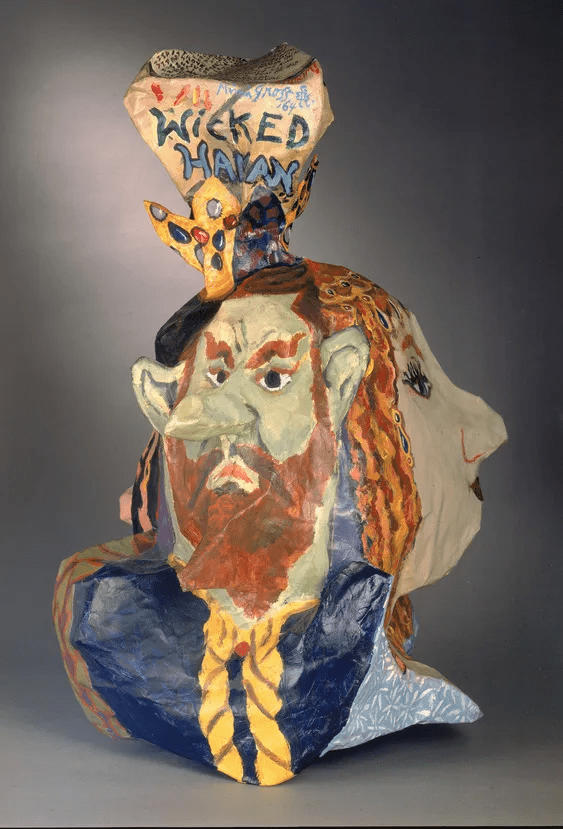
I don’t like arrogant people. I don’t like those who only think of themselves, and expect others to fall in line with them, too! It’s unlikely that an arrogant person would be reading or listening to this, namely because such individuals believe they are above the menial task of reading – unless it gets them more attention and/or power.
I don’t like Haman. The story clearly sets up Haman as the antagonist. He is a number one jerk in the first degree. Having a front row seat to his manipulative ways with the king arouses our sense of justice and injustice. Mordecai was the one person who saw Haman for who he is; so, if Haman couldn’t cajole and control Mordecai, he was determined to do him in, permanently.
It’s interesting that the royal command that people bow to Haman, follows the command that men are the lord of their homes. That doesn’t sound very “complimentary” to me. Haman wanted a strict hierarchical structure, with himself at the top.
It is consistent of the arrogant authoritarian person to not stop with wanting Mordecai out of the way, but also to lay plans for all of Mordecai’s people, the Jews, to be destroyed.
Because of Haman’s arrogant anger, he sought to enlist the king in his sinister plan. Every authoritarian dictator throughout history has scapegoated an entire race of people through rewriting history. Haman spun the Jewish people as a constant historical problem.
Using generalities and twisted truth, Haman depicted Jewish life as one long continuous rebellion against governmental authority. Note that Haman did not produce any hard evidence to his claims.
If this weren’t bad enough, Haman appealed to the king through the promise of financial gain with a plan of ridding the empire of Jews. The king let Haman go ahead with the plan, while keeping his own hands clean from the affair.
Thus, it was decreed that on the thirteenth day of the twelfth month, the people of the empire were to rise up against the Jews and wipe them off the face of the earth. No one was to be spared. And the Jews could be plundered.
So, King Xerxes and Haman went back to drinking and having a good time, neither being aware nor caring that the entire plan is insane and nonsensical – which is why we get the picture of the city’s citizens looking at one another quizzically… “Huh!?”
The story’s stage is set for the protagonist, Esther, to enter. Yet, we need to sit with this terrible situation for a while, and not rush to the conclusion of the narrative. That’s because the ancient Jews had to sit with this for an agonizing stretch of time, knowing that the actual day of their demise was on the calendar.
There would not be the centuries old Jewish celebration of Purim without this tension. Yes, the awful suffering would eventually end in glorious joy. However, there would not be such joy apart from the grinding circumstance of facing extinction.
Another way of putting this: There cannot be a resurrection without a crucifixion. There must be suffering before glory. When things are screwy, we have only our faith to cling to.
The wise person will ponder these things and take them to heart.
Do not forget us, your people, O Lord.
Be present to us in the time of our distress and grant us courage.
Save us by Your power, and come to our aid,
for I am alone and have no one but You on whom to depend. Amen.

 Rev. Tim Ehrhardt