


One Sabbath day as Jesus was walking through some grainfields, his disciples began breaking off heads of grain to eat. But the Pharisees said to Jesus, “Look, why are they breaking the law by harvesting grain on the Sabbath?”
Jesus said to them, “Haven’t you ever read in the Scriptures what David did when he and his companions were hungry? He went into the house of God (during the days when Abiathar was high priest) and broke the law by eating the sacred loaves of bread that only the priests are allowed to eat. He also gave some to his companions.”
Then Jesus said to them, “The Sabbath was made to meet the needs of people, and not people to meet the requirements of the Sabbath. So the Son of Man is Lord, even over the Sabbath!”
Jesus went into the synagogue again and noticed a man with a deformed hand. Since it was the Sabbath, Jesus’ enemies watched him closely. If he healed the man’s hand, they planned to accuse him of working on the Sabbath.
Jesus said to the man with the deformed hand, “Come and stand in front of everyone.” Then he turned to his critics and asked, “Does the law permit good deeds on the Sabbath, or is it a day for doing evil? Is this a day to save life or to destroy it?” But they wouldn’t answer him.
He looked around at them angrily and was deeply saddened by their hard hearts. Then he said to the man, “Hold out your hand.” So the man held out his hand, and it was restored! At once the Pharisees went away and met with the supporters of Herod to plot how to kill Jesus. (New Living Translation)
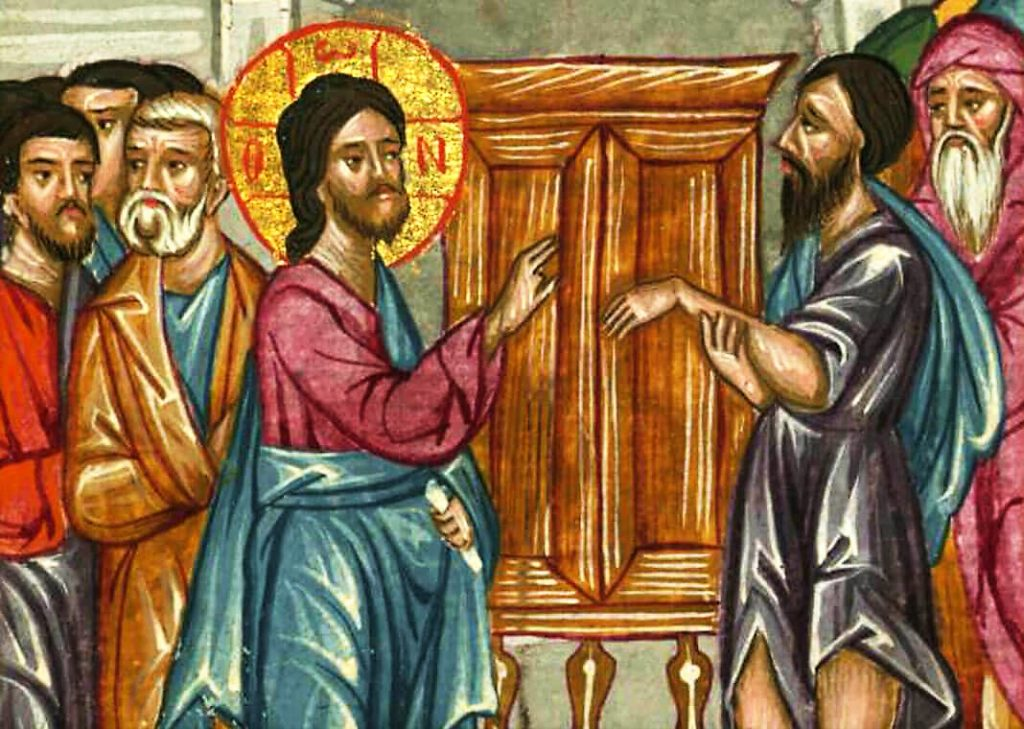
I am continually amazed whenever good people are surprised by being embroiled in the muck of human controversy. Since we live in a profoundly fallen world, good is often going to buck up against the bad. Besides, Jesus often found himself in a controversy of some kind; and we are not above our Lord.
There are two distinct yet similar controversies in today’s lesson; and they highlight why there were some folk who were all upset about the way Jesus went about things. Such people eventually came to the dark decision that Jesus needed to go away, permanently.
Much of the controversy between Jesus and the religious leaders came down to particular views of God’s law; and, of course, whose view was going to win out over the other. It ended up becoming what almost all controversies are about: Deciding who is really in power and calls the shots.
The Politics of Hunger
It was a Sabbath day. Jesus and his disciples were walking through the fields. And they were hungry. So the disciples took some grain, broke off the heads, and ate them. To any non-Jewish person, there’s no problem here. But the Pharisees were concerned.
First, they observed the disciples walking through grain fields. The Pharisees thought they should be staying put on the Sabbath. Second, and perhaps more significantly, the religious leaders saw Christ’s disciples gleaning – which was working on the Sabbath. To them, any respectable Jew prepared their food the day before. This is a lack of holiness, of not taking the Sabbath seriously. And this was completely unacceptable to the Pharisees.
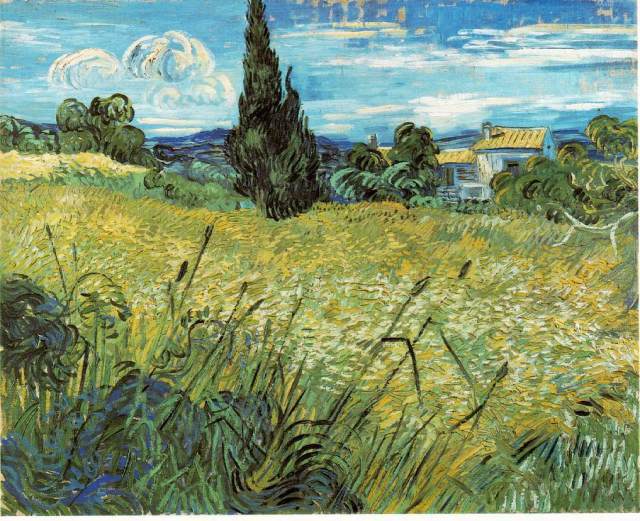
Jesus, however, viewed walking through the fields differently. He did not consider the Sabbath as trivial; Jesus instead stood back and took a big picture perspective of it all. And that view included the ancient story of David, who took the consecrated bread in the tabernacle which was reserved only for Levite priests. (1 Samuel 21:1-6; Leviticus 24:8-9)
The reason David wanted the bread was because he was a fugitive, on the run from King Saul who was trying to take his life. Jesus insisted, on that day, the priest on duty did nothing wrong in giving the special bread to David. Yes, the strict letter of the law was broken; and, no, this was not wrong – because the priest was helping to save a life, and a very important one at that.
Jesus discerned there are times when particular laws come into conflict; so it’s necessary to maintain the spirit of a law in order to maintain a high value and meet a pressing human need. In a sense, Jesus gave a covenant code legal opinion on the subject.
It’s no surprise, to any reader of the New Testament Gospels, that Christ would behave this way; and that it would drive the religious leaders bananas. After all, they, the Pharisees, upheld law and rendered legal decisions – not this upstart wannabe. Jesus took an authoritative stance on what was happening, and the leaders did not at all like their own authority questioned.
This wasn’t some maverick interpretation by Jesus. He simply pointed out that the Sabbath is a gift, given to people to promote life and health – and not a burden that folks are to carry. Any decent Sabbath-keeper knew this.
It appears the leaders didn’t like being reminded of it from Jesus. What’s more, Jesus was much too close to likening himself to David. Yet another reason to despise this uppity teacher.
The Legality of Suffering
A second controversy brought the issue of who is in charge and who gets to arbitrate community values into a greater light. There is perhaps no other place for that conflict to happen than in the synagogue, the meeting place of worshipers. The juiciest things always seem to happen in a place of worship.
In the first story, the religious leaders were caught surprised over the behavior of Jesus and his disciples. They’re determined not to make that mistake again. From this point forward, it seems the Pharisees are continually waiting for a chance to put down Jesus as a lawbreaker and rabblerouser.
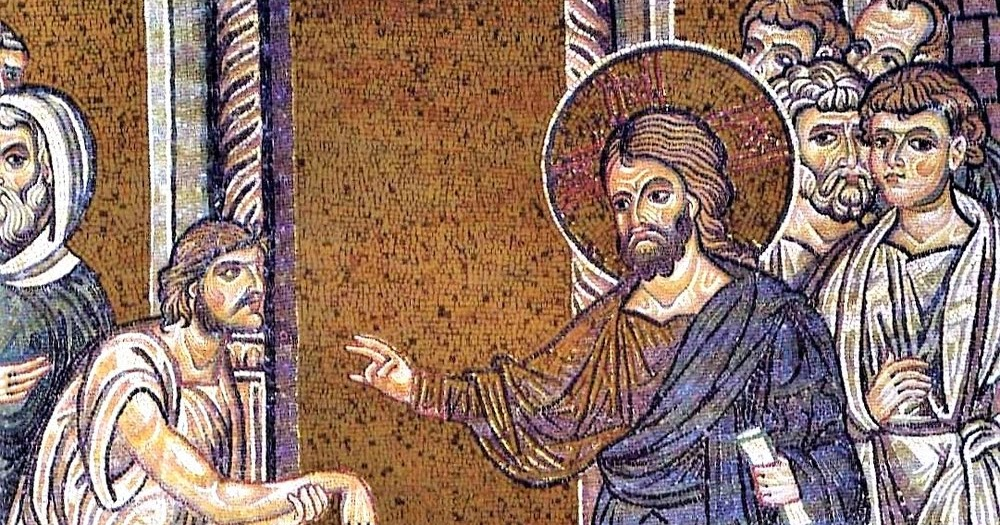
For them, the issue wasn’t about the ability to heal, but whether it’s being done on the Sabbath. Much like the grainfield incident, healing is work, and working on the Sabbath is a direct violation of God’s immutable law. The religious leaders wanted to prove that Jesus has no regard for God’s will.
Law, for many Pharisees in Christ’s day, was meant to bring order so that chaos does not rule. Obedience to the law is a pre-condition for blessing. Without a clear demonstration of holy living, the community could be under a curse, much like their ancestors before them who were exiled for disregarding God’s law.
Yet again, Jesus cut through the anxious fear and authoritative posturing and went directly to the intended spirit of the law. The Sabbath, of all days in the week, ought to be a time for doing good, not harm; and to save life, not kill it. Jesus was not doing anything that could be considered work, anymore than his disciples were actually gleaning or harvesting grain.
There is no better day than the Sabbath for restoring a man’s withered and malformed hand, for giving him back his ability to make a living and contribute to the community. Much more was restored to the man than a physical ability; he now had the ability to better his life and his family, not to mention the local economy. It ought to be all good…
Unfortunately, the Pharisees didn’t see it that way, that the man gained his dignity back, his wholeness and his joy. They could only see a threat to their own hegemony.
The Beginning of the End
So, this marks the beginning of the end. The leaders are so upset and angry, they began plotting for Christ’s destruction. Unlikely political allies came together because of a common enemy. To view Jesus as a threat to society is, at the least, messed up. But that’s what happens when people cannot see beyond the end of their nose. They make bad choices.
Even though Jesus came to give life, others want to take his. Despite the fact that Jesus did not reject the law or demean the Sabbath, people with a short-sighted agenda and hard hearts could only see someone upsetting the status quo.
Today, these same things can quickly turn to hostility. The legal implications of one’s values and commitments can get nasty fast. Opinions can harden, resulting in oppression, persecution, and even death.
The most noble of motives can go sour; and the best of intentions, the highly educated, and the most gifted persons among us can become despotic in their leadership. Indeed, absolute power corrupts absolutely.
This is why the gracious and benevolent kingdom of God will win the day. Hard-hearted people become desperately out of touch with what is most important; they are calloused to the human need in front of their faces. I believe that the words and ways of Jesus can dispel those dark forces and impulses.
I’ll take a controversial Christ any day because that is the path to life abundant and everlasting.
Whenever unjust, oppressive, harmful, and fearful systems hold on, the ministry of Jesus exposes them for what they are, and will deliver us from evil.
Thanks be to God!

 Rev. Tim Ehrhardt