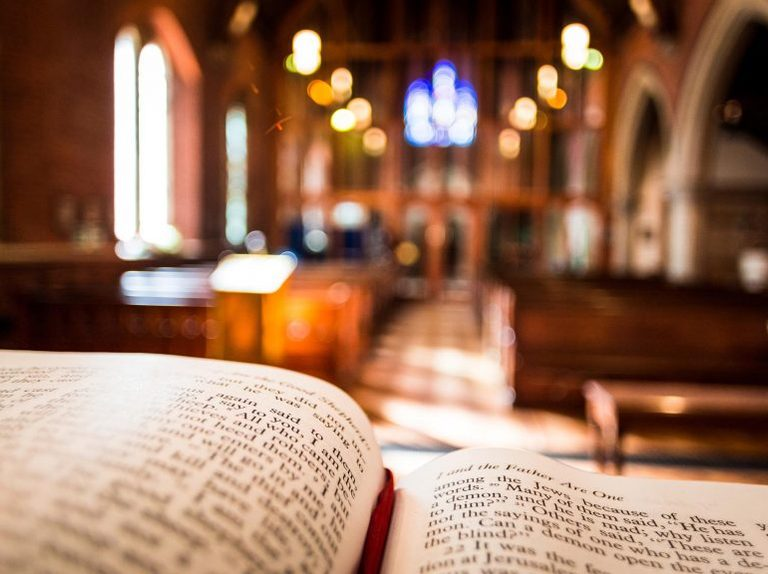
How Can Young People Keep Their Lives Pure? (Psalm 119:9-16)

How can young people keep their lives pure?
    By obeying your commands.
With all my heart I try to serve you;
    keep me from disobeying your commandments.
I keep your law in my heart,
    so that I will not sin against you.
I praise you, O Lord;
    teach me your ways.
I will repeat aloud
    all the laws you have given.
I delight in following your commands
    more than in having great wealth.
I study your instructions;
    I examine your teachings.
I take pleasure in your laws;
    your commands I will not forget. (Good News Translation)

Every historical age, and every generation of people has its own struggles. Of course, the challenges vary widely depending on who you ask – young adults of different races, income levels, and geographic locations often have different concerns or prioritize the same concerns differently.

Young people today have particular challenges concerning money, school, violence, sex, climate change, social media, and many other issues. And they face them in different ways than I had to deal with them (back when I was considered young).

Yet, no matter the struggle, nor the concern, the ability to remain set apart for godly purposes is perhaps the main challenge for a spiritual young person. How can a young person keep their life pure?

The psalmist asked the question, and gave a straightforward answer: By obeying God’s commands.

Knowing the answer, however, is only part of attaining and maintaining purity of life. One must put in the hard work necessary to achieve it and hold onto it. And the psalmist helps out with that, as well.

An engagement with the following spiritual practices is how the young person can live into obedience to God and be pure. It’s necessary to frame them as “I will” statements, so that we continually understand that these spiritual practices are vital, and not optional, to a successful life of purity.

I Will Put Energy Into Prayer

It’s one thing to throw up a few prayers in the heat of the moment. But it’s an altogether different thing to devote oneself to prayer and intentionally put the time and energy into praying.

Devote yourselves to prayer, being watchful and thankful. (Colossians 4:2, NIV)

Let there be no excuses in developing a robust prayer life – with the content of those prayers including petitions to avoid falling into disobedience.

I Will Hold God’s Word In My Heart

This is the primary means of keeping sin at bay and maintaining purity and holiness. The Scriptures are meant to be read, ingested, meditated upon, ruminated on, contemplated, and lived. Bibles are not intended to adorn coffee tables; they are designed for their contents to be known.

We can only hold what we have. To keep God’s Word in the heart, it must be taken into that heart.

I have hidden your word in my heart, that I might not sin against you. (Psalm 119:11, NLT)

I Will Praise God

Praise to God arises organically whenever we truly take in the words of God. That’s because God’s Word is life. Praising the Lord is a consistent theme throughout Holy Scripture, as people experience the grace and goodness of God.

I will praise you, Lord!
    You always do right.
I will sing about you,
    the Lord Most High. (Psalm 7:17, CEV)

I’ve thrown myself headlong into your arms—
    I’m celebrating your rescue.
I’m singing at the top of my lungs,
    I’m so full of answered prayers. (Psalm 13:5-6, MSG)

I Will Repeat Aloud God’s Word

It’s a good thing to read the Bible and know the commands of God. It’s an even better thing to read, out loud, and read it more than once.

“…Ezra the priest brought the Law before the assembly, which was made up of men and women and all who were able to understand. He read it aloud from daybreak till noon… in the presence of the men, women and others who could understand. And all the people listened attentively to the Book of the Law.” (Nehemiah 8:2-3, NIV)

Ezra Reads the Law to the People, by Bernadette Lopez

This, in fact, is how we actually get God’s Word impressed on our minds and into our hearts. It’s important for Scripture to move from our short term memory into our long term memory. Then, we can draw from it, especially in those times when we need immediate wisdom or comfort or help.

Just as praise is organic, so God’s Word can spontaneously come out of us – that is, if we have prepared ourselves by filling up the soul to the full of Scripture. Then, helpful words and theology begin to overflow out of us, and benefits everyone.

I Will Delight in Obedience

Submission doesn’t come naturally to most people; it requires intentional development. We need a plan for getting the commands of God inside us. Then they can be familiar to us. And we can follow those commands with all the grace and ability the Lord grants us.

This is more than woodenly following some rules. Keeping to the letter of the Law only engages the mind. The heart needs to be involved, as well. We must also keep the spirit of the Law. And that can happen by learning to delight in obeying God.

Trust in the Lord and do good;
    dwell in the land and enjoy safe pasture.
Take delight in the Lord,
    and he will give you the desires of your heart…

The Lord makes firm the steps
    of the one who delights in him;
though he may stumble, he will not fall,
    for the Lord upholds him with his hand. (Psalm 37:3-4, 23-24, NIV)

I Will Study God’s Word

Learning to delight in God’s commands logically leads toward wanting to examine those commands more closely, to take a good hard look at the biblical teachings available to us.

We don’t necessarily need to become Bible scholars in order to study. We just need the desire and a way to take a closer examination at Scripture. A good way to begin is engaging in a practice known as Lectio Divina.

Lectio Divina is an ancient Latin term which means “spiritual reading.” It is to read Holy Scripture not just to know its contents, but to experience its power to restore, heal, transform, and draw close to God. 

This is a simple way to prayerfully read the Bible, meditate on its message, and listen for what God may be saying for us to do. The goal is to become more Christ-like.

Lectio Divina is based upon reading a selected text of Scripture three times. Each reading is followed by a period of silence after which we respond to God with what we are hearing as we listen.

First Reading

During the first reading, read the text aloud twice. Read slowly and carefully. The purpose of the first reading is to hear the text and listen for a word, phrase or idea that captures your attention. Focus your attention on it, repeating it within your mind several times.

Second Reading

During the second reading, read the text again. This time, focus your attention on how the selected word, phrase or idea speaks to your life. What does it mean for you today? How is Christ, the Word, speaking to you about your life through this word, phrase or idea? After reading, observe a period of silence, then express a brief prayer to God.

Third Reading

Read the text again. This time, focus on what God is calling you to do or to become. Experiencing God’s presence changes us. It calls us to something. During this final reading, focus on what God is calling you to do or to be. Again, observe a period of silence, then pray to God about what you believe you are being called to do or to be.

I Will Take Pleasure in God’s Word

It is probably a foregone conclusion, that when we commit our energy to prayer, hold the Word near and dear to our heart, praise God, speak aloud the words of God, delight in and study divine instruction, we will find ourselves enjoying every moment of it – and living a pure and holy life.

We will discover that God takes pleasure in us. This enjoyment of God over us is so compelling and gracious, that it’s almost as if we cannot help but reciprocate with praise, adoration, and devotion to holiness of life.

There is no arm-twisting in this realm of enjoyment. No need to gin-up motivation, nor to try and get obedience and purity out of others.

The sooner we all learn that the world truly spins on an axis of mercy, the quicker folks will realize a better way to live than endless rules and pronouncements.

For the Lord is always true to the basic divine character of pure steadfast love through what is right, just, and good. Amen.

A Divine Calling (Jeremiah 1:4-10)

The Prophet Jeremiah by Marc Chagall, 1960

The Lord gave me this message:

“I knew you before I formed you in your mother’s womb.
    Before you were born I set you apart
    and appointed you as my prophet to the nations.”

“O Sovereign Lord,” I said, “I can’t speak for you! I’m too young!”

The Lord replied, “Don’t say, ‘I’m too young,’ for you must go wherever I send you and say whatever I tell you. And don’t be afraid of the people, for I will be with you and will protect you. I, the Lord, have spoken!” Then the Lord reached out and touched my mouth and said,

“Look, I have put my words in your mouth!

Today I appoint you to stand up
    against nations and kingdoms.
Some you must uproot and tear down,
    destroy and overthrow.
Others you must build up
    and plant.” (New Living Translation)

“Don’t let anyone think less of you because you are young. Be an example to all believers in what you say, in the way you live, in your love, your faith, and your purity.”

St. Paul to St. Timothy (1 Timothy 4:12, NLT)

I write to you, young people,
    because you are strong
    and the word of God abides in you,
        and you have overcome the evil one. (1 John 2:14, NRSV)

Young Jeremiah had an unusual calling from the Lord. It wasn’t to reach thousands with a life-giving message of hope and encouragement; the call was to declare destruction to an unjust people who believed they were fine, thank you very much.

It was a calling that would have been a huge challenge for the most seasoned of veteran prophets. But God called the young Jeremiah. This was his first crack at being a prophet of the Lord; and it was a doozy of a call!

Yet, when it comes to God’s call, age really means nothing. That’s because the Lord equips whomever the Lord wants to empower. Young or old makes no difference. All that’s needed is a willingness to submit to the voice of divine calling.

And to Jeremiah’s credit, the lengthy prophecy bearing his name in the Bible is a testament to his sense of call and straightforward obedience to it.

There is, and always has been, a divine/human cooperative in the world. God, of course, could do everything without humanity’s assistance. But it’s never been that way. Throughout the entirety of Holy Scripture, the Lord calls and empowers people for service.

On the one hand, this may seem like some strange convergence which, on the surface, is sure to end in some screw-ups and failure. Yet, on the other hand, this cooperation between Creator and creature gives people, at the least, a sense of ownership in the world; and, at the most, a powerful opportunity to bless the world with divine gifts of speaking and service.

Although Jeremiah was called to (mostly) pronounce doom, it’s first and foremost a message of justice. The Lord is concerned for the common good of all persons, not just some. Yahweh is not about to be forever idle whenever certain segments of humanity go rogue and harm their fellow sisters and brothers with unjust ways.

The Prophet Jeremiah by Marc Chagall, 1968

What’s more, the Lord delights in using people whom society at large might deem less than usable.

Now remember what you were, my friends, when God called you. From the human point of view few of you were wise or powerful or of high social standing. God purposely chose what the world considers nonsense in order to shame the wise, and he chose what the world considers weak in order to shame the powerful. He chose what the world looks down on and despises and thinks is nothing, in order to destroy what the world thinks is important. (1 Corinthians 1:26-28, GNT)

If God can use a donkey to communicate a message, then it’s likely that the Lord can enable any person on earth to speak words of justice – no matter if they’re young, uneducated, or underprivileged – and make the older, educated, and privileged look like jack asses. (Numbers 22:22-35)

For Christians everywhere, every believer has been called by God to proclaim the gospel of grace. The Word has come to us in Christ, in the flesh (John 1:14). Jesus is the primary and ultimate revelation of God’s Word to us.

God has also set the Church apart to serve as proclaimers of God’s Word to the nations. The Great Commission and the Great Commandment summarize our call to ministry. (Matthew 22:37-40; 28:19-20)

Yahweh’s intentional purpose was for Jeremiah to proclaim God’s word. That’s also God’s intentional purpose for the Church; the Lord puts God’s words in the church’s mouth. Christians proclaim the Word, which we know most fully and experience most personally in Jesus Christ.

With our words, perspectives, attitudes, relationships, and actions, God’s Word flows through us to the world. As believers, we know that gospel proclamation will accomplish God’s purposes.

We trust that God is empowering us to effectively proclaim God’s words with effectiveness so that all the earth may be renewed and blessed.

Most High God, you knew each of us before we were ever born. And so, you know us better than we know ourselves. Your divine power is already there, deep within us. As you call forth that power, enable us to respond with submission, obedience, and willingness to speak words of justice, love, and grace to a world in need of hope and betterment, through Jesus Christ, the Word made flesh, in the strength of the Holy Spirit. Amen.

Psalm 78:1-7 – For the Next Generation

O my people, listen to my instructions.
    Open your ears to what I am saying,
    for I will speak to you in a parable.
I will teach you hidden lessons from our past—
    stories we have heard and known,
    stories our ancestors handed down to us.
We will not hide these truths from our children;
    we will tell the next generation
about the glorious deeds of the Lord,
    about his power and his mighty wonders.
For he issued his laws to Jacob;
    he gave his instructions to Israel.
He commanded our ancestors
    to teach them to their children,
so the next generation might know them—
    even the children not yet born—
    and they in turn will teach their own children.
So each generation should set its hope anew on God,
    not forgetting his glorious miracles
    and obeying his commands. (NLT)

Every generation needs to recall and renew their ancestral faith – not in a wooden or bland acceptance but through vigorous retrospection of God’s past actions applied to present life. This happens primarily through the telling and retelling of stories. Both verbal and written history play a significant role in shaping current and future generations for ongoing faith.

Discussing God and Scripture need not be forced nor awkward. Most people like talking about things important to them. I have no problem talking about the latest books I am reading, my kids and grandkids, and bacon, simply because they are such a big part of my life. Conversations about these and other subjects arise organically out of the time and attention I have given them over so many years.

One of the best ways to live into faith and pass the baton is to regularly spend time with God through consistent Bible reading, heartfelt worship, earnest prayer, ongoing fellowship, participation in service, and other opportunities to learn about God. Talking about Jesus is to be an organic thing from a heart-wellspring that loves God and ponders divine commands.

The passing along of faith needs some intentional purpose and planning. When it comes to family, we can be willing and ready to ask good questions, instead of merely barfing out information. Typically, when my girls were growing up, most of our conversations around the table would center around one question I asked. We discussed it, talked about it, and mulled it over together. Sometimes, the question was deeply theological, and other times it was an intensely practical question. My wife and I often had others share a meal with us, and I would usually ask them to tell their “God story” or to participate with us in the question. If they were not followers of Jesus, I would ask them what they thought about him, and why, as well as tell us about their own religion.

Passing on the faith to the next generations is a sacred trust God has given to us. Embrace it within the home by talking about God and God’s Holy Word as a regular part of your everyday life, and freely converse in public, as well. The following are a few ways of impressing faith to younger generations:

  1. Train them to lead. Adults do not have to do everything. Everyone from toddlers to teenagers can be empowered to serve, if we will take up the challenge to mentor them. When my girls still lived at home, I took at least one of them everywhere I went; it made no difference what it was, whether to the grocery store, on a hospital visit, or even a church meeting. Serving is now second nature to them, part of the air they breathe.
  2. Show empathy to young persons and young families. Any old fool can criticize younger generations about their lack of involvement and how they are always on social media. The wise person will recognize they need our help, not our judgment. To have empathy for them means we recognize they are just trying to do the best they can in this crazy world we live in – a world very different than the one many of us grew up in. It is a hard world, one that is extremely competitive, requiring an offbeat energy and drive than previous generations. Being a student today is not like being a student when I was a kid. And being a young parent is not the same today as it once was. Today’s family structure is completely changed; what we think of as a traditional family only makes up 7% of the American population. The needed response is not to criticize but to empathize and find ways to help.
  3. More dialogue, less monologue. Discussion, conversation, questions, and mutual sharing are the ways Jesus developed his followers, and it is a way that we can likely reach younger generations. Dialogue will go much further than just telling others what they should believe and do. I admit I had to learn this one the hard way. Being a preacher does not always translate well at home.
  4. Adopt a young person, or a young family. If you consider yourself within an older generation, seriously think about taking a younger person or even family under your wing who is not related to you.
  5. Look for ways to support children, teens, and young families. Prioritizing younger generations will mean they do not have to do everything our way. Instead, we will commit to listening for what they tell us they need to love God and build into their own kids’ lives.
  6. Be a great neighbor. Again, any common curmudgeon can crank on about how messed up the world is. However, the wise person will focus on teaching, empowering, and developing young people into good neighbors who engage their local community and the world by addressing issues with great love and lots of compassion.

Lord God Almighty, I believe. I wish for the next generations to believe in you, too. So, let my faith be full and unreserved; let it penetrate all my thoughts and ways. Let my faith be joyful, worthy of being emulated by others. Give peace and gladness to my spirit so that it may shine forth in all my conversations, whether sacred or secular. Let my faith be humble and fully surrendered to the work of your Holy Spirit, for the sake of Jesus Christ my Lord. Amen.