Psalm 84 – The Joy of Worship

Every now and then I like taking a psalm and doing my own loose contemporary translation of the text (just so you know, I’ve had training in the Hebrew language, so this isn’t weird for me, or for you!). I find this exercise to be exhilarating and helpful for my own soul. I hope you find this to be useful for you, as well. 

Today’s psalm talks about the temple. I have contemporized it for the Christian who enjoys fellowship with God in the many places where the Lord can be found. I encourage you to read it over once, then carefully read it again, prayerfully. Do it both times out loud. The psalms are meant to be prayed, and they are meant to be said aloud with flavor!

How lovely are all the places where you dwell,
    powerful and mighty God of the numerous heavenly forces!

The depths of my soul long, even yearn,
    for the intimate backyard gatherings where Yahweh dwells.
My heart and my body, my whole self
    shout out loud for joy to the living God!

Yes, the lowly insignificant mother sparrow has also found a home with God;
    the swallow has, too, found herself a homey nest
    where she can lay her young beside your divine activity.
    Immense Lord of the numerous heavenly forces, my king, my God,

    You are so big that the lowliest of creatures find shelter in you!
Those who live within your sacred space are genuinely happy;
    they can’t stop praising you constantly and incessantly!

Those who put their energy in you are truly content;
    a one-way road to you is in their hearts.
As they walk through all kinds of dry hard circumstances
    they end up making them like a spring of living water.
    Yes, even problems become like a gentle rain of blessing.
The biggest of dilemmas become manageable,
    as they see the supremacy of God in it all.
Mighty Lord God of the numerous heavenly forces,
    hear my prayer to you;
    listen closely, O ancient God of my spiritual ancestors!

You are our great protective shield, God;
    pay close attention to your chosen one!

Better is one single solitary day in your backyard gathering
    than a billion days anywhere else!
I would prefer to park cars out in the front yard of God’s house
    than live comfortably in the palatial hangouts of the ungodly!
The Lord is like the brightness of a warm summer day,

and even the suntan lotion protecting me; God is all that!
    God is full of crazy grace and unspeakable glory.
The Lord gives— and doesn’t withhold — good things
    to those who walk with integrity of heart beside him.
Powerful Lord of the numerous heavenly forces,
    those who trust in you are truly giddy with joy!

Divine presence makes all the difference in the world. To be with God, to sense the Lord’s company, and to enjoy Divine favor brings deep satisfaction and contentment within a world of great dissatisfaction and discontent.

True beauty is found with the Author of the beautiful. Love motivates the pilgrimage toward God. The non-judgmental presence of the Lord provides us with a place of security, peace, and rest. Indeed, the nearness of God changes everything. It transforms our present circumstances from drudgery and despondency to opportunities for God to show up and show off divine power.

God, the heavenly king, and commander of heavenly forces chooses to dwell among us. The Lord’s ear is attentive to each person. The connection between God and God’s people is inseparable. This, then, is the very place where trust is engendered. Placing faith in a God who cares, listens, and acts blesses everyone.

Today, God abides with us because of the indwelling Spirit of Jesus. God’s presence has the effect of bringing people together and calming all fears. God’s eye is on the sparrow, which means the Lord is always watching with care and concern for all creation, especially humanity.

Almighty God, merciful heavenly Father, we give you humble thanks for all your goodness, kindness, and steadfast love to us and to all whom you have made. We bless you for our creation, preservation, and all the blessings of this life. Above all, we are grateful for your immeasurable love shown through the redemption of the world by our Lord Jesus Christ. Give us such an awareness of your divine presence, that with truly thankful hearts our lives might be an offering of praise in both speech and action. We trust you, gracious God, and give ourselves to your service. We choose to walk with you in holiness and righteousness all the days of our lives, through Jesus Christ our Lord, to whom with you and the Holy Spirit, be honor and glory forever. Amen.

His Eye Is On the Sparrow, sung by Selah

Exodus 19:16-25 – An Awesome God

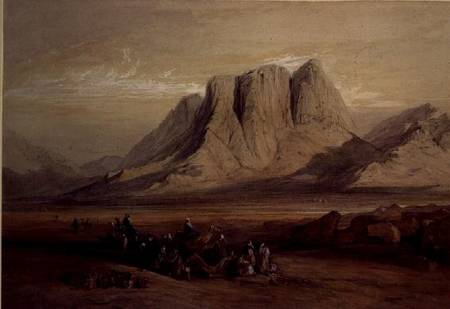
Mount Sinai by Scottish painter David Roberts (1796-1864)

On the morning of the third day, thunder roared, and lightning flashed, and a dense cloud came down on the mountain. There was a long, loud blast from a ram’s horn, and all the people trembled. Moses led them out from the camp to meet with God, and they stood at the foot of the mountain. All of Mount Sinai was covered with smoke because the Lord had descended on it in the form of fire. The smoke billowed into the sky like smoke from a brick kiln, and the whole mountain shook violently. As the blast of the ram’s horn grew louder and louder, Moses spoke, and God thundered his reply. The Lord came down on the top of Mount Sinai and called Moses to the top of the mountain. So, Moses climbed the mountain.

Then the Lord told Moses, “Go back down and warn the people not to break through the boundaries to see the Lord, or they will die. Even the priests who regularly come near to the Lord must purify themselves so that the Lord does not break out and destroy them.”

“But Lord,” Moses protested, “the people cannot come up to Mount Sinai. You already warned us. You told me, ‘Mark off a boundary all around the mountain to set it apart as holy.’”

But the Lord said, “Go down and bring Aaron back up with you. In the meantime, do not let the priests or the people break through to approach the Lord, or he will break out and destroy them.”

So, Moses went down to the people and told them what the Lord had said. (NLT)

As Christians await Easter and the resurrected Christ, the Revised Common Lectionary reminds us of another great anticipation from the Old Testament. The ancient Israelites were amazingly delivered from Egyptian slavery, miraculously walked through the Red Sea, and traveled with wondrous anticipation to Mount Sinai. Now, in today’s reading, they are about to meet with God!

The scene of this meeting is not exactly the romantic highland encounter of the Man from Snowy River (my wife’s all-time favorite movie). The landscape is much more akin to the dark and volcanic Mount Doom from The Lord of the Rings. The picture appears more foreboding than loving. The thing about mountain top experiences is that they are not all monolithic one-size-fits-all encounters with bright rainbows and happy skipping unicorns.

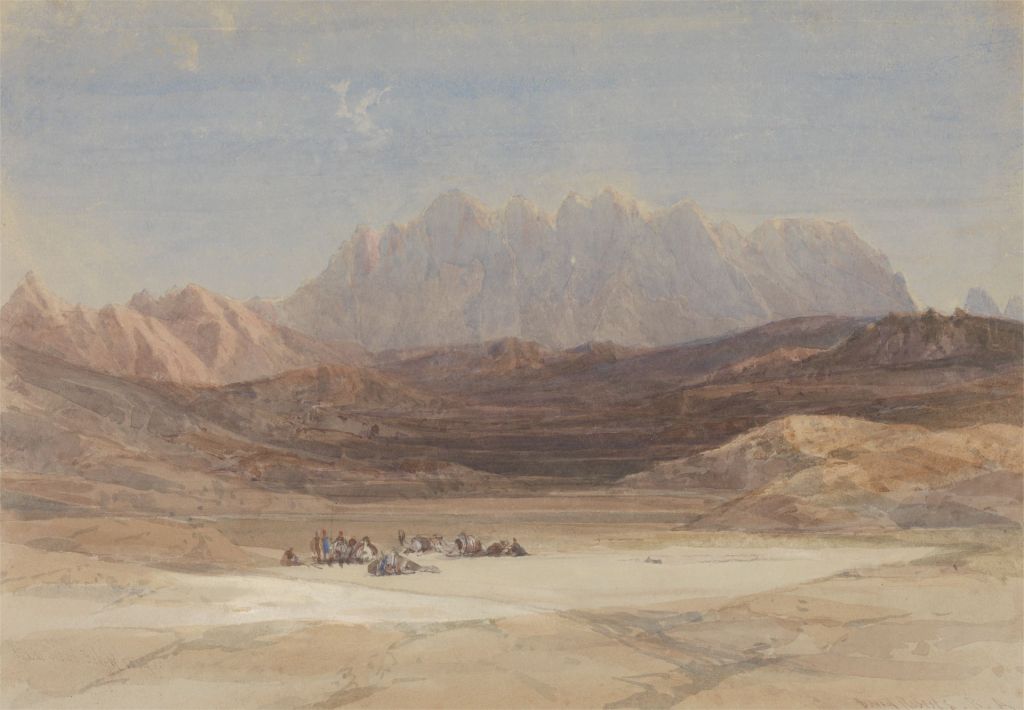
Mount Sinai by English painter Edward Lear (1812-88)

Mountain Top Experiences

Holy Scripture is replete with mountain experiences. Mountains serve as symbols for significant encounters with a mighty God. Whether it is Christ’s transfiguration on a mountain, or the giving of the law on a mountain, the awesome mountain serves as a tangible symbol of divine majesty, strength, and sovereignty. And, I might add, conversely, valleys in Scripture are symbolic of difficulty and suffering. Our God is Lord of both mountain and valley. The God of the Bible is both transcendent and immanent, ruling with power and might high above us on the holy mountain. Yet, the Lord also comes near to us in the valley of the shadow of death.

Leading up to the giving of the Ten Words (Commandments) in Exodus 20, Exodus 19 portrays an awesome scene of God in transcendent holiness and power. In fact, the experience was so otherworldly that the people were afraid to even come near the mountain. The Israelites needed limits placed on themselves because of God’s holy presence. Just like coming too near the immense power of the sun will destroy us, so getting near to God can ruin us if we do not respect divine holiness.

The Lord of the Mountain

Respecting God’s power and transcendence brings the reality of the Lord’s immanence into greater appreciation. God has gone to extreme lengths of self-revelation to people. For the Christian, it all culminates through the incarnation of Christ, the sending of the Son. In Jesus, the transcendence and immanence of God meet perfectly to bridge the chasm between humanity and the divine. Because of Jesus, the awesome sounds of thunder and trumpet do not lead to fear; they announce grace to those who approach God by faith.

You have not come to a mountain that can be touched and that is burning with fire; to darkness, gloom and storm; to a trumpet blast or to such a voice speaking words that those who heard it begged that no further word be spoken to them, because they could not bear what was commanded: “If even an animal touches the mountain, it must be stoned to death.” The sight was so terrifying that Moses said, “I am trembling with fear.” But you have come to Mount Zion, to the city of the living God, the heavenly Jerusalem. You have come to thousands upon thousands of angels in joyful assembly, to the church of the firstborn, whose names are written in heaven. You have come to God, the Judge of all, to the spirits of the righteous made perfect, to Jesus the mediator of a new covenant….

See to it that you do not refuse him who speaks. If they did not escape when they refused him who warned them on earth, how much less will we, if we turn away from him who warns us from heaven? At that time, his voice shook the earth, but now he has promised, “Once more I will shake not only the earth but also the heavens.” The words “once more” indicate the removing of what can be shaken—that is, created things—so that what cannot be shaken may remain. Therefore, since we are receiving a kingdom that cannot be shaken, let us be thankful, and so worship God acceptably with reverence and awe, for our “God is a consuming fire.” (Hebrews 12:18-29, NIV)

Our God is an awesome God. The divine dramas of God’s victory over Egypt and Christ’s victory over sin, death, and hell, have provided God’s people with spiritual power. Both the deliverance of the Israelites from Egyptian slavery by God and the deliverance secured on Mount Zion from spiritual slavery by Jesus are meant to free us to do the will of God. With God’s Word and God’s Spirit given to us, we are emancipated from an empty way of life to experience the fullness of Christ.

May the peace of God which surpasses all understanding, keep your hearts and minds in the knowledge and love of God, and of the Son, Jesus Christ, our Lord, and the blessing of God almighty. May Father, Son, and Spirit be among you and remain with you always. Amen.

2 Samuel 6:12-19 – Acceptable Worship

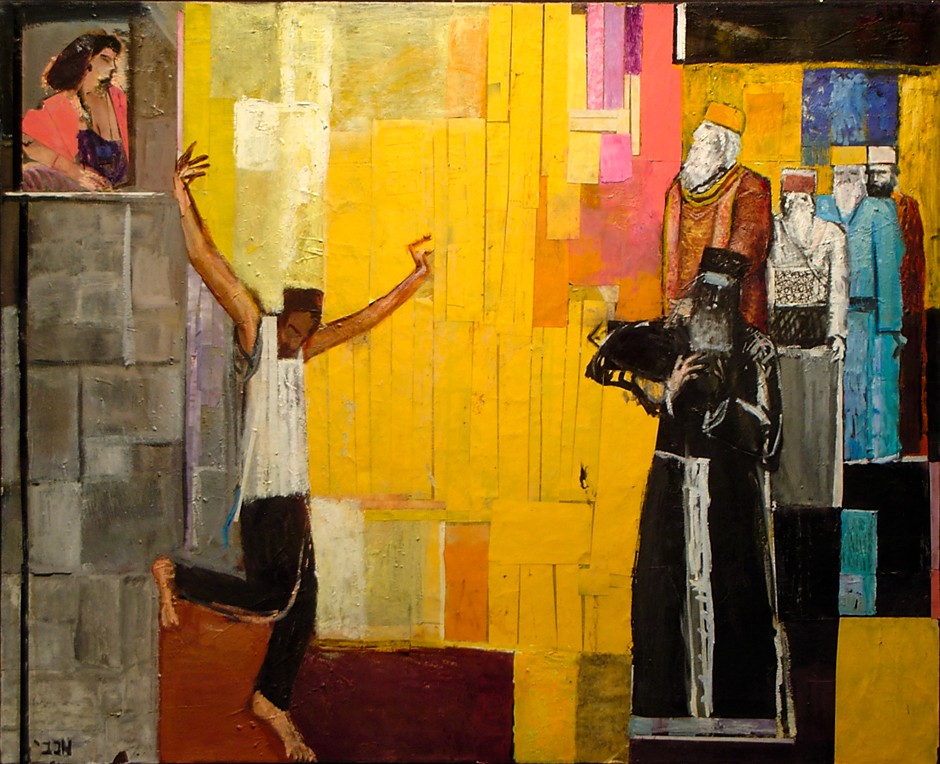
David Dancing by Richard McBee, 1998

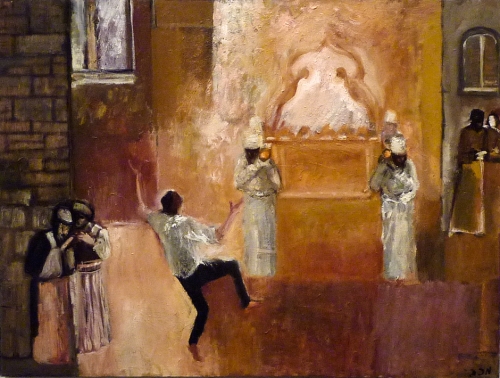
Now King David was told, “The Lord has blessed the household of Obed-Edom and everything he has, because of the ark of God.” So, David went to bring up the ark of God from the house of Obed-Edom to the City of David with rejoicing. When those who were carrying the ark of the Lord had taken six steps, he sacrificed a bull and a fattened calf. Wearing a linen ephod, David was dancing before the Lord with all his might, while he and all Israel were bringing up the ark of the Lord with shouts and the sound of trumpets.

As the ark of the Lord was entering the City of David, Michal daughter of Saul watched from a window. And when she saw King David leaping and dancing before the Lord, she despised him in her heart.

They brought the ark of the Lord and set it in its place inside the tent that David had pitched for it, and David sacrificed burnt offerings and fellowship offerings before the Lord. After he had finished sacrificing the burnt offerings and fellowship offerings, he blessed the people in the name of the Lord Almighty. Then he gave a loaf of bread, a cake of dates and a cake of raisins to each person in the whole crowd of Israelites, both men and women. And all the people went to their homes. (NIV)

After the worship debacle earlier in which two of the Levites attending the ark of the Lord were struck down by God, King David took time to refocus and go about bringing the ark back to Jerusalem in a proper way. A true celebration was underway that enjoyed the blessing of God upon it.  The sacrifices before God were sweet smelling because they were done in a spirit of obedience and humility. 

However, David’s wife, Michal, the daughter of Saul, did not worship. She critically observed David and the others and evaluated the worship service by how it appeared to her. Michal was not with everyone else giving herself to the true worship of God. She did not like how David went about worship. The acceptable worship of God was unacceptable to her and she let David know it. Yet, David was undaunted and had his focus where it needed to be. We get a cryptic last note on Michal, describing that she was barren to the day of her death – a note meant to convey both a physical reality of her body, and a spiritual reality of her soul.

So, how are we to worship God?  Jesus commented about worship: 

“The hour is coming, and is now here, when the true worshipers will worship the Father in spirit and truth, for the Father seeks such as these to worship him. God is spirit, and those who worship him must worship in spirit and truth.” (John 4:23-24, NRSV)

Neither good intentions alone (in spirit) nor appropriate actions alone (in truth) constitute acceptable worship.  Both are necessary.  The worship Jesus mentioned is literally “to prostrate oneself before God.”  In other words, it is to have a disposition and attitude of submission and humility toward God, seeking to obey him as king rather than superimpose our desires on him. 

Furthermore, God is near to us and far away from us, at the same time.  God is close to us through the person and work of Jesus Christ, and now in the person of the Holy Spirit. God is also sovereign and far above us, orchestrating the universe. In worship, we appreciate both God’s transcendence and immanence.

The presence of God is both comforting and dangerous. Divine holiness is like a fire, giving us light and warmth; but get too close to the flame and you will get burned, even destroyed. We have collective promises and blessings given to us as God’s people; and at the same time, we have individual responsibilities to know the will of God and do it in the way prescribed for us.

David Dancing by Richard McBee, 1986

The book of 1 Chronicles gives an additional account of David’s worship service in bringing the ark to Jerusalem, which includes a psalm of thanksgiving to God that he wrote himself to be sung by Asaph and his associates, the worship leaders.  Here is part of that psalm:

Sing to the Lord, all the earth!
    Share the news of his saving work every single day!
Declare God’s glory among the nations;
    declare his wondrous works among all people
        because the Lord is great and so worthy of praise.
He is awesome beyond all other gods
    because all the gods of the nations are just idols,
        but it is the Lord who created heaven!
Greatness and grandeur are in front of him;
    strength and joy are in his place.
Give to the Lord, all families of the nations—
    give to the Lord glory and power!
    Give to the Lord the glory due his name!
        Bring gifts! Enter his presence!
        Bow down to the Lord
        in his holy splendor! (1 Chronicles 16:23-29, CEB)

After the worship service, after the psalm had been sung by Asaph and the singers, the text goes on to say:

Then David placed Asaph and his relatives, together with Obed-edom and sixty-eight of his relatives, to minister there continually before the chest containing the Lord’s covenant, following the routines required on each day…. With them were Heman and Jeduthun and the rest of those chosen by name to give thanks to the Lord, because his faithful love lasts forever. With them were also the trumpets and the cymbals for the musicians and the instruments for God’s songs. (1 Chronicles 16:37, 41-42, CEB)

In Israel, King David instituted that the worship of God was to take place every day – not just one day a week.  What is more, David hired hundreds of musicians, singers, and worship leaders to minister before the Lord every single day, twice a day. Every conceivable instrument and voice were used to praise God in worship.  New songs were written continually by David, and arranged by Asaph, the lead worship person. 

God longs for our worship each day: to remember who we are and who God is; to sing; to confess sin; to claim forgiveness; to read the Holy Scriptures; and to pray. If we all devoted ourselves to worship in such a way, then we can begin to imagine God opening to us blessing upon blessing.

Blessed Lord, who caused all Holy Scripture to be written for our learning: Grant that we may hear it, read it, mark it, learn it, and inwardly digest it, so that we may embrace worship in body, mind, and spirit through our Savior Jesus Christ in the strength of the Holy Spirit. Amen.

Psalm 100 – Knowing God

scenic photo of castle during dawn
Photo by Felix Mittermeier on Pexels.com

Shout for joy to the Lord, all the earth.
     Worship the Lord with gladness;
come before him with joyful songs.
Know that the Lord is God.
It is he who made us, and we are his;
we are his people, the sheep of his pasture.

Enter his gates with thanksgiving
and his courts with praise;
give thanks to him and praise his name.
For the Lord is good and his love endures forever;
his faithfulness continues through all generations. (NIV)

The original use of this psalm was for the ancient Israelites approaching the temple to worship God.  Before worshipers ever came into the presence of the Lord, they were preparing themselves to encounter God through giving him thanks, using this very psalm.

When David and other Hebrew writers penned their poetic songs, they would center what they most wanted to draw attention to in the middle, so that what came before it and after it pointed to that central message. The center of Psalm 100 is verse 3: Know that the LORD is God.

There are three imperatives (commands) that come before this phrase; and, three imperatives that come after it.  All six imperatives are meant to help us know God better. “Shout” for joy to the LORD. “Worship” the LORD with gladness. “Come” before him with joyful songs are the three that lead us up to knowing the LORD.  “Enter” his gates with thanksgiving; “give thanks” to him; and, “praise” his name all come after the central command to “know that the LORD is God.” We belong to God. As God’s people we celebrate this tremendous knowledge with actions meant to impress God’s gracious inclusiveness firmly into us.

There perhaps is no better biblical way to experience God than through these six words: shout; worship; come; enter; give thanks; and praise. Declaring loudly of God’s character and works; kneeling and prostrating before God; approaching God’s throne with boldness; immersing oneself into the presence of God; voicing aloud gratitude to God; and, praising God’s holy name are all heartfelt actions of the faithful. These pious activities are to happen here on earth as they are always done in heaven. It’s what folks with a settled sense of belonging do.

To “know” God is to experience him through close relationship. It means we have a place and a purpose. It is a knowing and belonging which exists deep down in our gut. We get to know God by how he has worked in people’s lives, as well as our own. So, gatherings of believers (whether physical or virtual) are an opportunity to engage in the six imperatives of today’s psalm. Faithful worshipers deeply desire to focus on who God is and what he has done, remembering and rehearsing his qualities and deeds. Through this activity, we help one another know the Lord.  And knowing God is what real life is all about.  He is worthy of all the praise, adoration, and worship we can give to him.  So, let us praise God with heartfelt thanksgiving.

One of my favorite verses in the Bible has to do with knowing God. The Apostle Paul said, “I want to know (to experience with his entire being and not just with his mind) Christ and the power of his resurrection and the fellowship of sharing in his sufferings, becoming like him in his death.” (Philippians 3:10, NIV)

Everything in our lives, whether good or bad, is designed to help us know God better.  Shared experiences with each other encourage us to keep living for Jesus.  So, let us express gratitude today for all the gracious ways God has revealed himself and reached out to save such ones as us.

Almighty God, who works on my behalf, give me grace to put away the rootless existence of one who has no place; and, help me to experience and know your radical acceptance and inclusion into the dance of the Trinity – Father, Son, and Spirit, one God, now and forever. Amen.

Click Psalm 100 (Enter In) for a time of praise and thanksgiving to God.