

Choose a good reputation over great riches;
being held in high esteem is better than silver or gold.
The rich and poor have this in common:
The Lord made them both.
A prudent person foresees danger and takes precautions.
The simpleton goes blindly on and suffers the consequences.
True humility and fear of the Lord
lead to riches, honor, and long life.
Corrupt people walk a thorny, treacherous road;
whoever values life will avoid it.
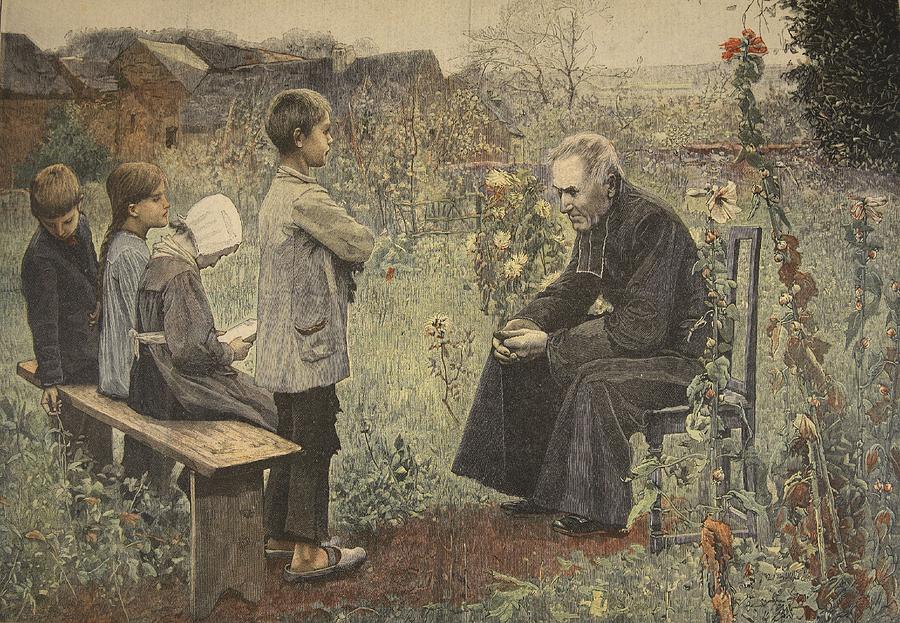
Direct your children onto the right path,
and when they are older, they will not leave it.
Just as the rich rule the poor,
so the borrower is servant to the lender.
Those who plant injustice will harvest disaster,
and their reign of terror will come to an end.
Blessed are those who are generous,
because they feed the poor.
Throw out the mocker, and fighting goes, too.
Quarrels and insults will disappear.
Whoever loves a pure heart and gracious speech
will have the king as a friend.
The Lord preserves those with knowledge,
but he ruins the plans of the treacherous.
The lazy person claims, “There’s a lion out there!
If I go outside, I might be killed!”
The mouth of an immoral woman is a dangerous trap;
those who make the Lord angry will fall into it.
A youngster’s heart is filled with foolishness,
but physical discipline will drive it far away.
A person who gets ahead by oppressing the poor
or by showering gifts on the rich will end in poverty.
Listen to the words of the wise;
apply your heart to my instruction.
For it is good to keep these sayings in your heart
and always ready on your lips.
I am teaching you today—yes, you—
so you will trust in the Lord.
I have written thirty sayings for you,
filled with advice and knowledge.
In this way, you may know the truth
and take an accurate report to those who sent you. (New Living Translation)
As a pastor, I have seen my share of parents broken over their particular son’s or daughter’s lifestyle and/or behavior. In some cases, the parents have a great deal of work to do with their own shortcomings. In many other scenarios, there are godly mothers and fathers experiencing the heartache of a wayward child through no real fault of their own.
Yet, some of them feel tremendously guilty because of a famous (or infamous) verse tucked away in our Old Testament lesson for today, to train children in the way they should go, and when they are old, they won’t depart from it.
Keep in mind, there are many different literary genres in Holy Scripture. Narratives, parables, gospel, epistles, poetry, and even apocalyptic literature all occur in the Bible. The book of Proverbs is a collection of wisdom sayings.
A proverb is a short pity statement of experiential truth.
In other words, a proverb expresses a general truth in which, all things considered, a particular outcome will likely occur. Proverbs were never designed to be ironclad promises of how things always are or will be. Rather, they are meant to teach wisdom, to give guidance in how to apply reality to a range of life circumstances.
So, when it comes to directing, guiding, and training children, it cannot be claimed that if a parent does a certain set of practices or disciplines that the child will always come out living a certain way. Neither people, nor Scripture, operates in that manner.
Biblical proverbs on parenting are designed to place emphasis on the necessity of intentional training and instructing children in the ways of God. And, more than likely, all things being equal, that training in the law of God will kick-in when the child is an adult, living on their own, needing wisdom to navigate a difficult world. Yet, remember, it is not a guarantee.
Even God, as the perfect parent, had rebellious children.
Adam and Eve disobeyed and went their own way. The ancient Israelites, God’s people, were often fickle about their commitment and obedience to the God who consistently showed them steadfast love.
Proverbs encourage us to put significant effort into developing children to be responsible people who live into their full humanity. We teach, train, exhort, live by example, and discipline our kids. We do it all because we love them and seek to be faithful in our own faith commitments.
And we live with the hope that our maternal and paternal efforts are not in vain. So, it is good for parents, teachers, and all who work with kids to have a gracious, wise, well-thought-out plan for training those children.
As we do so, we trust God, the One who ultimately does the needed renovations of the heart, and transformation of the mind.
Lord of life, you shape us in your image, and by your gracious gift the human family is increased. Grant to all parents everywhere the blessing of teaching and training children. Fill them with wisdom and love as they care for their family, so that they and their children may know and love you. Give us all, whether parents or not, wisdom so that we might always pray intelligently, live circumspectly, and speak lovingly to all the children in our lives, through Jesus Christ our Lord. Amen.



 Rev. Tim Ehrhardt