Matthew 16:5-12 – Be Careful of Bad Teaching

Do not be deceived
“Don’t be deceived, bad company corrupts good character.” (1 Corinthians 15:33)

When they went across the lake, the disciples forgot to take bread. “Be careful,” Jesus said to them. “Be on your guard against the yeast of the Pharisees and Sadducees.”

They discussed this among themselves and said, “It is because we didn’t bring any bread.”

Aware of their discussion, Jesus asked, “You of little faith, why are you talking among yourselves about having no bread? Do you still not understand? Don’t you remember the five loaves for the five thousand, and how many basketfuls you gathered? Or the seven loaves for the four thousand, and how many basketfuls you gathered? How is it you do not understand that I was not talking to you about bread? But be on your guard against the yeast of the Pharisees and Sadducees.” Then they understood that he was not telling them to guard against the yeast used in bread, but against the teaching of the Pharisees and Sadducees. (NIV)

I tend to think in metaphors, which is probably one reason I like the teaching of Jesus so much. While on this earth, he used a range of metaphors from common everyday life to communicate his point. Seems as though the disciples were more concrete thinkers.

Yeast was a common symbol for evil, which is why the Jews ate unleavened bread.  Jesus was trying to get the point across to his disciples that, like yeast, even just a little bit of unhealthy teaching can have far-reaching effects. Partaking of bad teaching works through the whole batch of dough and ruins the spiritual life.

We might think that after seeing Jesus heal the sick, raise a paralyzed man, cure the blind, restore the demon-possessed, walk on water, and feed the masses with only a few loaves of bread that his disciples would be clamoring with praise and responding with a big “Wow! Look at what Jesus did!  Tell us what to do next!”  Instead, they stood around mumbling about how to interpret the great feeding of the four thousand.

The math lesson Jesus explained to the disciples about the baskets of food that they had gathered was that the less the disciples had and the bigger their problem, the more Jesus did.  Jesus Math adds up to grace.  And grace means that who we are, or are not, and what we have, or do not have, is immaterial; what matters is that we have Jesus.  We give him what little we have, along with ourselves, and let him do the work.

We must avoid the trap and the temptation of thinking, “If only I had ___; If only I were ___.”  This is unsound doctrine because it denigrates the image of God within us and the good gifts God has already given to us, as if we ourselves are not enough. Yet, even if we have next to nothing, with few abilities, when offering it to Jesus, he turns it into a miraculous bounty of blessing for the world.

Seeing ourselves, our relationships, our stuff, and our world through the person and work of Jesus Christ is our task.  It does not take great powers of interpretation to see that the times are evil and bad information gets disseminated and spread.  What is more difficult for us is discerning that there is a great opportunity for mission and service amid this decaying world.

We will miss that wonderful opportunity if we partake of bad teaching. It is imperative that we feed upon sound teaching and be very discerning about who we listen to and what they are really saying to us. Words which are heavy with judgment and light on grace are to be suspect because such teaching is antithetical to the gospel. Instruction which sets apart and demonizes groups of people or characterizes certain individuals as monsters or animals is completely out of step with the way of Jesus Christ.

Wolf in Sheep Clothing

We are to be on our guard against any teaching which places an unrealistic and dispassionate heavy load of guilt and shame upon people. We must be vigilant to not accept teaching that plays upon people’s fear and twists reality, making groundless and unsubstantiated claims without evidence. In short, the Holy Scriptures are not to be used as a club to beat people into submission toward our way of thinking and acting.

The spiritual abuse and objectification of others by using the Bible is a terrible condition which unfortunately exists in today’s world. The sad reality is that there are people who engage in harassing others by using God’s Holy Word. People have been created in the image and likeness of God, and therefore deserve to be treated with respect and civility, regardless of their creed, color, or condition.

So, let me be clear and deliberate about the use and abuse of God’s revelation to us:

I do not condone any use of the Bible which seeks to intimidate, bully, impede, or affect any person’s ability: to work effectively at their jobs, to worship joyfully at their church, or to live without fear of being blacklisted or red-lined to the periphery of society.

I do not condone any use of the Bible which intends to control either by threat or by use of physical force any person, their family, and/or their property through inducing fear.

I do not condone any use of the Bible which justifies touching any person without their consent, or coerces, or physically forces another person to engage in a sexual act against their will.

I reject any use of the Bible which encourages any sort of hate crime, act of violence, or hate speech against any person regardless of their gender, sexual orientation, race, ethnicity, class, or religion.

I reject any use of the Bible by any clergy and/or church leadership which demeans and marginalizes women in their basic humanity, role, function, or leadership.

I reject any use of the Bible by any church member and/or attender which demeans and discounts the worldwide Christian community.

I uphold any use of the Bible which seeks to communicate its theology and message gently, carefully, graciously, and lovingly for the spiritual edification and healing of all people.

I uphold any use of the Bible which intends to cultivate one’s own soul and develop a teachable spirit.

I uphold any use of the Bible which looks for truth, wisdom, beauty, and humility.

I champion use of the Bible for both personal and corporate encouragement.

I champion use of the Bible for critical inquiry, scrutiny, and learning.

I champion use of the Bible for all people, regardless of age, including genuine seekers and spiritual misfits, as well as the hurt, abused, lonely, lost, confused, and concerned.

Soli Deo Gloria

Genesis 46:2-47:12 – How to Live in the World

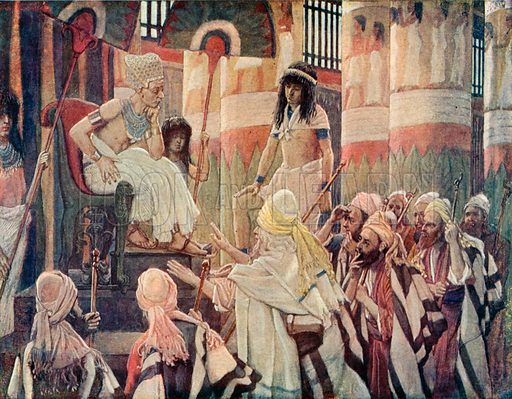
Joseph presents Jacob, his Father, to Pharaoh, Gen xlvii 7 and 8
Joseph presents Jacob and his brothers to Pharaoh by French artist James Jacques Joseph Tissot (1836-1902)

And God spoke to Israel in a vision at night and said, “Jacob! Jacob!”

“Here I am,” he replied.

“I am God, the God of your father,” he said. “Do not be afraid to go down to Egypt, for I will make you into a great nation there. I will go down to Egypt with you, and I will surely bring you back again. And Joseph’s own hand will close your eyes.”

Then Jacob left Beersheba, and Israel’s sons took their father Jacob and their children and their wives in the carts that Pharaoh had sent to transport him. So, Jacob and all his offspring went to Egypt, taking with them their livestock and the possessions they had acquired in Canaan. Jacob brought with him to Egypt his sons and grandsons and his daughters and granddaughters—all his offspring.

These are the names of the sons of Israel (Jacob and his descendants) who went to Egypt:

Reuben the firstborn of Jacob.  The sons of Reuben: Hanok, Pallu, Hezron and Karmi.

The sons of Simeon: Jemuel, Jamin, Ohad, Jakin, Zohar and Shaul the son of a Canaanite woman.

The sons of Levi: Gershon, Kohath and Merari.

The sons of Judah: Er, Onan, Shelah, Perez and Zerah (but Er and Onan had died in the land of Canaan).

The sons of Perez: Hezron and Hamul.

The sons of Issachar: Tola, Puah, Jashub and Shimron.

The sons of Zebulun: Sered, Elon and Jahleel.

These were the sons Leah bore to Jacob in Paddan Aram, besides his daughter Dinah. These sons and daughters of his were thirty-three in all.

The sons of Gad: Zephon, Haggi, Shuni, Ezbon, Eri, Arodi and Areli.

The sons of Asher: Imnah, Ishvah, Ishvi and Beriah.  Their sister was Serah.  The sons of Beriah: Heber and Malkiel.

These were the children born to Jacob by Zilpah, whom Laban had given to his daughter Leah—sixteen in all.

The sons of Jacob’s wife Rachel:

Joseph and Benjamin. In Egypt, Manasseh and Ephraim were born to Joseph by Asenath daughter of Potiphera, priest of On.

The sons of Benjamin: Bela, Beker, Ashbel, Gera, Naaman, Ehi, Rosh, Muppim, Huppim and Ard.

These were the sons of Rachel who were born to Jacob—fourteen in all.

The son of Dan: Hushim.

The sons of Naphtali: Jahziel, Guni, Jezer and Shillem.

These were the sons born to Jacob by Bilhah, whom Laban had given to his daughter Rachel—seven in all.

All those who went to Egypt with Jacob—those who were his direct descendants, not counting his sons’ wives—numbered sixty-six persons. With the two sons who had been born to Joseph in Egypt, the members of Jacob’s family, which went to Egypt, were seventy in all.

Now Jacob sent Judah ahead of him to Joseph to get directions to Goshen. When they arrived in the region of Goshen, Joseph had his chariot made ready and went to Goshen to meet his father Israel. As soon as Joseph appeared before him, he threw his arms around his father and wept for a long time.

Israel said to Joseph, “Now I am ready to die, since I have seen for myself that you are still alive.”

Then Joseph said to his brothers and to his father’s household, “I will go up and speak to Pharaoh and will say to him, ‘My brothers and my father’s household, who were living in the land of Canaan, have come to me. The men are shepherds; they tend livestock, and they have brought along their flocks and herds and everything they own.’ When Pharaoh calls you in and asks, ‘What is your occupation?’ you should answer, ‘Your servants have tended livestock from our boyhood on, just as our fathers did.’ Then you will be allowed to settle in the region of Goshen, for all shepherds are detestable to the Egyptians.”

Joseph went and told Pharaoh, “My father and brothers, with their flocks and herds and everything they own, have come from the land of Canaan and are now in Goshen.” He chose five of his brothers and presented them before Pharaoh.

Pharaoh asked the brothers, “What is your occupation?”

“Your servants are shepherds,” they replied to Pharaoh, “just as our fathers were.” They also said to him, “We have come to live here for a while, because the famine is severe in Canaan and your servants’ flocks have no pasture. So now, please let your servants settle in Goshen.”

Pharaoh said to Joseph, “Your father and your brothers have come to you, and the land of Egypt is before you; settle your father and your brothers in the best part of the land. Let them live in Goshen. And if you know of any among them with special ability, put them in charge of my own livestock.”

Then Joseph brought his father Jacob in and presented him before Pharaoh. After Jacob blessed Pharaoh, Pharaoh asked him, “How old are you?”

And Jacob said to Pharaoh, “The years of my pilgrimage are a hundred and thirty. My years have been few and difficult, and they do not equal the years of the pilgrimage of my fathers.” Then Jacob blessed Pharaoh and went out from his presence.

So, Joseph settled his father and his brothers in Egypt and gave them property in the best part of the land, the district of Rameses, as Pharaoh directed. Joseph also provided his father and his brothers and all his father’s household with food, according to the number of their children. (NIV)

Jacob Blesses Pharaoh
Jacob Blesses Pharaoh by Welsh artist Owen Jones, 1869

God likes fulfilling his promises to us – even and especially when we are in Egypt – in the world. Sometimes we work too hard at avoiding the world and creating heaven on earth right now.  God knew what the Israelites would face: four-hundred years of slavery in Egypt. Yet, God sent them anyway. Often, the people of God grow more in times of trial and hardship, than in times of plenty and peace.

The trip to Egypt included everyone in Israel. There is a genealogical list of those who made the journey because God fulfills his promises through people.  These are the folks who would carry on accomplishing the will of God.  Joseph and Jacob, the son, and the father, are reunited. Joseph diplomatically planned where the gang would live and work because Egyptians looked down on shepherds. Much like the ancient Israelites, we must navigate a world that is okay with us being in it yet not okay with us in the middle of things.

In the Old Testament, Egypt represents the world.  It is interesting God sent his people to live there. God seeks to create a people for his Name who are distinct from Egypt, yet, live among the people of the world.  There is a continual tension for God’s people to be holy and unique, not assimilating into the world’s mold; and, yet, at the same time, God wants them to have a constant engagement and interaction with the world. Therefore, two extremes are to be avoided: to focus solely on being a holy people through complete severance from the world as much as possible; and, to seek relevance in the culture through wholesale jettison of distinctiveness so that the sacred and the secular are connected.

God safeguards a distinct people so that they will be a preservative in the world. Godly people are neither to live in a vacuum, cut off from the world altogether, nor to be wed to the world so that the two are indistinguishable.  We live in a fundamentally broken world in need of the peace and grace of spiritual people within it. The Church has had to struggle with how to live in the world for two-thousand years.  We have the advantage of drawing from a rich Christian history. For there is nothing we face now which has not been faced by the church before.

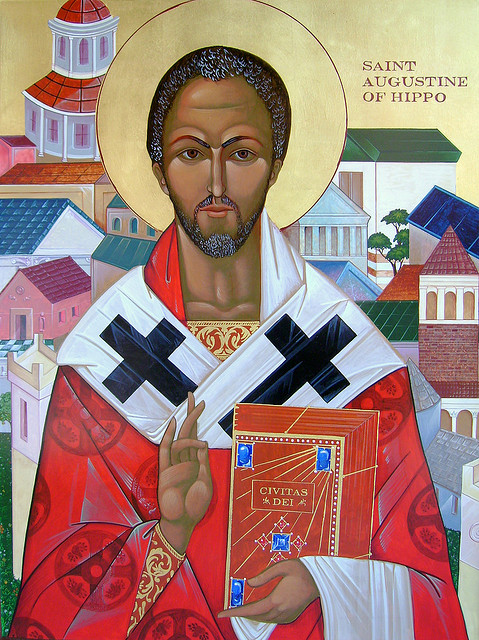
St Augustine

Saint Augustine wrote his seminal work, City of God, in about 413 C.E. The Roman empire had fallen, and pagans were blaming the Church because Christianity had become wed to the state. The people of God were unsure how to proceed.  So, Augustine sought to help Christians think about how to live in a post-Christian society.

Augustine’s work is lengthy and quite in-depth, so, the following is a brief distilling of his main arguments.  For Augustine, there are four essential institutions: two visible institutions; and, two invisible institutions:

  1. The Church – is a divinely established institution, designed to lead people to God.
  2. The State – is a political institution, adhering to political virtues to establish the peace.
  3. The City of Heaven – is made up of those predestined for salvation.
  4. The City of the World – is made up of those destined for eternal damnation.

We must pursue the City of Heaven, which for Augustine, is the pursuit of justice and righteousness. Augustine gave a clarion call for people to choose which city they will pursue, especially because many tended to blur the distinctions between the visible institutions of church and state.

Augustine’s conclusion is that the purpose of history is to show the unfolding of God’s plan. This involves fostering the City of Heaven and filling it with worthy citizens.  Therefore, the fall of Rome, a visible city so important to the people of Augustine’s day, was not near as important to the invisible God.

Maintaining an eternal perspective can help us today. The collapse of jobs, the scourge of a racialized society, the loss of life due to COVID-19, and injustice are significant events and circumstances – important enough to consider deeply how those issues will be handled. Augustine called out the people of his day for ignoring invisible spiritual solutions for the great problems among them.

Returning to the book of Genesis, a question arises: Will the Israelites become a nation through assimilation with Egypt and its institutions, or will they maintain their distinction as God’s people by relying on God’s covenant promises?  There are no easy answers to living in the world. However, it is important we struggle with how to get along in it.

God is the principal actor in the created world. God chooses to use his people as instruments of blessing to it.  Joseph’s wisdom and diplomacy, given by God, turned potentially catastrophic situations into times of prosperity. God, too, will use us as dispensers of wisdom – applying truth to concrete situations for the betterment of all involved.

Joseph handled the delicate situation of his brothers being shepherds while all shepherds were detestable to Egyptians.  Joseph brought the two worlds together through artful negotiation between the interests of both Pharaoh and the Israelites. He created a win/win scenario by setting up his brothers to help Pharaoh with his own needs in caring for livestock. In the end, all parties were satisfied because Joseph maintained a focus on needs instead of only advocating one side.

Rather than getting bogged down in promotion of methods and means, a sage approach is to maintain a focus on needs – which requires careful listening and a stance of empathy. Then, we can work toward prosperity for all instead of hardening into reified positions. A lot of problems in the church, work, society, and family can be turned to blessing if we seek the wisdom that comes from God.

May the Lord bless you and keep you; and, make his face shine on you and be gracious to you. May the Lord turn his face toward you and give you peace. Amen.

James 3:13-18 – Living Wisely

Geschftsmann muss sich bei einer Weg-Gabelung entscheiden

Who is wise and understanding among you? Let them show it by their good life, by deeds done in the humility that comes from wisdom. But if you harbor bitter envy and selfish ambition in your hearts, do not boast about it or deny the truth. Such “wisdom” does not come down from heaven but is earthly, unspiritual, demonic. For where you have envy and selfish ambition, there you find disorder and every evil practice. But the wisdom that comes from heaven is first pure; then peace-loving, considerate, submissive, full of mercy and good fruit, impartial and sincere. Peacemakers who sow in peace reap a harvest of righteousness. (NIV)

The great challenge of life for everyone is to respond to it rightly – to handle the people, situations, and responsibilities of life well.  We all need wisdom.  Wisdom is doing right and just things in the concrete actual situations of life.

Wisdom is much like driving a car.  There is a certain body of knowledge that you need to drive. Driving is much more than knowing the driving manual and passing the driving test.  The purpose of knowing the laws and how to drive a car is so that you can drive well on actual roads under all kinds of traffic and weather situations.  Driving wisely means you keep your eyes on the road and are mindful of all that is going on around you and even within you.  You do not fret about why there is a curve in the road or a stop sign in a certain location.  You do not try and figure out the mechanics of a stoplight, or the philosophy behind the engineering layout of the road system.  You just try to do what needs to be done on the road to get where you need to go by responding to the conditions as they come.  In Midwest America where I live, if you drive a car, you will face snow and ice conditions; you will have to respond to a deer in the road; you will have to deal with other drivers and practice wise defensive driving skills.  And you must come to grips with your own road rage when getting from point A to point B when it does not go as you think it should.

Wisdom in the Christian life includes and is more than knowledge. The Bible is not a three-ring binder that covers every single life situation that you can simply look up and follow the three steps.  Rather, Holy Scripture has a body of knowledge contained in differing kinds of literary genres to give us wise guidance for all of life.  Like driving a car, Christian wisdom involves being attentive and mindful of the people and circumstances around us as we move through life by responding with gracious practical knowledge to everything and everyone.  So, then, wisdom is the practical application of biblical truth to all of life.

Wise people possess two distinguishing marks: a good life, and a humble life. 

A wise person is the same inside and out, with integrity between the inner attitude and outward behavior.  The motive for being good springs from a disposition of meekness and gentleness.

The distinguishing mark of the unwise person is hidden agendas. 

The unwise are continually doing something, which on the surface seems altruistic and good, yet something else is driving them: bitter envy and selfish ambition. If we want to live the good life, it begins with identifying the envy that will sometimes arise within us and the selfish ambition that goes with it – then choose a path of true wisdom by embracing the good gifts and abilities of others and delight in them.  At the same time, we focus on our own gifts and abilities and are at peace with them, able to express them.  There is real beauty when this happens.

False wisdom (selfish pride) is earthly, unspiritual, and evil.  It relies on tactics of manipulation, power politics, parking lot conversations, and passive-aggressive behavior. Having good intentions but utilizing bad methods to get it is false wisdom.  Having an evil intention but cloaking it in good words is demonic. Our words and our behavior both need to be good.

The unwise person has a pathological progression occurring within them:

  1. Envy over not having something someone else has or losing something that was once possessed.
  2. Devious plans for dealing with it.
  3. Using pious language to cloak that plan in religious garb.
  4. Strife, division, and disharmony to get what they want.
  5. Unhealthy practices and habits of life which damage others.

The wise person, in contrast to the unwise, possesses seven characteristics which enables them to live well and enjoy a good life:

  1. Pure. There are no mixed motives with purity – no hidden agendas, no secret desires that are self-serving. It is a purification through repentance of the old unwise person and embrace of the new through the cross of Jesus.

“Create in me a pure heart, O God, and renew a steadfast spirit within me” (Psalm 51:10).  “Blessed are the pure in heart, for they shall see God” (Matthew 5:8).

  1. Peace-loving is more than the absence of conflict. Peace is to embrace harmony, to work well together, and to enjoy full relational experiences. Wise and godly people are healers, active in bringing unity and integration.

“Blessed are the peace-makers for they will be called children of God” (Matthew 5:9).  “Whoever of you loves life and desires to see many good days, keep your tongue from evil and your lips from speaking lies.  Turn from evil and do good; seek peace and pursue it” (Psalm 34:13-14).

  1. Considerate of others is to be flexible, open to reason, level-headed in anxious situations, gentle, non-combative, non-retaliatory, and generally understanding. It is the wisdom to make allowances for the weaknesses and shortcomings of others and takes the kindest possible perspective.

“Remind the people… to be ready to do whatever is good, to slander no one, to be peaceable and considerate, and always to be gentle toward everyone” (Titus 3:1-2).

  1. Submissive attitudes and actions are a choice. If a person is coerced into submission, that is slavery, not submission. To submit means to willingly place oneself under someone else’s authority. The submissive person is teachable and humbly receives correcting wisdom.

“Submit to one another out of reverence for Christ” (Ephesians 5:21).

  1. Merciful. Mercy is compassion in action. It is to empathize with the needs of others, and then do something about it.  There is always good fruit that results from mercy.

“Blessed are the merciful, for they will be shown mercy” (Matthew 5:7).

  1. Impartial people are without favoritism. It is to be the same person toward everyone. They are steady, consistent, and not swayed by the crowd; and, do not act one way with a certain group of people, and then act different with another group. Impartial people have a passion for justice and despise injustice, believing that all people’s needs must be met with equity.

“Do not pervert justice; do not show partiality to the poor or favoritism to the great but judge your neighbor fairly” (Leviticus 19:15). 

  1. Sincere hearts are without hypocrisy. The sincere person is the same both inside and out, having no ulterior motives and no skeletons in the closet.

“Now that you have purified yourselves by obeying the truth so that you have sincere love for you brothers, love one another deeply, from the heart” (1 Peter 5:22).

The telltale signs of false wisdom are envy and selfishness – resulting in disorder and all kinds of unhealthy practices.  Conversely, the signs of true heavenly wisdom are good deeds done from a devoted heart to God and a humble attitude – resulting in righteousness and peace. This, my friends, is the good life.

Heavenly Father take me to the place where I am saved from my pride and arrogance and where Christ’s humility is center stage, where I am lifting clean hands and a pure heart to you. Take me to the place where I am no longer looking at obstacles but looking down upon them, where I can see clearly, and my decisions are flooded with your divine light, truth, and justice. I bend my knee and receive your truth. I open my ears to receive your counsel. I open my heart to receive your godly wisdom through Jesus Christ in the power of the Holy Spirit. Amen.

Job 38:12-21 – So You Think You Know?

storm

“Have you commanded the morning since your days began, 
    and caused the dawn to know its place, 
so that it might take hold of the skirts of the earth, 
    and the wicked be shaken out of it? 
It is changed like clay under the seal, 
    and it is dyed like a garment. 
Light is withheld from the wicked, 
    and their uplifted arm is broken. 

“Have you entered into the springs of the sea, 
    or walked in the recesses of the deep? 
Have the gates of death been revealed to you, 
    or have you seen the gates of deep darkness? 
Have you comprehended the expanse of the earth? 
    Declare, if you know all this. 

“Where is the way to the dwelling of light, 
    and where is the place of darkness, 
that you may take it to its territory 
    and that you may discern the paths to its home? 
Surely you know, for you were born then, 
    and the number of your days is great! (NRSV) 

The older I get, and the more understanding I gain, the more I realize how little knowledge I truly possess. When I was eighteen years old, I thought I had the world pretty much figured out. Since then, it has all been downhill. With each passing year, my ignorance seems to grow exponentially. I suppose this all really makes some sense when talking about God’s upside-down kingdom. So much more of life is a mystery to us than we realize. 

The more discernment I get, the less, I discover, I know. 

Seems like the biblical character of Job found this out the hard way. If there is any person in Holy Scripture that would be wise and understanding, its him. God speaks highly of Job in the Bible. Regarding the upcoming destruction of Jerusalem, God said, even if these three men—Noah, Daniel and Job—were in it, they could save only themselves by their righteousness, declares the Sovereign Lord” (Ezekiel 14:14). Job is held up as the model of patience under suffering: “As you know, we count as blessed those who have persevered. You have heard of Job’s perseverance and have seen what the Lord finally brought about. The Lord is full of compassion and mercy” (James 5:11).  

Yet, with all of Job’s integrity, patience, and righteousness his understanding can barely get a movement on the Richter Scale of God’s expansive knowledge. We likely are somewhat familiar with the story of Job. Being a conscientious follower of God, Job is careful to live uprightly. He acknowledges God in all things and worships him alone. Yet, suffering befell him – for no other reason than that God allowed it. Job knew fully well that there was no personal sin behind his awful ordeal of grief and grinding pain. 

So, Job contended with God. For an agonizing thirty-five chapters (Job 3:1-37:24) Job questions God and respectfully takes him to task – as Job’s supposed friends questioned him and assume his guilt. Through it all God is there silent… saying nothing. Then, just when we think God is paying no attention, he suddenly speaks. What is so remarkable about God’s speech is that for the next four chapters (Job 38:1-41:34) he gives no answers. It is all questions. God said,

“Brace yourself like a man; I will question you and you shall answer me” (Job 38:3). 

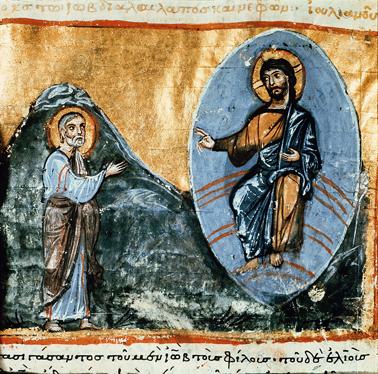
God Questions Job
God questions Job. From a 12th century Byzantine text.

It becomes abundantly clear after just a few questions that it would be impossible for any human being to even come close to having the understanding to answer anything God asks. And that was the whole point. God is God, and we are not. Our questions, however legitimate, real, and raw they are, come from a very puny perspective. In other words, we just don’t know as much as we think we do. 

To Job’s great credit, he keeps his mouth shut and listens. At the end of the questioning, Job responds in the only wise way one could after such an encounter:

“Surely I spoke of things I did not understand, things too wonderful for me to know” (Job 42:3). 

None of this means that, for us, we need to face our hardships and our sufferings with a stoic keep-a-stiff-upper-lip approach. Trapped grief will inevitably come out sideways and only cause more hurt. I believe God allowed Job to express his terrible physical, emotional, and spiritual pain for chapter after chapter because he needed to. Only when God sensed it was the proper timing did he jump in and bring the perspective Job then needed. And even after being challenged by God about his vantage point, Job still did not receive answers as to why he had to endure the awfulness of loss beyond what most of us could comprehend. 

Maybe we lack being able to understand even if God directly answered all our questions. Most likely, God protects us from knowing things that might bring irreparable damage to our human psyches. Again, this is all pure conjecture. Which leaves us with perhaps one of our greatest challenges as human beings: We must eventually come to the place of being comfortable with mystery – and even embracing it.

We simply will not have all things revealed to us that we want to know. And that’s okay.  

There is yet one more comment to observe about God’s questioning of Job. God is sarcastic. Sarcasm often gets a bad rap, much like anger does, because it is so often associated with unacknowledged emotions and/or expressing our feelings in an unhelpful way. Yet, there the sarcasm is, with the God of the universe. I must admit, I take some odd comfort in knowing that God can be snarky at times – in a good way. Anytime we try to pin God down to nice neat understandable categories, he typically colors outside our human contrived lines and demonstrates to us that he cannot be contained in our ramshackle box. I like it that God is playful, wild, and free to be himself – even if there are times it may bug me. 

God is unbound by any human knowledge, understanding, ideas, or plans. God will do what God will do. God will be who he will be. “I AM who I AM,” he once said. Now that’s a God I can put my trust in. 

O Lamb of God that takes away the sins of the world, have mercy upon me. 

O Lamb of God that takes away the sins of the world, have mercy upon me. 

O Lamb of God that takes away the sins of the world, grant me your peace. Amen.