1 Kings 3:5-14 – A Prayer for Discernment

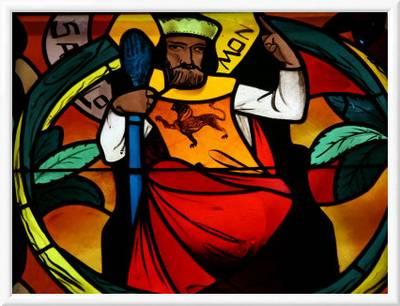
Stained glass window of King Solomon in Saint-Joseph Des Fins Church, France

The Lord appeared to Solomon at Gibeon in a dream at night. God said, “Ask whatever you wish, and I’ll give it to you.”

Solomon responded, “You showed so much kindness to your servant my father David when he walked before you in truth, righteousness, and with a heart true to you. You’ve kept this great loyalty and kindness for him and have now given him a son to sit on his throne. And now, Lord my God, you have made me, your servant, king in my father David’s place. But I’m young and inexperienced. I know next to nothing. But I’m here, your servant, in the middle of the people you have chosen, a large population that can’t be numbered or counted due to its vast size. Please give your servant a discerning mind in order to govern your people and to distinguish good from evil, because no one is able to govern this important people of yours without your help.”

It pleased the Lord that Solomon had made this request. God said to him, “Because you have asked for this instead of requesting long life, wealth, or victory over your enemies—asking for discernment so as to acquire good judgment— I will now do just what you said. Look, I hereby give you a wise and understanding mind. There has been no one like you before now, nor will there be anyone like you afterward. I now also give you what you didn’t ask for: wealth and fame. There won’t be a king like you as long as you live. And if you walk in my ways and obey my laws and commands, just as your father David did, then I will give you a very long life.” (Common English Bible)

You will recognize today’s Old Testament lesson as being the same as yesterday – just in a different book of the Bible. The books of 1 and 2 Chronicles are a restatement and edited version of 1 and 2 Kings. That’s because each was written in a different time for a particular context. Kings was compiled at the time of the Jewish exile when the Babylonians captured Jerusalem. Chronicles was put together for the exiles returning to Jerusalem.

Both accounts were meant to be lessons in how to live rightly as God’s people. For the people going into exile, the Kings narrative was to serve as a remembrance of how far the people had strayed from their roots in basic life wisdom.

“It is said that wisdom lies not in seeing things, but seeing through things.”

Manly P. Hall

Solomon was a very wise king. And today’s lesson makes it clear why. At the outset of his reign, Solomon could have asked for anything from God. A typical request might be for power in subduing enemies, popularity for appealing to the masses, or perks for maintaining political stability. 

Instead, Solomon asked for understanding and wisdom to govern God’s people so that he could discern between good and evil. It was the kind of asking which the Lord was pleased to hear and to give. All these millennia later, Solomon still has the reputation of being the wisest king that ever lived.

Solomon’s prayer resonates with me. As a church pastor, rather than focusing prayers on a bigger budget, more people reached, or adding programs, I can make the choice to pray for wisdom so that I will have my ministerial ladder on the right wall. 

As a hospital chaplain, instead of praying for greater visibility of the spiritual in healthcare, increased impact within the system, or more healing of patients, I can pray for understanding so that I will be able to make sound ethical, practical, and ministerial decisions in each context and case I encounter.

Solomon’s request was borne of a clear realization of who God is (the One who shows steadfast love) and who he himself is (like a little child with a big responsibility). God’s greatness and Solomon’s humility collided in a wonderful prayer for discernment to carry out God’s will on earth and to bless God’s people.

In this time of year, in which it is vogue to make New Year’s resolutions based upon the individual’s willpower, let’s take a different approach. Let’s pray and invite God to do the kind of deep change needed in our lives so that we can accomplish the will of God on this earth for this time. 

May we pray for discernment to serve well, ask for wisdom to be good stewards of our callings, and seek understanding from the God who delights in answering altruistic requests from humble people.

May you walk in the way of wisdom so that you will make good decisions and act in all good understanding.

Lord God, give me a mind and heart of wisdom so that I might rightly discern good and evil, right and wrong, and the best decisions to made in every situation. I choose to seek your ways and follow the narrow way of Jesus Christ through the enablement of your Holy Spirit. Amen.

2 Chronicles 1:7-13 – Ask for Wisdom

“Dream of Solomon” by Luca Giordano, 1693

God appeared to Solomon that night in a dream and said, “Solomon, ask for anything you want, and I will give it to you.”

Solomon answered:

Lord God, you were always loyal to my father David, and now you have made me king of Israel. I am supposed to rule these people, but there are as many of them as there are specks of dust on the ground. So, keep the promise you made to my father and make me wise. Give me the knowledge I’ll need to be the king of this great nation of yours.

God replied:

Solomon, you could have asked me to make you rich or famous or to let you live a long time. Or you could have asked for your enemies to be destroyed. Instead, you asked for wisdom and knowledge to rule my people. So, I will make you wise and intelligent. But I will also make you richer and more famous than any king before or after you.

Solomon then left Gibeon and returned to Jerusalem, the capital city of Israel. (Contemporary English Version)

Maybe it’s just me but I don’t often hear the word “wisdom” used in normal conversation.

I certainly don’t hear wisdom mentioned in talking about politicians, corporate executives, or even church leaders. “Oh, the Congressman is so wise!” “Isn’t that CEO a wonderfully sage person?” “My Pastor is full of wisdom!” You might even be laughing at this point because those kinds of statements just aren’t part of our daily interactions with others. 

We are more likely to say that somebody is full of something else other than wisdom. Yet, all the aforementioned statements could be said about King Solomon. The guy was wise, in fact, the wisest person that ever lived.

“Wise men talk because they have something to say; Fools , because they have to say something.”

Plato (424-348 B.C.E.)

Wisdom is the ability to put truth into practice. It is to see everything and everyone from God’s perspective. Wisdom is to have a solid base of knowledge, along with the skill set to use it for godly and constructive purposes. 

Solomon had a load of it. The really important thing to note from today’s Old Testament lesson is how Solomon obtained such wisdom. It came from God. Solomon asked for it, and he got it.

Anyone who needs wisdom should ask God, whose very nature is to give to everyone without a second thought, without keeping score. Wisdom will certainly be given to those who ask. (James 1:5, CEB)

Maybe the reason why so many people today are not characterized as wise is because they rely on their own ingenuity and hard work. Asking for wisdom may not even on their mind. Their radical independence prevents them from obtaining the wisdom needed.

In a world of dire straits, where significant problems often overshadow effective solutions, wisdom is needed more than ever. So, like Solomon of old, ask for wisdom and knowledge from God. 

We all are in some position of governing or overseeing others, whether it is being a parent, a faith community leader, or in charge of something at work. Everyone needs wisdom. 

Just ask. Be free to seek. Go ahead and knock on the door. Jesus said:

“Keep on asking, and you will receive what you ask for. Keep on seeking, and you will find. Keep on knocking, and the door will be opened to you. For everyone who asks, receives. Everyone who seeks, finds. And to everyone who knocks, the door will be opened.” (Matthew 7:7-8, NLT)

For all people everywhere, and in every circumstance, ask God for the ability to know the truth and put it into practice. Wisdom isn’t optional; it’s absolutely necessary to living a good life.

Get wisdom, get understanding;
    do not forget my words or turn away from them.
Do not forsake wisdom, and she will protect you;
    love her, and she will watch over you.
The beginning of wisdom is this: Get wisdom.
    Though it cost all you have, get understanding. (Proverbs 4:5-7, NIV)

Wise God, you know all things and how everything works. Give me wisdom and knowledge so that your purposes and plans might be accomplished in and through me for every situation to the glory of Jesus Christ in the power of your Holy Spirit. Amen.

Luke 7:31-35 – Dealing with the Dull and Foolish

Jesus went on to say, “To what, then, can I compare the people of this generation? What are they like? They are like children sitting in the marketplace and calling out to each other:

“‘We played the pipe for you,
    and you did not dance;
we sang a dirge,
    and you did not cry.’

For John the Baptist came neither eating bread nor drinking wine, and you say, ‘He has a demon.’ The Son of Man came eating and drinking, and you say, ‘Here is a glutton and a drunkard, a friend of tax collectors and sinners.’ But wisdom is proved right by all her children.” (New International Version)

I am sure all of us, at some point in our lives, have been in a no-win type of situation. Even Jesus experienced it. 

John the Baptist came as an ascetic, eating no bread and being a teetotaler. Some people thought he had a demon. Then, when Jesus came on the scene doing just the opposite – eating, drinking, and having a grand old time – the people accused him of being a drunkard and a glutton. 

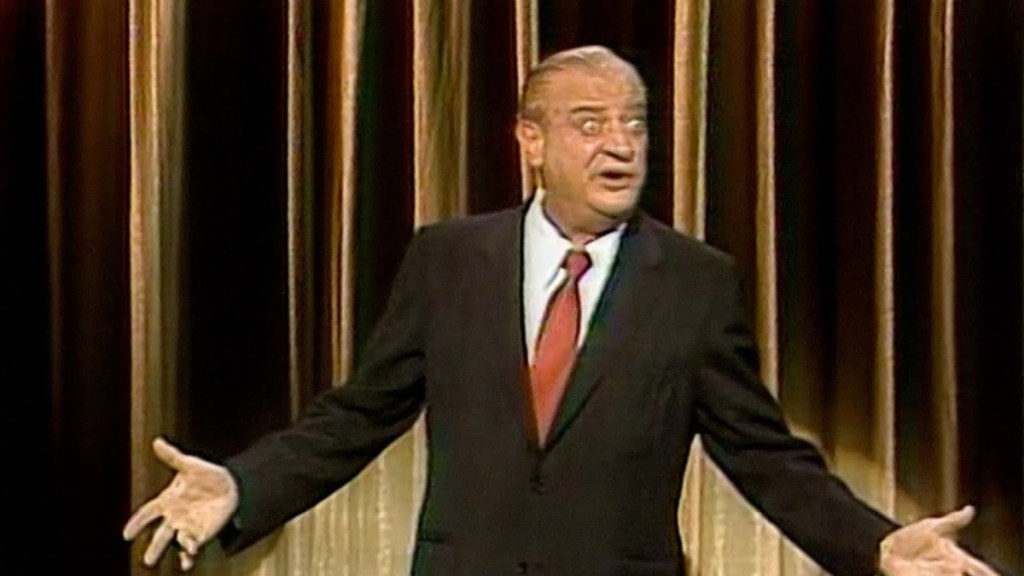
Jesus was like the Rodney Dangerfield of the ancient world – he never got any respect from the religious authorities.

I’m actually a bit relieved that Jesus went through that kind of scenario. Sometimes, it just seems that, with some people, they’ll grump and complain at us, no matter what we do or say. Wise King Solomon was familiar with such people; he called them fools: 

Do not answer a fool according to his folly,
    or you yourself will be just like him.
Answer a fool according to his folly,
    or he will be wise in his own eyes. (Proverbs 26:4-5, NIV) 

So, which is it? How do I handle a fool? The answer is: you don’t. A fool is going to be a fool no matter what you do or say. Handling them is a no-win situation.

It seems to me the way Jesus responded to the foolish around him was to express something of a lament. The saying he quoted has to do with weddings and funerals. Jesus was lamenting that the crowd standing right in front of him, seeing him and seeing his works, are like people who don’t dance at weddings, and don’t cry at funerals. 

In other words, they are plain dull and stupid. They have Jesus right in front of their faces, and they don’t see him because they are expecting someone else. The people just cannot get over the fact that Jesus hangs out with people other than them.

Jesus was likening the religious authorities to a bunch of bratty little kids. They sit and do nothing but heckle and bully others walking by, while they idly wait for their idea of Messiah to come waltzing along.

Messiah did come along. And they foolishly and dully missed it, and treated Jesus like any other Joe Schmo.

So, what do we do with such irritating and obnoxious people, like those who were never happy with Jesus? 

Well, frankly, Jesus just went about his mission – despite what the foolish generation was saying about him. 

And we must do the same. Some folks are going to backbite, gossip, slander, misunderstand and misrepresent you – and there’s not a dang thing you can do about it. We are not to take our cues from fools. We are to find our security and our solace in Jesus. We are to focus on living and loving, just like him.

And, as for the self-appointed critics and judges among us, let them blow their empty words out their blowholes into the air. The wise don’t have time to engage such blowhards. Leave them to God.

Wise Jesus, you handled people as well as anyone could, yet they still criticized you. Help me to live a sage life, and speak with circumspection, so that when irrational people talk their sinful jabbering, it isn’t because of my foolishness, but because of my love. Amen.

James 4:8-17 – Make Wise Spiritual Resolutions

Come near to God and he will come near to you. Wash your hands, you sinners, and purify your hearts, you double-minded. Grieve, mourn and wail. Change your laughter to mourning and your joy to gloom. Humble yourselves before the Lord, and he will lift you up.

Brothers and sisters do not slander one another. Anyone who speaks against a brother or sister or judges them speaks against the law and judges it. When you judge the law, you are not keeping it, but sitting in judgment on it. There is only one Lawgiver and Judge, the one who is able to save and destroy. But you—who are you to judge your neighbor?

Now listen, you who say, “Today or tomorrow we will go to this or that city, spend a year there, carry on business and make money.” Why, you do not even know what will happen tomorrow. What is your life? You are a mist that appears for a little while and then vanishes. Instead, you ought to say, “If it is the Lord’s will, we will live and do this or that.” As it is, you boast in your arrogant schemes. All such boasting is evil. If anyone, then, knows the good they ought to do and doesn’t do it, it is sin for them. (New International Version)

Resolve to Come Near to God

God is longingly looking out the window watching and waiting for us to come home (Luke 15:11-32). And when we are seen, God will run and come near to us.

We can come to God morning, noon, and night; when things are good and when they are bad. God gives generously to all without finding fault if we will but come near. (James 1:5)

When my oldest daughter was a small child, her bike was stolen. When she discovered it was gone, we sat down together in the backyard and came to God and prayed. I barely finished praying, we both looked up, and a police cruiser pulled up in the alley behind our house. The officer rolled down his window and said, “Hey, are you missing a bike?” 

We hopped in the back of the cruiser and the officer took us to a place where someone had ditched the bike. It was a tremendous lesson to both my daughter and I that when we come to God, God comes to us. I realize life doesn’t always work that way, yet we can be assured God listens, hears, and will respond.

Resolve to Wash Your Hands

We cannot approach God with blood on our hands. We need to come squarely facing our guilt and shame. God wants us to admit our guilt, confess it as such, receive forgiveness, and deal with matters of restitution, reconciliation, or making amends.

Look at what this very experience of godly sadness has produced in you: such enthusiasm, what a desire to clear yourselves of blame, such indignation, what fear, what purpose, such concern, what justice! (2 Corinthians 7:11, CEB)

Resolve to Purify Your Heart

Whereas the previous resolution was more external, this one addresses the inner person, the heart. Not only do our actions need to be cleaned up through washing our hands (repentance) our attitudes need cleansing, as well. 

Our hearts cannot be devoted to two masters. Double-minded persons need to become single-minded with pure, not mixed, motives.

“The man who tries to walk two roads will split his pants.”

African Proverb

Resolve to Grieve

God blesses those people who grieve. They will find comfort! (Matthew 5:4, CEV)

Any significant change or loss creates grief. And it is necessary to grieve. Grief is not an event but a process. Everyone’s grief is intensely personal and has its own timetable. It is not crazy, selfish, or unspiritual to grieve.  In fact, it is biblical.

The only way to get on the other side of grief is by telling your story. Sharing with each other, giving testimony to God’s grace, and expressing emotion is important. There cannot be healing apart from grief and lament.

Resolve to Mourn

Mourning is the emotional response to how terrible our fallen world is and can be, and how much we really need God.  It is to see that sin in all of its foulness and degradation is horrible and destroys everything it touches.

People who do not or cannot mourn are hard-hearted. They need deep spiritual transformation. By his wounds we are healed.

Resolve to Wail

We are actually commanded to cry – more than cry – to wail.  Whereas mourning might be more private and personal, wailing is more public.

I believe one of the greatest tragedies in today’s modern church is that Christians can become so focused on victory that they end up crying alone. Nobody should ever have to cry by themselves. Weep with those who weep. If there ever was an appropriate place for crying, it should be amongst likeminded brothers and sisters.

Resolve to Change

In the face of immense human need in this world, there must be change. We cannot turn the clock back to a more bygone idyllic era. We are here, now, together on spaceship Earth. We must come to grips with the kind of change needed to live above petty human degradation.

I once had a discussion with a young woman about heaven and hell. When we first started conversing, she expressed the desire to be in the place that had the better party going on. By the time we finished talking, she was grieving, mourning, and crying. I never knew what became of her – I even forget her name now. But once she got just a glimpse of sin’s gravity, it completely undid her.

Resolve to Be Humble

Humility is the path to intimacy with God and one another. The paradox is that through grieving, mourning, and wailing we become joyful and experience God. Through suffering there is glory. Being last makes us first.  Entering through the narrow gate brings us into the broad open space of eternal life.

Resolve to Not Slander One Another

To slander means to “speak against” or “speak down” to someone. Slander always contains false information based on bogus observations and misinterpretations. To intentionally tear-down another person either to their face or to other people is slander.

People sometimes believe they have a right to speak against another person. That really says more about the slanderer than the slandered. Slander is a spirit of retaliation and revenge. It is being self-righteous and acting as the judge.

Resolve to Not Be Judgmental

A critical and condemning spirit breaks the biblical law of love and declares itself the authority. It wrongheadedly believes it knows best for everyone.

When we put our focus on others and do not deal with our own critical spirit, we play God. That is not our job. 

Never pay back evil with more evil. Do things in such a way that everyone can see you are honorable. Do all that you can to live in peace with everyone. Dear friends, never take revenge. Leave that to the righteous anger of God. For the Scriptures say,

“I will take revenge;
    I will pay them back,”
    says the Lord.

Instead,

“If your enemies are hungry, feed them.
    If they are thirsty, give them something to drink.
In doing this, you will heap
    burning coals of shame on their heads.”

Don’t let evil conquer you but conquer evil by doing good (Romans 12:17-21, NLT)

Resolve to Have God in Your Plans

Some folks plan and map out their lives without a consideration of what God wants. They hold back on God, only giving partial effort and resources. And this can happen to any of us. We may not all have money and power, but we all have time, and how we use our time says a lot about our faith.

Jesus said we cannot serve both God and money (Matthew 6:24). In God’s economy, money is a tool to be used to meet needs and bless others. However, many persons tend to make audacious plans with money by accumulating debt and presuming they can pay it off; encouraging their kids to get high paying jobs as their highest objective; and, relying on the market economy to provide for them in the end. 

Money and making plans are good. Yet, the almighty dollar is not to be the motivating factor in our lives, and God needs to be squarely in the middle of all that we do.

So, resolve to embrace the virtue of humility – considering both others and God in making plans and decisions. For if we fail to do what we know we ought, our guilt will eventually catch up to us. Better to rely on God’s grace and make necessary changes.

Holy One, you are eternal, ever-present, and boundless in love. Yet there are times when we fail to recognize you in our daily lives. Sometimes shame clenches our hearts, and we hide our true feelings. Sometimes fear makes us small, and we miss the chance to speak from our strength. Sometimes doubt invades our hopefulness, and we degrade our own wisdom. In the daily round from sunrise to sunset, remind us again of your holy presence hovering near us and in us. Free us from shame and self-doubt. Help us to see you in the moment-by-moment possibilities to live honestly and to act courageously, through Jesus Christ our Lord. Amen.