

This is what the Lord says:
“For three sins of Judah,
even for four, I will not relent.
Because they have rejected the law of the Lord
and have not kept his decrees,
because they have been led astray by false gods,
the gods their ancestors followed,
I will send fire on Judah
that will consume the fortresses of Jerusalem.”
This is what the Lord says:
“For three sins of Israel,
even for four, I will not relent.
They sell the innocent for silver,
and the needy for a pair of sandals.
They trample on the heads of the poor
as on the dust of the ground
and deny justice to the oppressed.
Father and son use the same girl
and so profane my holy name.
They lie down beside every altar
on garments taken in pledge.
In the house of their god
they drink wine taken as fines.
“Yet I destroyed the Amorites before them,
though they were tall as the cedars
and strong as the oaks.
I destroyed their fruit above
and their roots below.
I brought you up out of Egypt
and led you forty years in the wilderness
to give you the land of the Amorites.
“I also raised up prophets from among your children
and Nazirites from among your youths.
Is this not true, people of Israel?”
declares the Lord. (New International Version)
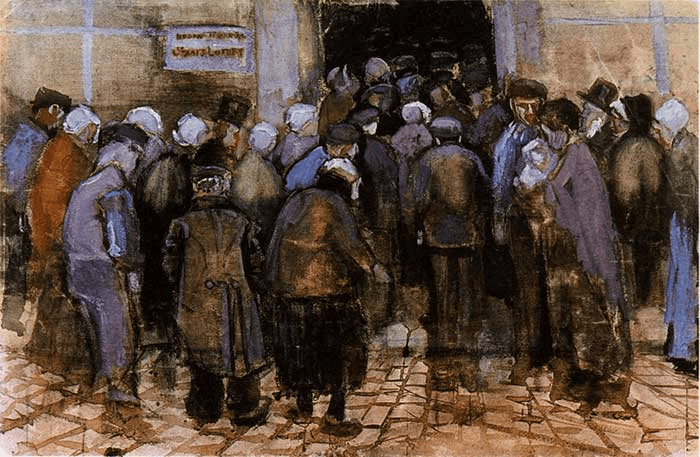
It’s not a sin to be poor. It is a sin to oppress, take advantage of, or exploit the poor.
Social justice isn’t something fabricated in the minds of progressive Christians. Social justice is biblical and at the heart of all sixteen prophetic books of Holy Scripture’s Old Testament.
The reason the prophets address poverty so often is that God hates injustice. God is not okay with an entire group of disadvantaged people having needed resources beyond arm’s reach – and the Lord’s ire is especially roused whenever the wealthy and powerful extort what little the poor have to begin with.
Even if there are some who tend to believe the poor are poor because of laziness or an unwillingness to work hard, you will not find that idea amongst the biblical prophets. You will, in fact, find just the opposite: fat cats who lie around with their privileged lives, not lifting a finger to help the underprivileged.
The Church does have a role in combating systemic oppression of the poor and needy, and the prophet Amos wants those who claim the name of the Lord to know it.
Amos not only harangued the nations who surrounded Israel and Judah of their sinful stances toward the poor, he leveled the very same message at God’s people who did the same things. Although the Israelites enjoyed a special status with God, that did not mean the Lord had a different set of values or expectations for them when it came to basic human justice.
Mistreating one another is a universal sin and all nations everywhere will be held accountable by God for how they treat the least persons among them. There is such a thing as universal human rights – and the godly person will care about this, at the least, because God cares.
Amos almost exclusively hones-in on the economic sins of the wealthy: taking away needed clothing from those who default on loans; assessing unnecessary and exorbitant fines; taking levies of grain; and living a lavish lifestyle on the backs of the less fortunate.
It was these continually repeated sins against one another which eventually led to both Israel and Judah being conquered by pagan nations and carried into exile.
Today, you will still easily find people being used by others, as if they were mere inhuman machines, here on this earth to make money for those who already have plenty of it. They’d sell their own grandmother if they could get a good price on her. Extortion and oppression are like eating and drinking to them.
Yet, such persons, groups, even entire governments are only stockpiling judgment upon themselves for the God whom they must eventually give an account in how they lived their lives on this earth.
Instead, intentionally paying attention to the poor and treating them with equity will involve the following:
- Donating to charitable causes, such as church denominational relief funds, and respected international organizations who can make your contributions count.
- Agitating politicians for better policies toward the poor. Writing letters, sending emails, and making phone calls are simple ways of letting your voice be heard in a democratic society.
- Learning about worldwide and local poverty. It’s hard not to be involved whenever there is pertinent information. Putting names and faces to struggling people is a must, as well as understanding some of the dynamics that go into poverty.
- Raising awareness of significant issues related to poverty and how it impacts the poor. Find others who care about this and share insights and understanding about how to educate others.
- Volunteering at a local organization who works with the poor.
There are many more ways to make a difference. As biblically informed people, care of the poor and being concerned for issues of poverty is a must, because the Lord is a Just God with a heart of justice for the disadvantaged, underprivileged, and needy among us.
Now if there are some poor persons among you, say one of your fellow Israelites in one of your cities in the land that the Lord your God is giving you, don’t be hard-hearted or tightfisted toward your poor fellow Israelites. To the contrary! Open your hand wide to them. You must generously lend them whatever they need. (Deuteronomy 15:7-8, CEB)
Just and merciful God, you give honor to the least, the forgotten, the overlooked, and the misjudged.
You give first place to the last, the left behind, the misunderstood, and the undervalued.
You give a warm welcome to the lost, the orphaned, the abandoned, and the destitute.
Help us, your people, to be your ears in listening to their cries.
Help us to be your voice speaking words of encouragement, affirmation, and acceptance.
Help us to be your feet walking beside those in need; and your hands to clothe, feed and shelter them.
You came for the least, the lost and last of this world. Lord, in your mercy, hear our prayer. Amen.


 Rev. Tim Ehrhardt