
On Knowing Christ

Pietà by Elisabeth Frink

The ancient Philippian church had lost sight of their purpose, of what is the primary reason for their being in existence. Simply put, they needed to unify around what is the central and most valuable core of Christianity: knowing Jesus Christ. For the Apostle Paul, in his letter to the Church at Philippi, Jesus was so valuable that he literally gave up everything to become a Christian and follow Jesus. (Philippians 3:4-14)

It was no little thing that Paul did, converting in such a completely life-altering way to Christ. Paul had everything going for him. He was the up and coming star in Judaism. Paul had the Jewish pedigree, the intelligence, the personality, and the drive to become one of the greatest Pharisees of all time. And yet he forsook it all to pursue and know Christ. 

It might be hard for us to imagine just how significant Paul’s turn around was. On a much smaller scale, it would be like Green Bay Packer quarterback, Aaron Rodgers, at the height of his career, leaving football altogether to become a missionary to some remote place few people have ever heard of. Most might likely think he lost his marbles and was throwing away (pun intended) something valuable and important. So, it was with Paul.  Everyone thought he was nuts for becoming a Christian.

However, this would be to misunderstand what is really of greatest value. There are plenty of people in our society telling us what we need. With all the noisy rhetoric, from political pundits to commercial marketers, the person and work of Jesus can easily get lost in an ocean of competing voices. On a practical level, it can be far too easy to simply toss Christian discipleship on the smorgasbord of good ideas we get handed each day. Jesus might get misplaced and forgotten on our plate of life because of the mass of other food that is piled alongside him.

World Communion Sunday (always the first Sunday in October each year) reminds Christians that Jesus is our surpassing greatness, the highest and most worthy asset we possess. When we come to the Lord’s Table, there is nothing else to feast upon except Jesus, and Jesus alone. In the act of receiving the common elements of bread and cup, we proclaim that we need no one else and no other thing to make us happy in this life. Jesus is enough for us. What is more, we stand united with our brothers and sisters in Christ throughout the world in a common purpose and value of knowing Jesus Christ, and him crucified.
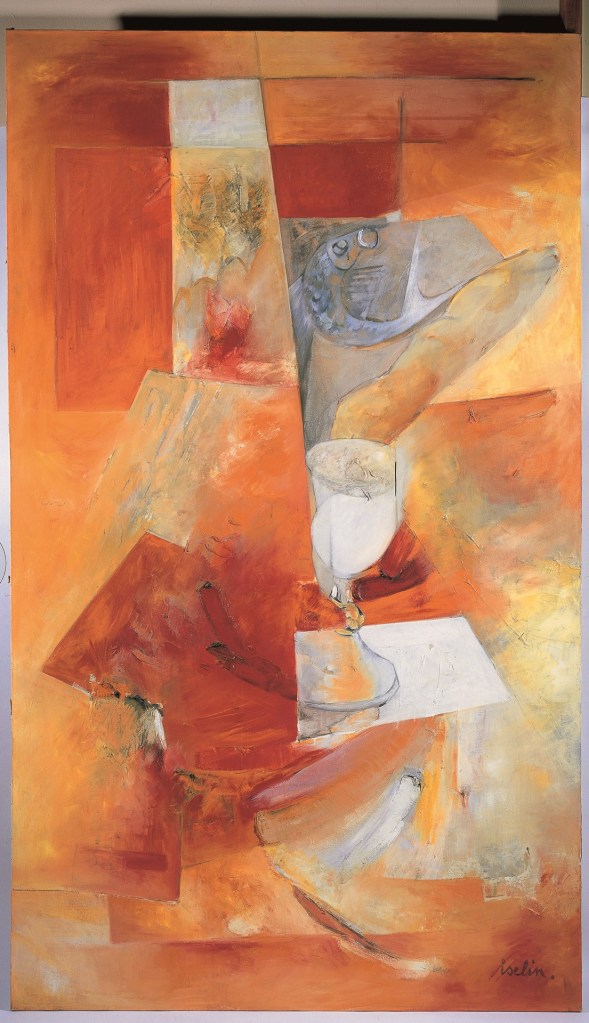
The Elements of Holy Communion by Jacques Iselin

The core value and heart of Christianity is a faith and love relationship with Jesus, to know him. This was the heartfelt cry of the Apostle Paul, and it was so meaningful to him that he gave up everything to pursue Christ and follow Jesus.  If we ever strip Christianity of this core value and stray from knowing Christ, the vacuum will be quickly filled with all kinds of other stuff, like the sheer duty of perfunctory prayers, clean living, and dispassionate robotic service. 

Paul longed to know Christ better. There are two words in the Greek language for “know.” One word refers to information; the other refers to an experiential knowledge – and that is the word Paul used with the Philippians. He deeply desired an intimate experience of Jesus. And Paul craved this so much that literally everything, when compared to Jesus, was “rubbish” to him. 

In the ancient world there were no landfills and dumps – the street served as the place people threw their garbage. The trash then got trampled into the ground, along with the generous amounts of animal dung. That is how Paul thought of even the best things in life as compared to knowing Jesus. 

There is no comparison between a freshly grilled T-bone steak and microwaved liverwurst. There is no comparison between a billion dollars and a penny. There is no comparison between the Green Bay Packers and the Chicago Bears (sorry Chi-Town). And there is no comparison between Jesus and anyone or anything else, no matter whom or what it is. 

Saint Augustine, Bishop of Hippo, in the fifth century, described life apart from Jesus as “disordered love.” By that he meant we pursue whatever our affections are set upon. One might love family, friends, job, and hobbies, yet if Jesus is absent or must compete for our affections in the middle of those things, then it is a disordered love. The solution, for Augustine, is to rightly order our love by having Jesus as the premier object of our affection. The New Testament frames it this way: Repent and believe the gospel.

To have “disordered love” is a nicer way of saying “spiritual adultery.” Using this metaphor, the appropriate response is to return to our first love. “You have forsaken your first love,” said Jesus to the church in Ephesus.  “Remember the height from which you have fallen!  Repent and do the things you did at first” (Revelation 2:4-5). 

Christianity is not some religion in which we strike a deal with God to go to heaven if we accept Jesus. Rather, Christianity centers all of life in the person and work of Jesus. The Lord is a jealous God, feeling slighted when Christians moonlight with the world at night while acknowledging Jesus during the day.

Specifically, Paul wanted to know the power of Christ’s resurrection. He yearned to experience a supernatural change from the inside-out – to be a new person in Christ. Paul did not simply turn over a new leaf; he did a dramatic 180 degree turn and went hard after Jesus. A desire and/or decision to know Christ is to be more than a milquetoast “I’ll try to do better.” Christianity, at its core, is dying to self and being reborn in Jesus with new life.

Furthermore, Paul wanted to know Christ and the fellowship of sharing in his sufferings. Paul ached to know Jesus so much that he embraced suffering, just as his Lord did. Paul was not some spiritual masochist; he rightly recognized that spiritual growth and intimacy with Jesus largely comes from the harsh realities of life’s trials and difficulties, as faith is stretched.  We would not know Christ the healer if we were not broken; Christ the provider if we were not in want; and, Jesus Christ and him crucified unless we were aware of sin in the world along with our own personal sin.

Each time a Christian approaches the Lord’s Table, they set aside competing voices and forsake rival gods to have Jesus. For us who believe, let the ingesting of the elements be an act of fellowship with God. May we, along with Paul, Augustine, and all past saints desire to have Jesus completely take over our lives because he is so valuable to us. We never need to be perfect to partake of bread and cup. Instead, we only need to strive toward what is ahead and decide that today we will press on toward the higher goal of knowing Christ.

Philippians 2:1-13 – Pass It On

Welcome, friends! Click the video below and let us participate together in the life of our God…

You may also view this video at TimEhrhardtYouTube: https://www.youtube.com/watch?v=NLw1vnnbHWE&t=60s

And, let us sing the oldie but goody Christian chorus…

May the Lord bless you, protect you, sustain you, and guard you;
May the Lord shine upon you with favor, and surround you with love and kindness;
May the Lord look upon you with divine approval, and give you the peace of a tranquil heart and life. Amen.

Pass It On

I am the youngest of five children, and because of that reality I had to follow my siblings in school with many of the same teachers they had. I heard these statements more than once: “Why can’t you be more like your sister?” (the studious valedictorian) and “Why aren’t you like your brother?” (the nice quiet one).  I sometimes had this icky feeling in school that I somehow fell short because I wasn’t like them. 

The task of the Christian is to imitate Christ – not impersonate Jesus by being someone we are not. God created each of us uniquely and has sovereignly gathered us together as the church. So, we need to strive to be the best individual person possible in imitating Jesus by means of who we are, learning to work together, appreciating one another as we seek to follow Christ. 

The Apostle Paul wrote the New Testament letter to the Philippian Church because the fellowship had broken down into some rancorous in-fighting. This left the believers disillusioned. So, Paul passed on four imitations of Christ (not impersonations) to help them (and us) experience the unity God desires for his people.  

1. We are to imitate Christ through passing on the right values (Philippians 2:1-2).   

Shared values, not smooth sailing, keeps a group of people together. Paul appealed to lived experience. If anyone has experienced encouragement, comfort, fellowship, tenderness, or compassion, then we need to recognize it, remember it, and then pass it on to others. Those values happened because God granted blessings to us through other people. In other words, we owe to others what God has done through others for us.   

These common valued experiences occur as we participate in the life of our triune God. They come from the perfect relational dynamic that endlessly occurs within God himself as Father, Son, and Spirt. As we spend time with God and are filled with the divine life, these relational values spill-over in our human interactions.   

Passing on encouragement and compassion is not a function of willpower in trying to impersonate Jesus; it is a matter of spending time with God – because people tend to imitate those they hang around. If we spend time with people who typically complain, we will end up constantly cranky. If we hang out with people who continually pray, we will find ourselves reflexively praying about everything. If we are around chronically negative people, we will become constantly unhappy. If we make it a regular practice to hang out with Jesus, we discover that we are imitating him in our relationships through encouragement, love, comfort, and compassion. 

The word “joy” pops up a lot in Paul’s letter to the Philippians, yet it is never an exhortation to be joyful but rather an exhortation to unity. The by-product of unity is joy. Joy and happiness are the direct result of unity, and unity comes from embracing the shared common values Paul expressed. 

2. We are to imitate Christ through passing on the right service (Philippians 2:3-4).   

Humility is the remedy for dissension and disunity. Strife comes from stubbornly guarding our own opinions. Humility, however, considers others better than oneself. We are to do nothing out of selfishness or vain conceit. Instead, we are to imitate Jesus – to take up our crosses and follow him through dying to things which create disunity. Trying to impersonate Jesus results in lording over people and circumstances. It leads to division. However, imitating Jesus results in being like him in his humility and gentleness. It brings unity and peace.   

Nik Wallenda is a Christian and a high wire artist. In 2012 he walked a tightrope across Niagara Falls; and, in 2013 he became the first person to high wire walk across the Grand Canyon. Nearly a combined billion people saw those two incredible feats. After every tight rope walk for the crowds, Nik Wallenda engages in a simple spiritual discipline: he walks where the throngs of people just stood and watched him, and quietly picks up their trash.  

Wallenda says about this practice, “My purpose is simply to help clean up after myself. The huge crowd left a great deal of trash behind, and I feel compelled to pitch in. Besides, after the inordinate amount of attention I sought and received, I need to keep myself grounded. Three hours of cleaning up debris is good for my soul. Humility does not come naturally to me. So, if I must force myself into situations that are humbling, so be it …. I know that I need to get down on my hands and knees like everyone else. I do it because it is a way to keep from tripping. As a follower of Jesus, I see him washing the feet of others. I do it because if I don’t serve others, I’ll be serving nothing but my ego.” 

3. We are to imitate Christ by passing on the right attitude (Philippians 2:5-11).   

The Apostle Paul bluntly stated that our attitude is to be the same as Jesus: laying down life for the benefit of others. Impersonating Jesus leads to a martyr complex that wants others see our good works. However, imitating Christ’s attitude is to serve without being concerned who sees it or who gets the credit. It is an attitude of passing on what we have received from God. 

In the way of Jesus, the way up is down; the way to gain is by giving; the way to life is through death; the way to praise God is humble service for others. When my grandson was in one of his many hospital stays in the epilepsy ward, I watched him (3 years old at the time and without any prompting) make his way from room to room encouraging other patients and serving them. In the room where a ten year old girl had just had brain surgery with no hair and unattractive bandages, I overheard him say, “Oh, I like your new hat; it looks great on you!”  Making his way to the next room of a twelve-year-old boy who was near death, he said, “Would you like a drink?  I can get a drink for you!”   

I saw parents in the epilepsy ward who were as different from one another as you could imagine. Yet, we all shared a common purpose which gave us a common attitude. We all wanted these kids to be seizure free, and we were doing whatever it took to help each other realize that dream. 

Jesus humbled himself and became a man, being obedient to death on a cross, because his purpose was for humanity to be sin-free. Christ did whatever it took to make that happen.  If a small little boy can be used of God, then how much can you and I adopt the attitude of Jesus and do whatever it takes to see that people realize freedom in Jesus Christ!? 

4. We are to imitate Christ through passing on the right commitments (Philippians 2:12-13).   

The Christian life is meant to be lived together with other believers. We can try to impersonate Jesus, which will result in trying to impress the wrong crowd. However, when we imitate Christ, we commit ourselves to the people God has placed in our lives. Just as it was not our choice which family we were born into, so it is not our choice which spiritual family we are born again into. The church is not a voluntary society, any more than a family is. The church belongs to Jesus and we are neither to just fluidly move in and out of it as if it were a hobby that we toy with once-in-a-while, nor treat it as a spectator sport just watching what happens and playing arm-chair quarterback on Monday morning. 

Paul exhorted the believers to work out their salvation with fear and trembling. That means we are to live-out our collective salvation together in being mindful of each other. In other words, unity takes a lot of work – work which requires imitating Christ through a shared commitment to one another. 

The promise we have is that when we do this kind of good work that it is God who acts to bend everything to his good purposes. This is a wonderful promise, one we need to take to heart with a good dose of godly reverence and awe. 

Conclusion 

My oldest sister was the valedictorian of her class. I did not follow in her steps. My brother was the kind of kid that teachers envied to have in their classes. I think my teachers wondered if we were from the same family. My other sister was friends with all her teachers, and they all enjoyed her. I just remember getting a lot of sighs and eye-rolling from my teachers. I often struggled with my identity as a kid.   

I found my identity in Christ. I discovered I did not have to be like anyone else. God used me for who I am right where I was, learning to imitate Jesus. We need not be worried or discouraged about how far short we fall in comparison to others. Instead, we are to be concerned about how God wants to fulfill all his good promises in Christ through us – because at the name of Jesus every knee will bow and every tongue will confess that Jesus is Lord to the glory of God.  We are to pass on to others every good thing we have in Jesus Christ. 

Matthew 10:5-23 – Jesus the Troublemaker

Jesus, 12th century Romanesque
A 12th century Romanesque depiction of Jesus

These twelve Jesus sent out with the following instructions: “Do not go among the Gentiles or enter any town of the Samaritans. Go rather to the lost sheep of Israel. As you go, proclaim this message: ‘The kingdom of heaven has come near.’ Heal the sick, raise the dead, cleanse those who have leprosy, drive out demons. Freely you have received; freely give.

“Do not get any gold or silver or copper to take with you in your belts— no bag for the journey or extra shirt or sandals or a staff, for the worker is worth his keep. Whatever town or village you enter, search there for some worthy person and stay at their house until you leave. As you enter the home, give it your greeting. If the home is deserving, let your peace rest on it; if it is not, let your peace return to you. If anyone will not welcome you or listen to your words, leave that home or town, and shake the dust off your feet. Truly I tell you, it will be more bearable for Sodom and Gomorrah on the day of judgment than for that town.

“I am sending you out like sheep among wolves. Therefore, be as shrewd as snakes and as innocent as doves. Be on your guard; you will be handed over to the local councils and be flogged in the synagogues. On my account you will be brought before governors and kings as witnesses to them and to the Gentiles. But when they arrest you, do not worry about what to say or how to say it. At that time, you will be given what to say, for it will not be you speaking, but the Spirit of your Father speaking through you.

“Brother will betray brother to death, and a father his child; children will rebel against their parents and have them put to death. You will be hated by everyone because of me, but the one who stands firm to the end will be saved. When you are persecuted in one place, flee to another. Truly I tell you, you will not finish going through the towns of Israel before the Son of Man comes. (NIV)

How do you view Jesus? I trust it includes plenty of compassion. I hope your view of Jesus also encompasses taking on the establishment and causing trouble. “I am sending you like lambs into a pack of wolves,” said Jesus to his disciples. Well, my goodness, that sounds unsafe! Sometimes we might lose sight that Jesus is much less concerned about our sense of safety and security than we are. That doesn’t make Jesus uncaring; it just means he sometimes has a different hierarchy of values than we do. Those who follow Jesus will need to take his concerns and ideals into consideration.

Frankly, the Lord Jesus was often a troublemaker who continually agitated for change. And, what is more, he warned us about trouble in the world. It is not that Jesus was intentionally pressing everyone’s buttons; he was just being himself, and that sent a whole lot of people gnashing their teeth at him. Our Lord Christ got all up into people’s grill and confronted them with bold assertions about justice and righteousness taken at God’s terms, not ours.

Therefore, as Christ’s followers, we can expect opposition and trouble. We need to anticipate we are going to sometimes disrupt and upset relatives, co-workers, neighbors, and those around us. Please understand this is not about being intentionally obnoxious or callously abusive. In fact, what personally drives me batty are Christians who take stupidly stubborn stands on the wrong hills of life, thus hurting others and damaging the cause of Christ. We really must be vigilant if someone’s hackles are raised that it is not because of our own foolish words and actions based in notions which Jesus never espoused.

The model of our Lord Jesus is that he was simply himself – advocating for the lost, the least, and the lonely – challenging systems which kept people burdened, oppressed, and lacking justice. This is the kind of stuff God has always done throughout history. Those with power and privilege discern quickly that advocacy and agitation for systemic change is a threat to them. Thus, we find ourselves like little lambs in a den of wolves. By simply loving Jesus and seeking to follow him we are, at times, going to upset people – and that is okay. Facing trouble is not the worst thing to be experienced – to be separated from God is.

It is okay to rock the boat, shake the tree, upset the fruit basket, stir the pot, and make waves if you are doing it because you value the ethics and methods of Jesus. So, count the cost. Give your life away. In doing so, you will find it.

Grant us, Lord God, a vision of your world as your love would have it: a world where the weak are protected, and none go hungry or poor; a world where the riches of creation are shared, and everyone can enjoy them; a world where different races and cultures live in harmony and mutual respect; a world where peace is built with justice, and justice is guided by love. Give us the inspiration and courage to build it.

Grant, O God, that your holy and life-giving Spirit may so move every human heart [and especially the hearts of the people of this land] that barriers which divide us may crumble, suspicions disappear, and hatreds cease; that our divisions being healed, we may live in justice and peace; through Jesus Christ our Lord. Amen.