Advent Is Coming (Zechariah 13:1-9)

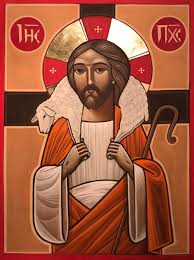
Coptic Church icon of Jesus the Good Shepherd

“On that day a fountain will be opened to the house of David and the inhabitants of Jerusalem, to cleanse them from sin and impurity.

“On that day, I will banish the names of the idols from the land, and they will be remembered no more,” declares the Lord Almighty. “I will remove both the prophets and the spirit of impurity from the land. And if anyone still prophesies, their father and mother, to whom they were born, will say to them, ‘You must die, because you have told lies in the Lord’s name.’ Then their own parents will stab the one who prophesies.

“On that day every prophet will be ashamed of their prophetic vision. They will not put on a prophet’s garment of hair in order to deceive. Each will say, ‘I am not a prophet. I am a farmer; the land has been my livelihood since my youth.’ If someone asks, ‘What are these wounds on your body?’ they will answer, ‘The wounds I was given at the house of my friends.’

“Awake, sword, against my shepherd,
    against the man who is close to me!”
    declares the Lord Almighty.
“Strike the shepherd,
    and the sheep will be scattered,
    and I will turn my hand against the little ones.
In the whole land,” declares the Lord,
    “two-thirds will be struck down and perish;
    yet one-third will be left in it.
This third I will put into the fire;
    I will refine them like silver
    and test them like gold.
They will call on my name
    and I will answer them;
I will say, ‘They are my people,’
    and they will say, ‘The Lord is our God.’” (New International Version)

There’s likely a reason why so many Bible-readers have barely considered, or just never read, the minor prophets of the Old Testament: It’s difficult reading, on several levels.

Yet, the twelve books of the minor prophets, along with the four books of the major prophets, account for a lot of material within Holy Scripture. If we are to understand the whole of the Bible, as well as know God better, we need to contend with what the prophets have to say.

Impurity and cleansing, grace and judgment, idolatry and stabbing, prophets and visions, sheep and shepherds, faith and apostasy, are all part of what seems, on the surface, to be a confusing hodge-podge of verbiage from the prophet Zechariah. Yet, we can still observe the things God cares about.

The Lord promised to rid the land of idols (false gods), (false) prophets, and the spirit of impurity (false righteousness). If God takes out the false prophets, then the people can say good riddance to a false message of leading others toward idolatry and impurity.

The spirit and the message behind false prophets, unholy leaders, and unrighteous teachers, has to do with propagating lies and suppressing truth, so that they can deceive people and manipulate others for their own benefit – leading groups of people away from reality, and into commitments that go nowhere.

This insidious stuff is meant to be taken quite seriously – because it leads to a breakdown in community, a proliferation of injustice, and oppressive spiritual bondage. That’s why we have a rather dramatic picture of parents stabbing a child – not because God likes violence – but to demonstrate that false prophets and their message will damage and destroy a nation, if indulged.
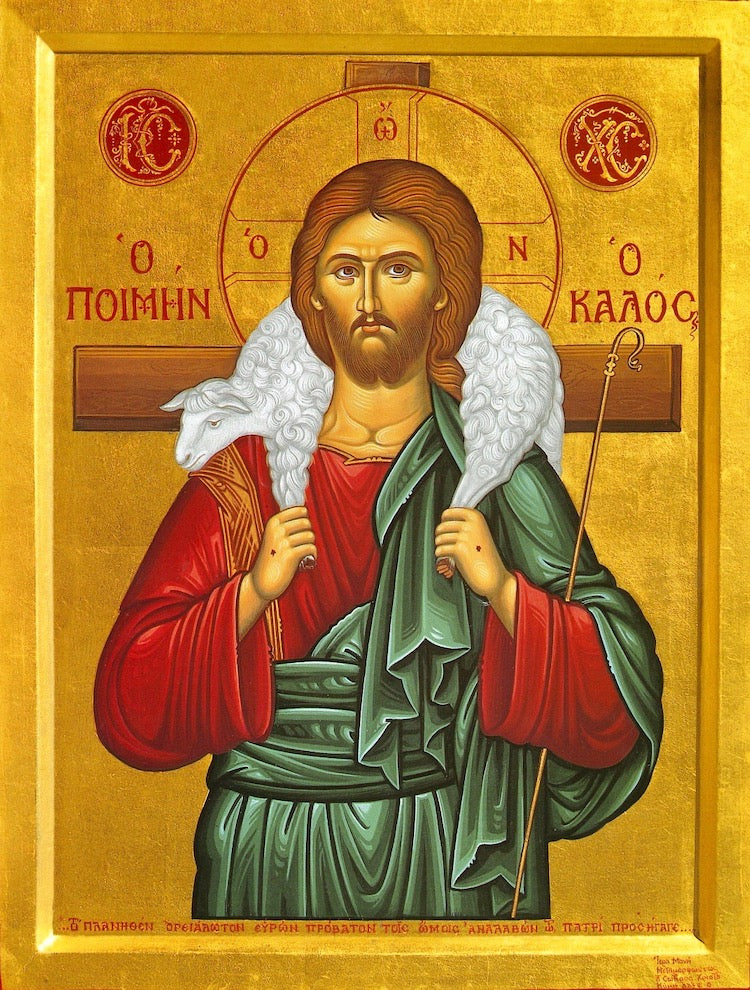
Orthodox icon of Jesus the Good Shepherd

We must always keep in mind and remember that injustice and unrighteousness must always be nipped in the bud (Deuteronomy 13:6-11). Sin, that is, those things which deceive and make false promises that result in a downward spiral toward death, is to be confronted. In the New Testament, Jesus put the matter this way:

If your right eye causes you to stumble, gouge it out and throw it away. It is better for you to lose one part of your body than for your whole body to be thrown into hell. And if your right hand causes you to stumble, cut it off and throw it away. It is better for you to lose one part of your body than for your whole body to go into hell. (Matthew 5:29-30, NIV)

Christ was not advocating a physical maiming of oneself, but rather for us to separate ourself from sin by whatever means necessary. In other words, Jesus was saying that sin isn’t something to be managed, but instead something to eradicate altogether.

Truth matters. Truth brings reality and beauty to light. Falsehood is terrible. To promote that which is false, and perhaps even worse, tolerate it, gives hate and injustice a platform from which to crawl out of the darkness and make the world blind. It would take an awful lot to undo error’s presence.

This is why the shepherd, or maybe, from the Christian perspective, the Christ, is stricken. The Good Shepherd, the one who is truth incarnate, would have to suffer. The injustice and unrighteousness is so foul and degrading that only the pure can undo the impure. And it is all set in motion, not by the forces of darkness, but by God.

God strikes the shepherd, and the sheep scatter. He is not struck because he deserves it – far from it – but because he assumes responsibility for the wrongdoing of others. Father God is the parent who stabs a spear in the side of God the Son.

The ultimate good shepherd of the sheep will die as a heinous offender; and God is the executioner.

In Christ, God put the wrong on him who never did anything wrong, so we could be put right with God.

2 Corinthians 5:21, MSG

This same great shepherd of the sheep, who became the Lamb of God that takes away the sin of the world, is coming again. And he will bring the refining and purifying fire of divine judgment upon the earth.

In this upcoming Advent season, we remember not only that Jesus has come to save the world. We also are reminded that there is yet a second Advent, in which Jesus will come to judge the living and the dead.

Behold, He is coming with clouds, and every eye will see Him, even they who pierced Him. And all the tribes of the earth will mourn because of Him. Even so, Amen.

“I am the Alpha and the Omega, the Beginning and the End,” says the Lord, “who is and who was and who is to come, the Almighty.” (Revelation 1:7-8, NKJV)

Blessed God and Father of our Lord Jesus Christ, preserve us from our own madness. Direct us away from dealing destruction to others; help us to steer clear of paths which lead to the ruin of ourselves and our world.

Protect us. Enable us to hear you. Beloved Jesus, show us your precious face in all others – you in us, and we in each other, from all places. Amen.

Good vs. Evil (2 Thessalonians 2:7-12)

For the mystery of lawlessness is already at work, but only until the one who now restrains it is removed. And then the lawless one will be revealed, whom the Lord Jesus will destroy with the breath of his mouth, annihilating him by the manifestation of his coming. The coming of the lawless one is apparent in the working of Satan, who uses all power, signs, lying wonders, and every kind of wicked deception for those who are perishing because they refused to love the truth and so be saved. For this reason God sends them a powerful delusion, leading them to believe what is false, so that all who have not believed the truth but took pleasure in unrighteousness will be condemned. (New Revised Standard Version)

There are two opposing forces which are operating in this world. One is the power of evil, manifested through lawlessness, selfishness, and wickedness. The other power is good, and it is seen wherever there is a concern for the common good of all people. Labors of love for all humanity and right relations with everyone are a demonstration of the peaceable fruit of righteousness existing in the world.

To put it succinctly, a spirit of merciful grace and a spirit of careless judgment both exist throughout the world.

Hate what is evil; cling to what is good.

The Apostle Paul (Romans 12:9, NIV)

The Apostle Paul wrote his letter to the church in Thessalonica because the believers there were confused. Somebody had told them that the end of the age already happened. Paul sought to set the record straight, that we are still anticipating the return of the Lord and the final judgment of all things.

The great Day of the Lord will not come until the faithless one, the person of lawlessness, the son of destruction, is revealed. Such a person opposes God and has the force of evil behind them. So, who is this person?

The person is not a single individual. Paul was helping the Thessalonian believers understand the actual situation by wrapping the abstract concept of evil into human form, so that they could visualize its reality and sinister nature. In truth, there will be lots of individual humans who manifest themselves through evil intent and actions, until the Lord’s return.

Grace is the operative power which restrains all the evil. A lot of people have questions about God and evil. Why is there so much evil? How come God doesn’t snuff it all out? Is the Lord not able to do anything? What’s going on?

Those are honest questions. And they come from a place of limited human perspective. Let’s turn this on it’s head. It’s not that God is impotent or isn’t doing anything about evil. Think of it this way: When you scoop up a bunch of sand in your hands, there are a lot of sand grains which fall to the ground. If the sand is evil, and the hands are God’s, the reality of the situation is that the Lord has most of the evil kept at bay.

In other words, if God were not involved in this world, at all, we would be living in a real dystopian society – people staying up at night to guard their homes with guns, and anxious folks attacking each other with impunity. As bad as some things are, it could be infinitely worse than it is.

The grace of God is active in restraining evil and providing believers with what they need to not only survive, but also to thrive in this world.

His divine power has given us everything needed for life and godliness, through the knowledge of him who called us by his own glory and excellence. Thus he has given us, through these things, his precious and very great promises, so that through them you may escape from the corruption that is in the world because of lust and may become participants of the divine nature. (2 Peter 1:3-4, NRSV)

A reversal occurs because of God’s grace. The wickedness which exists, especially within the human heart, is dealt with and transformed into a force for good in the world.

Once we, too, were foolish and disobedient. We were misled and became slaves to many lusts and pleasures. Our lives were full of evil and envy, and we hated each other. But—when God our Savior revealed his kindness and love, he saved us, not because of the righteous things we had done, but because of his mercy. (Titus 3:3-5, NLT)

Grace is wonderful for those who believe. However, for those who are faithless, grace is inoperative – simply because the wicked consider virtues like mercy and grace as weak and useless; they have no intention of either giving or receiving such drivel.

From a certain angle, it may seem that God is harsh. The Lord hardens hearts, sends powerful delusions, and entertains mysteries which some people will never discover. Yet, from another point of view, these are all necessary divine tools in dealing with unjust humanity and their systems of oppression.

Justice and righteousness are championed by God, and therefore, injustice and unrighteousness will not be put up with by the Lord. And that is a good thing. Love not only gives, but it also protects and withholds. Evil will be dealt with according to God’s good grace and in God’s good time – and not according to a limited human perspective or any person’s impatience.

The time is short, and the time is near; everything shall not continue, as it presently is, forever. This is why the author of Hebrews exhorted people to pay attention to “Today” with a capital “T.” Today won’t be here tomorrow. Tomorrow is the Day of the Lord. So, while it’s Today, we must be responsive.

My friends, watch out! Don’t let evil thoughts or doubts make any of you turn from the living God. You must encourage one another each day. And you must keep on while there is still a time that can be called “Today.” If you don’t, then sin may fool some of you and make you stubborn. (Hebrews 3:12-13, CEV)

We must encourage each other with continued faith and patience until the end of the age. We can do this. We are all in this life together, so let us keep on holding up one another and carrying each other’s burdens. In so doing, we will not be lawless, but fulfill the Law of Christ. (Galatians 6:2)

Keep on being brave! It will bring you great rewards. Learn to be patient, so you will please God and be given what he has promised. As the Scriptures say,

“God is coming soon!
    It won’t be very long.
The people God accepts
will live because
    of their faith.
But he isn’t pleased
with anyone
    who turns back.”

We are not like those people who turn back and get destroyed. We will keep on having faith until we are saved. (Hebrews 10:35-39, CEV)

May it be so, to the glory of God. Amen.

Who Is Running from God? (Jonah 1:1-17)

The Lord gave this message to Jonah son of Amittai: “Get up and go to the great city of Nineveh. Announce my judgment against it because I have seen how wicked its people are.”

But Jonah got up and went in the opposite direction to get away from the Lord. He went down to the port of Joppa, where he found a ship leaving for Tarshish. He bought a ticket and went on board, hoping to escape from the Lord by sailing to Tarshish.

But the Lord hurled a powerful wind over the sea, causing a violent storm that threatened to break the ship apart. Fearing for their lives, the desperate sailors shouted to their gods for help and threw the cargo overboard to lighten the ship.

But all this time Jonah was sound asleep down in the hold. So the captain went down after him. “How can you sleep at a time like this?” he shouted. “Get up and pray to your god! Maybe he will pay attention to us and spare our lives.”

Then the crew cast lots to see which of them had offended the gods and caused the terrible storm. When they did this, the lots identified Jonah as the culprit. “Why has this awful storm come down on us?” they demanded. “Who are you? What is your line of work? What country are you from? What is your nationality?”

Jonah answered, “I am a Hebrew, and I worship the Lord, the God of heaven, who made the sea and the land.”

The sailors were terrified when they heard this, for he had already told them he was running away from the Lord. “Oh, why did you do it?” they groaned. And since the storm was getting worse all the time, they asked him, “What should we do to you to stop this storm?”

“Throw me into the sea,” Jonah said, “and it will become calm again. I know that this terrible storm is all my fault.”

Instead, the sailors rowed even harder to get the ship to the land. But the stormy sea was too violent for them, and they couldn’t make it. Then they cried out to the Lord, Jonah’s God. “O Lord,” they pleaded, “don’t make us die for this man’s sin. And don’t hold us responsible for his death. O Lord, you have sent this storm upon him for your own good reasons.”

Then the sailors picked Jonah up and threw him into the raging sea, and the storm stopped at once! The sailors were awestruck by the Lord’s great power, and they offered him a sacrifice and vowed to serve him.

Now the Lord had arranged for a great fish to swallow Jonah. And Jonah was inside the fish for three days and three nights. (New Living Translation)

God said, “Go!”

Jonah said, “No!”

And, God said, “Oh!?”

Jonah did a complete turn-and-run from God’s clear instructions to go to the city of Nineveh. That doesn’t sound like a good idea. So, why did Jonah run? And why do we run?

Who were the Assyrians?

Nineveh was a large city in the ancient world, and the capital of Assyria. The Assyrians had a reputation as fierce soldiers and conquered the Middle East. They are mentioned many times in the Old Testament. It was Assyria that God used to judge the northern kingdom of Israel.

The typical military practice of the Assyrians was to attack a city and completely subjugate it by deporting most of the people and repopulating it with some of their own people. They did this so that the conquered people could not mount a revolt or resistance to their rule.

The Assyrians, the Ninevites, were notorious in the ancient world for their brutality toward conquered peoples. Many forms of torture that we are aware of today were invented by the Assyrians. Their methods were awful and inhumane. The Assyrians were experts at thinking up and executing extreme forms of torture on everyone who resisted their power. It was a very violent culture.

Who is God?

God isn’t at all like the Ninevites. The ways of the Assyrians caught the notice of God, who was ready to pronounce judgment on the heart of the Assyrian Empire, the capital city of Nineveh. So, as God typically did in the Old Testament, he told one of his prophets to go and give a message.

The message was simple: “Go to the great city of Nineveh and preach against it, because its wickedness has come up before me.” Lest we think God was determined to wipe Nineveh off the map, think again. Jonah confesses later in the book, “I knew that you are a gracious and compassionate God, slow to anger and abounding in love, a God who relents from sending calamity.” (Jonah 4:2)

Who was Jonah?

Jonah did not like the Assyrians. More than that, he hated their guts. They killed, maimed, executed, and deported Jonah’s fellow Israelites. The last thing Jonah wanted was to have effective preaching and see Nineveh repent of their violent ways. Jonah wanted judgment, not grace.

In this little four-chapter prophetic book of the Old Testament, it is Jonah who needs divine deliverance as much as the Ninevites do. In fact, Jonah’s need for rescue gets more attention than the evil Assyrians. The message of Jonah comes down to this:

Racism and hatred, however much perceived to be legitimate, have no part whatsoever in the kingdom of God.

Who are we?

Christians are the community of the redeemed. New life in Jesus Christ involves a wholesale jettison of bigotry and the manure pile of hatred directed toward any ethnic and/or religious group of people, period. New life means adopting the love of God. It involves becoming a dispenser of grace and mercy with all people, not just the ones we feel deserve it.

What does God want us to learn?

To share the same heart as God has – a heart that beats for people to know and live by a better way – a heart that has grace and compassion even in the face of flat-out evil. We are meant to think twice about pointing the finger at others. Instead, we are to take the plank out of our own eye before we address the splinter in another’s eye.

It wasn’t the Assyrians who were running from God; it was Jonah. In God’s upside-down realm, the wicked become the righteous, and the righteous are exposed as wicked. The unrighteous run to God, whereas the religious run from God. Nineveh eventually turned from their evil ways.

So, let’s keep to the side of mercy, not judgment.

O God, you created all people in your image. We thank you for the astonishing variety of races and cultures in this world. Enrich our lives by ever-widening circles of friendship, and show us your presence in those who differ most from us, until our knowledge of your love is made perfect in our love for all your children; through your Son, Jesus Christ our Lord. Amen.

Dealing with Denial (Jeremiah 32:1-9, 36-41)

The Lord spoke to me in the tenth year that Zedekiah was king of Judah, which was the eighteenth year that Nebuchadnezzar was king of Babylonia. At that time, the Babylonian army had surrounded Jerusalem, and I was in the prison at the courtyard of the palace guards. Zedekiah had ordered me to be held there because I told everyone that the Lord had said:

I am the Lord, and I am about to let the king of Babylonia conquer Jerusalem. King Zedekiah will be captured and taken to King Nebuchadnezzar, who will speak with him face to face. Then Zedekiah will be led away to Babylonia, where he will stay until I am finished with him. So, if you people of Judah fight against the Babylonians, you will lose. I, the Lord, have spoken.

Later, when I was in prison, the Lord said:

Jeremiah, your cousin Hanamel, the son of your uncle Shallum, will visit you. He must sell his field near the town of Anathoth, and because you are his nearest relative, you have the right and the responsibility to buy it and keep it in the family.

Hanamel came, just as the Lord had promised. And he said, “Please buy my field near Anathoth in the territory of the Benjamin tribe. You have the right to buy it, and if you do, it will stay in our family.”

The Lord had told me to buy it from Hanamel, and so I did. The price was 17 pieces of silver, and I weighed out the full amount on a scale….

Jeremiah, what you said is true. The people of Jerusalem are suffering from hunger and disease, and so the king of Babylonia will be able to capture Jerusalem.

I am angry with the people of Jerusalem, and I will scatter them in foreign countries. But someday I will bring them back here and let them live in safety. They will be my people, and I will be their God. I will make their thoughts and desires pure. Then they will realize that, for their own good and the good of their children, they must worship only me. They will even be afraid to turn away from me. I will make an agreement with them that will never end, and I won’t ever stop doing good things for them. With all my heart I promise that they will be planted in this land once again. (Contemporary English Version)

Denial is a powerful mental force.

Disaster was about to befall Jerusalem and its inhabitants. Few were prepared for what was ahead. But they should have been ready. That’s because the prophet Jeremiah repeatedly told the king and the people about their need to live in justice and righteousness.

The dominant belief within the city was that judgment would never come to them. The people looked at their covenant with the Lord, and the presence of the temple, as some sort of rabbit’s foot or insurance policy that would keep invading armies at bay.

But they were in denial about what was actually occurring. The people lived as they wanted, giving Yahweh some temple time and a bit of worship, but then turned around and also worshiped other gods. Furthermore, they exploited the poor, took advantage of the needy, and engaged in unscrupulous business practices. So, the prophet Jeremiah was given a message by God to the people:

I brought you here to my land,
    where food is abundant,
but you made my land filthy
    with your sins.
The priests who teach my laws
    don’t care to know me.
Your leaders rebel against me;
your prophets
    give messages from Baal
    and worship false gods….

You, my people, have sinned
    in two ways—
you have rejected me, the source
    of life-giving water,
and you’ve tried to collect water
in cracked and leaking pits
    dug in the ground. (Jeremiah 2:7-8, 14, CEV)

The message was repeatedly ignored, along with warnings of judgment, if the people did not change their errant ways. The city’s denial was palpable, holding the false belief that the Babylonians could never take them, and that God was on their side.

Pay attention, people of Judah! Change your ways and start living right, then I will let you keep on living in your own country. Don’t fool yourselves! My temple is here in Jerusalem, but that doesn’t mean I will protect you. I will keep you safe only if you change your ways and are fair and honest with each other. Stop taking advantage of foreigners, orphans, and widows. Don’t kill innocent people. And stop worshiping other gods. Then I will let you enjoy a long life in this land I gave your ancestors. (Jeremiah 7:3-7, CEV)

The antidote to denial is acceptance – not necessarily accepting that a situation is okay, fine, or right – but that the situation is actually there; it’s true, and I’ve got to face it as it is, and not as I want it to be.

The Babylonians were at the city gate. Yet, even then, Jeremiah was getting the stiff arm from King Zedekiah and was in prison for preaching sedition. Nobody wanted to face the music – that a funeral dirge was about to play. But they needed to own up to what was happening and why they were in such a position.

It’s a sad scene. It’s hard to watch, whenever others refuse to listen, knowing what will happen if they keep to their denial. There were some things Jeremiah did and didn’t do when he was in this awkward and precarious position.

Jeremiah did not:

  • Give up and/or shut up. He didn’t give in to the temptation of being frustrated, throwing up his hands, and walking away; and he didn’t adopt their denial and stop talking.
  • Manipulate by resorting to shaming the people, or using Machiavellian tactics to force or leverage repentance out of them.
  • Say, “I told you so!” In fact, he did just the opposite; he grieved and lamented the unchanged hearts and the destruction which did happen.

Jeremiah did:

  • Connect with both God and the people. He was able to differentiate himself from the situation, while at the same time, remaining connected as a voice to the people.
  • Accept his role as prophet. He took responsibility for himself and his own particular calling – and nothing more than that. He focused on what needed to be said and done in the moment, and left the rest to God.
  • Kept living his life. He went and bought a relative’s field, keeping the land in the family, knowing he was still going to have a life after such devastation.

The Lord, as the Good Shepherd, isn’t going to herd cats – so we must follow as the sheep who trust in the Lord’s voice and actions, to say and do what we most need to hear and obey.

Just and right God, you invite us to give ourselves in service to others, equipped with justice and righteousness. Be with me as I choose each day to reflect your divine presence in our world. Give me the courage and generosity to respond to your love, and to your call. May all your people speak your message with bravery, humility, and skill. Open the minds and hearts of those in denial — that they may accept you and your words. Amen.