Wise Living Is Clean Living (Proverbs 15:1-17)

A gentle answer quiets anger, but a harsh one stirs it up.

When wise people speak, they make knowledge attractive, but stupid people spout nonsense.

The Lord sees what happens everywhere; he is watching us, whether we do good or evil.

Kind words bring life, but cruel words crush your spirit.

It is foolish to ignore what your parents taught you; it is wise to accept their correction.

Righteous people keep their wealth, but the wicked lose theirs when hard times come.

Knowledge is spread by people who are wise, not by fools.

The Lord is pleased when good people pray, but hates the sacrifices that the wicked bring him.

The Lord hates the ways of evil people, but loves those who do what is right.

If you do what is wrong, you will be severely punished; you will die if you do not let yourself be corrected.

Not even the world of the dead can keep the Lord from knowing what is there; how then can we hide our thoughts from God?

Conceited people do not like to be corrected; they never ask for advice from those who are wiser.

When people are happy, they smile, but when they are sad, they look depressed.

Intelligent people want to learn, but stupid people are satisfied with ignorance.

The life of the poor is a constant struggle, but happy people always enjoy life.

Better to be poor and fear the Lord than to be rich and in trouble.

Better to eat vegetables with people you love than to eat the finest meat where there is hate. (Good News Translation)

Here is today’s Proverbs lesson in my own colloquial words:

A calm and kind response sucks the anger out of the room, but hot-headed words set the place on hellfire.

A level-headed person gives helpful answers, but a know-it-all only keeps on babbling nonsense.

Just because you cannot see God, doesn’t mean that God cannot see you, both the good and the bad.

Kind words given to another person are life-giving, but unkind words catapulted at a person ends up crushing their spirit.

You can tell a fool by how their refusal to accept counsel from their parents, but a wise person freely receives parental instruction.

Wise folk understand they need to save for a rainy day, but fools spend everything they have, then wonder why they’re in dire straits.

Wisdom and common sense are akin to one another; foolishness and nonsense are two peas in a pod.

The Lord perks up when the righteous pray, but does a face palm when the wicked offer up anything.

The ways of evil people make the Lord nauseous, but the way of the righteous is delightful to God.

A stupid dog doesn’t live very long, because he won’t heed his training or learn from any natural consequences.

If God can see everything that goes on with death and destruction, why would not the Lord see all things within your own heart?

Prickly people won’t listen to advice, and they refuse to consult anyone when making decisions.

Truthful persons smile when they’re happy and frown when they’re sad, but falsehood smiles when it’s sad and frowns when it’s happy.

Learners are curious about life, but ignorant folk only feed on tabloid information.

Once in survival mode, it’s hard to ever get out of it; but those who thrive have learned how to be content in any circumstance.

It’s a whole lot better to be poor and right with God, than to be rich and on the wrong side of the Lord.

Peanut butter sandwiches eaten on the floor with love are much more delicious than eating a filet mignon with hatred around the table.

Our words reflect what is truly the attitude of our heart. And our attitudes betray what we actually think about God and others.

If you drop a foolish person into a roomful of people, it’s like putting a rotten egg in with the rest of the eggs when making an omelet. Or, to put it according to an old adage, “One bad apple spoils the whole bushel basket of them.”

This is why it’s the responsibility of everyone to develop wisdom and a virtuous life. A faith community, a neighborhood, a workplace, a family, or any group of people are adversely affected whenever there’s one arrogant fool amongst them.

But just as he who called you is holy, so be holy in all you do; for it is written: “Be holy, because I am holy.” (1 Peter 1:15-16, NIV)

It only takes one drop of arsenic to ruin a gallon of water and make it undrinkable. And if you choose to drink it anyway, well, you’ll suffer the consequences.

And this is why purity of heart, righteousness, justice, and goodness are so very important. It’s also why holiness is placed as a premium in Holy Scripture, because impurity ruins the community and defiles any group of people.

For where you have envy and selfish ambition, there you find disorder and every evil practice. But the wisdom that comes from heaven is first of all pure; then peace-loving, considerate, submissive, full of mercy and good fruit, impartial and sincere. Peacemakers who sow in peace reap a harvest of righteousness. (James 3:16-18, NIV)

Wise living is clean living, in every sense of a person’s complete self – in body, mind, emotions, and spirit. The Book of Proverbs can help us with that.

O God, by whom the meek are guided in judgment, and light rises up in darkness for the godly: Grant us, in all our doubts and uncertainties, the grace to ask what you would have us to do, so that the Spirit of wisdom may save us from all false choices, and that in your light we may see light, and in your straight path may not stumble. Amen.

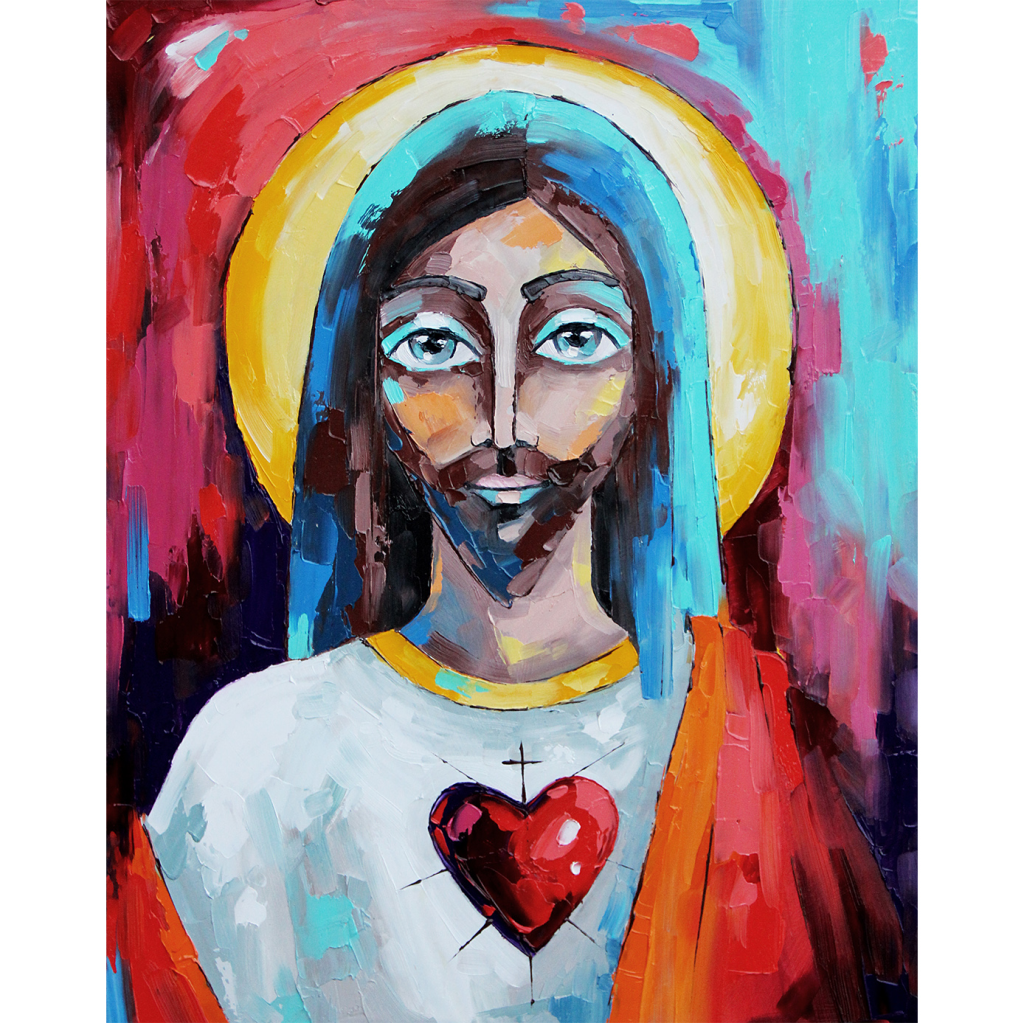
From the Heart (Mark 7:9-23)

Art by Anna Startseva

Then he said, “You skillfully sidestep God’s law in order to hold on to your own tradition. For instance, Moses gave you this law from God: ‘Honor your father and mother,’ and ‘Anyone who speaks disrespectfully of father or mother must be put to death.’ But you say it is all right for people to say to their parents, ‘Sorry, I can’t help you. For I have vowed to give to God what I would have given to you.’ In this way, you let them disregard their needy parents. And so you cancel the word of God in order to hand down your own tradition. And this is only one example among many others.”

Then Jesus called to the crowd to come and hear. “All of you listen,” he said, “and try to understand. It’s not what goes into your body that defiles you; you are defiled by what comes from your heart.”

Then Jesus went into a house to get away from the crowd, and his disciples asked him what he meant by the parable he had just used. “Don’t you understand either?” he asked. “Can’t you see that the food you put into your body cannot defile you? Food doesn’t go into your heart, but only passes through the stomach and then goes into the sewer.” (By saying this, he declared that every kind of food is acceptable in God’s eyes.)

And then he added, “It is what comes from inside that defiles you. For from within, out of a person’s heart, come evil thoughts, sexual immorality, theft, murder, adultery, greed, wickedness, deceit, lustful desires, envy, slander, pride, and foolishness. All these vile things come from within; they are what defile you.” (New Living Translation)

There is nothing inherently wrong with tradition. Ideally, traditions are helpful ways of remembering and maintaining the values that are important to us.

Yet, what can happen over time is that the tradition itself can become equal to the value we hold to; and eventually, the tradition can become more important than the value it is supposed to remind us of.

In the worst case scenario, the tradition is kept, and the value is forgotten and lost. Whenever that happens, traditions easily become weaponized to protect our interests while harming others. And that is a phenomenon Jesus wanted nothing to do with.

So, Christ affirmed and upheld the essential purpose of the Torah (scriptural law) as the foundation of morality to live justly and righteously in the world. Keeping Torah, therefore, is a matter of inner motives, and intents of the heart, rather than external compliance to ritualized traditions.

Unfortunately, the outward form had supplanted the inward disposition of the heart. Purity then became a matter of observable rituals, and defilement a matter of failing to do the ritual properly. And the original values behind the rituals were lost – which caused souls to become lost, and other people victimized by religious traditions.

Whether one is ritually clean or unclean is not ultimately determined by material objects; it is, instead, determined by the state of the heart.

Art by Andy Perez

In other words, no outward ritual can ever really make a person clean or unclean, pure or impure, spotless or polluted. Inner transformation is what scrubs a person clean and makes them pure.

Ritual traditions, and even scriptural law itself, is unable to effect a transformative change.

Torah can require purity, cleanness, and moral uprightness; but it cannot affect a metamorphosis. We need something other than traditions, rituals, and laws to bring true and sustainable transformation of life.

I say that it is time to hear and observe Jesus. Millions of people throughout history, and up to the present time, have found in Christ (and not in Christian rituals, traditions, church codes, nor in a political Christendom) the answer and the key to what life is really all about.

Again, there is not a problem with our human traditions per se, but with traditions replacing Torah and the word of God.

Jesus gave an example of just such a contradiction between religious tradition and divine law: According to tradition, if a person makes a vow concerning their property and/or possessions as a gift to God at the temple, then those assets cannot be used to support that person’s parents in their old age.

Christ pointed out that this clearly contradicts the command to honor your father and mother. Ironically, the very tradition that was supposed to purify became the means to contamination – because the tradition forbids the person from obeying the command of God.

In a word picture that everyone could understand, Jesus explained that impurity and defilement have to do with what passes through the heart, not the bowels.

People obey or disobey the Ten Commandments due to the state of their heart, and not whether they keep every detail of traditional washing of the hands and body.

People lack virtue not because they fail to do human traditions; but because of what is in their hearts.

This is why Jesus, in his Sermon on the Mount, gets to the heart of why people break commands. For example:

  • The outward act of murder is a result of the inward anger of nurturing bitterness in the heart. (Matthew 5:21-22)
  • The physical act of adultery is the culmination of dozens of mental adulteries which originated in the heart. (Matthew 5:27-28)

Everything that harms and hurts is sourced in the heart, and not in failing to keep a tradition.

Furthermore, the Gospel writer Mark, added the very interesting parenthetical comment that in speaking this way, Jesus meant to declare that all foods are clean; there is nothing eaten that can make us impure.

That may not seem remarkable to most people, but to Jews this statement is cataclysmic and revolutionary. Levitical law details the separating of clean and unclean food, for the purpose of distinguishing the Israelites from all the other surrounding nations. (Leviticus 11:43-44; 20:24-26)

Holding to food laws, and traditional hand washings when it comes to eating, are a way of preserving religious identity and national identity. Jesus had no intention of doing away with Jewish identity, but he very much intended to do away with maintaining practices that keep strict separation from other people.

In other words, Christ was opening the way for ministry to Gentiles. He wanted to bring connection where there was deep division. He wanted the world to know God.

This gets at the “heart” of true religion. Distinctiveness as God’s people does not necessarily nor ultimately come by observing particular traditions; it comes primarily through purity of heart.

And the means of bringing purity of any kind, comes through love. Love always makes a way and finds connections. Love is the sine qua non mark of God.

Traditions infused with love, point people to God, and let them know that they belong.

But traditions for tradition’s sake, repel people, and communicate to them that they don’t belong, and should go away and not pollute the pure ones.

This approach of Jesus toward the religious leaders raises for me several probing questions:

  1. What is the true state of your heart?
  2. Are you aware of your own heart’s dark shadows?
  3. In what sort of direction is your heart inclined to speak and act?
  4. Does encouragement or criticism typically arise from your heart?
  5. Is love the compass of your heart, or does bitterness give you direction?
  6. Will you acknowledge your need of a savior? Will you ask for help?

Blessed God and Father of our Lord Jesus Christ: Make us quick to listen, and slow to speak, so that the Word implanted in our hearts may take root to nourish all of our living. And may the the Word within us overflow into speech and action which blesses the world. Amen.

Victory Over the Power of Evil (Luke 4:31-37)

He went down to Capernaum, a village in Galilee. He was teaching the people on the Sabbath. They were surprised and impressed—his teaching was so forthright, so confident, so authoritative, not the quibbling and quoting they were used to.

In the meeting place that day there was a man demonically disturbed. He screamed, “Stop! What business do you have here with us, Jesus? Nazarene! I know what you’re up to. You’re the Holy One of God and you’ve come to destroy us!”

Jesus shut him up: “Quiet! Get out of him!” The demonic spirit threw the man down in front of them all and left. The demon didn’t hurt him.

That knocked the wind out of everyone and got them whispering and wondering, “What’s going on here? Someone whose words make things happen? Someone who orders demonic spirits to get out and they go?” Jesus was the talk of the town. (The Message)

During his earthly life and ministry, Jesus was a Deliverer and a Liberator; he came to save people from their guilt and shame, and to free the world from the clutches of evil.

And so, it was inevitable that Jesus would come into conflict with the forces of darkness.

In today’s story, Jesus had a confrontation with an unclean spirit, that is, a demon who is an ally of the devil. The particular demon was not only speaking for himself, but also for his fellow band of wicked spirits.

Christ’s ministry put him in direct opposition to the hosts of Satan. The nub of the issue for the demon was whether Jesus had come for their immediate destruction. Jesus, however, wasn’t in the habit of answering questions from demons.

So, Christ rebuked the demon, told him to get out of the person he was influencing. And that is exactly what happened. The writer, Luke, pointed out that this demonstrated Christ’s authority, that it even includes the power to command unclean spirits, and out they go.

And that is how the liberating and saving ministry of Jesus began.

In the Gospel of Luke, this account of Jesus being confronted by a demon happens just after Christ’s 40 days of being tempted in the desert, even by Satan himself. So, the entire demonic realm was alert to beginning ministry of Christ. They went after Jesus right away, perhaps trying to trip him up before he could get any ministerial momentum.

Jesus was teaching on the Sabbath in the town of Capernaum. We ought not to be surprised that a demonized man was among those observing the Sabbath. The wise believer will be savvy to this reality.

Furthermore, we aren’t told who the man was or of any symptoms he may have had. Apparently, he presented himself as a normal Jewish villager. So, we ought not to think that anyone being demonized will necessarily demonstrate madness or illness of some sort.

The demon was perhaps more aware of who Jesus was than anyone else there on that Sabbath Day in Capernaum. He acknowledged Christ’s power and mission. Jesus indeed came to destroy the power and influence of evil in the world.

You believe that there is one God. Good! Even the demons believe that—and shudder.

James 2:19, NIV

Since Jesus Christ is the rightful authority over all, that means Satan and his wicked spirits are not; and they must submit to that true and real power.

Truth and doctrine are not only about objective facts and right belief. Even though our thinking is important and critical, there is more to it than that: Orthodoxy (right belief) requires orthopraxy (right actions).

A right truth that is only described is not the whole truth. In reality, a false witness and a liar may state the truth, but not entirely, withholding important information; thus, impairing any sort of right action from taking place.

Gaslighting relatives, oppressive bosses, and tyrannical rulers who tell some truth, and even support some good things, are still gaslighting and oppressing others with their narcissistic brand of leadership.

Truly, believers in and followers of Jesus can sometimes be duped into supporting evil leaders who use all sorts of unjust tactics, just because that leader tells the part of truth I want upheld.

Jesus saves; he is Savior of the world – but that is only part of the truth. We must also ask: What has Christ come to save us from? Not just our mistakes, mess-ups, and sins. Christ came to deliver us from the very power of evil that supports injustice and unrighteous behavior to begin with.

If we merely view Jesus as our personal Savior from hell after we die, then we will likely focus almost exclusively on heaven. But if we see all the freedom we need from unhealthy behaviors and unjust ways, then we view Christ as so much more than a fire insurance policy.

We need a more expansive understanding of Christ’s cross. Yes, Jesus died for our sins. Yet, he also died to conquer evil; Christ made it possible for us to become liberated from the shackles of systemic sin and structural evil, as well as personal guilt. In other words, Christ came to topple all evil, and not just human foibles.

And this was why the dark powers of Satan, and his demons, were so afraid of Jesus. They knew their time was short. There is yet another power that has a hold on us today – and that is the reality that many people no longer believe in demons and devils and dark forces.

Since we are a technically advanced people with great understanding of medical science, we now know all sorts of things which cause physical and mental illness. Ancient people did not know about human hormones and chemicals, and the impact of genetic codes on our health. They had no idea about bacteria and viruses, microbes and hygiene.

Therefore, we can jettison all this mumbo-jumbo about demons, right?… Not so much.

Even with all of our modern (and postmodern) explanations for the body and brain, we are still finding ourselves having to contend with the mystery of evil, and the malevolent suffering it causes us.

We modern folk can certainly provide a lot of insight into the cause and effect of particular symptoms a person has according to their biology. And yet, that doesn’t take away the presence of malevolent forces on this earth.

Even with all of our understanding, evil still resides within organizations, institutions, and even faith communities. The meanness and malevolence, the injustice and the ingratitude, and the profound violence (both verbal and physical) which one human being can exact on another is still here – and some would argue that it’s worse than ever.

Knowing something isn’t the same as doing it. If that were true, then education ought to deliver us from evil. Even some intelligent and objective people, who are fluent in facts and figures, still use their calculations for evil.

No matter our creeds or convictions, whether we are religious or not, all of us seem to have a collective sense that this old world of ours is profoundly broken.

All the research dollars in the world has not produced a solution to fix evil. And even if we could completely understand evil, that isn’t the same as ridding ourselves of it.

What’s more, those who put all their trust in changing things through modern means (which means without God) have been some of the worst offenders of producing wars, political tyranny, and gross injustice.

To put all of this perhaps more succinctly in the form of question: We know and understand a lot in combating disease, disaster, and death; but does all of that insight do away with the evil of it? Are things less tragic now?

I argue that is has not. Evil is still evil. Chronic pain, homelessness, poverty, injustice, and health inequities are still wreaking their evil on people.

I believe that evil really does exist, even if it has different language today than it did in the ancient world.

There is real opposition, conflict, and confrontation from evil today. The victory Christ has achieved over the forces of evil has a 2,000 year track record of helping people experience renewed lives, even when their bodies are wasting away.

In the end, the victory of Jesus Christ shall become evident to all the world. Overcoming evil doesn’t come from us, but from God. We can and we must deal with evil in this world. But we are not the Savior or the Liberator.

We need faith in the Son of God who loved us and gave himself for us. Amen.

Matthew 12:43-45

            Nature abhors a vacuum.  A plot of soil that is tilled will be overtaken with weeds if nothing is planted and nurtured in the turned-over soil.  The pecking order of a brood of chickens cannot handle the death of the top hen without filling the position almost immediately.  And, in the spiritual realm, the exorcising of a demon will not simply leave a person empty of evil – his life will be filled with something in its place.
             The Gospel story that Jesus told about the man who is rid of an unclean spirit is a powerful and simple narrative on the necessity of true repentance.  It is not enough to be rid of something bad and destructive; the evil must be replaced with something good and useful.  That is, genuine repentance is both a turning away from ungodliness and an embrace of righteousness.
             For example, the Apostle Paul exhorted the Ephesian believers to not only stop stealing, but also get a job and start sharing with others.  They were not only to stop lying and using their tongues for gossip and slander, but they were to start using their words to speak truth that builds up others.  The spiritual principle is the same as the principle from nature:  a vacuum will always be filled.  The man who did not fill his life with God ended up having a problem with evil seven times greater than when he started.
             Whether dealing with addiction, bad habits, or any kind of evil influence we must have a two-pronged approach to its eradication.  We expel the evil by replacing it with godliness.  The man struggling with pornography or adultery must not only stop the behavior, but take up and champion women’s issues.  The woman who gives herself to others to be used and abused must not only get away from the problem, but take on her true identity in Christ as a precious child of God.  These are not meant to be simplistic answers to complex situations; they are meant to illustrate why so many people do not experience freedom and continue to have greater enslavement.  Freedom can only be realized through replacing old practices with new disciplines that directly attack the old.
             O God, I no longer want to live with saying I’m sorry and going right back to the old pig slop of sin.  I cannot change on my own.  I need Jesus to both take away the sin and give me a new life of living for him.  Help me to make choices that put to death the old way of life, and the courage to live into my forgiveness from you.  Amen.