The Trouble Is Turned (Esther 7:1-10)

The Coronation of Queen Esther, from the 1617 Scroll of Esther, Ferrara, Italy.

So the king and Haman came to have dinner with Queen Esther. On the second day, while they were drinking wine, the king asked Esther, “What is your request, Queen Esther? It will be granted to you. And what would you like? Even if it is up to half of the kingdom, it will be granted.”

Then Queen Esther answered, “If I have found favor with you, Your Majesty, and if it pleases you, Your Majesty, spare my life. That is my request. And spare the life of my people. That is what I ask for. You see, we—my people and I—have been sold so that we can be wiped out, killed, and destroyed. If our men and women had only been sold as slaves, I would have kept silent because the enemy is not worth troubling you about, Your Majesty.”

Then King Xerxes interrupted Queen Esther and said, “Who is this person? Where is the person who has dared to do this?”

Esther answered, “Our vicious enemy is this wicked man Haman!” Then Haman became panic-stricken in the presence of the king and queen.

The king was furious as he got up from dinner and went into the palace garden. But Haman stayed to beg Queen Esther for his life, because he saw that the king had a terrible end in mind for him. When the king returned from the palace garden to the palace dining room, Haman was falling on the couch where Esther was lying. The king thought, “Is he even going to rape the queen while I’m in the palace?” Then the king passed sentence on him, and servants covered Haman’s face.

Harbona, one of the eunuchs present with the king, said, “What a coincidence! The 75-foot pole Haman made for Mordecai, who spoke up for the well-being of the king, is still standing at Haman’s house.”

The king responded, “Hang him on it!” So servants hung Haman’s dead body on the very pole he had prepared for Mordecai. Then the king got over his raging anger. (God’s Word Translation)

“Let nothing disturb you, let nothing frighten you. All things are passing away: God never changes. Patience obtains all things. Whoever has God lacks nothing; God alone suffices.”

Saint Teresa of Ávila (1515-1582)

I sometimes half-jokingly say to people that it’s important for me to keep busy so that I stay out of trouble. The truth is, however, that I tend to find myself in trouble a lot – whether I’m busy, or not. The same could be said for the Jewish people.

If you are anything like me, you have experienced, on more than one occasion, of feeling like you are in a circumstance that’s like quicksand. It’s as if you are stuck with no way out. Queen Esther found herself in such a situation. Through no fault of her own, she was thrust upon the stage of being the intercessor between life and death, salvation and elimination. 

The wicked Haman, a high official to the king of Persia, had it out for the Jews. So, he orchestrated a devious plan to do away with them once and for all – even building a gallows on his own property in the anticipation of hanging one of them on it. That’s how much the guy hated Jews.
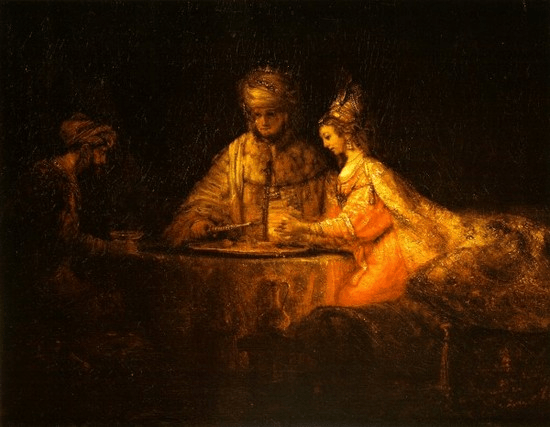
The King, Haman, and Esther, by Rembrandt van Rijn, 1660

But God, who is always awake and alert to whatever is happening in this world, had their backs. Even though the book of Esther does not once pronounce the name of God, the Lord’s influence and divine sovereignty are evident throughout the entirety of the story. 

God seems to specialize in hard cases, and in people who keep getting into trouble, despite their good intentions. And through providential means, the Lord inevitably gains the glory, and God’s people are wonderfully saved from circumstances well beyond their ability to save themselves.

Esther, a Jewish girl who became part of the king’s harem, and then the king’s wife and queen, humbly and prayerfully entered the king’s presence on behalf of her people, the Jews. Even though she was exalted to such a status, there was still the very real possibility that taking such an initiative would get Esther into deep trouble.

Yet, because of divine providence superintending the whole affair, the tables were turned, with the Jews being joyously delivered; and Haman literally finding himself at the end of his rope, on his own gallows. 

Prayer, sensitivity to God, and the humility to listen, undergirded Esther’s decision and courage to step out and act on behalf of her people. 

Especially when it comes to trouble, prayer is not optional equipment for the believer, but absolutely essential to facing each and every difficult situation. That’s because it is God, not us, nor any of our skill or ingenuity, that ultimately brings deliverance. 

Saving ourselves from impossible situations and dire circumstances is way above our pay grade; only God can bring true deliverance – the kind that genuinely changes people so that divine purposes are accomplished.

Our discouraging situations, hard cases, difficult people problems, and vexing trouble – whatever the situation – God has your back, and delights to answer our desperate pleas for help and deliverance. 

Like me, you may find yourself in trouble. But you can also find yourself with all the power of heaven behind you; and with an answer to your prayer that is beyond what you can even think or imagine.

Loving God, your Son Jesus Christ came that we might have life and have it abundantly. We humbly ask that you pour out your blessing upon our nation. Where there is illness, bring your healing touch; where there is fear, strengthen us with the knowledge of your presence; where there is uncertainty, build us up in faith; where there is dishonesty, lead us into truth; where there is discord, may we know the harmony of your love. This we are to bold to pray through Jesus Christ our Lord, who with you and the Holy Spirit are one God, now and forever. Amen.

The End of the World (Matthew 24:1-14)

The Final Sign

Jesus left the temple and was walking away when his disciples came up to him to call his attention to its buildings. “Do you see all these things?” he asked. “Truly I tell you, not one stone here will be left on another; every one of them will be thrown down.”

As Jesus was sitting on the Mount of Olives, the disciples came to him privately. “Tell us,” they said, “when will this happen, and what will be the sign of your coming and of the end of the age?”

Jesus answered: “Watch out that no one deceives you. For many will come in my name, claiming, ‘I am the Messiah,’ and will deceive many. You will hear of wars and rumors of wars, but see to it that you are not alarmed. Such things must happen, but the end is still to come. Nation will rise against nation, and kingdom against kingdom. There will be famines and earthquakes in various places. All these are the beginning of birth pains.

“Then you will be handed over to be persecuted and put to death, and you will be hated by all nations because of me. At that time many will turn away from the faith and will betray and hate each other, and many false prophets will appear and deceive many people. Because of the increase of wickedness, the love of most will grow cold, but the one who stands firm to the end will be saved. And this gospel of the kingdom will be preached in the whole world as a testimony to all nations, and then the end will come. (New International Version)

I am a suspicious person when it comes to end-time gurus. I find most of them to be false teachers, trying to scare people into their own little group, like a bunch of nuts in a fruitcake.

Yet, Jesus is an end-time preacher, giving an answer to those who asked him about the future and how things will literally shake up and shake out at the end of the world. So, because I trust him when he lays out what will happen, I believe there is a time coming when there shall be a judgment of the living and the dead.

Christ’s disciples had heard Jesus pronounce doom on the Jerusalem temple, and wanted to know about when this was going to happen, along with the signs leading to it. Jesus then went on to tell them about a much bigger picture than what the disciples were asking for; Jesus described not only the end of the temple, but also the end of the world as we know it.

I often find myself warning people about buying into those who constantly and confidently talk of the end, as if they have the inside track on it. Jesus did the same; so I’ll take my cues from him. Notice the warnings he offered his disciples concerning signs of the end time:

Don’t let anybody fool you

Watch out for deceivers. False teachers are those who claim to be Christians and have insider information from all their great study. Stay clear of them. Their sense of superiority, because of their supposed knowledge, will trick many people. Don’t be fooled by them.

Don’t be afraid

Anyone who pays any sort of attention to the news – whether local, national, or international – is likely to be concerned about the state of our world. We may even become terrified. But Jesus wants us to avoid being fearful all the time. And that will only happen if we listen as much or more to him than we do people who whip up a frenzy and get us all upset – much like talk radio hosts do to their audiences; or hack preachers do to spiritually vulnerable Christians.

We can be wise and discerning without being fearmongers and constantly worried. In times of crisis and disaster, Christians really ought to be the calmest people on the planet.

Armies may surround me,
    but I won’t be afraid;
war may break out,
    but I will trust you. (Psalm 27:3, CEV)

Wars, rumors of wars, coups, famines, and earthquakes happen. All these, and more, are signs – just like a woman with labor pains, about to give birth. When we look ahead, we may feel apprehensive, upset, and afraid with pain. But our fear will eventually give way to joy. Before things get better, things will get a lot worse. Disaster and destruction will lead to the renewal of all things.

The world will hate you

Because there is fear and deception, the Church will become an oppressed victim. The world hates those who truly follow Christ. All that has been simmering underground will break out in persecution against believers.

So, it ought not surprise any Christian or any Church when there is intolerance and disdain against them. Anyone following Jesus should expect the same treatment he received in his last days on earth.

Many “Christians” will turn against each other and hate each other. They will drop out and refuse association with Christ or his Church. The outside pressure will become intense enough to force a crumbling of the Church on the inside. Parishioners will tear each other to pieces.

Unfortunately, the world’s hate leads to the church’s apostasy – a turning away from faith. And this situation is a ripe situation for false teachers to rise and have their way. People will glory in their shame.

The ones who stick it out will be saved

The true believer holds onto faith, despite the intense pressure of hatred. This isn’t salvation by works; it’s salvation by a faith that is authentic, genuine, and the real deal. This faith remains as a testimony to all that love still exists and will never be extinguished.

And then the end will come.

There shall always be the good news in the middle of all the terribly bad news. Divine sovereignty will always be above the world’s hate and disorder.

Therefore, let the believer be the herald of good news and give themselves to the mission of faith, grace, hope, and love in Christ. No matter where or when you locate the time of great tribulation, it is always open season on gospel proclamation.

God will make something out of nothing. Trouble, hardship, oppression, persecution, and death are the signs of the end. Now is the time for faith and patience. Now is the opportunity to love with the light that penetrates the darkness of hate.

Eternal God, you are the light of the minds that know you, the joy of the hearts that love you, and the strength of the wills that serve you. Grant us to know you that we may truly love you; to love you so that we may truly serve you, through Jesus Christ our Lord. Amen.

The Example of John the Baptist (Matthew 14:1-12)

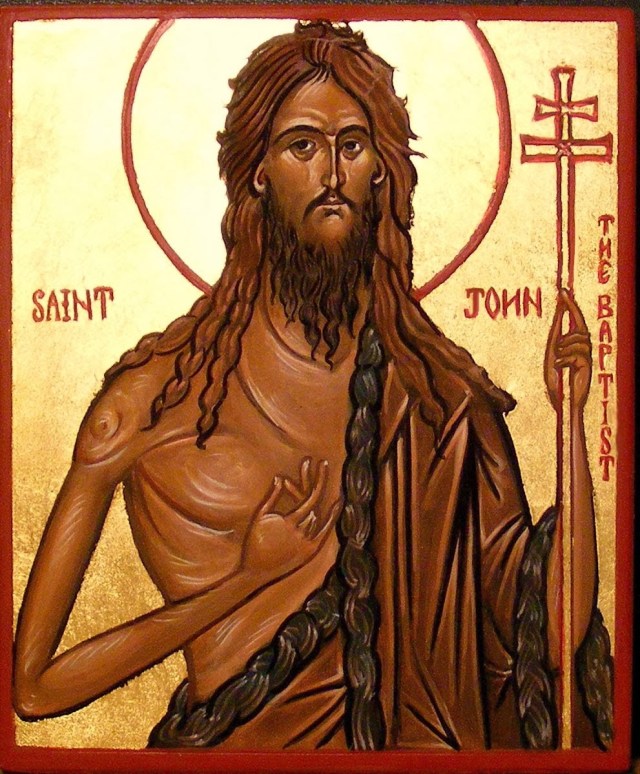
John the Baptist preaching, by George Maurice Cloud (1909-1973)

At that time Herod the ruler heard the news about Jesus. He said to his servants, “This is John the Baptist. He’s been raised from the dead. This is why these miraculous powers are at work through him.” Herod had arrested John, bound him, and put him in prison because of Herodias, the wife of Herod’s brother Philip.

That’s because John told Herod, “It’s against the law for you to marry her.”

Although Herod wanted to kill him, he feared the crowd because they thought John was a prophet. But at Herod’s birthday party Herodias’ daughter danced in front of the guests and thrilled Herod. Then he swore to give her anything she asked.

At her mother’s urging, the girl said, “Give me the head of John the Baptist here on a plate.” Although the king was upset, because of his solemn pledge and his guests he commanded that they give it to her. Then he had John beheaded in prison. They brought his head on a plate and gave it to the young woman, and she brought it to her mother. But John’s disciples came and took his body and buried it. Then they went and told Jesus what had happened. (Common English Bible)

John the Baptist’s murder is not only an ancient story; it’s also a story about our contemporary world – a world of power, sex, and intrigue. Times may change, but people across the ages do not. Humanity is fundamentally the same in every century. And the world is still the world, no matter the historical time. 

The contrast between King Herod and John the Baptist supply us with two types of people who exist throughout every age of humankind, offering us the choice of which way we will go with our lives. The story illustrates for us the reality of living in a fallen world as a devout person.

The Herod in today’s Gospel lesson was a son of Herod the Great, the one who killed all the male babies when Jesus was born in order to try and get rid of any rival king (Matthew 2:1-18). King Herod is displayed in the narrative as a tragic and pathetic figure who is ruled by his own lusts. He seems too proud and wimpy to admit he made a rash promise. He killed a man just to save face with his guests at a party.

This a Jerry Springer worthy family drama: The Herod family was rich, proud, and downright violent. They tended to marry within their own clan to hold their power and possessions for themselves. Herodias married her uncle Herod Philip; Salome was their daughter.

Later, Salome married Philip the tetrarch, half-brother to Herod Philip. Through marriage, Salome became both aunt and sister-in-law to her mother. Then the Herod in our story married Herodias, who had been married to Herod’s half-brother, Herod Philip. Having fallen in love with Herod Antipas, Herodias divorced Herod Philip to marry Herod Antipas.

Sheesh, nothing quite like complicated family drama.

Orthodox icon of John the Baptist

Into this violation of Old Testament marriage laws (the Herod’s were Jewish) came John who made no bones about the fact this was not right (Leviticus 18:16, 20:21). Herodias nursed a grudge against John for speaking out against her and Herod’s choices.

Hell, hath no fury like a woman’s scorn, and when Herodias found an opportunity to get rid of John, she coached her daughter into asking for John the Baptist’s head on a platter. Herod, too insecure to take back his ridiculous promise and look like a fool, consented to the execution of John.

In contrast to all this tragic theater is John the Baptist. John was a messenger of God and a preacher of repentance. As one who was preparing the way for Jesus, his message was simple and to the point: Repent, for the kingdom of God is near.

John got into trouble and lost his life because he spoke truth to power by meddling in the life of King Herod and his family. The Herod’s were the political establishment of the day, and John did not temper his words when dealing with them.

There is a refreshing integrity about John. He was always the same, no matter where he was, and no matter who the people were around him. In contrast to Herod, John was bold, courageous, confident, unafraid, and secure enough in his relationship with God to engage in ministry without thought to the consequences. 

John was unconcerned for what others might think of him, if he proclaimed truth in the public square, and it ended up costing him his life.

John the Baptist Rebuking Herod, by Giovanni Fattori (1825-1908)

The story of John the Baptist’s death speaks about the hostility of this world. And it prefigured and foreshadowed the death of Jesus:

  • Like John, Jesus was executed by the civil authorities.
  • Herod, like Pilate after him, hesitated to execute and was swayed by the crowd.
  • Herodias, like the chief priests toward Jesus, finally got her way through scheming and manipulation.
  • John’s disciples came and took his body and buried it, just like Joseph of Arimathea and Nicodemus did for Jesus.

These stories, on the surface, appear to be only gloom and doom. Yet, there is a message of hope and joy. The absurd is working out itself in deliverance from sin, death, and hell. Through death, Jesus conquered death. We now have no fear of death; its sting has been taken away. Without fear of death, we have no reason to fear life with its troubles and tribulations.

The fork in the road is between the way of John or Herod. It’s a values-based decision. If worth is derived from what we do, what we have, and/or other’s opinion of us, we will likely identify more with Herod and his choices. If there is a preoccupation with hoarding power and control, this is the path of Herod. 

Conversely, if the ultimate value is in knowing Christ crucified and the power of his resurrection, then we identify with John as our spiritual ancestor. If security and worth is derived from being in Christ, then there is boldness to speak truth to power and give grace to the powerless.

Herod saw no further than his immediate needs and safety; he failed to discern his own heart. Because of his spiritual blindness, Herod did not look away from himself and look to God. Faith in Jesus comes when persons look away from themselves and look to Christ who holds the power to free all from spiritual bondage.

Consider the example of John the Baptist. He consistently sought to do the will of God as best as he understood it. Together with all God’s people past and present, we declare that God is with us, the kingdom of God is near, and the love of Christ brings faith and hope.

Almighty God, through your providence John the Baptist was wonderfully born and was sent to prepare the way of your Son, our Savior, by the preaching of repentance. Lead us to repent according to his preaching and, after his example, constantly to speak the truth, boldly to rebuke vice, and patiently to suffer for truth’s sake; through Jesus Christ your Son, our Lord, who is alive and reigns with you, in the unity of the Holy Spirit, one God, now and forever. Amen.

Naming and Forsaking Evil (Psalm 83:1-4, 13-18)

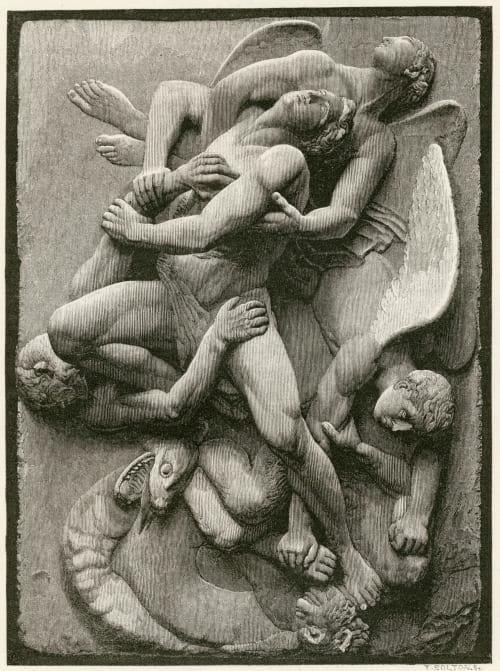
Deliver Us From Evil, by John Flaxman (1755-1826)

God, don’t shut me out;
    don’t give me the silent treatment, O God.
Your enemies are out there whooping it up,
    the God-haters are living it up;
They’re plotting to do your people in,
    conspiring to rob you of your precious ones.
“Let’s wipe this nation from the face of the earth,”
    they say; “scratch Israel’s name off the books.”
And now they’re putting their heads together,
    making plans to get rid of you….

My God! I’ve had it with them!
    Blow them away!
Tumbleweeds in the desert waste,
    charred sticks in the burned-over ground.
Knock the breath right out of them, so they’re gasping
    for breath, gasping, “God.”
Bring them to the end of their rope,
    and leave them there dangling, helpless.
Then they’ll learn your name: “God,”
    the one and only High God on earth. (The Message)

The psalms are the church’s prayer book. Many of the psalms are laments; and many of them are worshipful songs of praise. And there are also the “imprecatory” (pronounced im-PRECK-a-tory) psalms. To “imprecate” means to invoke evil upon someone; it is to pronounce a curse. 

The reason for the imprecatory psalm is that it is not any person’s place to engage in revenge or retaliation. Instead, for people who are genuinely caught in the crosshairs of evil and have sinful persons dogging them, prayer is their most effective recourse; an appeal to God is their best chance at survival and hope.

Sometimes you have to tell it like it is. There’s a time to do your best in putting up a good face and dealing with people who never stop gossiping, slandering, and trying to get their way. But there is also a time to call such behavior “evil” and cry out to God for help.

There are a lot of folks who consider imprecatory psalms a problem because of their detailed expressions of imprecation, of cursing. Yet, such psalms refuse to put a positive spin on malevolent motives, wicked words, and destructive actions.

Desperate people utter desperate prayers. Their unflinching sense of injustice will not allow them to sugarcoat the villainous plans of corrupt people.

Evil is never toppled with tepid prayers from wimpy worshipers. Rather, nefarious agendas are thwarted in the teeth of specific, focused, and intense prayers directed with spiritual precision and passion to the very core of diabolical forces.

We need not be shy about being real with God, even with praying imprecatory prayers. There really are people in this world, maybe even in your own life, that have malicious intent against you or others. Our job is not personal revenge, but to entrust ourselves to the God who fights for the poor, the oppressed, and the needy against the arrogant and the powerful. Let your prayers, then, reflect your life.

Along with psalms of praise lifted during times of celebration, so imprecatory psalms are not to be ignored but need to be uttered equally loud as prayers to almighty God in seasons of desperate evil.

If you have a gut feeling deep down that wicked people are running amok, then use this psalm as a prayer against the darkness which seeks to envelop the earth.

Jesus Christ will build his church and the gates of hell shall not overcome it (Matthew 16:18). The picture Jesus portrayed is one of faithful believers equipped with righteousness and justice storming the gates of hell, not shying away from it. Baked within the Lord’s words were the promise that evil atrocities will not have the day – that God’s people will not be destroyed or overwhelmed because of demonic and satanic power.

There is a time to flee and then there is a time to engage. I am suggesting that the chief way of mitigating evil is to punch it in the mouth with imprecatory psalms prayed with righteous flavor and focused directly against the powers of this present darkness. Why pray, out of all the things we could do, in order to deal with the evil of this world?…

For we do not wrestle against flesh and blood, but against principalities, against powers, against the rulers of the darkness of this age, against spiritual hosts of wickedness in the heavenly places. (Ephesians 6:12, NKJV)

Spiritual problems require spiritual implements to solve. And the tool of imprecatory psalms is a major way of pushing back the dark forces of this world, as well as the means of spiritual assertiveness against all forms of heinous acts and acerbic words from depraved people and evil systems.

God’s wrath is an expression of God’s love – because God is not okay with evil taking root in the lives and institutions of humanity. Prayer is our privilege of coming to the God who upholds justice and righteousness. For if God is for us, who can be against us?

Almighty God, hear me in the day of my trouble and send help from your holy sanctuary and strengthen my faith. Do not let me amble down the path of temptation, but deliver me from the evil one.

Holy Spirit, breathe your enablement into me and inspire me with a passion for goodness, truth, justice, and righteousness.

Lord Jesus be present with me in your risen power and protect me from harm and from everything that hinders your healing presence in this world. You overcame the forces of Satan, redeemed the world, then ascended to the Father.

Blessed Holy Trinity – Father, Son, and Sprit – the God whom I serve: May you be with me and within me; before me and behind me; on my right and on my left; above me and beneath me; and around me always, for the sake of your glory. Amen.