Trinity Sunday (John 16:12-15)

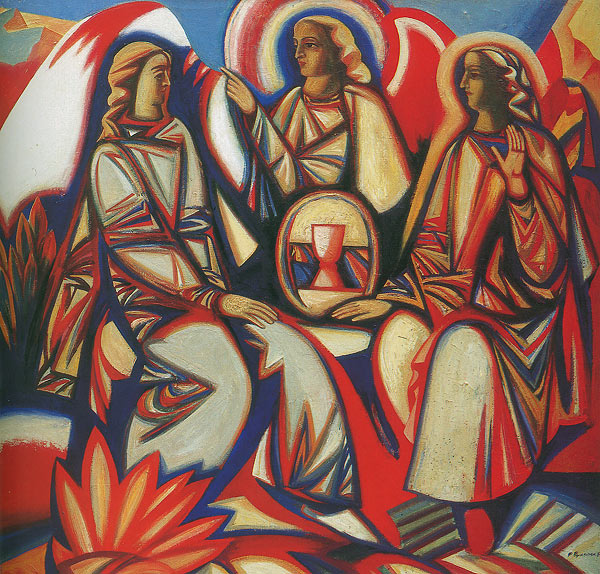
Holy Trinity, by Andrei Rubley

“I still have many things to say to you, but you cannot bear them now. When the Spirit of truth comes, he will guide you into all the truth, for he will not speak on his own but will speak whatever he hears, and he will declare to you the things that are to come. He will glorify me because he will take what is mine and declare it to you. All that the Father has is mine. For this reason I said that he will take what is mine and declare it to you.” (New Revised Standard Version)

Trinity Sunday is an annual celebration on the Christian Calendar which focuses intentionally on the mystery, power, and beauty of the triune God – Father, Son, and Spirit. All three persons of the Holy Trinity exist together in eternal love, harmony, and unity with each other as one God.

This day is much more than a doctrinal and theological affirmation. It is a reminder that our theological impulses are to have movement toward union with this triune God, to participate in the Divine dance of the Trinity.

The Christian life is oriented toward the Trinity. Christianity is a path, a road, a journey with God. It is a pilgrimage of the soul that demands our time, effort, and courage.

In other words, we are meant to experience God as Father, Son, and Spirit, rather than merely acknowledging the Trinity. Not only are we to know God; we are designed to feel at the core of our being the existential presence of God. What’s more, the Holy Trinity participates within the Godhead to help make that happen within us.

The Trinity we see in the Gospel of John is a presentation of God’s love for us. A gracious window is opened to the mystery of the one God in three persons. This allows us to see and feel that this trinitarian love holds us in a Divine embrace.

In Christ’s Farewell Discourse (John chapters 13-17) love is the dominant theme. Love is what Jesus wanted to leave with his disciples, and to remind them that all things are to be said and done with love. Christ promised the giving of the Spirit as a gift of love, so that we will learn to love ourselves and others.

There is eternal love, unity, and harmony continually flowing from the Father who sent the Son for us and for our deliverance, and from the Spirit who dwells with us in an abiding presence of love. Together the Father, Son, and Spirit develops us as lovers, loving the world just as God does.

The heavenly Father holds us in love so that we will hold the world in love.

Jesus the Son comes among us and reassures us of Divine love so that we will bring love to the world.

The Spirit guides us into the truth of love so that we will display love for one another in front of the world.

As Christians bravely, patiently, and calmly walk the road of the Christian life, they grow more and more in love with God, and therefore, more in love with the world that God loves so much.

There is an interaction between the Father and the Son marked by truth and love. Jesus graciously invites the believer into this conversation. In addition, the Spirit instructs us so that our speech and behavior will emulate the love which always takes place within the Trinity.

The reality of the Holy Trinity helps us experience and feel that God is for us; God is with us; and God is in us.

Sometimes we get hung up on the timing of things. We want what we want now. We don’t understand why God isn’t coming to our rescue. We wonder if God is even around because of this crud-encrusted planet we live on with all of its natural disasters and human destruction.

Yet, let’s keep in mind that the triune God has forever existed. God is constant. Father, Son, and Spirit are continually working in the immediacy of the now. We have been offered Living Water, but the water pouring forth now is not the same as what came before and what is to come – just as the water in a river flows by us, having come from somewhere downstream, and going somewhere else.

Time is irrelevant. All we have is the now. When we hold on to the past and/or have anxiety about the future, we are failing to live in the present. And in this very moment, the triune God is present with you, is in you, and is for you. Live in the now, and not so much in the has been and the not yet.

God only becomes real to us when I am. Then, the great “I AM” is able to dwell with the little “I am” of me in the present tense of now.

Because God is God, there will always be a mystery, because trying to understand the Holy Trinity – the great Three in One – shall forever elude us. We have not been called to understand God; we are called right now to submit to the unfolding of what God wants to reveal to us.

The triune God has shown us that within the Trinity there exists perfect love, harmonious unity, infinite beauty, and great goodness. As people created in the image of this God, we have the capacity to pursue these very same qualities. With God’s enablement, we can be a source of light and hope to a world which needs an experience of Divine love and truth.

God of heaven and earth, before the foundation of the universe and the beginning of time you are the triune God: the Author of creation; the eternal Word of salvation; and the life-giving Spirit of wisdom.

Guide us, O God, to all truth by your Spirit, so that we may proclaim all that Christ revealed and rejoice in the glory he shared with us. Glory and praise to you – Father, Son, and Spirit – now and forever. Amen.

Spiritual Blessings (Ephesians 1:7-14)

The Trinity, by Ukrainian artist Feodosiy Humeniuk, 1981

In him we have redemption through his blood, the forgiveness of our offenses, according to the riches of his grace that he lavished on us in all wisdom and insight.He did this when he revealed to us the mystery of his will, according to his good pleasure that he set forth in Christ, toward the administration of the fullness of the times, to head up all things in Christ—the things in heaven and the things on earth.

In Christ we too have been claimed as God’s own possession, since we were predestined according to the purpose of him who accomplishes all things according to the counsel of his will so that we, who were the first to set our hope on Christ, would be to the praise of his glory. And when you heard the word of truth (the gospel of your salvation)—when you believed in Christ—you were marked with the seal of the promised Holy Spirit, who is the down payment of our inheritance, until the redemption of God’s own possession, to the praise of his glory. (New English Translation)

The Apostle Paul wrote this letter to the Church at Ephesus. Believe it or not, the first chapter of Ephesians  comprises only two sentences in the Greek language for which he originally wrote. Ephesians 1:3-14 are one sentence, and Ephesians 1:15-23 is the other sentence. Thankfully, understandably, and mercifully, English translators have created multiple sentences for us so that we can better make sense of the text. 

It’s almost as if Paul was so excited to talk with the Ephesian believers about who they are in Jesus Christ and what they possess in him that he blurted out in writing with a flurry of enthusiasm and excited fervor without stopping to take a breath or a break.

Paul stacked word after significant word, on top of each other, in order to communicate the spiritual blessings that believers in Christ enjoy. Redemption, forgiveness, grace, wisdom, insight, predestination, faith, inheritance, and salvation are just some of the blessings given to those in union with Jesus Christ.

And, if that wasn’t enough, God has also graciously given us the Holy Spirit, the Paraclete, the one who comes alongside and helps us to live into the blessings we possess. Because God the Father predestined and elected us, God the Son redeemed us, and God the Spirit took possession of us, we are delivered from sin, death, and hell.

It’s as if we came to Christmas day expecting a package of underwear, and found instead a bunch of big boxes with some of the most lavish and expensive gifts we’ve ever seen!  This says much more about the giver than it says about us.

It was according to God’s good pleasure in Christ through the Spirit that believers in Jesus have such privileges.  Like the parent who sits back and watches the unpackaging of presents happen with great joy, so God delights and is pleased with the gifts given to us. The Lord absolutely delights in watching us unpack them and use them in this life.

These gifts, these blessings, are all lavishly provided because they are extensions of God, as if the Lord meticulously handmade each present with us in mind.

Throughout the entirety of Holy Scripture, all the stories and narratives, teachings and writings, are about God. The Lord of all creation is both the subject and object of each book of the Bible. Every good thing we have in this life is because of God’s gracious presence and power in this world.

Each positive experience we have is a direct result of God’s steadfast love toward people. All good gifts come from a good God who is delighted and pleased to give them.

Not a one of us purchased our own gifts and stuck them under the tree. God bought them all with the precious blood of Jesus and sent the Spirit to deliver them to us. 

Consider setting aside time today or tomorrow in a quiet place, and reflect on just one of the words in today’s New Testament lesson. Think about redemption or forgiveness, salvation, or grace, or any of the words which grab you.

Say the word repeatedly and meditatively, quietly and loudly, thoughtfully and with flavor. Consider what God did to bring you that gift. Contemplate the way(s) in which you have received the gift. 

Plan one way in which you might share your gift with another person. And make sure to give glory and praise to God for the grace lavishly given to you.

May your meditation lead to a deeper appreciation of what God has done for you; and may that revelation result in praise, honor, and glory to the One who accomplished so much on our behalf.

Gracious God, you have revealed and made known the way of deliverance from the power of darkness and brought me into your marvelous light. Help me to better understand all the ways you have acted on my behalf so that my life might reflect your grace and steadfast love to the world, through Jesus Christ, my Savior, in the enablement of the Holy Spirit. Amen.

Like Father Like Son (John 5:19-29)

The Trinity, by Ukrainian painter Feodosiy Humeniuk, 1981

Jesus responded to the Jewish leaders: 

“I assure you that the Son can’t do anything by himself except what he sees the Father doing. Whatever the Father does, the Son does likewise. The Father loves the Son and shows him everything that he does. He will show him greater works than these so that you will marvel. 

As the Father raises the dead and gives life, so too does the Son give life to whomever he wishes. The Father doesn’t judge anyone, but he has given all judgment to the Son so that everyone will honor the Son just as they honor the Father. Whoever doesn’t honor the Son doesn’t honor the Father who sent him.

I assure you that whoever hears my word and believes in the one who sent me has eternal life and won’t come under judgment but has passed from death into life.

I assure you that the time is coming—and is here!—when the dead will hear the voice of God’s Son, and those who hear it will live. Just as the Father has life in himself, so he has granted the Son to have life in himself. He gives the Son authority to judge because he is the Human One.

Don’t be surprised by this, because the time is coming when all who are in their graves will hear his voice. Those who did good things will come out into the resurrection of life, and those who did wicked things into the resurrection of judgment.”

(Common English Bible)

So goes the parent, so goes the child. Sons look and act a great deal like their fathers. And there is no mistaking the resemblance between Father of the heavens and Son of the incarnation.

In Christianity, to see Jesus is to see God. To know Christ is to know the Lord. They are distinct, yet inextricably linked as one; each is differentiated from the other in personhood, yet united with the same divine substance.

The deity of the Father and the deity of the Son is one, equal in glory, co-eternal in majesty.

What the Father is, the Son is.

Uncreated, eternal, almighty, and sovereign is the Father; uncreated, eternal, almighty, and sovereign is the Son.

The Father and the Son are not two gods but one God.

There is only one Father; there is only one Son. Each is neither greater nor lesser than the other.

Whoever wants to be saved from guilt, shame, sin, death, and hell – and to be delivered from the injustice of the world, the failings of oneself, and the machinations of evil, should think about the Father and the Son and the Spirit, the Holy Trinity, one God.

– Athanasian Creed

So, why is all this creedal Christian doctrine of any importance? Why pay attention to such things?

Because there are many issues and problems in this world of great importance which must be addressed and dealt with. We need to have some idea of how to go about: 

  • Governing ourselves as a free people
  • Eradicating poverty and disease
  • Educating our children
  • Paying taxes
  • Providing excellent and cost effective healthcare for everyone
  • Dismantling racism
  • Seeking peaceful international relations
  • Building responsible and accountable local community relationships
  • Supporting small businesses
  • Helping workers make a decent contributive living
  • Loving our families and faith communities 

It is my unshakable conviction that all these issues, and many others, need more than our collective mental attention and physical resources; these problems also need spiritual resolutions and solutions.

Seasons, years, centuries, and millennia come and go. People are born, live, and die. Generations exist and then are no more. Civilizations rise and fall. Through it all and above it all is the person of Jesus.

Christ is alive. He brings breath from dust, beauty from ashes, order from chaos, stability from insecurity, dignity from disrespect, and meaning from uncertainty. Jesus gives life, abundant and to the full.

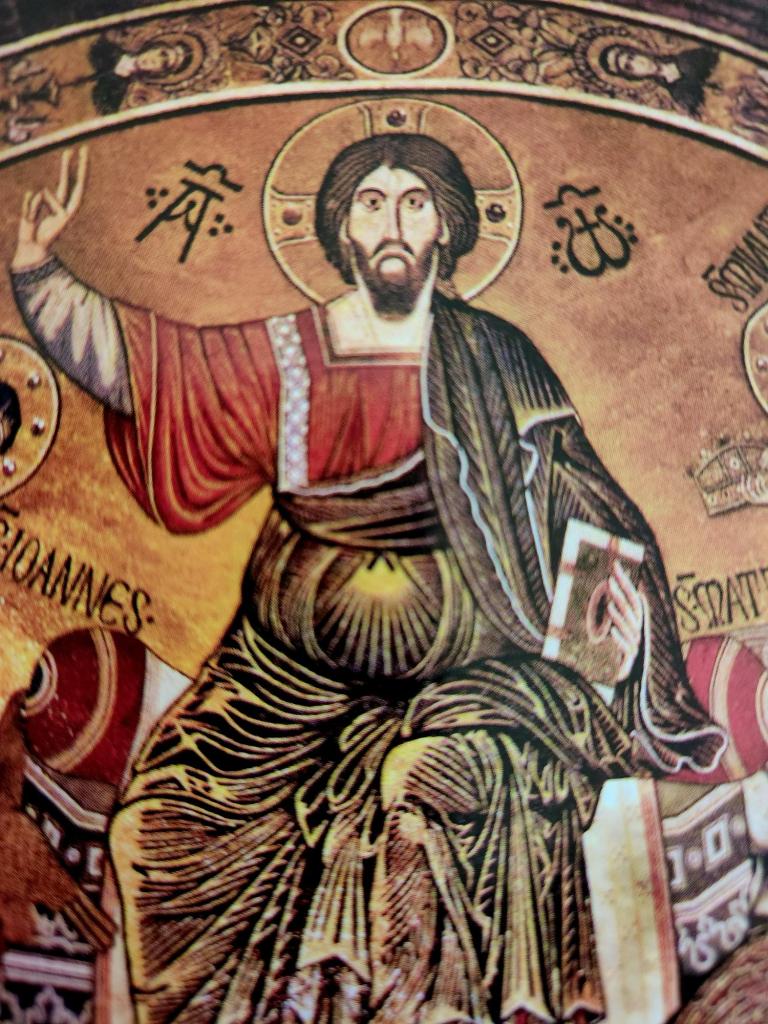
Christ the King, San Miniato al Monte Church, Florence, Italy

Today, this very moment, Christ is still on the throne of all creation. 

Human elections and institutions only have authority as given by Jesus, the Ruler of all.

Presently, Jesus is attentive and vigilant to people, actively interceding for us at the right hand of his Father in heaven. At this very moment, the Holy Spirit is the continuing presence of Christ on this earth, applying Christ’s redemption of humanity to the lives of millions. 

Sometimes we need to remember how important our spiritual resources are to living in this world – and to clarify what’s really of ultimate significance in this old broken world. 

My unwavering spiritual persuasion is this: People need the Lord. Therefore, it only makes good spiritual sense to live in ways that foster a connection with Jesus. 

This morning, I did what I do every morning – whether I’m sick or well, sad or happy, facing a busy day or a relaxed day – I began my day with Scripture reading, prayer, reflection, and gratitude. And I do it with the realization that Christ is King, that as the divine/human Lord of all, his:

  • authority is real
  • rule is benevolent
  • sovereignty is ubiquitous
  • reign is supreme
  • judgments are right and good
  • power is mighty enough to raise the dead

The Christian tradition holds that Jesus Christ is the exalted and glorified Son of God, the Sovereign authority over every dominion. The works of Jesus bear testimony to the cosmic reality that he is Lord of all. And, if that were not enough, Jesus shares his divine power with us, his people.

In the face of Christ’s majesty, the valid and appropriate response is sheer submission to Christ’s authority. 

Just as Jesus listened to the Father and obeyed the Father’s will, so we need to listen to Jesus and carry out his will. 

Just as Jesus enjoyed his relationship with the Father, so we are to bask in our wonderful relationship with Jesus. 

Since Jesus submitted to death on a cross and rose from the dead through God’s power, we now have access to that power by God’s grace through faith in Christ. And we are to use that divine power to take up our own cross and bear the great issues and problems of our day with all the spiritual resources granted to us in Christ Jesus.

Like Father, like Son. Like Christ, like Christians. May all followers of Jesus resemble their Lord in each word and in every way.

Almighty God, to you all hearts are open, all desires known, and from you no secrets are hid: Cleanse the thoughts of our hearts by the inspiration of your Holy Spirit, that we may perfectly love you, and worthily magnify your holy Name; through Christ our Lord. Amen.

Romans 5:1-5 – Maybe There Can Be Peace…

Therefore, since we have been justified through faith, we have peace with God through our Lord Jesus Christ, through whom we have gained access by faith into this grace in which we now stand. And we boast in the hope of the glory of God. Not only so, but we also glory in our sufferings, because we know that suffering produces perseverance; perseverance, character; and character, hope. And hope does not put us to shame, because God’s love has been poured out into our hearts through the Holy Spirit, who has been given to us. (New International Version)

Today, there are millions, perhaps billions, of people without peace in this world.

Maybe…

Maybe there isn’t much peace in your life. Because of that unsettled icky sense of agitation, your mind is somewhere else. It could be that you are upset about something that has happened or are worried about something that is going to happen. 

Maybe the lack of peace has to do with another person. They did or said something, and it’s been grinding on you. So, you are having conversations with that person in your head for which you will probably never say aloud. 

Maybe you have to deal with someone else who doesn’t have peace, and it’s creating stress for you. And you are wondering when things will settle down.

Maybe the lack of peace runs much deeper than your immediate circumstances and plans. 

Maybe every day, day-in-and-day-out, you are not quite sure about where you stand with a person or a group of people.

Maybe you aren’t sure about how you stand with God. You wonder whether God is really pleased with you, or not. 

Maybe you aren’t even in touch with your lack of peace because you are an expert at pushing whatever feelings you have so far down that you think you’re fine. But you really aren’t.

Maybe you are a perfectionist…

Perfectionists are never at peace. The specter of perfectionism always hangs in the air. There’s a steady stream of “should have’s,” and “could have’s” making noise in your head. Your work, no matter how good, is never good enough. “I should have done better.”  “I ought to do better.”  “I must be better.” 

Instead of viewing life’s opportunities as challenges to be welcomed, the perfectionist sees life as one unending mountain to climb, never quite reaching the top. 

The constant companions of perfectionistic people are disappointment, condemnation, frustration, and perceived failure. There is, for them, an internal world of self-loathing based on the lie that I am not enough – I have to be perfect. Peace, for the perfectionist, is a pipe dream.

Maybe we could focus a bit on God…

The Christian God is a triune God, existing in three persons – Father, Son, and Spirit – the great Three-in-One. The Trinity is the basis for all we are and all we do.

All of life is grounded in the triune God. God exists in perfect unity and harmony. God is God’s own community of glorious love. God’s glory is primarily seen on this earth through creation, through us, God’s creatures.

Glory is revealed as we reflect the image of God stamped on us in creation. Since God is love, God’s people are to be characterized by love – loving God, loving one another, and loving neighbor. God’s people are meant to exist together in unity and harmony, reflecting the very nature of the Holy Trinity. 

Yet, after the creation of the world and humanity, man and woman fell into guilt and shame through bucking God’s design for people. Ever since, God has been on a mission to reclaim the lost glory.

Maybe we need to focus on the Son… 

The ultimate expression of God’s mission was the sending of the Son to this earth. It is through Christ’s life, death, resurrection, and ascension that the way has been opened to a renewed relationship with our triune God.

The way is now clear for us to experience real practical peace. It has been achieved through the cross of Jesus Christ.

Therefore, since God has initiated a rescue mission for us by sending the Son, since we have been justified through faith, we have peace with God. 

To be justified means God made us righteous – has made things right between us. God has also provided access for us to be right with each other and the rest of creation. To put this in a contemporary vernacular, we ask God, “Are we good?” and God responds, “We’re good.”

Since then, we’re good with God, we have peace with God. 

Since then, that is true, we cannot try and get peace by another way.

Peace does not come through doing the right things, and by being a good person. 

Peace does not come through trying to obtain feelings of peace.

Peace is not merely the absence of conflict – of just keeping people from strangling each other and harming one another. 

Peace cannot be achieved by trying to relieve anxiety through better effort. 

Maybe grace is the answer…

The antidote to perfectionism, the resolution to feeling a lack of peace is unconditional approval from God. 

Grace is the elixir of life. 

Grace is the thing a perfectionist cannot work to obtain, and the thing that truly helps. 

Grace is freely given; it is a gift.   

Grace (God’s loving unconditional acceptance of us) is the true way of peace.

Some folks have so tied themselves to impossible performances and conditional love that the gift of grace is hard to accept. 

Change won’t happen overnight, and that’s okay – because God deals with us according to grace, not by earning spiritual merit badges. 

The renewal that brings transformation is a process, not an event. In Scripture it’s called “sanctification.” So, it’s important to enjoy the process. 

When you’ve caught yourself going back to the pigsty of perfectionism, instead of beating yourself up, go ahead and laugh at yourself and your own fallibility. Perfectionists take themselves way too serious. Anytime they can lighten up, it lights up the face of God (in a non-performance sort of way!).

Maybe peace is possible…

Peace delivers us from our brokenness.  Again, let’s return to the triune God. There is perfect peace within Father, Son, and Spirit. God is perfect unity, harmony, and love.

Peace means living, working, and playing together. 

Peace means experiencing wholeness, integrity, and contentment, even in the midst of hard circumstances. 

Peace means being a peacemaker.

The late Fred Rogers, from Mister Rogers’ Neighborhood, got into television because he didn’t like TV. During spring break of his senior year in seminary he encountered television for the first time. What he saw repulsed him because he saw people demeaning each other and not having peace.  

Fred Rogers worried that TV programming would create a generation of emotionally-bankrupt children. Faced with the decision to either sour on television itself or work to restore the medium, he chose the latter. He dropped out of seminary and began pursuing a career in broadcasting. Fourteen years later, he created a television show that shaped entire generations of children, running on PBS from 1968-2001.

Mr. Rogers was a devout Christian who rarely talked about his faith on the air. Yet, his show infused our society with beauty and grace. “You’ve made this day a special day by just your being you,” he’d famously sign off. “There is no person in the whole world like you, and I like you just the way you are.” 

In many ways, the lasting legacy of Mr. Rogers will not only be the greater emotional stability of generations of children, but also his wonderful example of peace and how to restore the world through basic human kindness.

Maybe the path of peace is different than I believed…

Having all our circumstances like we want them is not the basis of experiencing peace. That’s being delusional. Peace doesn’t happen whenever everything goes our way.

Instead, we are to rejoice in all our circumstances, even the ones which cause suffering – because they the Holy Spirit’s means of teaching us to experience the peace we long for.

Suffering is our triune God’s way of weaning us off all that divides and antagonizes so that we can attach ourselves to God’s peace. 

One of the most read Christian books of all time was written in the 1500’s by a French woman known as Madame Guyon. She saw the disunity of the world and the lack of peace in our individual lives as stemming from our lack of practicing God’s ways. 

Much of the world doesn’t know what to do with suffering, and does not accept it, because people want their own way with everything.

War and Peace by U.S. Air Force Staff Sgt. Jamal D. Sutter

To know God’s peace, we must practice just the opposite – by refusing all personal desires we have, whether good or bad. Why? Because the practice of refusing our own will breaks it free so it can attach to God’s will.  

We need our brains to be rewired in saying “no” to ourselves.

The other part of Madame Guyon’s practice is to accept every circumstance, even difficulty and suffering, with joy and thanksgiving. 

We can learn to say “yes, thank you” for each hard circumstance, whether good or bad. As in the case of Mr. Rogers, the evil we observe can spur us toward making peace in this world. We detach from personal desires so we can attach to what God wants to do.

Peace, on the practical level, comes from persevering under suffering and rejoicing in it. Why rejoice? Because suffering produces character and character hope. There cannot be hope without suffering. 

God the Father called God the Son to suffer; and God the Spirit leads us into suffering so that we might know peace and hope on a daily basis.

Conclusion

Abandon everything to God. Let it go – every dream, every personal desire, everything you have so that you are free to know God’s will for your life. 

Accept each circumstance you face with joy and thanksgiving. The Trinitarian love of God is poured into our hearts through every circumstance of life, even if it is difficult and hard. 

When we practice abandonment of our wills and acceptance of our circumstances, the result gives us hope, the confident expectation that nothing in our lives happens in vain. 

Every situation can lead us to know God and experience peace. This is very different from simply believing in the Trinity; it is to daily experience the Trinity. 

Glorious God, make your presence known through our worship, our prayer, and our reading of your Word. Father, Son, and Holy Spirit, within you lies unity, love, justice, peace, and power.

Fill our outstretched hearts with your Spirit and encircle us with your love. Make yourself known to us in new and challenging ways. Empower us to forsake every will but your own.  Inspire us toward your peace. Do with us what you will, through Christ our Lord in the power of the Holy Spirit. Amen.