Against Exorbitant Wealth (Amos 3:9-4:5)

Proclaim to the strongholds in Ashdod
    and to the strongholds in the land of Egypt,
and say, “Assemble yourselves on Mount Samaria,
    and see what great tumults are within it
    and what oppressions are in its midst.”
They do not know how to do right, says the Lord,
    those who store up violence and robbery in their strongholds.
Therefore thus says the Lord God:
An adversary shall surround the land
    and strip you of your defense,
    and your strongholds shall be plundered.

Thus says the Lord: As the shepherd rescues from the mouth of the lion two legs or a piece of an ear, so shall the people of Israel who live in Samaria be rescued, with the corner of a couch and part of a bed.

Hear and testify against the house of Jacob,
    says the Lord God, the God of hosts:
On the day I punish Israel for its transgressions,
    I will punish the altars of Bethel,
and the horns of the altar shall be cut off
    and fall to the ground.
I will tear down the winter house as well as the summer house,
    and the houses of ivory shall perish,
and the great houses shall come to an end,
            says the Lord.

Hear this word, you cows of Bashan
    who are on Mount Samaria,
who oppress the poor, who crush the needy,
    who say to their husbands, “Bring something to drink!”
The Lord God has sworn by his holiness:
    The time is surely coming upon you
when they shall take you away with hooks,
    even the last of you with fishhooks.
Through breaches in the wall you shall leave,
    each one straight ahead,
    and you shall be flung out into Harmon,
            says the Lord.
Come to Bethel—and transgress;
    to Gilgal—and multiply transgression;
bring your sacrifices every morning,
    your tithes every three days;
bring a thank offering of leavened bread
    and proclaim freewill offerings, publish them;
    for so you love to do, O people of Israel!
            says the Lord God. (New Revised Standard Version)

Orthodox icon of the prophet Amos

The prophet Amos sought to leave no stone unturned in exposing the transgressions of God’s wayward people. He went after social injustice; personal sins; religious idolatry; and all aspects of life in which the nation practiced self-indulgent hoarding of wealth and power.

Whenever people become focused on earthly power and control, they fall out of the realm of living in God’s power. If there is ever a personal or corporate sense of losing spiritual power, the problem is never with the Lord. The more one amasses worldly power and authority, the less effective they are with spiritual power.

It is possible for a nation or a church to have great political strength, yet in reality be powerless. Impressive constructed human strongholds are totally defenseless before the all-powerful God of the universe.

It’s always been curious to me why folks who claim the name of Christ, or who make grand confessions of faith, can then turn around and be enamored with obtaining wealth, real estate, resources of all sorts, and high-level positions. Such persons don’t deserve worldly power. It’s like putting a gold ring in a pig’s snout.

Persons with lots of worldly wealth and power will eventually find that their acquisitions fail them. And if their religion is powerless, everything in their life will lack power – no matter how it looks, or what spin they put on their situation.

Ignoring grace and mercy, compassion and kindness, to the poor and needy is a surefire way of experiencing divine condemnation. Treating one’s society and social relationships as mere pawns to get what I want is a prescription for alienation from God.

Whether someone believes in an almighty God, or not, oppressing and gaslighting others breaks down a society, and compromises basic law and order. Being concerned only with one’s constituents, and turning away from the common good of all, brings about injustice for the many.

But the ones in charge simply don’t care – which is why it raises the ire of a holy God. Any person who demeans meekness and gentleness, and clearly evidences a profound lack of humility, you can be sure that person is up to no good – despite any “good” words they might say.

Violence and robbery are the tools of those who care nothing for what their actions do to others. Justifying the rounding up of people into detention centers and robbing them of their lives and livelihood doesn’t fool God.

Those who go after unjust gain through any means possible will find that there is a boomerang effect to their actions. Their violent and unjust ways will turn back on them. They themselves shall be destroyed, and not the powerless and vulnerable.

In ancient Israel at the time of Amos, it was the Gentile nations who would rise up and be their judge. Pagan nations who thought nothing of despising and abusing others were the very ones to stand up and judge Israel. That’s how bad it was, even though there was wild prosperity, exorbitant wealth, and loads of power, that is, only among the upper class.

Living below the level of grace means showing no dignity or respect to one’s fellow humanity. It is unthinkable that such persons could or would ever exercise power in a democratic form of government. Just because they were elected and appointed to office, doesn’t mean they’ll act as civil servants.

Those in power who act only in self-interest will find themselves on the bad side of a holy God:

“Why would God withdraw from such a people? Because there was nothing in their lives corresponding to a heart concern for spiritual things; their character-reference could be written without mentioning God, or prayer, or holiness; their legacy to the future was wholly a testimony to a life lived for the body. And these claimed to be the people of God!” J.A. Motyer

Unchecked covetousness is actually a form of war against the poor. And any worship disconnected from righteousness and justice is an affront to both the needy among us, and God.

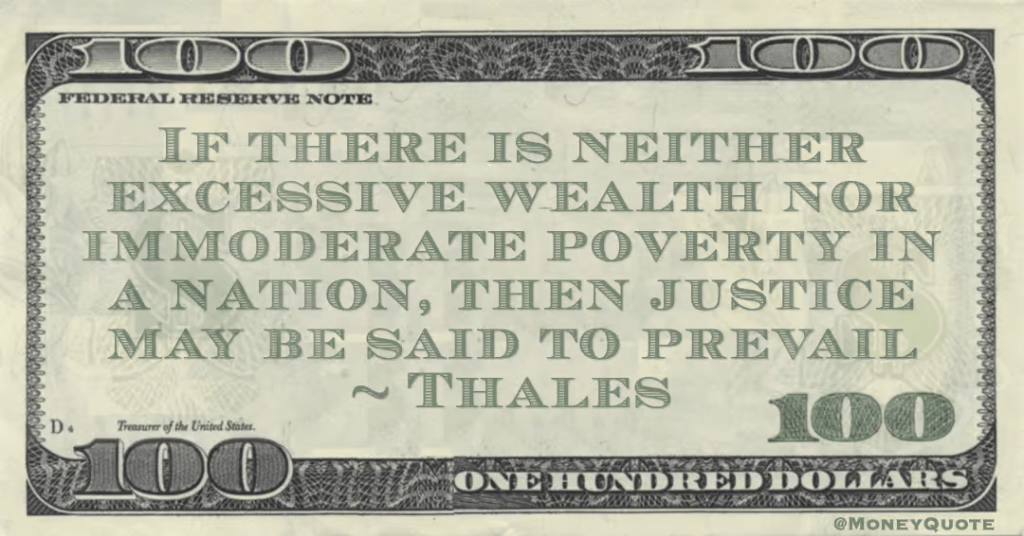
Wealth and power, in and of themselves, are neither good nor bad; they just are. But what we do with them is of vital concern. However, exorbitant riches and a lust for power, in and of themselves, are egregious sins.

In Holy Scripture, the poor are never chastised for their poverty and neediness. But the rich are continually exhorted and warned against for any sort of failing to care for the lower classes of people. (Matthew 25:14-30; Luke 12:13-21; 16:19-31)

The psalmist has a reality check for us:

Don’t be overly impressed when someone becomes rich,
    their house swelling to fantastic proportions,
    because when they die, they won’t take any of it with them.
    Their fantastic things won’t accompany them down under.
Though they consider themselves blessed during their lives,
    and even thank you when you deal well with them,
    they too will join the ancestors who’ve gone ahead;
    they too will never see the light again.
Wealthy people? They just don’t understand;
    they’re just like the animals
    that pass away. (Psalm 49:16-20, CEB)

The Teacher gives us some practical wisdom:

If you love money and wealth, you will never be satisfied with what you have. This doesn’t make a bit of sense. (Ecclesiastes 5:10, CEV)

Whoever becomes wealthy through unfair loans and interest collects them for the one who is kind to the poor. (Proverbs 28:8, GW)

And the Lord Jesus said:

“No one can serve two masters. Either you will hate the one and love the other, or you will be devoted to the one and despise the other. You cannot serve both God and money.” (Matthew 6:24, NIV)

“God blesses you who are poor,
    for the Kingdom of God is yours.” (Luke 6:20, NLT)

As for me, I’ll choose to take my cues from Jesus and the prophets, and not from those with earthly influence, riches, and power. How about you?

Almighty God, everything we possess – our time, abilities, resources, money, and material possessions – are gifts from You, and belong to You. Enable me to be a good steward of all that you have provided for me, so that I may be a blessing to the poor and needy; through Jesus Christ my Lord, in the strength of the Holy Spirit. Amen.

A Prayer of Confession (Psalm 51:1-12)

Have mercy on me, God, according to your faithful love!
    Wipe away my wrongdoings according to your great compassion!
Wash me completely clean of my guilt;
    purify me from my sin!
Because I know my wrongdoings,
    my sin is always right in front of me.
I’ve sinned against you—you alone.
    I’ve committed evil in your sight.
That’s why you are justified when you render your verdict,
    completely correct when you issue your judgment.
Yes, I was born in guilt, in sin,
    from the moment my mother conceived me.
And yes, you want truth in the most hidden places;
    you teach me wisdom in the most secret space.

Purify me with hyssop and I will be clean;
    wash me and I will be whiter than snow.
Let me hear joy and celebration again;
    let the bones you crushed rejoice once more.
Hide your face from my sins;
    wipe away all my guilty deeds!
Create a clean heart for me, God;
    put a new, faithful spirit deep inside me!
Please don’t throw me out of your presence;
    please don’t take your holy spirit away from me.
Return the joy of your salvation to me
    and sustain me with a willing spirit. (Common English Bible)

Sin. The word is rarely used anymore in places outside of churches. And when it is used within the church, sometimes it is grossly misrepresented, as if humanity’s identity is sin.

Although everyone has sinned and fallen short of God’s glory, our inherent personhood is not sinful. Every human is made in the image and likeness of God. Sin is like a permanent putrid abscess which never seems to go away.

Sin is everywhere – in our hearts, in our world, in our institutions, and in our families. It is on television, the internet, social media, and moves in and out of smartphones. Sin, apparently, is even in our desserts (oh, the decadence of chocolate!). If it takes one to know one, we are all experts on being sinners.

From a biblical vantage point, sin is serious business. Sin involves both the things we do (1 John 3:4), as well as the things we leave undone (James 4:17). Sin is both the breaking of God’s commands, and the lack of conforming to the teachings of Jesus.

Christians throughout the ages have generally understood that the Ten Commandments (Exodus 20:1-17) and Christ’s law of love (Luke 10:27) constitute a brief summary of God’s holy and moral instruction for humanity.  This is all based in the character of God as both holy and loving. 

All sin, whether in actions or inactions, has at its root an attitude and activity of self-centeredness. It is a selfish bent of thinking, feeling, and acting. And, oh my, the consequences!

Sinful attitudes bring about an obsession with lust (1 John 8:34; Galatians 5:16); a broken relationship with God (Romans 3:23; Galatians 5:17); bondage to Satan (1 Timothy 3:6-7; 2 Timothy 2:26); death (Romans 6:23; 8:6); hardening of the heart (Hebrews 3:13); and deception (1 Corinthians 3:18; James 1:22, 26) just to a name a few.

Sin lurks in the shadows of the heart, drips from the tongue of the wicked, and lingers in the actions of the selfish and proud. Sin is not something to trifle with, dabble in, or even manage. No, sin, at its core, is a rebellion against God, a stiff-arm to the Lord that claims we know better than God about how to run our lives. 

People are guilty of transgressing basic morality, as well as failing to be ethically virtuous people on any on-going consistent basis. 

Well, that sounds like a total Debbie-Downer. Actually, it’s total depravity. Being depraved people does not mean we are never capable of doing good; it just means that sin has profoundly touched everything in our lives, without exception.

When we come to the realization that we are in dire straits, then it is high time we blurt out a prayer of confession along with David. The book of Psalms is the Christian’s prayer book, and there is no better prayer to pray when we come to the end of ourselves than the psalmist’s plea for mercy, based in the steadfast love and faithfulness of God.

The ironic paradox of all this is that experiencing true joy and comfort comes through knowing how great our sin is. 

We can live above sin by being set free from it by the grace of God in Jesus Christ. If a person is to be redeemed from sin, then a provision must be made. Sin has been dealt with once for all through the person and work of Jesus. Christ is our representative, taking our place with the punishment we deserved (Galatians 4:4-5; Ephesians 2:5-6; Colossians 2:9-15; Hebrews 2:17-18; 1 John 2:1).

Jesus Christ is our ultimate substitute (Romans 5:8) which resulted in: our redemption (Galatians 5:13); satisfying all justice (Romans 3:25); and reconciliation to God (Romans 5:10). Therefore, the person who believes in Jesus is forgiven of sin because Christ’s sacrifice is sufficient to deal with all the effects of sin. The Christian is complete in Christ (Colossians 2:10).

When it comes to offering a confession in prayer, neither the eloquence of the speech nor the sheer word structure itself is the proper basis for a prayer of confession; utterances of a broken and contrite heart, submitted to God, trusting solely in his grace to transform, are the only words appropriate for approaching God with our sin. 

Such prayers are not to be few and far between; they are to be a regular regimen, engaged on a daily basis. Just as we take pills each day for all that ails us, so we need to take in the mercy of God through prayers of confession that link us to the true healing power which brings spiritual health and life.

Create a clean heart for me, God; put a new, faithful spirit deep inside me! Please don’t throw me out of your presence; please don’t take your holy spirit away from me. Return the joy of your salvation to me and sustain me with a willing spirit. Amen.

1 Samuel 2:21-26 – Sin and Sinners

God was most especially kind to Hannah. She had three more sons and two daughters! The boy Samuel stayed at the sanctuary and grew up with God.

By this time Eli was very old. He kept getting reports on how his sons were ripping off the people and sleeping with the women who helped-out at the sanctuary. Eli took them to task: “What’s going on here? Why are you doing these things? I hear story after story of your corrupt and evil carrying on. Oh, my sons, this is not right! These are terrible reports I’m getting, stories spreading right and left among God’s people! If you sin against another person, there’s help—God’s help. But if you sin against God, who is around to help?”

But they were far gone in disobedience and refused to listen to a thing their father said. So, God, who was fed up with them, decreed their death. But the boy Samuel was very much alive, growing up, blessed by God and popular with the people. (MSG)

God is not okay with sin. And that is a good thing. In a world full of systemic violence, oppression, injustice, as well as personal cruelty and callousness toward others, we depend upon the Lord’s inherent character of justice and righteousness.

“Sin” is quickly becoming an antiquated word in our culture. That is likely because far too many persons and groups have created extrabiblical lists of sins to avoid – and so many understandably do not want anything to do with it. Biblically, sin is described as wrong and unjust actions (1 John 3:4), as well as failing to do right and just actions (James 4:17). 

Sin is both the breaking of God’s commands, and the lack of conforming to the teachings of Jesus. Christians throughout the ages have generally understood that the Ten Commandments (Exodus 20:1-17) and Christ’s law of love (Luke 10:27) constitute a summary of God’s holy and moral instruction for humanity. This is all based in the character of God, as a holy and loving Being. Sin, then, may be defined as anything in a person which does not express, or is contrary to, the basic character of God.

All sin, whether through overt actions of injustice or a failure to get involved in righteous causes, is rooted in attitudes and activities of self-centeredness. Such sinful attitudes bring about an obsession with lust (1 John 8:34; Galatians 5:16); a broken relationship with God (Romans 3:23; Galatians 5:17); bondage to Satan (1 Timothy 3:6-7; 2 Timothy 2:26); death (Romans 6:23; 8:6); hardening of the heart (Hebrews 3:13); and deception (1 Corinthians 3:18; James 1:22, 26) just to a name a few. There is no upside to sin.

What all this means is that we are guilty of transgressing basic morality as well as failing to live up to being ethically virtuous people on any on-going consistent basis. “Well,” you might say, “that sounds like a total Debbie-Downer.” No, it is total depravity. Being depraved does not mean we are never capable of doing good; it just means that sin has profoundly touched everything in our lives, without exception.

The ironic paradox is that experiencing true joy and comfort comes through knowing how great our sin is. We can only live above sin if we are set free from it by the grace of God in Jesus Christ. If a person is to be redeemed from sin, then a provision must be made. In Christianity, sin has been dealt with once for all through the person and work of Jesus. Christ is our representative, taking our place with the punishment we deserved (Galatians 4:4-5; Ephesians 2:5-6; Colossians 2:9-15; Hebrews 2:17-18; 1 John 2:1).

Jesus Christ is our ultimate substitute (Romans 5:8); which resulted in our redemption (Galatians 5:13); which resulted in his sacrifice for sin satisfying all justice (Romans 3:25); which resulted in our reconciliation to God (Romans 5:10). So, the person who believes in Jesus is forgiven of sin because Christ’s sacrifice is sufficient to deal with all the effects of sin. The Christian is complete in Christ (Colossians 2:10).

The sin issue has been dealt with decisively and definitively in Christ. Thus, gratitude is the order of the day.  Christians ought to be the last people on earth who walk around looking like a bunch of sourpusses who were baptized in pickle juice. Instead, Christians ought to be the most thankful and gracious people around because they are forgiven people. A lack of joy and celebration betrays a lack of Christianity (Luke 15:25-32).

Sin certainly is awful. It destroys everything it touches and can leave terrible consequences in its wake. Sin, however, does not have the last word. Christ’s crucifixion and resurrection are the decisive blows to sin’s power. The skinny on sin is that it is terribly bad. But Jesus is extremely good and overcomes the worst that sin can dish out.

If only Eli’s sons would have listened to their father and embraced grace, yet their sin was so egregiously intolerant to the point that God had had enough of their shenanigans. The contrast between the Eli’s biological sons and his spiritual son, Samuel, were quite pronounced. Old Eli blessed Samuel and his parents but had to rebuke his own sons. Indeed, unchecked sin led to death, but the gift of favor is given to the penitent.

“Work hard for sin your whole life and your pension is death. But God’s gift is real life, eternal life, delivered by Jesus, our Master.”

romans 6:23, msg

Just as Samuel grew in stature and in favor with God and others, so a thousand-years later Luke the Evangelist uses this language to describe the growth of Jesus (Luke 2:40). We, too, can enjoy the grace of God whenever we forsake the heinous nature of sin and live into the way, the truth, and the life that the Lord has waiting for us.

Almighty God, Sovereign Lord of the universe, and Creator of humanity, we, your unfaithful children, are terribly sorry for our sins and the lives we have lived apart from your grace. We sincerely believe that only through the precious blood of our Lord Jesus Christ can we obtain your forgiveness. We confess we have committed serious offences against you in thought, word, and deed against our neighbors. In laziness, despair, and lust for power, we have provoked hatred, division and hurt within our communities. In greed, deceit, and indifference, we have caused serious damage and unnecessary conflict to our brothers and sisters. In selfishness, insensitivity, and bias we have encouraged and emboldened those who inflict hurt, pain, and sorrow
on our loved ones and families. In the name of religion, doctrine, and even of Christ himself we have wounded fellow believers. In stubbornness, pride, and arrogance, we have caused division and strife within your church.

Mercifully send your Holy Spirit and cleanse us from all unrighteousness, restore in us true faith in Christ, and help us to live in peace with our ourselves and our fellow humanity, through our Lord Jesus Christ, to the glory of your holy name. Amen.