Life In the Spirit (Romans 8:6-11)

Art by Randi Ford

The attitude that comes from selfishness leads to death, but the attitude that comes from the Spirit leads to life and peace. So the attitude that comes from selfishness is hostile to God. It doesn’t submit to God’s Law, because it can’t. People who are self-centered aren’t able to please God.

But you aren’t self-centered. Instead you are in the Spirit, if in fact God’s Spirit lives in you. If anyone doesn’t have the Spirit of Christ, they don’t belong to him. If Christ is in you, the Spirit is your life because of God’s righteousness, but the body is dead because of sin. If the Spirit of the one who raised Jesus from the dead lives in you, the one who raised Christ from the dead will give life to your human bodies also, through his Spirit that lives in you. (Common English Bible)

The chapters of Romans 5-8 are a core biblical text for the Christian life. They get down to the fundamental issue of a Christian’s identity and daily practice.

In the mind of the Apostle Paul, all persons are either in the Spirit of God, or not; selfish or unselfish; thinks of the common good of all, or only thinks of oneself and what is best for the individual me.

For Paul, the tell of one being a Christian is to orient one’s life completely around the person and work of Jesus Christ. If not, then one cannot claim to be a Christian, at all.

Regular Bible-readers will notice that I have used the Common English Version’s rendering of the Greek word σάρξ as “selfishness” instead of the literal and often translated English word “flesh.”

My choice highlights the reality that, although “flesh” may make some reference to the physical body, it has much more to do with a person’s holistic expression of sin by means of the mind, emotions, and soul. In other words, “flesh” can be appropriately translated as “selfishness” since it truly takes the whole person to accommodate sin’s desires.

The selfish nature of human individuals (and communities) can take many forms such as the passionate pursuit of material possessions, winning at all costs, unchecked power, and seeking influential positions.

What’s more, this fleshly selfishness is seen in communal ways through extreme promotion of capitalist ideology; hierarchical forms of power which dominate and oppress others; societal norms which keep people locked into class warfare; and exploitation of the earth’s resources for selfish purposes.

Those who are in these sorts of mindsets and social practices cannot please God, because they fundamentally contradict the overarching ethics of Holy Scripture.

We are not to dwell in the realm of selfishness but are to live in and according to the Spirit of Christ. All of this means that every believer has within them a great potential for both good and evil. Even though we have been freed from the realm of sin, the individual (and the community) must actively use this freedom from Christ for good purposes.

Simply avoiding the bad – although quite necessary – will not do. Only focusing on not getting into trouble may easily leave one complicit to evil by not helping when it was in our power to do so. The Lord Jesus avoided a simple skate through his earthly life. He instead sought:

“to preach good news to the poor,
    to proclaim release to the prisoners
    and recovery of sight to the blind,
    to liberate the oppressed,
    and to proclaim the year of the Lord’s favor.” (Luke 4:18-19, CEB)

These are actions rooted in Old Testament ethical practices. They are socially minded aspirations meant for the common good of all people, and not just some persons.

The Spirit invades our lives in order to unite us to Christ. In him the believer is made righteous, and given new life and hope. Christians now have a real possibility to live according to the words and the ways of Jesus.

We no longer need to “watch out for number one.” The love of God in Christ provides what is necessary to melt the old selfish desires.

We can now remove ourselves from unholy cycles of condemnation toward both others and self.

We can now speak in a manner which encourages and uplifts, rather than use our speech to verbally decapitate another with harsh divisive language.

We can now relate to others with genuine spiritual care, instead of personal disinterest.

And we can take great hope in the fact the work of God in this world is ongoing, because of transformation by divine grace. I need no longer to listen to all the condemning messages emanating from ignorant persons who are quick to make knee jerk judgments on things they know little about.

The Spirit of Christ and the Word of God are more powerful and have greater effectiveness than any other spirit or word that is expressed or spoken. The inner testimony within the individual knows this to be true. The Christian’s identity is firmly in Christ, not in selfishness.

Perhaps it is so hard to live unselfishly because self-surrender to God feels like dying. Often our longings betray the fact that we have forgotten who we are. When that happens, we tend to search for that identity in all the wrong places.

Let’s instead put our effort into the ultimate ethic of love as embodied in the Lord whom we serve – not in idyllic ideas of romance, but in accepting people for who they are, and not what we want them to be.

I’m talking about a love that is present to others and stays with them; sharing my life; putting up with another’s difficulties; seeing things through and plugging away at what I know is right.

Most of the time, living in the Spirit is just a matter of meeting what comes day by day, and persevering with patience through it in the best way I know how.

The love of God in Christ tends not to be the kind that people write stories about, but is simply doing things with a good attitude, a right spirit, and proper motives. If we relate deeply to life and experience both the joy and pain of living on this earth, then I believe we will find that our longings fade into the background.

That’s because I am now living in the realm of the Spirit of love. And when I’m in that zone, there’s no reason to seek anything else, because the Spirit is your life.

God of compassion and consolation, your breath alone brings life to weary souls. Pour out your Spirit upon us, so that we may face despair with the hope of resurrection and faith in Jesus Christ your Son, our Lord, who with you and the Holy Spirit are one God, now and forever. Amen.


Life in the Spirit (Romans 8:1-11)

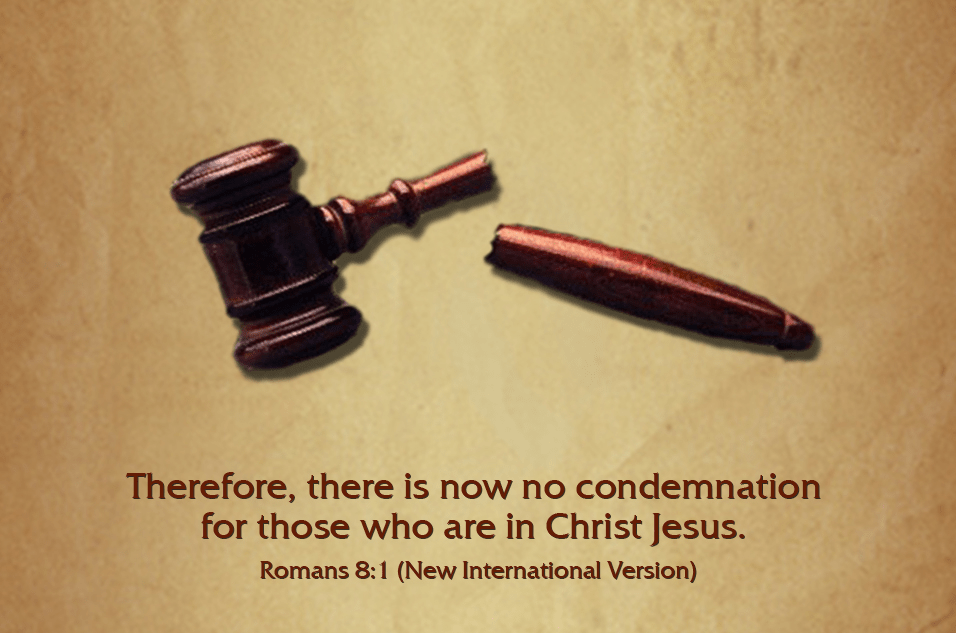
Therefore, there is now no condemnation for those who are in Christ Jesus, because through Christ Jesus the law of the Spirit who gives life has set you free from the law of sin and death. For what the law was powerless to do because it was weakened by the flesh [sinful nature] God did by sending his own Son in the likeness of sinful flesh to be a sin offering. And so he condemned sin in the flesh, in order that the righteous requirement of the law might be fully met in us, who do not live according to the flesh but according to the Spirit.

Those who live according to the flesh have their minds set on what the flesh desires; but those who live in accordance with the Spirit have their minds set on what the Spirit desires. The mind governed by the flesh is death, but the mind governed by the Spirit is life and peace. The mind governed by the flesh is hostile to God; it does not submit to God’s law, nor can it do so. Those who are in the realm of the flesh cannot please God.

You, however, are not in the realm of the flesh but are in the realm of the Spirit, if indeed the Spirit of God lives in you. And if anyone does not have the Spirit of Christ, they do not belong to Christ. But if Christ is in you, then even though your body is subject to death because of sin, the Spirit gives life because of righteousness. And if the Spirit of him who raised Jesus from the dead is living in you, he who raised Christ from the dead will also give life to your mortal bodies because of his Spirit who lives in you. (New International Version)

I feel tremendously privileged to be a Christian and to enjoy the very Spirit of God. The people of God are spiritual people, possessing God’s own Spirit. The Apostle Paul wanted Christians to know the privileges of life in the Spirit, as believers in Jesus.

No Condemnation

There is now no condemnation, no judgment, for us who are in Christ. God has pronounced a verdict, and that decision is final. We have been united to Christ by means of God’s Spirit. Since God condemns neither you nor I, there is no need whatsoever to condemn ourselves or other believers.

Since no condemnation is our reality as Christians, we are to believe this promise of God and swim in its wonderful privilege. Believe that the sin issue has been taken care of once for all through the life and death of Christ. And if you do not feel forgiven, then put yourself in a position to believe. 

It would be silly to go into the bathroom, turn on the shower, and then just stand in the middle of the bathroom without getting under the showerhead. It would be weird because you did not put yourself in a position to actually become clean. You may believe that a shower and using soap and shampoo will make you clean, but if you do not actually avail yourself of the privilege of actually taking the shower, but just stand there and look at it, you will not really be clean. 

We must put ourselves in a position to experience the privilege of knowing our wonderful state of cleanliness (no condemnation) by actually reading the Word of God on a regular basis; by praying in the Spirit on all occasions; by practicing the silence and solitude and other spiritual disciplines necessary to receive the cleansing work of the Holy Spirit.

Two people are declared “married” in a formal wedding ceremony. The couple then works out their shared union together over a lifetime. The minister does not pronounce condemnation at the ceremony; he declares a blessing. Yet, from that point forward, the two people must work on their marriage. They must believe their relationship is important enough to warrant putting themselves in a position to grow together. They will intentionally create date nights and conversations on the couch. They’ll seek to learn, appreciate, and participate in the other person’s interests and life. 

“Grace is not opposed to effort; it is opposed to earning. Earning is an attitude. Effort is an action. Grace, you know, does not just have to do with forgiveness of sins alone.”

Dallas Willard, The Great Omission

Just as we do not marry ourselves and pronounce ourselves a married couple, so we do not save ourselves. However, having a marriage license does not mean there is no effort to be done in the relationship. A marriage is both a legal reality, and a kind of mystical union between two married persons.

It’s a beautiful thing to be in a relationship where there is no condemnation. Because of Jesus Christ we are free to be the people God created us to be – forgiven and no longer burdened by the condemning voices of guilt and shame.

Freedom from Sin and Death

In Holy Scripture, sin is not only a personal struggle but a present ubiquitous reality in the world. The power and presence of sin is found everywhere. There is personal sin, institutional sin, and systemic sin. Because sin is everywhere, death is everywhere. Biblically, death refers to more than physical death because it is also a relational term. Death means relational separation from God. Conversely, life is relational connection with God. 

God did all the action necessary to make the union possible. God sent the Son. God became incarnate. God’s Son became a sin-offering, an atoning sacrifice for our sins. God condemned sin in sinful humanity. God met the righteous requirements of the law. God effects holiness in us by means of the Spirit. 

Rather than saving us from this terrible plight of sin, and then simply telling us to live a holy upright life, God the Father and God the Son sent God the Holy Spirit to indwell us so that we can live like Jesus. Therefore, we must put ourselves in a position to experience life through dwelling in the Scriptures and letting the Spirit and the Word work together to effect practical change in our lives (sanctification, that is, becoming holy). 

Having the Mind of Christ

A problem we all face is that we inhabit a fallen world. Our mindset can easily get screwy. If we want life and peace, we need the mind of Christ and the Spirit. Whatever our minds are occupied with is what determines whether we will have life and peace, or not. 

If the objects of our thoughts, interests, and affections are continually away from Christ and the Spirit, we will experience death, not life. If we put ourselves in a position to indulge the sinful nature (the “flesh”) we will miss real life. An undisciplined mind only leads to relational separation.

The addict knows there are two choices: either life or death. The first of the twelve steps of Alcoholics Anonymous is to admit that I am powerless over alcohol and that my life has become unmanageable.  The second step is to believe that a Power greater than myself can restore me to sanity. The third step is to turn my life and my will over to that Power. So, it is the same for us. 

We are powerless over sin, which will, if left unchecked, lead to death. But in the Spirit (not the alcoholic spirits!) we have life. Sin, like alcohol, is a daily possibility, even after giving my life and my will to God. Yet, there is also the possibility of life. And that hope of life comes with possessing the mind of Christ and the Spirit. 

We have hope that through the Spirit’s power we will overcome the power of choices that lead to death; and instead, embrace choices that lead to life. So, whatever we put into our minds is vitally important. 

The Spirit Indwelling Us

The Spirit is the distinguishing mark of the believer in Jesus. The Spirit opposes the sinful nature and expects us to do the same. There’s no need to try and live the Christian life on our own power when we possess spiritual power. There exists an internal struggle within us that desires to do right but has a compulsion to do otherwise. Yet, the indwelling Spirit gives us victory. Jesus lived the life for us that we could not live. His life, as much as his death, achieved salvation from sin for us. The very same Spirit that helped Jesus live his life, and raised him from death, is the same Spirit whom we possess.

When I was a kid, I remember my grandmother canning preserves. I would sit on a stool in the kitchen and watch her, looking forward to having some grape preserves on my next piece of toast. I once asked her, “Why are you always melting that wax over the fruit?” I didn’t understand how wax could make my toast taste any better. Grandma answered, “The wax seals the jar tightly so the fruit can’t be contaminated. If I didn’t seal it, the fruit would eventually rot.” As an amateur in the canning business, I could see the importance of picking grapes, boiling them, and canning them. But I now know how important sealing and preserving are.

You and I are God’s preserves. God not only chose us, redeemed us, and called us to life in the Son – God also had a plan for preserving us as heirs of eternal life. God gave us the indwelling Spirit so that we can live as we ought, free from sin and doing the will of God through spiritual power working within us. 

I hope today that you have a deep appreciation for the privileges of no condemnation, freedom from sin, possessing the mind of Christ and the power of the indwelling Spirit. And more than that, that you will avail yourselves of this tremendous gift of the Spirit and experience life and peace.

Gracious God, fill us with the knowledge of your will through all spiritual wisdom and understanding. May we live lives worthy of the Lord Jesus and please him in every way; bearing fruit in every good work, growing in the knowledge of God; being strengthened with all power according to your glorious might so that we may have great endurance and patience, joyfully giving thanks to you. For you have rescued us from the dominion of darkness and have brought us into the kingdom of the Son you love, in whom we have redemption, the forgiveness of sins. Amen.

Resist the World, the Flesh, and the Devil (Acts 6:8-15)

St. Stephen Before the Sanhedrin, by Mariotti di Nardo (1394–1424)

Now Stephen, a man full of God’s grace and power, performed great wonders and signs among the people. Opposition arose, however, from members of the Synagogue of the Freedmen (as it was called)—Jews of Cyrene and Alexandria as well as the provinces of Cilicia and Asia—who began to argue with Stephen. But they could not stand up against the wisdom the Spirit gave him as he spoke.

Then they secretly persuaded some men to say, “We have heard Stephen speak blasphemous words against Moses and against God.”

So they stirred up the people and the elders and the teachers of the law. They seized Stephen and brought him before the Sanhedrin. They produced false witnesses, who testified, “This fellow never stops speaking against this holy place and against the law. For we have heard him say that this Jesus of Nazareth will destroy this place and change the customs Moses handed down to us.”

All who were sitting in the Sanhedrin looked intently at Stephen, and they saw that his face was like the face of an angel. (New International Version)

Stephen was a squeaky clean guy – ethical, upright, above board, honest, spiritual – and a profoundly wise and devoted follower of Jesus. Because of his integrity, Stephen was acutely attuned to systemic evil in all its insidious institutional forms; alert and wise to the sinful nature of humanity; and aware of the devil’s evil intentions and machinations in the world.

And because Stephen had a well-developed Christian spirituality, it put him on the radar of the world, the flesh, and the devil – and ended up getting him killed as the first Christian martyr.

The big three enemies of every Christian are: 

  1. a sinful world system (1 John 2:15-16)
  2. the inherent sinful nature (Ephesians 4:22)
  3. the devil, who seeks to exploit the world and the sinful nature to tempt and move us into rebellion against God (1 Peter 5:8-9) 

However, the good news of Christianity is that Jesus Christ has obtained deliverance and freedom for people from each of those enemies. For this deliverance and freedom to be a practical reality in daily experience, each believer in Jesus must know and practice the truth.

In the original Fall of humanity, there was a passive response to the temptation of the serpent, along with an acceptance of doubt concerning God’s Word. There was also an acceptance of insinuations concerning God’s goodness and wisdom, and a deliberate choice to follow the suggestions of Satan and disobey God. 

The seriousness of that Fall into disobedience cannot be overemphasized. The Fall introduced the dimensions of sin, lust, depravity, slavery, ignorance, death and every form of evil into the human race. People became alienated from God and enslaved to the devil. 

The final effects of this sinful bondage will not be completely severed until the final judgment. The hold of the devil is so profound that it took the death and resurrection of Jesus Christ to break that hold and make it possible for humanity to be redeemed.

The descriptive titles given to Satan indicate his activity and what he is up to: 

  • Tempter (Matthew 4:3)
  • Deceiver (Revelation 12:9)
  • Accuser (Revelation 12:10)
  • Adversary (1 Peter 5:8)
  • Murderer and Liar (John 8:44)
  • The god of this world (Ephesians 2:2) 

Holy Scripture indicates that people can be significantly influenced – both personally and corporately – by Satan through: 

  • giving the devil a foothold (Ephesians 4:27)
  • lying (Acts 5:3)
  • physical and spiritual attacks (Job 1-2; 2 Corinthians 12:7)
  • deception (Revelation 12:9-10; 2 Corinthians 11:3)
  • temptation (1 Corinthians 7:5; 1 Thessalonians 3:5)
  • pride (1 Timothy 3:6)
  • corruption (2 Corinthians 11:3)
  • accusations (Revelation 12:10)
  • hypocrisy (Acts 5:1-11) 

People ignore the activity of Satan at their peril.

Just like the religious leaders trying to keep Stephen’s mouth shut, Satan’s purpose and aim is to keep each and every person from spiritual progress and maturity, and from the daily experience of living in faith, hope, and love. 

Unfortunately, the evidence of Satan’s success is all around us, even in the church. Whenever well-meaning Christians experience difficulty in prayer, in reading Scripture, in living for Christ, in overcoming sins, and in maintaining right fellowship with other believers, then this is a reminder of the subtle and powerful effect evil has upon us. 

It is imperative that we know and understand the provision we possess in overcoming the evil one.

Basic knowledge for combating the devil is this:

  • The crucifixion and resurrection the Lord Jesus Christ defeated Satan (Colossians 2:15) 
  • Jesus has destroyed the power of death and delivered those held in bondage (Hebrews 2:14-15) 
  • Christ came to this earth so that he might destroy the works of the devil (1 John 3:8) 
  • Through Christ’s ascension, Jesus is now seated in triumph over Satan (Ephesians 1:19-21; 2:5-6)

In order for this incredible access to become reality, there must be a complete and honest confession which repents and renounces past and present sins. 

If we confess our sins, he is faithful and just and will forgive us our sins and purify us from all unrighteousness.

1 John 1:9, NIV

There must be a complete and honest obedience to God in faith, hope, and love by standing with the truth (Ephesians 6:10-18); and there also needs to be an aggressive resistance of the work of Satan through constant vigilance by being rooted and established in truth. (1 Peter 5:8-9)

If you feel guilty, but don’t know what you’ve done or why you feel this way, then be aggressive about rejecting it. 

If you accuse yourself (“If you were really a Christian you would not be thinking a thought like that…”) then be pugnacious about refusing it. 

If your thoughts, emotions, and desires threaten to get out of hand – then take charge of them and bring them into subjection to Jesus – because you have the authority of Christ’s death, resurrection, and ascension behind you to reject and refuse all error and every satanic whisper.

Know the enemy’s lies and deceptions. Be hawkish about dealing with false guilt and unwarranted shame according to the truth of the gospel. 

Do not attempt to always do this alone; you are not an army of one. Seek the help and assistance of others who will, along with you, pray and practice the truth.

This is the sort of wisdom Stephen teaches us. So, let us learn from him and submit ourselves to the truth we know.

Almighty God, in you are hidden all the treasures of wisdom and knowledge. Open our eyes that we may see the wonders of your Word; and give us grace that we may clearly understand and freely choose the way of your wisdom; through Christ our Lord. Amen.