How Can I Live a Pure Life? (Psalm 119:9-16)

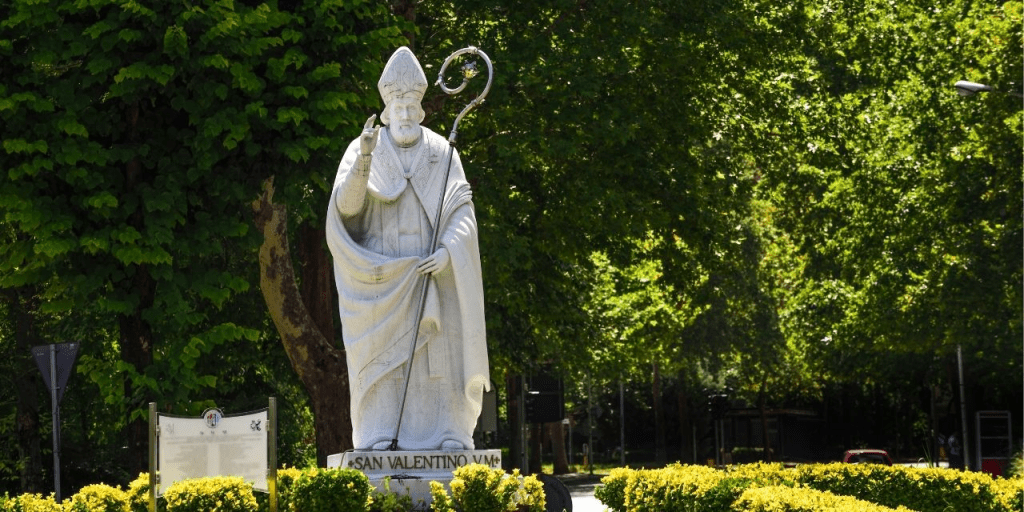
Statue of Saint Valentine in Terni, Umbria, Italy

How can a young person live a pure life?
    By obeying your word.
I try with all my heart to serve you.
    Help me obey your commands.
I study your teachings very carefully
    so that I will not sin against you.
Lord, you are worthy of praise!
    Teach me your laws.
I will repeat the laws we have heard from you.
I enjoy following your rules
    as much as others enjoy great riches.
I will study your instructions.
    I will give thought to your way of life.
I enjoy your laws.
    I will not forget your word. (Easy-To-Read Version)

There was an actual Saint Valentine (c.226-269 C.E.) who lived and served as a Bishop in Rome. The Roman Emperor of the time, Claudius II, was vehemently opposed to Christianity. Claudius forbad Christian marriages from taking place – which was something Bishop Valentine was unwilling to do, and was supposedly jailed for his refusal to stop performing Christian weddings. Hence, one of the reasons for Valentine being the patron saint of lovers.

That’s certainly one way of helping to keep young Christians pure. I, in fact, have more than once advocated on behalf of a young couple in love. Their parents, who wanted a large wedding and plenty of time to prepare for it, simply didn’t realize what they were asking of their kids and how much that put them in an awkward position.

To be pure means to be holy or set apart for a special or specific purpose. Christians are to be completely devoted to their Lord and Savior, Jesus Christ. In order to do that, they will need to pay particular attention to God’s commands and Christ’s teachings.

The Will

The whole person must be involved in obeying the teachings given to us. It begins with our will. Notice that the psalmist sets his resolve toward this great task by stating:

  • I will repeat (out loud) the divine laws I hear
  • I will study God’s instructions
  • I will give thought to my way of life with Yahweh
  • I will not forget the Lord’s words

I have considered my ways
    and have turned my steps to your statutes.
I will hasten and not delay
    to obey your commands. (Psalm 119:59-60, NIV)

We need strong affirmations toward engaging our will toward reading aloud, studying, and remembering biblical commands, so that we will succeed in our quest for purity and holiness.

The Emotions

Our affections also need to be involved. We are emotional creatures, having been formed by a Creator with deep feelings. Therefore, our own emotions are meant to be acknowledged and engaged. The psalmist enjoys God’s Law and is emotionally draw to it’s beauty and light.

Oh, how I love your law!
    I meditate on it all day long.
Your commands are always with me
    and make me wiser than my enemies. (Psalm 119:97-98, NIV)

We need strong feelings toward desiring God’s Word, so that there will be effective action toward a life of purity. Overall, we do what we want. Continually doing something we don’t really want to do ends up being either legalistic or loathsome.

The Body

Our bodies are the vehicles to doing and accomplishing God’s will on this earth. Thus, our physical selves must be animated toward the good, the right, and the just. The psalmist worshiped and praised God.

I, by your great love,
    can come into your house;
in reverence I bow down
    toward your holy temple. (Psalm 5:7, NIV)

Hear my cry for mercy
    as I call to you for help,
as I lift up my hands
    toward your Most Holy Place. (Psalm 28:2, NIV)

Our bodies need to move in physical rhythms of praise and worship to God, so that there will be purity of life. Holiness needs hands and feet to walk into the way of the Lord and obey God’s commands.

Philosophies of Purity

There are some unsound approaches to becoming pure and remaining holy:

  1. It’s up to me. God is too far away, maybe even absent altogether. This is a philosophy which ignores the gut. Yet, if we seek to connect with our innards, we’ll discover quickly that purity is not all on me. I am the vine; you are the branches. If you remain in me and I in you, then you will produce much fruit. Without me, you can’t do anything. (John 15:5, CEB)
  2. Follow your heart. Doing this has significance; however, if that’s the exclusive approach to purity, the mind gets left behind and the heart ends up vulnerable to deceit. The heart is deceitful above all things, and desperately sick; who can understand it? (Jeremiah 17:9, ESV)
  3. Knowledge is power. Yes, of course it is; but by itself, knowledge puffs up. We need the affections, particularly love, or else we become brains-on-a-stick, denigrating the body as superfluous to spirituality. Knowledge puffs up, but love builds up. (1 Corinthians 8:1b, NRSV)
  4. Control everything. There are certainly forces in operation in this world; yet we are never called to try and manipulate them. We may will ourselves to do many things, yet God has control of all things. Humanity is called to self-control, which takes up all our energy because it’s no easy feat. For the grace of God has appeared that offers salvation to all people. It teaches us to say “No” to ungodliness and worldly passions, and to live self-controlled, upright and godly lives in this present age. (Titus 2:11-12, NIV)

A sound philosophy of being holy and pure recognizes that we need divine help in strengthening our faith; the assistance of others who can walk alongside us and provide encouragement; and the engagement of our entire person, utilizing all our faculties in order to live a life of purity. Obedience to God’s Word is vital to a holy life; and to obey requires our entire selves.

There is to be a marriage between God’s commands and human obedience. The world may forbade this, but much like St. Valentine, we’ll let love have its way – and not the ruler of this present evil age.


Colossians 1:15-23 – Worship That Is Fit for a King

The Son is the image of the invisible God, the firstborn over all creation. For in him all things were created: things in heaven and on earth, visible and invisible, whether thrones or powers or rulers or authorities; all things have been created through him and for him. He is before all things, and in him all things hold together. And he is the head of the body, the church; he is the beginning and the firstborn from among the dead, so that in everything he might have the supremacy. For God was pleased to have all his fullness dwell in him, and through him to reconcile to himself all things, whether things on earth or things in heaven, by making peace through his blood, shed on the cross.

Once you were alienated from God and were enemies in your minds because of your evil behavior. But now he has reconciled you by Christ’s physical body through death to present you holy in his sight, without blemish and free from accusation— if you continue in your faith, established and firm, and do not move from the hope held out in the gospel. This is the gospel that you heard and that has been proclaimed to every creature under heaven, and of which I, Paul, have become a servant. (New International Version)

Jesus is King. Neither you, nor I, are. 

A simple statement; yet, not easily engrafted into daily life. 

The original sin of Adam and Even was rebellion – to break the bonds of loving authority God provided for them. We (especially us Americans) have this nasty anti-authoritarian strain which runs rather deep in us. 

As a child, when my middle daughter was grappling with the implications of faith in Christ, she once blurted out an honest cry that we can likely resonate with: “I just don’t want another person in my life telling me what to do!” 

Indeed, Jesus is King; we are not.

The New Testament lesson for today is rich with the pre-eminence and lordship of Jesus Christ: 

  • All things were created through Jesus and for him. 
  • Everything in all creation is held together by Jesus. 
  • Christ is the head of the church. 
  • In Jesus Christ, complete divinity exists and reigns. 
  • Jesus made peace through the cross because he had the authority and the qualifications to do so. 
  • Broken relationships and proper lines of authority are now restored and redeemed in Christ.

We can also likely relate to, at times, indulging an illusion of being in control and independently dictating the course of our lives. Yet, mercifully, Jesus is the great Sovereign, and this is a good thing – because in Christ we find reconciliation and purity of life. 

“The supreme thing is worship. The attitude of worship is the attitude of a subject bent before the King… The fundamental thought is that of prostration, of bowing down.”

G. Campbell Morgan

Because Christ is King, we really ought to submit to him. In fact, we need to pay some attention to how our bodies are to submit to his lordship.

When the body moves to animating physical actions of submission, this helps the heart to follow. Whole person worship involves engaging the mind, spirit, emotions, and, yes, the body. To neglect the body in worship is to truncate the ability to connect with God in Christ.

A typical metaphor for the Church is the “Body of Christ.” We can live into that phrase through an embodied spirituality of submission. Our individual bodies are temples of the Holy Spirit, important for expressing worship. (1 Corinthians 3:16)

God created us with literal physical bodies. And Jesus has a literal physical body. Bodies are important for whole person worship. This means the physical postures we take in worshiping King Jesus are significant. We need to pay attention to them.  

A healthy practice for Christians is to kneel in the presence of the Lord. I realize some Christian traditions do it as a part of their worship, and some do not. Some like it, some don’t. Yet, bowing, even prostrating oneself (if you are physically able!) can be a powerful symbol of the heart’s desire and disposition to submit to the lordship and authority of Jesus Christ. 

Crawling out of bed in the morning onto one’s knees and beginning the day aiming to live into the will of God, and ending the day in the same manner, are a practical means of remembering who Jesus is and who we are.

I believe all believers need to feel free in adopting a physical posture of worship which helps them connect with God in Christ. For some, that will be sitting in a comfortable position in contemplation. Others will want to stand, raise their hands, even dance in praise.

It also behooves us to let our bodies respond to whatever is happening with us spiritually. Exuberant praise needs the expression of hand clapping and toe tapping. Confession of sin needs a bit of bowing, kneeling, even prostrating. For prayer, hands open and palms facing up to receive blessing from God is a good bodily position of worship.

You get the idea. Just remember we need to strive for congruence in our worship, that is, what is happening with our outward bodily movements needs to match what is occurring inward with our spirits. And when the two are in sync, meaningful worship can happen – worship of submission fit for a king.

Sovereign God, in your mercy you have sent your Son, the Lord Jesus, who has brought reconciliation to a once broken relationship.  I bow before you in obedience, submission, and worship.  Let me live a cross-shaped life through enjoying the peace you have given me in Christ in both body and soul. Amen.

An Embodied Spirituality

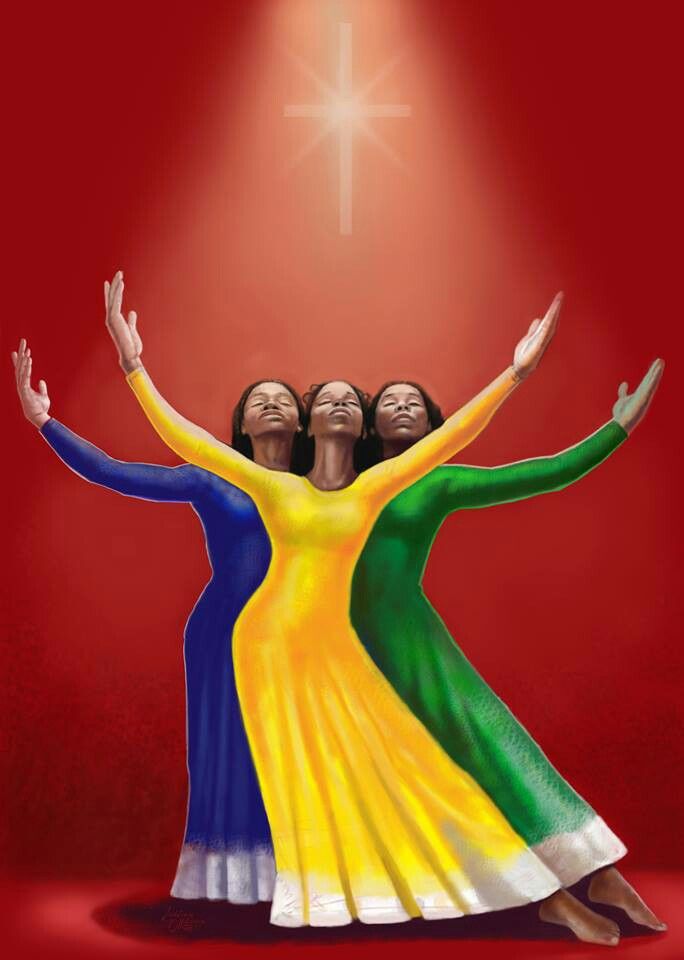
By Unknown artist

It is normal to feel guilty at this time of year about our bodies. Some of the more common goals for a new year are to lose weight, stop smoking, get in shape, have better sleep hygiene, and generally learn better self-care.  I am not going to add to the burden of guilt but emphasize something important: Our bodies are the vehicle given to us to glorify God. Our spirituality is quite embodied. (1 Corinthians 6:19-20)

One of the reasons we fail our bodies is that we do not always make the biblical connection of seeing our material selves with the same importance as the immaterial.  The Apostle Paul brought up a discussion about the body to the Corinthian Church because Corinth was a Greek city thoroughly imbibed with a Platonic philosophy of life.  At the core of Plato’s view of humanity was that the immaterial and the spiritual were of higher value than the body.  For Plato, the body is a necessary evil.  He referred to our souls as being imprisoned within the flesh.  When we die the soul is released and is freed from its bodily prison.

Western civilization has been significantly influenced, even today, by Plato’s view of humanity. Yet, that is not a biblical view of the body.  Instead of being a prison, the body is a temple, a sacred place which is no better and no worse than the soul.  When we die, we will not be disembodied souls, but will experience a bodily resurrection at the end of the age.  Eternity will be spent existing in a real glorified body free from sin. (1 Corinthians 15)

Since the body is sacred, and we glorify God with our bodies, then we must steward them just like we would steward any other physical material possession we own.  We have bought into Platonic philosophy when we treat our cars better than we treat our bodies.  If a warning light comes on in our cars, we get it checked by the mechanic.  He fixes the issue and tells us what we need to do to prevent it from happening again, and we listen to him. 

Far too often, when warning lights go off in our bodies, we ignore them until our bodies literally break down and we must go to the doctor.  And even then, the doctor tells us to do something, and we do not do it.  We never avoid the advice of our mechanic, and yet we do it with our doctor.  We need to adopt the biblical wisdom of glorifying God on this earth through our bodies. 

God’s care for our bodies can be found, for example, in the Old Testament prophet, Elijah. After Elijah experienced a great spiritual victory, he became the target of evil Queen Jezebel.  Elijah ran for his life and was severely burned-out from intense spiritual struggles with the queen’s prophets of Baal (1 Kings 19:1-3).  At that point, God did not come to Elijah and give him a sermon or exhortations about getting over it.  No, God restored Elijah’s body. And the Lord wants to restore our bodies, as well.

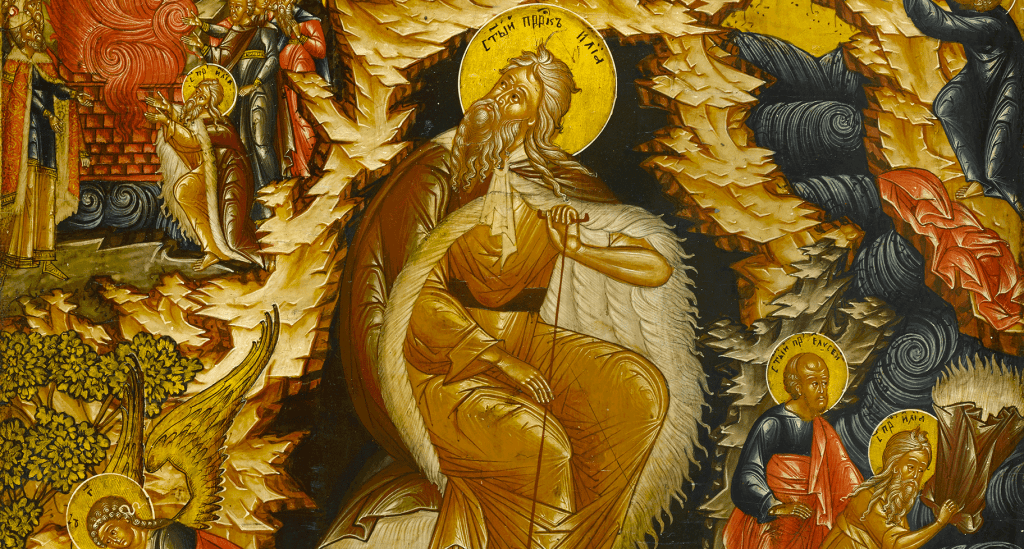
19th century Russian Orthodox icon of the prophet Elijah in the wilderness

First, Elijah needed sleep (1 Kings 19:5-6).  Millions of Americans are sleep deprived and live with a significant sleep debt (thus being continually cranky and out of sorts).  Insurance companies know this is a major issue because improper sleep habits have caused various auto accidents and fatalities. I once kept a crazy schedule with not many hours for sleep.  One day, during rush hour, I drove through a downtown expressway in bumper-to-bumper traffic and fell asleep.  I woke up about two minutes later and was still alive driving down the highway.  I sincerely believe God graciously drove the car for me.  That was my “wake up” call to change the way I was treating my body.

Second, Elijah needed to eat well (1 Kings 19:6-8).  For us, that means eating healthy.  One source of being overweight is failing to make the connection that eating is a spiritual activity.  Food is important to the kingdom of God.  It was eating that got us into trouble to start with and resulted in the fall of humanity.  Eventually, we will come full circle with eating being the activity we engage in at the end of the age – a redeemed view of food and eating together with Jesus at the marriage supper of the Lamb (Revelation 19:1-10).  God cares about food – what we eat and how much of it we consume.  He cares because we do not own our bodies – we steward them for God.

Third, Elijah needed some vigorous exercise (1 Kings 19:8-9).  He walked all the way to Mount Horeb, which was over a month’s travel.  But that exercise was essential to his well-being, both physically and spiritually.  It was only after he slept, ate well, and walked that Elijah was ready to meet with God in a powerful experience.

Our physical fitness is a spiritual issue, and so, needs prioritization.  I am under no illusions or delusions about the difficulty of this. I prefer brownies to broccoli and rather like sleeping instead of exercise. Yet, I work at being physically fit and caring for my body.  I am personally motivated toward health because I love God and want to please the Lord with my body. After all, my body was important enough to be redeemed through the Cross of Christ.

This is not about willpower – it is about Christian stewardship. I look at my body the same way I look at borrowing something from another person: I return it in the best condition I can. When the Lord takes me someday, I do not want it to be because I hastened my own death through disregard of my God-given body.

If I were God, donuts would be health food, sitting back in the recliner would build muscle, and two hours of sleep at night would be sufficient. But I am not God, so I submit to doing what it takes to have an embodied spirituality. We are to enjoy life through making the connection between the spiritual and the physical because that is the way God created us.

It is never too late to be a proper steward of the body.  Our physical anatomy is an amazing work of God and incredibly receptive to healthy choices. Here are a few of the choices we can make…

Remember the positives

Remember that care of the body is worth it.  Being fit feels great and equips us for the will of God.  Keep the long view in mind.  Sacrificing a temporary pleasure is worth the eventual gain.

Start small

I will not be doing any triathlons anytime soon, or ever. We need to be realistic and set appropriate goals without comparison to others. Start small and build up over time with slow incremental change. The place to begin is by rearranging our schedules so that our bodies become a priority.  Maybe it is time to make that doctor’s appointment you have been putting off.

Join others

Accountability and fun can and ought to go together. For example, preparing meals together is a chance to connect with a friend or family member. Discover and maintain a consistent rhythm of health that works for you and is enjoyable.

Reframe it

People often give up their best laid plans because they are disconnected from the rest of their lives. Reframing our view of the body as a spiritual activity helps connect and align our mind, body, and spirit in the wholeness God designed for us.

Start today

It takes time for something to become a habit. All good things are a process of realization. Consider and plan today, asking for God’s direction. Get the Lord in on it from the beginning and let it be an offering to him.

May you find the joy, contentment, and satisfaction of living with a body properly cared for and ready for use to the glory of God.