Hebrews 13:20-21 – Conflict and Peace

Pretty Place Chapel Blue Ridge Mountains
Pretty Place Chapel in the Blue Ridge Mountains

May the God of peace,
who brought back the great shepherd of the sheep,
our Lord Jesus,
from the dead by the blood of the eternal covenant,

        equip you with every good thing to do his will,
by developing in us what pleases him through Jesus Christ.
To him be the glory forever and always. Amen. (CEB)

These verses are the benediction, that is, the blessing given at the end of a long letter to a group of struggling Jewish Christians. In fact, things were so difficult for these believers that they were giving serious consideration to reneging on their commitment to Christ. So, the author of Hebrews sent them an exhortation and an encouragement to remain true and steadfast to the faith.

What is needed is not a shrinking back from faith but instead an enduring faith which is sustainable for the long haul of a person’s life.

The believers had both inner and outer conflict. They were experiencing hardship and persecution in the form of confiscation of their property and public insults. The Christians had started out well, facing such trouble with confidence through standing side-by-side with others who were suffering as well as holding on to their vibrant faith.

Yet, over time, their resolve began to break down. A slow drift occurred. Eventually, they started to retreat from the helping of others. They emotionally and spiritually inched their way to becoming despondent to the point of questioning whether all this Christianity stuff was worth it. The outer conflict worked its way inside their souls and damaged their spirits. By the time the writer of Hebrews comes along, a group of Christians are stuck in discouragement.

It’s one thing to deal with trouble and hardship on one day, even two. It’s quite another thing when that difficulty does not let up – when days turn into weeks, weeks into months, even months into years.

There are times when peace seems to have about as much chance of being realized as winning the lottery.

Yet, God is the God of peace, real lasting harmonious spiritually restful peace. It was achieved through the life and death of Jesus. The peace Jesus has brought is so much more than the absence of conflict. God’s peace is freedom from fear and anxiety. It is a settled confidence deep down inside that God will ultimately make good on all his promises and that things will not always be this way.

Until that day comes, God is not sitting in some divine Lazy-Boy recliner watching old reruns of the Angels playing baseball. Rather, God is active through carefully, deliberately, and, to our occasional consternation, slowly equipping us and developing us into spiritually fortified people who do the will of God and please Jesus in everything they do and say. Jesus is the Great Shepherd of the sheep who will not lead us astray but will settle us in green pastures.

The word translated “equip” is a rich word (Greek καταρτίσαι, pronounced “cot-ar-tids-ay”) which means to set something straight. Picture a bone which has been broken and needs to be reset and have time to heal. That is what God is doing in his people – repairing broken spirits. This divine healing is equipping believers for a lifetime of handling adversity with faith, confidence, and endurance. The process, frankly, hurts and requires patience before healing and health come.

If God can raise the dead, he can most certainly handle any earthly trouble we are going through.

God is in the transformation business. Extreme makeovers are his specialty. He uses hard circumstances, troubles, and torments of our lives and bends them into divine tools to form and shape his people to both survive and thrive in the world.

Complaining spirits, blaming and shaming others, and impatience borne of unrealistic expectations are the evidence of damaged emotions, wounded souls, and weak faith. This is the antithesis of God. He’s not overlooking humanity with a divine *sigh* in exasperation. That’s because he is the God of peace who is bringing all things to a conclusion in Christ. Jesus will come to judge the living and the dead. The Holy Spirit is now and very presently active to heal damaged emotions, repair wounded souls, and strengthen faith.

In those times when God seems absent and prayers seem to bounce off the ceiling are the times that God is establishing peace and expanding our capacity for faith and patience.

Benediction, blessing, and doxology come through the dark night of the soul and not by avoiding it.

Soli Deo Gloria. To God be the Glory.

Almighty God,
all thoughts of truth and peace
proceed from you.
Kindle in the hearts of all people
the true love of peace.
Guide with your pure and peaceable wisdom
those who take counsel
for the nations of the earth;
that in tranquility your kingdom
may go forward,
till the earth is filled
with the knowledge of your love;
through Jesus Christ our Lord. Amen.

–From the Book of Common Order of the Church of Scotland, St. Andrew Press.

Click It Is Well with My Soul by TenTwoSix Music and arranged by David Wise.

1 Peter 2:9-12 – Chosen by God

ChosenByGod

You are chosen people, a royal priesthood, a holy nation, people who belong to God. You were chosen to tell about the excellent qualities of God, who called you out of darkness into his marvelous light. Once you were not God’s people, but now you are. Once you were not shown mercy, but now you have been shown mercy.

Dear friends, since you are foreigners and temporary residents in the world, I’m encouraging you to keep away from the desires of your corrupt nature. These desires constantly attack you. Live decent lives among unbelievers. Then, although they ridicule you as if you were doing wrong while they are watching you do good things, they will praise God on the day he comes to help you. (GW)

The Apostle Peter wrote his letter to a group of believers struggling in the middle of suffering. He sought to encourage them with who they are in Christ, as well as exhort them to not go back to old ways of dealing with hard circumstances. And this is darned good instruction for us, as well, when we feel beat down in tough situations:

Remember who you are and to whom you belong; and, let that new identity, not the old one, determine how you will respond and what choices you will make when the going gets rough.

We are chosen people (Greek ἐκλεκτόν which is literally “elected”). We have royal blood. We belong to God – called by him and set apart for a life of proclaiming his great mercy. Peter simply encouraged and exhorted with the very same mercy he himself had been shown. Peter was chosen by Jesus despite his credentials. He had no formal training and was impulsive, random, headstrong, and likely had some first-century version of adult attention deficit disorder. Yet, Jesus elected him because God’s choice always nullifies human pride and ingenuity.

God chooses people for deliverance from sin, chooses to bestow royalty upon them, and chooses them as his own to be his ambassadors to the world. God’s choice of us is not based on our ability, but on God’s call and the Spirit’s presence and power working in and through us so that we might not boast in anything but the cross.

These chosen people Peter addressed were not full citizens. They were considered as foreigners by the Roman Empire in which they lived. The believers had limited rights in a Roman society which valued wealth, power, status, prestige, and pedigree. The Christians, along with Peter, had none of this privilege. Peter was letting them know that they have a status as God’s chosen people, distinct from the values of their surrounding culture.

The Christians were equipped for royal greatness through being set apart for Christ, with the Spirit of God to help make them holy in an unholy society.

It is from this firm standing and status of belonging to God and having their identity in Jesus Christ that the struggling believers could, then, firmly resist turning to the dark side. A strong sense of place and purpose is what helps us all to live decent lives, even when those who misunderstand and mistreat seem to be having the day over us. More than once in my own life I have been ridiculed and mocked only years later to have those very same persons say, “I noticed how you responded and watched how you handled situations and it made a deep impression on me.” Indeed, they went from parody to praise because of the mercy of God.

We are encouraged by Peter to take the long view of our circumstances. The Scriptures invite us to a more expansive view of our lives, a bigger picture of those around us, and a broader perspective of our society as a royal priesthood of believers. Any old fool can criticize others from afar, play armchair quarterback about things they know nothing about, and expect everyone else to bend to their way of thinking. It is, however, the wise person, instructed through deep suffering, who chooses to walk in the way of mercy, day after day, week after week, year after year, even though the pain is persistent and relentless. Such persons belong to God and have no need to rely on unmerciful and corrupt practices to live a full and satisfying life.

Sovereign God, thank you that you accept us as we are: vulnerable, flawed and in need of love. Feed us and fill us with the certainty of your love, the power of your Spirit, and the joy of your Kingdom as we open ourselves to your choice and your call upon us. Because you have chosen us, we declare your glory to the world. We no longer walk in the uncertainty of the darkness but in the certainty of your glorious light through Jesus Christ our Lord. Amen.

Click Who You Say I Am by Hillsong Worship as together we seek to live in the light of our glorious identity.

1 Peter 1:3-9 – Joy and Suffering

This is the day the Lord has made.  Let us rejoice and be glad in it!

Simply click the video below for a message from God’s Word.

Here are a few links for you:

You can click TimEhrhardtYouTube to view this message on YouTube.

Click Les Miserables to watch the scene described at the beginning of the message.

And, click I Am Not Alone by Kari Jobe to be encouraged that God is with us.

Grace to you always, my friends.

Joy and Suffering

BishopSavesJeanValjean
“Jean Valjean, my brother, you no longer belong to what is evil but to what is good. I have bought your soul to save it from black thoughts and the spirit of perdition, and I give it to God.” ― Victor Hugo, Les Misérables

One of my favorite stories is Victor Hugo’s Les Miserables.  It’s primarily a story of grace and new life.  The main character, Jean Valjean, spends nineteen years in jail for stealing a loaf of bread for his starving family.  The experience in prison caused him to become a bitter man.  By the time he is released, he is hard, angry, cynical, with nowhere to go.  In desperation, he seeks lodging one night at the home of a Catholic bishop, who treats him with genuine kindness, which Valjean sees only as an opportunity to exploit.  In the middle of the night he steals the bishop’s silver and runs.  The next day, however, he is caught by the police.  When they bring Jean back to the bishop’s house for identification, the police are surprised when the bishop hands two silver candlesticks to Valjean, implying that he had given the stolen silver to him, saying, “You forgot these.”  After dismissing the police, the bishop turns to Jean Valjean and says, “I have bought your soul for God.”  In that moment, by the bishop’s act of mercy, Valjean’s bitterness is broken.

Jean Valjean’s forgiveness is the beginning of a new life.  The bulk of Victor Hugo’s novel demonstrates the utter power of a regenerated and redeemed life.  Jean chooses the way of mercy, as the bishop did.  Valjean raises an orphan, spares the life of a parole officer who spent fifteen years hunting him, and saves his future son-in-law from death, even though it nearly cost him his own life.  There are trials and temptations for Valjean throughout his life.  What keeps him pursuing his new life is mercy.  Whereas before, Valjean responded to mercy with a brooding melancholy and inner anger, now – after being shown grace – Valjean responds to each case of unjust suffering with both mercy and joy, deeply thankful for the chance to live a new life full of grace.

JoySuffering
Followers of Jesus imitate their Savior through walking the way of suffering.

Suffering and joy.  Those two words, at first glance, may seem to be opposites.  Yet, Christianity views suffering as an occasion for joy, and not as empty meaningless grief.  Followers of Jesus imitate their Savior through walking the way of suffering.  We are told in Holy Scripture that these sufferings are trials to our faith, that is, they are the means by which our faith is developed, used, and strengthened.  Just as gold is refined by being put through fire, so our faith is refined and proven genuine through the purging fires of life’s trials and troubles.  Walking in the way of our Lord Jesus, adversity becomes our Teacher, helping us to know Christ better and appreciate the great salvation we possess in Jesus. (1 Peter 1:3-9)

Back in the first century, the Apostle Peter wrote a letter to Jewish Christians living in a Gentile society.  They were strangers and aliens in the ancient world.  These were people who responded to the preaching of Peter at Pentecost and gave their lives to the risen Christ.  When persecution broke out after the stoning of Stephen, the church was scattered, and many Jewish Christians went to live in Gentile nations very different from their home in Jerusalem.  In that Gentile environment, they were often looked down upon simply because they were Jewish.  What’s more, they were alienated from their families because of their commitment to Jesus.  They were alone and faced both the social and economic hardships that came with being Jewish Christians.  So, Peter wrote to encourage these suffering believers in their hardship.  He reminded them of what they possess and to use that precious possession rather than focus solely on their poverty and difficulty.  Peter let them know that their adversity has the positive effect of making their faith genuine.

Every generation of Christians needs to see that their faith is not only a matter of confession with the lips; faith is also proven primarily through suffering.  Faith is much like a new car – it is meant to be used.  It’s not just something we own and possess – to only sit in the garage and be admired.  A car is meant to be on the road, and if it does not perform well, we say it’s a lemon and we get another car.  Cars are the vehicles that get us from point A to point B.  And, hopefully, we enjoy the ride without being frustrated and having road rage.  It is unrealistic, as drivers, to believe we will never have to drive in adverse road conditions.  We recognize that it is silly to believe the weather must always conform to our driving habits.  We will have to drive through snow and thunderstorms.  We will need to deal with traffic and road construction.  We will have to drive defensively and continually be vigilant to the other drivers on the road.  We might always have a plan for how to get from point A to point B, yet, we must deal with whatever conditions we find along the way.  This isn’t optional, unless we decide to let the car sit in the garage and never use it.

The winter road with car
Mature Christians allow their faith to take them places, and have seen all kinds of adversity and suffering along the road of life.

Good drivers are good drivers because they drive a lot and have driven in nearly every type of road condition.  Mature Christians are those followers of Jesus who allow their faith to take them places, have seen all kinds of adversity, trials, and suffering along the road of life.  What makes them mature is that they have learned through all their troubles and trials to enjoy what God is doing in their lives instead of being frustrated and have faith-fury.  Such Christians have the confidence that they are receiving the goal of their faith, the salvation of their souls.  They understand that their faith grows and develops as they face the challenges of life every day with a firm commitment to their Lord Jesus.

The most miserable people are those who have not been taught by mercy, and, therefore, do not know the joy of extending mercy to others.  Peter could praise God because his life was transformed by the grace and mercy of Jesus.  Peter went from an impulsive and fearful fisherman who denied the Lord three times, to a confident and courageous witness of Christ because he was regenerated, restored, and renewed by grace.  He joyfully endured suffering and opposition because his faith was precious to him.

There is a tendency for many Christians to show a stoic attitude through the trials of life.  We try and keep a stiff upper lip and simply endure.  Taking the approach of “It is what it is” only works for so long.  Eventually “My God, my God, why have you forsaken me” is a more appropriate response to trouble. It is precisely during those times when human hope fades that we rejoice – even though the rejoicing is through tears – in the living hope kept for us. This gracious inheritance of hope is imperishable, undefiled, and unfading. That means we can live through a difficult day or week or month or even, dear God, a year or longer with spiritual endurance. We can do this, friends.  We can persevere through our worldwide trial of pandemic.  We can even do more than survive – we can thrive through having our faith muscle stretched and strengthened.  We are not alone.  We all suffer together.

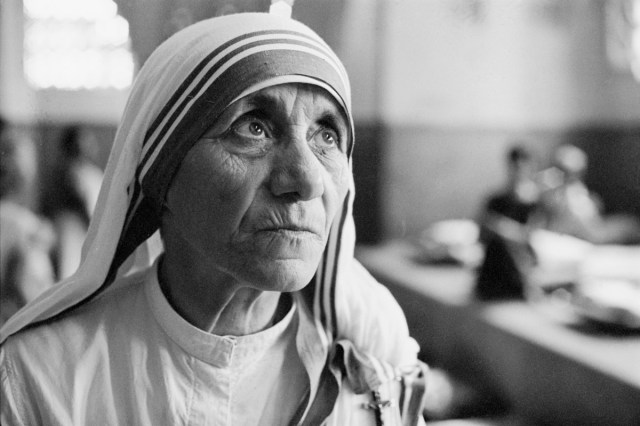
MotherTeresa
“Suffering, if it is accepted together, borne together, is joy.” –Mother Teresa

Our shared value of the risen Christ is the fuel that keeps our car of faith running.  It is what transcends the stoic attitude of unfeeling endurance to a joyful flourishing of faith.  Suffering is central to living for Jesus Christ.  Suffering is not something to continually avoid, go around, or bemoan because it is God’s means of forming us spiritually to be like Jesus.  I can say that the sufferings I’ve experienced in my own life I never want to go through again. I can also say that I would not change those experiences for anything because they have formed and shaped me in ways that would probably not have happened apart from adversity.

Our goal in this life is not to escape the world.  There is a time coming when our salvation will be consummated, heaven comes down to earth, and both are joined forever.

“Then I saw a new heaven and a new earth, for the first heaven and the first earth had passed away, and there was no longer any sea.  I saw the Holy City, the New Jerusalem, coming down out of heaven from God, prepared as a bride beautifully dressed for her husband.  And I heard a loud voice from the throne saying, ‘Now the dwelling of god is with men, and he will live with them.  They will be his people, and God himself will be with them and be their God.  He will wipe every tear from their eyes.  There will be no more death or mourning or crying or pain, for the old order of things has passed away” (Revelation 21:1-4). 

This is our inheritance in Christ.  First, however, we must come prepared for the future by undergoing grief in all kinds of sufferings in the present.  These trials to our faith are a sort of pre-marital session that prepare us for our marriage with Jesus.

Eventually, suffering will have done its work and we will be with Christ forever.  Until that day, let’s not stay in the garage of life.  Let us explore all that God has for us, embracing both the meaning and the mystery of faith.  Since our salvation is assured, let us live with confidence and run the race marked out for us.  Let us not be complacent or slow in doing the will of God, but work for God’s kingdom purposes on this earth.  And let us allow our trials to do their work in us, responding to them with joy knowing that our faith is being strengthened for the benefit of blessing the world.  Even in suffering, God is good all the time; and, all the time, God is good.  To him be the glory.