Revelation 2:8-11 – Spiritual Endurance

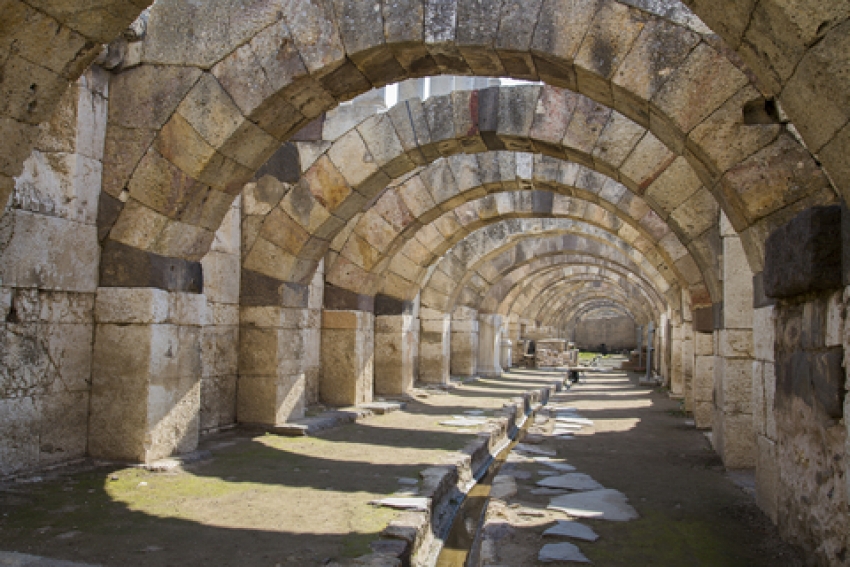
The remains of ancient Smyrna in Izmir, Turkey

This is what you must write to the angel of the church in Smyrna:

I am the first and the last. I died, but now I am alive! Listen to what I say.

I know how much you suffer and how poor you are, but you are rich. I also know the cruel things being said about you by people who claim to be Jews. But they are not really Jews. They are a group that belongs to Satan.

Don’t worry about what you will suffer. The devil will throw some of you into jail, and you will be tested and made to suffer for ten days. But if you are faithful until you die, I will reward you with a glorious life.

If you have ears, listen to what the Spirit says to the churches. Whoever wins the victory will not be hurt by the second death. (Contemporary English Version)

Jesus not only speaks in the four Gospels of the New Testament; Christ also speaks in the final biblical book of Revelation to seven different churches.

In today’s New Testament lesson, Jesus addresses the church at Smyrna – a large and beautiful port city in the ancient world, on the eastern coast of the Aegean Sea (present day Turkey). 

Jesus was letting the believers in Smyrna know they were about to experience severe persecution. However, they need not be fearful and can remain faithful because their Lord knows all about suffering. 

The church’s perseverance under such trouble would result in the crown of life, given to them by Jesus himself. Words coming directly from their Lord and Savior must surely have been an encouragement to the believers as they underwent extreme difficulty.

The congregation at Smyrna was facing imprisonment and, for some, even death for their faith. The heart of the message by Jesus is to remain faithful. 

The seven churches of Revelation which Jesus addressed

There will always be those who are faint of heart with weak faith, giving up when the going gets tough. Yet, persecution and hardship have a way of purging the soul, as well as the church, of its dross. Suffering is inevitable; how we handle adversity when it comes is completely under our own control.

Few of us will likely never face a hardship that could result in martyrdom. Knowing there are brothers and sisters in the faith throughout the world who do face daily hardship for devotion and beliefs puts our own troubles in a different light.

The daily irritations and trials that God puts in our way to refine us and shape our faith certainly seem small compared to imprisonment and martyrdom. Yet, no matter who we are and where we are located on this earth – whether facing uncommon hardship or banal difficulty – the afflictions of both body and soul come to us as opportunities to lean into faith and love Jesus to the end.

Jesus is not looking for perfect people – just faithful followers willing to endure suffering with the truth that our Lord stands with us. 

Whatever our current circumstances may be, Jesus offers us his perspective on it. He knows precisely what is going on and understands the spiritual resources you and I possess for each adverse situation we encounter.

In fact, few of us really discern the largess of internal resources within us because of Christ’s redemptive work and the Spirit’s abiding presence – not to mention the very personhood God graciously gave us in the womb before we were even born.

Even though it seems, at times, we lack the strength, wisdom, and courage for what is ahead – Jesus has supreme confidence in us to maintain faith and endure through our afflictions.

Life is not a sprint; life is a marathon. And to finish the race we need to be in good spiritual health. The perseverance of the saints will happen as we run – step by step, stride by stride – with boldness, despite fear of the unknown future around the bend.

Spiritual endurance requires becoming comfortable with risk, vulnerability, accountability, and the steadfast love which is both received and given.

Perhaps, most of all, it requires keeping our heads up and running toward the promise of reward at the finish. The crown of life is an image of both congratulation and celebration of a race well-run and the enjoyment of unending fellowship with our Lord for whom we have endured so much.

After all is said and done, and the end of the age has occurred, we will be able to look back in hindsight and see that it was really Jesus who all along was fortifying us to keep standing and keep going. Christ is so vested in us that he continually ensures our ultimate victory through a constant presence of help and encouragement. The heritage of both the Reformation and Holy Scripture testify to this truth:

“All our progress and perseverance are from God.”

John Calvin (1509-1564)

“I’m sure about this: the one who started a good work in you will stay with you to complete the job by the day of Christ Jesus.” (Philippians 1:6, CEB)

May the grace of Jesus sustain you; the love of God surround you; and the encouragement of the Spirit surprise you, today and every day. Amen.

Grant, O God, That we may never lose the way through our self-will, and so end up in the far countries of the soul; that we may never abandon the struggle, but that we may endure to the end, and so be saved; that we may never drop out of the race, but that we may ever press forward to the goal of our high calling; that we may never choose the cheap and passing things, and let go the precious things that last forever; that we may never take the easy way, and so leave the right way; that we may never forget that sweat is the price of all things, and that without the cross, there cannot be the crown.

So keep us and strengthen us by your grace that no disobedience and no weakness and no failure may stop us from entering into the blessedness which awaits those who are faithful in all the changes and chances of life down even to the gates of death; through Jesus Christ our Lord. Amen

William Barclay, Prayers for the Christian Year

Psalm 27 – Wait…

Psalm 27:4 painting by Marguerite Moreau McCarthy

The Lord is my light and my salvation;
    whom shall I fear?
The Lord is the stronghold of my life;
    of whom shall I be afraid?

When evildoers assail me
    to devour my flesh—
my adversaries and foes—
    they shall stumble and fall.

Though an army encamp against me,
    my heart shall not fear;
though war rise up against me,
    yet I will be confident.

One thing I asked of the Lord,
    that will I seek after:
to live in the house of the Lord
    all the days of my life,
to behold the beauty of the Lord,
    and to inquire in his temple.

For he will hide me in his shelter
    in the day of trouble;
he will conceal me under the cover of his tent;
    he will set me high on a rock.

Now my head is lifted up
    above my enemies all around me,
and I will offer in his tent
    sacrifices with shouts of joy;
I will sing and make melody to the Lord.

Hear, O Lord, when I cry aloud,
    be gracious to me and answer me!
“Come,” my heart says, “seek his face!”
    Your face, Lord, do I seek.
    Do not hide your face from me.

Do not turn your servant away in anger,
    you who have been my help.
Do not cast me off, do not forsake me,
    O God of my salvation!
If my father and mother forsake me,
    the Lord will take me up.

Teach me your way, O Lord,
    and lead me on a level path
    because of my enemies.
Do not give me up to the will of my adversaries,
    for false witnesses have risen against me,
    and they are breathing out violence.

I believe that I shall see the goodness of the Lord
    in the land of the living.
Wait for the Lord;
    be strong and let your heart take courage;
    wait for the Lord! (New Revised Standard Version)

“The key to everything is patience. You get the chicken by hatching the egg, not by smashing it.”

Arnold H. Glasow

The Christian season of Lent is a time of waiting…. Believers patiently wait for Easter and the resurrection of the Lord. But there must be a crucifixion before there is a resurrection. There must be suffering before there is glory. Truncating the process of spiritual development, including the hard circumstances of life, will stunt our growth.

So, we need to wait for the Lord….

But, dang it, waiting is hard! Patience is especially difficult whenever we are experiencing hardship and difficulty. We already know that praying for patience is problematic; we end up getting plenty of opportunities to exercise patience and may feel like we’re worse off than before. So, what do we do?

The way to wait patiently is through hope. And hope is a reality which needs to be continually fortified.

Whatever we long to see realized…

the return of a wayward son or daughter…

revitalization and revival within the church…

courage to face the high wall of adversity…

protection and deliverance from mean-spirited people…

an end to pandemic…

freedom from racism and injustice…

healing from chronic pain…

enough finances to make our budget budge…

whatever the situation we long for, patience is to be our breakfast every morning to help us through each day, living one day at a time, putting one foot forward.

Apart from patience, faith, and hope in God, we will lose our spiritual zeal and settle for a mediocre existence with tepid relationships and lukewarm engagement of the world. 

God desires more for us…

than simply having a marriage in which two people only exist under the same roof…

for church to be more than buildings, budgets, and butts in the pews…

for our work to be more than a necessary evil to make a living…

for our lives to be more than fear, worry, and anxiety…

for much more than broken dreams, messed up relationships, and situations gone sideways.

The confident expectation of hope neither eliminates trouble from our lives nor magically makes everything better.

Deep faith, like the psalmist expressed, does not change or alter reality – but it does change us.

The way in which we view and handle our troubles is understood differently through the filter of faith and the lens of hope.

The mammoth adversity in our lives is no longer feared because of settled trust in God; the danger which lurks about has no teeth to hold us when we are secure in the Lord.

The actions believers take toward God amidst the fallen nature of this world are to wait and hope, to be strong and take courage. It is precisely when we are totally discombobulated that faith and confident expectation kick in and take effect.

Our faith leads us to confess:

I believe the Lord is the Light which keeps me safe and illumines my path.

I believe the Lord is my Fortress, a castle to protect me.

I believe the Lord is an Army surrounding me, defending my life.

I believe the Lord is the Rock of my salvation, keeping me secure.

I believe the Lord is a Parent who holds me close and does not let go.

I believe the Lord is the right and good Judge, always extending grace and mercy to me.

I believe the Lord is Healer, oftentimes healing me from the need to be healed.

Therefore:

I have confidence and courage to engage the world, knowing God has my back.

I have confidence God will handle malevolent persons, systemic evil, and sinister forces on my behalf.

I have confidence I can approach God, since God’s character is always gracious and loving.

I have confidence to pray with authority, understanding God is the Sovereign of the universe.

I have confidence better days are ahead, that the Christ is soon coming.

I have confidence God bends to attentively listen to me praying.

I have confidence God is neither angry at me nor hidden from me.

I have confidence God shall lead me, guide me, and teach me in the way I ought to go.

I have confidence knowing that God has my best interests in mind.

Rather than losing heart, we can be strengthened with solid theology. Making daily affirmations of faith, persevering in hope, and performing small acts of love are our daily tasks while we wait and watch….

Almighty and everlasting God, the One who sees, knows, and protects, by the power of your Holy Spirit, you are refining us, purifying our discipleship, pulling us into following Jesus in this scary new world of uncertainty. Grant us mercy and grace to trust you more deeply, for the only secure place is with you, our light and our salvation, the stronghold of our life. We pray in the name of Jesus, the first-born of your new creation, and our hope, our life. Amen.

Job 1:1-22 – A Better Way Through Impossible Suffering

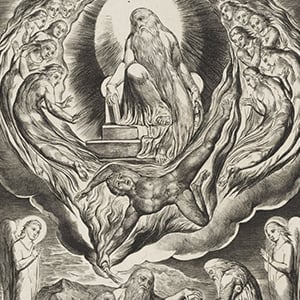
Satan Going Forth from the Presence of the Lord by William Blake, 1825

In the land of Uz there lived a man whose name was Job. This man was blameless and upright; he feared God and shunned evil. He had seven sons and three daughters, and he owned seven thousand sheep, three thousand camels, five hundred yoke of oxen and five hundred donkeys, and had a large number of servants. He was the greatest man among all the people of the East.

His sons used to hold feasts in their homes on their birthdays, and they would invite their three sisters to eat and drink with them. When a period of feasting had run its course, Job would arrange for them to be purified. Early in the morning he would sacrifice a burnt offering for each of them, thinking, “Perhaps my children have sinned and cursed God in their hearts.” This was Job’s regular custom.

One day the angels came to present themselves before the Lord, and Satan also came with them. The Lord said to Satan, “Where have you come from?”

Satan answered the Lord, “From roaming throughout the earth, going back and forth on it.”

Then the Lord said to Satan, “Have you considered my servant Job? There is no one on earth like him; he is blameless and upright, a man who fears God and shuns evil.”

“Does Job fear God for nothing?” Satan replied.“Have you not put a hedge around him and his household and everything he has? You have blessed the work of his hands, so that his flocks and herds are spread throughout the land. But now stretch out your hand and strike everything he has, and he will surely curse you to your face.”

The Lord said to Satan, “Very well, then, everything he has is in your power, but on the man himself do not lay a finger.”

Then Satan went out from the presence of the Lord.

One day when Job’s sons and daughters were feasting and drinking wine at the oldest brother’s house, a messenger came to Job and said, “The oxen were plowing and the donkeys were grazing nearby, and the Sabeans attacked and made off with them. They put the servants to the sword, and I am the only one who has escaped to tell you!”

While he was still speaking, another messenger came and said, “The fire of God fell from the heavens and burned up the sheep and the servants, and I am the only one who has escaped to tell you!”

While he was still speaking, another messenger came and said, “The Chaldeans formed three raiding parties and swept down on your camels and made off with them. They put the servants to the sword, and I am the only one who has escaped to tell you!”

While he was still speaking, yet another messenger came and said, “Your sons and daughters were feasting and drinking wine at the oldest brother’s house, when suddenly a mighty wind swept in from the desert and struck the four corners of the house. It collapsed on them, and they are dead, and I am the only one who has escaped to tell you!”

At this, Job got up and tore his robe and shaved his head. Then he fell to the ground in worship and said:

“Naked I came from my mother’s womb,
    and naked I will depart.
The Lord gave and the Lord has taken away;
    may the name of the Lord be praised.”

In all this, Job did not sin by charging God with wrongdoing. (New International Version)

Much of life is a mystery. We simply do not know why some things happen. And it’s likely we won’t have answers to many of our vexing questions, this side of heaven. From our limited human perspective, **** happens, and that’s about all we can say about it. 

There are times in Holy Scripture, however, when the veil between heaven and earth is peeled back long enough for us to catch a glimpse of mystery. Today’s Old Testament lesson is such a story. 

Job was a wealthy man and had everything this earthly life could offer. What’s more, he was a pious godly person of faith. It was commonly understood that those two things always went together. So, when we see behind the curtain and are privy to a conversation between God and Satan, the devil himself points this out – that Job only praises God because of how good he has it.  Even with this understanding of what was behind Job’s misery, we still see the mysterious God allowing Satan to operate with only God-knows reasons why.

Whenever calamity strikes, or bad news causes us to slump in our chairs, or adversity hits unexpectedly, or trouble smacks us upside our life like a sledgehammer, it’s only human to begin wondering what we did wrong or what we did to bring on such a terrible set of circumstances. 

But the truth is this: We just don’t always know. 

Yes, I fully understand that statement is hard to swallow; it even sucks. For example, no amount of understanding why my grandson has a rare form of epilepsy will make the pain go away. All my wonderings about his future isn’t going to help my daughter. It’s an impossible emotional place to be. It’s sad and it’s frustrating.

Yet, there is a better way.

Although there is so much we don’t know, we do know Job’s inconceivable response to the mystery of God. He made an incredible confession of faith, despite the most awful of circumstances. Job made the affirmation:

“When I was born into this world,
    I was naked and had nothing.
When I die and leave this world,
    I will be naked and have nothing.
The Lord gives,
    and the Lord takes away.
Praise the name of the Lord!”

Job 1:21, ERV

Rather than spending all of our emotional energy trying to figure out an answer to our “why” questions, perhaps the more sage response is to confess our faith in a radical trust of God. 

Using these actual words from Job can be a necessary start to navigating the troubled waters of evil which swirl around us, even if we have to say them over and over again to believe them.

I know I do.

Almighty God, every good thing I have in my life comes from you. It is your prerogative whether I continue to have those things, or not. Whatever happens, whether it causes heartbreak or happiness, is completely known to you. I trust that you know what you are doing, and I completely throw myself upon your mercy through Jesus Christ, my Savior. Amen.

Isaiah 61:1-7 – Better Days Ahead

The Spirit of the Sovereign Lord is on me,
    because the Lord has anointed me
    to proclaim good news to the poor.
He has sent me to bind up the brokenhearted,
    to proclaim freedom for the captives
    and release from darkness for the prisoners,
to proclaim the year of the Lord’s favor
    and the day of vengeance of our God,
to comfort all who mourn,
    and provide for those who grieve in Zion—
to bestow on them a crown of beauty
    instead of ashes,
the oil of joy
    instead of mourning,
and a garment of praise
    instead of a spirit of despair.
They will be called oaks of righteousness,
    a planting of the Lord
    for the display of his splendor.

They will rebuild the ancient ruins
    and restore the places long devastated;
they will renew the ruined cities
    that have been devastated for generations.
Strangers will shepherd your flocks;
    foreigners will work your fields and vineyards.
And you will be called priests of the Lord,
    you will be named ministers of our God.
You will feed on the wealth of nations,
    and in their riches you will boast.

Instead of your shame
    you will receive a double portion,
and instead of disgrace
    you will rejoice in your inheritance.
And so you will inherit a double portion in your land,
    and everlasting joy will be yours. (New International Version)

The message of better days ahead was a breath of fresh air to a beaten down people.

Just today I was speaking with an intensive care nurse who said, “It’s one thing to have a hard day, or know a few weeks will be difficult. It’s altogether another thing when it seems there’s no end to the hard deaths we experience.” Whenever things have gone sideways for so long, we find our lives needing restoration and renewal.

That was the situation for the ancient Israelites. They needed deliverance from their awful predicament. They longed for healing, freedom, and comfort from their grief. After centuries of a downward spiral into disobedience and going their own way, the people found themselves bereft of resources.

After you have suffered for a little while, the God of all grace, the one who called you into his eternal glory in Christ Jesus, will himself restore, empower, strengthen, and establish you.

1 Peter 5:10, CEB

The people needed the year of the Lord’s favor – the year of Jubilee. The Jubilee was supposed to occur every fiftieth year of Israel’s existence in the Promised Land. For forty-nine years there were individuals and families who either incurred debt, indentured themselves into servitude for survival, landed in prison, or ended up laboring in the fields they once owned.

According to the Law, after the forty-nine years, on the fiftieth year, the debts were erased, slaves were freed, fields allowed to rest, and the land restored back to its original owners. God’s deliverance is meant to be not only spiritual, but also very tangible and real.

Salvation is not just otherworldly – it’s also a transformation of the world we inhabit in the here and now.

The need for good news presupposes there’s been some bad news happening. The Lord deliberately gives attention to the oppressed, the brokenhearted, the captives, the prisoners, those who mourn, and the faint of heart. God is concerned for the lowly and the weak. 

It’s significant to note that Israel found themselves in such need not necessarily because they were always victims of adverse situations, but also because they failed to obey the stipulations of their covenant with God. 

We have no actual evidence the Israelites even practiced the Jubilee. After entering the Promised Land, by the time fifty years came down the pike, they had slid so far down the spiritual drain, it was completely off their radar to practice a Jubilee.

It seems no one had any intention of forgiving debts, freeing their indentured servants, giving back the land to original owners, or providing the land itself with a Sabbath rest. 

To not practice the Jubilee was to rob people of their land and practice injustice. But God loves justice and hates robbery. God pays attention to those who are not receiving very real and tangible needs for their lives. So, God speaks words of hope and deliverance for those in circumstances beyond their ability to cope.

The first few verses of today’s Old Testament lesson were the words Jesus read in the synagogue when he began his earthly ministry. Christianity observes that Jesus Christ is the ultimate fulfillment of this promise for deliverance and provision. He came to establish a Jubilee celebration that would never end.

It might be easy for some folks to overlook these verses as pertaining to them. After all, they are blessed, both materially and spiritually. They can always identify people who are in much more need than they are. But we must recognize that the maladies of our hearts are very real. There are specific conditions in our lives that leave us, not just them,in bondage and in need of restoration, renewal, and revitalization, just like the Israelites of old. 

We must name those maladies which are stuffed away in a closet of our heart, such as: the love of things and money; severed relationships; old grudges; hidden addictions; domestic violence; denial of depression; secret affairs; cutting; fear; anger; greed; and hatred. Outward smiles and small talk may hide the truth from others, but they do nothing to hide from a God for whom everything is laid bare.

It’s okay to be a glowstick, sometimes we need to break before we shine.

The good news is not just something for someone else who has “obvious” needs. The gospel must touch our lives and bring us freedom so that we can pass on that very real good news to the legion of social ills that make our world sick. 

There are people all around us who need spiritual, emotional, and material help. Yet, we will not have eyes to see them, or have hearts to help, if we are stuffing our burdens so deep within that we are blind to others.

On the other hand, we may too easily read today’s lesson in a manner it was not meant to be heard, as if we are more in need than we actually are, hearing it something like this: The Spirit of consumer choices is upon me, because the Lord has anointed me to preach good news to the middle-class. He has sent me to bind up the half-hearted, to proclaim more options for the limited, and release from Black Friday for the buyers, to proclaim the year of the Cyber-Monday. 

Perhaps we may not be so crass as to say that out loud, but we might have the tendency to misinterpret Bible passages so as to avoid our own great poverty of heart.

Whichever lens we tend to look at Isaiah’s prophecy, when we become experts at ignoring our needs and emotions, we fail to see the year of Jubilee. The stark reality is that no matter who we are, we need a biblical Jubilee.

Many people are either one paycheck, one prodigal kid, one mental health diagnosis, one serious illness, one drink, one affair, or one bad decision away from being the people we typically identify as in need – the ones that bad things happen to – the ones we do not want as next door neighbors.

We may not yet be vulnerable enough to admit our situation. So, we keep practicing the denial of our spiritual poverty. But everyone knows what a broken heart is. Everybody has a bondage they don’t want to admit. All people need renewal and restoration.

If we believe that tomorrow will be better, we can bear a hardship today.

How, then, shall we live?

Turn from the things which cause us poverty and bondage and turn toward delighting in the Lord your God. Rejoice, because God will make a sprout come up. God will cause us to grow. God will rebuild our ruined souls. God will restore the places of our lives that have been devastated. God will even renew the places that haven’t seen renewal for generations. It begins with you and me allowing the justice of God to work within us.

God can neither bring comfort to those who don’t mourn, nor turn grief into joy unless there is an acknowledgment of a dire situation. If we want to be an oak of righteousness, then there must be a confession of despair and an allowance of God’s justice through Jesus Christ to work its way in us.

Let us envision Jesus coming into our lives and replacing a tattered hat of grief with a crown of beauty. Picture the Lord placing on us a garment of praise to replace those stinky clothes of grumbling. Allow your life to display the grace of God in Christ, since we have been profoundly touched by the justice of God.

Lord Jesus, Carpenter and King, be merciful to the multitudes who today bear the indignities of injustice everywhere. Raise up leaders in every land dedicated to your righteous standards of order, equity, and justice. Grant to us the grace to fulfill our vocation of being loyal to kingdom ethics. Sharpen our intellects to pierce the pettiness of prejudice; to perceive the beauty of human fellowship. Guide our minds to a meaningful understanding of the problems of the poor, the oppressed, the unemployed, and the needy. Incline our hearts toward them, as is your heart, O Lord. May we hunger and thirst after justice always and do it in the power of the Holy Spirit. Amen.