James 5:1-6 – Avoid the Temptations of Wealth

Now listen, you rich people, weep and wail because of the misery that is coming on you. Your wealth has rotted, and moths have eaten your clothes. Your gold and silver are corroded. Their corrosion will testify against you and eat your flesh like fire. You have hoarded wealth in the last days. Look! The wages you failed to pay the workers who mowed your fields are crying out against you. The cries of the harvesters have reached the ears of the Lord Almighty. You have lived on earth in luxury and self-indulgence. You have fattened yourselves in the day of slaughter. You have condemned and murdered the innocent one, who was not opposing you. (New International Version)

Everyone’s station in life has it’s own particular temptations. It just so happens that in the church for which the Apostle James wrote his letter, the wealthy persons had completely given in to the temptation of using wealth to build more wealth on the backs of the poor. And the Apostle called them out on it.

Just because you nor I might not be rich in assets and wealth, doesn’t mean today’s New Testament lesson has nothing to do with us. We all inhabit some position of influence or authority, as well as own something, even if it is not much. So, how we use what has been given to us by God is of utmost importance for everyone.

The poor are tempted to envy the rich. And the rich are tempted to trust in their money, resources, and business acumen with no thought to God. Both rich and poor can identify so closely with their respective situations that their primary identity is defined by wealth, or the lack thereof.

Hoarding Wealth

Its not unusual for a person who appears middle or lower class to have hundreds of thousands of dollars stashed away. I have met more than a few of them in my life. Some people die millionaires, having been penny pinchers their entire lives.

Stockpiling wealth, whether hiding it or flaunting it, without the intention of using it for godly purposes is tragic. No one is blessed with such an approach to wealth. Money is temporary; relationships are permanent. A wise Christian focuses on storing heavenly treasure and taking an eternal view of their resources.

Don’t hoard treasure down here where it gets eaten by moths and corroded by rust or—worse! —stolen by burglars. Stockpile treasure in heaven, where it’s safe from moth and rust and burglars. It’s obvious, isn’t it? The place where your treasure is, is the place you will most want to be, and end up being. (Matthew 6:19-21, MSG)

Fraudulent Wealth

A person can become addicted to wealth, or so desire to be wealthy that they use illegal and dishonest ways of obtaining it and holding on to it. Withholding wages from workers is a crime, both legally and biblically. In the ancient world, and still in many places around the globe today, workers are paid daily, at the end of the day. To not receive their pay means their families will go hungry that night.

Don’t take advantage of poor or needy workers, whether they are fellow Israelites or immigrants who live in your land or your cities. Pay them their salary the same day, before the sun sets, because they are poor, and their very life depends on that pay, and so they don’t cry out against you to the Lord. That would make you guilty. (Deuteronomy 24:14-15, CEB)

Self-Indulgent Wealth

The one living completely for self is only building wealth in vain, like a hog being fattened for the slaughter. Day-dreaming and fantasizing about possessing money for personal indulgence, at the expense of others, will not end well.

Jesus said, “Be careful and guard against all kinds of greed. People do not get life from the many things they own.”

Then Jesus used this story: “There was a rich man who had some land. His land grew a very good crop of food. He thought to himself, ‘What will I do? I have no place to keep all my crops.’

“Then he said, ‘I know what I will do. I will tear down my barns and build bigger barns! I will put all my wheat and good things together in my new barns. Then I can say to myself, I have many good things stored. I have saved enough for many years. Rest, eat, drink, and enjoy life!’

“But God said to that man, ‘Foolish man! Tonight, you will die. So, what about the things you prepared for yourself? Who will get those things now?’ (Luke 12:15-20, ERV)

Murderous Wealth

When the rich and powerful are so bent on accumulating and hoarding wealth, they step all over workers to get what they want. And the poor laborers possess neither the ability nor the authority to handle the injustice. They are helpless.

By withholding wages and resources, or purposefully paying a non-living wage, the neglect puts people in poverty. Then, the poor struggle to survive. They may starve, even die, through no fault of their own. And the ones who put them in such a position will have to answer to a higher authority – God. (1 Kings 21)

How, Then, Shall We Live?

The Lord gives us money, resources, even wealth, for us to enjoy and give to others. We are stewards, accountable for the time, assets, and relationships, given us by God in this life. So, then, we must emulate godly models of asset allocation and thoughtful stewardship.

Command those who are rich in this present world not to be arrogant nor to put their hope in wealth, which is so uncertain, but to put their hope in God, who richly provides us with everything for our enjoyment. Command them to do good, to be rich in good deeds, and to be generous and willing to share. In this way they will lay up treasure for themselves as a firm foundation for the coming age, so that they may take hold of the life that is truly life. (1 Timothy 6:17-19)

May we all use whatever resources, gifts, abilities, and time we have to bless others and contribute to the common good of all persons.


Psalm 24 – It All Belongs to God

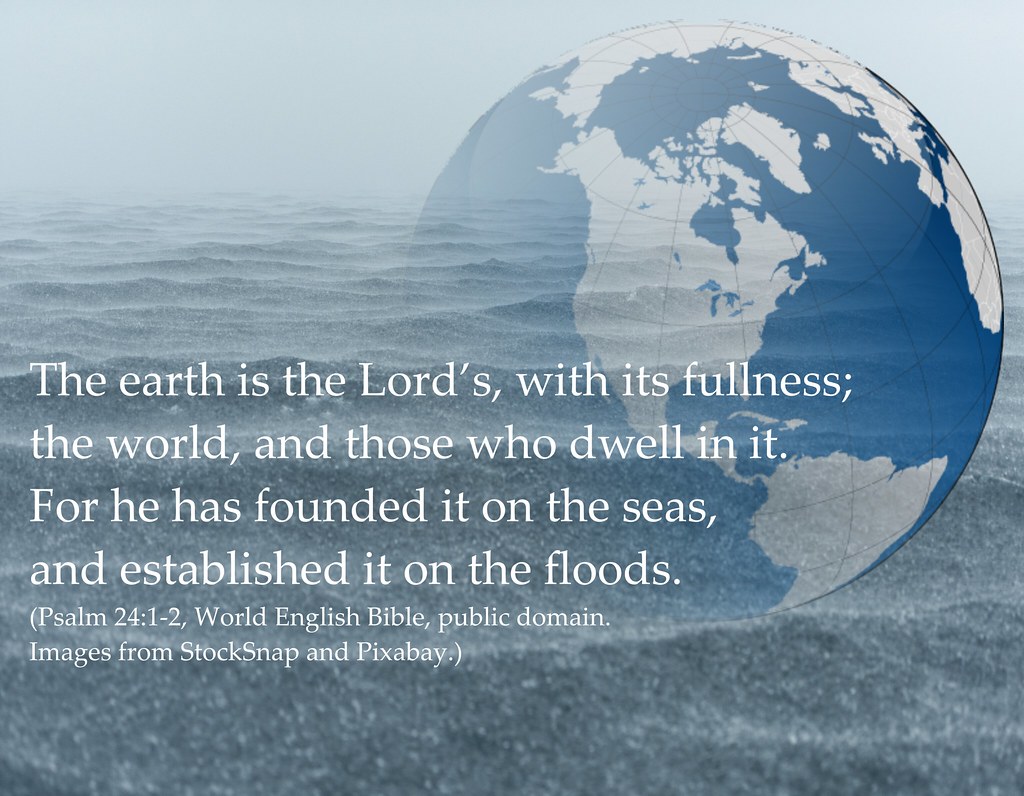
The earth and everything on it
    belong to the Lord.
    The world and its people
    belong to him.
The Lord placed it all
    on the oceans and rivers.

Who may climb the Lord’s hill
    or stand in his holy temple?
Only those who do right
    for the right reasons,
    and don’t worship idols
    or tell lies under oath.
The Lord God, who saves them,
    will bless and reward them,
    because they worship and serve
    the God of Jacob.
Open the ancient gates,
    so that the glorious king
    may come in.

Who is this glorious king?
    He is our Lord, a strong
    and mighty warrior.

Open the ancient gates,
    so that the glorious king
    may come in.

Who is this glorious king?
    He is our Lord,
    the All-Powerful!
(Contemporary English Version)

Abraham Kuyper (1837-1920) was born in the Netherlands. He was a church minister, university professor, and politician – having established a Christian university, as well as served in the Dutch parliament and as Prime Minister of the Netherlands.

Kuyper labored throughout his life to flesh-out the theological implications of a sovereign God. He consistently insisted all we do as humans is to be integrated and brought under the lordship of Jesus Christ. He believed firmly that all things belong to God in Christ and all the fragments of our lives are to be oriented and integrated around our Creator’s great claim upon us as creatures. Whether a pastor, teacher, or politician, every vocation, each activity, and all thoughts and intents rightly belong to God.

In other words, religion and spirituality cannot be kept within superimposed limits. There is no separation of any one domain of human thought from the rest, no isolation of any one domain of human life from another or from Christ.

The spiritual life is not limited to merely the ethereal. It is both celestial and terrestrial – heavenly and earthly – concerned for the immaterial and the material. God cares about it all because it all belongs to God.

God owns the world. So, the implications of this for us is huge. It means we don’t really own anything. We are simply stewarding all that God has given us – including our very lives. The chaos of this world, from a biblical perspective, comes from creatures attempting to assert their own sovereignty and control things. Since we were not created to be little gods roaming about doing our own thing, the inevitable result is a topsy-turvy world.

God’s divine claim and ownership of the world means that absolute authority does not rest with nations, states, or leaders. Everything we see, as well as what we don’t see, belongs to the Lord. Part of the task of believers is to confess and bear witness to God’s rightful and benevolent rule in this world. In fact, Christians everywhere pray toward this end every week: Your kingdom come, your will be done, on earth, as it is in heaven.

The circle of life, within Holy Scripture, is the Creator God bestowing life and relationship to created humans, who then respond by practicing just and righteous living – thereby receiving renewal from the Lord and life anew. Theoretically, this movement can go unbroken. It is a regular celebration, for the believer, in consistent rhythms of worship and adoration of God.

When we are able to get in the intended divine groove of faith, life, and worship, we will discover our meaning and purpose in the world. By rightly ordering our lives, centering and grounding them in the gracious and loving relationship of Creator and creature, then we find true blessing because it enjoys an intuited stamp of approval by the God who makes life possible.

In the Christian tradition, Jesus is the Victor, the King of Glory. All the promises and hopes of people are found and focused, in Christ. We enter through Jesus, the door of life, to deliverance from death and all that separates us from God, others, and self.

Jesus comes to bring blessing, justice, righteousness, mercy, purity, and peace. For this is how the world was meant to operate from the beginning. We are to open the ancient door of faith, especially when the Lord comes knocking:

Listen! I am standing and knocking at your door. If you hear my voice and open the door, I will come in and we will eat together. Everyone who wins the victory will sit with me on my throne, just as I won the victory and sat with my Father on his throne. If you have ears, listen to what the Spirit says to the churches. (Revelation 3:20-22, CEV)

Old Abraham Kuyper might be long dead, yet he got it right, if we are able to hear him:

“Whatever people may do, to whatever they may apply their hands – in agriculture, in commerce, and in industry, or in mind, in the world of art, and science – they are, in whatsoever it may be, constantly standing before the face of God. They are employed in the service of God. They have strictly to obey God. And above all, they must aim at the glory of his God.”

Abraham Kuyper

Blessed Lord, Creator of heaven and earth, though I am quite capable of fretting, complaining, and lamenting about how out of control things seem, the truth is that nothing is outside your grip. I may not always see your hand, discern your heart, or like your ways, but you are God and there is no other. So, continue to renew my thinking, gentle my heart, and deepen my worship. I humbly and gladly affirm that you are God, and I am not, through Jesus Christ, my Lord, who with you and the Holy Spirit reign sovereign as one God, now and forever. Amen.

An Embodied Spirituality

By Unknown artist

It is normal to feel guilty at this time of year about our bodies. Some of the more common goals for a new year are to lose weight, stop smoking, get in shape, have better sleep hygiene, and generally learn better self-care.  I am not going to add to the burden of guilt but emphasize something important: Our bodies are the vehicle given to us to glorify God. Our spirituality is quite embodied. (1 Corinthians 6:19-20)

One of the reasons we fail our bodies is that we do not always make the biblical connection of seeing our material selves with the same importance as the immaterial.  The Apostle Paul brought up a discussion about the body to the Corinthian Church because Corinth was a Greek city thoroughly imbibed with a Platonic philosophy of life.  At the core of Plato’s view of humanity was that the immaterial and the spiritual were of higher value than the body.  For Plato, the body is a necessary evil.  He referred to our souls as being imprisoned within the flesh.  When we die the soul is released and is freed from its bodily prison.

Western civilization has been significantly influenced, even today, by Plato’s view of humanity. Yet, that is not a biblical view of the body.  Instead of being a prison, the body is a temple, a sacred place which is no better and no worse than the soul.  When we die, we will not be disembodied souls, but will experience a bodily resurrection at the end of the age.  Eternity will be spent existing in a real glorified body free from sin. (1 Corinthians 15)

Since the body is sacred, and we glorify God with our bodies, then we must steward them just like we would steward any other physical material possession we own.  We have bought into Platonic philosophy when we treat our cars better than we treat our bodies.  If a warning light comes on in our cars, we get it checked by the mechanic.  He fixes the issue and tells us what we need to do to prevent it from happening again, and we listen to him. 

Far too often, when warning lights go off in our bodies, we ignore them until our bodies literally break down and we must go to the doctor.  And even then, the doctor tells us to do something, and we do not do it.  We never avoid the advice of our mechanic, and yet we do it with our doctor.  We need to adopt the biblical wisdom of glorifying God on this earth through our bodies. 

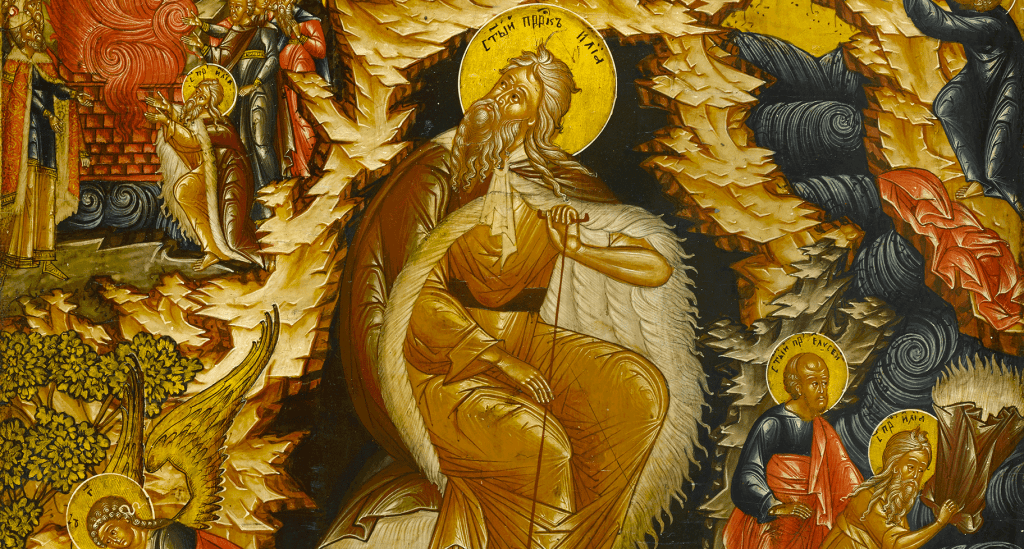
God’s care for our bodies can be found, for example, in the Old Testament prophet, Elijah. After Elijah experienced a great spiritual victory, he became the target of evil Queen Jezebel.  Elijah ran for his life and was severely burned-out from intense spiritual struggles with the queen’s prophets of Baal (1 Kings 19:1-3).  At that point, God did not come to Elijah and give him a sermon or exhortations about getting over it.  No, God restored Elijah’s body. And the Lord wants to restore our bodies, as well.

19th century Russian Orthodox icon of the prophet Elijah in the wilderness

First, Elijah needed sleep (1 Kings 19:5-6).  Millions of Americans are sleep deprived and live with a significant sleep debt (thus being continually cranky and out of sorts).  Insurance companies know this is a major issue because improper sleep habits have caused various auto accidents and fatalities. I once kept a crazy schedule with not many hours for sleep.  One day, during rush hour, I drove through a downtown expressway in bumper-to-bumper traffic and fell asleep.  I woke up about two minutes later and was still alive driving down the highway.  I sincerely believe God graciously drove the car for me.  That was my “wake up” call to change the way I was treating my body.

Second, Elijah needed to eat well (1 Kings 19:6-8).  For us, that means eating healthy.  One source of being overweight is failing to make the connection that eating is a spiritual activity.  Food is important to the kingdom of God.  It was eating that got us into trouble to start with and resulted in the fall of humanity.  Eventually, we will come full circle with eating being the activity we engage in at the end of the age – a redeemed view of food and eating together with Jesus at the marriage supper of the Lamb (Revelation 19:1-10).  God cares about food – what we eat and how much of it we consume.  He cares because we do not own our bodies – we steward them for God.

Third, Elijah needed some vigorous exercise (1 Kings 19:8-9).  He walked all the way to Mount Horeb, which was over a month’s travel.  But that exercise was essential to his well-being, both physically and spiritually.  It was only after he slept, ate well, and walked that Elijah was ready to meet with God in a powerful experience.

Our physical fitness is a spiritual issue, and so, needs prioritization.  I am under no illusions or delusions about the difficulty of this. I prefer brownies to broccoli and rather like sleeping instead of exercise. Yet, I work at being physically fit and caring for my body.  I am personally motivated toward health because I love God and want to please the Lord with my body. After all, my body was important enough to be redeemed through the Cross of Christ.

This is not about willpower – it is about Christian stewardship. I look at my body the same way I look at borrowing something from another person: I return it in the best condition I can. When the Lord takes me someday, I do not want it to be because I hastened my own death through disregard of my God-given body.

If I were God, donuts would be health food, sitting back in the recliner would build muscle, and two hours of sleep at night would be sufficient. But I am not God, so I submit to doing what it takes to have an embodied spirituality. We are to enjoy life through making the connection between the spiritual and the physical because that is the way God created us.

It is never too late to be a proper steward of the body.  Our physical anatomy is an amazing work of God and incredibly receptive to healthy choices. Here are a few of the choices we can make…

Remember the positives

Remember that care of the body is worth it.  Being fit feels great and equips us for the will of God.  Keep the long view in mind.  Sacrificing a temporary pleasure is worth the eventual gain.

Start small

I will not be doing any triathlons anytime soon, or ever. We need to be realistic and set appropriate goals without comparison to others. Start small and build up over time with slow incremental change. The place to begin is by rearranging our schedules so that our bodies become a priority.  Maybe it is time to make that doctor’s appointment you have been putting off.

Join others

Accountability and fun can and ought to go together. For example, preparing meals together is a chance to connect with a friend or family member. Discover and maintain a consistent rhythm of health that works for you and is enjoyable.

Reframe it

People often give up their best laid plans because they are disconnected from the rest of their lives. Reframing our view of the body as a spiritual activity helps connect and align our mind, body, and spirit in the wholeness God designed for us.

Start today

It takes time for something to become a habit. All good things are a process of realization. Consider and plan today, asking for God’s direction. Get the Lord in on it from the beginning and let it be an offering to him.

May you find the joy, contentment, and satisfaction of living with a body properly cared for and ready for use to the glory of God.

Psalm 8 – The Majesty of It All

MilkyWay
The Milky Way

O Lord, our Sovereign,
how majestic is your name in all the earth!

You have set your glory above the heavens.
Out of the mouths of babes and infants
you have founded a bulwark because of your foes,
to silence the enemy and the avenger.

When I look at your heavens, the work of your fingers,
the moon and the stars that you have established;
what are human beings that you are mindful of them,
mortals that you care for them?

Yet you have made them a little lower than God,
and crowned them with glory and honor.
You have given them dominion over the works of your hands;
you have put all things under their feet,
all sheep and oxen,
and also the beasts of the field,
the birds of the air, and the fish of the sea,
whatever passes along the paths of the seas.

O Lord, our Sovereign,
how majestic is your name in all the earth! (NRSV)

This little psalm grounds us by dealing with ultimate questions of existence: Who am I?  Why do I exist?  What is the purpose of my life?

The answers to those questions are supremely important because we can lose sight of who we are and why we exist. If we were to peel back the layers of any random person’s life, we may find a deep sense of not belonging, of being in profound touch with their own mortality, and of having a disconnected sense of their personal role in the world. Many people have lost their original purpose of being a person and belonging to the human family in a way that makes a significant contribution to the world.

We live on a big planet, and that causes some people to feel quite small and wonder how they fit in. Gaping at such a large universe we may ask along with psalmist, “What are humans that you are mindful of them?”  This question forms the center of the psalm.  Hebrew poetry is typically arranged to have the front and the end of the poem point to the middle as its focus. So then, the psalmist purposely wrote this psalm so we would consider the great question of what God thinks of humanity within the scope of this exceptionally large universe.

To put this largeness in perspective, if the Milky Way galaxy were the size of the entire continent of North America, our solar system would fit in a coffee cup. Even now, two Voyager spacecraft are hurtling toward the edge of the solar system at a rate of 100,000 miles per hour. For thirty-five years they have been speeding away from Earth, having traveled 9 billion miles. When engineers beam a command to the spacecraft at the speed of light, it takes over 13 hours to arrive. Yet this vast neighborhood of our sun—in truth, the size of a coffee cup—fits along with several hundred billion other stars and their planets in the Milky Way, one of perhaps 100 billion such galaxies in the universe. To send a light-speed message to the edge of that universe would take 15 billion years.

Moraine Lake, Canada
Moraine Lake in Alberta, Canada

Out of the billions of galaxies in the universe, what is planet Earth that God should care about it?  Even on our planet there are billions of creatures. Yet, out of all those bugs, animals, fish, and birds, God has a special relationship with us, humanity, and cares for us deeply. God has even entrusted us with the responsibility to care for creation.  We are the only creatures who have the charge to steward all that God has created.  To put it another way, we, as people created in the image of God, have a job that is befitting of royalty, and it is more than a duty – it is a delight.

Furthermore, it is a godly and spiritual thing to engage in good creation care, whether it is properly feeding and caring for a pet, properly attending to relationships with grace and civility, or playing a crucial role in responsible land use.  Whatever it may be within this vast created world, God has entrusted to us this expansive Earth we live upon.  Literally everything in all creation is under our stewardship.

Out of all the creatures on earth, only people have been given the task of caring for every other created thing.  Only we as people have the self-awareness and perspective of the world which is needed to govern the world.  So, then, we can only find our true purpose and belonging in the stewardship of creation.  Care-giving is at the heart of being a person.

The glitch to this, and why so many lose their way, is that the world is still living under a curse due to the original fall of humanity into sin.  When we allow other dominions to supersede God’s dominion, then we have major problems.  When the power of money, or the significance of a position or job title, or the ability to do certain tasks is our basic identity and place of belonging, then we will likely succumb to anxiety. Other dominions cannot help us find our true God-given majesty as people created in God’s image.  Living any other way than being a proper steward of the world is beneath us because we have inherent dignity as God’s vice-regents over creation.

“There is no such thing as a small thing – only small things done with big love.” –Mother Teresa

That sentiment perfectly captures the vision of the psalmist – that all people are crowned with glory and honor and rule with God to do all the small things of life with a love that comes from our Creator.

Going forward, we have the possibilities of engaging in good stewardship of all that God has given us.  We can use our words in ways that care for others and build them up, rather than saying uncaring things which are not helpful.  We have the chance to be attentive to all the little things of life, whether gardening, building a bird house, working with diligence and care at our jobs, or keeping our community clean and its citizens healthy and happy, it is all important and has a significant place.

Let us, then, continually improve what we do, no matter what it is, so that it befits us as God’s people crowned with honor.  May this topsy-turvy year become one of joy and contentment, knowing the majesty we share with God as humans in his wondrous world.

Creator God, you make all things and weave them together in an intricate tapestry of life. Teach us to respect the fragile balance of life and to care for all the gifts of your creation. Guide by your wisdom those who have power and authority, that, by the decisions they make, life may be cherished, and a good and fruitful Earth may continue to show your glory and sing your praises. Almighty God, you have called us to tend and keep the garden of your creation. Give us wisdom and reverence for all your plants and animals who share this planet with us and whose lives make possible our own. Help us to remember that they too love the sweetness of life and join with us in giving you praise. Amen.