


All Israel came together to David at Hebron and said, “We are your own flesh and blood. In the past, even while Saul was king, you were the one who led Israel on their military campaigns. And the Lord your God said to you, ‘You will shepherd my people Israel, and you will become their ruler.’”
When all the elders of Israel had come to King David at Hebron, he made a covenant with them at Hebron before the Lord, and they anointed David king over Israel, as the Lord had promised through Samuel.
David and all the Israelites marched to Jerusalem (that is, Jebus). The Jebusites who lived there said to David, “You will not get in here.” Nevertheless, David captured the fortress of Zion—which is the City of David.
David had said, “Whoever leads the attack on the Jebusites will become commander in chief.” Joab son of Zeruiah went up first, and so he received the command.
David then took up residence in the fortress, and so it was called the City of David. He built up the city around it, from the terraces to the surrounding wall, while Joab restored the rest of the city. And David became more and more powerful because the Lord Almighty was with him. (New International Version)

Originally, in the Hebrew Bible, 1 and 2 Chronicles were one book, not two; and the Chronicles are the final book of Hebrew Scripture. The Greek translation of the Hebrews Bible – the Septuagint – was accomplished around the turn of the second century B.C.E. and made Chronicles two books because of its length.
Compilers of Christian Scripture moved the location of Chronicles from the end of the Old Testament and put it alongside the other historical books of 1 and 2 Samuel, and 1 and 2 Kings – mostly because Chronicles is generally a restatement of those books for a different generation of Jews living in the post-exilic period along with Ezra and Nehemiah.
Chronicles largely retells the story of the ancient Israelites, and then summarizes their history before focusing primarily on the reigns of King David and King Solomon. Yet, it is more than a retelling.
Chronicles is a restatement that emphasizes the importance of faithfulness to God and highlights the necessity of taking God’s Law seriously.
Religious reforms play an important part of Chronicles. Removing idols, obeying God’s Torah and God’s prophets, and honoring the proper worship of God are central to ensuring that a Babylonian exile never happens again – that the people will see the consequences of infidelity to the Lord, and live in the right and just ways handed down to them.
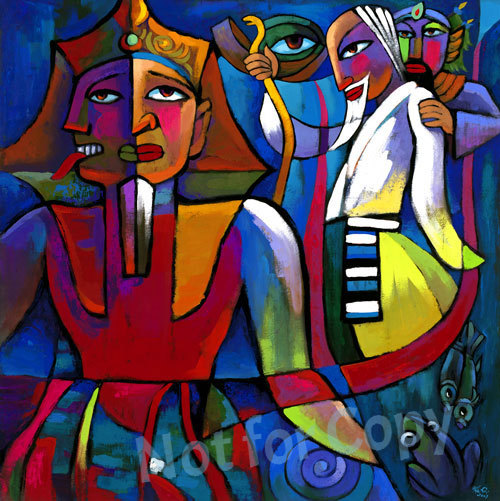
King David is pictured as a politically unifying figure of all Israel and Judah because he sought to conscientiously and faithfully live according to God’s commands. Later generations of kings did not do so, which led to the people losing their land and their temple.
David had proved himself as the right person for the job of leading the people. After becoming king, he used his position and authority to do God’s will. And it was a long time in coming; David patiently waited for the Lord’s timing and purpose to be accomplished.
Although anointed by the prophet Samuel as king while Saul was still in his reign, it took years for David to be enthroned as the actual king. David had several opportunities to make himself king by killing Saul (who was trying to kill David) but he allowed God to enthrone him in God’s own good time.
Rarely does anything the Lord promise come to fruition immediately. We must wait patiently for deliverance from painful trials of faith and the return of Christ. God makes promises. Then we persevere until those promises are fulfilled.
All of David’s waiting finally dissipated into kingly action. Before there were kings, judges ruled in Israel. And before that, Joshua led the people into the Promised Land. They had a mandate to expel the Canaanites. Those instructions from God only partially happened. There were still remnants and pockets of resistance. The Jebusites, ensconced in the city of Jebus (Jerusalem) were the most stubborn.
Part of the reason there were Canaanites still living in the land was the former King Saul’s failure to follow through on God’s plan. One of the first acts of King David was to finish and fulfill the complete takeover of the land.
David was willing to attempt something nobody else could do, and that no one believed could be done. If we were a fly on the wall during discussions about this, I can imagine a coterie of people saying to the king, “We tried that before. It won’t work. You cannot get rid of the Jebusites. This is a fool’s errand.”
Pessimism and passivity certainly do not dislodge anything, and the people had fallen into a cynicism that believed they needed to put up with the current situation.
Whenever a group of people fall into passive defeatism, criticism is rife because folks are not working together toward shared goals and solutions. Instead of addressing problems, there is merely complaining about whatever they don’t like.
On the other side of it, the Jebusites were smug in their self-confidence, showing their bravado through being blowhards. However, they had not yet faced David. If they thought another king like Saul was coming along, they were in for a big wake up call.
The Lord almighty was with David. And that is what made all the difference.
King David did not accept the status quo. He worked toward accomplishing the Lord’s will, as he understood it. And his faith always led to effective action.
Almighty and eternal God, so draw our hearts to you, so guide our minds, so fill our imaginations, so control our wills, that we may be wholly yours, utterly dedicated unto you; and then use us, we pray you, as you will, and always to your glory and the welfare of your people; through our Lord and Savior Jesus Christ. Amen.



 Rev. Tim Ehrhardt