
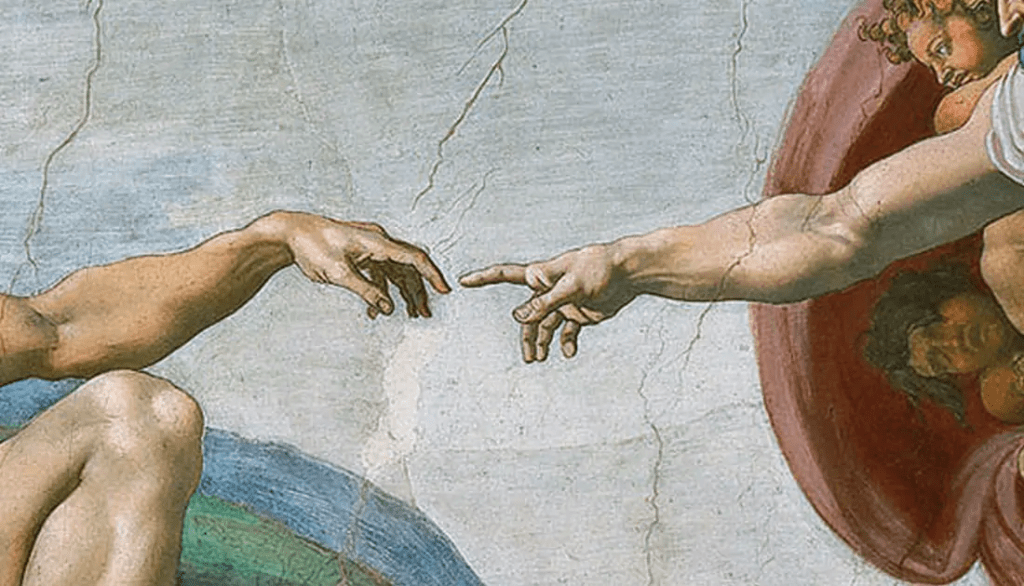
The Finite and the Infinite (Psalm 65)

God of Zion, to you even silence is praise.
    Promises made to you are kept—
    you listen to prayer—
    and all living things come to you.
When wrongdoings become too much for me,
    you forgive our sins.
How happy is the one you choose to bring close,
    the one who lives in your courtyards!
We are filled full by the goodness of your house,
    by the holiness of your temple.

In righteousness you answer us,
    by your awesome deeds,
    God of our salvation—
    you, who are the security
        of all the far edges of the earth,
        even the distant seas.
    You establish the mountains by your strength;
    you are dressed in raw power.
    You calm the roaring seas;
        calm the roaring waves,
        calm the noise of the nations.
Those who dwell on the far edges
        stand in awe of your acts.
    You make the gateways
        of morning and evening sing for joy.
You visit the earth and make it abundant,
    enriching it greatly
        by God’s stream, full of water.
You provide people with grain
    because that is what you’ve decided.
Drenching the earth’s furrows,
        leveling its ridges,
    you soften it with rain showers;
        you bless its growth.
You crown the year with your goodness;
    your paths overflow with rich food.
Even the desert pastures drip with it,
    and the hills are dressed in pure joy.
The meadowlands are covered with flocks,
    the valleys decked out in grain—
        they shout for joy;
        they break out in song! (Common English Bible)

The biblical psalms present God as sovereign over all creation. Today’s psalm extols the Lord of the universe as God of both temple and terra, of people and the earth.

God of the temple

Praise is the appropriate offering to God – because it is the Lord who listens, forgives, and chooses to fill persons with the holiness and goodness of God’s presence, exemplified in the temple.

Infinite righteousness cannot be fulfilled by finite beings. In other words, we need God.

The nineteenth century philosopher and theologian, Søren Kierkegaard (1813-1855) insisted that the humans did not established themselves; therefore, no one can simply exercise their will toward better and brighter circumstances.

Kierkegaard argued that humanity, at its core, is a synthesis of the infinite and the finite, the temporal and the eternal. A finite human is not a self; only when connected and aware of the infinite is someone a self. (The Sickness Unto Death)

Creatures can never lift themselves above anxiety, worry, distress, or hardship with only finite resources; we need infinite supplies and divine capital, to tap into the image of God within us, to realize that our true identity is inextricably dependent upon our Creator.

“Prayers” by Yoram Raanan

We are more than bodies and brain synapses; we are also souls. And as souls, we shall never realize our true selves through the temporary means of possessions, prestige, and power. A person cannot construct a self, by themselves, to bear the weight of who we really are. That’s because our real identity is hidden with Christ in God. (Colossians 3:3)

Just as the temple in Jerusalem was much more than a physical structure, so we, as the people of God, are so much more than tangible beings.

Do you not know that you are God’s temple and that God’s Spirit dwells in you? (1 Corinthians 3:16, NRSV)

Praise, prayer, and worship are practices designed to connect with the infinite God. Indeed, the kingdom of God is much nearer than we know.

Jesus said, “The kingdom of God is not coming with things that can be observed, nor will they say, ‘Look, here it is!’ or ‘There it is!’ For, in fact, the kingdom of God is among you.” (Luke 17:20-21, NRSV)

God of terra

We walk upon and inhabit this present terra firma, this earth. The earth, and all that is in it, belongs to the Lord. God is something of a cosmic farmer, taking care of the earth, watching over it, tending to its needs.

All that takes place on this celestial ball we live upon is under the gracious and loving eye of God. It is the Lord who brings the seasons and the rains, calming the storms of the seas, as well as the storms of our lives.

One of the reasons we find ourselves in such an impending climate debacle on this earth, is that we continue to utilize all the finite resources we can muster and fail to acknowledge and become aware of the grand infinite wherewithal we have with our Creator and Sustainer.

“I am the Lord, your savior;
I am the one who created you.
I am the Lord, the Creator of all things.
    I alone stretched out the heavens;
    when I made the earth, no one helped me. (Isaiah 44:24, GNT)

The earth is beautiful. Yet, in our insistence upon merely using the temporal and physical, ugliness has come upon the earth, obscuring the true nature of God’s good creation. Distancing ourselves from the Creator only builds bigger obstacles to solving the earth’s most significant issues.

Self-imposed and ensconced impediments need to be cleared away. The weeds have overtaken the garden; we can no longer see the good plants that are supposed to grow and produce a harvest. And yet, as any farmer or gardener knows, you cannot simply yank such weeds from the ground without also pulling up what you are trying to preserve.

The Lord will provide – but if we keep to our stubborn independence from God, the process of weeding the garden will take much longer to accomplish. Yet, God is patient, not wanting any to perish but all to come around to the infinite. (2 Peter 3:9)

Conclusion

Let us come to God in our neediness and failure. We must see ourselves as infinite souls with finite solutions who can cry out to the God who hears and forgives. We need to connect with the Lord who hears our prayers. It is imperative that we rely upon the infinite Creator who is concerned to cultivate justice and righteousness upon an earth which is full of plenty for everyone.

Praise, pray, give thanks, and be connected to the infinite One whom we need for life and godliness in this present, evil, and finite age.

Stay joined to me and I will stay joined to you. No branch can produce fruit alone. It must stay connected to the vine. It is the same with you. You cannot produce fruit alone. You must stay joined to me. (John 15:4, ERV)

Blessed God and Father of all, yours is the kingdom, the power, and the glory forever. To you belongs the heavens and the earth. It is you who made all that is – sun, moon, stars, rivers, forests, minerals, birds, animals, fish, and us – and pronounced it all “good.” We seek your divine mercy and help so that our work and our worship may curb the sin that so easily entangles and bring your intended shalom to the earth. Amen.

1 Corinthians 3:10-17 – Being a Holy Temple

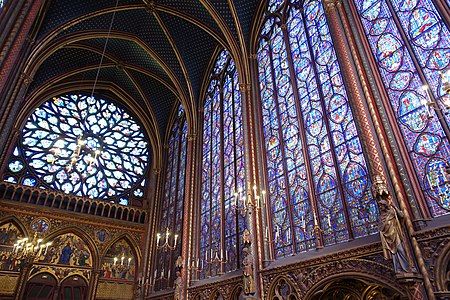
Albi Cathedral in Sainte-Chapelle, France

By the grace God has given me, I laid a foundation as a wise builder, and someone else is building on it. But each one should build with care. For no one can lay any foundation other than the one already laid, which is Jesus Christ. If anyone builds on this foundation using gold, silver, costly stones, wood, hay or straw, their work will be shown for what it is, because the Day will bring it to light. It will be revealed with fire, and the fire will test the quality of each person’s work. If what has been built survives, the builder will receive a reward. If it is burned up, the builder will suffer loss but yet will be saved—even though only as one escaping through the flames.

Don’t you know that you yourselves are God’s temple and that God’s Spirit dwells in your midst? If anyone destroys God’s temple, God will destroy that person; for God’s temple is sacred, and you together are that temple. (New International Version)

God is holy, pure, beautiful, and completely separated from all that is evil. 

However, there is a problem; but it isn’t with God. 

Ever since the fall of humanity into guilt, shame, and impurity, people cannot be near or approach a perfect Being. Just as we will surely go blind by looking directly at the sun – or be totally disintegrated by getting too close to it – so humans cannot be with such a holy God.

In the Old Testament, God graciously devised a system whereby people could approach the divine. A temple was built. It had very detailed and strict prescriptions about how it was to be built. There needed to be curtains, walls, and borders everywhere to shield the people from being destroyed by the sheer holiness of God.

Entering the New Testament, Jesus is the exact representation of God’s holy being and presence. In Christ, God became intimately close to people. Through the redemptive events of Jesus, humanity is delivered from the vexing problem of being far away from God. 

If that were not enough, God the Father and Son sent God the Holy Spirit to be the continuing presence of Jesus on this earth. 

In today’s New Testament lesson, the Apostle Paul tells us that, as the church, we are a holy temple which is graciously, patiently, and with great care being built into a spiritual house that can be the place where God meets with humanity.

The triune God has conspired and gone out of the way to be with us. The Lord has bended the arc of history for good purposes to be with us. Like a lover separated from his beloved, God has pulled out all the stops to make us holy so that we can abide with him in divine holiness.

From the solid foundation of Jesus Christ as the chief cornerstone, we take care to build a spiritual infrastructure worthy of holiness.

As he who called you is holy, be holy yourselves in all your conduct;for it is written, “You shall be holy, for I am holy.” (1 Peter 1:15-16, NRSV)

God’s will is for you to be holy… God has called us to live holy lives, not impure lives. (1 Thessalonians 4:3, 7, NLT)

Some Christians mistakenly believe that holiness means to exclusively separate as far from everything and everyone who is impure. Any hint or smell of unsound dogma or nonconformity with established rules results in separation. Yet, this predilection for separation is really a form of division – which is contrary to the holiness of God. Because the Lord bends over backwards to accommodate the sinner’s ability to approach the divine presence.

Indeed, holiness involves a separation from all that is evil so that we can attach ourselves to God and others. Holiness isn’t simply an end in itself. To be holy means we are prepared and ready to engage in the highest of aims: Love.

Now that you have purified yourselves by obeying the truth so that you have sincere love for each other, love one another deeply, from the heart. For you have been born again, not of perishable seed, but of imperishable, through the living and enduring word of God. (1 Peter 1:22-23, NIV)

Holiness without a clear trajectory toward love is like putting a new collar on a dead dog. It just doesn’t make any sense.

Yet, too many folks have put a leash on that shiny new collar and are dragging the deceased around – much to the chagrin and revulsion of the world – who rightly sees this behavior as both downright crazy and plain stupid.

Paul would say that kind of behavior will be shown for what it is: Building on the wrong spiritual foundation.

It’s really all about Jesus. Christians bear the name of Christ because we (ideally) center our entire existence – past, present, and future – on the redemption provided through Jesus.

And that’s what this Christian season of the year is about: We celebrate the birth of Christ, God’s breaking into this world, to bridge the great divide between divinity and humanity.

The incarnation of Jesus Christ is our foundation.

Being a holy temple means being a sacred space large enough to hold love for all people.

From that strong support, there is no limit to the breadth and height of God’s kingdom. So, may you, along with the Apostle Paul pray:

I’m asking God to give you a gift from the wealth of his glory. I pray that he would give you inner strength and power through his Spirit. Then Christ will live in you through faith. I also pray that love may be the ground into which you sink your roots and on which you have your foundation. This way, with all of God’s people you will be able to understand how wide, long, high, and deep his love is. You will know Christ’s love, which goes far beyond any knowledge. I am praying this so that you may be completely filled with God. (Ephesians 3:16-19, GW)

Amen.

1 Corinthians 3:10-23 – The Ultimate Sacred Space

According to the grace of God given to me, like a skilled master builder I laid a foundation, and someone else is building on it. Each builder must choose with care how to build on it. For no one can lay any foundation other than the one that has been laid; that foundation is Jesus Christ. Now if anyone builds on the foundation with gold, silver, precious stones, wood, hay, straw—the work of each builder will become visible, for the Day will disclose it, because it will be revealed with fire, and the fire will test what sort of work each has done. If what has been built on the foundation survives, the builder will receive a reward. If the work is burned up, the builder will suffer loss; the builder will be saved, but only as through fire.

Do you not know that you are God’s temple and that God’s Spirit dwells in you? If anyone destroys God’s temple, God will destroy that person. For God’s temple is holy, and you are that temple.

Do not deceive yourselves. If you think that you are wise in this age, you should become fools so that you may become wise. For the wisdom of this world is foolishness with God. For it is written, “He catches the wise in their craftiness,” and again, “The Lord knows the thoughts of the wise, that they are futile.”

So, let no one boast about human leaders. For all things are yours, whether Paul or Apollos or Cephas or the world or life or death or the present or the future—all belong to you, and you belong to Christ, and Christ belongs to God. (NRSV)

You have an incredibly special position and status which no one can ever take away.

We were made by and for God. In the beginning, the creative activity of God achieved its pinnacle in the formation of a man and a woman. Only humanity carries within them the image and likeness of God. People are unique, special, and set apart as the creatures who can enjoy a close relational fellowship with their Creator.

However, humanity fell into disobedience, which introduced sin and death into God’s good world. Ever since that time, God has been on a rescue mission. The Holy Scriptures are an unfolding drama of redemption in which a heart-stricken God goes out of the way to make and keep promises to a sinful people. The Israelites, a people set apart from all other people, were meant to be devoted to God in such a way that the world would be drawn to their relationship with the Lord and with the created order.

Yet again, even with an impressive temple where people met God in sacred rituals and activities, the people went astray and followed their ancestors into worshiping other gods. God, ever the gracious Lord who does not forget the divine covenant of love, sent his Son, Jesus, as the ultimate fulfillment of all the good promises made.  Through the redemptive events of Christ’s cross, resurrection, and ascension the deliverance from all that is wrong and broken in this world is reversed. We are blessed with pardon and redemption from the slavery of sin.  We are given a renewed status as God’s people.

If this were not enough, God has given us the Spirit to help us. Christians, followers of Jesus Christ, are never alone. A merciful God makes us a holy people and the temple where the Lord dwells by means of the Spirit. In the Old Testament, the sacred space of worship was a physical building. Approaching the holy God meant entering a holy temple, set apart for connection between the divine and the human. The midpoint of history in which all events hinge is the cross of Christ. His redeeming work has transformed the world. 

Now, we are the temple of God, the sacred place where God meets with us. The glory of God is to be found, once again, in human beings. It is in this rich understanding of God’s activity and humanity’s new status that the Apostle Paul appealed to with a pointed rhetorical question: “Do you not know that you are God’s temple and that God’s Spirit dwells in you?”

“The church is not a religious community of worshippers of Christ but is Christ himself who has taken form among people.”

Dietrich Bonhoeffer

The Corinthian church was in grave danger of doing the thing that all lost humanity had done through the ages.  They were breaking down into divisions and conflicts and were not thinking of others as God’s special people.  Paul named them collectively as God’s temple. They were not individual temples but one holy sacred temple together. This theology and anthropology were meant to teach, persuade, chastise, and encourage the Christians that there was no place for special-interest groups in the church; no room for following pet teachers and preachers; and no reason to ostracize others who didn’t agree exactly as you do.

Believers in Jesus Christ are collectively the people of God, the temple in which God dwells. This makes them a holy people, set apart for the exclusive worship of the triune God. We are to live up, not down, to who we are in Christ, in the Spirit, in the realm of God’s kingdom.

We are meant to return to the foundation of the temple. If the foundational works of this great temple of God are the redemptive events of Jesus, with Christ himself as the chief cornerstone of the structure, then we are meant to return in this great season of Lent to Jesus. With meekness and humility, we are to come to God in Christ by the Spirit and confess our many sins, repent of them all, and return to God as the special, holy, and loved people we are.

For far too long Paul’s letter to the Corinthians has been used to poke at people for smoking or drinking too much or generally not caring for our physical bodies. This was not so much Paul’s understanding. He was thinking much more along the lines of church unity, harmony, mutual love, grace, encouragement, and making decisions which are best for the common good of all. To break down Paul’s instruction to individual habits which harm the body is a woefully truncated view of his teaching. 

Instead, we are to have a high view of one another. We, together, are the people of God. We, together, are meant for holy worship of the triune God. We, together, are the complex expression of God’s creative action – a temple set in the middle of a watching world. 

Therefore, we are to be concerned for one another. We are to act as one holy people of God. We are to reflect the love, unity, and fellowship of the Holy Trinity in our life together. Let us then encourage each other toward love and good deeds; upholding the common good; and extending grace in all circumstances. For this is what temple living looks like.

Holy God, you have set us apart together as your holy people. Help so to live up to our status as your beloved creatures that we are continually mindful of you, one another, and the grace you give for all circumstances.  May our foundation be strong in the person and work of Jesus Christ, your Son, our Savior, as the Spirit dwells in us together. Amen.

1 Corinthians 6:12-20 – An Embodied Spirituality

Welcome, friends! The body is important. Our physical bodies are the vehicle to accomplishing the will of God in the church and the world. Click the videos below and let us discover the connection between the spirit and the body…

1 Corinthians 6:12-20
This Body Is Your Temple by Matt and Joanna Black

Go forth into the world in peace;
be of good courage;
hold fast that which is good;
render to no one evil for evil;
strengthen the fainthearted;
support the weak;
help the afflicted;
honor everyone;
love and serve the Lord in body, mind, and spirit,
rejoicing in the power of the Holy Spirit;
and the blessing of God almighty,
the Father, the Son, and the Holy Spirit,
be among you and remain with you always. Amen.