When to Stay, When to Move (Numbers 9:15-23)

Pillar of Fire, Pillar of Cloud in the Desert, stained glass at the Congregation Beth Emeth, Herndon, Virginia

On the day the Tent of the Lord’s presence was set up, a cloud came and covered it. At night the cloud looked like fire. Whenever the cloud lifted, the people of Israel broke camp, and they set up camp again in the place where the cloud came down. The people broke camp at the command of the Lord, and at his command they set up camp.

As long as the cloud stayed over the Tent, they stayed in the same camp. When the cloud stayed over the Tent for a long time, they obeyed the Lord and did not move on. Sometimes the cloud remained over the Tent for only a few days; in any case, they remained in camp or moved, according to the command of the Lord. Sometimes the cloud remained only from evening until morning, and they moved on as soon as the cloud lifted.

Whenever the cloud lifted, they moved on. Whether it was two days, a month, a year, or longer, as long as the cloud remained over the Tent, they did not move on; but when it lifted, they moved. They set up camp and broke camp in obedience to the commands which the Lord gave through Moses. (Good News Translation)

I know a few believers who would really like to have their spiritual lives governed by a cloud lifting and moving and settling. Then, there wouldn’t be any doubt about what to do and when to do it.

But keep in mind that this arrangement of a cloud was temporary; it was only meant to get the Israelites from one place to another until they entered the Promised Land. Anytime we try and make something permanent which is designed to be temporary, we become stuck, not to mention missing out on the good things intended for us.

Clouds of Glory, by Yoram Raanan, 2014

In a time of transition for the nation of Israel, the gracious presence of God provided both guidance and assurance. The Lord was with them; and the divine presence reminded the people that God’s promise would be fulfilled.

The book of Numbers begins at the point where the book of Exodus leaves off. Leviticus is in between, interrupting the narrative flow with detailed legislation, especially of the sacrificial worship system. Exodus ends with the construction of the tabernacle (the sacred tent with the ark of the covenant and worship utensils).

Numbers then begins a year after Israel came out of Egypt. It covers the years of wandering in the desert wilderness in which an entire generation dies off and their children are poised to enter the Promised Land. The bulk of the book is given to the beginning and ending of the 40 years of wandering.

The Sinai Peninsula, where the Israelites walked, is a rather harsh environment. This is on purpose; it’s part of the nation’s spiritual development. The desert is the place where failures are acknowledged and purged. It’s a unique place and time which required a special system to safeguard the people. They needed to be guided toward holiness so that they could be a holy nation, set apart for God.

In many ways, Numbers is a depressing book. It tells us the painful shortcomings of Israel to their divinely appointed calling. There are plenty of murmurings, rebellions, and outright transgressions of all kinds. I can just imagine God shaking his head in disappointment.

Yet, even though many individuals were punished and an entire generation died, God’s covenant with the people held firm – namely because the Lord tenaciously held to it and did not abandon Israel altogether. The tabernacle remained, despite the fickle people.

The point is strongly made that God was with the people and governed their comings and goings. And this teaches us something about our own spiritual pilgrimage on this earth; and the decisions and discernments which must be made in that sojourn.

There are times we need to pack up and get moving; and there are other times when we need to stay put, pause, and wait on the Lord’s timing. Our entire earthly life is one big sojourn from birth to death. How we go about this pilgrimage is of upmost importance.

We are meant to connect with transcendent things, to discover the Divine. The Lord wants us to discern what to do, when to do it, and where. So we keep moving, learning both the value of putting down roots and blessing a particular place, as well as the importance of walking, traveling, and spreading out across the earth. In engaging these dynamics of movement and stillness, we learn about realities greater than ourselves.

There is a lot of work to do with discernment and decision-making. We may long for a pillar of cloud, but the Lord seems to want us leaping into the unknown with faith when it’s time; or to stop talking, sit down, and listen for the still small voice of God. And we’ll need to work together for this discernment to happen.

A change in direction requires right motives and proper attitudes. It’s got to have some solid knowledge, understanding, and wisdom behind it. And our movements must be purposeful in a way which blesses the world and doesn’t curse it.

In short, faith and trust are to be developed. Faith is not a static word, but dynamic. Believing is always moving, either in redemptive and helpful ways, or in the unbelieving ways of self-centeredness and ignorance. And since the believer serves a good God who has our best interests at mind, we can trust that we’re headed toward the place of promise and abundance.

Course corrections will always be needed, and that’s okay. But what’s not okay is the refusal to change, move, and discern next steps. One of the wonderful gifts of taking time for silence, solitude, and prayer is that we learn the subtle movements of God’s spiritual rhythms. We discern who we are, how we are, where we are, and where we need to be.

May it please the supreme and divine Goodness to give us all abundant grace ever to know his most holy will and perfectly to fulfill it. Amen.  —St. Ignatius of Loyola

Learning to Trust (Psalm 4)

Answer me when I cry out, my righteous God!
    Set me free from my troubles!
        Have mercy on me!
        Listen to my prayer!

How long, you people,
    will my reputation be insulted?
How long will you continue
    to love what is worthless
    and go after lies?
Know this: the Lord takes
    personal care of the faithful.
The Lord will hear me
    when I cry out to him.
So be afraid, and don’t sin!
    Think hard about it in your bed
    and weep over it!
Bring righteous offerings,
    and trust the Lord!

Many people say,
    “We can’t find goodness anywhere.
    The light of your face has left us, Lord!”
But you have filled my heart with more joy
    than when their wheat and wine are everywhere!
I will lie down and fall asleep in peace
    because you alone, Lord, let me live in safety. (Common English Bible)

The psalmist, David, was a man after God’s own heart. But that did not mean that he was inoculated from trouble and hardship.

David had a lot of adversity and much difficulty throughout his life. So, it only made sense to him to cry out to the Lord for deliverance and help. God had helped David in the past, and David was confident that the Lord would help him yet again.

We all find ourselves in a tight spot, between a rock and hard place, at times. It’s what we do when we are in that position that is critical. David had a history of looking to God, seeking God’s grace, and soliciting answers to prayer.

David, the psalmist, was a real victim of slander and lies. More than once in his life, he had people out to get him, to actually take his life. Whatever your understanding of stress is, it doesn’t get much more stressful than someone hunting you down like an animal to literally kill you. I’m sure that many times David wondered how long this surreal madness was going to go on.

Whenever we are especially stressed, it can be hard to even breathe. If we aren’t mindful of ourselves, we will take lots of short staccato breaths that only feed anxious signals to the brain. It leaves us in a perpetual state of hypervigilance, almost unable to pray and have thoughts of God.

But we absolutely need to take deep breaths and trust in God’s sustaining presence. We’ll never get to sleep, nor stay at rest, without a sense of the divine presence.

Insomnia happens for a lot of reasons. Many people have diagnosed sleep disorders that are very real medical conditions. Others can’t get a good night’s rest because of poor sleep hygiene by not planning for adequate sleep, drinking too much caffeine during the day, inattention to a healthy diet, or a host of other habits. Some have issues of chronic pain which can make it difficult to sleep well.

And then there are yet others who suffer from racing thoughts, anxiety, and depression. The stress of their waking life is so significant that several hours of deep sleep seems only like some pipe dream. It’s impossible to sleep when the weight of the day is pressing on you. Finding a sense of calm before bed isn’t easy—especially when you can’t unplug from the demands of your day.

I am wondering if many of us will even allow ourselves to unplug and establish some quiet wind-down time. Reading a real book – not one on a backlit tablet device – or talking with a friend or family member are simple ways of easing our anxiety and letting rest come.

The psalmist, David, had a regular practice of meditating on Scripture, recalling the events of God, and expressing gratitude and praise for answered prayer. Each of us has a built-in spiritual rhythm just like we have a circadian rhythm. Always trying to buck those God-given rhythms will inevitably result in being “off,” at the least, and experiencing debilitating depression, at the worst.

Yet, when we learn to move with the unforced rhythms of grace, there is a groove we slip into which serves us well. In other words, what I am trying to say, is that by allowing ourselves to be human, we can discover health.

David neither had delusions, nor illusions, about his enemies, friends, others, and himself. He didn’t try to be somebody he was not. Instead, David had firm and confident convictions about God and the place of prayer.

By taking in a steady diet of David’s psalms, we can learn to hold together both faith and doubt, confidence and confusion, perseverance and perplexity, in ways which strengthens our faith.

Everyone of us who desire God must learn to trust; and it’s in the school of hard knocks where our faith is developed in order to sustain us for a lifetime of service and resilience.

There will always be those who believe ill of us through slander, lies, or outright oppression. In such times, let’s cry out to God for both peace and guidance; and ask the Lord for help in learning to breathe, lie down, and get some rest.

As our trust develops, we may even find the grace and courage to confront our oppressors, so that they can seek their own peace with God.

May Christ be with you, and within you;
May Christ go before you, and linger behind you;
May Christ be on your right, and on your left;
May Christ hover above you, and bring support beneath you;
May the Lord Jesus Christ completely and thoroughly surround you, now and forever. Amen.

Leviticus 23:1-8 – There’s More to Life Than Work

The Lord said to Moses: Speak to the Israelites and say to them: These are my appointed times, the Lord’s appointed times, which you will declare to be holy occasions: Work can be done for six days, but the seventh day is a Sabbath of special rest, a holy occasion. You must not do any work on it; wherever you live, it is a Sabbath to the Lord. These are the Lord’s appointed times, holy occasions, which you will celebrate at their appointed times:

The Lord’s Passover is on the fourteenth day of the first month at twilight. The Lord’s Festival of Unleavened Bread is on the fifteenth day of the same month. You must eat unleavened bread for seven days. On the first day you will hold a holy occasion and must not do any job-related work. You will offer food gifts to the Lord for seven days. The seventh day will be a holy occasion; you must not do any job-related work. (Common English Bible)

When I was kid, watching the cartoon The Jetsons was a Saturday morning ritual. The futuristic family featured George the husband and father, an employee of Spacely Sprockets. 

In one episode, George comes home and is met by his dog, Astro, and wife, Jane, looking tired and haggard from a day’s work. George’s comment when he entered on the treadmill through the door was, “Jane, these 3-hour work-days are killing me!”

Indeed, the technological progress of post-World War II America had led to the common belief among many that with so many advancements, workdays would become smaller, with leisure time growing. In the 1960’s, it seemed a foregone conclusion that technology would provide the masses with unprecedented amounts of discretionary time for whatever they would want to do.

Sixty years removed from The Jetsons, and we now know what Americans and people across the world would do with time-saving devices: We simply work a lot more. 

Just the opposite has occurred from having loads of leisure time. People discovered that greater efficiency with technology has brought an equal competition for business and making more money. Time saved has translated into accomplishing more work, and not in taking vacations or indulging in new hobbies and ventures.

The fourth command of God’s Ten Commandments is needed today more than ever. It is high time that we come back to this basic instruction of the Lord and engraft its wise counsel into our lives. 

The point of God’s command for a Sabbath-rest is neither to squash commerce, nor to be a curmudgeon about fencing one day a week of doing nothing. Instead, the Sabbath command is designed to be a life-giving day where we discover that: There is more to life than work.

The word “Sabbath” literally means “to rest.” God built into creation a rhythm of rest and work. God rested, not because of being tired but so that there was enjoyment of the earth and everything in it. 

Everything in life is done in rhythm. We walk in rhythm, talk in rhythm, and our hearts beat in a rhythm. The earth cycles in rhythmic seasons of the year, and the animal kingdom mates and lives in annual rhythms. All creation is rhythmic.

Whenever we keep going and do not live according to the rhythm laid out for all of God’s creatures, we break. Therefore: Rest from work is needed.

Even machinery needs a break. I find it more than ironic that we treat our cars and vehicles with the regular maintenance and care that we don’t even extend to ourselves. We care for our cars because we don’t want to experience a breakdown on the highway. Yet, much more important is the care of our souls and our bodies. 

Without regular intervals of work and rest, in a consistent rhythmic pattern, we breakdown, burnout, and, like little children who have missed a nap, we have epic meltdowns of anger, frustration, and passive-aggressive behavior because we simply ignored God’s fourth command.

“Each person deserves a day away in which no problems are confronted, no solutions searched for. Each of us needs to withdraw from the cares which will not withdraw from us.”

Maya Angelou

Legalistic observances of the Sabbath miss the point through a continual, “Don’t do this, don’t do that, can’t do anything fun on Sunday,” as if God were some divine curmudgeon who frowns with a deeply furrowed brow at anything happy on the Sabbath. (Mark 2:23-3:6) 

To rest means to have a change of pace from the regular weekday activity of work. To rest and enjoy the difference of a Sabbath’s day is avoided by so many people because it brings this question to the forefront of our minds: Who am I if I’m not working?

Our identities can be so tied to our jobs that we compulsively check our multiple e-mail accounts on a day off; tie ourselves to our smart phones and iPhones on vacation; and allow work to bleed into our time away from the job. 

God has wisely placed loving boundaries around us. But like Adam and Eve, who were not content with enjoying the entire garden, we obsessively pluck the forbidden fruit from the one tree that is off limits.

Work brings money, influence, power, relationships, industry, and a host of good things. The problem is not work; the problem is that we humans can create an idol of it.

Whenever work and all that comes with it, consumes our attention, we are on a one-way road to nowhere. I have heard many deathbed confessions. I’ve yet to hear anyone wish they had worked more.

No, the confessions typically involve something out of rhythm and out of whack – that they let their jobs and their ambitions surrounding work call the shots in life, without stopping to enjoy the vast creation, the gifts of God, and the emotional wealth that can come from relationships.

“If we only stop when we are finished with all our work, we will never stop, because our work is never completely done… Sabbath… liberates us from the need to be finished.”

Wayne Muller

Because we aren’t sure who we are if we’re not working, we just keep working. If we feel bad, we work harder.  If things are tough at home, we just put more hours in at work. If we need more money, we pick up a part-time job. 

When work becomes the catch-all answer to our many problems, it has become our god and we will worship at the altar of money and activity… until we can learn to stop and rest. 

One day out of seven. Just one-seventh of your life is needed to allow a divine rhythm into your existence. 

The temptation, however, is to take a day off from work so that you can do other work at home. So, the challenge, for many people, is to allow the one day of the weekend to be the time you get stuff done, and another day to truly rest.

This is not easy. For me, it is terribly hard. I can easily slide into working seven days a week for weeks, even months, at a time. Few people bat an eye at my constant working, except my wife and a few friends. In fact, many people seem impressed when I work all the time. But what gets lost in all this is God’s grace to us through rest.

God wants enjoyment, not avoidance – for us to be still and know God. The Lord longs for us to connect with the Divine. This means we must plan and prepare for it. Maybe we need to put God on our calendars, to make an appointment with God like we would anyone else. That will often involve being out in God’s big creation.

Whenever we get down to practicing the Sabbath, we find that the world didn’t stop. Then, when we return to work, we discover that the earth is still spinning on its axis. 

Life doesn’t cease when we submit to a Sabbath rest; it’s just that we cease from participating in it for a short time. Our delusions of grandeur dissipate and disappear when we finally come around to consistently obeying a good old Sabbath rest.

Work is noble. But there is nothing noble about working without rest. 

We are still human beings when we aren’t making money, and still valuable when we don’t have jobs. Folks in healthcare facilities aren’t any less important because they no longer hold a job. Work doesn’t define us – God’s image within us does. 

It’s unlikely that we’ll ever see a George Jetson 3-hour workday, and that’s probably a good thing. Work’s inherent goodness can only be truly appreciated when we plan and prepare to live and enjoy a Sabbath’s day rest. 

Because I belong to you, God, and not to myself,
I will rest from worrying about the future
and rest in your never-ending divine presence;
I will rest from frustration at things not working out as I want them to;
I will rest from fear
and rest in my experience of courage when days are hard.
I will rest from complaining
and rest in the beauty and pleasure all around me.
For the Lord’s yoke is easy and his burden is light,
and I will find rest for my soul. Amen.

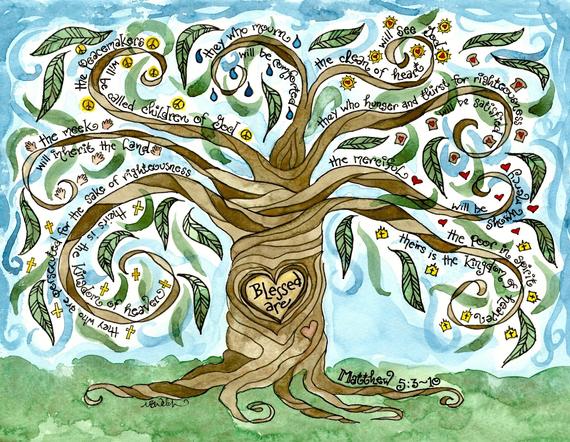
The Beatitudes of Jesus: An Introduction

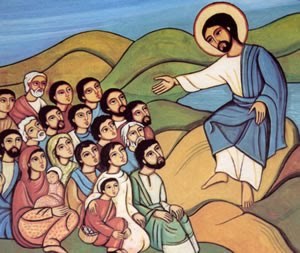
Now when Jesus saw the crowds, he went up on a mountainside and sat down. His disciples came to him, and he began to teach them. He said:

“Blessed are the poor in spirit,
    for theirs is the kingdom of heaven.
Blessed are those who mourn,
    for they will be comforted.
Blessed are the meek,
    for they will inherit the earth.
Blessed are those who hunger and thirst for righteousness,
    for they will be filled.
Blessed are the merciful,
    for they will be shown mercy.
Blessed are the pure in heart,
    for they will see God.
Blessed are the peacemakers,
    for they will be called children of God.
Blessed are those who are persecuted because of righteousness,
    for theirs is the kingdom of heaven.

“Blessed are you when people insult you, persecute you and falsely say all kinds of evil against you because of me. Rejoice and be glad, because great is your reward in heaven, for in the same way they persecuted the prophets who were before you. (Matthew 5:1-12, NIV)

The human brain is hard-wired, in such a way, that it works its best when healthy rhythms of giving and receiving occur. God created us to thrive and flourish when we pay attention to particular ways of being with one another as people.

Jesus used the term “blessed” not in a financial sense, as if having lots of money is what it means to experience blessing. The word “blessed” means to have God’s stamp of approval, his favor, with the emotional and spiritual response of joy or happiness. 

Real and lasting joy comes from a right relationship with God, defined according to what Jesus says – different from the false righteousness of the religious establishment which is based on outward appearance rather than inner attitudes. We need to know how to relate to our God, instead of simply conforming to an outward form of Christianity that everybody is doing.

Our entire selves are blessed when we engage in consistent rhythms of practicing humility before the Lord; sitting with grief; putting ourselves in another’s shoes; seeking right relationships with both God and others; pursuing mercy, purity, and peace-making in all our affairs; and allowing persecution to form us in ways the good times cannot.

Jesus preached the Beatitudes to clarify what it means to be approved by God. He wanted to gain true disciples who follow God for the right reasons. The crowd was following Jesus physically, but not necessarily spiritually. They all followed for different reasons: for healing, curiosity, or a genuine desire to be a disciple. So, Jesus sat them down to communicate what a true follower and disciple is.

Imagine we are part of the crowd originally hearing Christ’s Sermon on the Mount (Matthew 5-7).  The world in which the people lived, and the religious system which they took for granted, was highly restrictive. 

In order to approach God, enter the kingdom, and be a good citizen, one had to be Jewish, male, a faithful Law-keeper, physically whole, healthy, and able; and, if not wealthy, able to make a good living. 

Yes, this reality meant that Gentiles, women, those who struggled to keep the Law, the diseased and disabled, and the poor had no shot whatsoever in the kingdom of God. To be blessed and have God’s stamp of approval on your life meant you were a healthy and wealthy Jewish man who practiced a legalistic form of righteousness. 

Not a single one of us here would have any shot at the kingdom of God. Yet, we have heard something about this guy, Jesus. There seems to be something very compelling about him. We go seek him out, sit down on a mountainside and hear him say the most refreshing and scandalous words we have ever heard…

God approves of the spiritually bankrupt who realize they’ve got no leverage to make any deals. They shall be given the riches of God’s grace.

God approves of those who grieve over personal sin and lament the presence of sin in the world. They are the ones who will experience God’s forgiveness and comfort.

God approves of the powerless and those who use their authority to champion others. They will inherit God’s power and take up authority to command dark forces and put them in their place.

God approves of those who have a voracious appetite for right relationships and doing everything for the right reasons. Their growling spiritual stomachs will be stuffed with God’s righteousness.

God approves of those who liberally extend grace to others, being always considerate of everyone’s needs, showing neither prejudice nor favoritism. They shall receive God’s grace at the end of the age when Christ comes to judge the living and the dead.

God approves of the spiritually clean who have bathed in the waters of divine mercy. They will see Jesus face to face.

God approves of those who facilitate and negotiate peace. Because that is precisely what God’s children do.

God approves of those who are persecuted for living by these counter-cultural Beatitudes. They have an inheritance that will never perish, spoil, or fade.

Grant us, Lord God, a vision of our world as your love would make it: a world where the weak are protected, and none go hungry or poor; a world where the benefits of abundant life are shared, and everyone can enjoy them; a world where different races and cultures live in tolerance and mutual respect; a world where peace is built with justice, and justice is guided by love. And give us the inspiration and courage to build it, through Jesus Christ our Lord. Amen.