Luke 19:45-48 – Jesus Cleans House

A bronze panel of Jesus chasing the merchants from the Temple by Lorenzo Ghiberti (1378-1455)

When Jesus entered the temple courts, he began to drive out those who were selling. “It is written,” he said to them, “‘My house will be a house of prayer’; but you have made it ‘a den of robbers.’”

Every day he was teaching at the temple. But the chief priests, the teachers of the law and the leaders among the people were trying to kill him. Yet they could not find any way to do it, because all the people hung on his words. (New International Version)

Jesus seems a bit like an actor in an old western movie. He’s the sheriff who drifts into town, sizes up the situation, shoots up the bad guys, defends the women and children, and cleans up the town. 

It’s a side to Jesus that might surprise some.

Jesus is no simple one-dimensional person, as if he’s always calm and picking dandelions. Christ is fully human and fully God – a complex person full of both human and divine anger. Today’s Gospel lesson reminds us that Jesus defies stereotyping, and that we need to see a fuller profile of who he is, and what he is up to.

Jesus is not only the merciful servant who graciously heals at the temple; but he is also a mighty judge who is intolerant of unjust systems and cleans house. 

Because Jesus is superior to everything, he is not some Being that we can domesticate for our own personal use. He did not come to this earth as some sort of spiritual vitamin supplement, or to be on call 24/7 in order to bail us out when we need it, or help us get ahead in life.

Instead, zeal for his Father’s house consumes Jesus. (John 2:13-17)

Jesus driving the merchants out of the Temple by Raymond Balze (1818-1909)

Christ sought to please the Father. Jesus oversees what the church and Christians are supposed to be. 

It’s our task to conform to Christ, and not the other way around. 

That happens whenever we let Jesus be the sheriff who drives out our sin, and, at the same time, the town doctor who brings the needed healing to our lives. 

Jesus cleaned house by attacking the system he saw operating.

It was Passover, the time when all pious Israelites made the pilgrimage to Jerusalem. Cattle, sheep, and doves were used for sacrifices. And the only place where those sacrifices were made was at the Temple in Jerusalem.  This meant that anyone wanting to worship God from outside of Jerusalem would have to do some traveling. 

Over time, a system was set up: Vendors established kiosks which lined the Temple courts; and they sold animals for the required sacrifices, as a matter of convenience. 

Since there were thousands of folks who came from a long way, often from outside of Israel, they brought their foreign currency with them, and it could be exchanged at the tables set up by money-changers.

Perhaps that all sounds practical. A little capitalism which provides a service for the people doesn’t seem all bad. So, what’s the problem? 

Jesus didn’t have a problem with capitalism per se; his problem with the whole system is that it should not even exist – these guys should not be in the Temple, at all! 

Jesus attacked the system and made a western movie scene out of it because the vendors and money-changers, even if using sound business practices (which they weren’t) should not even be there. For Jesus, it trivialized the Temple and took away from its intended purpose as a house of prayer for all nations.

Here’s how the system was supposed to work:

Coming to the Temple from outside of Jerusalem was never intended to be easy or convenient.

Making the pilgrimage to Jerusalem was supposed to be difficult. For the past year, since the last Passover, a family raised a newborn lamb in their house. Parents and children all took part in caring for it.

Then, when it was time, they all journeyed to Jerusalem together, taking turns carrying the year old lamb over their shoulders. Everyone knew what was coming. Their precious lamb, now a cherished part of the family, would be given in sacrifice at the Temple.

It was all a very powerful reminder of sin’s cost and how terrible it truly is.

Entering Jerusalem with no animal, and only money to buy one, is a cheap facsimile of real worship.

It misses the entire point of the system. It hinders people from genuinely connecting with God through prayer.  And Jesus will not put up with it – to the point of violently driving the whole system out of the Temple.

Jesus didn’t mess around with the sinful system. He didn’t politely ask the money-changers to move their tables somewhere else; he didn’t strike a deal with those selling animals to market them at cost. No. Instead, he went all town sheriff on them because the whole system was a blasphemous act against the right and true worship of God.

It has been the sin of the Church, through the centuries, to find ways of doing ministry and worship by not actually doing it (e.g., selling indulgences). 

We might feel good by simply attending a worship service, or offering some obligatory prayers, and giving money without having done anything to meaningfully connect with God. Our devotion may not be toward bringing something of ourselves to sacrifice by using our spiritual gifts and laying our lives down for others. 

It’s really a heart issue. For example, we might rightly give to missionaries or mission projects. Yet, if we give without any thought to doing missions ourselves and being missional people, then we are in grave need of having a clean house by overturning the tables in our hearts. 

17th century Ethiopian depiction of Christ cleansing the Temple

Jesus cleaning house was not an end in itself; he did it so that the Temple could be used for its intended purpose: A house of prayer. A place of healing. A gathering of collective praise to God.

Whenever an existing system is challenged, there will be those who push back because they benefit from the way things are.

The religious leaders were incensed by Christ’s systemic change. The behavior of Jesus challenged their authority, and they were angry about losing some of their power – not to mention jealous and envious that the people hung on his every word.

Jealousy rots the bones. Envy and selfish ambition accompany every evil practice and are behind every evil system. (Proverbs 14:30; James 3:14-16)

The real culprit behind the Temple system, as well as our own conflicts and disagreements is our selfish anger, our abject jealousy that someone else is receiving something which should be mine, and our insidious envy of wanting what another has.

Jesus knew he would upset and anger the religious leaders. But he cared enough about the proper place of worship that he attacked the contrived Temple system that fed on obscuring what real sacrifice was. Christ was willing to take on the establishment and reestablish a house of prayer for all people.

The way for us has been made clear through the death of Christ. Jesus has removed the old system and replaced it with the new. (Hebrews 8:13)

Therefore, we ought to be a beacon of hope for all who are coming to God and desire to offer their sacrifice of service or praise. We must eliminate any system, rule, or practice that eviscerates true worship.

May we follow the Lord Jesus by being active and proactive in making the way clear for others to come to God. And the first step to doing so is by having God clean house on our own hearts.

It’s what a good deputy sheriff would do.

Create in me a clean heart, O God,
    and put a new and right spirit within me.

The sacrifice acceptable to God is a broken spirit;
    a broken and contrite heart, O God, you will not despise. Amen.

Isaiah 5:1-7 – A Parable of the Vineyard

I will sing for the one I love
    a song about his vineyard:
My loved one had a vineyard
    on a fertile hillside.
He dug it up and cleared it of stones
    and planted it with the choicest vines.
He built a watchtower in it
    and cut out a winepress as well.
Then he looked for a crop of good grapes,
    but it yielded only bad fruit.

“Now you dwellers in Jerusalem and people of Judah,
    judge between me and my vineyard.
What more could have been done for my vineyard
    than I have done for it?
When I looked for good grapes,
    why did it yield only bad?

Now I will tell you
    what I am going to do to my vineyard:
I will take away its hedge,
    and it will be destroyed;
I will break down its wall,
    and it will be trampled.

 I will make it a wasteland,
    neither pruned nor cultivated,
    and briers and thorns will grow there.
I will command the clouds
    not to rain on it.”

The vineyard of the Lord Almighty
    is the nation of Israel,
and the people of Judah
    are the vines he delighted in.
And he looked for justice, but saw bloodshed;
    for righteousness, but heard cries of distress. (New International Version)

God is the owner of the vineyard. Israel and Judah are the beloved. The Lord graciously chose them, gave them divine promises, and set his steadfast love upon them. God sang over them with affection and took care of them.

The Lord God put time, effort, and love into the relationship. God anticipated good things, looked forward to a bright future, and expected a flowering of justice and righteousness from the people.

It didn’t happen. The relationship went sour. Nothing but rotten grapes.

God builds. God gives. God sustains…. And God destructs. God takes away. God ends what he begins.

The Lord didn’t put all that work into the people to have them perpetuate injustice toward the poor and disadvantaged. God didn’t choose Israel so that they would then neglect God’s law by mistreating others and ignoring the right.

The bloodshed of the people was that they squeezed and bled the poor to death. The cries and anguished responses of the needy were ignored. There was no mercy. So, God was not about to idly stand by and let such rotten grapes abuse and ruin the good, the just, and the right.

The relationship between and God and God’s people was an ancient love song that went off key and struck a minor chord. The Lord has extreme love and patience… until he doesn’t. There’s no way the just and right God is going to put up with abusive, ignorant, and bad folks forever.

Jesus had this allegorical image of Isaiah in mind when he spoke in parables about the impossibility of good fruit coming from bad vines and trees, and the necessity of removing dead branches. (Luke 6:43-45; John 15:1-17)

If the grapes are bad, the vine is bad. If the words are hateful, sarcastic, passive-aggressive, manipulative, conniving, racist, hurtful, mean, foolish, and either subtly or overtly abusive, then the person has a dark heart and is need of redemption, not excuses.

Every tree that does not bear good fruit will be cut down and thrown into the fire. The wicked heart will not be able to speak ill of others and act hatefully with impunity forever. They will be called to account for their abusive words and actions, whether overtly violent, or subtly undermining.

The righteous heart, however, shall experience divine pleasure and reward, as if the careful construction of helpful and building up words with loving deeds wins first-prize at the great heavenly fair.

The good person loves and does not hate. They are so far from harming anyone that they even pray and wish well for their enemies. They pray for blessings on those who curse them. There is an honest striving to speak good words to everyone, regardless of who they are.

The upright heart thinks the best of everyone and holds nothing over someone else’s head. Such a good heart condemns no one, leaving all judgment to God alone. It is patient with the most exasperating of people, praying they might come to their senses and become spiritually healthy.

The righteous are able to use their speech to admonish their neighbor with care and affection. They freely forgive, happily give, liberally encourage, and use their tongue to speak words of life. Indeed, their speech is wise, humble, full of grace, and above all, loving.

The just and right person uses their hands and feet to build good things for others, especially the most vulnerable and needy among us. They willingly meet needs without bitterness or with a begrudging heart.

If there is a problem with words, it will not do to simply change the speech. That’s because it is a heart issue. And the heart must be willing to change and be transformed by sheer mercy.

If there is an issue with actions, it will not do to merely enforce a change in behavior. That’s because it’s a heart problem. And the heart desperately needs to acknowledge sin and repent from evil.

Fortunately, God is the expert on renovating dilapidated hearts and performing effective heart transplants.

Oftentimes something needs to be destroyed for a building to be erected. There always needs to be a death before there can be a resurrection. New life cannot occur without forsaking an old life.

Believers in Jesus are mindful that our life of faith, hope, and love comes from a death. So, we journey with Jesus along the road of suffering, up Calvary, and are crucified with him so that we might rise with him.

This is the way.

It is the way of repentance, of genuine change, of new habits, of Christianity. So now, let’s go to him outside the camp, bearing his shame. We don’t have a permanent city here, but rather we are looking for the city that is still to come. (Hebrews 13:13-14)

May justice, righteousness, and peace be yours in abundance through him who gave himself for us and for our salvation.

Merciful Father, we pray that violence will be overcome by the power of love; that opposition and division give way to reconciliation; and that the desire for power and control be transformed into the desire for forgiveness, justice, and peace.

May peace be in our hearts so that they are open to the action of your divine grace.

May all humanity – especially the poor, the needy, the least among us, and the lost – feel the warmth of your steadfast love and the love of your people toward them.

May the fruit of love, joy, peace, patience, kindness, goodness, faithfulness, gentleness, and self-control be our breakfast, lunch, and dinner; and may your divine abundance of mercy and justice be scattered throughout our city, our nation, and our world, through Jesus Christ our Lord, in the strength of your Holy Spirit.

Amen.

Psalm 80:1-2, 8-19 – Longing for Restoration

Shepherd of Israel, listen!
    You, the one who leads Joseph as if he were a sheep.
    You, who are enthroned upon the winged heavenly creatures.
Show yourself before Ephraim, Benjamin, and Manasseh!
    Wake up your power!
Come to save us!…

You brought a vine out of Egypt.
    You drove out the nations and planted it.
You cleared the ground for it;
    then it planted its roots deep, filling the land.
The mountains were covered by its shade;
    the mighty cedars were covered by its branches.
It sent its branches all the way to the sea;
    its shoots went all the way to the Euphrates River.
So why have you now torn down its walls
    so that all who come along can pluck its fruit,
    so that any boar from the forest can tear it up,
    so that the bugs can feed on it?

Please come back, God of heavenly forces!
    Look down from heaven and perceive it!
Attend to this vine,
    this root that you planted with your strong hand,
    this son whom you secured as your very own.
It is burned with fire. It is chopped down.
    They die at the rebuke coming from you.
Let your hand be with the one on your right side—
    with the one whom you secured as your own—
    then we will not turn away from you!
Revive us so that we can call on your name.
    Restore us, Lord God of heavenly forces!
    Make your face shine so that we can be saved! (Common English Bible)

Let us continually keep in mind that the psalms are quite Jewish. Yes, I often refer to the psalms as the Church’s Prayer Book and unabashedly see them through Christian eyes. Yet, the psalter, at its core, are prayers and songs of the Jewish experience.

The deep longings and yearnings of the Jewish people within a constant stream of hardship, difficulty, and persecution give voice to all humanity. In other words, the bearing of the Jewish soul as the people of God is the crying out on behalf of us all.

The Jews know a thing or two about lament. Today’s psalm is a lament, a prayer, a longing for God to come and restore Israel. It is a cry for the Lord to no longer look upon them with anger. The people knew, in their exposed vulnerability, they needed God. They longed for their God to come and save them and to bring a revitalized nation.

Amid awful circumstances and emotional pain, it can be hard to focus with any sort of concentrated prayer. 

The Jews also help us here because they crafted and arranged the psalms in such a way as to enable and foster recall and memory. So, where many of us Gentiles can be rather more like pagans babbling on in our distress, the Jewish psalms offer us the ability of short, succinct, and staccato prayers. Early Christians called them “breath prayers.” 

Throughout the day we can utter “Stir up your power, O God; come to save us.”  The intention of saying it repeatedly in a day is not to get God’s attention – because we already have it. No, the purpose is to connect us with Divine resources for deliverance; to be in constant touch and continual communion with the One who can ultimately restore, renew, revitalize, and reform the world with justice and righteousness. 

Repeated short prayers offer us the opportunity to express our longing for the flourishing of the earth and its inhabitants, as well as to enjoy walking with God in the garden of fellowship, peace, and goodwill.

To pray is to be restored.

Restoration is a beautiful thing. I rarely watch makeover shows on television, but if I notice a program where an old house, seemingly better suited for the wrecking ball, getting restored to its original charm and beauty, I am hooked. 

We as people seem to resonate deeply with things being repaired and rejuvenated to looking brand new again.

Again, the Jewish people go before us, through the psalms, with the vision to see the old become new. Whereas some may get lost in the drab discouragement of a gray and dreary environment, forgetting the original shine of how things once were, Asaph, the consummate Jewish song leader, guided the people in remembering how God’s people enjoyed the covenant and the promises of God. 

Yet, over time, the relationship was not maintained and cared for; the people gradually slid into disrepair, much like a once grand old house, now merely a haunt for critters and birds. Centuries of neglecting prayer and worship brought a situation where it seemed the only recourse was to do away with the people and begin again.

I certainly do not want to be on the bad end of God’s anger. I would much rather learn my lesson from the Jewish experience and enjoy Divine favor.

I also long to see this old fallen world restored to her original beauty. So, we must come to God – not once – but again and again, over, and over. Like the hammer of perseverance, pounding nail after nail, so we must offer our prayers morning, noon, and night, day after day, crying out to God with the great cry of the Jewish people:  “Restore us, O God; let your face shine, that we may be saved!”

Merciful God of all nations bring restoration to our lives, our families, our faith communities, our workplaces, our human institutions, our neighborhoods, and our shared world. Send your Holy Spirit so that we might enjoy seasons of blessing again.  Restore, renew, revive, and rejuvenate our disordered love. May your face shine upon us once again through the mighty name of Jesus. Amen.

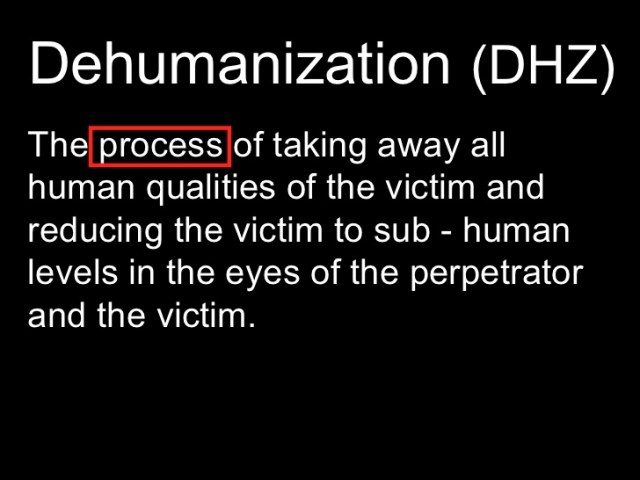
Isaiah 24:1-13 – Dehumanization Pollutes the Earth

The Lord is going to turn the earth into a desolate wasteland.
He will mar the face of the earth and scatter the people living on it.
The same will happen to people and priests,
male slaves and masters,
female slaves and masters,
buyers and sellers,
lenders and borrowers,
debtors and creditors.
The earth will be completely laid waste and stripped
because the Lord has spoken.

The earth dries up and withers.
The world wastes away and withers.
The great leaders of the earth waste away.

The earth is polluted by those who live on it
because they’ve disobeyed the Lord’s teachings,
violated his laws,
and rejected the everlasting promise.
That is why a curse devours the earth,
and its people are punished for their guilt.
That is why those who live on the earth are burned up,
and only a few people are left.

New wine dries up, and grapevines waste away.
All happy people groan.
Joyful tambourine music stops.
Noisy celebrations cease.
Joyful harp music stops.
People no longer drink wine when they sing.
Liquor tastes bad to its drinkers.
The ruined city lies desolate.
The entrance to every house is barred shut.
People in the streets call for wine.
All joy passes away,
and the earth’s happiness is banished.
The city is left in ruins.
Its gate is battered to pieces.

That is the way it will be on earth among the nations.
They will be like an olive tree which has been shaken
or like what’s left after the grape harvest. (God’s Word Translation)

A lot of people shy away from biblical passages, like today’s Old Testament lesson from Isaiah. Too negative, not enough positivity.

Like it, or not, Isaiah 24, along with many other texts of a similar vein, exist in Holy Scripture. And I insist we must pay attention to such texts of doom and gloom. For if we only choose to deal with the encouraging and inspirational texts of the Bible, we will have a severely truncated faith which will not stand in the hard times.

The voice I offer, however, isn’t a beat-you-up tone. I seek to have a pastoral voice that upholds the best of biblical ethics and human dignity. 

Because every person (and I do mean every person) on planet earth is created in the image and likeness of God, each individual human being is a person of worth and deserves respect and kindness.

People do and say terrible things every day. Because of that reality, it doesn’t mean God’s image has left or taken a vacation, or that someone deserves a pejorative label which stigmatizes and ostracizes them from the human family. 

For the Christian, the supreme ethic of life is love. We hold to the Great Commandment: Love God and love neighbor. All other commands of Holy Scripture hang on the commands to love, upheld by Jesus himself.

Jesus answered, “‘Love the Lord your God with all your heart, with all your soul, and with all your mind.’ This is the greatest and the most important commandment. The second most important commandment is like it: ‘Love your neighbor as you love yourself.’ The whole Law of Moses and the teachings of the prophets depend on these two commandments.” (Matthew 22:37-40, GNT)

It is because of the presence of God and Love that difficult biblical texts occur in Scripture. When people, in God’s image, defile that image through oppressing fellow image-bearers and turning from commands to live ethically and lovingly in the world, God has something to say about it. And we get texts like today’s from the prophet Isaiah.

Therefore, we must all ask ourselves if we are loving others in this world as intended by our Creator and Redeemer. 

We routinely hear, through social media posts, political pundits, religious prognosticators, and daily interactions around the water cooler, opinions laced with profound hate, disrespect, and misunderstanding.

Whenever disasters occur – whether yet another act of gun violence, a natural calamity, or economic ruin – there are a host of stories which surround them all. Some of those stories are heartwarming tales of people rushing in to bring comfort, solace, and support. And there are far too many stories of abject fear, ignorance, and calloused behavior directed at others, even victims, with selfish and misguided tools of wrath.

There is such a constellation of issues and problems to unpack and deal with in this world that I do not nor cannot even begin to try to do such a task. I only want to bring a small bit of light to the shadows of the human heart which inevitably tries to dehumanize others who do not agree with his/her opinion and group-think.

For example, there is no lack of people who persist in dehumanizing LGBTQ individuals and gay communities.  One man told me recently, in a matter-of-fact manner, that the Orlando, Florida shooting from 2016 was most likely a judgment from God upon homosexuals because of our government’s straying from godliness. 

Those in LGBTQ circles are quite familiar with this kind of speech. To label it correctly: It is hate speech – dehumanizing speech – the kind of attitude and talk which pollutes the world and raises the hackles of a holy and loving God. 

When people of any particular kind of group, whether gay or straight, Democrat or Republican, Christian or non-Christian, are verbally (and actually) mowed-down like animals, it is because they are being looked at as nothing but animals, or monsters, or anything but a human being.

The apple does not fall far from the tree of the knowledge of good and evil.

We must come to grips with the fact that every person killed on this planet is a destruction of God’s image. And we are not the judges of whether any loss of life is God’s judgment, or not. To make any sort of claim to knowing this is, at best, extreme hubris, and, at worst, germinating the seeds of a future holocaust of killing. 

Whenever any one person or group places a superimposed label upon another person or subculture of people of being monstrous, hateful, and undeserving of justice, then that person or group must come to grips with their own poverty of spirit and embrace the real love which Jesus has demonstrated and offers. And, if they don’t, they ought not be surprised when their tree gets shaken by God, or even cut down and thrown into the fire.

No matter what side one falls on, there is no biblical precedent or place to dehumanize another person or group of people, period. 

Christians and churches, especially, need to stop acting and reacting to the parts of culture and society they don’t like and start living and loving like Jesus by building relationships with a broad spectrum of groups and individuals.

It falls to the faith communities of this land to initiate love and to live above hate speech. And the onus is on Christians to model a supremely loving ethic toward all people.

I admit that many Christians do not have a good track record on this. And I further admit that I have observed an eerie silence from far too many of them in the face of great human tragedy, as if nothing of particular consequence has happened. 

This post is a very small and meager attempt on my part to offer something of the loving Christ to others. For, the church is nothing at all, if it isn’t all about Jesus and his gospel of grace.

Gracious Father, lead us from death to life, from falsehood to truth, from despair to hope, from fear to trust. Let peace fill our hearts and our world. Let us dream together, pray together and work together, to build one world of peace and justice for all, through the One who made peace possible, Jesus Christ, your Son, our Lord, who with you and the Holy Spirit reign as one God, now and forever. Amen.