Like Father Like Son (John 5:19-29)

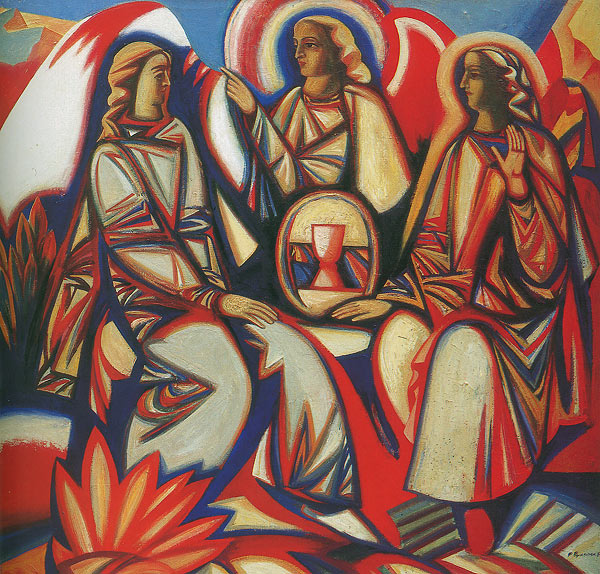
The Trinity, by Ukrainian painter Feodosiy Humeniuk, 1981

Jesus responded to the Jewish leaders: 

“I assure you that the Son can’t do anything by himself except what he sees the Father doing. Whatever the Father does, the Son does likewise. The Father loves the Son and shows him everything that he does. He will show him greater works than these so that you will marvel. 

As the Father raises the dead and gives life, so too does the Son give life to whomever he wishes. The Father doesn’t judge anyone, but he has given all judgment to the Son so that everyone will honor the Son just as they honor the Father. Whoever doesn’t honor the Son doesn’t honor the Father who sent him.

I assure you that whoever hears my word and believes in the one who sent me has eternal life and won’t come under judgment but has passed from death into life.

I assure you that the time is coming—and is here!—when the dead will hear the voice of God’s Son, and those who hear it will live. Just as the Father has life in himself, so he has granted the Son to have life in himself. He gives the Son authority to judge because he is the Human One.

Don’t be surprised by this, because the time is coming when all who are in their graves will hear his voice. Those who did good things will come out into the resurrection of life, and those who did wicked things into the resurrection of judgment.”

(Common English Bible)

So goes the parent, so goes the child. Sons look and act a great deal like their fathers. And there is no mistaking the resemblance between Father of the heavens and Son of the incarnation.

In Christianity, to see Jesus is to see God. To know Christ is to know the Lord. They are distinct, yet inextricably linked as one; each is differentiated from the other in personhood, yet united with the same divine substance.

The deity of the Father and the deity of the Son is one, equal in glory, co-eternal in majesty.

What the Father is, the Son is.

Uncreated, eternal, almighty, and sovereign is the Father; uncreated, eternal, almighty, and sovereign is the Son.

The Father and the Son are not two gods but one God.

There is only one Father; there is only one Son. Each is neither greater nor lesser than the other.

Whoever wants to be saved from guilt, shame, sin, death, and hell – and to be delivered from the injustice of the world, the failings of oneself, and the machinations of evil, should think about the Father and the Son and the Spirit, the Holy Trinity, one God.

– Athanasian Creed

So, why is all this creedal Christian doctrine of any importance? Why pay attention to such things?

Because there are many issues and problems in this world of great importance which must be addressed and dealt with. We need to have some idea of how to go about: 

  • Governing ourselves as a free people
  • Eradicating poverty and disease
  • Educating our children
  • Paying taxes
  • Providing excellent and cost effective healthcare for everyone
  • Dismantling racism
  • Seeking peaceful international relations
  • Building responsible and accountable local community relationships
  • Supporting small businesses
  • Helping workers make a decent contributive living
  • Loving our families and faith communities 

It is my unshakable conviction that all these issues, and many others, need more than our collective mental attention and physical resources; these problems also need spiritual resolutions and solutions.

Seasons, years, centuries, and millennia come and go. People are born, live, and die. Generations exist and then are no more. Civilizations rise and fall. Through it all and above it all is the person of Jesus.

Christ is alive. He brings breath from dust, beauty from ashes, order from chaos, stability from insecurity, dignity from disrespect, and meaning from uncertainty. Jesus gives life, abundant and to the full.
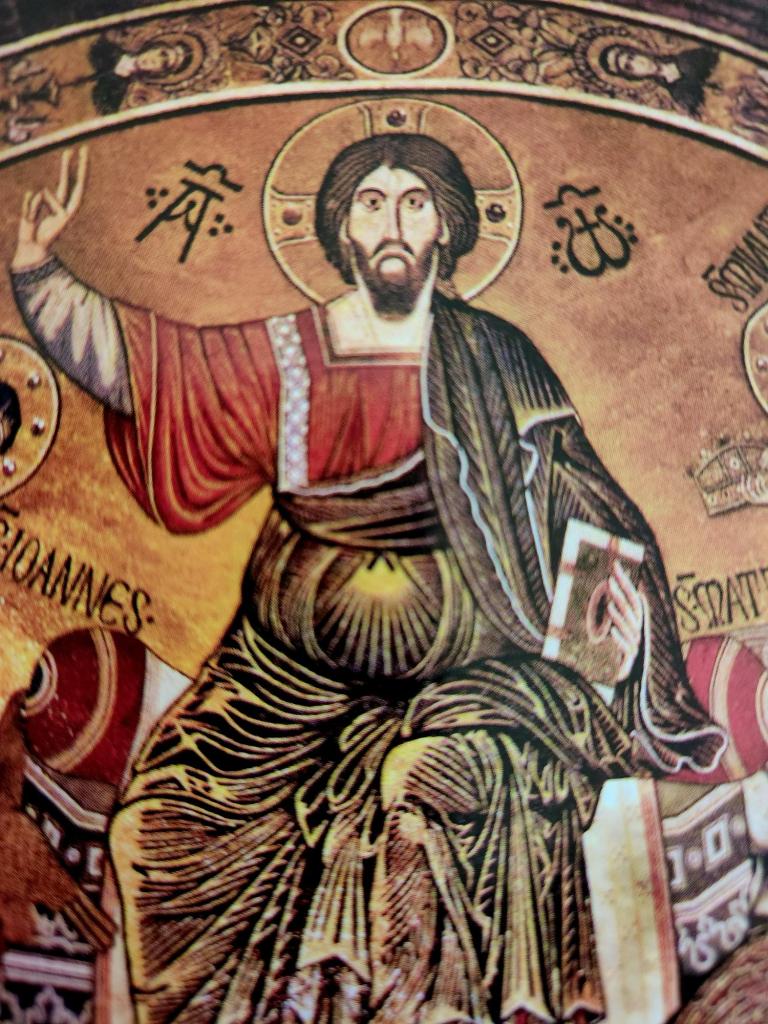
Christ the King, San Miniato al Monte Church, Florence, Italy

Today, this very moment, Christ is still on the throne of all creation. 

Human elections and institutions only have authority as given by Jesus, the Ruler of all.

Presently, Jesus is attentive and vigilant to people, actively interceding for us at the right hand of his Father in heaven. At this very moment, the Holy Spirit is the continuing presence of Christ on this earth, applying Christ’s redemption of humanity to the lives of millions. 

Sometimes we need to remember how important our spiritual resources are to living in this world – and to clarify what’s really of ultimate significance in this old broken world. 

My unwavering spiritual persuasion is this: People need the Lord. Therefore, it only makes good spiritual sense to live in ways that foster a connection with Jesus. 

This morning, I did what I do every morning – whether I’m sick or well, sad or happy, facing a busy day or a relaxed day – I began my day with Scripture reading, prayer, reflection, and gratitude. And I do it with the realization that Christ is King, that as the divine/human Lord of all, his:

  • authority is real
  • rule is benevolent
  • sovereignty is ubiquitous
  • reign is supreme
  • judgments are right and good
  • power is mighty enough to raise the dead

The Christian tradition holds that Jesus Christ is the exalted and glorified Son of God, the Sovereign authority over every dominion. The works of Jesus bear testimony to the cosmic reality that he is Lord of all. And, if that were not enough, Jesus shares his divine power with us, his people.

In the face of Christ’s majesty, the valid and appropriate response is sheer submission to Christ’s authority. 

Just as Jesus listened to the Father and obeyed the Father’s will, so we need to listen to Jesus and carry out his will. 

Just as Jesus enjoyed his relationship with the Father, so we are to bask in our wonderful relationship with Jesus. 

Since Jesus submitted to death on a cross and rose from the dead through God’s power, we now have access to that power by God’s grace through faith in Christ. And we are to use that divine power to take up our own cross and bear the great issues and problems of our day with all the spiritual resources granted to us in Christ Jesus.

Like Father, like Son. Like Christ, like Christians. May all followers of Jesus resemble their Lord in each word and in every way.

Almighty God, to you all hearts are open, all desires known, and from you no secrets are hid: Cleanse the thoughts of our hearts by the inspiration of your Holy Spirit, that we may perfectly love you, and worthily magnify your holy Name; through Christ our Lord. Amen.

To the Family of God (2 John 1:1-16)

St. John the Apostle, by sculptor Thomas Ball (1819-1911)

From the Elder—

To the dear Lady and to her children, whom I truly love. And I am not the only one, but all who know the truth love you, because the truth remains in us and will be with us forever.

May God the Father and Jesus Christ, the Father’s Son, give us grace, mercy, and peace; may they be ours in truth and love.

How happy I was to find that some of your children live in the truth, just as the Father commanded us. And so I ask you, dear Lady: let us all love one another. This is no new command I am writing you; it is the command which we have had from the beginning. This love I speak of means that we must live in obedience to God’s commands. The command, as you have all heard from the beginning, is that you must all live in love.

Many deceivers have gone out over the world, people who do not acknowledge that Jesus Christ came as a human being. Such a person is a deceiver and the Enemy of Christ. Be on your guard, then, so that you will not lose what we have worked for but will receive your reward in full.

Anyone who does not stay with the teaching of Christ, but goes beyond it, does not have God. Whoever does stay with the teaching has both the Father and the Son. So then, if some come to you who do not bring this teaching, do not welcome them in your homes; do not even say, “Peace be with you.” For anyone who wishes them peace becomes their partner in the evil things they do.

I have so much to tell you, but I would rather not do it with paper and ink; instead, I hope to visit you and talk with you personally, so that we shall be completely happy.

The children of your dear Sister send you their greetings. (Good News Translation)

The Pastor

Tucked away near the back of the Bible is a short little letter from the Apostle John, identifying himself as “The Elder.” This is meant to convey both his venerable leadership and his affectionate relation as the grandfatherly old man who has something important to say. In other words, John was, in our terms, a Pastor responsible for shepherding the church with care.

The Church and Christians

“The dear Lady” is a metaphor for the church. Through personifying the church, John was assigning worth, respect, and dignity to the mother with spiritual progeny.

“Her children” are the believers within the church, spiritual offspring with the church as their mother. This has been an important motif for most of Christian history – an understanding that has gotten lost over the centuries in much of the Protestant world. Yet, one of the magisterial reformers, John Calvin, retained this view of the church and its members:

“The Church is the bosom which God is pleased to gather his children… who are guided by her motherly care until they mature and at last reach the goal of faith…. How useful, indeed how necessary, it is that we should know her. For there is no other way to enter into life unless this mother conceive us in her womb, give us birth, nourish us at her breast, and keep us under her care and guidance… Our weakness does not allow us to be dismissed from her school until we have been pupils all our lives.”

(Institutes of the Christian Religion, 4.1, 4)

Indeed, Calvin was merely upholding the words of St. Cyprian, Bishop of Carthage (c.200-258, C.E.)  who stated 1,300 years earlier than the reformer:

“No one can have God as Father who does not have the church as Mother.”

St. Cyprian (On the Unity of the Catholic Church, ch.vi)

Love and Truth

The relationship between the mother and her children is to be always characterized by familial love. Everything within Christianity rises and falls with love because God is love.

God extends loving words and actions because love is the stuff that God is made up of. The very character of God is love, through and through. There is never a time when God is not loving.

In fact, God’s anger and wrath are expressions of love – for God is opposed to all which is unloving. Therefore, God extends justice and confronts sin so that love will freely flow once again amongst humanity and all creation.

God is not okay with deceit, not at all alright with errant understandings of his Son, Jesus Christ, being made out as a mere phantom without a real flesh-and-blood body. He had to be made like us in every way. Otherwise, there is no deliverance from the deceitfulness of sin, the sting of death, and the agony of hell.

John, as the Apostle of love, consistently espoused the primacy and permanence of love whenever he had the chance. Truth and love go together, always, insisted John. Love is only really possible when there is truth in the heart.

The true muster of mother church and of individual believing children is their love. No matter what is done – whether outreach, fellowship, or worship – it is all to be done in love and in truth. It’s not enough to be right; the rightness must be applied with the generosity, grace, and liberality of love.

The telltale sign of the deceiver, the false teacher, is that he proclaims only one without the other, either truth or love, but never both together.  

A profound lack of love is the litmus test that belies a faulty and heretical doctrine of Jesus. The absence of love is a red flag that impure teaching is happening. The real enemy of Christ is the one who claims Christianity but does not love, neither in word nor deed. If we really want to love God, we will love one another, and vice-versa.

Love and truth always go together. A mother is a mother because of her children; and a child is a child because of the mother. You cannot have one without the other.

To embrace truth is to love a group of people wherever they are. It is to see them, listen to them, then act on their behalf. Far too often Christians are known for their hubris in superimposing on others what those others need – believing they already know the truth of both Bible and them.

Love abides with the truth of a people. Genuine love seeks the truth and responds accordingly. Love is willing to find out what the issues are of a people. Assuming others need our money, our plans, our service, or our solutions, assumes we already understand their situation without hearing from them.

Love is longsuffering. It is willing to sit with folks for as long as it takes. Love finds itself by carefully applying biblical truth to the truth of a people. And that takes a great deal of time and effort. There are no shortcuts to love.

Love must have its way, or it isn’t love.

Since God is love, God must have his way in us first.

Hope and Happiness

Hope is a confident expectation that promises will be kept and realized.

Happiness is the result.

Hope and happiness go together like bacon and eggs, Tom and Jerry, the moonwalk and Michael Jackson, Friday and fish fry, Harry Potter and Hogwarts, salt and pepper, Adam and Eve, Jesus and the Spirit, and well, I think you get the picture.

Unhappiness is the inevitable result of feeling hopeless. Hope and happiness are both relational terms. They come from having good relations based in love and truth.

Love and truth are very much relational terms, being realized because of mother church’s nurturing.

And the chosen mother came into being because of the Father’s gracious will.

So, tell me, what is your takeaway from this quite brief reflection on John’s little letter?…

God Is Both Near and Far (Psalm 145:1-5, 17-21)

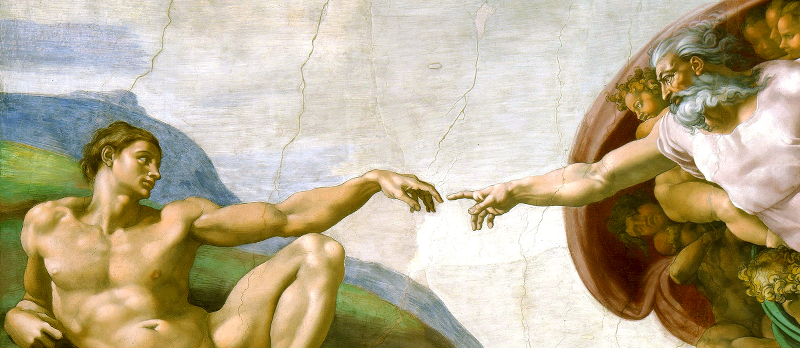
God giving life to Adam, by Michelangelo (1475-1564) on the ceiling of the Sistine Chapel, Rome

I will exalt you, my God the King;
    I will praise your name for ever and ever.
Every day I will praise you
    and extol your name for ever and ever.

Great is the Lord and most worthy of praise;
    his greatness no one can fathom.
One generation commends your works to another;
    they tell of your mighty acts.
They speak of the glorious splendor of your majesty—
    and I will meditate on your wonderful works….

The Lord is righteous in all his ways
    and faithful in all he does.
The Lord is near to all who call on him,
    to all who call on him in truth.
He fulfills the desires of those who fear him;
    he hears their cry and saves them.
The Lord watches over all who love him,
    but all the wicked he will destroy.

My mouth will speak in praise of the Lord.
    Let every creature praise his holy name
    for ever and ever. (New International Version)

The Lord is both near and far. The God of Holy Scripture is, at the same time, both:

  • approachable and aloof
  • close and distant
  • beside us and beyond us
  • available and elusive
  • revealing and remote
  • warm and cool
  • knowable and mysterious
  • readily at hand and at arm’s length
  • a good neighbor next door and a politician over in a city you’ve never been

The technical theological terms for describing God in such a way is that the Lord is both immanent and transcendent. And that is a good thing. We need the Lord to be both.

This psalm is a hymn of praise to God. The psalmist, David, celebrates the attributes and the actions of the Lord. David understood, better than most, that God is so far above humanity in divine majesty that miracles are always possible. Because God is God, the Lord’s arm is never too short to extend help and deliverance.

David knew that God’s powerful ability and God’s loving affection go hand-in-hand together; God’s mighty strength and God’s compassionate spirit work together harmoniously for our benefit.

They did not conquer the land with their swords;
    it was not their own strong arm that gave them victory.
It was your right hand and strong arm
    and the blinding light from your face that helped them,
    for you loved them. (Psalm 44:3, NLT)

God’s interventions, wonders, and miracles are never done dispassionately; the Lord’s arm is extended with deep concern and loving care for people.

The Lord acts as a close relative, like a parent, exhibiting qualities of both father and mother. God is close enough to not only hear our verbal prayers but to also hear our faint whispers. Indeed, the Lord is so close that we don’t even have to speak for the prayers of our heart to be heard.

The righteous call to the Lord, and he listens;
    he rescues them from all their troubles.
The Lord is near to those who are discouraged;
    he saves those who have lost all hope.

Good people suffer many troubles,
    but the Lord saves them from them all. (Psalm 34:17-19, GNT)

In the New Testament Gospels, Jesus gave us instruction on how to address God: “Our Father in heaven.” Not just “my” Father, but “our” Father. We are to pray with the mindful sense of our union with the Lord, as well as our connection with one another as believers.

The Lord sits in heaven as the Most High God, the transcendent Lord of me, you, and all people – watching over and protecting all whose hearts are in the right place, and effectively guarding us from a lofty divine vantage point.

My shield is God Most High, who saves the upright in heart. (Psalm 7:10, NIV)

Clap your hands, all you nations;
    shout to God with cries of joy.

For the Lord Most High is awesome,
    the great King over all the earth.
He subdued nations under us,
    peoples under our feet. (Psalm 47:1-3, NIV)

With our transcendent God always having a watchful eye over us, we need not fear anything or anyone. The Lord knows the score of how things are going in the world and in your life. And, what’s more, God knows the ropes in providing for us, protecting us, and powerfully handling any and all enemies to our souls.

Yet, at the same time, all the time, God is both our high holy King, and our close intimate Friend. Indeed, the Lord is graciously immanent as my Abba – the Father who is near and dear to our hearts.

Because you are [adopted] sons and daughters, God sent the Spirit of his Son into our hearts, crying, “Abba, Father!” Therefore, you are no longer a slave but a son or daughter, and if you are his child, then you are also an heir through God. (Galatians 4:6-7, CEB)

Christians everywhere in the world, and throughout the ages, gather together and repeat the Lord’s Prayer, every Sunday, as well as in weekly small groups, and daily individual prayers. We cry out, “Our Father in heaven” as the most used phrase over the course of our Christian lives.

And that sort of repetition is a good thing. It is important to verbalize that God is transcendent – far above all earthly powers as the sovereign Lord of the universe; and to vocalize that God is immanent – near to us as a father to a child.

Just because a phrase can become vain repetition doesn’t mean that repeating it is a bad thing. Using our words to reiterate both the far distance and the close relation of God is a worthy activity which fortifies our faith, and which passes truth to successive generations of the faithful.

The best way I know of cultivating a healthy sense of God’s transcendence and immanence (outside of reading scripture and praying) is through clouds and kids – both of which require mature adults to practice some much needed humility.

There is nothing quite like putting clocks and schedules aside, stretching out a blanket on a hill, laying back, and watching the clouds roll by. The perspective of massive highness reminds us that our problems are neither as daunting nor as important as we thought.

In contrast to the high clouds, there’s also nothing quite like forgetting your age and getting on the ground to be eye level with a kid. Fortunately, I have rambunctious and curious grandsons who continually remind me that, the lower I get, the better I understand what’s truly most important.

Neither my kids nor my grandkids care all that much about the what’s in my life – what I do – my work, my hobbies, my angst, my daily activities. But they do care a great deal about who I am and why I’m with them.

Intentionally developing a sense of God as both far and near, helps us remember who we are and why are here.

Ironically, the closer I get in touch with the reality that I’m mere dust, and will return back to the ground, the better I’m able to see the Most High God. And, conversely, the more I gaze into the sky, the greater awareness I have of the people around me. I learn to love God and neighbor, as I ought.

There’s no better time than now to get out there and take advantage of the clouds and the kids. It will likely help you to know God better; and it will probably bring a greater awareness, clarity, and connection to the truly significant which is always around us.

Father God, you formed us from the dust of the earth. Remind us of our place as your creatures at home in your creation. Forgive us when we forget our connection to the earth, and our dependence upon the goodness of your world. Lord have mercy.

Brother Jesus, you were born into this world, and made your earthly home in Nazareth. Help us to know and love the people and places where you have set us. Forgive us when we fail to care for our homes, our communities, and your creation. Christ, have mercy.

Blessed Holy Spirit, you desire to grow in us your fruit of love, joy, peace, patience, kindness, goodness, faithfulness, gentleness, and self-control. Forgive us when our roots are so shallow, and our hearts so restless, that our lives fail to bear fruit. Enable us to find our home in you, and in the places to which you call us. Lord have mercy.

Blessed Holy Trinity – Father, Son, and Spirit – the God who is both far and near: Forgive us our sins, settle us in a place of belonging, and enable us to bear fruit for your kingdom. Amen.

Build It Now! (Haggai 1:1-15a)

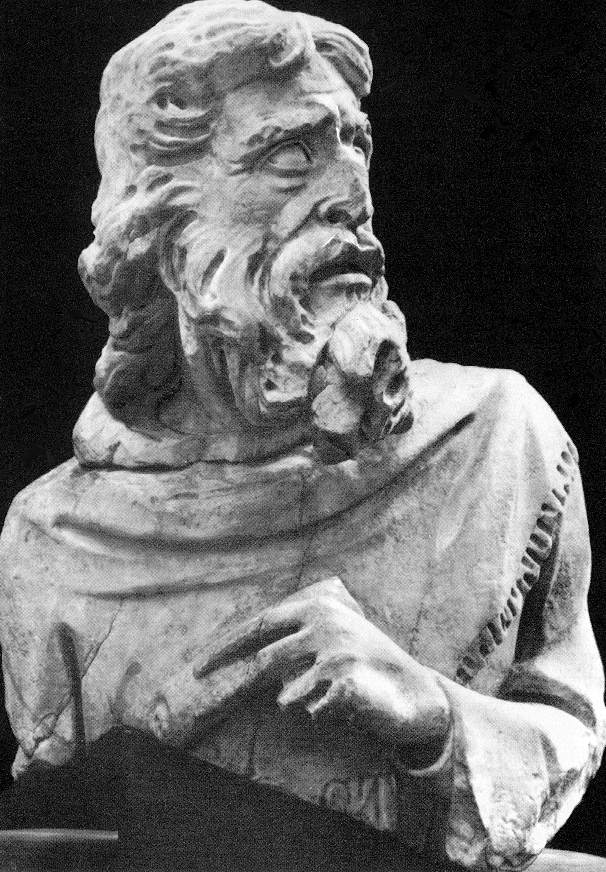
Statue of the prophet Haggai, by Giovanni Pisano, c.1290 C.E., Siena, Italy

In the second year of King Darius, on the first day of the sixth month, the word of the Lord came through the prophet Haggai to Zerubbabel son of Shealtiel, governor of Judah, and to Joshua son of Jozadak, the high priest:

This is what the Lord Almighty says: “These people say, ‘The time has not yet come to rebuild the Lord’s house.’”

Then the word of the Lord came through the prophet Haggai: “Is it a time for you yourselves to be living in your paneled houses, while this house remains a ruin?”

Now this is what the Lord Almighty says: “Give careful thought to your ways. You have planted much but harvested little. You eat, but never have enough. You drink, but never have your fill. You put on clothes but are not warm. You earn wages, only to put them in a purse with holes in it.”

This is what the Lord Almighty says: “Give careful thought to your ways. Go up into the mountains and bring down timber and build my house, so that I may take pleasure in it and be honored,” says the Lord. 

“You expected much, but see, it turned out to be little. What you brought home, I blew away. Why?” declares the Lord Almighty. “Because of my house, which remains a ruin, while each of you is busy with your own house. 

Therefore, because of you the heavens have withheld their dew and the earth its crops. I called for a drought on the fields and the mountains, on the grain, the new wine, the olive oil and everything else the ground produces, on people and livestock, and on all the labor of your hands.”

Then Zerubbabel son of Shealtiel, Joshua son of Jozadak, the high priest, and the whole remnant of the people obeyed the voice of the Lord their God and the message of the prophet Haggai, because the Lord their God had sent him. And the people feared the Lord.

Then Haggai, the Lord’s messenger, gave this message of the Lord to the people: “I am with you,” declares the Lord. So the Lord stirred up the spirit of Zerubbabel son of Shealtiel, governor of Judah, and the spirit of Joshua son of Jozadak, the high priest, and the spirit of the whole remnant of the people. They came and began to work on the house of the Lord Almighty, their God, on the twenty-fourth day of the sixth month. (New International Version)

Timing is everything.

There is a time to ponder and plan and there’s a time to move and act. If the time is ripe for action, then the lack of initiative is plain old procrastination. But how do you know when to act?

If the Lord says it’s time, well then, it’s time!

God’s people wouldn’t have described their inaction in rebuilding God’s house as dragging their feet. They perceived their inertia as a sensible delay.

Yet, the Lord saw the people’s approach as inexcusable enough to send a prophet with a specific message and call to action: Build the house now!

Let’s get a feel for why God’s call for immediacy comes when it does. In the ancient world, it had always been the practice of armies to assimilate conquered peoples into the culture of the conquering king. 

In the eighth century B.C.E., the Assyrian Empire conquered the northern kingdom of Israel. The Assyrians took most of the people into captivity, left the poorest of the people alone, and resettled the land with some of their own Assyrian people. The inevitable intermarriages resulted in their progeny being known as the Samaritans in the New Testament Gospels, as the Samaritans.

Two-hundred years after Assyria conquered Israel, Nebuchadnezzar besieged the southern kingdom of Judah and took over Jerusalem. He carried Daniel and all the other educated and professional people to Babylon. In the course of taking the city, Nebuchadnezzar tore down the wall and destroyed the temple that Solomon had made.

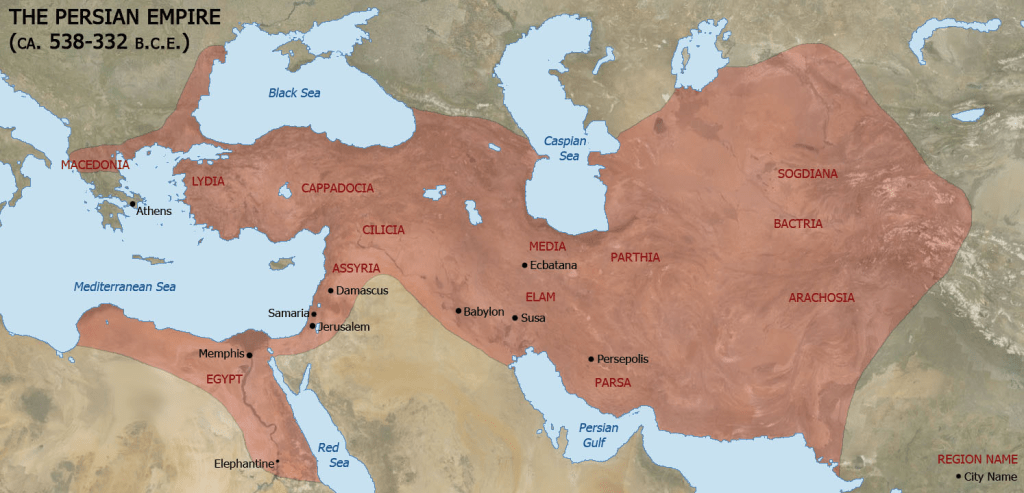
During the Babylonian exile, the Persians conquered Babylon and became rulers of a large geographical empire. Because the massive Persian Empire was in control of so many different kinds of people across such a vast territory, they were not able to operate as previous empires did by assimilation and resettlement. 

Instead, the Persians did something new and different: They encouraged and enabled their conquered peoples to keep their religion and their culture. The only caveat was that they had to give tribute and allegiance to the empire and pray for the king. This is why Nehemiah, Ezra, and Haggai were able to return to Jerusalem and given royal authority to rebuild the wall and the temple. 

But, from the git go, there was opposition to the rebuilding from the old Canaanite inhabitants of the land. After many years, the wall was rebuilt but the temple restoration bogged down. The people slowly became discouraged and lost enthusiasm to do the work. 

Understandably, the people got caught up in taking care of their own homes and just plain neglected working on the temple. Over time, they just forgot about the entire project. But God didn’t.

The prophet Haggai made it clear that the people’s mental distraction and physical neglect was taken as disrespect by the Lord. Haggai insisted that the reason the people were not experiencing blessing on their land was because they simply did not have their priorities straight. 

Thus, God sent the prophet Haggai to preach a sermon entitled: Build the house now! 

To the people’s credit, they responded to the call of God and started rebuilding God’s house. The work was completed. However, there seemed to be a problem. 

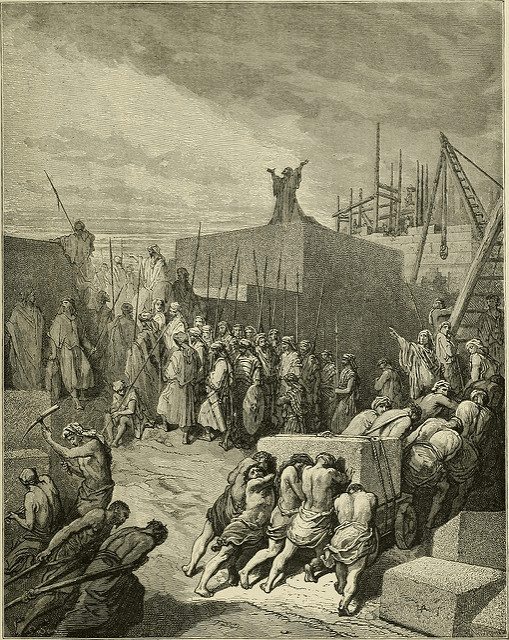
Rebuilding the Temple, by Gustave Doré, 1866

Moving into the rest of Haggai’s prophecy, the newly restored temple didn’t look anything like Solomon’s grand and glorious temple. Many of the older worshipers could still remember Solomon’s temple; to them, the rebuilt temple seemed like a bologna sandwich compared to the T-bone steak of the past. 

So, God sent Haggai again to encourage the people. The Lord will be with them. The restored temple may not look the same, but what makes the temple great is God’s glory.

An important takeaway from the prophecy of Haggai is that the Lord is a jealous God; God’s people are to worship the Lord with all of their heart, soul, mind, and strength. 

We also learn that the Lord is sovereign and supreme over all creation. God owns everything and will use it all to accomplish divine purposes on this earth. 

In addition, we see that God calls people to new work and fresh ministry. The Lord was behind the destruction of the old temple; and when the time was right, God called the people to build a new ministry.

And we learn something about ourselves, as well. God’s people need to hear and respond to God’s call. Haggai put a God-sized vision before the people; he helped them imagine what the new temple would be like – full of God’s glory.

God is doing a new thing. The Lord continues calling people to:

  • Seek first the kingdom of God. (Deuteronomy 4:29; Psalm 63:1; Matthew 6:33; Hebrews 11:6)
  • Love God with whole hearts. (Deuteronomy 6:5, 11:1-22, 19:9, 30:16-20; Matthew 22:37)
  • Love neighbor as we love ourselves. (Leviticus 19:18; Matthew 22:38; Romans 13:9; Galatians 5:14)
  • Make disciples of Christ from all nationalities. (Matthew 28:18-20)
  • Be witnesses to God’s glory in Christ. (Psalm 66:16; Acts 1:8; 2 Timothy 2:2)
  • Obey the Holy Spirit. (Acts 5:31-33; Romans 6:17; Hebrews 5:8-9)

It is good to remember and celebrate past ministries; and it is also good to throw ourselves into the new ministries which God calls us and to build them for God’s glory.

My friends, build it now.

Glory to you, O God, the One who is able to do far beyond all that we could ask or imagine by your divine power at work within us; glory to you, blessed God, in the church and in Christ Jesus for all generations, through the empowering Holy Spirit, forever and always. Amen.