Titus 1:1-9 – Effective Spiritual Leaders

From Paul, a slave of God and an apostle of Jesus Christ. I’m sent to bring about the faith of God’s chosen people and a knowledge of the truth that agrees with godliness.

Their faith and this knowledge are based on the hope of eternal life that God, who doesn’t lie, promised before time began. God revealed his message at the appropriate time through preaching, and I was trusted with preaching this message by the command of God our savior.

To Titus, my true child in a common faith.

Grace and peace from God the Father and Christ Jesus our savior.

The reason I left you behind in Crete was to organize whatever needs to be done and to appoint elders in each city, as I told you. Elders should be without fault. They should be faithful to their spouse and have faithful children who can’t be accused of self-indulgence or rebelliousness. This is because supervisors should be without fault as God’s managers: they shouldn’t be stubborn, irritable, addicted to alcohol, a bully, or greedy. Instead, they should show hospitality, love what is good, and be reasonable, ethical, godly, and self-controlled. They must pay attention to the reliable message as it has been taught to them so that they can encourage people with healthy instruction and refute those who speak against it. (Common English Bible)

Paul wrote his letter to Titus so that spiritually solid competent virtuous leaders might be appointed to guide the church on the island of Crete (located in the Mediterranean Sea, south of Greece). 

There was no ambiguity with Paul about the importance of leadership. The Apostle clearly laid out his expectations that church officials must have a good reputation – not bossy, quick-tempered, heavy drinkers, bullies, or dishonest in business. Instead, they must be friendly to strangers and enjoy doing good things. They must also be sensible, fair, pure, and self-controlled.  They must stick to the true message they were taught, so that their good teaching can help others and correct everyone who opposes it.

I find it interesting that very few biblical scholars view this teaching as an ideal to aspire – while many churches and believers think this is the case. There is neither any indication nor reason within the biblical text to think that Paul presented his expectations for the ideal leader, as if no one could really be this way. 

Furthermore, Paul did not provide his instruction as a strategy for getting apathetic people off their butts and into some form of service. No, it’s best to understand that Paul meant what he said. He knew that compromising on the character of leadership would erode and destroy the church.

“True leadership is found in giving yourself in service to others, not in coaxing or inducing others to serve you.”

J. Oswald Sanders

The selection of church leaders is important because just one bad belly-aching non-virtuous apple can upset the entire apple cart. Good people provide good teaching and good wisdom. Selfish people with a self-centered agenda find ways to subvert or manipulate sound instruction to get what they want. 

Everyone in the Body of Christ is to grow in the wisdom and knowledge of God. They are to be wise to all the shenanigans of myopic persons through understanding the commands and instruction of Holy Scripture. This is yet another reason to immerse ourselves in the Bible so that we will lead with confidence.

If a church or faith community feels the need to overlook character defects to fill empty leadership seats, then Houston, we have a problem. Any short order cook worth his salt would never crack open a rotten egg and mix it in with the rest to make an omelet. And any group of people who throw a bad egg into their leadership team had better be ready to get sick and vomit when meetings are called to order.

It is imperative that spiritual leaders possess the following:

  • A good reputation
  • Faithfulness and fidelity to their families.
  • A clear-mind and consistent good behavior.
  • Self-control
  • The moral courage to speak truth with grace.
  • A spirit and practice of hospitality.
  • An ability to communicate well so that people are built up in their faith.
  • Sobriety
  • Humility
  • Respectability
  • Gentleness
  • Patience
  • Generosity
  • Compassion
  • Maturity
  • Sincerity
  • Honesty
  • Empathy
  • Purity

All these traits are needed for effective and godly spiritual leadership. Compromising on virtue will never end well. Upholding moral character brings blessing.

“The authority by which the Christian leader leads is not power but love, not force but example, not coercion but reasoned persuasion. Leaders have power, but power is safe only in the hands of those who humble themselves to serve.” 

John R.W. Stott

God calls and sets apart individuals for service. The Lord desires to reveal and manifest the divine presence among people through leaders who reflect God’s good attributes. Jesus Christ wants his church to be built up through faithful service. The Spirit seeks to sanctify and empower for effective ministry.

Nowhere do we find in Scripture that a leader’s main job is listening to complaints. That’s because God has a zero tolerance policy toward murmuring, grumbling, and ingratitude. In fact, the New Testament clearly says to do everything without complaining or arguing. (Philippians 2:14)

Neither will you find the church is supposed to operate just like an American form of democracy. Spiritual leaders are not representatives of the people to do their will. Instead, they are representatives of God to the people so that God’s will is done in all things. 

That all means prayer to God and outreach to the world is the major work for spiritual leaders. And it takes virtuous and ethical persons leading to realize love to all kinds of people. So, feel free to exercise leadership. Just make sure that leadership is grounded in the God of integrity and the Word of grace and truth.

Almighty God, the One who gives good gifts to people, may every grace of ministry rest on divinely appointed leaders. Keep them strong and faithful so that your church may prosper in peace. Grant leaders wisdom, courage, discretion, and benevolence so that they may fulfill their charge to the glory of Jesus Christ and in the power of your Holy Spirit. Amen.


Philippians 3:13-4:1 – Follow My Example

Brothers and sisters, I do not consider myself yet to have taken hold of it. But one thing I do: Forgetting what is behind and straining toward what is ahead, I press on toward the goal to win the prize for which God has called me heavenward in Christ Jesus.

All of us, then, who are mature should take such a view of things. And if on some point you think differently that too God will make clear to you. Only let us live up to what we have already attained.

Join in following my example, brothers and sisters, and just as you have us as a model, keep your eyes on those who live as we do. For, as I have often told you before and now tell you again even with tears, many live as enemies of the cross of Christ. Their destiny is destruction, their god is their stomach, and their glory is in their shame. Their mind is set on earthly things. But our citizenship is in heaven. And we eagerly await a Savior from there, the Lord Jesus Christ, who, by the power that enables him to bring everything under his control, will transform our lowly bodies so that they will be like his glorious body.

Therefore, my brothers and sisters, you whom I love and long for, my joy and crown, stand firm in the Lord in this way, dear friends! (NIV)

Many years ago, while driving through an intersection, a car turned in front of me and caused me to slam my brakes. After getting on my way (and proud of myself for not saying a word) my daughter, who was five years old at the time, leaned forward from the back seat and asked me, “Dad, is that guy an idiot?” 

Kids often imitate their parents in everything, whether good or bad. This is no less true for adults. When it comes to Christianity, faith is passed on not just from individuals reading their bibles in seclusion; it is handed down from person to person. Christians learn from leaders and respected persons how faith is lived out and practiced – and this comes primarily through imitating what they see. 

Therefore, it is good for us to ask the question: “Who do I imitate?” because we mimic and pass on things we learn from others. So, it is imperative we learn from people who demonstrate the values and ideals we aspire to possess ourselves. In the people we listen to either virtually or in person, as well as the authors we read, we are to walk according to the example of virtue, sacrifice, and commitment.

We must imitate those Christian leaders who have a proven character in persevering in faith in the face of pain and suffering and have done it with great humility. This does not necessarily mean we emulate those who eruditely speak the Word of God, have superior gifts and abilities, and enjoy success in ministry. It does mean, however, we ought to imitate, and have as mentors, those persons who imitate Christ. We can leave behind those who are self-promoting peacocks and pursue admiration and praise. 

We are to mimic those who have proved themselves in hardship. A Christian leader who has not undergone fiery trials and been purged of sinful pride are more easily seduced by their own importance. However, leaders who have seen their share of hard circumstances, pain, and suffering, and have come through it loving God and serving others out of grace and humility, are leaders worth imitating. They will likely serve well as good models of faith and ministry.

It is also good to consider the kind of example we ourselves are displaying for others. In all our words and behaviors, whether we recognize it or not, we are modeling what is genuinely important to us. And sometimes what we do not say, or choose not to do, says as much or more about our character, beliefs, and ethics.

It takes a lot of confidence in our way of life to say to another, like the Apostle Paul did, “follow my example.” If we have learned with humility and curiosity the words and ways of Jesus, and lovingly put them into practice, then we can be emboldened to mentor others in the faith and demonstrate for them what laboring for justice, righteousness, holiness, and godliness looks like in this fallen world.

More than ever we need a cadre of solidly committed folks who have been mentored well in the ways of grace to serve as a beacon of light in the darkness of this world’s besetting sins of structural racism, hedonistic consumerism, discriminatory ageism, oppressive patriarchalism, biased hierarchism, disparity classism, religious anarchism, and a hundred other “isms” which keep people from flourishing in this life as God intended.

It is vital we learn from and emulate others who have a proven track record of promoting the common good of all persons. And it is equally important we become part of the ranks of those who are good examples of citizens in God’s benevolent and ethical kingdom.

Almighty God, may I stand firm in faith through all the challenges and travails of this life. Enable me to incorporate the love of Christ in my life to such a degree that it proves to be an example of grace and peace. Give me a heart willing to sacrifice and serve the common good of all. Give me a broader and deeper understanding of the lessons I need to discover from others wiser than myself. Allow me to learn all I must from this painful, yet blissful life, through Jesus Christ my Lord, in the power of your Holy Spirit. Amen.
1 Peter 5:1-5, 12-14 – Humble Leadership

To the elders among you, I appeal as a fellow elder and a witness of Christ’s sufferings who also will share in the glory to be revealed: Be shepherds of God’s flock that is under your care, watching over them—not because you must, but because you are willing, as God wants you to be; not pursuing dishonest gain, but eager to serve; not lording it over those entrusted to you, but being examples to the flock. And when the Chief Shepherd appears, you will receive the crown of glory that will never fade away.

In the same way, you who are younger, submit yourselves to your elders. All of you, clothe yourselves with humility toward one another, because,

“God opposes the proud
    but shows favor to the humble….”

With the help of Silas, whom I regard as a faithful brother, I have written to you briefly, encouraging you and testifying that this is the true grace of God. Stand fast in it.

She who is in Babylon, chosen together with you, sends you her greetings, and so does my son Mark. Greet one another with a kiss of love.

Peace to all of you who are in Christ. (NIV)

Humility is the consummate virtue of the believer in Jesus. Apart from humility there is only a lack of authenticity and integrity. With humility there is a recognition of our need for God’s grace, guidance, and peace. Humility opens to us the wide vistas of God’s love and mercy. 

A humble spirit:

  • Makes leadership both possible and bearable (God is in control, not us). 
  • Helps relieve the anxious worries that wash over us (God cares for us).
  • Enables us to resist evil and remain strong in faith (God protects us).
  • Fortifies us to remain steady through suffering (God comforts us).

Genuine spiritual humility places us securely in the merciful arms of God. Furthermore, humility and meekness are what this old fallen world needs, as well, and to which we must reinforce in all our church leadership appointments, national and local political elections, and work staff hires. An abundance of smarts and grit cannot compensate for a lack of humility. God is always in control, and so, syncing our lives with divine providence and care will enable us to be better off.

Yet, humility is one of the hardest virtues to practice because it requires that we willingly put aside pride, ego, and personal agendas to embrace God’s agenda:

God blesses those people who depend only on him. They belong to the kingdom of heaven! (Matthew 5:3, CEV)

Jesus said, “The truth is, you must change your thinking and become like little children. If you don’t do this, you will never enter God’s kingdom. (Matthew 18:3, ERV)

Don’t do anything for selfish purposes, but with humility think of others as better than yourselves. (Philippians 2:3, CEB)

To be a humble leader means to have the intention, focus, and action of seeking God’s will and way in everything. Then, to have the courage to lead others in God’s direction despite resistance and opposition from those who want to follow a different path.

Therefore, our task as spiritual leaders is to pursue hard after God’s direction rather than relying solely upon our base instincts, pragmatic desires, and personal views. Humility provides us a radical openness to God. A meek and gentle spirit enables us to develop an ever-deepening awareness of where God is leading. The Lord is up to something and has plans for our world, our locales, and our faith communities.

We also need to recognize that not everyone is open to God. If our focus is primarily on molding a group of people to be what we want them to be, then we may have become closed to what God wants. This closed spirit comes out in a couple of different ways:

  1. Maintaining tradition at all costs. Living with uncertainty and ambiguity is too much for some leaders, so they stick close to the status quo. Like Abraham, however, we are called to move and change without always knowing where we are going. (Genesis 12:1-5)
  • Getting rid of tradition like there is no tomorrow. To get what they want some leaders focus solely on their own needs and desires without considering those they are called to lead. Like Timothy, we are to hold onto the great deposit of doctrine and heritage given to us and not always be looking for the next new thing to turn things around. (1 Timothy 6:20-21; 2 Timothy 1:13-14)

Humility-based leadership continually consults the divine will and others’ wisdom in a concerted effort to be collaboratively open to God. A humble spirit enables and empowers leaders:

  • To lead from a position of faith, not fear.
  • To seek divine help and resources through a posture of listening. 
  • To practice love in all things to all persons.
  • To make prayer and discernment the foundation of planning.
  • To read Holy Scripture as if life depended on it.
  • To consult and collaborate with others who are like-minded.
  • To honor and respect tradition while holding it with open hands, not closed fists.

If we cultivate a humble attitude and a deep openness to God, along with a determined readiness to move people lovingly and graciously in God’s direction, then amazing things can happen. Let our prayer together be this: 

I am yours, wise God, no matter where you call me to go, what you call me to do, and how you call me to be.  I will seek your will and way as I lead others to do the same through Jesus Christ our Lord in the power and guidance of your Holy Spirit. Amen.

Mark 11:27-33 – Dueling Authorities

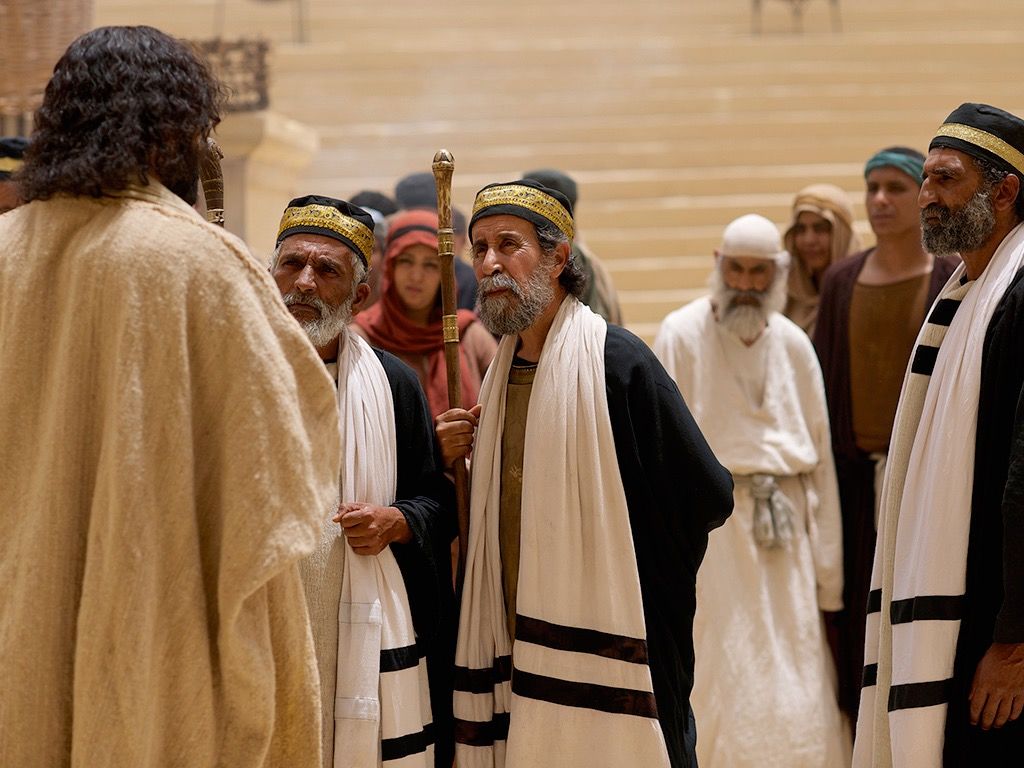
They arrived again in Jerusalem, and while Jesus was walking in the temple courts, the chief priests, the teachers of the law and the elders came to him. “By what authority are you doing these things?” they asked. “And who gave you authority to do this?”

Jesus replied, “I will ask you one question. Answer me, and I will tell you by what authority I am doing these things. John’s baptism—was it from heaven, or of human origin? Tell me!”

They discussed it among themselves and said, “If we say, ‘From heaven,’ he will ask, ‘Then why didn’t you believe him?’ But if we say, ‘Of human origin’ …” (They feared the people, for everyone held that John really was a prophet.)

So, they answered Jesus, “We don’t know.”

Jesus said, “Neither will I tell you by what authority I am doing these things.” (NIV)

Because Christ is Lord, we might overlook that Jesus, in his earthly ministry, was an outsider. Although a teacher, a rabbi, Jesus was neither a priest nor a member of any Jewish religious sect. He walked around as if he owned the place (which he did) and this gave no end of consternation from the established status quo religious leadership.

Jesus made significant inroads into people’s lives, especially with outsiders like himself, and this created anger and jealousy with many of the religious ruling class. Since Jesus was not a card-carrying member, the leaders wanted to hear from him why he kept acting confidently and deliberately on their religious turf, as if he had authority to do so.

The established authorities are depicted in today’s Gospel lesson as a craven bunch who did not want to alienate the crowds yet were eager to get the upstart Jesus out the way. This appears to be an age-old situation of leaders putting their fingers to the wind to go with whatever will keep them popular and in power. Since Jesus consistently refused to play such games, the authorities believed he needed to go. They, however, had no intention of risking an outright confrontation and showing their shadow motives.

Jesus clearly connected himself with John the Baptist, both coming from the same authority. John was yet another figure for whom the established leaders could not control. We ought never to underestimate that threats to status quo leadership who have no inkling of being public servants when true moral authority comes along. The lack of conformity from both John and Jesus would cost them their very lives.

Speaking truth to power while not becoming defensive is a tricky art. Yet, Jesus did it. Continual challenges to his authority left him unfazed as to his mission and purpose on this earth. Christ was assertive without becoming despotic; forward without taking the bait of useless arguments; confident with no hint of arrogance.

For me, the contrast between Jesus and the religious authorities is trenchant. The confident, wise, and calm authority of Christ is in direct opposition to the fear, anxiety, and worry of the ruling leaders. Whereas they kept anxiously ruminating about what to do about this threat to their established authority, Jesus exhibited a non-anxious presence which maintained a steadfast focus on God’s righteous, holy, and benevolent rule and reign.

Sometimes, continual fear is a clue that one is so worried about losing the person, place, or position they possess that the divine gets pushed aside.

Questioning Christ’s credentials was the giveaway that the existing religious authorities were concerned about their power and privilege, and not the people. The wise person will see such queries for what they are.

Wherever we observe those who refuse to share power, have a xenophobic bent toward outsiders, and will seem to do just about anything to maintain the status quo, there we will find the abuse of authority. Conversely, where we observe a deep concern for equity, justice, and the common good of all persons, there we see compassionate leadership who will champion ethical leadership and espouse moral authority.

In any democratic society, we must choose our leaders wisely.

Great God of hope, in these times of change and uncertainty, unite your people and guide our leaders with your wisdom. Give us courage to overcome our fears and help us to build a future in which all may prosper and share together through Jesus Christ our Lord in the strength of your Holy Spirit. Amen.