Philippians 1:3-14 – Unity Through Shared Purpose

I thank my God every time I remember you. In all my prayers for all of you, I always pray with joy because of your partnership in the gospel from the first day until now, being confident of this, that he who began a good work in you will carry it on to completion until the day of Christ Jesus.

It is right for me to feel this way about all of you, since I have you in my heart and, whether I am in chains or defending and confirming the gospel, all of you share in God’s grace with me. God can testify how I long for all of you with the affection of Christ Jesus.

And this is my prayer: that your love may abound more and more in knowledge and depth of insight, so that you may be able to discern what is best and may be pure and blameless for the day of Christ,filled with the fruit of righteousness that comes through Jesus Christ—to the glory and praise of God.

Now I want you to know, brothers and sisters, that what has happened to me has served to advance the gospel. As a result, it has become clear throughout the whole palace guard and to everyone else that I am in chains for Christ. And because of my chains, most of the brothers and sisters have become confident in the Lord and dare even more to proclaim the gospel without fear. (NIV)

Physical health does not just happen. Care of the body is necessary through eating well, exercising, and coping adequately with stress. In the same way, spiritual health and care for the Body of Christ occurs when we put every effort to keep the unity of the Spirit through the bond of peace (Ephesians 4:3).

When spiritual health breaks down in the Body of Christ there are divided loyalties, unhappiness, and disunity. And this is precisely what happened in the ancient Philippian Church. They were spiritually sick and relationally fragmented through inattention to one another.

Unity is much more than the absence of division. It is a common community, sharing life together, working on supporting one another and reaching out to others. In our New Testament lesson for today, the Apostle Paul begins his letter with emphasizing that the Body of Christ realizes unity through a shared purpose of embracing the good news of Jesus Christ and proclaiming it to others.

Every pronoun, each “you” used in these verses is not singular but plural. We are meant to establish our common life together around a shared mission of gospel proclamation: The kingdom of God is near. Through repentance and faith in the person and work of Jesus there is forgiveness of sins, new life, and participation in the life of God. The mission is not for larger church attendance, although that is nice and may happen; it isn’t to do more, or to get other people to stop swearing or avoid tattoos.

The Apostle Paul knew that without a focus on mission, on sharing the good news with each other and proclaiming the gospel to others, that the lack of purpose would create spiritual sickness. Apart from a deliberate focus on centering life and mission around the person and work of Christ, a group of people just nit-pick one another to death with all their various opinions and wants.

Wherever there is an absence of shared purpose, there you will find constant complaining, endless arguing, and a bunch of crotchety curmudgeons who nobody wants to be around.

Conversely, with a polestar on mission, the community of the redeemed work together in close fellowship with the result being joy. Happy people are a breath of fresh air to be around. A good healthy spirit is a delight to others. In fact, folks will find hope and healing through a common purpose of life together which imbibes liberally from the redemptive events of Jesus.

Good news is fun to share. It is joyful. The gospel of Jesus Christ is wonderful news, worthy of exuberant celebration. The Apostle Paul had fond memories of his partnership in the gospel with the Philippian believers. Although he had been jailed and beaten, Paul joyously sang in the prison – to the point where the jailer took notice and listened to the good news of new life in Christ. The jailer and his entire family became followers of Jesus. (Acts 16:16-34)

The Philippians were Paul’s spiritual children. They had sacrificed with Paul toward the shared vision of proclaiming good news. So, Paul wanted them to remember their own significant events of coming to faith, enjoying fellowship together, and working toward common objectives. In reminding the Philippian believers, Paul hoped to help get their heads screwed on straight again. He was confident this would happen, having an unshakable belief that God would continue the good work started within them.

This confidence was the basis of Paul’s prayers for the church. He beseeched God to unleash the Philippians’ collective love in a grand experiential knowledge of the divine so that they might discern well, making solid decisions which place the gospel as central to all of life.

There is an incredible depth to human need – a deep spiritual longing for what is good and beautiful. Relational unity brings out the beauty and majesty of humanity. Sometimes we just need to recall past days when this was true of us when we are facing animosity and acrimony.

In times of frustration, anger, demonstrations, riots, violence (both physical and verbal) and injustice, we desperately need a vision of humanity which locks arms in unity without vilifying one another.

When we place priority on the good news, I believe we will again discover the joy of life, of knowing Christ. Perhaps, with a watching world observing basic human kindness and joyful relations, we will find ways of being better together and working toward the common good of all persons. And methinks, Jesus wants to help with this, if we will only let him.

May the risen and ascended Lord strengthen our efforts to mend the ruptures of the past and to meet the challenges of the present with hope in the future. May we embrace the grace which a sovereign God holds out to us and to our world. Amen.

Romans 12:1-8 – Healthy Group Dynamics

Transformed

Therefore, I urge you, brothers, and sisters, in view of God’s mercy, to offer your bodies as a living sacrifice, holy and pleasing to God—this is your true and proper worship. Do not conform to the pattern of this world but be transformed by the renewing of your mind. Then you will be able to test and approve what God’s will is—his good, pleasing, and perfect will. 

For by the grace given me I say to every one of you: Do not think of yourself more highly than you ought, but rather think of yourself with sober judgment, in accordance with the faith God has distributed to each of you. For just as each of us has one body with many members, and these members do not all have the same function, so in Christ we, though many, form one body, and each member belongs to all the others. We have different gifts, according to the grace given to each of us. If your gift is prophesying, then prophesy in accordance with your faith; if it is serving, then serve; if it is teaching, then teach; if it is to encourage, then give encouragement; if it is giving, then give generously; if it is to lead, do it diligently; if it is to show mercy, do it cheerfully. (NIV) 

Every person is important. Everyone is needed. Each one, according to this New Testament lesson, is to offer their entire lives to God through worship and the exercise of their spiritual giftsPeople are designed to be active in building up one another. 

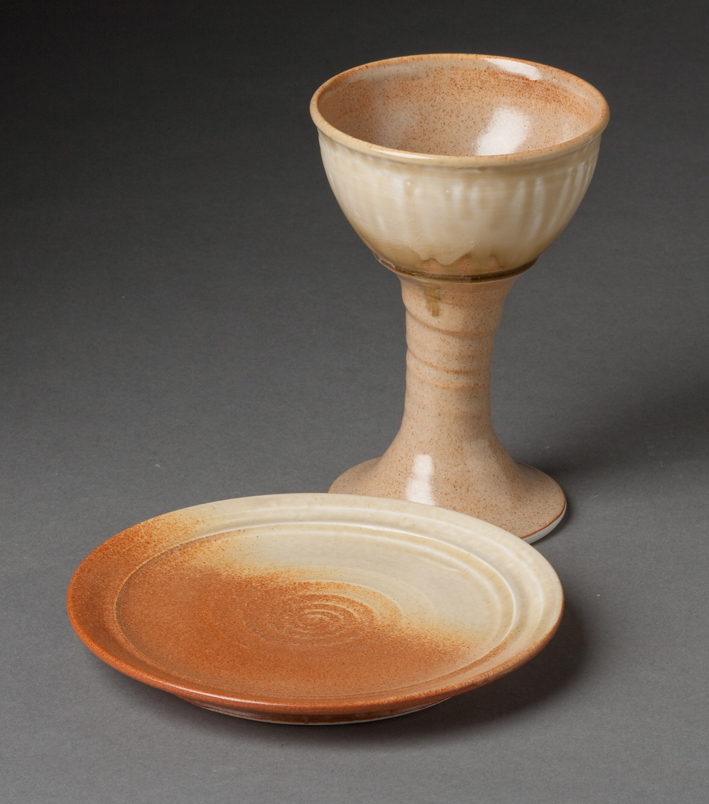
When I was growing up, we had a fine china set that my parents kept in a beautiful china cabinet.  The set and the cabinet are old and were a prominent part of our living room. However, we almost never used it. I can only remember once or twice that my Mom got the china out to use. God is not looking for fine china that sits unused. He is looking for rough-and-tumble clay pots—the kind that can be used every day. God wants ordinary table-wear that can be handled in a crash-and-bang world.  

Followers of Jesus Christ were never meant to be a china cabinet, where precious pieces are safely stowed out of harm’s way. Instead, humanity is to be like a working kitchen, where well-worn pots are filled again and again to dispense their life-giving contents to a thirsty world; and, where common plates and cups are used again and again to provide a hungry population with the Bread of Life. 

Cup and Plate

Within the ancient Roman Church were both Jews and Gentiles – two groups vastly different from each other.  They tended to keep to themselves and only operate within their familiar and comfortable circles of friends and relatives.  But the Apostle Paul wanted them to be united by exercising their spiritual gifts for the benefit of the entire congregation, and not just certain persons. 

We are strongly encouraged to give ourselves in service to one another because of God’s mercy in Christ.  Since God has saved us from sin, we are to gratefully respond to him in worship that is dedicated to serving everyone.  The word “worship” in today’s text is where we get the word “liturgy.”  That is, Paul’s vision for the church was to have a daily liturgical rhythm of spiritual worship, not just on Sunday when we might pull out the fine china and impress people. 

Paul’s appeal was not to guilt people into serving but is an exhortation for all Christians to appropriately respond to God’s grace by offering their lives in sacrificial service. This is a form of saying “thanks” to God. To be oriented in a sacred liturgy that is fit for the daily will of God, our minds must be renewed. Through saturation in Scripture we discern our spiritual gifts, know what God wants us to do with those gifts, and use them effectively in the church and the world.   

Grace has been given to every believer in Jesus, not just a select few. We all have different gifts and have been graced with abilities for the benefit of others. When everyone collectively uses these spiritual gifts, there is the ability to know the will of God in any situation for any group of people. All the pronouns used in today’s verses are plural. There is to be a group dynamic which seeks to give minds and bodies completely to God in worship, using our spiritual gifts for building up one another, and discovering the will of God together. 

All believers in Jesus must share and work together by utilizing God’s grace, instead of getting burned-out because others are not serving. Grumbling about what others are not doing begs the question of whether we are over-functioning, or not. It could be that we have succumbed to the danger the Apostle Paul warned us about: thinking so highly of ourselves that we believe our gifts are superior to others, so we need to maintain our control and hegemony in the group. This is a terribly misguided notion.   

Body of Christ

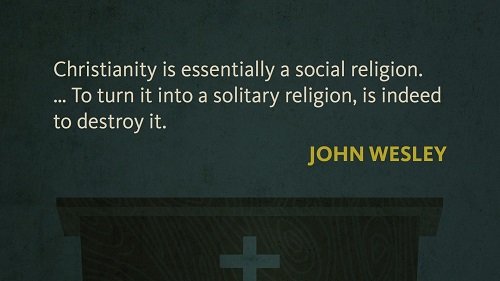
We belong to one another.  Therefore, one major way of giving to God is through offering ourselves to each other with equity and without favoritism.  We must not separate Christ from his church.  To say that we need God, but do not need the church is to really say that we do not need God because the two are inseparable. Nowhere in Holy Scripture do we find individual Christians doing their own thing, isolated from a committed group of people, the church.  

When Jesus called people to follow him in service to God and a world in need, some gave him excuses that they were busy and had other pressing matters to attend to before they could follow him. Jesus simply left them and told them they were not fit for the kingdom of God. (Luke 9:57-62) 

When people were preoccupied with building wealth, or gaining power, or jockeying for influence, Jesus told them to stop it, exercise some faith, and seek first the kingdom of God.  Build your treasure in heaven, Jesus said, because it will be permanent; and, not on earth where it is temporary. (Matthew 6:19-34)  

We are graced by God with abilities which God fully expects us to use. “Cheap grace” is merely embracing Christ as a personal Savior but not welcoming him as the Lord in whom we must sacrificially give our lives to service in the church and the world. Spiritual health and vitality cannot exist apart from every person using God’s given grace to contribute to the functioning of the Body of Christ.   

spiritual gifts

The list of spiritual gifts Paul provided is not exhaustive but represents a combination of speaking and serving gifts necessary to bless humanity. Paul exhorted the church to not restrain people’s exercise of gifts but let them go at it, full bore:  

  • “Prophesying” is not foretelling the future but a word meaning “inspired speech” from God that addresses what God’s people are to do considering his Word.   
  • “Serving” is a generic word referring to all types of hands-on service.   
  • “Teaching” is needed to instruct the faithful in all the revealed will of God.   
  • “Encouraging” involves both speaking and serving, as the one gifted in encouragement comes alongside others and helps them to do something with both verbal coaching and tangible help.   
  • Giving” specifically refers to the person who lives a simple life to be able to give generously and contribute to the needs of others.   
  • “Leading” is the ability to get out in front and show the way in obtaining the will of God.   
  • “Mercy” is the much-needed ability to see down-and-out hurting people and be a conduit of God’s grace to them. 

Here is a simple observation: There is no one person who possesses all these gifts. That is why everyone must work together to have a spiritually healthy community.  A spiritually toxic community is the inevitable result of only a few people using their gifts. 

The Apostle Paul communicated some important truth about what faithful Christians must do to be transformed by a renewal of the mind: exercise godly sacrifice; commitment to worship; intentional unity; and, an awareness of our spiritual gifts. The following are some thoughts on becoming aware of our spiritual gifts:   

  1. Pay attention.  Every spiritual gift reflects God’s grace and character, and so, you will find joy and satisfaction in expressing it. Your spiritual gift will be a place of deep spiritual formation and growth in your life, as God uses it both to powerfully connect you to him and to expose areas of your soul that need his forgiveness and redemption.   
  2. Try.  Give it a whirl.  Take the step to connect with a service or ministry, or just try doing what you feel might be something God wants you to do.  Gifts are discovered more from others observing and affirming your gift and less than going through a research process.  The encouragers among us will be happy to affirm the gifts of others. 
  3. Develop.  All spiritual gifts must be cultivated and developed.  Paul told his young protégé, Timothy, to fan into flame the gift of God.  Put yourself in a position to be taught and mentored. 

We were designed by God for worship and service. We will find our greatest delight in life through engaging those two activities. The result is a spiritually healthy and thriving Christian community that loves God, loves one another, and loves the world. 

God of grace, I come before you today praying for your Holy Spirit to stir up the gifts already placed inside your people. God Almighty, I pray that whatever gifts your Holy Spirit has decided to give and put within me and those around me that those gifts be activated and used for your glory and the edification of others.  I pray for peace and joy in the community, that no one will be jealous or covetous about anyone else’s gifts. Lord God, I pray also as these gifts grow and develop that the fruit of the Spirit will be manifested, to ensure the gifts are ministered in love. May you receive all praise honor and glory from the gifts you give, through Jesus Christ, our Lord.  Amen. 

Trinity Sunday – The God of Wholeness

oak tree 2

We live in a fundamentally broken world. Systemic racism, political gridlock, social stratification, hate crimes, alcohol and domestic abuse, ageism, disease, malpractice, terrorism, and xenophobia barely scratch the surface of sad societal ills and we face living in this old fallen world. Indeed, it is all quite distressing. To realize wholeness and integrity will require operating the mechanism of blessing.

“May the grace of the Lord Jesus Christ, the love of God, and the fellowship of the Holy Spirit be with you all.” (2 Corinthians 13:14)

This is the blessing I leave with my congregation each Sunday. A divine blessing involves the wholeness and integrity of the triune God given to us through grace, love, and fellowship. Holding each facet of that blessing together can sometimes be a challenge.

There was a time in my life when I golfed every day. Even though I played a lot of golf, it was rare for me to have an entire round where my driving, approach shots, chipping, and putting all worked nicely together. My typical experience was that when my driving was superb, my chipping and putting was awful; or, that when my putting was amazing, my approach shots were atrocious. Rarely did I have the whole package of a solid golf game put together in one seamless round. Instead, my game, along with most amateur golfers, is typically disjointed with a combination of brilliant shots and ugly shanks.

The Christian life can seem the same way – with the ability to show love and grace, be open and caring on some days, and not so much on other days. We need God – the triune God. Within God there is complete wholeness, a total well-rounded divine Being.  As we connect with this Being, then we can experience God’s wholeness and integrity, which leads to our own consistent daily wholeness, with no divided herky-jerky self.

The Trinity – Father, Son, and Spirit – provides us with a model of wholeness and displays how it all comes together in a solid consistent life of blessing. There is a beautiful connection between the Trinity and our lives.  It is a path to wholeness that involves healing, hope, and spiritual health based in the triune God.

Healing

The grace of Jesus enables us to pull ourselves together. Jesus is the one who has brought reconciliation and restoration – he has made the bridge and connection to God. In response to this grace we aim for perfection (not perfectionism) pull ourselves together” and restore and heal ourselves. Since Jesus is the Reconciler, the one who restores and heals, we are to allow that grace to wash over us and seep deep into our souls so that we experience reconciliation, restoration, and healing.  When we are broken and disjointed, the grace of Jesus sets us back in place again.

Tim Hansel

The late Tim Hansel was a teacher and mountain climber. He wrote a book many years ago entitled, You Gotta Keep Dancin’: In the Midst of Life’s Hurts, You Can Choose Joy! Hansel lived with chronic debilitating pain for thirty-five years after a climbing accident where he literally fell off a mountain and shattered most of the vertebrae in his back. In his long journey of coming to grips with his painful existence, Tim Hansel discovered that wholeness can certainly come through brokenness. Healing can happen with pain still present. Maturity can occur through painful growth of the human spirit. He constantly said to people, “Pain is inevitable; but misery is optional.” He explained to others, “Character is developed through adversity and pain. That adversity can either destroy us or build us up, but it will not leave us the same, depending upon our chosen response to it.  Pain can either make us better or bitter.”

Even if you do not experience the kind of healing and restoration of body or soul you are looking for, maybe, like Tim Hansel, you will receive grace and freedom that the loving triune God gives. God himself lives with observing the terrible pain of humanity’s hurts every day. The more we participate in the life of God, the greater is our ability to deal with pain – our own as well as the pain of others.

Hope

The fellowship of the Holy Spirit enables us to receive comfort. The Spirit is the Paraclete, the one who encourages by coming alongside and helping. The Spirit works with us, intimately participating in our lived everyday experiences. The Spirit is God’s means of experiencing wholeness. The Holy Spirit lovingly appeals to us in ways we can understand and act – speaking words of comfort and exhortation with the commitment to a faithful presence. Since the Spirit is committed to helping us, thus, we are to help others through living in fellowship with them.

John-Wesley

When John Wesley was a young Christian, a seasoned saint advised him, “Do you wish to serve God and go to heaven? Remember you cannot serve him alone. You must therefore find companions or make them. The Bible knows nothing of solitary religion.” Wesley took that advice to heart. Convinced that the pursuit of personal holiness was impossible apart from Christian community, he carefully organized the Methodist movement (a reaction against solitary religion) into societies (congregations), classes (small groups of eight to twelve), and bands (accountability groups of three to five).

We are meant to receive the encouragement of the Spirit. The Holy Spirit does not hold back in providing us with the help we need to live the Christian life in the form of other believers. We are all important. If we are not healed, we hurt and then hurt others. However, with healing comes hope, and hope encourages us that it will not always be this way – there are better days ahead.

Hope helps us to see beyond the immediate pain, hard circumstance, or adversity to what God can do through the help and power of the Holy Spirit. Just as there is complete and whole fellowship within the triune God, so there can be wholeness of fellowship with us. Christianity is not a solitary religion; it involves companions and fellow disciples for the journey.

Health

The love of God the Father is our peace. God’s unconditional love brings spiritual health to the Body of Christ and to the world. Within God there is complete and total love – a wholeness in which everything God does expresses loving-kindness.

Unity and peace happen when there is health in the church and the world. It is the fruit of love. Love for one another brings unity of prayer and purpose. It is love that brings about peace and harmony. It is love which solidifies compassion in circumstances of adversity.

We are meant to receive the Father’s love. Love brings people together and enables them to become conduits of the loving nature of God to others. There is no other path to spiritual health and sanity than the journey of love.  And love most often gets messy because we get into the muck of people’s lives with all their needs and hurts. Sometimes it takes a tragedy before some folks show love. So, live each day with no regrets as if it were your last and Jesus was coming today.

The Trinity

God the Son, Jesus Christ, brings healing because of his grace.

God the Holy Spirit brings hope because of his encouragement.

God the Father brings health because of his love.

Because of the Trinity, our work is clear:

The Body of Christ brings healing to the world because it bestows grace.

The Body of Christ brings hope to the world because of its encouragement.

The Body of Christ brings health to the world because of its love.

May the grace of the Lord Jesus Christ, and the love of God, and the fellowship of the Holy Spirit be with you all, now and forever. Amen.

1 Corinthians 7:32-40

            We understand worry and anxiety.  Its part of the human condition in this broken world.  You may have even woken up this morning with deep furrows of anxiety about the state of your life – and maybe God was lost somewhere in your worry.  The Bible addresses worry many times, and the Apostle Paul brings it out here in our New Testament lesson for today.
            Throughout the letter to the Corinthians, the Apostle Paul dealt with several issues effecting the life and spiritual (even physical) health of the church.  In chapter 7, he discusses the prospect of marriage for unmarried persons (sounds like Paul spoke at a lot of college campuses).  He goes back and forth as if he has a daisy in his hand giving a pre-marital counsel of “she loves me, she loves me not” as he pulls petals off the flower.
            Paul vacillates between whether to get married or not because he’s concerned for the larger issue of worry and anxiety.  “I want all of you to be free from worry.”  This, then, becomes a sage grid from which to make an important life decision: Does being unmarried create worry and anxiety within you, to the point that you can’t think about pleasing God?  Then drop the long engagement and get married; or, put yourself out there to connect in a relationship.  If not being married doesn’t cause you to worry, then stay in your current state and don’t pursue marriage.  Use your station in life to serve God freely, liberated from the worry of caring for a spouse.
            Pleasing and serving the Lord is Paul’s highest good.  If we are in life circumstances which make it difficult for us to serve God, then we ought to work to change the situation so that we can focus better on Christ.  This is one of the most simple and wise ways of making decisions for the Christian, and discerning God’s will.


God Almighty, you have brought me in safety to this new day.  Preserve me with your mighty power, that I may not fall into worry – forgetting to please you in every way.  Help me not be overcome by anxiety, and in all I do direct me to fulfilling of your purposes; through Jesus Christ, my Lord, along with you and the Holy Spirit.  Amen.