The Lord said to Samuel, “How long will you mourn for Saul, since I have rejected him as king over Israel? Fill your horn with oil and be on your way; I am sending you to Jesse of Bethlehem. I have chosen one of his sons to be king.”
But Samuel said, “How can I go? If Saul hears about it, he will kill me.”
The Lord said, “Take a heifer with you and say, ‘I have come to sacrifice to the Lord.’ 3 Invite Jesse to the sacrifice, and I will show you what to do. You are to anoint for me the one I indicate.”
Samuel did what the Lord said. When he arrived at Bethlehem, the elders of the town trembled when they met him. They asked, “Do you come in peace?”
Samuel replied, “Yes, in peace; I have come to sacrifice to the Lord. Consecrate yourselves and come to the sacrifice with me.” Then he consecrated Jesse and his sons and invited them to the sacrifice.
When they arrived, Samuel saw Eliab and thought, “Surely the Lord’s anointed stands here before the Lord.”
But the Lord said to Samuel, “Do not consider his appearance or his height, for I have rejected him. The Lord does not look at the things people look at. People look at the outward appearance, but the Lord looks at the heart.”
Then Jesse called Abinadab and had him pass in front of Samuel. But Samuel said, “The Lord has not chosen this one either.” Jesse then had Shammah pass by, but Samuel said, “Nor has the Lord chosen this one.” Jesse had seven of his sons pass before Samuel, but Samuel said to him, “The Lord has not chosen these.” So, he asked Jesse, “Are these all the sons you have?”
“There is still the youngest,” Jesse answered. “He is tending the sheep.”
Samuel said, “Send for him; we will not sit down until he arrives.”
So, he sent for him and had him brought in. He was glowing with health and had a fine appearance and handsome features.
Then the Lord said, “Rise and anoint him; this is the one.”
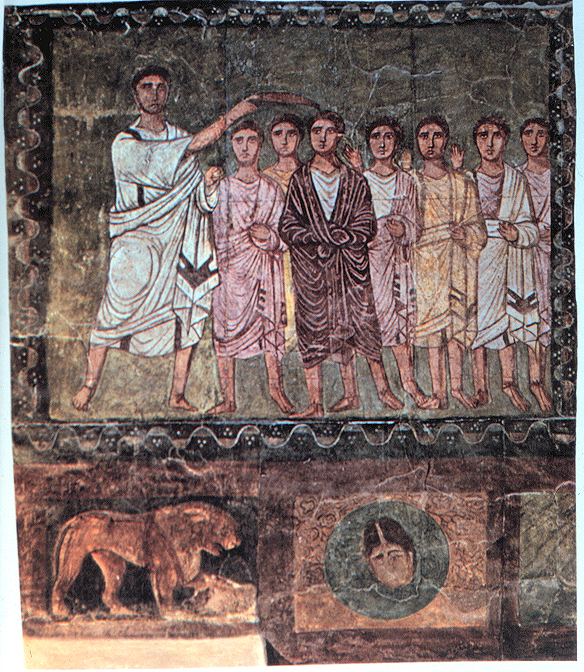
So, Samuel took the horn of oil and anointed him in the presence of his brothers, and from that day on the Spirit of the Lord came powerfully upon David. Samuel then went to Ramah. (NIV)

Appearances can be deceiving. One of the best ways to see beyond mere physical sight is to engage in the spiritual practice of solitude. Solitude is not loneliness but a deliberate retreat from normal routines to be alone with the Lord. The faith of both Samuel and David were strengthened through solitude. It prepared them for public service and made them godly. Because they had established patterns of being alone with God, they had an inward solitude even when in a crowd. That is why Samuel could have an interaction with the Lord, even when among lots of people.
Solitude is important because it is the true path to listening well. A person whose faith has been shaped through solitude has an ability to carry on a dialogue with God while, at the same time, having a conversation with others.
Christ’s relationship with the Father was formed through solitude. Jesus was able to have simultaneous conversations with God and people since he practiced solitude on a regular basis. Jesus began his ministry with solitude (Matthew 4:1-11); made major decisions through solitude (Luke 6:12); and taught his disciples to practice solitude (Matthew 17:1-9; 26:36-46).
Solitude is necessary because engaging the world is important. Effective interaction with others requires times of retreat for solitude with God. Solitude as a spiritual discipline:
- Gives us freedom from the need for constant noise and activity.
- Allows God to shape our faith rather than conform to the world.
- Liberates us from other people’s expectations for us.
- Helps quiet internal noise and racing thoughts so we can better listen to God.
- Provides the opportunity for reflection upon and preparation for future events.
- Creates encouraging speech for the benefit of others.
- Fuels a desire to keep practicing solitude because of its benefit.
Solitude taught Samuel obedience.
Samuel learned obedience through years of solitude with old Eli the priest. “Speak Lord, for I am listening” became a way of life for Samuel, as he was trained in how to listen well.
Samuel’s greatness as the Judge of Israel did not lie in his original ideas or the initiatives he took, but in simple obedience to the commands of God. Years of obscurity and solitude as a child created the ability to hear and carry-out what the Lord told him to do.
Even Samuel, as godly as he was, could not rely on personal observations about choosing the next king of Israel. Because he had long years of practicing solitude with the Lord, Samuel was able to clearly hear divine speech and anointed the right person as king. Samuel did not trust his own judgment but relied on God’s direction.
Solitude characterizes God.
Christians serve a triune God of Father, Son, and Spirit. God has complete and perfect solitude along with focused engagement with humanity. Through spending time with God, people can simultaneously interact with divinity and humanity. It is a bit like my wife who began her broadcasting career in radio by simulcasting the AM station in one ear of her headphones, and the FM station in the other ear. She could que a record for the FM station while, at the same time, forecasting the weather for the AM station. Her ability was born of practice and commitment to her craft. In the same way, we have been given a vocation to engage the church and world, and the ability to have a solitude of heart while interacting with others.
God, unlike us, sees us completely, inside-and-out – which is why we are dependent upon solitude of heart so that we can make proper judgments. God urged Samuel to not look at the outward appearance because this is how wrong judgments happen.
Solitude formed David into a king.
David was on nobody’s short list to become king. He was so far out there as a candidate for the position that his own family did not even think it necessary to have him present for the sacrificial feast. It is just like God to have a way of choosing the people we think would be the least likely to do anything.
Being in the pasture day after day and night after night by himself was just the right curriculum that trained the next king. Shepherding was not a lonely affair for David. It was a rich experience of solitude which developed a solid relationship with God. Out in the field, away from all the wrong judgments of the world, David learned to discern God’s voice – a skill he carried with him the rest of his life.
Solitude might seem unrealistic for extroverts, and only something for introverts. Yet, solitude is essential to creating a robust faith in God. The following are some steps toward the practice of solitude and allowing it to bring you into a closer walk with the Lord.
- Practice “little solitudes” in the day. The early morning cup of coffee or shower, the drive-time to work, the lunch break, the quiet at night when all is dark and everyone in bed are opportunities for solitude with God to reorient and redirect our lives.
- Find or create a quiet place designed specifically for solitude. It might be a room, a closet, or a chair. It might be outdoors. It can be anywhere that helps you be free from distraction and invites you to connect deeply with Jesus.
- Begin the day by spending at least 10 minutes alone with God in silence. Over time, work your way to even more minutes, even hours. I am a believer in an hour a day keeping the devil away. Eventually, take an entire day away, every few months. Consider taking a weekend or even a week away once a year.
- Read Holy Scripture slowly and meditatively. Listen to what the Spirit may be saying in your reading. Keep a journal handy and write down your observations. Allow prayers to arise from what you hear from the Lord.
This might seem optional only for those with discretionary time – but it is no more optional than planting in the Spring to get a harvest in the Fall. Such fruit results in the slaying of giants….