All Saints Day (John 11:32-44)

The Forerunners of Christ with Saints and Martyrs, by Fra Angelico, 15th century

When Mary came where Jesus was and saw him, she knelt at his feet and said to him, “Lord, if you had been here, my brother would not have died.” When Jesus saw her weeping and the Jews who came with her also weeping, he was greatly disturbed in spirit and deeply moved. He said, “Where have you laid him?” They said to him, “Lord, come and see.” Jesus began to weep. So the Jews said, “See how he loved him!” But some of them said, “Could not he who opened the eyes of the blind man have kept this man from dying?”

Then Jesus, again greatly disturbed, came to the tomb. It was a cave, and a stone was lying against it. Jesus said, “Take away the stone.” Martha, the sister of the dead man, said to him, “Lord, already there is a stench because he has been dead four days.” Jesus said to her, “Did I not tell you that if you believed you would see the glory of God?” So they took away the stone.

And Jesus looked upward and said, “Father, I thank you for having heard me. I knew that you always hear me, but I have said this for the sake of the crowd standing here, so that they may believe that you sent me.” When he had said this, he cried with a loud voice, “Lazarus, come out!” The dead man came out, his hands and feet bound with strips of cloth and his face wrapped in a cloth. Jesus said to them, “Unbind him, and let him go.” (New Revised Standard Version)

Every year on the Christian Calendar, the Church commemorates the saints who have gone before us. This day provides an opportunity to acknowledge the spiritual reality that contemporary believers stand on the shoulders of those who lived and died before us. Those saints of yester year deserve our recognition.

Since many believers know little about Christian history, it is good to take the time and reflect on the contributions of our spiritual ancestors. Our own personal spiritual growth isn’t just something we did on our own; we owe a lot to the saints who preceded us, and made it possible for us to know Christ.

In our Gospel lesson for today, Mary’s brother Lazarus had died. She was distraught and mourned her loss. Jesus reminded Mary that physical death is not the end; it is a temporary move to a higher plan of existence, until we all share in the final resurrection of the dead together as believers.

Although dead, the saints we recognize and remember can still speak to us, making significant contributions to our lives. All sorts of books, including Holy Scripture, have timeless reminders of how to live in this world. And, for some Christian traditions, the saints of long ago still maintain a real interaction with us in the present.

Times may change, yet the basic nature of people does not. The saints of the past have incredible wisdom for us, if we will but listen.

The Raising of Lazarus, by John Reilly (1928-2010)

In this way, Lazarus serves as an example of one who has a unique, powerful, and compelling testimony. He speaks, not only actually in his post-resurrection awakening by Jesus, but also virtually in speaking to us through the text and from his historical and heavenly place.

The presence and testimony of Lazarus was incredibly real enough for the religious leaders to begin plotting Christ’s demise; and even planning to kill Lazarus, because of his powerful testimony.

There is a place for grief and tears, and a place for joy and celebration. It seems that too much of our present time is given to the lament which comes from loss. The death and then resurrection of Lazarus by Jesus is a foretaste of Christ’s return.

We, along with all of the saints of bygone eras, will share together in a great resurrection at the end of time.

The author of Hebrews understood this, and spoke about the saints’ anticipation. Even though their lives were often characterized by adversity and suffering, they were able to exercise patience and perseverance, knowing there is something better ahead, along with us:

Some faced jeers and flogging, and even chains and imprisonment. They were put to death by stoning; they were sawed in two; they were killed by the sword. They went about in sheepskins and goatskins, destitute, persecuted and mistreated—the world was not worthy of them. They wandered in deserts and mountains, living in caves and in holes in the ground.

These were all commended for their faith, yet none of them received what had been promised, since God had planned something better for us so that only together with us would they be made perfect. (Hebrews 11:36-40, NIV)

Death is our enemy. Each one of us will succumb to it. Even Lazarus, although dead and then raised to life, ended up dying again. Yet he, along with us, shall be raised immortal.

Until that glorious time, we need to keep going and enduring in this life. We are mortals, subject to all that mortality means for us. Death is that ever-present specter that continually lingers in the background of everyone’s life. The reality of death can upend us, either through the bereavement of loved ones, or through anxious thoughts of our own impending death.

Although Christ has won the war against our old enemy, the fight, however, is not yet over. We need to keep up a future orientation, as Jesus did, and as the faithful saints of the past did.

The risen Lord shall not only cry with us, but shall wipe away every tear, and make it so that we will never be put to shame.

This makes the Christian recognition of All Saints Day not only a remembrance of the past, but also a way of viewing the future. Let us, then, join with all the saints in looking forward to the day of Christ, and letting that perspective shape how we live today.

Beloved God, you deal with us kindly and in steadfast love. You lift up those bent over with heavy burdens, and sustain the weak and oppressed. Release us from our present anxious fears, so that we who hold fast to your commandments, may honor you with faith and patience for all that you have done for us, and will do for us; through Jesus Christ our Lord, in the power of the Holy Spirit. Amen.

How Long, O Lord? (Psalm 80)

Hear us, Shepherd of Israel,
    you who lead Joseph like a flock.
You who sit enthroned between the cherubim,
    shine forth before Ephraim, Benjamin and Manasseh.
Awaken your might;
    come and save us.

Restore us, O God;
    make your face shine on us,
    that we may be saved.

How long, Lord God Almighty,
    will your anger smolder
    against the prayers of your people?
You have fed them with the bread of tears;
    you have made them drink tears by the bowlful.
You have made us an object of derision to our neighbors,
    and our enemies mock us.

Restore us, God Almighty;
    make your face shine on us,
    that we may be saved.

You transplanted a vine from Egypt;
    you drove out the nations and planted it.
You cleared the ground for it,
    and it took root and filled the land.
The mountains were covered with its shade,
    the mighty cedars with its branches.
Its branches reached as far as the Sea,
    its shoots as far as the River.

Why have you broken down its walls
    so that all who pass by pick its grapes?
Boars from the forest ravage it,
    and insects from the fields feed on it.
Return to us, God Almighty!
    Look down from heaven and see!
Watch over this vine,
    the root your right hand has planted,
    the son you have raised up for yourself.

Your vine is cut down, it is burned with fire;
    at your rebuke your people perish.
Let your hand rest on the man at your right hand,
    the son of man you have raised up for yourself.
Then we will not turn away from you;
    revive us, and we will call on your name.

Restore us, Lord God Almighty;
    make your face shine on us,
    that we may be saved. (New International Version)

What do you do when your life is not going as expected? How do you deal with the confusion of unwanted circumstances you didn’t ask for?

Nobody willingly signs up for chronic pain, constant hardship, debilitating situations, and unanswered prayer. And yet, all of us know what it feels like to have our hearts broken over a child, parent, or relative; or to be grief-stricken with either a physical malady, mental disease, emotional disorder, spiritual abuse, or some combination of them.

The psalmist most certainly knows your difficulty and your pain. That’s because he intimately knew God – and still had questions! In fact, all of us who worship and adore the Lord have faced the conundrum that God seems, at times, to be missing in action.

We may wonder, like the psalmist, where the God of the past is. Where is the One who manhandled enemies, provided for the godly, and brought abundant life? The Lord might sometimes seem to be foreign to our human condition, and far from our human experience of things.

There are plenty of stories in the Bible about God doing the miraculous, bringing deliverance, and extending help in dire situations. Yet, for many, in this present time, there is silence. Prayer after prayer brings nothing but bupkis from God. A sullen angst can easily settle into our spiritual bones.

It could also be that people we love and care for are experiencing too many hardships, boatloads of anxiety, and are wracked with worry. And we wonder why God has not risen up to answer our prayers on their behalf.

How long, Lord? Will you forget me forever?
    How long will you hide your face from me?
How long must I wrestle with my thoughts
    and day after day have sorrow in my heart?
    How long will my enemy triumph over me? (Psalm 13:1-2, NIV)

The very fact that with only a cursory look at the news there are children dying in war, senseless murders in the streets, and wanton destruction throughout the world, we may cry out, “Where is God in all this? Wake up! How long, O Lord, must we endure this!?”

Even the small tragedies of life might push us beyond what we can bear, because grief is stacked upon grief in a big lamentable sandwich of spiritual hurt. And if God seems nowhere to be found, our afflictions are multiplied.

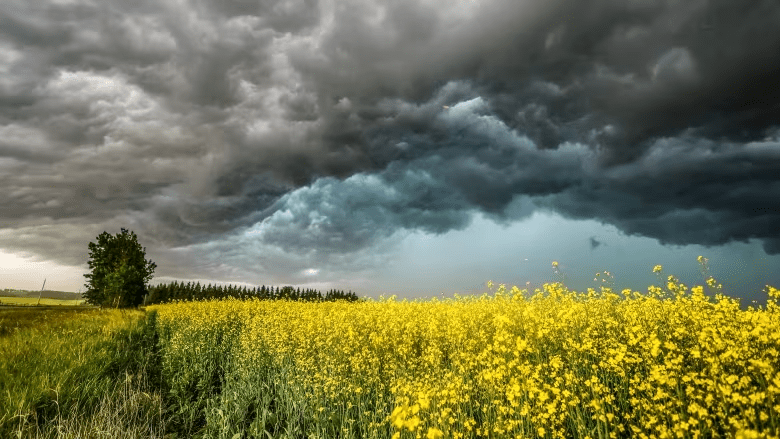
The psalmist drew upon agricultural metaphors that his culture was quite familiar with. A society of farmers knows how much hard work is involved in their vocation – and the hours of anxiety and concern for the field to produce some crops and bear some fruit.

Farmers very much realize the power that nature can do through either drought or flood, hail or wind. The picture of the attentive farmer, gardener, and vinedresser is an apt picture of how God looks upon us.

I grew up on an Iowa farm. I have an intimate understanding of the requirements for tending to the land so that it will produce a crop, and yield a good harvest. Like many jobs, farming isn’t something that requires the same amount of attention every single day.

There are times and seasons for a high degree of activity, like planting in the Spring and harvesting in the Fall. At other times, there isn’t much to do but wait.

By no means does the farmer expect the plants to grow overnight. The faithful farmer learns to be patient, knowing that it will be weeks before anything breaks the ground; and that it will take all summer for the crops to grow and mature before they are ready for harvest.

In those times of inactivity, the corn stalks don’t start talking to one another about where the farmer went to, and whether he is off fishing or not. Even though the farmer is absent, the actions of the farmer are still very much evident.

Our own wonderings and questions about God’s presence and absence are all understandable and valid. Yet, we must keep in mind that there is continual evidence all around us that the Lord has been at work, and is still laboring as the Divine Gardener in ways we cannot see.

God is continually watching over us, ensuring that we have the proper conditions of sun, water, and good soil in order to grow, thrive, and produce a harvest of righteousness. We will still face the adverse circumstances of inclement weather, unfavorable weeds, and pests eating on and around us. Yet, we already and always have everything we need to live a successful spiritual life – without choking or starving to death.

We are not going to have all of our questions answered this side of heaven. We are, however, assured that God is good and can restore us when we are broken or failing to thrive. However, it just might take some time to do it, that’s all.

O God of heavenly powers, by the might of your command, drive away from our bodies all sickness and infirmity, and everything that brings us ill health of either body, mind, or spirit. Be present in your goodness with all your servants who are in need, that their weakness may be banished and strength restored; and that, with health renewed, they may bless your holy Name. Amen.

The Day of the Lord (Zechariah 14:1-9)

Art by Larissa Lando

A day of the Lord is coming, Jerusalem, when your possessions will be plundered and divided up within your very walls.

I will gather all the nations to Jerusalem to fight against it; the city will be captured, the houses ransacked, and the women raped. Half of the city will go into exile, but the rest of the people will not be taken from the city. Then the Lord will go out and fight against those nations, as he fights on a day of battle. On that day his feet will stand on the Mount of Olives, east of Jerusalem, and the Mount of Olives will be split in two from east to west, forming a great valley, with half of the mountain moving north and half moving south.You will flee by my mountain valley, for it will extend to Azel. You will flee as you fled from the earthquake in the days of Uzziah king of Judah. Then the Lord my God will come, and all the holy ones with him.

On that day there will be neither sunlight nor cold, frosty darkness. It will be a unique day—a day known only to the Lord—with no distinction between day and night. When evening comes, there will be light.

On that day living water will flow out from Jerusalem, half of it east to the Dead Sea and half of it west to the Mediterranean Sea, in summer and in winter.

The Lord will be king over the whole earth. On that day there will be one Lord, and his name the only name. (New International Version)

Even though people are polarized politically, not on the same page spiritually, and with as many diverse opinions as the grains of sand on a beach, we all seem to agree on one thing: The world is a messed up place.

Indeed, our world in fundamentally broken. There is injustice everywhere. You don’t have to go very far to find corruption. Selfishness abounds. Wars and violence and death proliferate in every corner of the globe. Just watching the evening news can give a person secondary trauma.

The Bible is not aloof to the injustice and human suffering of this old fallen world. Ancient peoples saw their share of hard circumstances and horror. We have difficult passages in Holy Scripture, like today’s Old Testament lesson, because we live in a difficult world.

There is, however, an end to it all. The prophet Zechariah communicated that God shall intervene and personally hold to account the world’s systems, institutions, organizations, communities, nations, and individuals. Because God is Love, the Lord will not put up with systemic evil and wicked hearts forever.

We people are both victims and perpetrators. By God’s grace, whenever we perpetrate injustice, we will become aware of it and seek to make it right through spiritual repentance and personal restitution. And if we don’t, may the Lord have mercy on us.

The Day of the Lord is a phrase referring to God’s divine judgment on this world. The Lord will personally come, according to the prophet Zechariah, to judge the world and establish a gracious and benevolent rule forever. On that day, events shall unfold which have never happened before.

Zechariah, of course, is not the only prophet to foresee the great Day of the Lord coming in power and glory. Notice what a few of the other prophets say:

Wail, for the day of the Lord is near;
    it will come like destruction from the Almighty.
Because of this, all hands will go limp,
    every heart will melt with fear.
Terror will seize them,
    pain and anguish will grip them;
    they will writhe like a woman in labor.
They will look aghast at each other,
    their faces aflame.

See, the day of the Lord is coming
    —a cruel day, with wrath and fierce anger—
to make the land desolate
    and destroy the sinners within it.
The stars of heaven and their constellations
    will not show their light.
The rising sun will be darkened
    and the moon will not give its light.
I will punish the world for its evil,
    the wicked for their sins.
I will put an end to the arrogance of the haughty
    and will humble the pride of the ruthless.
I will make people scarcer than pure gold,
    more rare than the gold of Ophir.
Therefore I will make the heavens tremble;
    and the earth will shake from its place
at the wrath of the Lord Almighty,
    in the day of his burning anger. (Isaiah 13:6-13, NIV)

Alas for that day!
    For the day of the Lord is near;
    it will come like destruction from the Almighty…

The Lord thunders
    at the head of his army;
his forces are beyond number,
    and mighty is the army that obeys his command.
The day of the Lord is great;
    it is dreadful.
    Who can endure it? (Joel 1:15; 2:11, NIV)

“The day of the Lord is near
    for all nations.
As you have done, it will be done to you;
    your deeds will return upon your own head.” (Obadiah 15, NIV)

The great day of the Lord is near—
    near and coming quickly.
The cry on the day of the Lord is bitter;
    the Mighty Warrior shouts his battle cry.
That day will be a day of wrath—
    a day of distress and anguish,
        a day of trouble and ruin,
    a day of darkness and gloom,
        a day of clouds and blackness—
    a day of trumpet and battle cry
against the fortified cities
    and against the corner towers. (Zephaniah 1:14-16, NIV)

The Day of the Lord is the final day of reckoning for those who have stubbornly held to their unjust ways and failed to acknowledge there are better and righteous ways to live and operate in the world. God shall purge the earth of evil.

Just because suffering and wickedness have endured for several millennia, does not mean that God is absent, uncaring, or will do nothing. And just because people (supposedly) get away with being self-centered and calloused toward their fellow humanity, does not mean they won’t have to face the Judge someday.

If you have suffered from a harsh leader, or endured an unjust situation, or seen others you care about crushed by an oppressive system, please understand that God does see it all – and God will vindicate the godly, while holding the ungodly accountable for their wickedness.

It is frustrating, even maddening, to have to put up with injustice day after day. Take heart to neither give up nor give in, because the Lord your God has your back. There is support for today, and justice for tomorrow.

Almighty God, who created humanity in your own image: Grant us grace to fearlessly contend against evil, and to make no peace with oppression. Help us to use our freedom, and employ it in the maintenance of justice among individuals and nations, to the glory of your holy Name, through Jesus Christ our Lord. Amen.

The End of the World (Matthew 24:1-14)

The Final Sign

Jesus left the temple and was walking away when his disciples came up to him to call his attention to its buildings. “Do you see all these things?” he asked. “Truly I tell you, not one stone here will be left on another; every one of them will be thrown down.”

As Jesus was sitting on the Mount of Olives, the disciples came to him privately. “Tell us,” they said, “when will this happen, and what will be the sign of your coming and of the end of the age?”

Jesus answered: “Watch out that no one deceives you. For many will come in my name, claiming, ‘I am the Messiah,’ and will deceive many. You will hear of wars and rumors of wars, but see to it that you are not alarmed. Such things must happen, but the end is still to come. Nation will rise against nation, and kingdom against kingdom. There will be famines and earthquakes in various places. All these are the beginning of birth pains.

“Then you will be handed over to be persecuted and put to death, and you will be hated by all nations because of me. At that time many will turn away from the faith and will betray and hate each other, and many false prophets will appear and deceive many people. Because of the increase of wickedness, the love of most will grow cold, but the one who stands firm to the end will be saved. And this gospel of the kingdom will be preached in the whole world as a testimony to all nations, and then the end will come. (New International Version)

I am a suspicious person when it comes to end-time gurus. I find most of them to be false teachers, trying to scare people into their own little group, like a bunch of nuts in a fruitcake.

Yet, Jesus is an end-time preacher, giving an answer to those who asked him about the future and how things will literally shake up and shake out at the end of the world. So, because I trust him when he lays out what will happen, I believe there is a time coming when there shall be a judgment of the living and the dead.

Christ’s disciples had heard Jesus pronounce doom on the Jerusalem temple, and wanted to know about when this was going to happen, along with the signs leading to it. Jesus then went on to tell them about a much bigger picture than what the disciples were asking for; Jesus described not only the end of the temple, but also the end of the world as we know it.

I often find myself warning people about buying into those who constantly and confidently talk of the end, as if they have the inside track on it. Jesus did the same; so I’ll take my cues from him. Notice the warnings he offered his disciples concerning signs of the end time:

Don’t let anybody fool you

Watch out for deceivers. False teachers are those who claim to be Christians and have insider information from all their great study. Stay clear of them. Their sense of superiority, because of their supposed knowledge, will trick many people. Don’t be fooled by them.

Don’t be afraid

Anyone who pays any sort of attention to the news – whether local, national, or international – is likely to be concerned about the state of our world. We may even become terrified. But Jesus wants us to avoid being fearful all the time. And that will only happen if we listen as much or more to him than we do people who whip up a frenzy and get us all upset – much like talk radio hosts do to their audiences; or hack preachers do to spiritually vulnerable Christians.

We can be wise and discerning without being fearmongers and constantly worried. In times of crisis and disaster, Christians really ought to be the calmest people on the planet.

Armies may surround me,
    but I won’t be afraid;
war may break out,
    but I will trust you. (Psalm 27:3, CEV)

Wars, rumors of wars, coups, famines, and earthquakes happen. All these, and more, are signs – just like a woman with labor pains, about to give birth. When we look ahead, we may feel apprehensive, upset, and afraid with pain. But our fear will eventually give way to joy. Before things get better, things will get a lot worse. Disaster and destruction will lead to the renewal of all things.

The world will hate you

Because there is fear and deception, the Church will become an oppressed victim. The world hates those who truly follow Christ. All that has been simmering underground will break out in persecution against believers.

So, it ought not surprise any Christian or any Church when there is intolerance and disdain against them. Anyone following Jesus should expect the same treatment he received in his last days on earth.

Many “Christians” will turn against each other and hate each other. They will drop out and refuse association with Christ or his Church. The outside pressure will become intense enough to force a crumbling of the Church on the inside. Parishioners will tear each other to pieces.

Unfortunately, the world’s hate leads to the church’s apostasy – a turning away from faith. And this situation is a ripe situation for false teachers to rise and have their way. People will glory in their shame.

The ones who stick it out will be saved

The true believer holds onto faith, despite the intense pressure of hatred. This isn’t salvation by works; it’s salvation by a faith that is authentic, genuine, and the real deal. This faith remains as a testimony to all that love still exists and will never be extinguished.

And then the end will come.

There shall always be the good news in the middle of all the terribly bad news. Divine sovereignty will always be above the world’s hate and disorder.

Therefore, let the believer be the herald of good news and give themselves to the mission of faith, grace, hope, and love in Christ. No matter where or when you locate the time of great tribulation, it is always open season on gospel proclamation.

God will make something out of nothing. Trouble, hardship, oppression, persecution, and death are the signs of the end. Now is the time for faith and patience. Now is the opportunity to love with the light that penetrates the darkness of hate.

Eternal God, you are the light of the minds that know you, the joy of the hearts that love you, and the strength of the wills that serve you. Grant us to know you that we may truly love you; to love you so that we may truly serve you, through Jesus Christ our Lord. Amen.