Mark 1:9-15 – Thrown into the Desert


About that time, Jesus came from Nazareth of Galilee, and John baptized him in the Jordan River.  While he was coming up out of the water, Jesus saw heaven splitting open and the Spirit, like a dove, coming down on him.  And there was a voice from heaven: “You are my Son, whom I dearly love; in you I find happiness.”
At once the Spirit forced Jesus out into the wilderness.  He was in the wilderness for forty days, tempted by Satan. He was among the wild animals, and the angels took care of him. (CEB)
 
            We stand at the beginning of the Lenten season, the six-week 40-day period leading to Easter and the celebration of Christ’s resurrection.  But now is a time of preparation.  Just as Jesus identified with his people Israel in their desert sojourn for 40 years, so Jesus wandered the desert for 40 days.  Our Lord’s entire earthly life was devoted to identifying with lost humanity and leading them to the Promised Land of forgiveness, peace, and joy.
            Lent is our 40-day journey in the desert, identifying with Jesus.  Perhaps you think such a season is optional, even unnecessary.  It’s likely that God will put you in the desert whether you recognize the season or not.
            In a wondrous event, Jesus is baptized and comes out of the water with some of the most gracious words you’ll find in Scripture: “You are my Son, whom I dearly love; in you I find happiness.”  In this story of identification with God it’s not a stretch, but intended, that we see our own identification with Christ.  Jesus so closely links himself with God’s people that when God expresses his love to the Son, he is saying words of grace to us, as well.
            If the story ended there, it would stand as a glorious account.  But a hard transition follows, and the language indicates a swift turn of circumstance.  Immediately after the baptism and the loving words, Jesus is “forced” into the wilderness by the Spirit.  The word quite literally means “to hurl.”  We are given the picture that as soon as Jesus is up out of the water, the Spirit picks him up and hurls him into the desert.
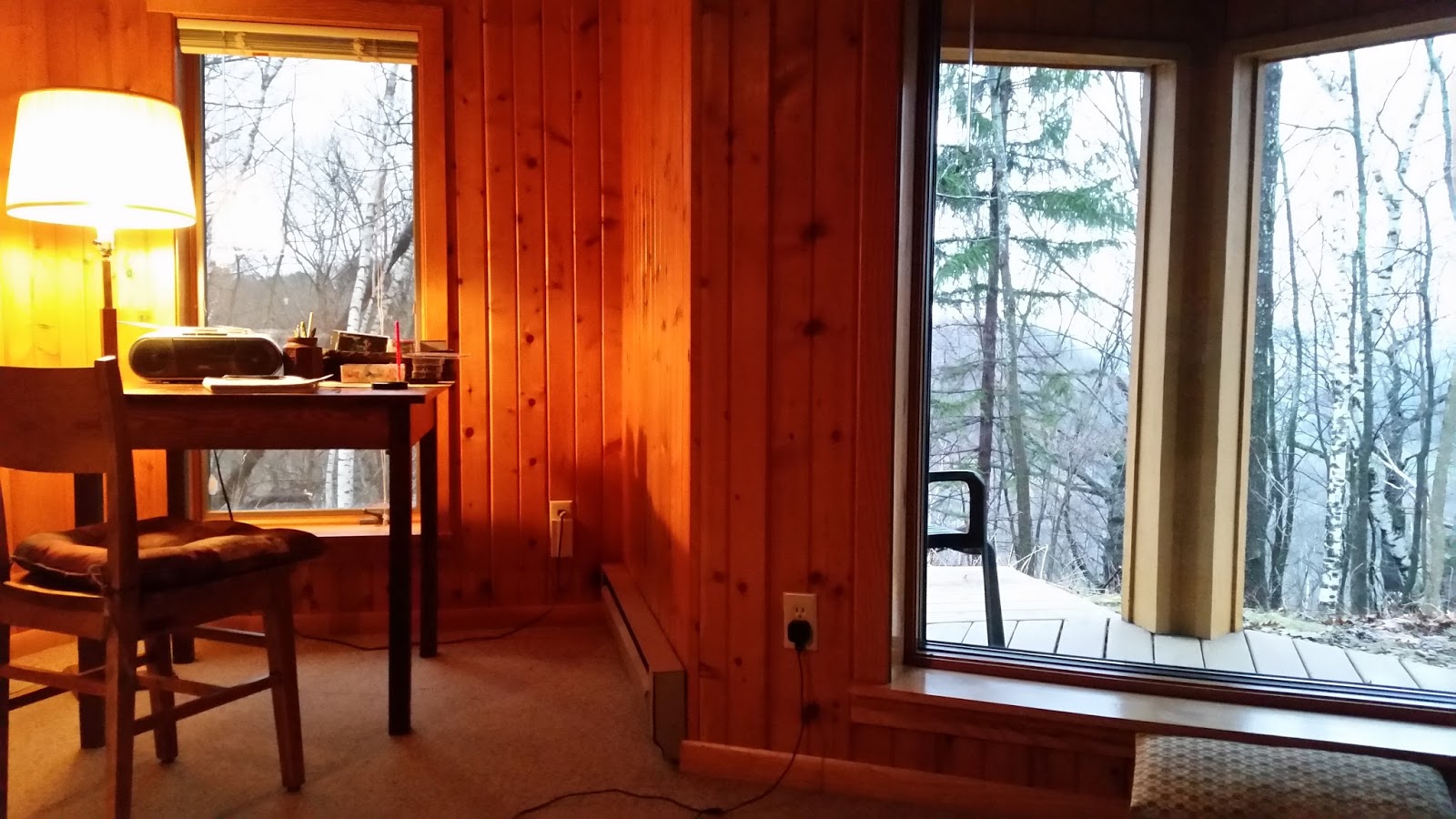
            The desert is a place of solitude where the greatest temptations occur: coming face to face with oneself.  If Jesus needed the desert experience, how much more do we?  How much more do we need to observe and practice Lent and submit to the 40-day experience of the desert?
            God desires to meet with us in the secluded backside of the desert.  He has some things to teach us.  He has a work of preparation to do in our lives.  The way in which we respond to the desert we are aggressively thrown into by the Spirit will set the course of our lives.
O Lord, you have demonstrated and shown love to your Son and to your people.  You have taught us that without love whatever we do is worth nothing.  Send your Holy Spirit to hurl us into the desert time of teaching so that love might be poured into our hearts.  Grant this humble request for the sake of the Son whom you love, who lives and reigns with you and the Holy Spirit, one God, forever and ever.  Amen.


Isaiah 59:1-15


            “Truth stumbles in the public square.”  That is the prophet Isaiah’s summary phrase of ancient Israel’s moral situation.  He wrote to a post-exile community that was still reeling from losing their land and finding their way among the rule of others.  They were not a free people – by a long shot.  And their deliverance from Gentile dominance was not coming anytime soon, for a reason.  They still had not really dealt with their own problems.  They wanted salvation without confession, and freedom without repentance.  But Isaiah reminded them that their separation from God was a result of their violence, deceitfulness, and corrupt system of justice.  The Jews were neither pursuing peace, nor the common good.  There would be no deliverance apart from facing those sins and renouncing them.
             Without a virtuous citizenry, truth stumbles in the public square.  That is, if national morality and personal ethics are absent, truth erodes and any system of laws and justice devolve into a morass of selfish agendas and lack of concern for all persons.  People might haggle and disagree on what is the best way forward for a given nation, but if they do not begin with the foundation of truth and virtue, then violence is the ultimate outcome because people want what they want and do not give a damn about anything else.  They will kill and covet, but they will not get what they want since their motives are unethical and immoral.
             This is why the spiritual tools of prayer and fasting, confession and repentance, faith and public moral action must be the underlying conscience of a nation.  Without virtue, truth may stumble but will always be present to speak to power.  Government is designed as an institution to promote the common good of all citizens.  If divine intervention is necessary, the proper course of action is acknowledgment of transgressions.  
             Sovereign God, you are the invisible ruler among the nations.  Our sins are many and they bear witness against us that sound judgment has left the room.  Christ, have mercy upon us, and grant us your peace through the blessed Holy Spirit.  Amen.

The Sacred Space of Prayer


“Three times a day he got down on his knees and prayed, giving thanks to his God” (Daniel 6:10).
 
            I really believe that the Old Testament character of Daniel is our best model in all the Bible of a person who exercised a planned, deliberate, and consistent prayer life no matter the situation.  There were two major characteristics of Daniel’s prayer life:  his planned approach to prayer; and, his consistent perseverance of prayer.
 
Our prayers need to be planned with deliberate practice.
 
            Daniel had an intentional plan for prayer.  Daniel did pray spontaneously in his life – all the time.  But that was not his bread-and-butter day-in-and-day-out life of prayer.  Daniel had set times in which he prayed three times a day.  I am not insisting that we all ought to pray at the set times of 6am, 12pm, and 6pm, as Daniel did every day of his life (although I think that is good biblical plan to emulate! – see Psalm 55:17).  However, there needs to be some planning and some intentional purpose behind creating and carving out time for prayer each and every day of our lives.  In other words, we need to approach prayer with the same deliberate discipline that we would approach anything else in our lives, like a person doing housework, a student writing his paper, an athlete preparing and practicing, or an employee getting her work accomplished.
 
            Prayer takes a lot of planning, energy and commitment.  On July 16, 1969 three astronauts (Neil Armstrong, Michael Collins, and Buzz Aldren) went into space aboard NASA’s Apollo 11.  The rocket they were in was carrying over 5 million pounds of fuel.  At the liftoff, it took 5 engines producing over 7 million pounds of thrust in order to reach the velocity of 17,500 miles per hour which was needed to break the earth’s gravitational pull and get them into orbit.  Here’s the deal:  Prayer is the way we escape the gravitational pull of our fleshly lives and enter into God’s orbit.  It takes planning; it takes energy; and, it takes commitment; it takes focus; it takes discipline; prayer takes a lot of fuel.
 
            Using the example of Daniel, we have two plans that need to be worked out in order to engage in and sustain a consistent prayer life:  We need a set time to pray; and, we need a set place to pray.  Just as we set aside a special room in our house just for sleeping (a bedroom); just as we set aside a particular place (a bed) just to sleep; so, we really need a sacred space just for prayer.  Just as we understand that a good night’s sleep will not come with a nap, but with a plan for going to bed and arising in the morning, so we need to arrange a time to get in a particular actual place of prayer and go about the effort and energy of wrestling with God.  If prayer is important, then we will demonstrate and plan for that value by setting aside a place and a time to do it. 
 
Our prayers need to persevere with consistent practice.
 
            Daniel was a teenager when the Babylonians came to Jerusalem, tore down the wall, and took the best young people of the city into captivity.  Daniel lived to be an old man well into his eighties.  For over sixty years, Daniel prayed three times a day, every day, without fail.  His prayers were consistent and sustained.  He never gave up.  The reason he always opened his window and prayed toward Jerusalem is that he was praying consistent with God’s promise that the exiles would someday return to Jerusalem.  He looked out that window every day, three times a day, praying over and over again for the return, for God’s help, and for the peace of his people.


            So you see, in light of this biblical teaching about prayer, why setting aside a special room in your church building and/or home for the expressed intention and practice of prayer is invaluable.  If you have never considered such a room, then I suggest you breach the idea with your pastor or church board.  Apart from God we can do nothing.  Therefore, prayer is not just a nice idea or optional equipment; it is vitally necessary.  So, it only makes sense to create a sacred space where prayer occurs with some planned consistency.

Ephesians 5:15-20

            “Act like people with good sense and not like fools.  These are evil times, so make every minute count.  Don’t be stupid.  Instead, find out what the Lord wants you to do.”  God’s Word is not just a nice collection of books; it is wisdom, and it is life.  A Christian who ignores Holy Scripture is like a race car driver who thinks he can enter a race with no pit crew or take any pit stops.  He won’t get very far.  In fact, it is downright foolish.
 
            We are exhorted to make every minute count, and to take the time to consider what God wants.  It is just plain common sense, as a Christian who follows Jesus, to take extended time for Bible reading, focused prayer, committed service in love, as well as taking regular Sabbath breaks in order to connect with God.  If this seems unrealistic, then the problem is that you are living with far too much stuff that is taking time, energy, and diversion away from finding out what the Lord wants you to do.
 
            We cannot use our time and resources wisely if we do not consistently interact with God.  Certainly, we are not all the same – one size does not fit all when it comes to how we read, pray, and live.  But we still must do it.  God gave us a book to read.  He is an invisible God who desires our prayers.  God has given us his Spirit in order for us to use our spiritual gifts for the benefit of others.  Pretending that any of these things is optional is, well, just stupid.  So today is the day, if you have not already done so, to make a plan for daily interaction with God. 
 
What have you done in the past that has worked for you?  Are you still doing it?  Can you do it again?  What changes must you make in your life to accommodate finding out what God wants you to do?  Are you currently being wise, or foolish?  What will you do?


            Wise God, I look to you for how to live, act, and speak.  I want to please you in every way by living according to the words and ways of Jesus through the power of your Holy Spirit.  Lead me in wisdom, truth, and grace.  Amen.