The Source of True Godliness (1 Timothy 3:14-16)

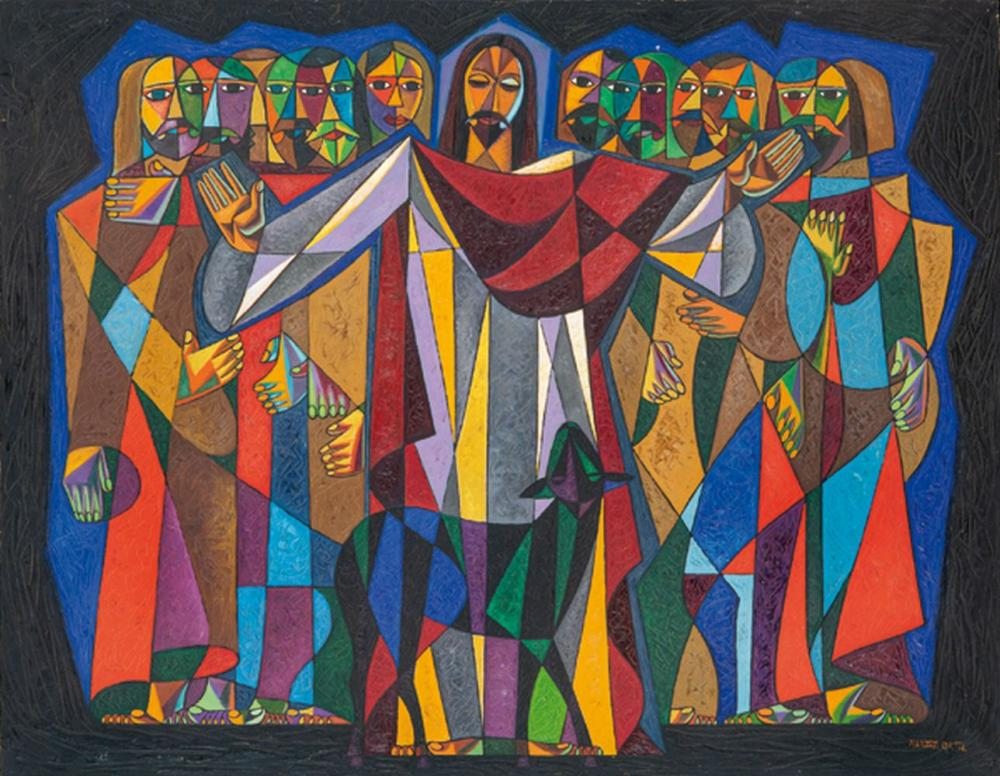
Jesus Christ and the Apostles, by Nicolás Martínez Ortiz (1907-1990)

Although I hope to come to you soon, I am writing you these instructions so that, if I am delayed, you will know how people ought to conduct themselves in God’s household, which is the church of the living God, the pillar and foundation of the truth. Beyond all question, the mystery from which true godliness springs is great:

He appeared in the flesh,
    was vindicated by the Spirit,
was seen by angels,
    was preached among the nations,
was believed on in the world,
    was taken up in glory. (New International Version)

Godliness is an important thing for those who seek to follow God.

So, the Apostle Paul wrote to his young protégé, Timothy, who was leading the church in Ephesus. Paul gave Timothy some sound practical instructions regarding how things ought to be conducted between pastor and people. Paul did this because he wasn’t quite sure how long it would be before he could show up in person, and he wanted to ensure that the ministry would go forward in a way that honored Christ.

Christian ministry is important because it doesn’t simply have to do with one’s private abilities and affairs. Rather, Christian leaders and pastors are entrusted with the household of God, the church. Believers are a holy sanctuary of the soul, the place where God dwells by means of the Spirit.

The Church is not a brick and mortar building, but the place of the living God, the pillar and foundation of the truth. Pastor and parishioners alike are to support the truth of the gospel, that is, the good news about the person and work of Jesus Christ.

Both believers and bishops who make up the Church support gospel truth by doing the following:

  1. Hear and heed the truth. “Whoever has ears to hear, let them hear… This is the meaning of the parable: The seed is the word of God. Those along the path are the ones who hear, and then the devil comes and takes away the word from their hearts, so that they may not believe and be saved. Those on the rocky ground are the ones who receive the word with joy when they hear it, but they have no root. They believe for a while, but in the time of testing they fall away. The seed that fell among thorns stands for those who hear, but as they go on their way they are choked by life’s worries, riches and pleasures, and they do not mature. But the seed on good soil stands for those with a noble and good heart, who hear the word, retain it, and by persevering produce a crop.” (Luke 8:8, 11-15, NIV)
  2. Handle the truth rightly. Make an effort to present yourself to God as a tried-and-true worker, who doesn’t need to be ashamed but is one who interprets the message of truth correctly. (2 Timothy 2:15, CEB)
  3. Hide the truth in your heart. I have hidden your word in my heart that I might not sin against you. (Psalm 119:11, NIV)
  4. Hold the truth as the Word of Life. Hold firmly to the word of life; then, on the day of Christ’s return, I will be proud that I did not run the race in vain and that my work was not useless. (Philippians 2:16, NLT)
  5. Ingest and digest the truth. Study, meditate, and devote yourself to God’s Word. Your words were found, and I ate them, and Your word was to me the joy and rejoicing of my heart. (Jeremiah 15:16, NKJV) You must not depend on bread alone to sustain you, but on everything that the Lord says. (Deuteronomy 8:3, GNT)
  6. Interest yourself in the truth, and defend it. “I have been put here for the defense of the gospel.” (Philippians 1:16, NRSV) I must write and ask you to defend the faith that God has once for all given to his people. (Jude 1:3, CEV)
  7. Impart the truth and disseminate it to others. The unfolding of your words gives light; it imparts understanding to the simple. (Psalm 119:130, NRSV) Teach these new disciples to obey all the commands I have given you. (Matthew 28:20, NLT)
  8. Indicate and demonstrate the power of the truth in the way you live your life. Let the message about Christ completely fill your lives, while you use all your wisdom to teach and instruct each other. With thankful hearts, sing psalms, hymns, and spiritual songs to God. Whatever you say or do should be done in the name of the Lord Jesus, as you give thanks to God the Father because of him. (Colossians 3:16-17, CEV)

The Church is a big deal because the head of the Church, Jesus Christ, is a big deal.

In many quarters of the world, the Church no longer has much influence or impact. For some, the Church is nothing more than an outdated antiquarian club that’s irrelevant to us today. For others, the Church is an abusive institution that looks to extend selfish power over others. And for many, the Church is simply not something they want to be a part of, having neither strong opinions one way nor the other.

Yet, the Apostle Paul, in his letters to all the churches, presents the Church as united to Christ and an extension of his person and work on this earth. Now, that’s a big deal!

Therefore, the Church is meant to confess Christ in its daily witness in all it says and does. In other words, the Church is to embody the words and ways of Jesus, and even Christ himself, by means of God’s Holy Spirit.

Everything about the Christian is to exude the very life of Christ.

How we can possess such a vital union and connection with Jesus is a mystery. Rather than trying to understand it, we embrace it and live it with all the energy the Spirit of God grants us.

We do, however, seek to know Jesus Christ ever more, every day. The more we know Christ, the better we will be able to know the height and depth of love, and to extend that love in all the places of this fallen planet that lack it. This is where true godliness and goodness spring from.

The Church everywhere and for all time confesses and proclaims that Jesus Christ descended to this earth, was visibly seen in a human body by both people and angels, proved right by the invisible Spirit, proclaimed among all kinds of peoples, believed in all over the world, and ascended into heavenly glory.

After two thousand years of church history, Christians are still unpacking the incredible richness and mystery of what all that means for us and for our salvation. And it is a spiritual journey worth taking for the rest of our lives.

May I walk this day, O Christ, in the realm of grace, walking with you, my feet firmly on your earth-path, my heart loving all as kindred, my words and deeds alive with justice. Amen.

The Divine Teacher and Leader (Isaiah 48:17-21)

Thus says the Lord,
    your Redeemer, the Holy One of Israel:
I am the Lord your God,
    who teaches you how to succeed,
    who leads you in the way you should go.
O that you had paid attention to my commandments!
    Then your prosperity would have been like a river
    and your success like the waves of the sea;
your offspring would have been like the sand
    and your descendants like its grains;
their name would never be cut off
    or destroyed from before me.

Go out from Babylon; flee from Chaldea;
    declare this with a shout of joy; proclaim it;
send it forth to the end of the earth;
    say, “The Lord has redeemed his servant Jacob!”
They did not thirst when he led them through the deserts;
    he made water flow for them from the rock;
    he split open the rock, and the water gushed out. (New Revised Standard Version)

A presupposition is something that is assumed in advance or taken for granted. In my own life, I live with the following basic presupposition: Christianity works. It stands behind my faith and confidence, informing everything I do.

I believe in a good God, who genuinely wants people to succeed in life, and will do whatever it takes to help us, doing what is best for us, for our own good.

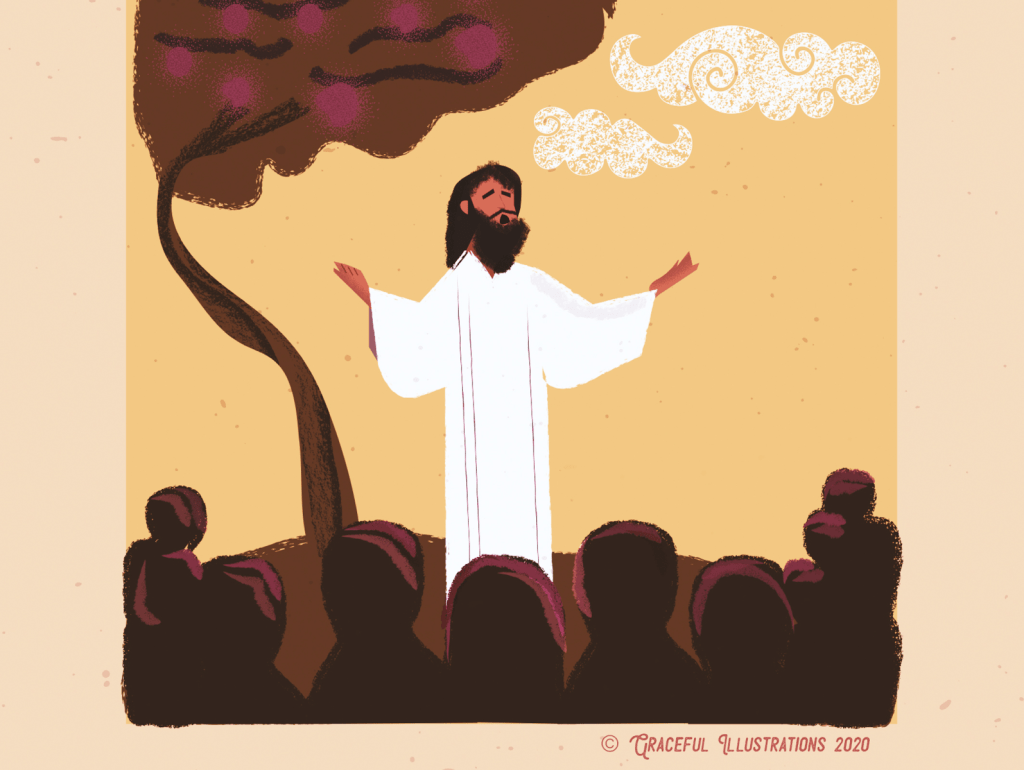
God is our divine teacher and leader. The Lord is the One who gave Israel the Ten Words (commandments) and the Law to live by. Yahweh is the One who mercifully delivered the ancient Israelites out of Egyptian slavery, protected them in the desert, and led them into the Promised Land.

Furthermore, for the Christian, God the Father is the One who sent God the Son, Jesus, to be with us and amongst us as Teacher and Lord, leading us and saving us. God the Father and God the Son together sent God the Holy Spirit to be with us always – continually teaching us all things, reminding us of Christ’s teaching, and providing needed leadership for our earthly spiritual journey.

Every provision has been given for us to live into a successful life. Yet, in the case of both the Jews who originally heard Isaiah’s prophecy, as well as for many of us as contemporary believers, we have paid scant attention to the divine commandments – nor have we submitted to the divine leadership.

God is teaching and God is leading. We, however, are having difficulty in heeding the instruction and the guidance.

“Hear, O my people, and I will speak,
    O Israel, I will testify against you.
    I am God, your God…

You give your mouth free rein for evil,
    and your tongue frames deceit.
You sit and speak against your kin;
    you slander your own mother’s child.” (Psalm 50:7, 19-20, NRSV)

And God has furthermore stated:

“Hear, O my people, while I admonish you;
    O Israel, if you would but listen to me!…

But my people did not listen to my voice;
    Israel would not submit to me…

O that my people would listen to me,
    that Israel would walk in my ways!” (Psalm 81:8, 11, 13, NRSV)

God desires the best for us and our welfare. The Lord wants us to experience happiness, prosperity, abundance, and blessing. Christianity works. Attention to the spiritual life brings success. Yet we keep working against ourselves through our ignorance of divine teaching and leading.

We could move freely and powerfully like a river – yet we continue to dam up the flow.

We could grow and gain strength like the waves of the ocean – yet we refuse to go out and set sail.

We could reproduce ourselves by making more disciples than the sand on the seashore – yet we are impotent.

We could endure by remembering the name of the Lord – yet there is no future without listening.

What must we do? Go out!

Just as the ancient Israelites went out of Egypt and left their bondage behind, so we are to go out and experience the redemption we have in Jesus Christ.

God is leading us to freedom. The Lord is teaching us how to live in this world as free people. But we must take the step of going out, of leaving, of walking the way of the pilgrim and sojourning into the successful life.

God has our backs. Just as the Israelites were taken care of in the desert with the sustenance of manna and with even water gushing out of a rock, so the Lord will care for you and me out in this scary world of ours.

God does what God does, not based upon what humanity does or doesn’t do, but because of God’s own decision and will. Since the Lord is always good, right, just, and loving, God acts in ways consistent with the divine nature.

Another way of putting the matter is that the spiritual life works, and Christianity works, because it is grounded in nature of God. When we reflect the image of God within us by using our words and our deeds toward mercy, grace, justice, and love, then we are synced with how the universe operates. And success in life is realized.

Even more than that, we are connected with the Creator – which makes all the difference as we try to continually navigate through this earthly life in ways that are right and redemptive.

O God, you made us in your own image and redeemed us through Jesus your Son: Look with compassion on the whole human family; take away the arrogance and hatred which infect our hearts; break down the walls that separate us; unite us in bonds of love; and work through our struggle and confusion to accomplish your purposes on earth; that, in your good time, all nations and races may serve you in harmony around your heavenly throne; through Jesus Christ our Lord. Amen.

Restoring True Religion (Micah 1:1-5)

The word of the Lord that came to Micah of Moresheth during the reigns of Jotham, Ahaz and Hezekiah, kings of Judah—the vision he saw concerning Samaria and Jerusalem.

Hear, you peoples, all of you,
    listen, earth and all who live in it,
that the Sovereign Lord may bear witness against you,
    the Lord from his holy temple.

Look! The Lord is coming from his dwelling place;
    he comes down and treads on the heights of the earth.
The mountains melt beneath him
    and the valleys split apart,
like wax before the fire,
    like water rushing down a slope.
All this is because of Jacob’s transgression,
    because of the sins of the people of Israel.
What is Jacob’s transgression?
    Is it not Samaria?
What is Judah’s high place?
    Is it not Jerusalem? (New International Version)

What is true religion?

Divine union with God is the whole point of religion.

In saying that, you may have reacted reflexively or viscerally. That’s because it’s likely that your experience of religion has been anything but a mystical and wondrous connection with the Lord. The religious trappings, that you perhaps grew up with, were anything but helpful in knowing God.

That is both unfortunate and sad. In the absence of genuine unity with God, moralism diabolically worms its way into religion to replace spiritual practices of helpful connection, with legalistic rules of unhelpful separation.

Religion gets a bad rap. That’s likely because how we may typically think about it is really no religion, at all. True religion has a singular aim: how to connect us with the divine, that is, how to make one out of two. If we have to keep overcoming man-made obstacles in order to connect with God, this is irreligious, not religious.

How ought we to understand sin?

As a little test to this, as you read today’s Old Testament lesson from the prophet Micah, did you assume that the sins of Israel had to do with disobeying the rules, of breaking the law, of immoral worship? Or did you wonder if the sins of the people had to do with all the ways they created distance and separation between themselves and God?

The word of the Lord to the prophet Micah was not speech directed against the usual supposed devils of secularism or scientism. Instead, God was deeply concerned about the things that widened the gap between God and the people.

A divine/human union, a loving relationship between the Lord and people, an intimate knowing of one another, has always been at the heart of God’s understanding of religion. Anything less is demonic. God desires a mutual knowing and seeing, and not setting up altars which block the connection.

“The eye through which I see God is the same eye through which God sees me; my eye and God’s eye are one eye, one seeing, one knowing, one love.”

Meister Eckhart

Have we become separated?

Israel had lost their connection with God, and so, were no longer participating with the Lord in the divine/human cooperative of love. And God was not letting this happen without a clarion call to come back to the relationship.

The language of coming down from heaven and melting things is a reference to eliminating all the obstacles that stand in the way to true religion. The Lord will cataclysmically level everything in order to smooth the way between God and God’s people.

The capital cities, Samaria of Israel and Jerusalem in Judah, were the offenders in creating the blockage. Their high places of worship will be leveled to pave the road for unhindered fellowship; and a renewed and restored religion, based upon social justice for all, economic equity, and inclusive practices.

The severed connection with God became the fodder for all sorts of unjust thoughts and actions.

Woe to those who plan iniquity,
    to those who plot evil on their beds!
At morning’s light they carry it out
    because it is in their power to do it.
They covet fields and seize them,
    and houses, and take them.
They defraud people of their homes,
    they rob them of their inheritance.

Shall I acquit someone with dishonest scales,
    with a bag of false weights?
Your rich people are violent;
    your inhabitants are liars
    and their tongues speak deceitfully. (Micah 2:1-2; 6:11-12, NIV)

Idolatry, in the guise of alternative forms of worship, is sinful in the sense that it’s humanity’s attempt at having their ultimate needs met outside of the religion given to them. Religion must be a conduit for enabling us to spiritually connect with the Lord. Establishing practices which marginalize God put people at risk of becoming feral worshipers who run about doing everything but discovering their true selves and the one true God.

It is time for us to recognize and celebrate that we are connected to each other by a power greater than all of us, and that our connection to God and each other is grounded in love and compassion.

How do I make a spiritual connection?

There are three dimensions to the spirit: the head (thoughts), the heart (emotions), and the gut (actions).  Each dimension is meant to work together in alignment so that we can move forward toward healing, health, wholeness, integrity, peace, and relationship.

  • The Head deals with questions such as, “Who am I? What is the meaning of life? Who is God?”
  • The Heart considers our emotional selves by asking,“What am I feeling? What is my view of God? How do I give and receive love?”
  • The Gut taps into the embedded image of God within us by contemplating, “What is the good life? To whom will I show compassion? Will I listen to myself and others?”

My friends, we have 15 prophetic books in the Bible because this problem of messed up religion has become an awful impediment to genuine spirituality. It was not only a problem all those millennia ago; it’s still an issue today.

So, let’s take a serious reading of the prophet Micah, and his prophetic biblical companions; and let us restore and renew true religion among ourselves, so that humanity can become the just and good people we were always destined to be by our Creator.

Almighty God our heavenly Father, guide the nations of the world into the way of justice and truth, and establish among them peace, which is the fruit of righteousness, so that they may become the kingdom of our Lord and Savior Jesus Christ. Amen.

A Changed Life (Galatians 1:11-24)

A mosaic of the Apostle Paul in St Isaac’s Cathedral, St. Petersburg, Russia

I want you to know, brothers and sisters, that the gospel I preached is not of human origin. I did not receive it from any man, nor was I taught it; rather, I received it by revelation from Jesus Christ.

For you have heard of my previous way of life in Judaism, how intensely I persecuted the church of God and tried to destroy it. I was advancing in Judaism beyond many of my own age among my people and was extremely zealous for the traditions of my fathers. But when God, who set me apart from my mother’s womb and called me by his grace, was pleased to reveal his Son in me so that I might preach him among the Gentiles, my immediate response was not to consult any human being. I did not go up to Jerusalem to see those who were apostles before I was, but I went into Arabia. Later I returned to Damascus.

Then after three years, I went up to Jerusalem to get acquainted with Cephas and stayed with him fifteen days. I saw none of the other apostles—only James, the Lord’s brother. I assure you before God that what I am writing you is no lie.

Then I went to Syria and Cilicia. I was personally unknown to the churches of Judea that are in Christ. They only heard the report: “The man who formerly persecuted us is now preaching the faith he once tried to destroy.” And they praised God because of me. (New International Version)

I didn’t ask God for this

Saul wasn’t looking to change anything – except maybe to keep those confounded Christians, the group known as “The Way,” out of his beloved religion. He didn’t wake up one morning, sit on the edge of his bed and say, “Well, now, gee-whillikers, I think I’ll become the Apostle Paul, follow Jesus, and rankle a bunch of my fellow Jews with establishing churches all over the place.”

The only well-thought out plan Saul had was to ensure that Christians stayed away by any means possible. He had quite the turn around by actually joining the Christian movement. (Acts 9:1-19)

From the very get-go of his conversion, the new Paul faced skepticism, doubts, and opposition from both church and synagogue. Christians knew how Saul breathed all kinds of threats against them; so, understandably, they were reticent to receive him, perhaps wondering if it were some sort of ruse to topple the church. If it were not for the insight and encouragement of Barnabas, Paul may not have ever entered the ranks of the church. (Acts 9:26-27)

Paul’s fellow devout Jews were so upset with him for becoming a turncoat that they sought to kill him – which became a theme of Paul’s life – getting rocks thrown at him, whipped, beaten, and left for dead more than once. (Acts 9:23-24; 2 Corinthians 11:24-29)

Although Paul never asked for a dramatic conversion to Christianity, a missionary life, and continual suffering at the hands of others, he nevertheless embraced it with all the gusto of faith God gave him.

So, the gospel that the Apostle Paul proclaimed wasn’t something he sought; it was given to him. God graciously revealed the good news to Paul. For three years, he received it. Considering Paul’s background and former life, we can see why it might not be a good idea for him to hang out in Jerusalem and learn about Jesus.

Arabia is a desert. That is precisely where Paul needed to be in his early life as a Christian. Eventually, the churches and believers came around to seeing the authenticity of Paul’s faith and embraced him as a disciple. Paul is considered an Apostle because he had direct contact with Jesus himself in the Arabian desert.

God called me through the grace of Jesus

That phrase is Paul’s spiritual autobiography in a nutshell. It represents his dramatic transformation — from persecutor to preacher — and gives evidence of the hand of God at work in his life.

The fundamental conviction of being called by God, anchors Paul’s faith story. He tells that story in order to remind the Galatian Church of their own experience of being called by God’s grace.

Paul wrote his letter to the Church to help keep them on the track of grace; they were saved by grace, so therefore, they needed to also be sanctified by grace (and not law). He feared they were being led astray by believers who twisted the gospel for their own ends in order to avoid suffering. (Galatians 6:12)

The question Paul tackled head on was: Do the Gentiles have to become Jewish in order to be Christians? “Absolutely not!” Paul insisted. Neither circumcision nor uncircumcision counts for anything; the only thing that counts is faith working through love. (Galatians 5:6)

I connected with God, and you can, too

Paul was arguably the most influential Christian who ever lived. He shared his faith story in order to encourage the Galatians to examine their own experiences for signs of God’s call.

How has God called you?

It matters little whether it’s a dramatic call, like Paul’s, or whether it seems mundane, as if you don’t remember a time that you didn’t believe. And everything in between.

The important point is that we all need moments, events, and experiences of life transformation; and God’s grace must be the defining center of our personal and collective narratives.

Grace makes all the difference and is what leads to a changed life.

Once you were separated from God. The evil things you did showed your hostile attitude. But now Christ has brought you back to God by dying in his physical body. He did this so that you could come into God’s presence without sin, fault, or blame. (Colossians 1:21-22, GW)

Almighty God, transform us – not for our benefit, but for the benefit of the world. Do your work in changing us to be the new creation you have called us to be in Jesus Christ.  

Holy Spirit of God, do your sanctifying work in the church and help us to be the Body of Christ – engaged in mission, testifying to our faith, and bearing witness to the presence of our Savior, Jesus Christ. 

Lord Jesus, enable us to surrender the church back to you. It is yours, not ours. Help us lay aside our personal agendas and preferences so we can be fully committed to your calling for us. 

Blessed Holy Trinity – Father, Son, and Spirit – the God whom we serve: Do your work in our world and give to us a vision of transformed lives, renewed neighborhoods, and restored communities – bringing blessings and redemption for the glory of God. Amen.