Comfort For Those with Troubles (2 Corinthians 1:1-11)

St. Paul, by Rembrandt Harmenszoon van Rijn, 1657

Paul, an apostle of Christ Jesus by the will of God, and Timothy our brother,

To the church of God in Corinth, together with all his holy people throughout Achaia:

Grace and peace to you from God our Father and the Lord Jesus Christ.

Praise be to the God and Father of our Lord Jesus Christ, the Father of compassion and the God of all comfort, who comforts us in all our troubles, so that we can comfort those in any trouble with the comfort we ourselves receive from God. 

For just as we share abundantly in the sufferings of Christ, so also our comfort abounds through Christ. If we are distressed, it is for your comfort and salvation; if we are comforted, it is for your comfort, which produces in you patient endurance of the same sufferings we suffer. And our hope for you is firm because we know that just as you share in our sufferings, so also you share in our comfort.

We do not want you to be uninformed, brothers and sisters, about the troubles we experienced in the province of Asia. We were under great pressure, far beyond our ability to endure, so that we despaired of life itself. Indeed, we felt we had received the sentence of death.

But this happened that we might not rely on ourselves but on God, who raises the dead. He has delivered us from such a deadly peril, and he will deliver us again. On him we have set our hope that he will continue to deliver us, as you help us by your prayers. Then many will give thanks on our behalf for the gracious favor granted us in answer to the prayers of many. (New International Version)

You probably didn’t sign-up for trouble.

Although varying from person to person and from group to group, all of us experience trouble in this world.

The Apostle Paul experienced a lot of trouble throughout his Christian life:

Five times I received from the Jews the forty lashes minus one. 

Three times I was beaten with rods, once I was pelted with stones, three times I was shipwrecked, I spent a night and a day in the open sea, I have been constantly on the move.

I have been in danger from rivers, in danger from bandits, in danger from my fellow Jews, in danger from Gentiles; in danger in the city, in danger in the country, in danger at sea; and in danger from false believers. 

I have labored and toiled and have often gone without sleep; I have known hunger and thirst and have often gone without food; I have been cold and naked. Besides everything else, I face daily the pressure of my concern for all the churches. (2 Corinthians 11:24-28, NIV)

Why didn’t Paul get cynical or jaded by his awful troubles?

What was the secret to Paul’s incredible resilience in the face of such trouble?

How did Paul get through all of that nasty trouble?

Paul, in my opinion, was the consummate Christian. He is the model missionary, mentor, pastor, and caregiver. Yet, it wasn’t his superior giftedness or dogged personality which got him through the tough times.

The Apostle persevered through trouble without succumbing to despondency by receiving help.

Let’s be honest: Most people would rather give than receive – and that is a good thing. Yet, what isn’t a good thing is continual caregiving without yourself receiving care.

We cannot expect to help others without accepting it ourselves. 

The caregiving Christian needs to be vigilant about practicing selfcare and understanding their limitations. One must not pretend to be super-spiritual, with unlimited super-strength and super-compassion, extended to others 24/7 with super-skill. It’s neither realistic, nor smart. 

Caregivers, and not only care recipients, need to accept comfort from both God and others.

“We must accept our vulnerability and limitations in regard to others.  We cannot expect to help others without accepting it ourselves.”

Mother Teresa

The word dominating today’s New Testament lesson is “comfort.” It’s used by Paul ten times in these verses. Comfort involves both speech and action, words and deeds. For comfort to happen, someone comes alongside another and helps them with both loving actions and encouraging words.

We can only give what we have – which means that if we want to continue helping and caring for others, there will need to be continual healthy rhythms of receiving comfort yourself. We provide for others from the largess of grace given to us by the God of abundance.

Sometimes people get stuck in their grief. The troubles have caused such a change and loss that they need help getting out. And the way people get unstuck and resolve their troubles, is through telling their story – which requires someone else to listen. 

St. Paul, by Rembrandt, 1630

Through my own experience of trouble, as well as helping others through their trouble (and sometimes being a troublemaker!) I have developed a checklist of things to do, to allow, and to keep in mind as a caregiver:

  • Live a balanced life. Live in the tension between caring for others and caring for self – without assigning any judgment, shame, or guilt to any of it.
  • Learn to trust other people. You aren’t the only person on earth who can care for the people you care for. Let them contribute so that you can take have a respite.
  • Make a list of needs and concerns. Do this both for yourself and those you care for. Delete those needs that you personally cannot meet. Of the remaining needs, determine the ones for which you are primarily responsible, then, decide which ones are the most important.
  • Contact your Pastor. That’s what he/she is there for. Reach out. You aren’t in a John Wayne movie or an episode of the Lone Ranger. By the way, you know they’re fictional characters, right?
  • Carry your own backpack. Other people have their own backpacks to carry filled with troubles and responsibilities. Although you can help shoulder their load, taking the weight completely off is Christ’s job, not yours. What’s more, don’t fill your own backpack with rocks that leave you with a crushing weight. Be realistic and confident in what you can and ought to do, as well as what you cannot and should not do.
  • Listen to others. Trusted family members and friends usually see the signs of stress in your life before you do. When they speak up, give them your attention. They know what they’re talking about.
  • Accept help. The fast track to bitterness and burnout is refusing the assistance of others who can give you a break in your constant caregiving.
  • Involve others. There are individuals willing and ready to participate if you would just inform them as to what would be helpful.
  • Talk to a therapist. We all get overwhelmed in particular seasons of life. If caregiving has become a compulsion, then take one hour per week to meet with a good therapist or counselor to talk through things in your life.
  • Delegate. Delegate. Delegate. Then, delegate some more.
  • Recharge your soul. Find personal time for yourself daily. Engage in things that feed your spirit and energize your inner person.
  • Don’t waste your time and energy. Some people aren’t going to understand what you’re doing and why you’re doing it; and they don’t really want to understand. And it is not our job to make them understand.
  • Don’t manipulate others. A common temptation is to try and force family, friends, and faith communities to do what we want them to do, whenever we are heavy into ministry. Instead, focus on your own responsibilities and don’t worry about everybody else’s.

God always has a listening ear. The Lord knows grief better than all of us. Jesus understands trouble. In Christ, hope is kindled, care is received, and comfort abounds.

May you, by faith, enter into abundant life – despite the circumstances – so that your overwhelming trouble is transformed into overflowing comfort. Amen.

Heartfelt Prayer (Lamentations 5:1-22)

Orthodox icon of Jeremiah praying

O Lord, reflect on what has happened to us;
consider and look at our disgrace.

Our inheritance is turned over to strangers;
foreigners now occupy our homes.

We have become fatherless orphans;
our mothers have become widows.

We must pay money for our own water;
we must buy our own wood at a steep price.

We are pursued—they are breathing down our necks;
we are weary and have no rest.

We have submitted to Egypt and Assyria
in order to buy food to eat.

Our forefathers sinned and are dead,
but we suffer their punishment.

Slaves rule over us;
there is no one to rescue us from their power.

At the risk of our lives, we get our food
because robbers lurk in the wilderness.

Our skin is as hot as an oven
due to a fever from hunger.

They raped women in Zion,
virgins in the towns of Judah.

Princes were hung by their hands;
elders were mistreated.

The young men perform menial labor;
boys stagger from their labor.

The elders are gone from the city gate;
the young men have stopped playing their music.

Our hearts no longer have any joy;
our dancing is turned to mourning.

The crown has fallen from our head;
woe to us, for we have sinned!

Because of this, our hearts are sick;
because of these things, we can hardly see through our tears.

For wild animals are prowling over Mount Zion,
which lies desolate.

But you, O Lord, reign forever;
your throne endures from generation to generation.

Why do you keep on forgetting us?
Why do you forsake us so long?

Bring us back to yourself, O Lord, so that we may return to you;
renew our life as in days before,
unless you have utterly rejected us
and are angry with us beyond measure. (New English Translation)

“’Knock and it shall be opened.’ But does knocking mean hammering and kicking the door like a maniac?”

C.S. Lewis, A Grief Observed

Prayer is not about getting the right words strung together in a correct formula in a perfect disposition of the heart. Rather, prayer is conversation and a dialogue with God. 

Sometimes prayer looks a lot more like a triage unit in a hospital than it does a steeple on a church. Prayer often looks like desperation more than it does praise. 

God is a Being that we can tell the truth about what is really going on in our lives. Prayer isn’t prayer when we just tell God what we think God wants to hear.

“Prayer is not asking. It is a longing of the soul. It is daily admission of one’s weakness. It is better in prayer to have a heart without words than words without a heart.”

Mahatma Gandhi

The biblical book of Lamentations is the prophet Jeremiah’s extended prayer of grief, lament, complaint, and raw feeling. His hometown of Jerusalem was decimated by the invading Babylonian army. Thousands of people were taken out of the city and into exile. The ones left, including Jeremiah, were beside themselves with anger, grief, sadness, and fear.

We hear his cry to God, not worrying about whether it is appropriate language or not. Jeremiah’s words and phrases to God were heartfelt and real:

“We’re worn out and without any rest.”

“All the joy is gone from our hearts.” 

“We are heartsick.”

“We can hardly see through our tears.”

“Why do you keep forgetting us, God?”
“Lord, why dump us and leave us like this?

“Give us a fresh start, for God’s sake!”

Jeremiah was not concerned about how he looked or sounded, and not afraid to express his real thoughts and feelings.

Every thought and feeling is a valid entry into prayer. It is of utmost importance that we pray what is actually inside of us and not what we believe God would like to hear from us. 

The Lord doesn’t like pretense and posturing; God wants the real us. 

Plastic words and phony speeches are an affront to God. We must pray precisely what is on our minds and in our hearts – unfiltered, if need be. No matter the headache or the heartache, we only need to pray, without any concern for doing it perfectly.

“Suffering forces us to change.
We don’t like change and most of the time we fear it and fight it.
We like to remain in emotionally familiar places
even through sometimes those places are not healthy for us.
On occasion, the suffering is so great that we have to give up.
We surrender the old and begin anew.
Often it is the pain we experience that leads us, not only to a different life,
but a richer and more rewarding one.” Dennis Wholey

Gracious God, sometimes I feel like I have to have it all together to even speak to you. Yet you already know my heart better than I know it myself. Forgive my constant hiding from you and accept my heartfelt prayer to you for grace and help, through Jesus Christ my Savior and Lord. Amen.

Welcome Humility (Luke 9:43b-48)

While everyone was amazed at all that he was doing, he said to his disciples,“Let these words sink into your ears: The Son of Man is going to be betrayed into human hands.” But they did not understand this saying; its meaning remained concealed from them, so that they could not perceive it. And they were afraid to ask him about this saying.

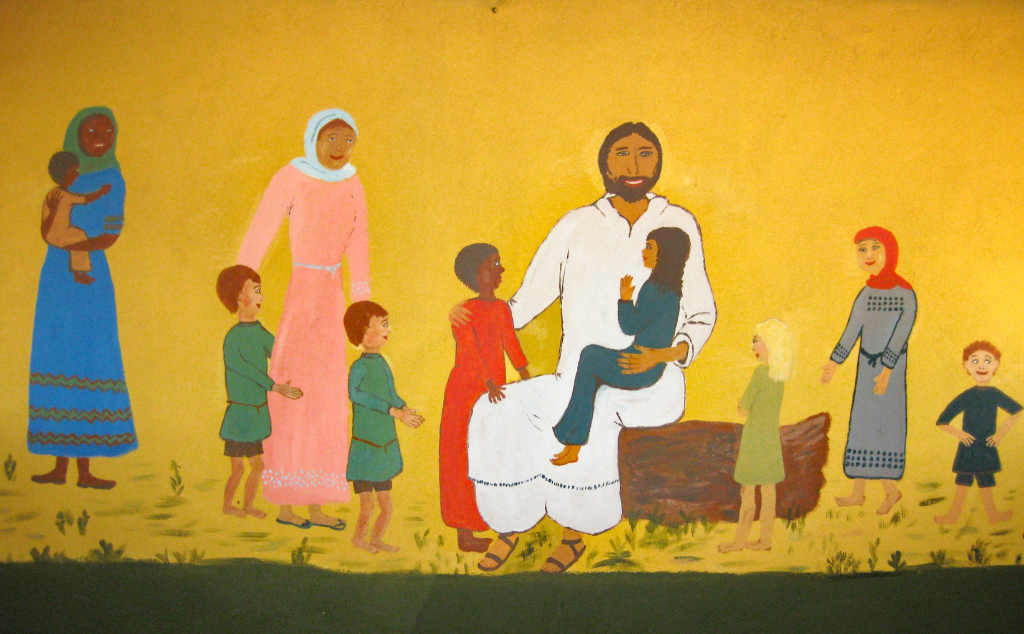
An argument arose among them concerning which one of them was the greatest. But Jesus, aware of their inner thoughts, took a little child and put it by his side and said to them, “Whoever welcomes this child in my name welcomes me, and whoever welcomes me welcomes the one who sent me, for the least among all of you is the greatest.” (New Revised Standard Version)

Pride and Humility

Whenever we are not focused on what is most important, we then tend to focus on trivial matters which help no one. Another way of putting this: Getting stuck in pride makes us concerned for our position, whereas being humble creates opportunities to serve our fellow humanity.

“It was pride that changed angels into devils; it is humility that makes people as angels.”

St. Augustine

The ultimate humility was the cross of Christ. Jesus submitted himself to death, even death on a cross. He emptied himself, taking the posture of a servant. (Philippians 2:7-8) Jesus Christ did not come to be served but to serve; and to give his life as a ransom for many. (Mark 10:45)

God’s benevolent, gracious, and ethical realm is accessed and rests upon humility.

Wherever there are humble hearts, there is change, transformation, and new life. Where there is the presence of pride, there you will find posturing, positioning, and peacocking – nothing changes.

Humility enables a person to see beyond the end of their nose. A humble posture allows an individual to observe the wounds and pains of those with little power and low societal status. A preoccupation with being great and believing we are indispensable is to amble down a blind path.

Children and Humility

In the ancient world, children were on the lowest rung of society’s ladder. They were mostly looked upon as potential adults – little people who would someday contribute to the welfare of the family business and the community.

Until they became adults, kids were expected to begin learning their future trade with full submission and obedience. They had no power or leverage over others.

So, when Jesus told his disciples to take the lowly position of a child, he was not talking about innocence or cuteness. Christ meant for his followers to divest themselves of prideful positioning for greatness and to instead embrace the helplessness and vulnerability of children.

For Jesus, a child was closer to God’s rule and reign because they existed in truly humble circumstances; whereas an adult had too much concern with looking good and seeking every advantage possible.

The Upside-Down of Humility

Life is more upside-down than we sometimes realize. Adults have more to learn from kids than kids do from adults. To listen to a child is about as near to hearing the voice of God as you will get.

Let us consider how pride and humility work out in our daily lives. For example, when down and hurting, maybe you have had the experience of another person trying to one-up your pain, as if what they experienced was worse than you. In their pride, they ignore that pain is personal, as if it’s a one-size-fits-all. 

Invalidating a person’s state of being or feelings does no one any good.  It happens because of pride and a lack of humility.

“All streams flow to the ocean because it is lower than they are. Humility gives it its power.”

Lao Tzu

Imagine going to see a doctor who turns out to be arrogant in his approach. He fails to really listen to you. He just gives a quick exam and offers his diagnosis with a regimen of more pills to take. You are left sitting there while he is off to another patient, colonizing another person’s mind and emotions with his expertise.

I am not giving doctors a hard knock. I work in a hospital and have great respect for medical professionals who provide wise care plans. Yet, it is likely that you, like me, have had that occasional experience of the doctor full of themselves with all the right answers on your pain and situation.

You may have also had the unfortunate experience of having a pastor, therapist, or counselor assess your situation with little information and even smaller compassion.  Like writing a script for pills, they give you a few Bible verses and tell you to quit sinning and live obediently.

The Good Life and Humility

If pride and arrogance are the original sin, then the remedy to that malady is humility.

No matter who we are – whether doctors, pastors, laypersons, patients, or whomever – we are meant and designed by our Creator God to live a humble life. That means we are to both give and receive humility-based care.

Humility is the cornerstone to every good thing in this life.  Jesus said:

“Blessed are the poor in spirit, for theirs is the kingdom of heaven.” (Matthew 5:3, NIV)

The door of God’s kingdom swings-open on the hinges of humility.

The Apostle Paul, seeking to follow the Lord Jesus in his teaching and humility said:

“Since God chose you to be the holy people he loves, you must clothe yourselves with tenderhearted mercy, kindness, humility, gentleness, and patience.” (Colossians 3:12, NLT)

Basic human interactions with one another are to be grounded in humility. The old prophet made his expectations clear:

“He has told you, O mortal, what is good; and what does the Lord require of you but to do justice, and to love kindness, and to walk humbly with your God?” (Micah 6:8, NRSV)

Life is truly life when it is humility-based.

Care and Humility

Caring for another person is not a simple linear matter of offering opinions or expertise; it is believing that the one needing care is the expert on herself. The caregiver has as much to learn from the care-seeker.

The beauty of humility-based care is that two people discover together how to grow, thrive, and flourish in a situation where it is not currently happening.

Breakthroughs occur in the soil of humility when the care-seeker comes out of the darkness and into the light through mutual discovery and insight.

We live with the confidence of the Psalmist:

“God leads humble people to do what is right and teaches them the way.” (Psalm 25:9, GW)

In the end, God saves and heals, not you or me. That God chooses to use us to bring care to others ought to elicit the utmost of humility within us.

Welcome humility into your life and you will find a truly abundant life.

Lord God, let me have too deep a sense of humor to be proud.

Let me know my absurdity before I act absurdly.

Let me realize that when I am humble, I am most human, most truthful, and most worthy of your serious consideration.

Amen.

1 Peter 4:7-11 – Be Hospitable

One of the Family, Frederick George Cotman, 1880

The end of all things is near; therefore, be serious and discipline yourselves for the sake of your prayers. Above all, maintain constant love for one another, for love covers a multitude of sins. Be hospitable to one another without complaining. 

Like good stewards of the manifold grace of God, serve one another with whatever gift each of you has received. Whoever speaks must do so as one speaking the very words of God; whoever serves must do so with the strength that God supplies, so that God may be glorified in all things through Jesus Christ. To him belong the glory and the power forever and ever. Amen. (New Revised Standard Version)

One of the most practical and biblical ways of demonstrating love is through hospitality.

Hospitality, at its heart, is an invitation to come into my home and into my life. It is a ministry of acceptance, encouragement, restoration, and healing. 

The loving work of hospitality “covers a multitude of sins” through the power of influence. When we have face-to-face conversations around the table, it prevents us from engaging in sins that would otherwise be committed if left to ourselves.

Because the end of all things is near, we need our wits about us through a determined focus on prayer, love, and hospitality.

The word “hospitality” literally means, “love of the stranger.” I invite someone whom I do not know very well into my home and befriend them. This is what Jesus did for us. Although we were all estranged from God and on the outside, Jesus came to eat with us.

“Listen! I stand at the door and knock; if any hear my voice and open the door, I will come into their house and eat with them, and they will eat with me.” (Revelation 3:20, GNT)

Jesus invites us into the life of God; and so, we are to invite others into our lives. Jesus has so closely identified with his people that when we practice hospitality, we are inviting Jesus in. In fact, we may not realize that some people we host are angels: 

Do not forget to show hospitality to strangers, for by so doing some people have shown hospitality to angels without knowing it. (Hebrews 13:2, NIV)

Inviting another person into my home and my heart takes time and effort. Doing it without grumbling is a necessity.

In an ideal world, we always receive something back for our work of hospitality – an invitation from the other person, or, at least, a simple thank you. That does not always happen; it must not be the driving reason why we are generous.

Hospitality is a work of love which originates from a heart that has been touched by the hospitality of God. Our earthly hospitality is a form of saying “thank you” to God for the grace given to us.

Complaints break into the house like unwanted burglars when we expect to receive, and do not. If you receive another person as though they were Christ himself, grumbling will likely be far from you. Instead, there will be rejoicing over the opportunity to serve Jesus.

Jesus said, “Anyone who welcomes you welcomes me. And anyone who welcomes me also welcomes the one who sent me.”

Matthew 10:40, CEV

In the New Testament world, a concrete expression of love to other believers in Jesus was providing food and shelter for Christians traveling throughout the Roman Empire. Often, the traveling strangers were itinerant evangelists spreading the message of the gospel from place to place. 

Dear friend, you are faithful in what you are doing for the brothers and sisters, even though they are strangers to you. They have told the church about your love. Please send them on their way in a manner that honors God. It was for the sake of the Name that they went out, receiving no help from the pagans. We ought therefore to show hospitality to such people so that we may work together for the truth. (3 John 5-8, NIV)

At times, believers were deprived of necessities due to occasional waves of persecution. The people Peter addressed were mostly Jewish Christians. As they faced persecution in Jerusalem, they fled to geographical places dominated by pagan Gentiles.

As refugees, they were often poor and needy; and the townspeople where they went were not hospitable. So, they had to rely on the love and hospitality of those believers they could connect with who had the means to help.

Contribute to the needs of God’s people, and welcome strangers into your home.

Romans 12:13, CEB

There is a great need for hospitality in our world. 

Many American’s circle of friends is shrinking. According to one study, the number of people who said they had no one to talk to about important matters has more than doubled in the past 10 years. Over 35 million Americans now live alone (28% of all households). 

Hospitality cuts both ways for us. We are to invite the lonely into our hearts and homes; and the lonely are to invite others into their hearts and homes, instead of waiting for somebody to just show up.

Food is to hospitality what weightlifting is to bodybuilders; you really need food, meals, and the sharing that goes with it to make a difference in another’s life.

In biblical times, eating a meal together was a sacred affair.  To have another person in your house, sitting around your table, was a way of communicating acceptance, care, and friendship. That’s why the religious leaders had such difficulty seeing Jesus eat with “sinners.” Jesus was unequivocally loving and accepting of such persons.

Looking at our world, it can often be a sad place. We may wonder:

  • Can people of different races live in peace? 
  • Can Democrats find common ground with Republicans? 
  • Can a Christian family carry on a civil friendship with neighbors down the street far from Christianity? 
  • Can people worlds apart from each other get along? 

The early church did. And they did it without all the stuff we have – through the simplest tool of the home.

No matter our gifts and abilities, each one of us can be hospitable. Something mystical happens at a dinner table that does not happen anywhere else – it opens the door to true community.

“Table of Hope” by Joey Velasco

While they were eating, Jesus took a loaf of bread, and after blessing it he broke it, gave it to the disciples, and said, “Take, eat; this is my body.” Then he took a cup, and after giving thanks he gave it to them, saying, “Drink from it, all of you; for this is my blood of the covenant, which is poured out for many for the forgiveness of sins. (Matthew 26:26-28, NRSV)

For the Christian, eating and ingesting bread and wine serves as a tangible way of understanding what life is to be like. We take Jesus into the depths of our lives. We ingest him, that is, we engage in an intimate relationship whereby the two of us can never be separated.

We are meant for life together, to enjoy eating and drinking together. True life is sharing both our resources and our hearts with one another. 

Loving God, thank you for your generosity. I am a stranger in this world, yet you invite me to be your guest. You lavishly offer me your hospitality and welcome me into your family. You invite me to share in the abundance of your kingdom. Help me remember that when I offer hospitality to others, I am receiving Christ into my home.

Gracious God, I open my heart to those who are wounded; those who have wounded me; those who are outcasts; and to all who are searching. I want my everyday ordinary life to please you. I am grateful that there is always room at your Table; through Jesus, my Lord. Amen.