
Rebuilding (Ezra 6:1-16)

Rebuilding of the Temple, by Gustave Doré, 1866

Then King Darius made a decree, and they searched the archives where the documents were stored in Babylon. But a scroll was found in Ecbatana, the capital of the province of Media, on which was written the following:

A memorandum— In the first year of his rule, King Cyrus made a decree: Concerning God’s house in Jerusalem: Let the house at the place where they offered sacrifices be rebuilt and let its foundations be retained. Its height will be ninety feet and its width ninety feet, with three layers of dressed stones and one layer of timber. The cost will be paid from the royal treasury. In addition, the gold and silver equipment from God’s house, which Nebuchadnezzar took out of the temple in Jerusalem and brought to Babylon, is to be restored, that is, brought back to Jerusalem and put in their proper place in God’s house.

Now you, Tattenai, governor of the province Beyond the River, Shethar-bozenai, and you, their colleagues, the officials in the province Beyond the River, keep away! Leave the work on this house of God alone. Let the governor of the Jews and the elders of the Jews rebuild this house of God on its original site.

I also issue a decree about what you should do to help these elders of the Jews as they rebuild this house of God: The total cost is to be paid to these people, and without delay, from the royal revenue that is made up of the tribute of the province Beyond the River. And whatever is needed—young bulls, rams, or sheep for entirely burned offerings to the God of heaven, wheat, salt, wine, or oil, as requested by the priests in Jerusalem—let that be given to them day by day without fail so that they may offer pleasing sacrifices to the God of heaven and pray for the lives of the king and his sons.

I also decree that if anyone disobeys this edict, a beam is to be pulled out of the house of the guilty party, and the guilty party will then be impaled upon it. The house will be turned into a trash heap.

May the God who has established his name there overthrow any king or people who try to change this order or to destroy God’s house in Jerusalem. I, Darius, have decreed it; let it be done with all diligence.

Then Tattenai, the governor of the province Beyond the River, Shethar-bozenai, and their colleagues carried out the order of King Darius with all diligence. So the elders of the Jews built and prospered because of the prophesying of the prophet Haggai and Zechariah, Iddo’s son. They finished building by the command of Israel’s God and of Cyrus, Darius, and King Artaxerxes of Persia. This house was completed on the third day of the month of Adar, in the sixth year of the rule of King Darius.

Then the Israelites, the priests and the Levites, and the rest of the returned exiles joyfully celebrated the dedication of this house of God. (Common English Bible)
Throughout the time period of the Babylonian exile, the Jews waited impatiently for the day that Babylonian or Persian kings would allow them to return to their land and rebuild the Temple. When Cyrus was appointed king, their efforts were finally rewarded. Cyrus ordered that they be allowed to return to Israel and rebuild the Temple. He even promised to provide supplies for the project.

Under Persian rule, each subject people was allowed to live by its ancestral laws, which were enforced by the imperial government. Violations of the laws of the group to which one belonged constituted an offense against the state precisely because they led to instability. The maintenance of order in Judea, for example, would ensure the security of traveling to and from Egypt, and therefore the king required, in his own interest, that Jewish law be observed.

But down the road, when rebuilding efforts were questioned by the Persian governor of Judea, Tattenai, he and his associates wrote to King Darius about the legitimacy of the work. A search of the Persian records verified the Jewish claim and authority to rebuild the Temple.

What’s more, King Darius strongly affirmed support of restoration, including the use of tax revenues to help with funding the work. It was important enough for Darius to communicate that severe punishment would happen if anyone hindered rebuilding of the Temple.

The Temple was thus completed (in 516 B.C.E.) and it happened over a long period of time, under consistently adverse circumstances. The success of such a huge endeavor came through a combination of two different Persian kings who authorized the work and supported it fully; the prophets Haggai and Zechariah who encouraged it and provided spiritual support; and the Jewish leaders and workers who did the actual reconstruction and supported the effort with their blood, sweat, and tears.

In other words, a lot of stars in the universe needed to align for the Temple to actually be rebuilt. And it happened. Celebration of God’s sovereignty and divine help was then in order.

Awe and wonder are the basis of any good spirituality. Experiences that defy our imagination stick with us and bolster our faith for future mysteries and conundrums. I’m sure the Jews involved in rebuilding the Temple seriously wondered if it ever would materialize. Yet, it did.

While moments of awe come upon us, and cannot really be planned, there are yet some ways in which we can attune ourselves to experience awe in the everyday, such as:

  • Reading Holy Scripture, or inspiring biographies and novels
  • Attending church worship services and special events
  • Walking out in creation and spending time outside
  • Listening to music and going to live music performances
  • Visiting museums and community events
  • Engaging in spiritual disciplines and practicing them with others

We all go through times of rebuilding and needing to restore something which has been damaged or devastated. In your efforts, may you see the wonder of God’s movements in your life today, as you work and labor for a better tomorrow. Amen.

A Desert Spirituality (Mark 1:9-15)

In those days Jesus came from Nazareth of Galilee and was baptized by John in the Jordan. And just as he was coming up out of the water, he saw the heavens torn apart and the Spirit descending like a dove upon him. And a voice came from the heavens, “You are my Son, the Beloved; with you I am well pleased.”

And the Spirit immediately drove him out into the wilderness. He was in the wilderness forty days, tested by Satan, and he was with the wild beasts, and the angels waited on him.

Now after John was arrested, Jesus came to Galilee proclaiming the good news of God and saying, “The time is fulfilled, and the kingdom of God has come near; repent, and believe in the good news.” (New Revised Standard Version)

40 Days of Desert

We are in the season of Lent in the Christian Year. Beginning with Ash Wednesday, Christians take a forty-day journey, leading to Holy Week and Easter. Jesus spent forty days in the desert being tempted by Satan. So, the Church remembers this event with the season of Lent.

This is the season in which many Christians give focus to the temptations we face on a regular basis. We intentionally practice spiritual disciplines, such as fasting, and give up something for six weeks, so that we might become aware of our attachments to other things and how much we rely on them, instead of trusting God.

It was important for Jesus to be in the desert; and it’s necessary for us, as well. Jesus retraced the steps of the ancient Israelites, who wandered in the desert for forty years before entering the Promised Land. The people needed to re-connect with God, after having failed in their faith. Trust had to be strengthened and developed before they could be ready to receive God’s promises.

Jesus accomplished what others did not: He faced down the devil and overcame temptation in the desert. 

The forty days were a necessary preparation for the upcoming three years of ministry that would culminate in Christ’s death, burial, and resurrection. Before any of that could happen, Jesus had to experience the desert.

We, like Jesus, need a desert spirituality. The desert forms us into followers of Jesus by learning to overcome temptation, so that we will not be shaped into followers of Satan. God desires to strengthen our faith, and facing down the temptations of Satan are crucial to our spiritual development.

For Christians, the desert becomes the gymnasium where we are broken down through the stress of temptation, so that we might become spiritually stronger in our faith. Without this kind of spiritual training, we become vulnerable to Satan’s accusations, and easy prey to his temptations.

Christ’s Desert

After the baptism of Jesus, the Spirit flung him into the desert. There was real danger in the desert, wild animals and all. Yet, put in that situation and having come through it, Jesus was able to deal with the crafty pursuits of Satan to distract him from his mission. 

Throughout the Gospel of Mark, after tossing demons out of people, Jesus commanded the unclean spirits not to tell anyone who he was. Part of what was going on, is that Satan wanted to tempt Jesus to gain fame and power through popularity and accolades. But that was not the way of Jesus. He was not going to bring in the kingdom of God through the avenues of careful marketing and brand recognition.

Another practice of Jesus throughout his ministry was to seek places for solitude and prayer. The needs Jesus daily faced were large and vast and never ended. Yet, he resisted working without any rest or guidance in prayer. 

A temptation could have been to please people and never get away to pray. Yet, through solitude and prayer, Jesus connected with his Father; he moved from place to place proclaiming the good news of God’s rule and reign. Jesus did not succumb to the temptation to settle in one place and build a petty kingdom of his own, apart from the Father.

As Jesus walked the countryside telling people of repentance and faith, he often spoke in parables that were designed to foster thought and reflection. Jesus was not duped by the temptation to always be black and white about everything, merely giving the bottom line of his teaching to people. 

Christ did not teach in order to get immediate results, or to let people know which side he was on concerning the issues of the day. Instead, Jesus was about the business of building something permanent that would far outlast his short three years of ministry.

Because of the desert, and through his Father’s affirmation, Jesus lived a unique three years on this earth that has never been equaled before or since.

Our Desert

Years ago, I went on a leadership retreat in the Canadian wilderness. We were so far out in the sticks that we needed special first aid training before leaving, because if someone got severely injured it would be hours before he could receive any medical attention. There was no cell phone service, no towns, no anything except mile after square mile of wilderness. 

We were continually vigilant to not attract bears. The wilderness can be a dangerous place. One day, we were each dropped off on our own personal islands for an entire day, alone. Being face to face with yourself can be hard to deal with, which is what a desert experience does – it exposes the idols of our hearts and the ways in which we are tempted.

A person does not need to be in the Canadian wilderness or in the actual desert to experience the effects of desert life. The Holy Spirit has a way of throwing us into the desert through a change of circumstance, so that we will exercise our spiritual muscles and get in spiritual shape. 

The top three temptations that people face on a daily basis are: 

  1. Worry and anxiety
  2. Procrastination and putting things off
  3. Gossip and other sins of the tongue 

So, how do we face down those temptations and retrace our steps back to the path of God? Here are some lessons I have learned in my own desert experiences:

  1. Know your weaknesses. Know yourself, and the temptations directed at you. The three I just mentioned all come from a tendency toward perfectionism. We worry about the future, of not saying or doing something perfectly. So, we procrastinate for fear of screwing up and not being perfect. And we gossip to others about their faults and weaknesses because it maintains the illusion that our perfectionism is intact, at least as compared to others. Perfectionism is slavery. For freedom Christ has set us free. Stand firm, therefore, and do not submit again to a yoke of slavery. (Galatians 5:1, NRSV)
  2. Understand the importance of timing. When are you at your weakest, and vulnerable to temptation? What triggers you to sin? Whenever kids act up, we first wonder if they are tired or hungry or have some other need. It’s the same with us. Carrying sleep debt, skipping meals, or eating junk food because we are in a hurry, will set us up for temptation. Elijah faced down four-hundred prophets of Baal, then fell apart when one woman, Jezebel, went after him. He needed food and rest. Discipline yourselves; keep alert. Like a roaring lion your adversary the devil prowls around, looking for someone to devour. (1 Peter 5:8, NRSV)
  3. Look to God and others. Don’t rely solely on your own willpower; or believe that you can resist temptation all by yourself, all the time. Even Jesus looked both to his Father and his disciples. Then Jesus went with them to a place called Gethsemane, and he said to his disciples, “Sit here while I go over there and pray.” He took with him Peter and the two sons of Zebedee and began to be grieved and agitated. Then he said to them, “My soul is deeply grieved, even to death; remain here, and stay awake with me.” And going a little farther, he threw himself on the ground and prayed, “My Father, if it is possible, let this cup pass from me, yet not what I want but what you want.” Then he came to the disciples and found them sleeping, and he said to Peter, “So, could you not stay awake with me one hour? Stay awake and pray that you may not come into the time of trial; the spirit indeed is willing, but the flesh is weak.” (Matthew 26:36-41, NRSV)
  4. Have a plan. Flying by the seat of your pants will not always work. The clever see danger and hide, but the simple go on and suffer for it. (Proverbs 22:3, NRSV) One of the ways I personally resist temptation is by having a daily plan of worshiping God, praying, and reading Scripture at set times throughout the day. For me, it’s significant to have more than a few minutes of “quiet time” in the morning.
  5. Overcome evil with good. Do not be overcome by evil, but overcome evil with good. (Romans 12:21, NRSV) Applying this to the top three temptations people face, that means worriers will love their enemy and pray for those who persecute. For the procrastinator, it means to take intentional steps of faith and risk, being real and vulnerable with others through accountable relationships. For the gossip, they will seek to speak words of encouragement that build others up.
  6. Know that you are never alone. Angels attended Jesus. Even the Son of God was not on his own.  Whatever you are facing is likely not unique to you. Others face it, too. Our brothers and sisters throughout the world are undergoing the same kind of problems when they seek to walk with Christ.

Let the desert shape and strengthen your faith. If the Holy Spirit has thrown you into a dry place, then instead of bucking the situation and complaining about it, learn all you can about resisting temptation so that you can come out the other end a stronger, more faithful follower of Jesus Christ. 

May it be so, to the glory of God.

Sensing the Impossible (Exodus 3:1-15)

The Burning Bush, by Yoram Raanan

Now Moses was tending the flock of Jethro his father-in-law, the priest of Midian, and he led the flock to the far side of the wilderness and came to Horeb, the mountain of God. There the angel of the Lord appeared to him in flames of fire from within a bush. Moses saw that though the bush was on fire it did not burn up. So Moses thought, “I will go over and see this strange sight—why the bush does not burn up.”

When the Lord saw that he had gone over to look, God called to him from within the bush, “Moses! Moses!”

And Moses said, “Here I am.”

“Do not come any closer,” God said. “Take off your sandals, for the place where you are standing is holy ground.” Then he said, “I am the God of your father, the God of Abraham, the God of Isaac and the God of Jacob.” At this, Moses hid his face, because he was afraid to look at God.

The Lord said, “I have indeed seen the misery of my people in Egypt. I have heard them crying out because of their slave drivers, and I am concerned about their suffering. So I have come down to rescue them from the hand of the Egyptians and to bring them up out of that land into a good and spacious land, a land flowing with milk and honey—the home of the Canaanites, Hittites, Amorites, Perizzites, Hivites and Jebusites. And now the cry of the Israelites has reached me, and I have seen the way the Egyptians are oppressing them. So now, go. I am sending you to Pharaoh to bring my people the Israelites out of Egypt.”

But Moses said to God, “Who am I that I should go to Pharaoh and bring the Israelites out of Egypt?”

And God said, “I will be with you. And this will be the sign to you that it is I who have sent you: When you have brought the people out of Egypt, you will worship God on this mountain.”

Moses said to God, “Suppose I go to the Israelites and say to them, ‘The God of your fathers has sent me to you,’ and they ask me, ‘What is his name?’ Then what shall I tell them?”

God said to Moses, “I am who I am. This is what you are to say to the Israelites: ‘I am has sent me to you.’”

God also said to Moses, “Say to the Israelites, ‘The Lord, the God of your fathers—the God of Abraham, the God of Isaac and the God of Jacob—has sent me to you.’

“This is my name forever,
    the name you shall call me
    from generation to generation. (New International Version)

Moses with the Burning Bush, by Marc Chagall, 1966

The burning bush is one of those iconic objects and familiar stories in Holy Scripture. The experience of Moses changed both his life and the lives of all the Israelites then and now.

Having spent the first forty years of his life as a darling in the Egyptian court, then the next forty years far from that life on the backside of the desert with a bunch of sheep, it is an understatement to say Moses did not expect or ever envisioned encountering God in a burning bush. The impossible has no possibility…. Or, does it?

That incredible encounter engaged the senses of Moses:

  • the paradoxical sight of seeing fire in a bush that isn’t burning up
  • the smells of sheep, the outdoors, and perhaps, even of fire
  • hearing the call of God from within the bush
  • spiritually and emotionally tasting the attentive justice of God
  • removing the sandals to touch and feel the grounding of sacred space

The story comments on the senses of God, as well. Even though God is Spirit and is worshiped as such, God is alive with his own sensations:

  • seeing the approach of Moses, and the misery of the Israelites
  • the smell of injustice wafting into God’s nostrils with a stench that brought a strong divine reaction
  • hearing the cries of suffering
  • anticipating the savory taste of showing mercy and justice together
  • touching Moses in such a profound way that he and the Israelites would never be the same

Through it all, the close identification between God and God’s people is expressed. The Lord feels the humiliation and pain of the Israelites and vows to uproot them from the Egyptian factory farm of slavery and plant them firmly into rich Promised Land soil. And what God promises to do, God has the authority and power to make good on.

An impossible situation, Moses thinks. How can hundreds of years of backbreaking bondage to a national force so mighty that nothing can be done about it, be broken? Who am I, Moses, to face such odds?

Ah, but God specializes in systems of oppression and miserable people. It is the Lord’s abilities which conquer the mightiest of foes and can extend mercy to the lowest and the least powerful. The entire situation is ripe for divine intervention and supernatural wonders to occur.

God will make a way where there seems to be no way. God works in ways which transcend our senses.

  • Where we are blind, God gives sight
  • Where we are deaf, God opens our ears with the sound of justice
  • When our taste buds are shot with the gruel of poverty, God causes our tongues to dance with the zest of mercy
  • When our nerve endings are raw from cruel bondage, God touches us with freedom
  • Where our nostrils have become accustomed to the smell of death, God’s aroma of life awakens us to new hope

My friends, I believe with all my heart that you already intuitively know deep in your spirit that the impossible is possible with God. It is never a question of God’s ability, but of God’s timing. God is able – and the Lord works the impossible in its proper time so that justice and mercy will have their full effect.

God of the impossible: I believe. Help me in my unbelief.

God of mercy: I receive. Help me in my denial.

God of justice: I accept. Help me in my rejection.

God of all time: I endure. Help me in my impatience.

God of All: I submit. Help me in my rebellion.

God of power and of might: I trust. Help me in my distrust.

God of our Lord Jesus Christ: I follow. Help me in my wandering.

God of the nations: Yes, you know that I love you. Yes, Lord, you know I love you. Lord, you know all things, and you know that I love you. So, yes, I will answer your call to go. Help me in my sending. Amen.

Go Up the Mountain (Isaiah 2:1-4)

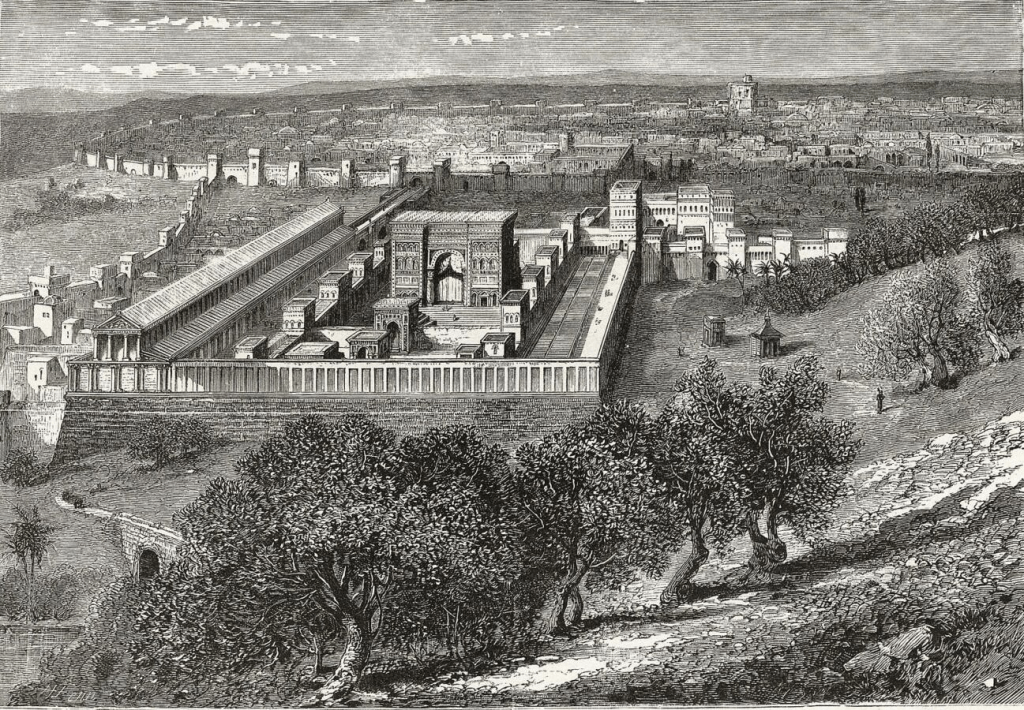
Jerusalem from the Mount of Olives, by William Simpson (1823-1899)

The word that Isaiah, son of Amoz, saw concerning Judah and Jerusalem.

In days to come
    the mountain of the Lord’s house
shall be established as the highest of the mountains
    and shall be raised above the hills;
all the nations shall stream to it.
    Many peoples shall come and say,
“Come, let us go up to the mountain of the Lord,
    to the house of the God of Jacob,
that he may teach us his ways
    and that we may walk in his paths.”
For out of Zion shall go forth instruction
    and the word of the Lord from Jerusalem.
He shall judge between the nations
    and shall arbitrate for many peoples;
they shall beat their swords into plowshares
    and their spears into pruning hooks;
nation shall not lift up sword against nation;
    neither shall they learn war any more. (New Revised Standard Version)

Mountains make up about one-fifth of the world’s landscape and 12% of the world’s population live on them. They are more than imposing and impressive statues of rock. About 80% of our planet’s fresh water originates in the mountains.

It was on a mountain that Noah’s ark settled; Moses was given the law; and Jesus preached and died. Even the beans from my morning coffee were grown on the side of a mountain. I have everything I need in the mountainous God of all.

The most fundamental truths about God are consistency and constancy in the divine nature. God is forever present with people. 

So, it is no coincidence that the temple of God was built on a mountain at the highest point in the city of Jerusalem. Ascending the temple mount reminded every worshiper of the Lord’s ever-present protection and strength. It pointed them to the source of life. With God, every need is met and satisfied, because on the mountain and in the temple, people learn how to live in this world. They are taught the ways of the Lord.

We learn to live in peace and harmony by ascending the mountain, entering the house of God, and adopting a teachable spirit.

Today’s Old Testament lesson is a vision of the future – the way things will be. Now, things are not as they ought to be. Injustice, unrighteousness, indifference, and impurity leave their mark everywhere. It may cause folks to wonder whether the Lord is truly present, or not.

If God seems or feels aloof or unconcerned, it is not that the Lord is avoiding us or is distracted with other important matters of running the universe. It simply means God chooses to reveal the divine character and the divine will when the appropriate time warrants it, for our benefit.

A mountain looks like it never moves. Yet the slow but steady rains, the creeping of tectonic plates, and undiscernible changes within the earth shift mountain ranges over time. The Lord is most certainly responding to us, our movements and changes, in a way we cannot perceive with the naked eye.

Our responsibility in the entire affair is to engage in consistent rhythms of spirituality which place us in a position to receive grace when God decides to give it. If we are still, we can feel the movements of grace developing within us, and enveloping us with life.

Perhaps we need to become adept at being spiritual mountain goats, using our wide cloven hooves of faith to negotiate the immense crags and rocks of God. After all, we will spend an eternity getting to know God and never exhaust the exploration.

Therefore, we must not despair. Rather, we can anticipate meeting with God, just as the Israelites of old looked forward and upward in ascending the temple mountain. The truth is that God surrounds people, even when we do not always perceive it to be so. 

The sturdiness of God is able to handle and bear the weight of our heaviest burdens.

Throw all your anxiety onto him because he cares about you. (1 Peter 5:7, CEB)

If we will but look up, there is abiding help for the most vexing of problems.


I raise my eyes toward the mountains.
    Where will my help come from?
My help comes from the Lord,
    the maker of heaven and earth.
God won’t let your foot slip.
    Your protector won’t fall asleep on the job. (Psalm 121:1-3, CEB)

There is peace and settled rest when we call upon the God who surrounds us.

I call out to the Lord,
    and he answers me from his holy mountain.

I lie down and sleep;
    I wake again because the Lord sustains me. (Psalm 3:4-5, NIV)

It is through trust that we become mountains ourselves – strong in faith and giving life to those around us. And it is also no coincidence that Jesus ascended a mountain in order to deliver his most important teachings.

When Jesus saw the crowds, he went up the mountain, and after he sat down, his disciples came to him. And he began to speak and taught them, saying:

Blessed are the poor in spirit, for theirs is the kingdom of heaven.

Blessed are those who mourn, for they will be comforted.

Blessed are the meek, for they will inherit the earth.

Blessed are those who hunger and thirst for righteousness, for they will be filled.

Blessed are the merciful, for they will receive mercy.

Blessed are the pure in heart, for they will see God.

Blessed are the peacemakers, for they will be called children of God.

Blessed are those who are persecuted for the sake of righteousness, for theirs is the kingdom of heaven. (Matthew 5:1-10, NRSV)

On the mountain we encounter the Lord. In that place, we find that humility, gentleness, mercy, purity, and peacemaking are the sacred pathways of pushing back on the world’s injustice and establishing a more just and right culture.

All sorts of people, from everywhere, from every nation, will stream to receive gracious teaching. They will become aware of how to live in an egalitarian society. Everyone’s needs shall be met.

Great and mountainous God, help me to keep my heart clean and to live honestly and fearlessly, so that no outward failure can dishearten me or take away my joy of conscious integrity. Open wide the eyes of my soul so that I may see good in all things. Grant me today a vision of your truth. Inspire me with the spirit of gladness and make me to be a cup of strength to suffering souls; in the name of the strong Deliverer, our Lord and Savior, Jesus Christ. Amen.