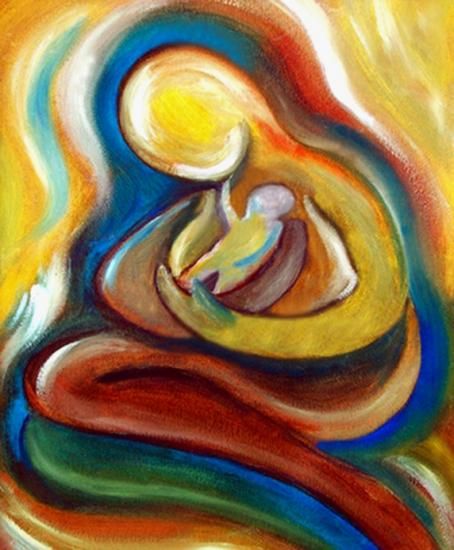
The Finite and the Infinite (Psalm 65)

God of Zion, to you even silence is praise.
    Promises made to you are kept—
    you listen to prayer—
    and all living things come to you.
When wrongdoings become too much for me,
    you forgive our sins.
How happy is the one you choose to bring close,
    the one who lives in your courtyards!
We are filled full by the goodness of your house,
    by the holiness of your temple.

In righteousness you answer us,
    by your awesome deeds,
    God of our salvation—
    you, who are the security
        of all the far edges of the earth,
        even the distant seas.
    You establish the mountains by your strength;
    you are dressed in raw power.
    You calm the roaring seas;
        calm the roaring waves,
        calm the noise of the nations.
Those who dwell on the far edges
        stand in awe of your acts.
    You make the gateways
        of morning and evening sing for joy.
You visit the earth and make it abundant,
    enriching it greatly
        by God’s stream, full of water.
You provide people with grain
    because that is what you’ve decided.
Drenching the earth’s furrows,
        leveling its ridges,
    you soften it with rain showers;
        you bless its growth.
You crown the year with your goodness;
    your paths overflow with rich food.
Even the desert pastures drip with it,
    and the hills are dressed in pure joy.
The meadowlands are covered with flocks,
    the valleys decked out in grain—
        they shout for joy;
        they break out in song! (Common English Bible)

The biblical psalms present God as sovereign over all creation. Today’s psalm extols the Lord of the universe as God of both temple and terra, of people and the earth.

God of the temple

Praise is the appropriate offering to God – because it is the Lord who listens, forgives, and chooses to fill persons with the holiness and goodness of God’s presence, exemplified in the temple.

Infinite righteousness cannot be fulfilled by finite beings. In other words, we need God.

The nineteenth century philosopher and theologian, Søren Kierkegaard (1813-1855) insisted that the humans did not established themselves; therefore, no one can simply exercise their will toward better and brighter circumstances.

Kierkegaard argued that humanity, at its core, is a synthesis of the infinite and the finite, the temporal and the eternal. A finite human is not a self; only when connected and aware of the infinite is someone a self. (The Sickness Unto Death)

Creatures can never lift themselves above anxiety, worry, distress, or hardship with only finite resources; we need infinite supplies and divine capital, to tap into the image of God within us, to realize that our true identity is inextricably dependent upon our Creator.

“Prayers” by Yoram Raanan

We are more than bodies and brain synapses; we are also souls. And as souls, we shall never realize our true selves through the temporary means of possessions, prestige, and power. A person cannot construct a self, by themselves, to bear the weight of who we really are. That’s because our real identity is hidden with Christ in God. (Colossians 3:3)

Just as the temple in Jerusalem was much more than a physical structure, so we, as the people of God, are so much more than tangible beings.

Do you not know that you are God’s temple and that God’s Spirit dwells in you? (1 Corinthians 3:16, NRSV)

Praise, prayer, and worship are practices designed to connect with the infinite God. Indeed, the kingdom of God is much nearer than we know.

Jesus said, “The kingdom of God is not coming with things that can be observed, nor will they say, ‘Look, here it is!’ or ‘There it is!’ For, in fact, the kingdom of God is among you.” (Luke 17:20-21, NRSV)

God of terra

We walk upon and inhabit this present terra firma, this earth. The earth, and all that is in it, belongs to the Lord. God is something of a cosmic farmer, taking care of the earth, watching over it, tending to its needs.

All that takes place on this celestial ball we live upon is under the gracious and loving eye of God. It is the Lord who brings the seasons and the rains, calming the storms of the seas, as well as the storms of our lives.

One of the reasons we find ourselves in such an impending climate debacle on this earth, is that we continue to utilize all the finite resources we can muster and fail to acknowledge and become aware of the grand infinite wherewithal we have with our Creator and Sustainer.

“I am the Lord, your savior;
I am the one who created you.
I am the Lord, the Creator of all things.
    I alone stretched out the heavens;
    when I made the earth, no one helped me. (Isaiah 44:24, GNT)

The earth is beautiful. Yet, in our insistence upon merely using the temporal and physical, ugliness has come upon the earth, obscuring the true nature of God’s good creation. Distancing ourselves from the Creator only builds bigger obstacles to solving the earth’s most significant issues.

Self-imposed and ensconced impediments need to be cleared away. The weeds have overtaken the garden; we can no longer see the good plants that are supposed to grow and produce a harvest. And yet, as any farmer or gardener knows, you cannot simply yank such weeds from the ground without also pulling up what you are trying to preserve.

The Lord will provide – but if we keep to our stubborn independence from God, the process of weeding the garden will take much longer to accomplish. Yet, God is patient, not wanting any to perish but all to come around to the infinite. (2 Peter 3:9)

Conclusion

Let us come to God in our neediness and failure. We must see ourselves as infinite souls with finite solutions who can cry out to the God who hears and forgives. We need to connect with the Lord who hears our prayers. It is imperative that we rely upon the infinite Creator who is concerned to cultivate justice and righteousness upon an earth which is full of plenty for everyone.

Praise, pray, give thanks, and be connected to the infinite One whom we need for life and godliness in this present, evil, and finite age.

Stay joined to me and I will stay joined to you. No branch can produce fruit alone. It must stay connected to the vine. It is the same with you. You cannot produce fruit alone. You must stay joined to me. (John 15:4, ERV)

Blessed God and Father of all, yours is the kingdom, the power, and the glory forever. To you belongs the heavens and the earth. It is you who made all that is – sun, moon, stars, rivers, forests, minerals, birds, animals, fish, and us – and pronounced it all “good.” We seek your divine mercy and help so that our work and our worship may curb the sin that so easily entangles and bring your intended shalom to the earth. Amen.

1 Corinthians 1:18-31 – The Sixth Sense of Spirituality

For the message of the cross is foolishness to those who are perishing, but to us who are being saved it is the power of God. For it is written:

“I will destroy the wisdom of the wise;
    the intelligence of the intelligent I will frustrate.”

Where is the wise person? Where is the teacher of the law? Where is the philosopher of this age? Has not God made foolish the wisdom of the world? For since in the wisdom of God the world through its wisdom did not know him, God was pleased through the foolishness of what was preached to save those who believe. Jews demand signs and Greeks look for wisdom, but we preach Christ crucified: a stumbling block to Jews and foolishness to Gentiles, but to those whom God has called, both Jews and Greeks, Christ the power of God and the wisdom of God. For the foolishness of God is wiser than human wisdom, and the weakness of God is stronger than human strength.

Brothers and sisters, think of what you were when you were called. Not many of you were wise by human standards; not many were influential; not many were of noble birth. But God chose the foolish things of the world to shame the wise; God chose the weak things of the world to shame the strong. God chose the lowly things of this world and the despised things—and the things that are not—to nullify the things that are, so that no one may boast before him. It is because of him that you are in Christ Jesus, who has become for us wisdom from God—that is, our righteousness, holiness and redemption. Therefore, as it is written: “Let the one who boasts boast in the Lord.” (New International Version)

Although a lot of people are not religious, I believe every person on planet earth is spiritual. By that I mean we all intuitively know deep in our gut that there are bigger things going on in this world beyond our own existence – that there is a transcendent Someone who is higher than us whom we can connect to and helps us connect with one another as humans.

If our epistemology (the study of how we as humans know things) doesn’t allow for transcendent reality, then it is a deficient and truncated philosophy (the study of truth, knowledge, and conduct); it will not be able to accommodate spiritual realities.

There are times you have no explanation for what is happening – no words to describe the experience you went through. That’s because your five senses (taste, sight, touch, smell, and sound), although alert and reliable with taking-in all kinds of sensory data, are simply inadequate to explain the transcendent situation.

I was once talking with an agnostic (a person who denies that ultimate knowledge can be found, or that knowledge can be located ultimately with a god). This particular guy became a father for the first time. He was fresh off the incredible experience of being in the room with his wife when she gave birth to their son. 

Bill (not his real name) was flush with enthusiasm. He took in the sight of his newborn baby boy, held him and touched him for the first time, and joyfully listened to his very first screams of new life in this great big world.  Bill described it all to me with such awe and reverence. 

Then, Bill said something to me that I haven’t forgotten: “I don’t know how to explain it, Tim. Something spiritual happened when my son was born, something I can’t put into words. All I can say is that I experienced something that was not of this world.”

Something not of this world. That was Bill’s way of saying that he had no mental categories from which to draw from to give him any kind of sensory explanation to the awesome reality of being there at childbirth. 

Our five senses are vital, critical, and significant; yet they do not tell the whole story. As important as our ability to taste, see, touch, smell, and hear is, there are other ways of knowing and experiencing life.

Faith and spirituality are the sixth sense which enable us to discern and know things about ourselves, this world, and God – things that we would not know with only our five senses. 

There is a spiritual reality which transcends the physical. The soul, whether we acknowledge we have one or not, is the place of communion with this unseen reality. The inner person is where we meet-up with God and find a vast world of spiritual resources which boggle the five senses. Somehow, we know this is true, even if we have no language to explain it.

Jesus once said that it is the Spirit who gives life; human strength isn’t even a factor (John 6:63). In other words, God is Spirit, and the One who gives meaning, connection, relationship, and even physical life. Human abilities cannot ultimately do this. Yes, we do have biological explanations for human attraction, marriage, and where babies come from; yet this is not the whole story. 

There is a transcendent reality behind it all that gives life meaning and purpose. There are times, once-in-awhile, when the unique, the astonishing, and the beautiful grab us.

Our souls spring to life. We “see” the transcendent and get an awesome glimpse of this place where the physical and the spiritual “touch.”

We “taste” that the Lord is good, and “hear” the call to a deeper experience of recognizing the care and compassion of Christ. 

We take in a deep breath and “smell” the aroma of him who created us in his image and likeness.

Let your senses draw in all the wonderful information it can. And don’t stop there. Allow your soul to drink in the spiritual dimension of wisdom, and feed your inner person with Jesus Christ, who saves us from the sinful and the mundane, and lifts us to the world of the Spirit where there is life, hope, and infinite love.

Holy God, your knowledge of me exceeds what I grasp or see in any moment; you know me better than I know myself. Now, help me to trust in your mercy, to see myself in the light of your holiness, and grant me the grace that I may have true contrition, make an honest confession, and find in you forgiveness and perfect remission. Amen. – A prayer of St. Augustine

Everyone Can Juggle

“Say, what?” you may protest. “I can’t juggle. I can’t learn that. I’m not coordinated, not rhythmic, not graceful, not _____.” (fill in the blank with your own negative)

I’m not buying it. I insist everyone can juggle, without exception. Yes, even the elderly, the young, those with severely arthritic hands and no hands, at all, can juggle. This is no mind game. It’s not playing with words.

Everyone can juggle because there is a juggler inside of every person.

God is Creator. People are creatures, created in the image and likeness of God. God is a juggler. And so are you and me.

It comes down to what kind of story we are telling ourselves.

For example, if there is a narrative rolling around in your head that you are stupid, even though you may be very intelligent, you will live up to the story of being unintelligent. The life you live will be as an incompetent nincompoop.

So, what is the story you are telling yourself about yourself?

Juggling takes practice. I can teach anyone to juggle in three minutes, or less. After that, it’s all about doing it – lots and lots of repetition and practice. It takes time, patience, and tenacity – the very qualities required to do just about anything.

Which you have done multiple times in your life, already. Sometimes we all need to remember when we did something well, when we committed to the time and effort of accomplishing an important task or project.

There is nothing glamorous about learning to juggle, and certainly not about becoming proficient at it. It is tedious, pedantic, and at times, frustrating work. It takes an overarching, “Why?”

If I want to juggle because it looks cool, and I’d like to impress friends, then I likely will not stick with it. If I believe it can be done in a relatively short amount of time, then I’ll probably become discouraged and drop out.

Yet, if I discover I really like to juggle, and I want to do it, that in the doing of this new thing I am finding out some things about myself I didn’t know before – or even that when I juggle, even imperfectly, I learn something about God – well, then, this is a “why” which has sustaining power.

Yes, indeed, everyone can juggle. There is a juggler inside each and every one of us. The real issue is whether we actually believe that is true, and whether we really have a solid internal reason for doing so.

So, let’s come back to that weird part about what I said above – that even people without an ability to lift their arms (or with no arms, at all) can juggle. It has to do with our definition of juggling. Here is the straight up dictionary definition of the words, “juggle,” “juggling,” and “juggler:”

To keep (several objects, as balls, plates, tenpins, or knives, etc.) in continuous motion in the air simultaneously by tossing and catching.

To perform feats of manual or bodily dexterity, as tossing up and keeping in continuous motion a number of balls, plates, knives, etc.

A person who performs juggling feats, as with balls or knives, etc.

One little word makes the difference here: etcetera. (etc.)

I’m actually not going to answer my own question or make explicit my point. I’ll let you fill it in yourself because I am confident you can do so. You are creative.

You’ll figure it out.

What we all really need is just enough direction to get our creative abilities going, without so much instruction that it becomes controlling (like a boss looking over your shoulder and just barking orders when you screw up).

Developing a skill or a craft is different than becoming a professional or doing a job. The real work is both internal and most often out of the limelight. It’s a commitment to a process, more than it is a means to an end goal. A process cannot be rushed; there must not be shortcuts. And, unless we learn to enjoy the process, we end up doing shoddy work.

The construction of a person’s soul is a lifelong project.

It requires becoming aware of one’s deep inward spirituality. Solitude, silence, and stillness are imperative to forming the soul.

I am a Christian. As such, I want to know Christ better. For that to happen, I need to pay attention to and care for my soul.

Throughout the history of Christianity, much attention has been given to the care of souls. Early church fathers (and mothers) such as Gregory the Great (540-604, C.E.) took great pains to describe ministerial work as offering moral and spiritual guidance to both the churched and unchurched, both Christian and non-Christian.

In 1656, Puritan preacher Richard Baxter wrote a book, The Reformed Pastor, which set the standard of pastoral care for generations. Baxter elaborated on seven functions of crafting souls (stated in my own words):

  1. Helping others connect with their spiritual selves;
  2. Giving sage spiritual direction;
  3. Building up people with careful and encouraging words;
  4. Attending to church, family, and group dynamics;
  5. Providing special focus to the needy, the sick, and the dying;
  6. Holding people accountable for their words and actions;
  7. Setting proper spiritual boundaries to keep harmful words and actions at bay within the community.

There is nothing sexy about any of these functions. It is humble nitty-gritty work which typically goes unnoticed by many because it is a slow process over time.

As a Christian who is concerned for the construction of souls, I take my cues from the Christian Bible. There are many references to “one another” in the New Testament which highlight the spiritual dynamics and proper environment needed for souls to thrive. Just a few of the most mentioned are: 

  • Encouragement
  • Mutual edification
  • Love
  • Forgiveness
  • Hospitality

Within the New Testament Gospels of Jesus, Christ modeled a life of spiritual practice which include healing, teaching, guiding, and mending damaged and broken souls. These were all a part of his mission to bring God’s benevolent kingdom to earth.

Like a proper garden, we need to continually tend to our soul, which requires the consistent spiritual farming of daily Scripture reading and prayer, practicing Sabbath rests, silence and solitude, fasting, and giving.

Our souls need careful shepherding. We are to be vigilant toward attending to our spiritual selves, as well as the souls of others – not because we must, but because we are willing.

You can do this. After all, you are a juggler!

Matthew 22:36-40 – Who Do We Minister To?

“Teacher, which is the greatest commandment in the Law?”

Jesus replied: “‘Love the Lord your God with all your heart and with all your soul and with all your mind.’ This is the first and greatest commandment. And the second is like it: ‘Love your neighbor as yourself.’ All the Law and the Prophets hang on these two commandments.” (New International Version)

I love my three daughters. I think God made them beautiful to compensate for all the ornery things they did as kids so I would not go crazy. Once the oldest was at the top of the stairs with the youngest (who was two years old at the time). She put her in a laundry basket and pushed her down with the middle kid at the bottom to catch her. 

I love my wife with all my heart and soul. Yet, she always thought it would be a good idea to have an open-door policy for the girls to come into our bed at night whenever they needed us. I have been puked on, peed on, kicked on and pushed out of bed. Sometimes it was like living with a bunch of drunks. Raising this girl version of “Malcom in the Middle” was often stressful. However, I gladly dealt with it all because I love my girls with all my heart, soul, mind, and strength.

Who do we minister to? The short answer: everyone. The reason we are to pay attention to everyone within our orbit is that God does. The way of loving our neighbor is to experientially know the heart, soul, mind, and strength of our great God.

Love God with All Your Heart

God has children across planet earth, and the Lord loves them all. To love God with all our heart is to begin seeing God’s big expansive heart for people all around the world. God’s compassionate heart is close to the broken-hearted, near to those in need. In fact, God’s wrath is a response of love to make things right in this fallen world. As early as the book of Genesis, just a few chapters in, it says:

The Lord saw that the human beings on the earth were very wicked and that everything they thought about was evil. He was sorry he had made human beings on the earth, and his heart was filled with pain. (Genesis 6:5-6, NCV)

God is disturbed with violent and evil hearts. God is heartbroken about the dark places within the human heart. God is deeply concerned for suffering, injustice, oppression, and death.

Every year fifteen-million children die of starvation. Human trafficking of women and girls has increased six-fold over the past five years resulting in forty-million victims of forced sex worldwide. Five and a half million people worldwide have died from COVID-19 Hundreds of millions are locked in grinding poverty, have no clean water to drink, and face a lifetime of illiteracy and poor wages.

The breadth and depth of human need and suffering goes on and one and on….

This is just a small glimpse of what God sees every day. And God knows each one of their names. For us, people need to move from being numbers to being names. God wants us to champion vital causes and aim our collective love toward people in need of Christ’s compassion and deliverance.

Love is a deliberate decision to meet a need in another person. One who fails to see the needs of others will suffer a shrinking heart. But the one close to God’s heart and aware of another’s need will gain an expansive heart. God also sees the good and the beautiful: every obedient act done in secret, each prayer uttered in the privacy of our closet, and all the places of selfless love toward another.

Love God with All Your Soul

I believe the world will experience a mass turning to God whenever Christians reclaim the soul of Christianity by experiencing a newfound sense of God’s wonder and beauty.

If loving God with all my heart means my heart breaks for the things that break God’s heart, then loving God with all my soul has my life flooded with God’s glory – awed by Divine majesty, mystery, and beauty. Loving God with all my soul is to perceive the glory and wonder of God all around me. It is to be profoundly grateful for everything – even and especially for the lessons learned from personal hardship and suffering.

Without a divine perspective, we only see the world as we are and not as it is. The ways to cultivate a beautiful love for God with all my soul is to meditate on Scripture and creation. Literally take time to smell the roses. If we walk or drive the same route every day, be mindful to observe one thing you have never seen before. Then, praise God for it. Each time Holy Scripture is read, do it slowly and carefully, noticing one thing you have never seen before. Then, praise God for that perception.

Take the extra step of sharing your wonderful and beautiful observations with others, especially unbelievers. It does no good to try and scare or cajole people into the kingdom of God. It makes all the difference when the world can see Christians captivated by the beauty and majesty of Christ.

Love God with All Your Mind

True love has an insatiable desire to know more and more about the object of its affection. To love God with all our mind is a desire to learn and experientially know more about the Lord. It is to have a constant curiosity about God.

Loving God takes our full faculties. God wants all our brains, not just one half of it.

Left-brain dominant people rely on the logical, analytical, practical, and think chiefly in concrete ways. Right-brain dominant folks are artistic, intuitive, creative, imaginative, humorous, even sarcastic, often speaking poetically and with satire or metaphor. Loving God with all our minds means we will use all our brains, both the right and the left hemispheres.    

One obstacle to loving God with our brains is that the mind of sinful humanity is death (Romans 8:6). A sinful mind is a small brain; it is not interested in genuine critical thinking – only in stubbornly expressing opinions. Such individuals are merely using a ridiculously small part of their brains. God, however, wants to sanctify our whole brains, to transform us by the renewing of our minds (Romans 12:2). 

We are to use our full cognitive capacities to love God – meaning we will value the left brain hemisphere of order and discipline, using all the tools of reason and logic, learning critical thinking skills, and pursuing the life of the mind.

We will also value the right brain hemisphere of mystery, paradox, and gray areas, enjoying the process of discovery, and probing the deepest issues of divinity and humanity – being comfortable with asking questions and not always having the answers.

Love God with All Your Strength

God loves the smell of your sweat. You might stink to high heaven from hard work but for God it is a sweet aroma and sacred incense. Love is measured not only by words spoken but by calories burned. Using our hands and our effort is as valuable to God as using our brains. 

Go hard after God with all your strength! Yet also be mindful that we all have a finite amount of energy. Because of this, we need to ensure we do not inordinately waste our energy pursuing power and control. Pride, anger, and selfishness saps our strength. Guilt, shame, and regret follow it up by draining our spiritual stamina. So, we need to keep busy doing the right things.

Our priorities need to reflect God’s values. Therefore, we will worship the Lord with all our strength, pray like there is no tomorrow, read Scripture like its our favorite food, fellowship with others as if they are adored old friends, and engage in mission with a continual sense that today could be the day of the Lord’s return.

Loving God with all our strength requires helping others in need whether they believe in Jesus, or not.

Since the Lord is truly concerned for all people’s welfare, putting our energy into sponsoring a refugee family, helping someone with their budget or their bills, providing for at-risk children, or organizing the neighborhood to work together, we let people know we care about them – and not just about whether they end up attending church, or not.

At the same time, we never need to ignore genuine opportunities to share our faith with folks we have connected with. Even if we are functioning with tangible help, we can make the extra effort of connecting people with Jesus.

Conclusion

The power of the gospel is strongest when people experience the full life that God desires for their entire existence. That will happen, I firmly believe, when people are in relationships with believers and with Christ.

When a church or faith community pays attention to the holistic needs of all persons within their sphere of influence, the effect on an individual, a family, a neighborhood, and a city is dramatic.

We love God by being obedient to his great command to love the world through meeting needs and establishing caring relationships. We can do this. It’s what we were saved from sin to do.

Gracious God, we give you thanks that you did not leave us in our misery and suffering, but that in love and mercy, you reached out to us. Thank you that while we were still sinners, Christ died for us. Thank you that Jesus humbled himself, even to death on a cross. Thank you for your heart that seeks the lost. We were once lost, desperately needing you, and going our own way. We are sorry for having hearts that rebelled against you and sought darkness. Thank you for saving us from ourselves.

Please give us hearts that care for the people who are in darkness. Teach us to care for them as you do. Thank you for including us in the mission of reaching other people for your Name. Grow us to care for humanity, both believers and unbelievers. We pray our conversations will be seasoned with salt and full of grace. We pray our friends will see the love of Jesus in us. Enlarge our hearts and make them passionate to see people delivered from their guilt and shame, through Jesus Christ, our Savior and Lord, in the mighty strength of your Holy Spirit. Amen