1 Corinthians 15:20-34 – That’s Weird

“Nonsense” by Wanidaem, 2016

But in fact, Christ has been raised from the dead, the first fruits of those who have died. For since death came through a human being, the resurrection of the dead has also come through a human being; for as all die in Adam, so all will be made alive in Christ. But each in his own order: Christ the first fruits, then at his coming those who belong to Christ. Then comes the end, when he hands over the kingdom to God the Father, after he has destroyed every ruler and every authority and power. For he must reign until he has put all his enemies under his feet. The last enemy to be destroyed is death. For “God has put all things in subjection under his feet.” But when it says, “All things are put in subjection,” it is plain that this does not include the one who put all things in subjection under him. When all things are subjected to him, then the Son himself will also be subjected to the one who put all things in subjection under him, so that God may be all in all.

Otherwise, what will those people do who receive baptism on behalf of the dead? If the dead are not raised at all, why are people baptized on their behalf?

And why are we putting ourselves in danger every hour? I die every day! That is as certain, brothers and sisters, as my boasting of you—a boast that I make in Christ Jesus our Lord. If with merely human hopes I fought with wild animals at Ephesus, what would I have gained by it? If the dead are not raised,

“Let us eat and drink,
    for tomorrow we die.”

Do not be deceived:

“Bad company ruins good morals.”

Come to a sober and right mind, and sin no more; for some people have no knowledge of God. I say this to your shame. (New Revised Standard Version)

There was a lot of goofiness going on with the Corinthian church.

That’s why the Apostle Paul’s first letter is long and filled with addressing a variety of problems. Some of those issues we can understand and relate to, and some we don’t have much of a clue what’s really going on. I tend to think that because the Corinthian believers tended to keep some bad company, a lot of weird stuff pops up, like vicarious baptisms for the dead. Where the heck did that come from?

“Weird Blue Painting” by Matthew Freese

Well, what we do know is that when Jesus told good old Peter the fisherman to leave his nets behind and become a fisher of people, catching them was only half the work. Cleaning them takes a lot of work, too.

I have done my share of fishing in life (both real fish and real people), and I can say that cleaning fish is a messy affair. Just as a fish gets gutted, so a person, caught for Jesus, needs to be eviscerated of all the worldly entrails of sin. And that didn’t completely happen with the Corinthians.

Rather than hanging out with the goofy weird dudes who are saying and doing only God knows what, Paul brought the Corinthians back to the center of the gospel. He reeled them into Christ’s resurrection.

The resurrection of Jesus Christ from death is the penultimate event of securing victory from sin’s guilt and shame, as well as death’s sting. It’s the resurrection which enables every Christian to realize the power of cutting out the weird and goofy stuff of worldly sin for the meat of Christ’s words and ways.

Because Christ arose with a real physical body, we, too, will experience a bodily resurrection. This means, as believers in Jesus, we are not to have a goofy approach that resurrection is all spiritual with nothing physical going on, as if the body were just some weird container for the soul that we have to put up with here on earth.

Whenever that weird thinking takes place, people do goofy things, believing they can do whatever the heck they want, since the body is like a paper plate that we’ll just toss in the garbage when we’re done with it. Christ’s kingdom ethics and physical morality ends up taking a back seat to ethereal philosophical musings. Leave it to the Greek Corinthians to do mental gymnastics in order to live however they want. Sometimes, when I read Paul’s letter, it feels like I’m watching an old “Leave It to Beaver” episode where Beaver is having all kinds of goofy thinking and doing weird stuff because of Whitey and Larry’s bad advice.

Jerry Mathers as the Beaver

Coming back again and again to the redemptive events of Jesus helps preserve us from the esoteric bunny trails of theological goofiness. Yet, if we continue to keep company with a bunch of folks who are into power and control through the ungodly means of mistreating the body (and other people), making comparisons between the physical and the spiritual, (as if they were two completing separate identities), obsessing over their weird and unintelligible philosophies, and refusing to take responsibility for their physical actions – then, we’re going to turn goofy, just like them.

Come to your senses, Paul would say, and get your head screwed on straight. Fill the space between your two ears with proper knowledge of Christ’s resurrection, and pay attention to your hands and feet, because they are the tangible means of putting the will of God into practice.

There’s a goofy and weird “ha, ha,” and then there’s a goofy and weird “uh, oh.” Keep the “ha, ha,” avoid the “uh, oh,” and you’ll be just fine.

Lord, have mercy. Christ, have mercy. Lord, have mercy on us, your people, and grant us your wisdom and peace. Amen.


Psalm 1 – Two Different Ways

Oh, the joys of those who do not
    follow the advice of the wicked,
    or stand around with sinners,
    or join in with mockers.
But they delight in the law of the Lord,
    meditating on it day and night.
They are like trees planted along the riverbank,
    bearing fruit each season.
Their leaves never wither,
    and they prosper in all they do.

But not the wicked!
    They are like worthless chaff, scattered by the wind.
They will be condemned at the time of judgment.
    Sinners will have no place among the godly.
For the Lord watches over the path of the godly,
    but the path of the wicked leads to destruction. (New Living Translation)

Today’s psalm presents us with two differing ways we can choose to shape our lives: The way of the upright and virtuous, or the way of the unethical and depraved. 

The way of the right and just person leads to human flourishing and life – whereas the way of the wicked and unjust person leads to human degradation and death. 

Distinguishing between the righteous and the wicked is not always as easy as it looks.

Only at the end of the age, when the Day of Judgment comes, will we know for certain the righteous and the wicked.

The magisterial Reformer, Martin Luther, contrasted these two ways with his Heidelberg Disputation of 1518. Luther called the way of the wicked a theology of glory – and described the way of the righteous as the theology of the cross.

The cross of Christ, as expressed by Luther, is God’s attack on human sin. Christ’s death is central to Christianity, and one must embrace the cross and rely completely and totally upon Christ’s finished work on the cross to handle human sin. Through being crucified with Christ, we find the way to human flourishing and life. In other words, righteousness is gained by grace through faith in Christ.

Conversely, the theology of glory is the opposing way of the cross. For Luther, the wicked person, and the vilest offender of God, is not the person who has done all kinds of outward sinning and heinous acts. The worst of sinners do good works.

Specifically, the wicked person is the one who does all kinds of nice things – yet does them disconnected from God by wanting others to see their good actions. Another way of putting this: The wicked person is one who seeks to gain glory for self, rather than giving glory to God.

Our good works can be the greatest hindrance to righteousness.

It is far too easy to place faith in our good works done apart from God, rather than having a naked trust in Christ alone. And it is far too easy to do good things for the primary purpose of having others observe our goodness, rather than do them out of the good soil of being planted in God’s Word. 

The remedy for sin is the cross, and the sinner is one who lives apart from that cross, trusting in self so that people can recognize and give them their perceived due respect and accolades.

“It is impossible for a person not to be puffed by his good works unless he has first been deflated and destroyed by suffering and evil until he knows that he is worthless and that his works are not his but God’s.”

Martin Luther

We are not to avoid good works but do them from the good soil of being planted in the law of God and connected to the vine of Christ. When the psalmist uses the term “law” he is referring to Scripture as a whole, to all the acquired wisdom about how life is supposed to be lived in God’s big world.

The righteous are those who immerse themselves in the law; secretly rise early to meditate on God’s Word; privately pour over Scripture’s message and pray to put it into practice because they want to delight in God. Their fruit will be abundant and sweet.  

The wicked, however, are simply too busy to take note what the law says; only serve to be seen; and publicly desire to be recognized for their charity and works. Such works will not stand when Judgment Day comes.

You’re nothing but show-offs. You’re like tombs that have been whitewashed. On the outside they are beautiful, but inside they are full of bones and filth. (Matthew 23:27, CEV)

Truly righteous people have a humble sense that they could easily drift from God, if not staying connected and rooted in Jesus and the way of the cross. 

The wicked, in contrast, are like chaff – worthless, and not adding value to anything. They are arrogant and annoying – wanting all the attention that God rightly deserves. The wicked have nothing to contribute to God’s kingdom. They hinder the harvest of souls God is working toward with their irritating attitudes.

Generosity marks the righteous because God is generous. Grace defines the righteous because God is gracious.  Gentleness is the way of the righteous because Christ is gentle. Spiritual prosperity is the result of a righteous relationship cultivated with Jesus Christ. The Lord watches over the way of such persons.

The way of the wicked will perish.

We have sixteen prophetic books in the Old Testament, all given to a single message: Judgment is coming because of wickedness.  And the wicked turn out to be God’s covenant people, because they selectively did their good works to gain glory for themselves. They withheld the good they could have done because it did not add any value to their reputation or their personal goals.

God desires genuine spiritual growth for us. That will only happen if we avoid the theology of glory and embrace a theology of the cross – delighting in God and the law.

Every day, we have a choice to make: The way of connection and life, or the way of disconnection and death. 

Look here! Today I’ve set before you, life and what’s good versus death and what’s wrong. If you obey the Lord your God’s commandments that I’m commanding you right now by loving the Lord your God, by walking in his ways, and by keeping his commandments, his regulations, and his case laws, then you will live and thrive, and the Lord your God will bless you…. But if your heart turns away and you refuse to listen, and so are misled, worshipping other gods and serving them,I’m telling you right now that you will definitely die…. I have set life and death, blessing and curse before you. Now choose life—so that you and your descendants will live—by loving the Lord your God, by obeying his voice, and by clinging to him. That’s how you will survive and live long…. (Deuteronomy 30:15-20, CEB)

The idols of our hearts can so easily draw us away from God so that our own good works are done for an audience who will recognize and affirm. Instead, our daily choice must be to love God supremely and give God glory for everything good in our lives. 

What will you choose this day?

Why Is Our Ministry Important?

Welcome, friends! Luke 4:14-30 is the account of Jesus reading the words of Isaiah the prophet to proclaim good news to the poor, freedom for prisoners, recovery of sight for the blind, and release for prisoners. How Christ used those words caused a huge commotion, and still does. Let’s find out together what happened. Click the videos below and let us consider Jesus….

Pastor Tim Ehrhardt, Luke 4:14-30

Gracious God, you bring glad tidings to the poor, heal the brokenhearted and free prisoners from jails. Please come to us and send us out, as forgiven people, to the poor, the brokenhearted, and the imprisoned. Amen.

Luke 4:14-30 – Why Is Our Ministry Important?

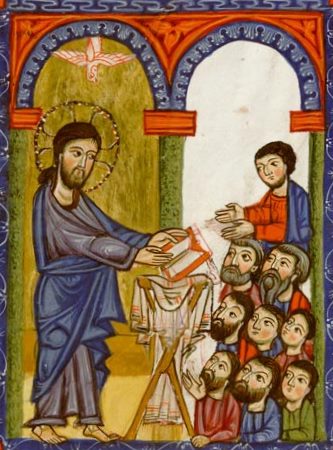
Jesus Unrolls the Scroll in the Synagogue, by French artist James Tissot (1836-1902)

Jesus returned to Galilee in the power of the Spirit, and news about him spread through the whole countryside. He was teaching in their synagogues, and everyone praised him.

 He went to Nazareth, where he had been brought up, and on the Sabbath day he went into the synagogue, as was his custom. He stood up to read, and the scroll of the prophet Isaiah was handed to him. Unrolling it, he found the place where it is written:

 “The Spirit of the Lord is on me,
    because he has anointed me
    to proclaim good news to the poor.
He has sent me to proclaim freedom for the prisoners
    and recovery of sight for the blind,
to set the oppressed free,
     to proclaim the year of the Lord’s favor.”

Then he rolled up the scroll, gave it back to the attendant and sat down. The eyes of everyone in the synagogue were fastened on him. He began by saying to them, “Today this scripture is fulfilled in your hearing.”

All spoke well of him and were amazed at the gracious words that came from his lips. “Isn’t this Joseph’s son?” they asked.

Jesus said to them, “Surely you will quote this proverb to me: ‘Physician, heal yourself!’ And you will tell me, ‘Do here in your hometown what we have heard that you did in Capernaum.’”

“Truly I tell you,” he continued, “no prophet is accepted in his hometown. I assure you that there were many widows in Israel in Elijah’s time, when the sky was shut for three and a half years and there was a severe famine throughout the land. Yet Elijah was not sent to any of them, but to a widow in Zarephath in the region of Sidon. And there were many in Israel with leprosy in the time of Elisha the prophet, yet not one of them was cleansed—only Naaman the Syrian.”

All the people in the synagogue were furious when they heard this. They got up, drove him out of the town, and took him to the brow of the hill on which the town was built, in order to throw him off the cliff. But he walked right through the crowd and went on his way. (New International Version)

Jesus was the hometown boy of Nazareth, the rising star who was putting the small village on the map. He walked into the synagogue on the Sabbath with the people all watching with pride, their chests puffed with delight over one of their own making it to the big time. 

It just so happened that on that day the Old Testament reading was from the prophet Isaiah – a prophecy of grace and healing that fit the budding ministry of Jesus. Here was the hope of Israel. It was all bunnies and butterflies, until Jesus decided to say a few words to them all….

Jesus took the prophecy of Isaiah about proclaiming liberty to captives and the oppressed and then applied it, not to his fellow Jews who were present, but to, of all people, Gentiles! 

Jesus just had to open his mouth and point out that in the days of Elijah, the prophet was sent to a Gentile woman. In addition, Jesus let everyone know the prophet Elisha cleansed a Gentile. The gathered synagogue worshipers understood exactly what Jesus was doing – claiming to be the ultimate prophet, sent for those people. 

It was too much for the people gathered for worship. All hell broke loose as the “worshipers” became so angry and insolent that they drove Jesus out of town and tried to kill him. Jesus had that kind of effect throughout his earthly ministry by saying and doing the unexpected. 

The people of Nazareth seemed to have always interpreted the message of Isaiah and the prophets as being for themselves, not others. Whenever any believer or church loses sight of a biblical message and re-interprets it as being for only us, then we end up like the Nazarenes of old who did not recognize Jesus for who he really is and what he really came to do. 

Some believers and churches need a question asked of them: Are you ready to throw Jesus off a cliff?

Our faith is not merely individual; it is meant to impact the world. In the beginning the earth was created by God and it was good. Yet, it didn’t take long for things to go sideways. The fall of humanity into sin and disobedience brought death and decay to the world. Ever since, the human condition has been dominated by guilt, shame, indifference, violence, taking advantage of others, pride, and selfishness.

However, God did not leave the world to its own demise. The Lord began the process of reconciliation, culminating in the person and work of Jesus Christ. And now, Christians are a new society, the community of the redeemed, the church. As the people of God, we are called to do justice, love mercy, and walk humbly.

Jesus came to save us from our predicament, and to proclaim good news to the poor, freedom for prisoners, recovery of sight for the blind, and freedom for those oppressed by others. The kingdom of God is to extend over every square inch of this earth, every nation, every race and ethnicity, every institution and organization, and every individual. It all belongs to God’s rule and reign in Christ.

Jesus has made us, his disciples, ambassadors of reconciliation. Ever since the fall of humanity, God is reclaiming and redeeming, even now, all of creation back to himself. The Lord is seeking to bring people back into the harmony that existed in the Garden of Eden. Although this will only be fully realized when Christ returns, we presently now have the responsibility to be gracious agents of God’s kingdom, restoring all areas of this world and all people to their rightful place, at peace with God.

There is every reason to hope because a new world began emerging at the resurrection of Jesus Christ from death. As Christians, we accept struggle and hardship in this life and endure all things because, even though disease, destruction, and death claim so many lives, the love of God in Christ will never change nor die.

Because of the risen and ascended Christ, who is the light for all people everywhere, Christ’s disciples are able to respond to the great mass of human suffering with compassion.

This is important since compassion might not be our initial reaction to human suffering. Like the villagers in Christ’s hometown of Nazareth, we can chafe at the thought of compassionately reaching out to the poor, the prisoner, the blind, and the oppressed. We might either resist ministry to the “other” because we believe they caused their own poverty and adverse situation, or because we simply don’t believe we are wired for ministry to them.

If you knew me before I was a Christian, you might not recognize me. I didn’t love anybody. I had no compassion for anyone. It wasn’t until I experienced the love and compassion of Jesus Christ that my life turned upside-down. I began responding to human need with a deep concern. I sought to connect with all kinds of people. I wanted to make a difference in the world.

Back then I was (and to some degree still am) something of an agitator. Maybe that’s one reason I am so drawn to the compassion of Christ. For compassion is actually a radical form of criticism, declaring that our pains and our hurts are to be taken seriously, that they are not to be accepted as natural but abnormal and unacceptable for the human condition. It’s not supposed to be this way!

The compassion of Jesus needs to be understood as a totally subversive action against the kingdom of darkness, a bold and daring affront against all that keeps people locked into systems of oppression and poverty.

The world needs to experience the Church everywhere as a place and a people of good news – expressed in both word and deed – in which they are hospitably invited into the very life of God and experience the fullness of peace and joy in the Holy Spirit. In other words, we are not only in the personal transformation business, but we are also in the business of transforming society so that the common good of all persons is upheld.

As the church proclaims and seeks to establish the kingdom of God, it comes to see that all human need is important – whether it is spiritual, physical, mental, or emotional. We “do justice” by helping others experience the reality of God’s love in Christ and compassionately meet their holistic needs. We “love mercy” by showing hospitality and inviting folks very different from ourselves into our lives. We “walk humbly” with our God by emulating the compassionate ministry of Jesus to all people.

What is your “compassion quotient?” That is, how much compassion do you have in your life right now?

What are some tangible ways we can work on raising our level of compassion and demonstrating compassionate action to those around us and in our city?

It is questions like these that enable us to sync our lives with the heart of Jesus, who still desires to bring good news to the world.

Almighty God, you sent your Son Jesus Christ to reconcile the world to yourself: We praise and bless you for sending your people in the power of the Spirit to preach the Gospel to all nations. We thank you that in all parts of the earth a community of love has been gathered together by many prayers and labors, and that your people share in your mission of restoring all people to unity with yourself and one another in Christ; for the kingdom and the power and the glory are yours forever. Amen.