Free to Live a New Life (Romans 7:1-6)

You shouldn’t have any trouble understanding this, friends, for you know all the ins and outs of the law—how it works and how its power touches only the living. For instance, a wife is legally tied to her husband while he lives, but if he dies, she’s free. If she lives with another man while her husband is living, she’s obviously an adulteress. But if he dies, she is quite free to marry another man in good conscience, with no one’s disapproval.

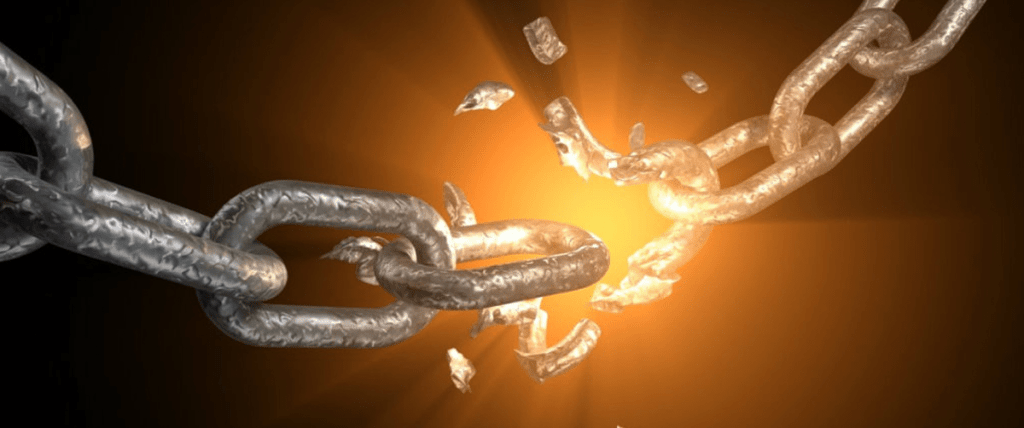
So, my friends, this is something like what has taken place with you. When Christ died he took that entire rule-dominated way of life down with him and left it in the tomb, leaving you free to “marry” a resurrection life and bear “offspring” of faith for God. For as long as we lived that old way of life, doing whatever we felt we could get away with, sin was calling most of the shots as the old law code hemmed us in. And this made us all the more rebellious. In the end, all we had to show for it was miscarriages and stillbirths. But now that we’re no longer shackled to that domineering mate of sin, and out from under all those oppressive regulations and fine print, we’re free to live a new life in the freedom of God. (The Message)

The goal of salvation is to be delivered from oppressive bondage so that we are free to live a true and beautiful life – a holy life, set apart for good.

Romans chapters 6-8 are the Apostle Paul’s pointed discussion of how we become holy in a real and practical way. The theological word we typically use for this is “sanctification,” which means “to become holy,” and “set apart” for God. To be delivered from sin, death, and hell through the person and work of Jesus Christ is not the end of the story; it is just the beginning.

Becoming holy and good in our everyday lives boils down to this: identity and belonging.

One of the healthiest ways of looking at the entirety of the Bible’s message is that we belong to God. Our identities are thoroughly wrapped around Jesus. The process of realizing this, and coming to grips with it, is how we grow as people in holiness and righteousness.

Because of Christ’s finished work on the cross, we have been delivered from the realm of sin. Our change in status from condemned to accepted provides us the awareness to make daily affirmations of faith and live a new life.

Yet, the sinful nature (flesh) or the old person is still there. Although it is now toothless, our past can, and may often, exert a powerful influence on us. Even though there is a medium-rare T-bone steak on the table for us to enjoy, there are times we go back to the old bologna sandwich with stale white bread.

We no longer need to fall short of our true humanity. That’s because we belong to God. We are adopted into God’s family, having been orphaned by sin’s cruel influence.

However, just because we have been saved from the power of sin, sin itself is not extinct. We still must deal with it. We are alive to God and need to take up this great spiritual reality and live into it, for the force of sin still exerts a powerful influence in the world.

We deal with sin’s continued presence (the world, the flesh, and the devil) through embracing God’s grace versus trying to overcome it with the law.

Paul used an illustration from marriage to expand our understanding of grafting grace into our daily lives. By law, a married woman is bound to her husband (keeping in mind this sense of belonging was the predominant view of marriage in the Apostle’s day). But if the husband dies, the wife is released from the legal marriage. If she were to give herself to another man while her husband is still alive and they are married, then she becomes an adulteress. However, if she is a widow, then marries again, she is not an adulteress.

Paul applies this understanding to our relationship with the law. Death has separated us from the law. We died with Christ. Therefore, we have been set free from the law and have become alive to grace. As believers in Jesus, God’s grace and love changed our lives:

  • We now “belong to another, to him who was raised from the dead.” (Romans 7:4)
  • “When Christ’s body hung upon the cross, when God spared not his own Son but gave him up for us all.” (Romans 8:32)
  • “Christ took on himself for us all the curse of the law which inflicted all of us.” (Galatians 3:13)
  • We died to the law. God’s grace has made the death of Jesus the death of all from the realm of sin. (2 Corinthians 5:14)

As a married man, let me use Paul’s illustration to get down to the gist of his teaching. Yes, I am legally married and belong to my wife. I made vows to my wife on our wedding day which bind me legally to do what I said I would do. Yet, if I fulfill those vows in a strictly legalistic manner, I can vouch for my wife that this would not qualify as an acceptable situation for her. You see, my wife (and, me, too!) are freely bound to one another in love and grace. I care for my wife because I love her deeply, and not because it is my legal duty to do so.

The Christian life was neither designed nor meant to serve as a bare legal contract or covenant between us and God. God forbid such a thought! Jesus died to clear us from all the legality stuff so that we could freely love and serve God with joyful abundance and gratitude.

I am follower of Jesus because I love him deeply. What impels and motivates me is God’s grace. The law is there and has its place. However, it is not the law that causes me to be a Christian; it is the love of Christ which saved me from myself and compels me to live like Jesus.

May the God of peace make you pure, belonging only to him. May your whole self—spirit, soul, and body—be kept safe and blameless when our Lord Jesus Christ comes. The one who chose you will do that for you. You can trust him. Amen.

Freedom from Sin (Romans 6:12-23)

Therefore do not let sin reign in your mortal body so that you obey its evil desires. Do not offer any part of yourself to sin as an instrument of wickedness, but rather offer yourselves to God as those who have been brought from death to life; and offer every part of yourself to him as an instrument of righteousness. For sin shall no longer be your master because you are not under the law, but under grace.

What then? Shall we sin because we are not under the law but under grace? By no means! Don’t you know that when you offer yourselves to someone as obedient slaves, you are slaves of the one you obey—whether you are slaves to sin, which leads to death, or to obedience, which leads to righteousness? But thanks be to God that, though you used to be slaves to sin, you have come to obey from your heart the pattern of teaching that has now claimed your allegiance. You have been set free from sin and have become slaves to righteousness.

I am using an example from everyday life because of your human limitations. Just as you used to offer yourselves as slaves to impurity and to ever-increasing wickedness, so now offer yourselves as slaves to righteousness leading to holiness. When you were slaves to sin, you were free from the control of righteousness. What benefit did you reap at that time from the things you are now ashamed of? Those things result in death! But now that you have been set free from sin and have become slaves of God, the benefit you reap leads to holiness, and the result is eternal life. For the wages of sin is death, but the gift of God is eternal life in Christ Jesus our Lord. (New International Version)

The word “sin” is mentioned 10 times in these 12 verses of Scripture. It’s an important word, and so, we need to understand something of it. Discerning the concept of sin in the Bible is crucial to our spiritual growth and development as believers in Jesus. A better grasp of sin’s nature and power will help us to better understand and appreciate God’s grace and how to live the Christian life.

Sin Is Everywhere

We see the evidence of living in a broken world every day. Disaster, disease, and death are realities we all must deal with. The presence and power of sin is everywhere – in our hearts, our world, our institutions, and our families. It’s on television, the internet, social media, and moves in-and-out of smartphones. If it takes one to know one, we are all experts on being sinners.

Definitions of Sin

From the Bible’s vantage, sin is things we do (1 John 3:4) as well as things we leave undone (James 4:17). Sin is both actively breaking of God’s commands, and passively avoiding them. 

Christians throughout the ages have generally understood that the Ten Commandments (Exodus 20:1-17) and Christ’s law of love (Luke 10:27) constitute a brief summary of God’s holy and moral instruction for humanity.  These laws are based in the character of God as a holy and loving Being.

Sin, then, may be defined as anything in a person, group of people, an institution or a system, which does not express, or is contrary to, the basic character of God. In short, sin is a pervasive force which exists everywhere, defined in the following acrostics:

Sinful actionsSinful thoughtsSinful inaction
StressStupidSpiritual
InducedInwardInsidious
NarcissismNoodlingNarcolepsy

Sin Is Contrary to God’s Character      

All sin, whether active or passive, is self-centered and lacks self-awareness. Sin exists wherever a person, group, or organization thinks more about itself than of God and God’s love and justice. Sinful attitudes bring consequences such as:

  • Obsession with lust (1 John 8:34; Galatians 5:16) Lust is the stance of having to possess something, instead of appreciating it without ownership.
  • Broken relationships (Romans 3:23; Galatians 5:17) Wanting something without any concern for it’s cost leaves a trail of broken relationships with God and others.
  • Bondage to Satan (1 Timothy 3:6-7; 2 Timothy 2:26) Obtaining the object of our lust brings slavery, not freedom
  • Spiritual death (Romans 6:23; 8:6) Death is separation from God and estrangement from others
  • Hardening of the heart (Hebrews 3:13) A hard heart happens by stubbornly holding on to what we want, irrespective of what God wants
  • Deception (1 Corinthians 3:18; James 1:22, 26) To be deceived is to believe that other people, even God, are the problem whenever things go sideways

This may all sound like a total Debbie-Downer. Actually, it’s total depravity. Being depraved does not mean we are never capable of doing good; it means that sin has profoundly touched everything in our lives, without exception.

Sin Is Not the Last Word

Paradoxically, experiencing true joy and comfort comes through knowing how great our sin is. We live above sin by being set free from it by the grace of God in Jesus Christ. To be redeemed from sin, a provision is needed. In Christianity, sin has been dealt with once and for all through the person and work of Jesus. Christ is our representative, taking our place and delivering us from sin (Galatians 4:4-5; Ephesians 2:5-6; Colossians 2:9-15; Hebrews 2:17-18; 1 John 2:1).

Jesus Christ is our ultimate substitute (Romans 5:8)…

Which resulted in our redemption (Galatians 5:13)…

Leading to a satisfaction of all justice (Romans 3:25)…

Bringing reconciliation with God (Romans 5:10)… 

And putting sin to death, making us complete in Christ (Colossians 2:10).      

Although sin destroys everything it touches and leaves terrible consequences in its wake, sin does not have the last word: grace does.

Words for Sin

There are 33 different words for “sin” in the original Greek language of the New Testament. Only one of them is used in the verses from Romans: ἁμαρτία (“HA-mar-tee-ah”) literally means “to miss the mark,” or to “fall short.” (Romans 5:12-21; 1 John 1:8-10; 2 Corinthians 5:21)

The concept of missing the mark gets to the heart of why persons, groups, institutions, and systems fall short of God’s standard. We fail to see who we truly are and what God has truly done for us in Christ. And so, sin deceives us into believing that our needs can be met outside of God.

Metaphors for Sin

  • Obstacle. Sin obstructs a truly good and beautiful life. It’s like a blockade that prevents us from entering the kingdom of God; or like large hurdles we have to jump to move forward. Sin is like a bear on our back which slows us down to a crawl.

Let us rid ourselves of everything that gets in the way, and of the sin which holds on to us so tightly, and let us run with determination the race that lies before us. (Hebrews 12:1, GNT)

  • Addiction. The word “sin” is an attempt to meet a legitimate need in an illegitimate way. Sin is an energy which we become fixated on in order to meet our needs for love and acceptance. If unchecked, the sinful method for meeting the need becomes the need itself.

We are tempted by our own desires that drag us off and trap us. Our desires make us sin, and when sin is finished with us, it leaves us dead. (James 1:14-15, CEV)

“Seek what you are seeking – but don’t seek it where you are seeking it!”

St. Augustine
  • Marketing scam. Sin is misleading. It’s a scam or a branding which looks good but the product is all wrong. Sin is a deception, and it leads us to deceive others in order to make ourselves look better than we really are.

When you give to the poor, don’t blow a loud horn. That’s what show-offs do in the synagogues and on the street corners because they are always looking for praise. I can assure you that they already have their reward. (Matthew 6:2, CEV)

Overcoming Sin

Victory over sin and the dark force of this world comes through faith. Believe that you have been set free from sin.

For everyone born of God overcomes the world. This is the victory that has overcome the world, even our faith. Who is it that overcomes the world? Only the one who believes that Jesus is the Son of God. (1 John 5:4-5, NIV)

We need our ultimate faith to rest in God, and not in anyone or anything else. The Scripture says:

Trust in the Lord with all your heart,
    and do not rely on your own insight.
In all your ways acknowledge him,
    and he will make straight your paths. (Proverbs 3:5-6, NRSV)

Eternal God, in whom we live and move and have our being, whose face is hidden from us by our sins, and whose mercy we forget in the blindness of our hearts: cleanse us from all our offenses, and deliver us from proud thoughts and vain desires, that with reverent and humble hearts we may draw near to you, confessing our faults, confiding in your grace, and finding in you our refuge and strength; through Jesus Christ your Son. Amen.

God of the Living (Ezekiel 39:7-8, 21-29)

I will make sure that my people Israel know my holy name, and I will not let my name be disgraced any more. Then the nations will know that I, the Lord, am the holy God of Israel.”

The Sovereign Lord said, “The day I spoke about is certain to come….

The Lord said, “I will let the nations see my glory and show them how I use my power to carry out my just decisions. The Israelites will know from then on that I am the Lord their God. And the nations will know that the Israelites went into exile because of the sins which they committed against me. I turned away from them and let their enemies defeat them and kill them in battle. I gave them what they deserved for their uncleanness and their wickedness, and I turned away from them.”

The Sovereign Lord said, “But now I will be merciful to Jacob’s descendants, the people of Israel, and make them prosperous again. I will protect my holy name. When they are once more living in safety in their own land, with no one to threaten them, they will be able to forget how they were disgraced for having betrayed me. In order to show to the many nations that I am holy, I will bring my people back from all the countries where their enemies live. Then my people will know that I am the Lord their God. They will know this, because I sent them into captivity and now gather them and bring them back into their own land, not leaving even one of them behind. I will pour out my spirit on the people of Israel and never again turn away from them. I, the Sovereign Lord, have spoken.” (Good News Translation)

“God is trying to sell you something, but you don’t want to buy. This is what your suffering is: Your fantastic haggling, your manic screaming over the price!”

Hafiz, 14th century Persian mystic poet

A lot of folks struggle with their relationship with God in trying to make sense of the hard things they go through. Some interpret their troubles as a punishment from God. Others resign themselves to the difficulty and, at best, believe there must be some purpose to it all; and, at worst, simply state in defeat, “It is what it is.”

God most certainly does allow some awful things to happen. Although the Lord is not the author of the evil, God providentially bends all circumstances for the divine glory and for our benefit.

We may still cry out and insist, “But why must God do it this way? Isn’t there another path than the one I’m on?” It’s not bad to ask those questions. After all, the Lord Jesus himself cried out, “My Father, if it is possible, may this cup [of suffering] be taken from me. Yet not as I will, but as you will.” And, “My God, my God, why have you forsaken me?” (Matthew 26:39, 27:46, NIV)

In many ways, life is about detaching from all that hinders us from attaching to God. If we are mindful of this project, it’s likely we will realize a fulfilling connection with the divine. If, however, we lose sight of this, and become unaware of the vital relationship between God and humanity, then the Lord loves us enough to work on bringing us back into healthy relations.

It takes a lifetime of practice to let go and die to self.

And God will use every circumstance – both good and bad – to help us do that.

The Lord is glorified and shown forth as holy when we detach from all that is unhealthy and attach to everything that is just, right, and good.

God’s own Holy Spirit is the very person we need to guide us through each situation of our lives.

Typically, it is we ourselves who need to change, and not necessarily our circumstances. Yet, we too often fear change. The ego – the false self – hates change because it has bought into the belief that the outward projection of oneself to the world is the real thing (which it is not). Therefore, the ego tends to interpret each negative situation as an attack, rather than discerning that this might be the Lord getting at the inner heart of the person.

We must come to grips with the reality that one must change in order to love, and to love in order to change. Anytime we love someone or something else, we have died on some level; we let go of something so that we can grab hold of something else. The monkey who refuses to let go of the banana is trapped; the one who releases it grabs hold of freedom.

“Sin” is much less about moralistic religion, and much more about mistaking ourselves for someone we aren’t and not knowing to whom we belong. The ancient Israelites, whom the prophet Ezekiel addressed, had lost touch with who they are and whose they are. So, the Lord was determined to clarify it for them.

The realization of our true selves comes through love. And since God is love, knowing God enables us to regain our true essence.

The ego, although the necessary scaffolding for the emerging construction of the soul, must eventually be jettisoned. It would be weird if you erected a building, then kept up the façade. God is alive and deals with the living, and not the dead things around us.

Jesus said, “He’s not the God of the dead but of the living. In God’s sight all people are living.” (Luke 20:38, GW)

O Holy One, we call to you and name you as eternal, ever-present, and boundless in love. Yet there are times, O God, when we fail to recognize you in the dailyness of our lives. Sometimes shame clenches tightly around our hearts, and we hide our true feelings. Sometimes fear makes us small, and we miss the chance to speak from our strength. Sometimes doubt invades our hopefulness, and we degrade our own wisdom.

Holy God, in the daily round from sunrise to sunset, remind us again of your holy presence hovering near us and in us. Free us from shame and self-doubt. Help us to see you in the moment-by-moment possibilities to live honestly, to act courageously, and to speak wisdom. Amen.

Guide Me By Your Good Spirit (Psalm 143)

Listen to my prayer, Lord!
    Because of your faithfulness, hear my requests for mercy!
    Because of your righteousness, answer me!
Please don’t bring your servant to judgment,
    because no living thing is righteous before you.

The enemy is chasing me,
    crushing my life in the dirt,
        forcing me to live in the dark
            like those who’ve been dead forever.
My spirit is weak inside me—
    inside, my mind is numb.

I remember the days long past;
    I meditate on all your deeds;
    I contemplate your handiwork.
I stretch out my hands to you;
    my whole being is like dry dirt, thirsting for you.

Answer me, Lord—and quickly! My breath is fading.
    Don’t hide your face from me
        or I’ll be like those going down to the pit!
Tell me all about your faithful love come morning time,
    because I trust you.
Show me the way I should go,
    because I offer my life up to you.
Deliver me from my enemies, Lord!
    I seek protection from you.
Teach me to do what pleases you,
    because you are my God.
Guide me by your good spirit
        into good land.
Make me live again, Lord, for your name’s sake.
    Bring me out of distress because of your righteousness.
Wipe out my enemies because of your faithful love.
    Destroy everyone who attacks me,
        because I am your servant. (Common English Bible)

Many Westerners tend to think about sin as bad individual actions which are quite personal. However, sin is much bigger than that. Primarily, sin is a force, a power in this universe which weighs on every molecule within it. None of us can escape having to deal with it.

For persons like the psalmist, they strive to be good and live a just life, yet they are continually dogged by others who have given into the “dark side.” The wicked discern the force of sin in the world, and then decide to move with it – believing that good guys finish last.

Yet, there is another powerful force in the universe – and it’s a greater power than sin.

Everywhere we look, we see a bad spirit. And that sinful spirit is behind the injustice, oppression, war, conflict, ignorance, and avarice which exists in every nation, community, and even home. Entrenched opinions, yelling at each other, the refusal to consider evidence, and narrow thinking have permeated our societies and pitted people against one another.

This evil spirit of the age is captured in the Apostle Paul’s words as he reflected on this and other psalms:

As it is written:

“There is no one righteous, not even one;
    there is no one who understands;
    there is no one who seeks God.
All have turned away,
    they have together become worthless;
there is no one who does good,
    not even one.”
“Their throats are open graves;
    their tongues practice deceit.”
“The poison of vipers is on their lips.”
    “Their mouths are full of cursing and bitterness.”
“Their feet are swift to shed blood;
    ruin and misery mark their ways,
and the way of peace they do not know.”
    “There is no fear of God before their eyes.”

Now we know that whatever the law says, it says to those who are under the law, so that every mouth may be silenced and the whole world held accountable to God. Therefore no one will be declared righteous in God’s sight by the works of the law; rather, through the law we become conscious of our sin. (Romans 3:10-20, NIV)

The psalmist doesn’t want to be a part of the sinful force and the bad spirit. He, instead, knows that sometimes he’s part of the problem, along with being a victim of sin, and thus, knows he needs deliverance from this awful power.

Promises to do better and personal willpower won’t cut it, when it comes to changing a life and a society. Rather, we must tap into a good spirit, which is ultimately, the Spirit.

Even though all have been both victim and victimizer, and fall short of God’s glory, all are justified freely by God’s grace through the redemption that came by Christ Jesus. (Romans 3:23-24)

Once we were blocked from prayer because of obstacles existing unaware among us and within us. But now we see the world for how it’s been touched by foulness and degradation, so we pray.

The spirit of the age will fail us. Our own spirit will be fickle. God’s Spirit, however, is continually living and active with the force of grace and mercy.

In our fear, it’s okay, even good, to flee from evil. Yet, we must complete the process by not only fleeing from the bad spirit, but also fleeing to God’s Spirit.

Prayer, then, becomes our lifeline. It’s our connection to what is right, just, and good. In Christianity, the Spirit is the one who conforms us to the glory of God and the image of Jesus. The Spirit is our Teacher, Guide, and Advocate, keeping us on God’s good path.

We need to live according to the Spirit – which is a continual journey of removing obstacles to faith and allowing God’s good gifts to awaken within us.

My counsel is this: Live freely, animated and motivated by God’s Spirit. Then you won’t feed the compulsions of selfishness. For there is a root of sinful self-interest in us that is at odds with a free spirit, just as the free spirit is incompatible with selfishness. These two ways of life are contrary to each other, so that you cannot live at times one way and at times another way according to how you feel on any given day. Why don’t you choose to be led by the Spirit and so escape the erratic compulsions of a law-dominated existence? (Galatians 5:16-18, MSG)

Yes, sin is a powerful force, manifesting itself in a host of bad spirits all around us. But grace is greater than all sin, and God’s good Spirit shall overwhelm and overcome all evil.

Visit this place, O Lord, we pray, and drive far from it the snares of the enemy; may your holy angels dwell with us and guard us in peace, and may your blessing be always upon us, through Jesus Christ our Lord. Amen.