You Have Inherent Worth (Genesis 2:4b-7)

Elohim Creating Adam, by William Blake, 1795

In the day that the Lord God made the earth and the heavens, when no plant of the field was yet in the earth and no vegetation of the field had yet sprung up—for the Lord God had not caused it to rain upon the earth, and there was no one to till the ground, but a stream would rise from the earth and water the whole face of the ground—then the Lord God formed man from the dust of the ground and breathed into his nostrils the breath of life, and the man became a living being. (New Revised Standard Version)

The word “Genesis” comes from the Septuagint, an ancient Greek translation of the Old Testament, and means “origin.” The first book of the Bible does indeed have to do with origins. And in the early chapters, Genesis addresses the origins of the earth and all it’s life and systems, including humans.

Genesis 1 is a poetic account of those origins. Genesis 2-3 provide a complementary narrative account of creation and the beginning of the world. These three chapters together affirm the inherent goodness of all creation, as well as how complex it all truly is.

God is the Creator of the earth and humanity. The original man, Adam, is a name transliterated from the Hebrew adamah, which means ‘ground’ or ‘dirt/dust.’ This relationship between Adam and the literal dirt of the planet is the basis for humanity’s special relationship with the land and taking good care of it as a proper steward of the earth. In the beginning, working the actual ground was set up as a blessing.

We are living creatures, having been given breath (Hebrew nephesh). Along with all the living breathing animals on this earth, we share a basic creaturehood and are thus connected with each other. In addition, only people are formed in God’s likeness and enjoy a special relationship with the Lord in being God’s image-bearers. (Genesis 1:27)

God created you and me as good. The Lord has made provision for us to glorify God, and to be successful in doing the Lord’s will. People who are ineffective in living out their spiritual lives are persons who do not know the truth about themselves. 

Both truth and error are powerful. If people are misguided about who they are, then they become like empty wells with no water to draw from. Many of our problems, failures, and shortcomings are largely due to a misunderstanding of our basic personhood. 

A profound result of this misunderstanding is a lack of self-worth. Whenever we are in error about who we really are, we have automatically limited ourselves to what we can do in our lives. Comparing ourselves to others is not helpful; nor is trying to simply gin-up good feelings about ourselves. 
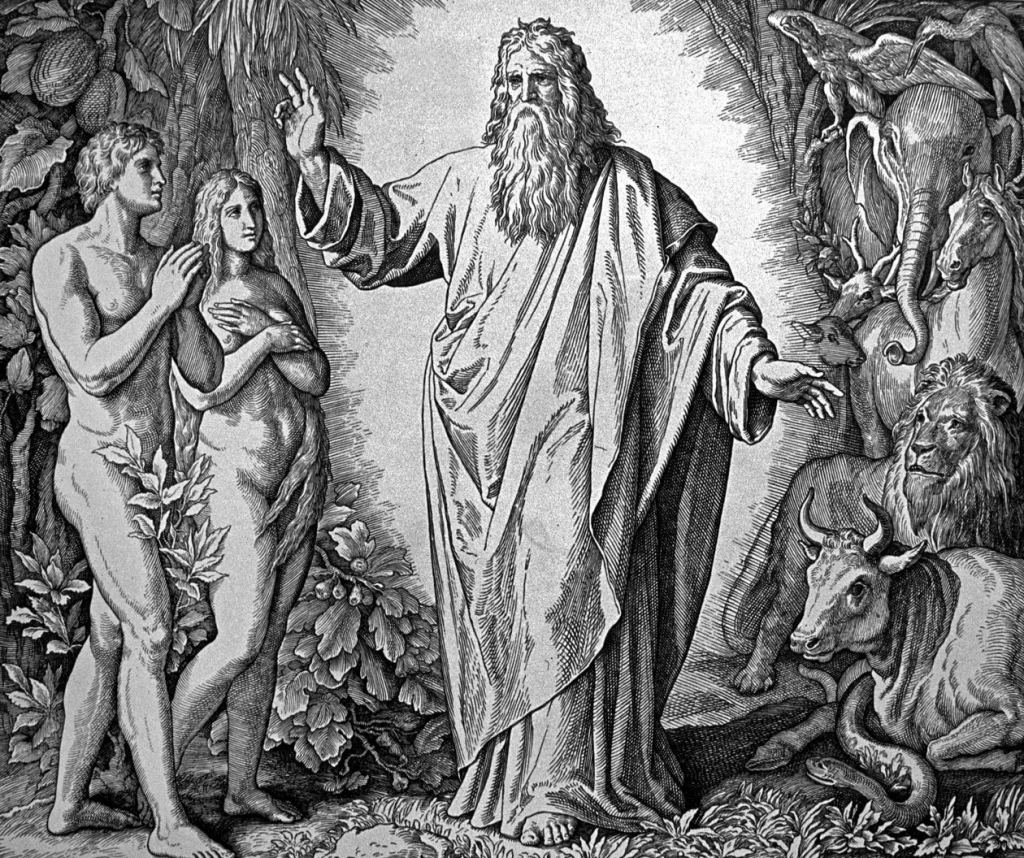
God Creates Adam and Eve, by Julius Schnorr von Carolsfeld (1794-1872)

Only by accepting who we truly and really are, can we actually be helped, and discover human fulfillment in this life. Let us consider that it is vitally important what the Holy Scriptures say about us; and also equally significant to respond in faith to the recognition of our great worth on this earth.

An important bedrock truth we must understand is that people been created in the image and likeness of God (Genesis 1:16-17). We can only begin to understand ourselves if we begin with creation. Since God is a Person of infinite perfection and goodness, to be created in God’s image means we are persons of great potential and value.

To be a person means that we are self-conscious and can make decisions. We also have inherent rights to know, to be heard, to feel, to have an opinion, to be honored, to develop potential, to assume responsibility, and to enjoy life and all creation. In other words, God treats us as persons; therefore, we may not treat ourselves any less than that.

People were created to know God, to understand spiritual truth, and to perform spiritual functions. 

Because we are created by God, we are sacred individuals. We commit a profound shortcoming when we do not develop our potential and live as though life and fulfillment were graciously given by God for our good. 

Accepting erroneous thoughts about ourselves (and we all have) leads us to misinterpret our circumstances, relationships and opportunities. Without even realizing it, we bring confusion and failure into many, if not all, areas of our life.

One of the clearest evidences that we may not know, accept, and practice the biblical truth of our self-worth, is seen in our response to Holy Scripture. Too often we observe altruistic people and say, “I can’t be like that!” Or we read scriptural promises and commands and say, “I can’t do that!” Living with that kind of unbelief and error in our lives results in discouragement and/or criticism of others who seem to be successful in their spiritual lives.

Here is the truth about you:

You are loved by God (John 15:9; 17:23). This means that God recognizes us as persons, gives us our rightful place in the divine life, and will do right by us. God has our back. Therefore, let us accept this truth.

You are called to live in fellowship with God (1 Corinthians 1:9). No greater honor could be bestowed on us than the invitation to interact with the Living God. As we do, the door is open, so that God can minister to us and lead us into the knowledge and practice of the divine will.

You have been given divine revelation (Hebrews 1:1-3). Having the Bible available to us (in our own language!) is one of the greatest possessions we could ever receive. There is nothing more powerful than the truth about God and divine desires for our daily life. Therefore, let us pay attention to divine revelation and obey it, since God has so graciously given it to us.

You are the object of divine redemption (Romans 5:8-9). The great evidence of our human worth is the reality that Jesus Christ has secured our redemption from guilt, shame to himself. Jesus, the Son of God, loved us and gave himself for us. (Galatians 2:20)

You are the temple of the Holy Spirit (1 Corinthians 6:19-20). The actual physical temple of the Old Testament was filled with the glory of God. Today, through Christ’s redeeming love on the cross, every believer in Jesus is God’s temple. Therefore, God wants to work in us and through us for the Lord’s glory and honor.

The conclusion to the matter is that the way to know our true self-worth is to accept what Holy Scripture says about us; and then respond by faith and love to its loving and redeeming message. 

According to the book of Genesis, you are no accident. You are a person of infinite worth to God. So live into this wonderful truth.

Soli Deo Gloria

Divine Affirmation (Isaiah 44:1-5)

The Lord says,

“Listen now, Israel, my servant,
    my chosen people, the descendants of Jacob.
I am the Lord who created you;
    from the time you were born, I have helped you.
Do not be afraid; you are my servant,
    my chosen people whom I love.

“I will give water to the thirsty land
    and make streams flow on the dry ground.
I will pour out my spirit on your children
    and my blessing on your descendants.
They will thrive like well-watered grass,
    like willows by streams of running water.

“One by one, people will say, ‘I am the Lord’s.’
    They will come to join the people of Israel.
They each will mark the name of the Lord on their arms
    and call themselves one of God’s people.” (Good News Translation)

Who do you believe you are, at the very core of your being?

Your very essence, the person you are deep down inside, is worthy of divine blessing and belonging. You are loved by God.

In a world of abject hate and injustice, there remains within the soul the majesty of people created in the image and likeness of God. There is still hope for us, that is, if we will receive water in our thirst and be bathed in the reality of who we are. And I take a decidedly Christian perspective on that identity.

I am a firm believer in making daily affirmations of truth based upon what God has done for us in Christ. The Christian doctrine of justification means that God has justified us and made us right, along with all creation through the cross of Jesus. This is more than a doctrine to believe, but it is also a reality to be lived into each and every day.

I know it doesn’t always feel like we belong or that we are blessed. Many of our adverse situations may cause us to wonder about whether God accepts us, or not.

As we go through life, there are those who don’t like the way we do things, or are upset about our views on particular subjects, or think that we ought to be doing something we aren’t doing. In such times, my initial reaction might be to justify myself – to defend my words or my silence, my actions or inactions, and my work. 

I am not yet what I will be someday, but I am not what I used to be either.

These sorts of encounters can easily leave us feeling insecure, like a vulnerable teenager trying to look cool in the middle of his awkwardness. I even once had a person complain to me that on a particular Sunday my shoes were not shined well enough. For a person like me who is borderline obsessive-compulsive, that was not an easy mental slough-off; I really wanted to beat myself up over the lack of shiny shoes!

The truth of the Christian life is that I have no need to justify myself. Why? Because God has already justified me in Christ. 

The following are some regular affirmations we can tell ourselves for truth and righteousness to awaken within our souls:

  1. I thankfully acknowledge and accept who I am in my unchangeable physical appearance which God has uniquely designed for me, so that the Lord can bring a special view to others through my life. (Psalm 139:13-18; 2 Corinthians 10:12, 12:9-10)
  2. I thankfully acknowledge and accept that I am unconditionally loved and treasured by God, who wanted a relationship with me, and to whom I belong. (Romans 8:31-32, 38-39; John 6:44, 17:23)
  3. I thankfully acknowledge that I am unconditionally accepted as a worthy person to God, because of Jesus Christ, in whom I trust for all things. (Ephesians 1:16; Romans 4:6-8; Isaiah 61:10)
  4. I thankfully acknowledge that I am a secure person because God cares about me and asks me to trust divine leadership and goodness. (Romans 8:28; Matthew 6:25-33; Proverbs 3:5-6; Psalm 37:3-7, 23)
  5. I thankfully acknowledge that I am in a process of growth. My sinful nature is part of my personality, but it is not who I am. I consider myself dead to the sinful nature and alive and responsive to God. I am not yet what I will be someday, but I am not what I used to be either. I accept my struggles with guilt and shame as opportunities to depend more on God and Christ’s justification for me. (1 Peter 2:1-3; Romans 6:11; 2 Corinthians 10:13; Galatians 5:16)
  6. I thankfully acknowledge and accept that I am a competent person who is adequate to fulfill God’s will successfully each day. My strength is supplied by God’s Holy Spirit, who works through me to make an important and eternal impact on others with the love of God and the message of Christ. (Philippians 2:13, 4:13; 1 Corinthians 10:13; 1 Peter 4:10-11; 2 Corinthians 5:20)

We are loved, accepted, and cared for by God. And we have important lives to live. Therefore, we need not threatened or devastated by the way some people treat us. 

Others do not determine our self-worth. We might be pained when others let us down, but it is not the end of the world. We can continue to act responsibly toward them without demanding that they understand us, accept us, or respect us.

Many if not most people try to find acceptance and significance through family, peers, faith communities, achievements, appearance, work, etc. Yet, none of those sources can satisfy or fulfill our basic personal needs. This is why there are so many people who feel resentment, anxiety, guilt, or a vague sense of emptiness and even despair.

Yet when a person trusts God and exhibits faith in Christ, as the true source of justification in order to satisfy basic needs, that person can learn to regard themself in their new identity with Christ: 

  • Their faith can be trained to believe in and focus on a new self-concept, even in circumstances when they feel the pain of rejection. 
  • They can rebound from disappointment and develop resilience. 
  • They can forgive others and continue to serve others without dependence upon positive feedback from another.

To be justified by Christ means that we can live in the security of being a child of God without depending on others to do for us what God has already done through Jesus. Learning to live in this way takes daily affirmations of faith and truth.

Glory to the Father and to the Son and to the Holy Spirit; as it was in the beginning is now and shall be forever. Our faith and hope is not in vain, because God’s love has been poured into our hearts. Amen.

The Truth About You (John 8:21-30)

Once more Jesus said to them, “I am going away, and you will look for me, and you will die in your sin. Where I go, you cannot come.”

This made the Jews ask, “Will he kill himself? Is that why he says, ‘Where I go, you cannot come’?”

But he continued, “You are from below; I am from above. You are of this world; I am not of this world. I told you that you would die in your sins; if you do not believe that I am he, you will indeed die in your sins.”

“Who are you?” they asked.

“Just what I have been telling you from the beginning,” Jesus replied. “I have much to say in judgment of you. But he who sent me is trustworthy, and what I have heard from him I tell the world.”

They did not understand that he was telling them about his Father. So Jesus said, “When you have lifted up the Son of Man, then you will know that I am he and that I do nothing on my own but speak just what the Father has taught me. The one who sent me is with me; he has not left me alone, for I always do what pleases him.” Even as he spoke, many believed in him. (New International Version)

Jesus was an interesting guy – both cagey and confrontational at the same time. He had a way (the way, in fact) that left those who longed for mercy and encouragement to receive it, while also giving rebuke to those satisfied with being stuck in their misguided lives.

This made Christ one of those persons whom you either loved or hated. The people that loved him, adored him; and those that hated him, sought to kill him.

It’s really a matter of self-perception. The ones who tend to self-loathe and wonder if they’re accepted, or not, are the ones who feel on the outside. These are the folks who discover themselves on the inside, accepted by God. And Jesus made it happen for them.

On the other hand, the ones who are enamored with themselves and their superior religion, looking down at others and feeling secure as insiders, are the people who will find they’re actually on the outside looking in; indeed, they will die in their self-delusion.

Our self-identification matters. If identity is tied to what we’re able to do for God, and/or how pious we look for others to see, then our inflated egos will eventually be popped with the pinprick of divine judgment. But if identity is tethered to belonging to God by divine grace and mercy, then we shall know true acceptance.

We need to know the truth about ourselves. Both truth and error are powerful. If we have misguided notions of self, we are like empty wells with no water to draw from. Many of our problems, failures, and shame are largely due to a misunderstanding of the kind of person we are. 

A profound result of this misunderstanding is a lack of self-worth. When we are in error about who we really are, we are severely limited in what we can do in our lives. We can neither solve the problem by comparing ourselves with others nor by trying to generate good feelings about ourselves. Only through accepting what the Holy Scriptures say about us, and responding in faith, can we be truly helped.

So, here are some bedrock truths about us:

  1. We are created in the image and likeness of God. (Genesis 1:16-17)  We begin to understand ourselves by beginning with the creation of the world. Since God is a Person of infinite perfection and goodness, to be created in God’s image means we are persons of great potential and value.
  2. We are special to God. The Lord treats us as persons; therefore, we may not treat ourselves any less than that. To be a person means that we are self-conscious and can make decisions. We also have inherent rights to know, to be heard, to feel, to have an opinion, to be honored, to develop potential, to assume responsibility, and to enjoy life and all creation.
  3. We are loved by God (John 15:9; 17:23) God recognizes us as persons, gives us our rightful place in the divine life, and will do what is right by us. In other words, God has our back. The Lord will not gaslight us.
  4. We are called to a relationship with the loving God (1 Corinthians 1:9) No greater honor could be bestowed on us than to be invited to interact with the Living God. As we do, the door is open so God can minister to us and lead us into the knowledge and practice of a good life.
  5. We are the recipients of divine revelation (Hebrews 1:1-3) Having the Holy Scriptures available to us is the greatest possession we could ever receive. There is nothing more powerful than the truth about God and God’s design for our daily life. Therefore, we commit a profound sin when we neglect and disobey what God has so graciously given us.
  6. We are the objects of divine redemption (Romans 5:8-9) The great evidence of our human worth is the reality that Jesus Christ has secured our redemption from sin, death, and hell. Jesus, the Son of God, has loved us and gave himself for us. (Galatians 2:20)
  7. We are the temple of the Holy Spirit (1 Corinthians 6:19-20) The actual physical temple of the Old Testament was filled with the glory of God. Today, through Christ’s redeeming love on the cross, every believer in Jesus is God’s temple. Therefore, God wants to work in us and through us for to bless and serve the world.

The conclusion to the matter is that the only way we will know true self-worth is to accept what God says about us and respond by faith and love to this loving and redeeming message. You are a person of infinite worth to God, so live into this wonderful truth.

Gracious Creator, blessed all-knowing God, be merciful to upgrade my opinion of myself and my vision for the future so I never feel the need to protect and preserve the past. Show me how to be a faithful steward of the greatness you have placed within me.

Loving Lord, you know everything about me and love me anyway! As I accept and experience your grace and mercy, help me to grasp the depth and perfection of your love as demonstrated by the sacrifice of your only Son, Jesus Christ my Lord, who with you and the Holy Spirit are one God, now and forever. Amen.

The Christian and Self-Worth


            One of the things that we must be clear about when it comes to living the Christian life is that God has made provision for the believer’s daily life to glorify him so that we may be successful in doing his will.  Toothless and ineffective Christians are persons whom do not know the truth about themselves.  Both truth and error are powerful.  If we think wrongly about who we are as Christians, we are like empty wells with no water to draw from.  Many of our problems, failures, and sins are largely due to our misunderstanding of the kind of person we are.  A profound result of this misunderstanding is a lack of self-worth.  When we are in error about who we really are, there is much limitation to what we can do in our lives.  We can neither solve the problem by comparing ourselves with others nor by trying to generate good feelings about ourselves.  Only through accepting what the Holy Scriptures say about us, and responding in faith, can we be truly helped.
 
            An important bedrock truth that we must understand about ourselves as believers in Jesus is that the Christian has been created in the image and likeness of God (Genesis 1:16-17).  We can only begin to understand ourselves if we begin with creation.  Since God is a Person of infinite perfection and goodness, to be created in his image means we are persons of great potential and value.
 
            To be a person means that we are self-conscious and can make decisions. We also have inherent rights to know, to be heard, to feel, to have an opinion, to be honored, to develop potential, to assume responsibility, and to enjoy life and all creation.  In other words, God himself treats us as persons; therefore, we may not treat ourselves any less than that.
 
            God created us to know him, to understand spiritual truth and perform spiritual functions.  Because we are created by God, we are sacred individuals.  We commit a profound sin when we do not develop our potential and live as though life and fulfillment were graciously given by God for our good.  When we accept erroneous thoughts about ourselves (and we all have) then we almost always use that error to misinterpret our circumstances, relationships and opportunities.  Without even realizing it we bring confusion and failure into many if not all areas of our life.
 
            One of the clearest evidences that we do not know, accept, and practice the biblical truth of our self-worth is seen in our response to God’s Word.  Too often we read the Bible’s promises and say, “I can’t be like that!”  Or we read the Scripture’s commands and say, “I can’t do that!”  When we live that kind of unbelief and error in our lives the result is too often discouragement and/or criticism of others who seem to be successful in their Christian lives.
 
            Let’s get some genuine spiritual truth down deep in our bones:  the Christian has been and is loved by God(John 15:9; 17:23).  To be loved by God means that God recognizes us as persons, gives us our rightful place in his life, and will do what is right by us.  In other words, God has our back.  We must accept this truth.
 
            The Christian has been called to live in fellowship with God (1 Corinthians 1:9).  No greater honor could be bestowed on us than to be invited to interact with the Living God.  As we do, the door is open so God can minister to us and lead us into the knowledge and practice of his will.
 
            The Christian has been given divine revelation (Hebrews 1:1-3).  Having the Holy Scriptures available to us is the greatest possession we could ever receive.  There is nothing more powerful than the truth about God and his desires for our daily life.  Therefore, we commit a profound sin when we neglect and disobey what God has so graciously given us.
 
            The Christian has been made the object of divine redemption (Romans 5:8-9).  The great evidence of our human worth is the reality that Jesus Christ has secured our redemption from sin to himself.  Jesus, the Son of God, has loved us and gave himself for us (Galatians 2:20).
 
            The Christian has been made the temple of the Holy Spirit (1 Corinthians 6:19-20).  The actual physical temple of the Old Testament was filled with the glory of God.  Today, through Christ’s redeeming love on the cross, every believer in Jesus is God’s temple.  Therefore, God wants to work in us and through us for his glory and honor.


            The conclusion to the matter is that the only way we will know true self-worth is to accept what the Bible says about us and respond by faith and love to its loving and redeeming message.  You are a person of infinite worth to God, so live into this wonderful truth.  May it be so.