


One day Jesus was praying in a certain place. When he finished, one of his disciples said to him, “Lord, teach us to pray, just as John taught his disciples.”
He said to them, “When you pray, say:
“‘Father,
hallowed be your name,
your kingdom come.
Give us each day our daily bread.
Forgive us our sins,
for we also forgive everyone who sins against us.
And lead us not into temptation.’”
Then Jesus said to them, “Suppose you have a friend, and you go to him at midnight and say, ‘Friend, lend me three loaves of bread; a friend of mine on a journey has come to me, and I have no food to offer him.’ And suppose the one inside answers, ‘Don’t bother me. The door is already locked, and my children and I are in bed. I can’t get up and give you anything.’I tell you, even though he will not get up and give you the bread because of friendship, yet because of your shameless audacity he will surely get up and give you as much as you need.
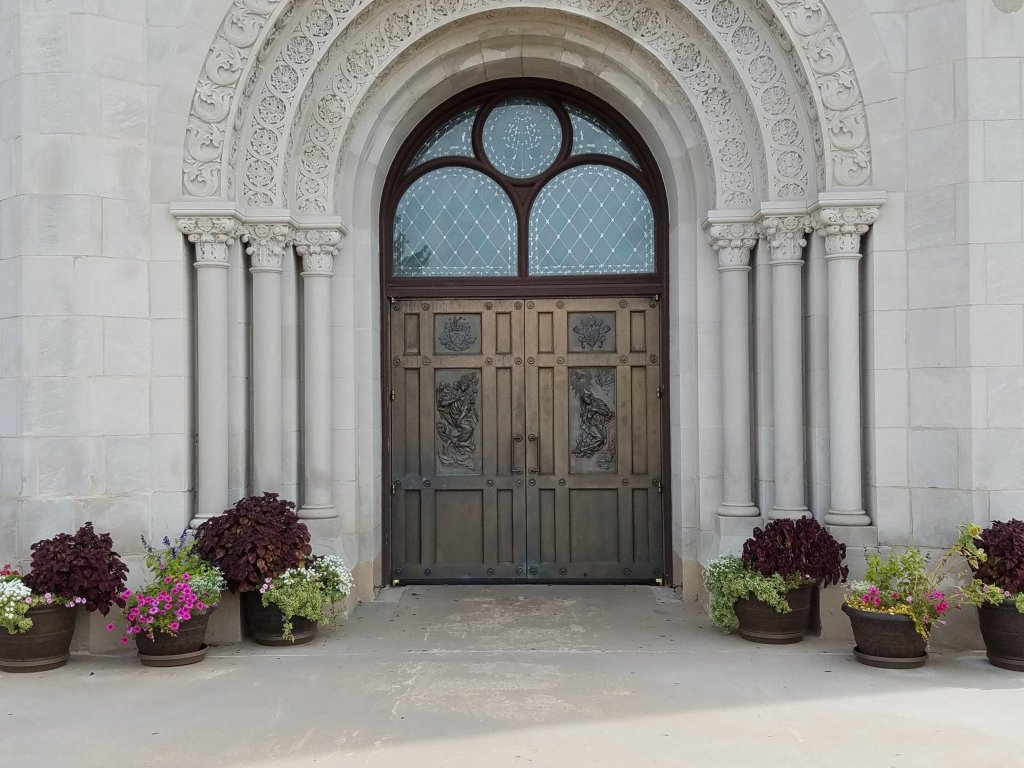
“So, I say to you: Ask and it will be given to you; seek and you will find; knock and the door will be opened to you. For everyone who asks receives; the one who seeks finds; and to the one who knocks, the door will be opened.
“Which of you fathers, if your son asks for a fish, will give him a snake instead? Or if he asks for an egg, will give him a scorpion? If you then, though you are evil, know how to give good gifts to your children, how much more will your Father in heaven give the Holy Spirit to those who ask him!” (New International Version)

Jesus, in his teaching ministry on earth, often used the “lesser-to-greater” argument in getting his point across. And that is precisely what he was doing with his disciples in today’s Gospel lesson, instructing them about the nature and motivation of prayer.
The lesser-to-greater argument implies a comparison of values. It’s grounded on a common sense and logical convention that if this lesser thing is true, then, of course, how much more is this greater thing!
If something less likely to happen is true, then something more likely to happen will probably be true as well. The technical phrase for this is the a fortiori argument. It’s a Latin term meaning, “for a still stronger reason.”
So, then, Jesus wanted his followers to understand that prayer has value because God is a loving Father, not a begrudging friend. Whereas the friend in the story was badgered just so the person could get some real necessities, God needs no badgering to generously give good gifts that may or may not be considered as necessities by us.
Prayer has veracity and potency because of whom those prayers are directed to.
In the ancient world, it was common understanding that you needed to get the local gods attention if you wanted something. Which is why, for example, in the prophet Elijah’s showdown with the prophets of Baal, that Baal’s worshipers were yelling, gesticulating, and even cutting themselves for hours. They fully expected to put a lot of work into getting Baal’s attention, to convince him of intervening in their ancient version of a wild West shootout. (1 Kings 18:16-29)
In contrast to the four-hundred prophets of Baal, a single prophet of the Lord utters one simple prayer, then fire comes rushing down from heaven. (1 Kings 18:30-39) Much like the person who badgered the friend for bread, the prophets pestered Baal for hours.
It all comes down to who really cares. The friend? Not enough to jump out of bed right away and meet a need. Baal? Not so much. God? Now we’re talking.
We typically don’t ask, seek, or knock, if we believe we won’t get a response – or if it will take a lot of energy, time, and effort we don’t have.
Yet, if we are confident of being with care, then we are likely to have a habit of asking, seeking, and knocking.
If a friend begrudgingly gives to you because of persistent knocking, how much more will God graciously, generously, and with gaiety give you goodness when you ask? Because God is good, God gives good gifts. The largess of the Lord is willing and ready to dispense grace from an infinite storehouse of mercy.
This is why Jesus encouraged people to not pray like those who don’t know God, babbling on because they think they’ll be heard because of the sheer volume of words. (Matthew 6:7-8)
There are two misconceptions of prayer which existed in Christ’s day, and today. They come from non-Christian sources:
- There must be a lot of prayer before prayer “works.” Although I believe repetition is important for forming good habits, praying the same prayers over and over again so as to be heard betrays an ignorance of God, not to mention an actual lack of faith. Many ancient religions were based in learning how to manipulate the spiritual forces out there to get what we need. It’s kind of like a divine version of hustling for love in all the wrong places. Christians need to know they don’t need to have thousands of people praying in order to get God’s attention to answer prayer.
- I must convince God of the need to answer my prayer. God is not a reluctant listener. The reason the Lord already knows what we need before we ask is because God has been paying close attention to us well before we got around to asking, seeking, and knocking on the divine door. God’s ear is already inclined to hear us – expectantly awaiting our petitions. This is a tremendously freeing idea, that I can come to God openly and honestly, without wondering if I am heard, or not.
We might too often neglect to ask, seek, and knock because we rely on our own determination, abilities, education, or observations. Life can be hard. So, we keep on asking, seeking, and knocking.
No one enters God’s realm because of sheer determination. God’s kingdom is only accessed through humble prayer. God is the One with the supernatural resources to help us live the Christian life.
And God is pleased to provide what we need to live that life. God delights in hearing our asking’s, responding to our seeking’s, and answering our knocking’s. With God, there is no daydreaming while we ask, no avoiding us when we seek, and no pulling the shades on the windows as the door is being knocked.
In love, God looks forward to our asking, seeking, and knocking.
Repetition is important – not vain repetition which believes that the more prayer is repeated, the greater possibility of the answer we want – but a routine lifestyle of persistently and consistently praying.
Ask
You want something you don’t have, and you will do anything to get it. You will even kill! But you still cannot get what you want, and you won’t get it by fighting and arguing. You should pray for it. Yet even when you do pray, your prayers are not answered, because you pray just for selfish reasons. (James 4:2-3, CEV)
The Apostle James, learning from his brother, Jesus, gets behind the asking to the heart of why we ask and why we do not ask. This, in no way, is to discourage us from asking or to be doubtful whether God cares about our asking, or not. James also said:
Anyone who needs wisdom should ask God, whose very nature is to give to everyone without a second thought, without keeping score. Wisdom will certainly be given to those who ask. Whoever asks shouldn’t hesitate. They should ask in faith, without doubting. (James 1:5-6, CEB)
Seek
If you seek the Lord your God, you will find him if you seek him with all your heart and with all your soul. (Deuteronomy 4:29, NIV)
Seek the Lord while he may be found, call upon him while he is near. (Isaiah 55:6, NRSV)
Prayer is much like a wrestling match. It requires a great deal of effort. In fact, every good thing in life demands blood, sweat, and tears. We are to keep on seeking, to continue searching and looking for God amid our life circumstances. The Lord will be found.
Knock
God has said:
“When you pray, I will answer you. When you call to me, I will respond.” (Isaiah 58:9, GNT)
Prayer isn’t all continual searching and diligently seeking. Sometimes, there is an immediate answer to our knocking on heaven’s door.
God has also said:
“I will answer their prayers before they finish praying.” (Isaiah 65:24, CEV)
It is to God’s glory whether our prayers are answered quickly, or not. It is to our glory that we exercise our ability to enter God’s throne room and ask, seek, and knock. We have the assurance that whatever the answer is from God, it will always be a merciful response.
For God mercifully gives us what we ask for, and also mercifully does not give us what we ask for.
We do not know what tomorrow may hold for us. All we know for certain is that we are known by a God who hears when we ask, is worth seeking, and answers when we knock.
May you be encouraged to pray, to truly connect with God, because the Lord is available without appointment, and is waiting for us to ask with bended ear.
Eternal God, by whose power we are created and by whose love we are redeemed: Guide and strengthen us by your Spirit so that we may give ourselves to your service and live today and every day in love to one another and to you, through Jesus Christ our Lord, in the strength of the Holy Spirit. Amen.



 Rev. Tim Ehrhardt