Luke 13:31-35 – Blessed is He Who Comes in the Name of the Lord

Blessed is He Who Comes in the Name of the Lord, by José Luis Castrillo

At that time some Pharisees came to Jesus and said to him, “Leave this place and go somewhere else. Herod wants to kill you.”

He replied, “Go tell that fox, ‘I will keep on driving out demons and healing people today and tomorrow, and on the third day I will reach my goal.’ In any case, I must press on today and tomorrow and the next day—for surely no prophet can die outside Jerusalem!

“Jerusalem, Jerusalem, you who kill the prophets and stone those sent to you, how often I have longed to gather your children together, as a hen gathers her chicks under her wings, and you were not willing. Look, your house is left to you desolate. I tell you – you will not see me again until you say, ‘Blessed is he who comes in the name of the Lord.’” (New International Version)

King Herod of Judea, who was in the pocket of the Roman Empire, was issuing threats against Jesus. And those threats had some teeth behind them. Herod had recently beheaded Christ’s friend and cousin, John the Baptist (Luke 9:7-9). Yet, Jesus seemed unconcerned by the warnings. He made it clear that he was going to keep doing what he was doing, unfazed by Herod’s bluster.

Jesus had no intention of halting his travels, even because of a credible threat by the governing powers. Christ emphasizes his words by assuring his listeners that the work he is doing will be done today, and the next, and the day after that—building ultimately to his greatest work of securing redemption through his crucifixion and resurrection. 

I hope to be always journeying towards Jerusalem with a heart full of compassion that will not waver in the midst of violent killing and injustice. That isn’t easy, yet I know that my humble pilgrimage with Jesus will be worth it all, in the end.

Yet, for now, I need to make a stop in Bethlehem. I must follow the star to the place where Christ the newborn king is lying in a simple stinky feeding trough. The juxtaposition of that reality could not be more pronounced. The rightful Lord of all, far more powerful than old King Herod or the Roman Emperor, comes to earth not to be served, but to serve, and give his life as a ransom for many. (Mark 10:42-45)

What’s more, Jesus deliberately donned the clothing and postured himself as a lowly servant throughout his earthly ministry. Whereas Herod acted the predictable part of a power hungry worldly ruler, squelching all rivals to the throne, Jesus shared his authority with others, along with a promise of continual presence. (Matthew 2:16-18, 28:16-20)

“Almighty God, give us grace to cast away the works of darkness and put on the armor of light, now in the time of this life, in which your Son Jesus Christ came to visit us in great humility; So that, at the last day, when he shall come again in his glorious majesty to judge the living and the dead, we may rise to the life immortal.” 

Book of Common Prayer

Jesus is down for the struggle. He knows that injustice and systemic evil must be carefully rooted out. He understands that hearts and minds aren’t changed overnight. It will take time. Yet, Christ is in it for the long haul. The Lord is patiently, and sometimes imperceptibly, using divine power and authority to preserve the good and weed out the bad.

It will take a long time, and will be an extended process, because there are so many hard hearts. Jesus was ready, willing, and able to gather people together, as a mother hen gathers her chicks – yet there was an unwillingness to it. And Christ isn’t in the business of twisting arms and manipulating others, like Herod.

Jesus invites. He doesn’t squeeze people like an orange to get their juice. Christ carefully prepares a meal. He sets the table himself. He gives of himself. Like some wildly potent superfood, a bit of wine and morsel of bread is more than enough to fill the hungry soul and thirsty spirit.

There is always room at the Table.

There is room for you and for me. There is room for every kind of person – from every nation, race, gender, ethnicity, class – no matter the distinctions and no matter the past. It is the love of God in Christ, not the judgment, which brings people peace and salvation. It comes through a baby, not some wily old fox of a ruler.

Eventually, the phrase will be uttered, “Blessed is he who comes in the name of the Lord.” Jesus pulled this phrase from the Old Testament psalms. He did this, knowing quite well the context surrounding the verse:

The stone the builders rejected
    has become the cornerstone;
the Lord has done this,
    and it is marvelous in our eyes.
The Lord has done it this very day;
    let us rejoice today and be glad.

Lord, save us!
    Lord, grant us success!

Blessed is he who comes in the name of the Lord. (Psalm 118:22-26, NIV)

The chicks might scatter and refuse to be gathered. The builders may reject the crucial cornerstone and still try to build. Yet, it will not always be this way. As we celebrate the first advent of Christ in his incarnation, the second advent is continually in view. Christ is coming… again. The time is near….

Look! He comes with the clouds of heaven.
    And everyone will see him—
    even those who pierced him.
And all the nations of the world
    will mourn for him.
Yes! Amen! (Revelation 1:7, NLT)

The triumphal entry of Jesus on Palm Sunday is followed by a triumphal entry into my heart, and the hearts of many. And there is coming yet another triumphal entry, back to this earth. All things will made new….

“There will be no more death, no more grief or crying or pain. The old things have disappeared.” Then the one who sits on the throne said, “And now I make all things new!” (Revelation 21:4-5, GNT)

May it be so, to the glory of God.

Hebrews 10:10-18 – Out with the Old, In with the New

Because Jesus Christ did what God wanted him to do, we are all purified from sin by the offering that he made of his own body once and for all.

Every Jewish priest performs his services every day and offers the same sacrifices many times; but these sacrifices can never take away sins. Christ, however, offered one sacrifice for sins, an offering that is effective forever, and then he sat down at the right side of God. There he now waits until God puts his enemies as a footstool under his feet. With one sacrifice, then, he has made perfect forever those who are purified from sin.

And the Holy Spirit also gives us his witness. First he says,

“This is the covenant that I will make with them
    in the days to come, says the Lord:
I will put my laws in their hearts
    and write them on their minds.”

And then he says, “I will not remember their sins and evil deeds any longer.”So, when these have been forgiven, an offering to take away sins is no longer needed. (Good News Translation)

As I sit at my computer, easily keyboarding my thoughts, it is almost inconceivable to me that I made it through my undergraduate college days in the early 1980s with a manual typewriter and notetaking with the old-fashioned pen and spiral notebook.  No cell phone, no tablet, no electronic devices aiding me through my education. Typewriters are now obsolete, along with corded dial telephones and wringer washers.

Yet even more incredible is the complete replacement of an old mundane system of ritual sacrifice to a religion of the heart in which God remembers the people’s sins no more. This is such a radical change that it would be like having self-cleaning dishes or total speech-to-text “writing” of “papers.” 

The new order of things described in Hebrews is so much more than a labor-saving device; it is a completely different system that leaves the old system obsolete forever. That is what Jesus Christ’s once-for-all sacrifice did on our behalf.

We live in a New Covenant era in which God has put divine laws on our hearts and written them on our minds. No typewriter, no computer, no keyboard necessary, because the blood of Christ has introduced a seminal change in how we relate to God. 

There is now a thorough forgiveness that no longer requires any labor, ritual, or work. Indeed, it is finished. Now, we have the privilege and opportunity of living into the new reality graciously provided for us. It is an era of great peace, joy, and goodwill.  It is so good that it would be absolutely ridiculous to go back to the old way.

So, slow down enough in this season to connect or re-connect with a most wonderful truth: Jesus Christ came to save sinners. Gratitude for our salvation from sin, death, and hell, recognized and acknowledged each day, helps to stave off living in the past.

Continually looking at a bygone era as the good old days probably wasn’t, in reality, near as great as it’s remembered. That’s because when things are hard in the present, we often reflexively retreat into the past, cherry-picking some good memories, then constructing a mental narrative without all the bad stuff which actually went along with it.

Instead, in this Advent season, Christians purposely focus upon and remember God’s merciful descent to live among humanity. Christ lived, died, rose from death, and is alive – interceding for us continually. Past and present come together in the person of Jesus.

The Word became flesh and blood,
    and moved into the neighborhood.
We saw the glory with our own eyes,
    the one-of-a-kind glory,
    like Father, like Son,
Generous inside and out,
    true from start to finish. (John 1:14, MSG)

The good news of Christianity is that we are gloriously forgiven and redeemed because of Christ, given for us, the once for all sacrifice for sin.

May this season be full of grace and wonder for you, as you pilgrim to the manger and adore Christ the newborn king.

Saving God, you have completely taken care of the sin issue once and for all through the blood of your Son.  Forgive me for my predilection to retreat into old obsolete ways of trying to earn peace and joy, instead of adopting the new, which sometimes seems almost too good to be true.  Thank you for deliverance and new life in Jesus Christ.  Amen.

1 Peter 1:3-9 – Be Joyful in Suffering

Praise be to the God and Father of our Lord Jesus Christ! In his great mercy he has given us new birth into a living hope through the resurrection of Jesus Christ from the dead, and into an inheritance that can never perish, spoil or fade. This inheritance is kept in heaven for you, who through faith are shielded by God’s power until the coming of the salvation that is ready to be revealed in the last time. In all this you greatly rejoice, though now for a little while you may have had to suffer grief in all kinds of trials. These have come so that the proven genuineness of your faith—of greater worth than gold, which perishes even though refined by fire—may result in praise, glory and honor when Jesus Christ is revealed. Though you have not seen him, you love him; and even though you do not see him now, you believe in him and are filled with an inexpressible and glorious joy, for you are receiving the end result of your faith, the salvation of your souls. (New International Version)

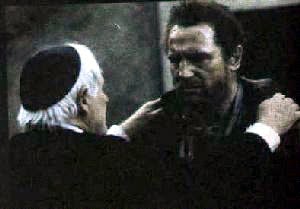
One of my favorite stories is Victor Hugo’s Les Miserables. It’s a story of grace and new life. The main character is Jean Valjean, who spends nineteen years in jail for stealing a loaf of bread for his starving family.  The experience in prison caused him to become a bitter man. 

By the time he is released, Valjean is hard, angry, and cynical. Since ex-convicts were not treated well in nineteenth-century France, Jean Valjean had nowhere to go. In desperation, he seeks lodging one night at the home of a Catholic bishop, who treats him with genuine kindness, which Valjean sees only as an opportunity to exploit. 

In the middle of the night, Jean Valjean steals the bishop’s silver and leaves. The next day, however, he is caught by the police. When they bring Jean back to the bishop’s house for identification, the police are surprised when the bishop hands two silver candlesticks to Valjean, implying that he had given the stolen silver to him, saying, “You forgot these.” 

After dismissing the police, the bishop turns to Jean Valjean and says, “I have bought your soul for God.” In that moment, by the bishop’s act of mercy, Valjean’s bitterness is broken.

Jean Valjean’s forgiveness is the beginning of a new life. The bulk of Victor Hugo’s novel demonstrates the utter power of a redeemed life. Jean chooses the way of mercy, as the bishop had done. 

Valjean raises an orphan, spares the life of a parole officer who spent fifteen years hunting him, and saves his future son-in-law from death, even though it nearly cost him his own life. There are trials and temptations for Valjean all along the way. 

What keeps Jean Valjean pursuing his new life is mercy. Whereas before, he responded to mercy with a brooding melancholy and inner anger, now – after being shown grace – Valjean responds to each case of unjust suffering with both mercy and joy, deeply thankful for the chance to live a new life full of grace.

Suffering and joy. They, at first glance, may seem to be opposites. Christianity views suffering as an occasion for joy, and not just empty meaningless grief. 

“A gracious soul may look through the darkest cloud and see God smiling on him.”

Thomas Brooks (1608-1680)

Followers of Jesus imitate their Savior through walking in the way of suffering. These sufferings are trials to our faith and the means by which our faith is developed, used, and strengthened. Just as gold is refined by being put through fire, so our faith is refined and proven genuine through the purging fires of life’s trials and troubles. 

Walking in the way of the Lord Jesus, adversity is our Teacher, helping us to know Christ better and appreciate the great deliverance from sin, death, and hell we possess in Jesus.

Adversity has a positive effect of making faith genuine. Every generation of Christians must come to grips with faith. Belief is not only a matter of confession with the lips; faith is also proven primarily through suffering. So, we must walk-the-talk, as well as talk-the-walk. 

Faith is like a new car – it is meant to be occupied, used, and driven – and not to only sit in the garage and be admired. A car is meant to be on the road, and if it does not perform well, we say it’s a lemon and we get another car. 

Cars are the vehicles getting us from point A to point B. And, hopefully, we enjoy the ride without being frustrated and having road rage. It is unrealistic, as drivers, to believe we will never have to drive in adverse road conditions. We know it is silly to believe the weather must always conform to our driving habits. 

Good drivers are good drivers because they drive a lot and have driven in nearly every road condition there is.  Mature Christians are those followers of Jesus who live their faith each and every day and, since they allow their faith to take them places, have seen all kinds of adversity, trials, and suffering along the road of life.

They have learned through all their troubles and trials to enjoy what God is doing in their lives instead of being frustrated and have faith-fury. Such Christians have the confidence they are receiving the goal of their faith, the salvation of their souls. They understand their faith grows and develops as they face the challenges of life every day with a firm commitment to their Lord Jesus.

There are times we feel overwhelmed by our circumstances and wonder how to get through them. Yet, no matter what happens, we still love Jesus and believe him, even though we don’t see him. Like Jean Valjean, we keep living our lives with joy knowing that mercy shapes our lives with purpose and meaning.

Peter could praise God because his life was transformed by the grace and mercy of Jesus. Peter went from an impulsive and fearful fisherman who denied the Lord three times, to a confident and courageous witness of Christ because he was regenerated, restored, and renewed by grace. He joyfully endured suffering and opposition because his faith was precious to him. 

There can be a tendency for many Christians to show a flat and staid attitude through the trials of life – trying to keep a stiff upper lip and endure. However, taking the approach of “It is what it is” only works for so long. 

Eventually “My God, my God, why have you forsaken me!” is a more appropriate response to trouble. It is precisely during those times when human hope fades that we rejoice – even though the rejoicing is through tears – in the living hope kept for us.

This gracious inheritance of hope is imperishable, undefiled, and unfading. That means we can live through a difficult day or week or month or even, dear God, a year or longer with spiritual endurance. We can persevere through a worldwide trial of pandemic. We can do more than survive – we can thrive through having our faith muscle stretched and strengthened. We are not alone. We all suffer together.

Our shared value of the risen Christ is the fuel that keeps our car of faith running. It is what transcends the stoic attitude of unfeeling endurance to a joyful flourishing of faith. 

Eventually, suffering will have done its work and we will be with Christ forever. Until that day, let’s not hunker down and stay in the garage of life. Let us explore all that God has for us, embracing both the meaning and the mystery of faith. Since our salvation is assured, let us live with confidence and run the race marked out for us. 

Let us not be complacent or slow in doing the will of God, but work for God’s kingdom purposes on this earth, in this age, while it is still called Today. And let us allow the trials of this age to do their work in us, responding to them with joy knowing that our faith is being strengthened for the benefit of blessing the world. 

To God be the glory. Even in suffering.

Blessed Lord, you created us and lovingly care for us. We accept all our sufferings willingly, and as truly obedient children we resign ourselves to your holy will. Give us the strength to accept your loving visitation to us through adversity, and never let us grieve your heart by giving-in to impatience and discouragement. We offer you all our pains to be used for your honor and glory.

Brother Jesus, you loved us so much as to suffer and die for our deliverance from sin. Through the love we have for you, we willingly offer all that we have ever suffered in the past, am now suffering, and will suffer in the future. We are grateful that your love enables us to suffer with joy. Because you suffered, we have new life in the name of Jesus who taught us to pray. Amen.

Matthew 17:23-32 – Parable of the Two Sons

The Parable of the Two Sons by Jorge Cocco

Jesus entered the temple courts, and, while he was teaching, the chief priests and the elders of the people came to him. “By what authority are you doing these things?” they asked. “And who gave you this authority?”

Jesus replied, “I will also ask you one question. If you answer me, I will tell you by what authority I am doing these things. John’s baptism—where did it come from? Was it from heaven, or of human origin?”

They discussed it among themselves and said, “If we say, ‘From heaven,’ he will ask, ‘Then why didn’t you believe him?’ But if we say, ‘Of human origin’—we are afraid of the people, for they all hold that John was a prophet.”

So, they answered Jesus, “We don’t know.”

Then he said, “Neither will I tell you by what authority I am doing these things.

“What do you think? There was a man who had two sons. He went to the first and said, ‘Son, go and work today in the vineyard.’

“‘I will not,’ he answered, but later he changed his mind and went.

“Then the father went to the other son and said the same thing. He answered, ‘I will, sir,’ but he did not go.

“Which of the two did what his father wanted?”

“The first,” they answered.

Jesus said to them, “Truly I tell you – the tax collectors and the prostitutes are entering the kingdom of God ahead of you. For John came to you to show you the way of righteousness, and you did not believe him, but the tax collectors and the prostitutes did. And even after you saw this, you did not repent and believe him. (New International Version)

The people entering God’s kingdom may not be the ones we expect. 

That’s because God’s kingdom is an upside-down kingdom. The spiritual insiders are really on the outside, while the spiritual outsiders are the ones inheriting the kingdom.

Today’s Gospel parable is a warning to all the spiritually serious to beware, lest their energies be spent entirely in correctness, believing the right things, and making obedience to Christ of secondary importance. 

This parable also encourages moral failures with the wonderful possibilities of a changed life. 

That’s because talk is cheap. Only what one believes, one will do.

Lip service to God, without loving service, is hollow and means nothing.

The Warning: Don’t Assume

Christ’s parable warns those who arrogantly assume they have an inside track by their belief, when in reality they aren’t obeying God, at all.  It’s a bit hard for us to imagine how offensive this story was to the religious authorities of the day, so here is a restatement of the parable in a more contemporary form:

What do you think? There was once a man well-respected in the community. He had two sons. The one son grew up and also became a respectable member of the community. This son was a successful businessman, and willingly gave a lot of money to causes in his community, including new lights for the football field – which was no small cost. He only asked that appropriate and prominent recognition be given him with a plaque on each of the light poles with his name on it. 

The other son was not so successful.  He was the one in school of whom the teachers said, “Why can’t you be more like your brother?”  There was nothing spectacular about this son. In fact, he lived an alternative lifestyle and seemed to always be the talk of people behind his back. 

One day the father said to him, “Son, go and work at my place of business today. I am going away and need you to do some of the tedious paperwork I have gotten behind on so that I can get away.” “I will not,” he answered, but later felt heartsick about the way he had spoken to his father and decided to go to his place of business and do all the grunt work his father needed done.

The father also went to the other son, the well-respected one, and said the same thing about needing him to do all the thankless paperwork that was piled up. That son answered, “Yes, sir, I will. Anything you need I will do.”  However, that son did not follow through and go do the tedious work. Instead, he chose to go golfing with some people whom he was trying to coy favor with.

After telling the story, Jesus asked all the upstanding church leaders and people listening, “Which of the two sons did what his father wanted?” “The first,” they all answered.

Then, Jesus said to them, “I tell you the truth, the gay, lesbian, bisexual, transgender, and queer people are entering the kingdom of God ahead of you. For you have had heard hundreds if not thousands of sermons about grace and the true way of righteousness, and you did not believe by putting the Word of God into practice; but they did. And even after you saw how grace can transform a life from the inside-out, you yourselves did not repent and believe.

For Jesus to tell such a story was so incredibly scandalous that it could get him killed – and it did. Simply believing the right things and living as an upstanding citizen is not the way of salvation. Tax collectors and prostitutes were the most despised people in Christ’s time. It was assumed they were on the outside and could never come to God, much like some might believe it unthinkable that a Muslim terrorist could be saved by Jesus. 

The proof of genuine belief is not in talking a good line; it is in actively obeying God when no one is looking to see what a good person you are.

Those who say, “I love God” and hate their brothers or sisters are liars. After all, those who don’t love their brothers or sisters whom they have seen can hardly love God whom they have not seen! This commandment we have from him: Those who claim to love God ought to love their brother and sister also.

1 John 4:20-21, CEB

The Christian life hinges on obedience to the words and ways of Jesus. It is to be a blessing to a lost world in need of the grace and love of God.

There was once a Pastor in the 1890’s, Pastor Wright, who pronounced from his pulpit and wrote an article for his denomination’s newsletter on how people flying was both impossible and contrary to the will of God.  Pastor Wright had two sons named Orville and Wilbur. The Pastor was so sure of himself, but he was surely wrong.

The Invitation: Walk Through the Open Door

This parable is more than a warning; it is also a story that opens a door of grace and mercy for unlikely people, far from God, who have said “no” to God. It is a wonderful invitation for all us screw-ups and people with little to no faith to come to Jesus, and he will give rest.

One of my favorite Old Testament references is from the life of David. It is rather obscure and tucked away where no one notices it in Scripture. David was on the outside looking in. King Saul was trying to capture him, even though he had done nothing wrong:

David got away and escaped to the Cave of Adullam. When his brothers and others associated with his family heard where he was, they came down and joined him. Not only that, but all who were down on their luck came around—losers and vagrants and misfits of all sorts. David became their leader. There were about four hundred in all. (1 Samuel 22:1-2, MSG)

This rag-tag group of outsiders in Israel became Israel’s insiders as David eventually became king. These were the men, referred to later, as David’s mighty men, people on the cutting edge of bringing Israel into prominence. 

Jesus, Son of God, Son of Humanity, came and clearly identified himself as the Savior to the outsider when he quoted the prophet Isaiah: 

“The Spirit of the Lord is on me.
    He has chosen me to tell good news to the poor.
He sent me to tell prisoners that they are free
    and to tell the blind that they can see again.
He sent me to free those who have been treated badly
    and to announce that the time has come for the Lord to show his kindness.” (Luke 4:18-19, ERV)

In Christ, there is no lost cause and no person too far to be rescued and redeemed. And if we believe that, we will participate with God’s desire to reach the outsider.

Conclusion

Practicing the words and ways of Jesus happens when we locate ourselves within this parable. For the true outsider, this is the most wonderful news possible – that Jesus is reaching out and bringing you to himself – that changing a “no” to saying “yes,” entry to life is possible. 

Yet, maybe some of us need to locate ourselves as the insider who needs to get a clue before we miss out on the grace of God in Christ.

Take heart, for Jesus came to seek and to save that which is lost. It is time to act on what we believe – to affirm truth and right doctrine, and to embody it with obedience to God’s call on our life.