The Need for Sacrifice

Man of Suffering by Georges Rouault, 1942
Ecce Homo by French artist Georges Rouault, 1942

Christ’s Church is not so much made up of saints or sinners as it is made up of saintly sinners and sinning saints.  The Church is at the same time both beautiful and ugly, holy, and wicked, full of faith and full of fear.  The Body of Christ is the place of spiritual sensitivity as well as a den of depravity.  So, anyone searching for a squeaky-clean church on a nice upward path of success with everything done to perfection and where no one ever gets hurt or unhappy… it does not exist; and, it never did.

Jesus stands alongside his imperfect people, despite their faults and egotism.  Jesus intimately knows our damaged emotions and our open putrid spiritual abscesses.  Yet, he treats us with mercy because he never tires of rehabilitating and reforming his Church.

Christ’s disciple, Peter, is the poster child for all the mixed motives and imperfect following of God we experience. For example, Peter stepped out of the boat in great faith and walked on the water, only to begin sinking because of his great fear. It was Peter who made a bold and right confession of faith, and then turned around here in our story for today and bought into Satan’s agenda. And Jesus was right there next to Peter all the way. Christ both rebukes and loves, all the while never abandoning us, but always working in and through us to accomplish his kingdom purposes.

Here is what we need to know or be reminded of today: Following Jesus involves pain and sacrifice because we live in a broken mixed-up world, and, on top of it, Christ’s Church is still imperfect and in the process of becoming holy.  If we will admit it, we are all like Peter – a little devil who needs to get in line behind Jesus. (Matthew 16:21-28)
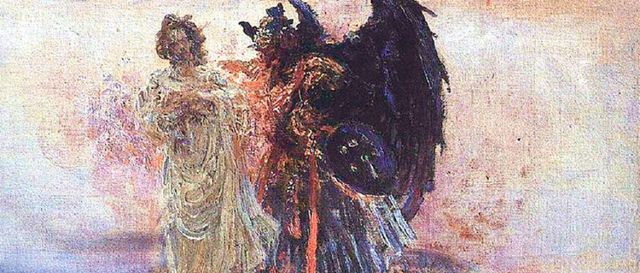
Peter Admonishes Jesus
Peter Admonishes Jesus by Unknown artist

We all, at times, get frustrated and/or disgusted with the whole church thing.  We can whine and complain and even avoid it.  Or, we can commit to taking up our cross, and give our lives for Jesus Christ.  We can choose to put love into the church where love is not, even when we do not feel loved. Priest and professor, Ron Rollheiser, once gave the following analogy about staying together around Jesus:

Imagine that the family is home for Christmas, but your spouse is sulking, you are fighting being tired and angry, your seventeen year old son is restless and doesn’t want to be there, your aging mother isn’t well and you are anxious about her, your uncle Charlie is batty as an owl… and everyone is too lazy or selfish to help you prepare the dinner.  You are ready to celebrate but your family is anything but a Hallmark card.  All their hurts and hang-ups are not far from the surface, but you are celebrating Christmas and, underneath it all, there is joy present.  A human version of the messianic banquet is taking place and a human family is meeting around Christ’s birth….

In the same way, here we are, the community of the redeemed. We gather in our imperfect way, a crazy mix of sinner and saint.  But we gather in and around Jesus – and that makes all the difference.  There is a reason we are here on this earth, a reason much bigger than all our dysfunctional ways and dyspeptic attitudes. Jesus Christ is building-up the people of God and he will keep doing it until the end of the age. In other words, Jesus is not quite finished with us yet; we still have some things to learn about the need for sacrifice.

The need for sacrifice by Jesus. (Matthew 16:21-23)

Jesus stated openly and in detail what must happen.  It was necessary for Christ to suffer deeply and die a cruel death; it was God’s will and plan. Yet, good ol’ Peter was not down for this plan, at all.  He took Jesus aside and rebuked him, believing him to be off his rocker for even suggesting such a terrible scenario.  Jesus, however, turned the tables on Peter and rebuked him right back.  Essentially, what Jesus said is that being Christ-centered without being cross-centered is satanic.

The error of Peter was that he presumed to know what was best for Jesus. He believed the suffering of the cross would “never” happen. Peter’s perceptions were dim and limited; he did not clearly see how broken the world really is and how much it would take to heal it. Jesus needed to offer himself as a sacrifice for the sins of the entire planet.

Crucifixion of Christ by Georges Rouault, 1936

Sometimes, like Peter, we might think that the way I see and the way I perceive is the way things really are, or, at least, how they should be. Peter had been walking with Jesus for a few years, watching and enjoying his ministry of teaching, healing, and extending compassion.  It was all good for Peter, and, therefore in his mind, it should not change. Peter wanted to hold this moment forever. After all, why try and fix something that is not broken? Oh, but broken the world is – so much so that it required the ultimate sacrifice.

Just because it was good for Peter did not mean it was good for everybody or should always be this way.  If Peter were to have his way, we would all be in hell right now; it would not have been good for us.  We, like Peter, are finite humans with limited understanding and perceptions.  We can easily slip into a satanic mode of believing that because something is going fine for me that everyone else is doing okay, too.  I like it, I want it, so what is the problem?

The problem is that we too easily look at life through narrowly selfish lenses, and then cannot see other people’s needs; cannot perceive the lost world around us with any sense of reality; cannot see that Jesus has an agenda very different from our own.  Our limited perceptions come out in saying things like, “Oh, she is just depressed because she is avoiding responsibility.”  “People on government welfare are lazy.”  “He’s addicted because he doesn’t want to help himself.”  “They’re demonstrating on the streets because they are a bunch of malcontents.” These, and a legion of statements like it, betray a satanic worldview devoid of grace and a compulsive need to find blame, believing that if there is personal suffering there must be personal sin.

In truth, we are all part of one human family, and we are all in this together; one person’s joys are our joys; one person’s struggles are our struggles. We really are our brother’s keeper. The detachment we can have toward other human beings is completely foreign to the words of Jesus.  The Christian life involves suffering, and Jesus invites us to follow him in his way of sacrifice.

The need for sacrifice by the followers of Jesus. (Matthew 16:24-28)

There is a way to reverse demonic thinking.  Jesus issues an invitation to practice self-denial, to fall in line behind him, and walk with him in his suffering.  Self-denial is not so much doing something like giving up sweets for Lent as it is giving up on ourselves as our own masters.  It is the decision to make the words and ways of Jesus the guiding direction for our lives.  It is the choice to quit holding onto the way I think things ought to be, and to take the time to listen to Jesus.

The logic of Jesus is relentless.  Life comes through death, so, we must give up our lives to find them.  It does us no good to adulterate our lives by serving the gods of success and perfectionism.  Jesus invites us to quit our moonlighting job with the world and go all in with him.  Only in this way will we truly find life.

Jesus was saying more than just submitting to suffering – we are to embrace it. In doing so, we will find reward and joy.  For those familiar with this path, they can tell you that suffering is a blessing because they have found the true purpose and meaning of life.

Crucifixion with Lamp by Colin McCahon 1947
Crucifixion with Lamp by New Zealand artist Colin McCahon, 1947

Few people have suffered as much as the nineteenth-century missionary medical doctor to Africa, David Livingstone.  He was a pioneer explorer who opened the interior of Africa to the outside world.  He had two reasons for doing so: To be able to take the good news of Christ’s suffering to the African people; and, to open Africa to legitimate trade so that the illicit slave trade would end.

Dr. Livingstone’s hand was once bitten and maimed by a lion; his wife died while on the mission field; he was most often alone on his travels; the one house he built was destroyed in a fire; he was typically wracked with dysentery and fever, or some other illness in the jungle.  Someone once commented to him that he had sacrificed a lot for going in the way of Jesus. Livingstone’s response was, “Sacrifice? The only sacrifice is to live outside the will of God.”  When asked what helped him get through so much hardship, he said that the words of Jesus to take up his cross were always ringing in his ears.

We may believe we must watch out for ourselves; that we need to push for our personal preferences; that if I accept this invitation to follow Jesus in the way of self-denial I will be miserable and people will walk all over me. Such thoughts are demonic whispers in our ears.

There are two ways of thinking and approaching the Christian life: There is the way which believes success, perfection, and a pain-free life is the evidence of God’s working; while the other way believes that suffering is right and necessary to connect with God and to be in solidarity with those who suffer.

Suffering, rejection, and execution did not fit into Peter’s church growth plan or factor into his view of Messiah. So, I will say it plainly: We do not exist only for ourselves. We do not exist to be a spiritual country club.  We do exist to follow Jesus in his path of sacrifice and suffering for a world of people who desperately need to know the grace of forgiveness and the mercy of Christ. Jesus died.  We are to die to ourselves. Christ lives; so, we are to live a new life.  In God’s upside-down kingdom, joy comes through suffering. We are to follow Jesus as the mix of sinners and saints that we are.

Peter eventually learned his lesson from Jesus. After Christ’s resurrection and ascension, Peter caught fire with courage and boldness – which landed him in hot water with the Jewish ruling council. As a result, he was severely whipped and flogged and told to keep in line. Peter’s response demonstrates how far he had come. He left the experience rejoicing that he had been counted worthy of suffering disgrace for the Name of Jesus Christ. (Acts 5:41)

May dear old Peter’s spiritual tribe increase.

Hebrews 12:1-3 – Wednesday of Holy Week

“If there is a meaning in life at all, then there must be a meaning in suffering. Suffering is an ineradicable part of life, even as fate and death. Without suffering and death, human life cannot be complete.” –Man’s Search for Meaning by Viktor Frankl

842b0-crucifixion

Therefore, since we are surrounded by such a great cloud of witnesses, let us throw off everything that hinders and the sin that so easily entangles. And let us run with perseverance the race marked out for us, fixing our eyes on Jesus, the pioneer and perfecter of faith. For the joy set before him he endured the cross, scorning its shame, and sat down at the right hand of the throne of God. Consider him who endured such opposition from sinners, so that you will not grow weary and lose heart. (NIV)

We are moving inexorably to the cross of Christ.  Along the way we face opposition, ridicule, misunderstanding, and betrayal.  And, yet, today’s New Testament reading informs us that this is initiated, motivated, and animated because of joy.  The path leading to the cross and the cross of Christ itself was painful in every sense of the word.  This doesn’t sound joyful at all.  There’s no definition in any dictionary which includes  suffering and shame with the word joy.

Jesus did not relish in being hurt by others because pain with no purpose is nothing but tragic despair.  Rather, Jesus clearly understood what the end of his suffering would accomplish: the saving of many lives.

Trying to make sense of this great sacrifice on our behalf can be mind-blowing.  No earthly illustration or word-picture can begin to adequately capture the idea.  Yet, maybe we can understand focusing the necessary discipline, effort, endurance, and pain in order to accomplish a goal.  In other words, the most significant and important goals of our lives require a great deal of blood, sweat, and tears to realize.  In a former life I was a cross country runner (back far enough for Sherman to set the way-back machine).  When I was running on a road or a golf course, I would sometimes get that very nasty and sharp pain in my side while running.  It is called a side cramp, or side stitch.  If you have never experienced it, the pain feels like an intense stabbing, as if someone were taking a knife and twisting it inside you.  Runners know there’s only one thing to do when this occurs: Keep running through the pain and it will subside in a few minutes.  To stop running only exacerbates and prolongs the hurt, not to mention losing a race.

Jesus endured the cross knowing he was going to experience terrible excruciating pain.  He also knew that not facing the shame of it and avoiding the agony would only make things worse; it wouldn’t take care of the problem of sin.  Jesus persevered through the foulness and degradation of the cross for you and me.  The pain was worth it to him.  Christ did not circumvent the cross; he embraced it so that the result would be people’s deliverance from death and hell.  The end game of his redemptive work was joy over deposing the ruler of this dark world and obliterating obstacles to people’s faith.

Suffering often does not fit into our equation of the Christian life; and, yet, it needs to.  Since Jesus bled and died for us, it is our privilege to follow him along the way of suffering.  Holy Week is a time to reflect and remember on such a great sacrifice, and to consider our Christian lives in the face of such great love.

Gracious Lord Jesus, I give you eternal thanks for your mercy toward me through the cross.  It is a small thing for me to follow you even it means great suffering on my part.  My life is yours.  Use it as you will, through the power of the Holy Spirit.  Amen.

Click There Is A Redeemer by Crossings Worship to continue the contemplation on the redemptive events of Jesus.

John 12:20-36 – Tuesday of Holy Week

cross of christ

Some Greeks who had come to Jerusalem for the Passover celebration paid a visit to Philip, who was from Bethsaida in Galilee. They said, “Sir, we want to meet Jesus.” Philip told Andrew about it, and they went together to ask Jesus.

Jesus replied, “Now the time has come for the Son of Man to enter his glory. I tell you the truth, unless a kernel of wheat is planted in the soil and dies, it remains alone. But its death will produce many new kernels—a plentiful harvest of new lives. Those who love their life in this world will lose it. Those who care nothing for their life in this world will keep it for eternity. Anyone who wants to serve me must follow me, because my servants must be where I am. And the Father will honor anyone who serves me.

“Now my soul is deeply troubled. Should I pray, ‘Father, save me from this hour’? But this is the very reason I came! Father, bring glory to your name.” 

Then a voice spoke from heaven, saying, “I have already brought glory to my name, and I will do so again.” When the crowd heard the voice, some thought it was thunder, while others declared an angel had spoken to him.

Then Jesus told them, “The voice was for your benefit, not mine. The time for judging this world has come, when Satan, the ruler of this world, will be cast out. And when I am lifted-up from the earth, I will draw everyone to myself.” He said this to indicate how he was going to die.

The crowd responded, “We understood from Scripture that the Messiah would live forever. How can you say the Son of Man will die? Just who is this Son of Man, anyway?”

Jesus replied, “My light will shine for you just a little longer. Walk in the light while you can, so the darkness will not overtake you. Those who walk in the darkness cannot see where they are going. Put your trust in the light while there is still time; then you will become children of the light.”

After saying these things, Jesus went away and was hidden from them. (NLT)

We are taking another step in our journey together with Jesus.  That path leads to a cruel cross.  For the past six weeks the Christian has been on a Lenten walk.  To keep the long sojourn going, believers focus on spiritual discipline, prayer, and repentance.  Along the way we come face-to-face with the shadow parts of ourselves.  We discover that within us there is the pull to hold-on to unhealthy rhythms and habits of life, as well as a push to arrange our lives with the fragmentation of disordered love.

Perhaps our reflexive response to things we do not like about ourselves is to either use sheer willpower to change or try and somehow manage our brokenness, as if we could boss our spiritual selves out of darkness.  The problem and the solution are much more radical than we often would like to admit.

The answer as we journey with Jesus is to die to ourselves.  Yes, this is the teaching of our Lord.  Sin cannot be managed or willed away – it must be eradicated and completely cut out, like the cancer it is.  Transformation and new life can only occur through death.  Jesus uses the familiar example of a seed to communicate his point.  A tiny little seed can grow, break the ground, and develop into something which provides sustenance for others.  It does no good to remain a seed in the ground.

dying to self

Jesus did not tell others to do what he himself does not do.  Christ is the ultimate example of the one who died to himself and literally died for us.  Only through suffering and death did he secure deliverance and freedom from sin, death, and hell.  Through his wounds we are healed.  Through his tortuous death a resurrection became possible – and we must always remember that there must be a death if there is to be a resurrection.  Death always comes before there is life.  There must be suffering before there is glory.

Through dying to self and following Jesus, a wonderful growth and transformation can happen.  It is a change, when it matures and produces a crop, which brings the kind of spiritual sustenance the world so desperately needs.  Following Jesus, leaving all to walk with him, is true repentance and authentic discipleship.

Perhaps you think I’m being too forceful, too insistent about this Jesus stuff.  Yes, you have perceived well.  I am being quite single-minded about the need to die to self and live for Christ.  Somehow, within many corners of Christianity, a wrongheaded notion that suffering is not God’s will has wormed its way into many churches.  Jesus, however, is insistent that dying to self is necessary.  And it hurts like hell.  It’s a hard teaching to absorb when you so desperately want things to be rainbows and unicorns.  Yet, the Epistle to the Hebrews makes explicit the way of Christ:

“In the days of his flesh, Jesus offered up prayers and supplications, with loud cries and tears, to the one who was able to save him from death, and he was heard because of his reverent submission.  Although he was a Son, he learned obedience through what he suffered; and having been made perfect, he became the source of eternal salvation for all who obey him.” (Hebrews 5:7-9, NRSV)

silhouette image of person praying
Photo by Rodolfo Clix on Pexels.com

We are not above our Master.  Even Christ’s life on this earth, before his death and resurrection, was marked with suffering.  Even Jesus learned obedience through struggle and adversity.  Our Lord himself did what he is now asking us to do.  He gave himself up to do the Father’s will.  Jesus offered loud cries and tears and submitted to what the Father wanted.  We must do no less.  We don’t get to choose which parts of Christ’s life and teaching we will adhere to and which ones we don’t need to, as if Jesus were some spiritual buffet line.  All who live for Jesus will follow him into the path of suffering, of death to self, and of new life through the power of his resurrection.  In Christ’s own words from our Gospel reading today: “Those who love their life will lose it, and those who hate their life in this world will keep it for eternal life.”  We must…

Surrender

We have hundreds, maybe thousands of small decisions every day with the use of our time, our money, our energy, and our relationships.  If we have tried to fix what is broken inside of us, we will likely just try to hastily fix the problems and the people in our lives and move on with getting things done on our to-do list.  Instead, we have the invitation to surrender.  We have opportunity to create sacred space for solitude and silence, prayer and repentance.  Take the time to (virtually!) sit with a person in pain and listen.  Reflect on how to use your money in a way which mirrors kingdom values.  Begin to see your life as a holy rhythm of hearing God and responding to what he says.  It takes intentional surrender to do that.

Sacrifice

Holding-on to our stuff and time is the opposite of sacrifice.  In fact, it’s avarice.  Yes, I understand that you and I are not Jesus – our sacrifice and suffering are not efficacious, that is, it doesn’t deliver other people from sin.  Only Christ’s death does that.  Yet, we are still called to sacrifice.  This was the Apostle Paul’s understanding:

“I am now rejoicing in my sufferings for your sake, and in my flesh, I am completing what is lacking in Christ’s afflictions for the sake of his body, that is, the church.” (Colossians 1:24, NRSV)

I’m just going to let you wrestle with that incredible verse and mull it over.  Pleasure is not the summum bonum of life.  Our lives are not meant to be lived solely for minimizing pain and maximizing comfort. Jesus has extended a call to view our workplaces, communities, neighborhoods, and families as our mission field of grace to a world in need of basic human attention.  This takes sacrificial love on our part.

Christianity is not really a religion that’s for people who have put together neat theological answers and tidy packaged certainties to all of life’s questions.  Rather, Christianity is a dynamic religion of learning to follow Jesus, discovering how to die to self, and struggling to put Christ’s teaching and example into practice.  It is a path often characterized by a three-steps-forward, two-steps-backward, and three-steps-forward again kind of reality.  The road is zig-zaggy with plenty of potholes.  Those who don’t struggle are in big trouble.  However, those who go through the pain of dying to themselves for the sake of their Lord, find that the harvest they produce leads to eternal life.

May you struggle well, my friend.

Almighty God, your dear Son did not ascend to joy until he first suffered pain and did not enter glory before he was crucified.  Mercifully grant that we, walking in the way of the cross, may find it as the true way of life and peace, through Jesus Christ your Son our Lord.  Amen.

Click Lead Me to the Cross by Hillsong United to continue contemplating the way of Christ.

Hebrews 9:11-15 – Monday of Holy Week

Wood Cross

When the Messiah arrived, high priest of the superior things of this new covenant, he bypassed the old tent and its trappings in this created world and went straight into heaven’s “tent”—the true Holy Place—once and for all. He also bypassed the sacrifices consisting of goat and calf blood, instead using his own blood as the price to set us free once and for all. If that animal blood and the other rituals of purification were effective in cleaning up certain matters of our religion and behavior, think how much more the blood of Christ cleans up our whole lives, inside and out. Through the Spirit, Christ offered himself as an unblemished sacrifice, freeing us from all those dead-end efforts to make ourselves respectable, so that we can live all out for God. (The Message)

The Christian Holy Week is an opportunity to embrace the value and practice of journeying with Jesus.  Just as birthday and anniversary celebrations allows us a different rhythm of life for a time, or as holidays provide us with certain family traditions, so Holy Week can be a special and unique time of contemplation and reflection on the last week of Christ’s earthly life.  As we journey with Jesus, consider the days of this week:

Palm Sunday is a focus on the entry of Christ into Jerusalem to shouts of “Hosanna! Blessed is he who comes in the name of the Lord!”

Monday of Holy Week looks ahead to Christ’s sacrifice with Mary’s anticipatory grief through a heartfelt and beautiful anointing of Jesus’ feet with her hair and her tears.

Tuesday of Holy Week depicts the difficulty of the disciples in wrapping their hearts and minds around what Jesus is telling them about his impending death.

Wednesday of Holy Week is known in some Christian traditions as “Spy Wednesday” because we remember that Jesus was betrayed by Judas, a clandestine spy among the disciples.

Maundy Thursday marks three significant events in Christ’s last week:  his washing of the disciples’ feet; his institution of the Lord’s Supper; and, his new commandment to love one another.

Good Friday marks the death of Jesus Christ.  It is “good” because his death means redemption for the world.  We especially remember why the cross is so very important, that it is the once-for-all sacrifice to end all sacrifices.  There is now eternal forgiveness.

Holy Saturday remembers the death of Jesus and his body in the grave with the Romans securing and keeping guard over it.

Easter Sunday is the culmination of all the expectations of God’s people, and the fulfillment of all God’s promises to them in Christ.  We rejoice, celebrate, and renew our love and commitment to God for raising Jesus from death.  His resurrection means new life for us.  He is risen, indeed!

Observing Holy Week is rather different this year.  Whereas this week typically takes the form of attending special church services, we are presently reliant on virtual community and spiritual presence.  It seems to me that, more than ever, we are reminded of our wonderful privilege in a worldwide community of redeemed persons who together are focusing on the life and death of Jesus.  If ever there was a time to realize our incredible connection with believers across the earth in contemplation and celebration together as Christ’s own Church, now is such a time.

Together with Christ’s Church throughout the globe we have opportunity to read treasured Christian Scriptures over the course of the week and to focus on the passion narratives in the Gospels.  For the follower of Jesus Christ, these are the fundamentals of our faith, the base upon which our eternal lives are constructed.  We return to the redemptive events of Jesus again and again so that for the entirety of the year we can live in careful devotion to the Savior who has brought us salvation from sin and offers new life.

Holy Week is here.  So, we choose to remember and give thanks with both quiet gratitude and loud shouts of praise, with solemn reflection and expressive response.  There is no time like it in the year.

Grant to us, Almighty God, that in our weakness we might be revived and renewed through the Passion of your one and only Son Jesus, our Lord, who lives and reigns with you and the Holy Spirit, one God, now and forever.  Amen.