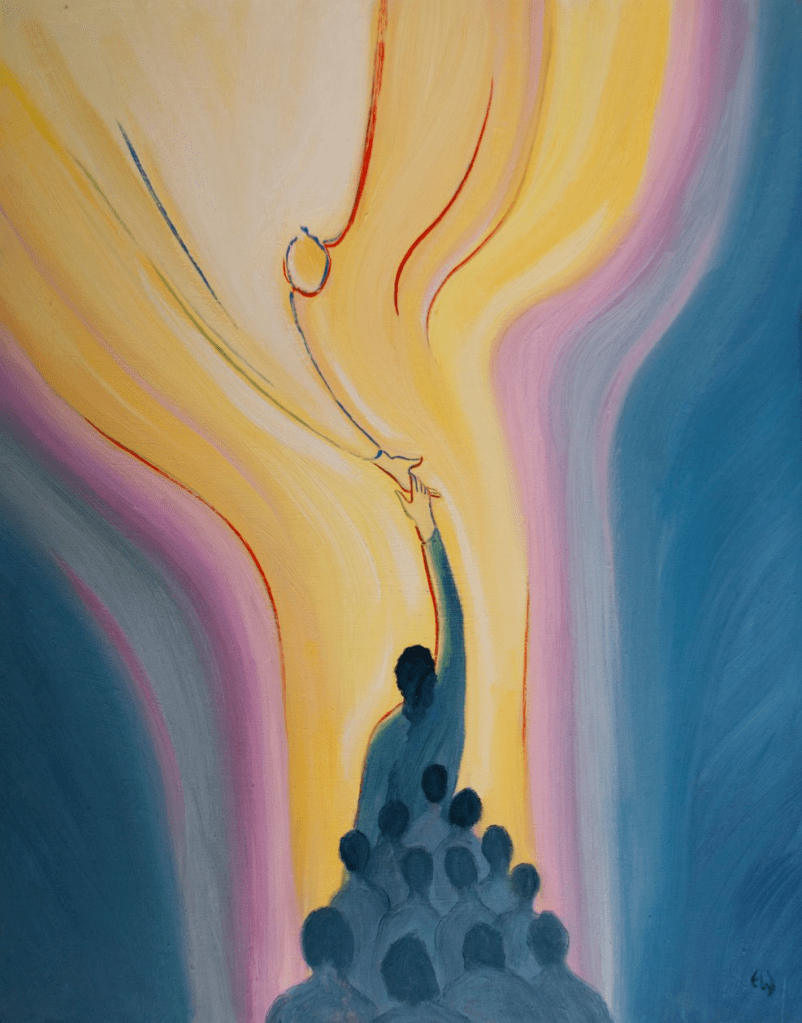
Christ Is Effective (Hebrews 10:10-18)

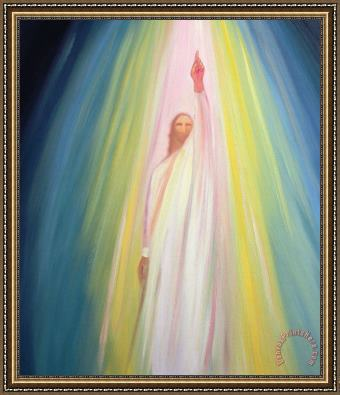
Orthodox icon of Jesus Christ

Day after day every priest stands and performs his religious duties; again and again he offers the same sacrifices, which can never take away sins. But when this priest had offered for all time one sacrifice for sins, he sat down at the right hand of God, and since that time he waits for his enemies to be made his footstool. For by one sacrifice he has made perfect forever those who are being made holy.

The Holy Spirit also testifies to us about this. First he says:

“This is the covenant I will make with them
    after that time, says the Lord.
I will put my laws in their hearts,
    and I will write them on their minds.”

Then he adds:

“Their sins and lawless acts
    I will remember no more.”

And where these have been forgiven, sacrifice for sin is no longer necessary. (New International Version)

We are reminded in this Advent season of the Christian Year, that the coming of Christ had a purpose: Offering himself for all of the guilt and shame of the world.

Through the incarnation of Christ, God entered the world in order to deliver all creation from the power of evil, to give freedom from sin, death, and hell, so that people could come to God.

The old sacrificial system of Levitical priests offering sacrifices was good, but it was not effective. Jesus, as both priest and offering, is infinitely better. Christ’s offering was so superior that it was the sacrifice to end all sacrifices.

Jesus Christ was willing to do the work of offering himself, and was the perfect person to do it. No other could have done it.

In the Christian religious tradition, Jesus is the logical, reasonable, and promised way of reversing the curse upon humanity and doing away with sin forever.

The person and work of Christ is both a simple project to understand, as well as so complex that we will spend an eternity exploring Jesus and his ministry.

So, let’s make sure to maintain the tension of a message everyone can understand, as well as a message so deep and wide that we need to keep discovering how it continues to unfold, even up to this day and beyond.

The priest in the old covenant made daily offerings. The sacrifices were a reminder of guilt; none of them could take away sins. But Christ made one offering that potently took care of the sin issue once and for all.

The offerings of the Levitical priests in the old system were repeated because they were insufficient to take away human shame. But Jesus “endured the cross, scorning its shame, and sat down at the right hand of the throne of God.” (Hebrews 12:2)

The author of Hebrews tells us that the once-for-all offering of Jesus made the worshiper perfect. It makes sense that a perfect Savior offered a perfect sacrifice, with the effect of making perfect those who are coming to God.

“Perfect” does not mean that the worshiper is now completely without sin, as if an instant moral and ethical perfection occurred. The author was not communicating that Christians are completely unblemished, pure, and never error in their ways.

Rather, the Book of Hebrews has the message that we can come to God without any obstacles. Worshipers are now in a situation where they can engage in the project of Christian maturity without any hindrances to access with God.

Even death will not stop the believer from coming to God. Death, hell, and sin have been conquered by Christ’s offering of himself. We can now spiritually grow, instead of spiritually wither. The way is open to God.

For we do not have a high priest who is unable to empathize with our weaknesses, but we have one who has been tempted in every way, just as we are—yet he did not sin. Let us then approach God’s throne of grace with confidence, so that we may receive mercy and find grace to help us in our time of need. (Hebrews 4:15-16, NIV)

In Christ, we have shed our human weakness and have obtained an indestructible life. (Hebrews 7:16)

The “perfection” or maturity and full realization of God’s promises in Christ will culminate at the end of the age. So, it is theologically (doctrine of God) and anthropologically (doctrine of humanity) appropriate to say that we are perfect and not yet perfect.

Put a different way, in the context of soteriology (doctrine of salvation), we have been saved, are being saved, and will be saved. The Cross of Christ has secured perfect deliverance for us.

Yet, we must live into that deliverance, which is what we call “sanctification” or the process of being made holy, pure, and mature as Christians.

And we will not be completely free of the world’s evil machinations, our own sinful proclivities, and the devil’s stratagems against us until the second advent when Christ returns to judge the living and the dead.

For now, we are in the process of being made perfect. We struggle daily with the tension between good and bad, right and wrong, justice and injustice.

Its as if the offering of Jesus, the Cross of Christ, made the largest splash in history, with ripples still extending out in all directions into the past and the future that keep making significant waves.

Thank you, Jesus. Praise the Lord.

Heavenly Father, in you we live and move and have our being: We humbly pray you so to guide and govern us by your Holy Spirit, that in all the cares and occupations of our life we may not forget you, but may remember that we are ever walking in your sight; through Jesus Christ our Lord. Amen.

The Real Thing (Hebrews 9:24-28)

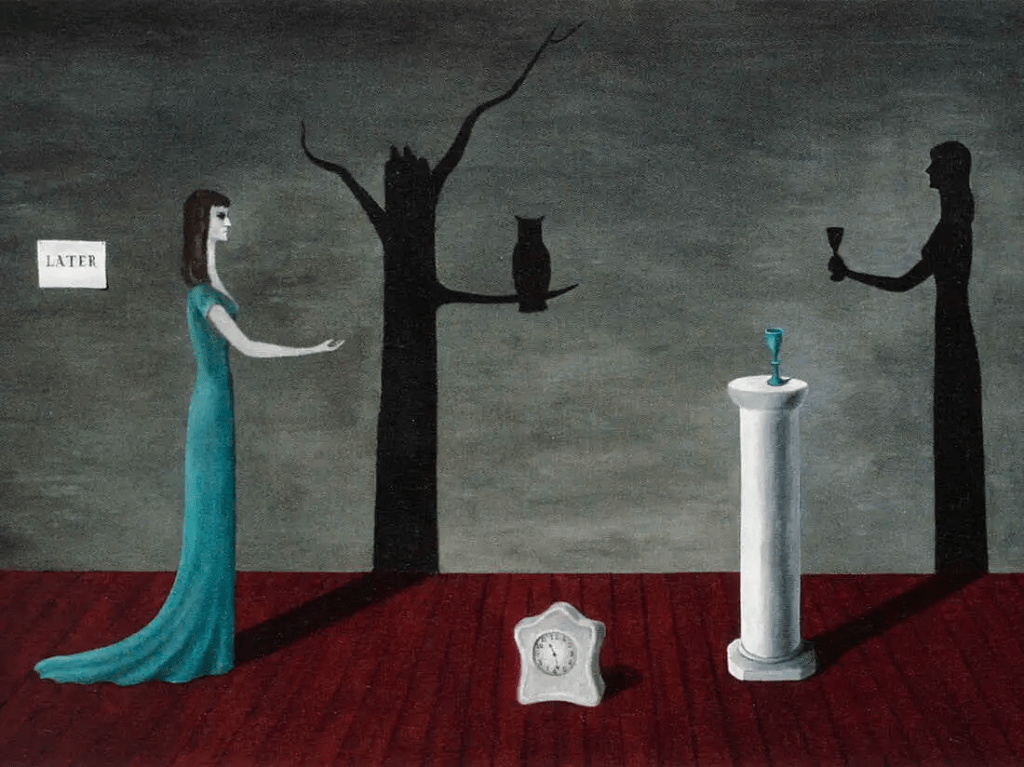
Strange Shadows (Shadows and Substance), by Gertrude Abercrombie, 1950

For Christ did not enter a sanctuary made by human hands, a mere copy of the true one, but he entered into heaven itself, now to appear in the presence of God on our behalf. 

Nor was it to offer himself again and again, as the high priest enters the holy place year after year with blood that is not his own, for then he would have had to suffer again and again since the foundation of the world.

But as it is, he has appeared once for all at the end of the ages to remove sin by the sacrifice of himself. And just as it is appointed for mortals to die once and after that the judgment, so Christ, having been offered once to bear the sins of many, will appear a second time, not to deal with sin but to save those who are eagerly waiting for him. (New Revised Standard Version)

I admit that the Book of Hebrews in the New Testament is one of my favorite books of the Bible. I also recognize that Hebrews is one of the most difficult books to deal with. And specifically, chapter 9 can be quite mind-boggling.

The author of Hebrews, whoever he was actually was, did the intellectually and theologically staggering job of establishing continuity between the two testaments of the Bible.

He compared and contrasted the old (or first) covenant with the new (or second) covenant, examining the Levitical priesthood and its sacrificial system, with Christ as the high priest whose singular sacrifice ended all sacrifices.

The old sacrificial system began on Mount Sinai. Moses sprinkled the sacrificial blood of bulls and goats on both the people and the tabernacle. He was consecrating them, and the sacrificial implements, so that everyone could participate in the worship of Yahweh.

In the new covenantal system, blood is also used to purify. Yet, the heavenly tabernacle could not be cleansed with the blood of animals. It required a better and superior sacrifice. (Hebrews 9:23)

The Sacrifice of Christ, by Elizabeth Wang, 2002

That sacrifice is Jesus. He was both the high priest officiating the ritual, and the actual sacrificial offering. It is the life of Jesus, given in self-sacrificial death, which enables worshipers to come to God without any obstruction whatsoever.

Jesus does not have to keep offering himself. It was a one and done affair. One sacrifice on behalf of everyone. Once for all.

This is, of course, a distinctively Christian view and approach to the problem of guilt, shame, disobedience, and death. It has been a very compelling view for millions of people over the past two millennia.

In whatever way one seeks to understand and make sense of the author’s line of reasoning concerning a Christian approach to sacrifice and dealing with sin, what is apparent to me is that the author talked of a reality that we do not presently see.

The author of Hebrews was lifting up something important that he wanted us to notice. He was pointing out the reality of spiritual forces that have the power to both destroy and give life.

The earthly objects that we can see, touch, feel, hear, and smell are mere representations or shadows of heavenly things.

Many people, if not most people, today would say that invisible things such as our ideas and philosophies of religion are mere mental ways of understanding the objective reality in front of us that we can use our five senses to detect.

But the author of Hebrews insists – and I believe rightly so – that it’s the other way around. Everything we are presently experiencing with our objective senses is a projection of the ultimate invisible reality.

In other words, this entire world will pass away, because it is but a shadow in the history of eternity. The invisible God is the real deal. The heavenly sanctuary is reality. Love is the permanent operating system of eternity, and not your 401(k) or the next political election.

Jesus the Christ has offered himself once for all time, and for all sins. And he did it because the triune God – Father, Son, and Spirit – is a community of unitive love. That is, God is Love. So therefore, God can only do that which is love.

The end of time is not yet here. This present world with all of its inconsistent ways of doing both good and bad is still with us. But Jesus will come again.

The sin issue has been dealt with, once and for all. Christ did that. Jesus will return in order to bring salvation to those who are waiting for him.

If we must wait, let us do it patiently, with all of the faith and endurance it requires. Yet, this is not a passive waiting. We are to be busy proclaiming the good news of God’s invisible realm with both words and sacraments – with the signs and shadows and representations we have that point to the reality of God.

Everything visible and tangible on this earth is mirroring a greater, better, and superior reality which we cannot see with our eyes or touch with our hands.

Christianity is unabashed that all things point to Christ, who is the first and the last, the alpha and omega, the be all and end all of everything.

Come, Lord Jesus, Son of God, Son of Humanity. We long for you to return in glory and set us and this entire sinful world aright with your divine justice.

Be our guest, Lord Jesus, our Savior and Friend. We receive in faith your salvation. We trust that both the physical food and spiritual food you give will sustain us for our work and worship in this world.

May it be so, to the glory of God, and through the enablement of the Holy Spirit. You are one God – Father, Son, and Spirit – in one holy community of Love, now and forevermore. Amen.

Visible Signs of Invisible Realities (Hebrews 9:15-24)

For this reason Christ is the mediator of a new covenant, that those who are called may receive the promised eternal inheritance—now that he has died as a ransom to set them free from the sins committed under the first covenant.

In the case of a will, it is necessary to prove the death of the one who made it, because a will is in force only when somebody has died; it never takes effect while the one who made it is living. This is why even the first covenant was not put into effect without blood. When Moses had proclaimed every command of the law to all the people, he took the blood of calves, together with water, scarlet wool and branches of hyssop, and sprinkled the scroll and all the people. He said, “This is the blood of the covenant, which God has commanded you to keep.” In the same way, he sprinkled with the blood both the tabernacle and everything used in its ceremonies. In fact, the law requires that nearly everything be cleansed with blood, and without the shedding of blood there is no forgiveness.

It was necessary, then, for the copies of the heavenly things to be purified with these sacrifices, but the heavenly things themselves with better sacrifices than these. For Christ did not enter a sanctuary made with human hands that was only a copy of the true one; he entered heaven itself, now to appear for us in God’s presence. (Hebrews 9:15-24)

The Hebrew Christians were tired. They had faced adverse circumstances, unjust imprisonments, persecution, prejudice, confiscation of their property, and public ridicule.

Most of all, they encountered rejection from their Jewish families of origin. There was precious little support for them, outside of their group.

The suffering went on long enough that the Christians began to experience a weakening of faith. In their distress, they started considering whether to return to Judaism, and renege on their commitment to Christ.

The author of Hebrews saw the struggle and spoke up, encouraging and exhorting the believers to keep going, to exercise faith and perseverance in the face of their ongoing troubles.

The author’s overall message to the discouraged believers was that Jesus Christ is superior over everything and everyone. Christ is better than the angels, Moses, and Aaron. Jesus is the ultimate high priest who offered himself as a sacrifice, once for all.

By means of the cross, Jesus became the mediator of a new and better covenant. There is, therefore, no more need of another high priest. Christ now occupies that office permanently.

Jesus Christ Points us to God, by Elizabeth Wang

Christ’s death was efficacious for all. The sacrificial system with all of the officiating Levitical priests was the old order of things, meant to point us to Christ.

Offering sacrifices day after day, and engaging in prescribed liturgical rituals in order to access God, are no longer necessary. Perpetual anxiety exists wherever people keep wondering if they have done enough to satisfy their guilt and/or responsibility.

The answer of Christianity is yes, the work is finished; Jesus completed it, once and for all.

There is no longer anything that can distress us. Sin, death, and hell have been conquered through the death of Christ. His singular sacrifice has achieved victory over the sinful powers, and reconciliation and peace with God.

Blessed is the one
    whose sin the Lord does not count against them
    and in whose spirit is no deceit. (Psalm 32:2, NIV)

The covenant code’s sacrificial system was never designed to be a permanent way of doing things. All of the implements used in that system were symbols pointing to the real deal. They were a temporary means of leading people to Christ, who is the once for all sacrifice to end all sacrifices, the one who truly takes away our guilt and shame forever.

The picture is of Christ, as our high priest, who sprinkled us with his own blood and made us clean – not only today or for some temporary period of time – but for all time. We are not only made clean; we are made clean forever by the blood of Christ.

Cleanse me with hyssop, and I will be clean;
    wash me, and I will be whiter than snow. (Psalm 51:7, NIV)

The historical person of Jesus – his life, ministry, crucifixion, death, resurrection, ascension and glorification – was a visible image showing us the great importance of invisible realities.

The Ark of the Covenant was a visible sign of God’s invisible presence, and the need for a restoration of the divine/human connection.

The temple, the worship implements, and the whole sacrificial system was a visible sign of God’s invisible holiness, and the need for purity of heart amongst the people.

Jesus was a real person with a real body and real human needs, a visible reality which showed us the invisible God, and what God truly deems as right and good.

It is Jesus Christ, the Son of God and Son of Humanity, in whom we have redemption the forgiveness of sins. He is the image of the invisible God. (Colossians 1:14-15)

Christ is our Mediator, bridging the gap between heaven and earth.

Christ is our Savior, delivering us from our guilt and shame, our worry and anxiety, and our old enemy, death itself.

Christ is our Advocate, stepping in and acting on our behalf, and sending the Holy Spirit to be his continuing presence on this earth.

Christ is our champion, the pioneer of our salvation, securing redemption for us through his singular death.

Christ is our Intercessor, who even now lives to intercede for us, as we strive and struggle to live in humility, justice, and righteousness, as peacemakers in this world.

What this all means, from the vantage of Christianity, is that we need Jesus.

Without Christ, there is no hope. With Christ, all things are possible.

Jesus is the answer to every question, because Jesus is the center of all things. He is the fertile soil from which all of life sprouts; the first-fruit which provides life; and the continuing sustenance which saves us from a disconnected, fragmented, discouraging existence.

Along with the ancient Hebrew Christians, let us be encouraged with Christ, who is truly our everything.

Accept, O Lord, our thanks and praise for all that you have done for us. We thank you for the disappointments and failures that lead us to acknowledge our dependence on you alone.

Above all, we thank you for your Son Jesus Christ; for the truth of his Word, and the example of his life; for his steadfast obedience, by which he overcame temptation; for his dying, through which he overcame death; and for his rising to life again, in which we are raised to the life of your kingdom.

Grant us the gift of your Spirit; that we may know you and make you known; and through your Spirit, at all times and in all places, may give thanks to you in all things. Amen.

Set Apart for the Lord (Numbers 8:5-22)

Consecration of the Levites, by Dutch artist Jan Luyken (1649-1712)

The Lord said to Moses: “Take the Levites from among all the Israelites and make them ceremonially clean. To purify them, do this: Sprinkle the water of cleansing on them; then have them shave their whole bodies and wash their clothes. And so they will purify themselves. Have them take a young bull with its grain offering of the finest flour mixed with olive oil; then you are to take a second young bull for a sin offering.

“Bring the Levites to the front of the tent of meeting and assemble the whole Israelite community. You are to bring the Levites before the Lord, and the Israelites are to lay their hands on them. Aaron is to present the Levites before the Lord as a wave offering from the Israelites, so that they may be ready to do the work of the Lord.

“Then the Levites are to lay their hands on the heads of the bulls, using one for a sin offering to the Lord and the other for a burnt offering, to make atonement for the Levites. Have the Levites stand in front of Aaron and his sons and then present them as a wave offering to the Lord. In this way you are to set the Levites apart from the other Israelites, and the Levites will be mine.

“After you have purified the Levites and presented them as a wave offering, they are to come to do their work at the tent of meeting. They are the Israelites who are to be given wholly to me. I have taken them as my own in place of the firstborn, the first male offspring from every Israelite woman. Every firstborn male in Israel, whether human or animal, is mine. When I struck down all the firstborn in Egypt, I set them apart for myself. And I have taken the Levites in place of all the firstborn sons in Israel. 

“From among all the Israelites, I have given the Levites as gifts to Aaron and his sons to do the work at the tent of meeting on behalf of the Israelites and to make atonement for them so that no plague will strike the Israelites when they go near the sanctuary.”

Moses, Aaron and the whole Israelite community did with the Levites just as the Lord commanded Moses. The Levites purified themselves and washed their clothes. Then Aaron presented them as a wave offering before the Lord and made atonement for them to purify them. After that, the Levites came to do their work at the tent of meeting under the supervision of Aaron and his sons. They did with the Levites just as the Lord commanded Moses. (New International Version)

Levite priests, by Sefira Lightstone

Holiness is very important to God; therefore, people are to be properly set apart for special divine work.

Perhaps we might think about this in the context of a professional vocation – which requires a good deal of training and development. The process, as well as the participants, need to be certified by a certification body. Without a specialized training, their work may hurt others, and even harm themselves.

Setting apart the Levites for the special work of caring for all the aspects of worship required a particular sort of calling, initiation, and ritual in order to have them ready – without harming themselves, or others. Because God is holy, things must be done in a way that helps, not harms.

The ritual for preparation essentially involved de-sinning the Levites, and purifying them from any ceremonial uncleanness. The community was to lay their hands on them, setting them apart for service as representatives of the people.

The Levites served before the Lord in a vicarious position, that is, all Israel came to God through them. They performed the needed sacrifices, handled the worship symbols and implements, and protected the sacred objects in the tent of God’s presence, the tabernacle.

With the Levites in their sacred role, they were near to the people, but distinct from them. They acted as a conduit between God and the people. Levites were something like the sunglasses protecting the people from the bright sun of the Lord’s presence; and like the workers laboring to make people thrive and flourish before God.

In the holiness of worship, the Levites were living sacrifices, offered to God for sacred purposes. So, as such, they understood their need to be continually pure of heart and free from anything that would defile them.

Sacrificial service was literally the job description of the Levites. They absolved themselves of any self-assertive ambitions, and pursued God’s will for the lives without question. This is, of course, the expected ideal, which would soon become deflated in the lives of the two older sons of Aaron the high priest.

Nevertheless, the descendants of Levi were a permanent visual aid and a daily reminder for God’s people of their unique status before Yahweh, as well as the redemption secured for them from Egyptian slavery. Whenever the people saw a Levite – consecrated to God – they knew that the Lord was with them.

God had said that the Levites belonged to him, were completely given over to the Lord, and set apart for dedicated holy and divine work. Moving into the New Testament, every Christian belongs to God, and those who labor for Christ and maintain holiness of life, demonstrate God’s ownership and special relationship to them.

Self-surrender and commitment to the common good of everyone in the community is supposed to be a hallmark of every Christian person. Whereas others may give themselves to self-discovery and self-fulfillment, followers of Jesus are to wholly dedicate themselves to self-sacrifice.

All believers, much like the ancient Levites, are called to a different life, with Christ as their constant mentor and model.

Loving God and Father of our Lord Jesus Christ, may the holy sacrifice of your Son cleanse my soul, strengthen my heart, pardon my past, and restore me in your peace. May I always adore you through my sacrificial service, fueled by your divine love. May I learn to sacrifice my own comfort, plans, and dreams, if it is not for your glory and the good of others. Amen.