Formed with Virtue (Romans 1:8-15)

First, I thank my God through Jesus Christ for all of you because your faith is being reported all over the world. God, whom I serve in my spirit in preaching the gospel of his Son, is my witness how constantly I remember you in my prayers at all times; and I pray that now at last by God’s will the way may be opened for me to come to you.

I long to see you so that I may impart to you some spiritual gift to make you strong—that is, that you and I may be mutually encouraged by each other’s faith.I do not want you to be unaware, brothers and sisters, that I planned many times to come to you (but have been prevented from doing so until now) in order that I might have a harvest among you, just as I have had among the other Gentiles.

I am obligated both to Greeks and non-Greeks, both to the wise and the foolish. That is why I am so eager to preach the gospel also to you who are in Rome. (New International Version)

Gratitude, service, prayer, encouragement, and duty. These are the qualities which defined the Apostle Paul; he sought to embody them every day of his life.

These virtues can define us, as well. If we seek to develop and exhibit each one, then we will find true community and satisfying relationships. And these very qualities were what Paul longed for in the Roman Church – because the believers were too often characterized by ingratitude, serving only those who were like them, a lack of prayer, discouraging others, and a warped sense of duty.

Jews and Gentiles were together in one church. It wasn’t going to be easy to get along and work side-by-side, but Paul was absolutely committed to it. Since the Apostle was both a Jew and a missionary to Gentiles, his heart deeply desired a mutual ministry in which the Christians thoroughly loved one another and had each other’s backs.

Gratitude

For that to happen, the practice of thanksgiving is needed.

We know that the one who raised the Lord Jesus from the dead will also raise us with Jesus and present us with you to himself. All this is for your benefit, so that the grace that is reaching more and more people may cause thanksgiving to overflow to the glory of God. (2 Corinthians 4:14-15, NIV)

In truth, gratitude is a spiritual practice which requires cultivation and attention. One of the best ways, in my opinion, of doing this is to keep a gratitude journal – actually hand writing what we are thankful for each day. And, when it comes to others, developing the habit of saying the words, “Thank you,” “I am so grateful,” and “You are so kind, I appreciate it.”

It’s hard to be a spiritual curmudgeon and grump through life whenever gratitude shapes our relationships. Gratitude has the practical effect of curbing our critical tendencies; it helps us as value people by thanking them often and clearly for who they are.

Service

To serve God and others is a way of offering resources, time, influence, and spiritual gifts for the betterment of humanity. This is how we love our neighbor as ourselves.

“Whoever serves me must follow me; and where I am, my servant also will be. My Father will honor the one who serves me.”

Jesus (John 12:26, NIV)

By orienting our lives around service, we begin to see other people’s needs and meet them – since we are taking the time and energy in getting to know them. As servants, we learn to “walk the talk” and embody what we profess. And, if we couple service with gratitude, we are able to whistle while we work and avoid bitterness.

Prayer

We all pray and pray for others. The real trick is to remember one another in prayer and persevere in it. For that to happen, we must allow God to heal our distracted selves and bring integrity to our fragmented lives.

“We should make a gift of our hearts, emptying them of ourselves, that they may be filled with God. Our almighty Father becomes one with us and transforms us, uniting Creator and creature.”

Teresa of Ávila (1515-1582)

By centering our identity firmly in Christ, we open ourselves to remember and intercede for others.

Pray in the Spirit on all occasions with all kinds of prayers and requests. With this in mind, be alert and always keep on praying for all the Lord’s people. (Ephesians 6:18, NIV)

Along with gratitude and service, our prayers take a focused shape of supporting others in need of healing, care, courage, patience, etc. And we replace any tendency to control or manipulate with a prayerful trust in God.

Encouragement

The Apostle Paul had a deep longing to help others grow into their God-given potential. He sought to empower others by sharing his life with them. Paul desired everyone to give themselves for the common good of all.

See to it, brothers and sisters, that none of you has a sinful, unbelieving heart that turns away from the living God. But encourage one another daily, as long as it is called “Today,” so that none of you may be hardened by sin’s deceitfulness. (Hebrews 3:12-13, NIV)

None of us can make it in life without the help and encouragement of others. So, we need authentic relationships for mutual help and support, to learn from each other, and garner wisdom from those who have walked with God many years.

Encouragement is greatly moved along when gratitude, service, and prayer accompany it, so that an encouraging community of people are a loving group of folks for whom others want to be around.

Duty

A sense of obligation is a good thing. It turns our privilege and power into a force for good in the church and the world. In reality, we are stewards of God’s gifts and resources given to us. This enables us to have a healthy practice of duty to our fellow humanity.

Jesus said, “Do not store up for yourselves treasures on earth, where moths and vermin destroy, and where thieves break in and steal. But store up for yourselves treasures in heaven, where moths and vermin do not destroy, and where thieves do not break in and steal.” (Matthew 6:19-20, NIV)

Through infusing our duty with gratitude, service, prayer, and encouragement, it becomes a delight to freely give of ourselves and our stuff, without a begrudging attitude. Generosity becomes a way of life, and we avoid becoming unhappy misers.

“If our charities do not at all pinch or hamper us, I should say they are too small.”

C.S. Lewis

Conclusion

In the Roman Church of Paul’s day, the relational dynamic had not yet broken down to the point of Schadenfreude, that is, actively delighting in another’s misfortune – but they were on their way. To mitigate and stop this from happening, Paul modeled a genuine spirit of thanksgiving, loving service, remembering prayer, healthy encouragement, and generous duty.

We would do well to follow his example of virtue, and be shaped by the gospel of Jesus Christ.

Generous God, I give thanks to you for the gifts you have given me – life, family, friends, time, talents, and possessions. All that I have comes from you. Help me to remember this and rejoice in your goodness.

Walk with me, my God. Help me on my spiritual journey, so that I may constantly renew my relationship with you and all the good people in our parish and beyond.

Renew in me your Spirit. Give me the strength and courage to become a better follower of Jesus, in whose name I am bold to pray. Amen.


Who’s In Charge? (Romans 9:6-13)

I am not saying that the promise of God has failed; for not all the people of Israel are the people of God. Nor are all of Abraham’s descendants the children of God. God said to Abraham, “It is through Isaac that you will have the descendants I promised you.” This means that the children born in the usual way are not the children of God; instead, the children born as a result of God’s promise are regarded as the true descendants. For God’s promise was made in these words: “At the right time I will come back, and Sarah will have a son.”

And this is not all. For Rebecca’s two sons had the same father, our ancestor Isaac. But in order that the choice of one son might be completely the result of God’s own purpose, God said to her, “The older will serve the younger.” He said this before they were born, before they had done anything either good or bad; so God’s choice was based on his call, and not on anything they had done. As the scripture says, “I loved Jacob, but I hated Esau.” (Good News Translation)

My friend, I want to break this to you as gently as possible yet as straightforward as I can: Neither you nor I are in control or in charge! 

Any semblance of control we think we have is merely a delusion. Now, before you push back, its important to make the distinction between control and responsibility. We are to own our decisions and take responsibility for their outcome. The Bible describes this as “self-control.”

God’s saving kindness has appeared for the benefit of all people. It trains us to avoid ungodly lives filled with worldly desires so that we can live self-controlled, moral, and godly lives in this present world. (Titus 2:11-12, GW)

Attempting to control others is not our job – never was, isn’t now, and never will be – that’s God’s business. 

God makes choices. This was the Apostle Paul’s point to the church at Rome. The congregation was a volatile mix of Jew and Gentile. There was some bad history between them that stretched back centuries. Yet, here they were together in one church worshiping Jesus. 

Paul made a responsible choice to step into the mess between them and let each group know something important: It is neither their choice about who’s in and who’s out as God’s people, nor their choice about how someone gets in to start with. Those sorts of decisions are God’s choice. 

The Jews needed to know that Gentiles are in the kingdom because God does the work of choosing, calling, and including Gentiles just as much as Jews. 

The Gentiles needed to know that they were not replacing Jews as chosen people. The point? God chooses whomever he darn well pleases to choose, and the choice is not up to you or me.

This speaks on so many levels about how to conduct ourselves with one another in the church. The foundation of all good church dynamics is the recognition that God is the one who calls and gathers people together. That always needs to be the starting point in our relations with each other. The church is not a random collection of persons who happen to be in the same place at the same time. God puts us where we are.

He has made everything beautiful in its time. He has also set eternity in the human heart; yet no one can fathom what God has done from beginning to end. (Ecclesiastes 3:11, NIV)

The Church is a covenantal community. Believers in Jesus are receiving the blessings first promised by God’s covenant relationship with Abraham in the Old Testament that all nations would be blessed by grace through faith. God is committed to acting on their behalf through election, adoption, and redemption. The new covenant community, the Church, receives the promises of God and exists to follow Jesus Christ in all things. 

The Church is not a voluntary society, like every other human institution. Rather, the Church is the divinely called community of the redeemed whom God has joined through the Spirit to Christ. Therefore, an individual, theologically speaking, does not join a church; instead, God joins the Church to Jesus.

The Nicene Creed (325 C.E.) describes the Church with four identifying marks:

  1. The Church is one.  The unity of the Church comes from God’s covenant people being in fellowship with the Lord through Jesus in the Spirit. This unity is expressed through the bond of love and a common worship that includes the spiritually forming practices of preaching, liturgy, and sacraments.  Since believers serve a triune God of Father, Son, and Spirit who exists in unity, so Christians are to work toward maintaining their unity through the bond of peace.
  2. The Church is holy.  The Church is holy by virtue of Christ’s finished work. Therefore, the members of the Church are saints, called by God to live in holiness and participate with him in carrying out his purposes on earth. As God is holy, so believers are to be holy in all they do. Since Christians are holy through God’s justification in Christ, so the Church as saints must uphold justice in the world.
  3. The Church is catholic.  This means that God’s people are found in all parts of the world throughout all times in history, including every race, class, gender, and ethnicity. Since the Church includes all kinds of people from different cultures, these believers must work together. The Church, across all kinds of denominations, ought to minister together to the total life of all people through gospel proclamation and good works done in the Spirit.
  4. The Church is apostolic.  Apostolic means “to be sent.” The Church is not only a people who are gathered for worship and teaching; they are also sent into the world as salt and light to those who are in darkness. Where the Church goes, the rule and reign of Jesus goes with them so that the gospel is spread to all nations.

Sovereign God, you choose whomever you want to include in your kingdom. Allow me to see Jesus in each person you call and save so that I can love and encourage them in the faith which is mutually and graciously given to us all; through Christ our Lord, and the ministry of the Holy Spirit. Amen.

Life in the Spirit (Romans 8:1-11)

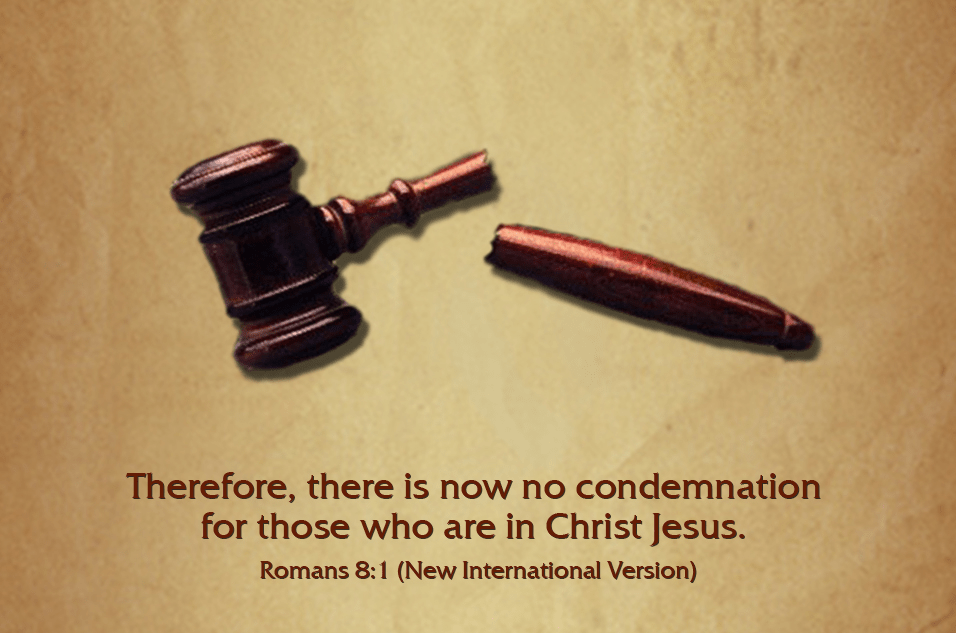
Therefore, there is now no condemnation for those who are in Christ Jesus, because through Christ Jesus the law of the Spirit who gives life has set you free from the law of sin and death. For what the law was powerless to do because it was weakened by the flesh [sinful nature] God did by sending his own Son in the likeness of sinful flesh to be a sin offering. And so he condemned sin in the flesh, in order that the righteous requirement of the law might be fully met in us, who do not live according to the flesh but according to the Spirit.

Those who live according to the flesh have their minds set on what the flesh desires; but those who live in accordance with the Spirit have their minds set on what the Spirit desires. The mind governed by the flesh is death, but the mind governed by the Spirit is life and peace. The mind governed by the flesh is hostile to God; it does not submit to God’s law, nor can it do so. Those who are in the realm of the flesh cannot please God.

You, however, are not in the realm of the flesh but are in the realm of the Spirit, if indeed the Spirit of God lives in you. And if anyone does not have the Spirit of Christ, they do not belong to Christ. But if Christ is in you, then even though your body is subject to death because of sin, the Spirit gives life because of righteousness. And if the Spirit of him who raised Jesus from the dead is living in you, he who raised Christ from the dead will also give life to your mortal bodies because of his Spirit who lives in you. (New International Version)

I feel tremendously privileged to be a Christian and to enjoy the very Spirit of God. The people of God are spiritual people, possessing God’s own Spirit. The Apostle Paul wanted Christians to know the privileges of life in the Spirit, as believers in Jesus.

No Condemnation

There is now no condemnation, no judgment, for us who are in Christ. God has pronounced a verdict, and that decision is final. We have been united to Christ by means of God’s Spirit. Since God condemns neither you nor I, there is no need whatsoever to condemn ourselves or other believers.

Since no condemnation is our reality as Christians, we are to believe this promise of God and swim in its wonderful privilege. Believe that the sin issue has been taken care of once for all through the life and death of Christ. And if you do not feel forgiven, then put yourself in a position to believe. 

It would be silly to go into the bathroom, turn on the shower, and then just stand in the middle of the bathroom without getting under the showerhead. It would be weird because you did not put yourself in a position to actually become clean. You may believe that a shower and using soap and shampoo will make you clean, but if you do not actually avail yourself of the privilege of actually taking the shower, but just stand there and look at it, you will not really be clean. 

We must put ourselves in a position to experience the privilege of knowing our wonderful state of cleanliness (no condemnation) by actually reading the Word of God on a regular basis; by praying in the Spirit on all occasions; by practicing the silence and solitude and other spiritual disciplines necessary to receive the cleansing work of the Holy Spirit.

Two people are declared “married” in a formal wedding ceremony. The couple then works out their shared union together over a lifetime. The minister does not pronounce condemnation at the ceremony; he declares a blessing. Yet, from that point forward, the two people must work on their marriage. They must believe their relationship is important enough to warrant putting themselves in a position to grow together. They will intentionally create date nights and conversations on the couch. They’ll seek to learn, appreciate, and participate in the other person’s interests and life. 

“Grace is not opposed to effort; it is opposed to earning. Earning is an attitude. Effort is an action. Grace, you know, does not just have to do with forgiveness of sins alone.”

Dallas Willard, The Great Omission

Just as we do not marry ourselves and pronounce ourselves a married couple, so we do not save ourselves. However, having a marriage license does not mean there is no effort to be done in the relationship. A marriage is both a legal reality, and a kind of mystical union between two married persons.

It’s a beautiful thing to be in a relationship where there is no condemnation. Because of Jesus Christ we are free to be the people God created us to be – forgiven and no longer burdened by the condemning voices of guilt and shame.

Freedom from Sin and Death

In Holy Scripture, sin is not only a personal struggle but a present ubiquitous reality in the world. The power and presence of sin is found everywhere. There is personal sin, institutional sin, and systemic sin. Because sin is everywhere, death is everywhere. Biblically, death refers to more than physical death because it is also a relational term. Death means relational separation from God. Conversely, life is relational connection with God. 

God did all the action necessary to make the union possible. God sent the Son. God became incarnate. God’s Son became a sin-offering, an atoning sacrifice for our sins. God condemned sin in sinful humanity. God met the righteous requirements of the law. God effects holiness in us by means of the Spirit. 

Rather than saving us from this terrible plight of sin, and then simply telling us to live a holy upright life, God the Father and God the Son sent God the Holy Spirit to indwell us so that we can live like Jesus. Therefore, we must put ourselves in a position to experience life through dwelling in the Scriptures and letting the Spirit and the Word work together to effect practical change in our lives (sanctification, that is, becoming holy). 

Having the Mind of Christ

A problem we all face is that we inhabit a fallen world. Our mindset can easily get screwy. If we want life and peace, we need the mind of Christ and the Spirit. Whatever our minds are occupied with is what determines whether we will have life and peace, or not. 

If the objects of our thoughts, interests, and affections are continually away from Christ and the Spirit, we will experience death, not life. If we put ourselves in a position to indulge the sinful nature (the “flesh”) we will miss real life. An undisciplined mind only leads to relational separation.

The addict knows there are two choices: either life or death. The first of the twelve steps of Alcoholics Anonymous is to admit that I am powerless over alcohol and that my life has become unmanageable.  The second step is to believe that a Power greater than myself can restore me to sanity. The third step is to turn my life and my will over to that Power. So, it is the same for us. 

We are powerless over sin, which will, if left unchecked, lead to death. But in the Spirit (not the alcoholic spirits!) we have life. Sin, like alcohol, is a daily possibility, even after giving my life and my will to God. Yet, there is also the possibility of life. And that hope of life comes with possessing the mind of Christ and the Spirit. 

We have hope that through the Spirit’s power we will overcome the power of choices that lead to death; and instead, embrace choices that lead to life. So, whatever we put into our minds is vitally important. 

The Spirit Indwelling Us

The Spirit is the distinguishing mark of the believer in Jesus. The Spirit opposes the sinful nature and expects us to do the same. There’s no need to try and live the Christian life on our own power when we possess spiritual power. There exists an internal struggle within us that desires to do right but has a compulsion to do otherwise. Yet, the indwelling Spirit gives us victory. Jesus lived the life for us that we could not live. His life, as much as his death, achieved salvation from sin for us. The very same Spirit that helped Jesus live his life, and raised him from death, is the same Spirit whom we possess.

When I was a kid, I remember my grandmother canning preserves. I would sit on a stool in the kitchen and watch her, looking forward to having some grape preserves on my next piece of toast. I once asked her, “Why are you always melting that wax over the fruit?” I didn’t understand how wax could make my toast taste any better. Grandma answered, “The wax seals the jar tightly so the fruit can’t be contaminated. If I didn’t seal it, the fruit would eventually rot.” As an amateur in the canning business, I could see the importance of picking grapes, boiling them, and canning them. But I now know how important sealing and preserving are.

You and I are God’s preserves. God not only chose us, redeemed us, and called us to life in the Son – God also had a plan for preserving us as heirs of eternal life. God gave us the indwelling Spirit so that we can live as we ought, free from sin and doing the will of God through spiritual power working within us. 

I hope today that you have a deep appreciation for the privileges of no condemnation, freedom from sin, possessing the mind of Christ and the power of the indwelling Spirit. And more than that, that you will avail yourselves of this tremendous gift of the Spirit and experience life and peace.

Gracious God, fill us with the knowledge of your will through all spiritual wisdom and understanding. May we live lives worthy of the Lord Jesus and please him in every way; bearing fruit in every good work, growing in the knowledge of God; being strengthened with all power according to your glorious might so that we may have great endurance and patience, joyfully giving thanks to you. For you have rescued us from the dominion of darkness and have brought us into the kingdom of the Son you love, in whom we have redemption, the forgiveness of sins. Amen.

Get Along with Each Other (Romans 2:12-16)

All who have sinned apart from the law will also perish apart from the law, and all who have sinned under the law will be judged in accordance with the law. For it is not the hearers of the law who are righteous in God’s sight but the doers of the law who will be justified. When gentiles, who do not possess the law, by nature do what the law requires, these, though not having the law, are a law to themselves. They show that what the law requires is written on their hearts, as their own conscience also bears witness, and their conflicting thoughts will accuse or perhaps excuse them on the day when, according to my gospel, God through Christ Jesus judges the secret thoughts of all. (New Revised Standard Version)

Every single person on planet earth has been created by a good Creator in the image and likeness of God, without exception.

Because we are all stamped with the Lord’s divine image deep within us, there is a universally inherent sense of justice, rightness, fairness, integrity, morality, and love. Particulars of ethics may differ from culture to culture, yet all persons and societies have a broadly similar innate understanding of right and wrong.

Within the ancient Roman Church were a mix of Jews (the historical people of God who were given the law and the covenant through Moses) and Gentiles (non-Jewish persons). The Apostle Paul wrote his lengthy and probing letter to them because the two groups of Jew and Gentile were at odds with one another.

The Gentile Christians could not understand the Jewish Christian fondness and insistence on ancient rules and particular commands, and so, they looked down on their brothers and sisters in the faith as being hopelessly locked into outdated traditions and practices.

Conversely, the Jewish Christians could not understand the Gentile Christian affinity for a freedom that seemed to not care about the religious importance of food and eating, seasons and holy days, and outward signs of Christianity, and so, they tended to look down on their brothers and sisters in the faith as ignorant, immature, and in need of ritual practices.

The Church back then was almost like putting a group of people with O.C.D. (Obsessive-Compulsive Disorder) with a group of people with A.D.D. (Attention-Deficit Disorder). At the least, it’s going to very interesting to watch them try to live and worship together; at the worst, it’s going to spark an all-out battle for supremacy.

Paul was intervening somewhere in the middle between the interesting situation and the pitched battles so that the Church would not turn into total war. The last thing he wanted was two churches: one Jewish and one Gentile. No, there is one church, just as there is one God. Paul was determined that these knuckleheads are going to have to learn to get along.

For he himself is our peace, who has made the two groups one and has destroyed the barrier, the dividing wall of hostility, by setting aside in his flesh the law with its commands and regulations. His purpose was to create in himself one new humanity out of the two, thus making peace, and in one body to reconcile both of them to God through the cross, by which he put to death their hostility. He came and preached peace to you who were far away and peace to those who were near. For through him we both have access to the Father by one Spirit.

The Apostle Paul (Ephesians 2:14-18, NIV)

Since Paul himself was a Jewish Christian, he tended to get pretty testy with his fellow Jews. Although Paul often went back-and-forth throughout his letter to the Romans, addressing Jews, then Gentiles, he most often had more to say to the Jewish brothers and sisters.

And that is what’s happening in today’s New Testament lesson. The Apostle Paul is directing his words chiefly toward the Jewish believers. He is lifting the Gentile believers and placing them on the same level as the Jews. Although the Gentiles weren’t the ones who received the law, they’ve always had that law deep inside them.

Not only ought the Gentile Christians to be respected because of their inherent sense of God’s law, but this also makes them accountable for their own words and actions. In other words, there’s no excuse for any sinful talk or behavior.

What’s more, the real issue isn’t whether one group has the law, or not. The rub is whether one actually obeys and does the will of God. It doesn’t matter whether one hears the law read aloud in a Jewish synagogue or whether one hears the law spoken in the individual conscience. All are responsible for acting on that voice and engaging in deeds of justice, peace, and love. All must connect with the stamped image of God within us.

I’m not sure what is worse: committing overt sins or observing the sin and saying or doing nothing about it. Indifference is at the core of most sin – both for the perpetrator and the passive spectator seeing it. Each one is living against both their conscience and by what they’ve heard and been taught.

The Word of God has not been truly received until it is put into practice. This is a consistent theme in the New Testament: 

Jesus said, “The people who are really blessed are the ones who hear and obey God’s message!” (Luke 11:28, CEV)

Obey God’s message! Don’t fool yourselves by just listening to it. If you hear the message and don’t obey it, you are like people who stare at themselves in a mirrorand forget what they look like as soon as they leave. But you must never stop looking at the perfect law that sets you free. God will bless you in everything you do, if you listen and obey, and don’t just hear and forget. (James 1:22-25, CEV)

Listening to the Word without obedience is just that – it is mere hearing. Profession of faith in Jesus means nothing without a practice of that faith; learning the Bible is useless without living it; and acceptance of the Word is nothing more than a mental exercise without action to back it up. Profession, knowledge, and acceptance alone does not satisfy God’s plan for our lives. 

The danger is that we have the potential to deceive ourselves into thinking we are okay just because we know the right things and believe the right things. Christianity is a vital love relationship with Jesus, and, so, is not merely a matter of hearing and affirming orthodox truth; it also involves orthopraxy, that is, having right practice, the doing of truth.

Whenever the Gentile Christians in Rome refused to love the Jewish Christians, they were neither hearing God nor obeying God’s law. Whenever the Jewish Christians listened to law and gospel, but then had no intention of changing to accommodate the Gentile Christians, they were being disobedient. And whenever we hear about how God forgives us in Jesus’ name, but then we insist on not forgiving another person, we are not being doers of the Word.

So, let’s take a lesson from the ancient Roman Church: Be attentive to all persons in the Body of Christ. Include them and care for them. Pay attention to God’s Word. Include it and engraft into your life. Because care of the Body and care of the Word go hand-in-hand together.

May the God who created a world of diversity and vibrancy,
Go with us as we embrace life in all its fullness.

May the Son who teaches us to care for stranger and foreigners,
Go with us as we try to be good neighbors in our communities.

May the Spirit who breaks down our barriers and celebrates community,
Go with us as we find the courage to create a place of welcome for all. Amen.