

The word of the Lord came to me: “What do you people mean by quoting this proverb about the land of Israel:
“‘The parents eat sour grapes,
and the children’s teeth are set on edge’?
“As surely as I live, declares the Sovereign Lord, you will no longer quote this proverb in Israel. For everyone belongs to me, the parent as well as the child—both alike belong to me. The one who sins is the one who will die.
“Suppose there is a righteous man
who does what is just and right.
He does not eat at the mountain shrines
or look to the idols of Israel.
He does not defile his neighbor’s wife
or have sexual relations with a woman during her period.
He does not oppress anyone,
but returns what he took in pledge for a loan.
He does not commit robbery
but gives his food to the hungry
and provides clothing for the naked.
He does not lend to them at interest
or take a profit from them.
He withholds his hand from doing wrong
and judges fairly between two parties.
He follows my decrees
and faithfully keeps my laws.
That man is righteous;
he will surely live,
declares the Sovereign Lord.
“Suppose he has a violent son, who sheds blood or does any of these other things (though the father has done none of them):
“He eats at the mountain shrines.
He defiles his neighbor’s wife.
He oppresses the poor and needy.
He commits robbery.
He does not return what he took in pledge.
He looks to the idols.
He does detestable things.
He lends at interest and takes a profit.
Will such a man live? He will not! Because he has done all these detestable things, he is to be put to death; his blood will be on his own head.
“But suppose this son has a son who sees all the sins his father commits, and though he sees them, he does not do such things:
“He does not eat at the mountain shrines
or look to the idols of Israel.
He does not defile his neighbor’s wife.
He does not oppress anyone
or require a pledge for a loan.
He does not commit robbery
but gives his food to the hungry
and provides clothing for the naked.
He withholds his hand from mistreating the poor
and takes no interest or profit from them.
He keeps my laws and follows my decrees.
He will not die for his father’s sin; he will surely live. But his father will die for his own sin, because he practiced extortion, robbed his brother and did what was wrong among his people.
“Yet you ask, ‘Why does the son not share the guilt of his father?’ Since the son has done what is just and right and has been careful to keep all my decrees, he will surely live. The one who sins is the one who will die. The child will not share the guilt of the parent, nor will the parent share the guilt of the child. The righteousness of the righteous will be credited to them, and the wickedness of the wicked will be charged against them.
“But if a wicked person turns away from all the sins they have committed and keeps all my decrees and does what is just and right, that person will surely live; they will not die. None of the offenses they have committed will be remembered against them. Because of the righteous things they have done, they will live. Do I take any pleasure in the death of the wicked? declares the Sovereign Lord. Rather, am I not pleased when they turn from their ways and live?
“But if a righteous person turns from their righteousness and commits sin and does the same detestable things the wicked person does, will they live? None of the righteous things that person has done will be remembered. Because of the unfaithfulness they are guilty of and because of the sins they have committed, they will die.
“Yet you say, ‘The way of the Lord is not just.’ Hear, you Israelites: Is my way unjust? Is it not your ways that are unjust? If a righteous person turns from their righteousness and commits sin, they will die for it; because of the sin they have committed they will die. But if a wicked person turns away from the wickedness they have committed and does what is just, and right, they will save their life. Because they consider all the offenses they have committed and turn away from them, that person will surely live; they will not die. Yet the Israelites say, ‘The way of the Lord is not just.’ Are my ways unjust, people of Israel? Is it not your ways that are unjust?
“Therefore, you Israelites, I will judge each of you according to your own ways, declares the Sovereign Lord. Repent! Turn away from all your offenses; then sin will not be your downfall. Rid yourselves of all the offenses you have committed, and get a new heart and a new spirit. Why will you die, people of Israel? For I take no pleasure in the death of anyone, declares the Sovereign Lord. Repent and live! (New International Version)

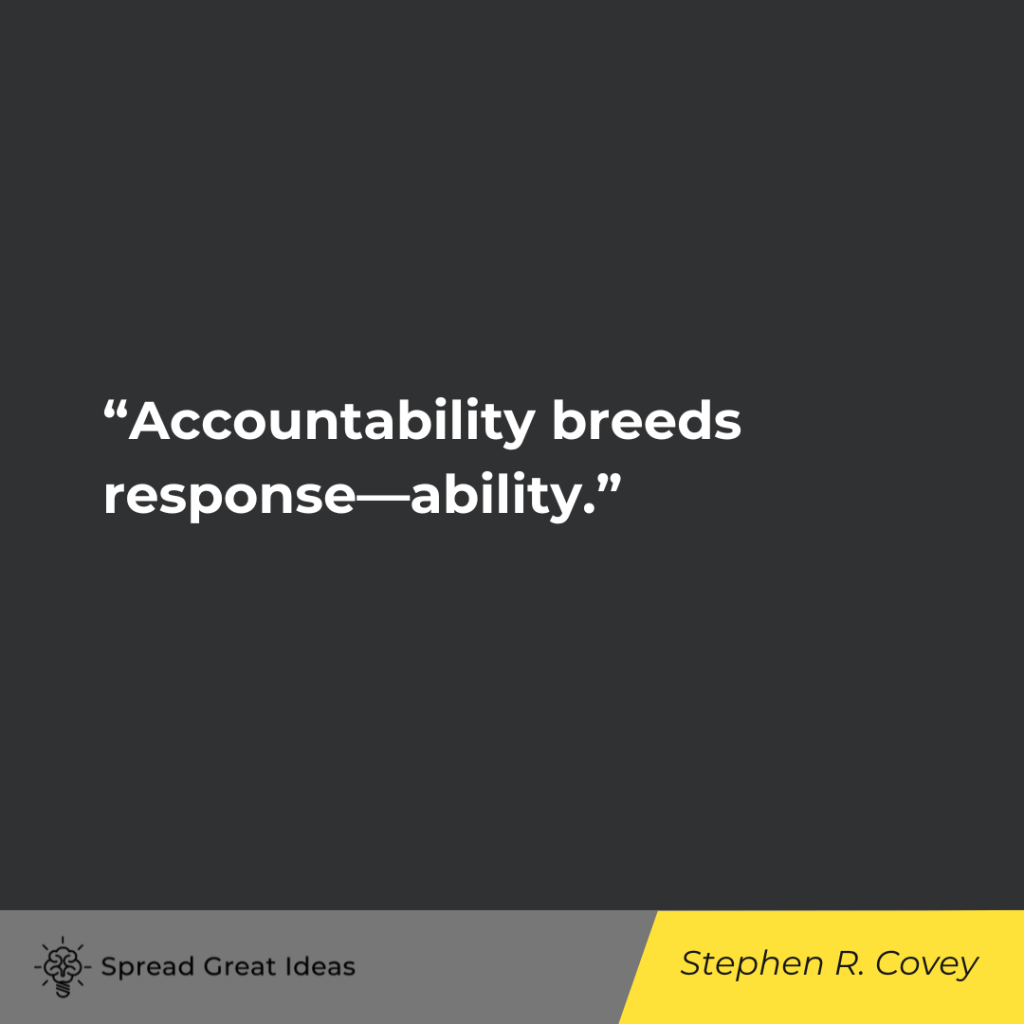
Every single one of us is accountable to one another for what we say and how we conduct ourselves. Above all, we are accountable to God for our motives, words, and actions in this life.
The flipside to stating that we are accountable, is saying that none of us are responsible for another person’s intentions, words, or actions.
Other people may influence us. We may be either participants in or victims of another’s actions. Some folks might take credit for something another person said or did. Yet, ultimately, we are responsible for our own life.
Whatever I think, say, or do is on me, period.
What’s more, one’s past actions do not replace our current actions. The prophet Ezekiel emphasized individual responsibility and accountability. All of the other Old Testament prophets addressed whole nations, and not individuals. They denounced the social, economic, and political systems and institutions, upholding communal ideals of justice.
Ezekiel communicated that children shall not be punished for their parent’s sins. Only the person who sins will face judgment.
A person ought only to pay for their own sins; punishment should not carry forward to future generations. The prophet also insisted that each individual person has the opportunity to change their behavior, and so, avoid their deserved penalty.
Every individual has the opportunity to change their personal ways of injustice or unrighteousness. For those who refuse, there is a and right and just Judge who knows how to dispense what is needed for each person – whether it is judgment to the arrogant, comfort to a victim, or justice for the underprivileged.
God cares that every person on earth receives what they need to thrive and flourish in this life. And to those who don’t give a wit about others, the Lord gives an opportunity to turn from arrogance and change.
Refusing to change, however, will end badly for the stubborn person.
The prophet Ezekiel calls on individuals to speak and act in ways that are helpful, not harmful. And whenever one harms another, that one must acknowledge the irresponsibility, because I am held accountable for what I say and do.
All words and actions come with consequences. It would do us a lot of good to consider how what we say and do (or fail to say and do) impacts the next generation of people. Everyone leaves a legacy of some sort – whether good or bad – so we need to be aware of how we live.
Each person must take up the mantle to do good, not evil; and to live righteously, not wickedly. Living selfishly with impunity leads to divine judgment. Yet, mercy is always there, if we seek to amend our ways.
Conversely, living righteously, and then resting on my laurels and living however I want, does not inoculate me from divine judgment.
You and I must live one day at a time, trusting God and seeking the welfare of others. And when I mess up, I am to keep a short account with God by admitting my fault and receiving grace.
We humans have quite enough responsibility in our lives without taking on the extra job of exacting judgment on another person. If we live a righteous life to begin with, then there is no need for a new heart and life.
Yet, if I need it, a new existence is there, through a change of direction which humility grants us.
Almighty God, help me to prioritize your values, and put my faith into action. Enable me to use the talents, resources, and time with which I have been blessed. Empower me to serve my community and my world. May I serve you always, and pray with a joyful spirit. Amen.



 Rev. Tim Ehrhardt