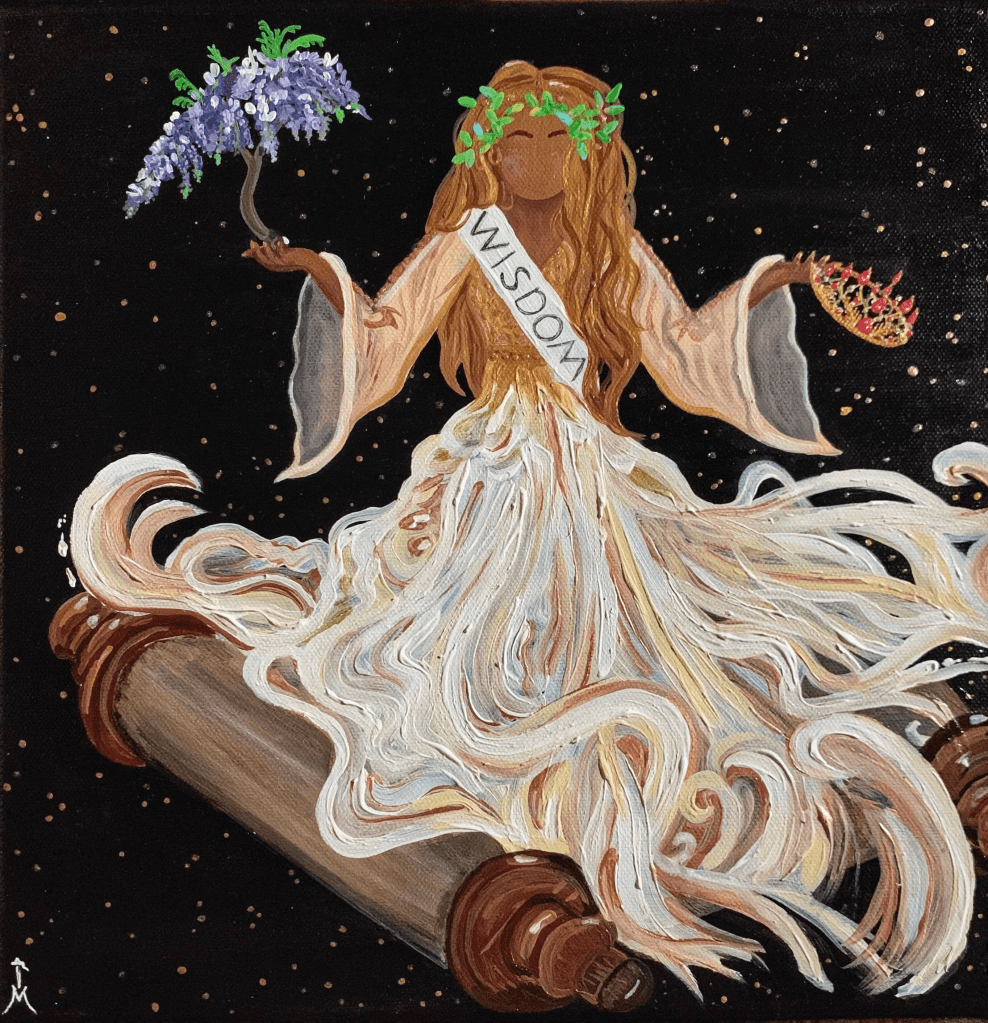
Wisdom for Life (Proverbs 11:1-31)

The Lord detests dishonest scales,
    but delights in an accurate weight.
When pride comes, so does shame,
    but wisdom brings humility.
Integrity guides the virtuous,
    but dishonesty ruins the treacherous.
Riches don’t help in the day of wrath,
    but righteousness rescues from death.
The righteousness of the innocent makes their path straight,
    but the wicked fall in their wickedness.
Those who do right are saved by their righteousness,
    but the untrustworthy are caught by their own desires.
When the wicked die, their hope perishes.
    Yes, any hope based on money perishes.
The righteous are saved from distress,
    and the wicked take their place.
The godless destroy their neighbors by their words,
    but the righteous are saved by their knowledge.
When the righteous succeed, a city rejoices;
    when the wicked perish, there are shouts of joy.
A city is honored by the blessing of the virtuous;
    it is destroyed by the words of the wicked.
Whoever despises their neighbor lacks sense;
    a sensible person keeps quiet.
A slanderer walks around revealing secrets,
    but a trustworthy person keeps a confidence.
Without guidance, a people will fall,
    but there is victory with many counselors.
Guaranteeing the debt of a stranger brings big trouble,
    but the one who refuses to shake hands will be secure.
A gracious woman gains honor;
    violent men gain only wealth.
Kind persons benefit themselves,
    but cruel people harm themselves.
The wicked earn false wages,
    but those who sow righteousness receive a true reward.
The righteous are headed toward life,
    but those who pursue evil, toward death.
The Lord detests a crooked heart,
    but he favors those whose path is innocent.
The evil person will surely not go unpunished,
    but the children of the righteous will escape.
Like a gold ring in a pig’s nose
    is a beautiful woman who lacks discretion.
The desires of the righteous end up well,
    but the expectations of the wicked bring wrath.
Those who give generously receive more,
    but those who are stingy with what is appropriate will grow needy.
Generous persons will prosper;
    those who refresh others will themselves be refreshed.
People curse those who hoard grain,
    but they bless those who sell it.
Those who look for good find favor,
    but those who seek evil—it will come to them.
Those who trust in their wealth will wither,
    but the righteous will thrive like leafy trees.
Those who trouble their family will inherit the wind.
    The fool will be servant to the wise.
The fruit of the righteous is a tree of life,
    and the wise gather lives.
If the righteous receive their due on earth,
    how much more the wicked and sinners? (Common English Bible)

The good and the bad, the wise and the foolish, the righteous and the wicked. When it comes to proverbial wisdom, there are two kinds of people: Those who take a right, just, and good path of life; and those who take the wrong exit, practice injustice, and embrace being bad.

We are all, of course, a strange amalgam of sinner and saint. Everyone has some altruism, along with a devious bent. So, life really comes down to our choices. Will our decision-making be wise, or foolish?

This is where the Book of Proverbs helps us. It lays out a prudent course of action for us, so that we can gain a perspective on the consequences of those actions, whether good or bad.

We have to carefully weigh our decisions and consider the likely outcomes of the choices we make.

As we decide, keep in mind that honesty is the best policy (11:1-4); choices have consequences (11:5-6); certain choices lead to rewards (11:7-10); good brings good, and bad brings bad (11:11-31).

Honesty Is the Best Policy

Making the decision to be honest in all things is what builds our capacity to resist evil. Poor choices often come from simply giving in, because we don’t have our resistance to saying “no” built up yet.

Humility enables us to keep our minds on the task at hand, rather than compromise on our integrity in order to achieve something we believe we need or want. The humble person understands that all things are a gift from God – and that the Lord can give, and the Lord can take away. Humility teaches us to say, “Blessed be the name of the Lord.”

When we are emptied of self-promotion, and filled with honest humility, righteousness results. And the righteous person automatically and reflexively denies all evil and wickedness.

Choices Have Consequences

Just because no one sees it, doesn’t mean there won’t be consequences. And just because there was no lightning strike from God immediately after a transgression, doesn’t mean that God’s judgment isn’t coming later.

I talk to far too many people, in my line of work as a hospital chaplain, who are filled with regret about some decision they made earlier in their life. Because now they are experiencing the physical consequences of that choice (and the emotional and relational consequences, as well).

A set of choices made earlier in life not only have real consequences later that one can see and feel; those decisions also erode the ability to make sound decisions in the present. It is a tough uphill struggle to gain some spiritual and emotional health, whenever any reserve of righteousness was not properly developed and maintained.

Certain Choices Lead to Rewards

Conversely, however, consistently good decisions, made over a stretch of time, provide solid spiritual and emotional dividends from which we can draw from in difficult times.

The chief reward for the righteous is that they have a robust life of faith and goodness because of their relationship to the Lord and a good supportive community of persons.

Foolish living leads to punishment; wise living leads to reward. A good life is really a reward itself. That’s because we are meant to live this way, to be merciful and just in all we do, walking humbly with our God. (Micah 6:8)

When the wicked die, that’s it. But when the righteous die, they leave a profound legacy in the form of others who have been encouraged, helped, and loved by their righteousness. They carry on the legacy of good. It makes a big difference.

I cannot imagine any greater reward than to know that I have been faithful to my God, and good to my fellow humanity. Such persons become like a great cloud of witnesses, testifying to the worth of investing in wisdom and humility.

Good Brings Good, Bad Brings Bad

A just and good life inspires others, invigorates groups of people, and leads to holistic health of individuals. Purity of heart is beneficial to the individual, and is contagious to the community.

A foolish life trusts in their own bad attitudes and personal opinions – and then they will wonder why they don’t get anywhere in life, and nobody wants to be around them.

King Solomon himself, gatherer of the biblical proverbs, knew all too well about both the good and the bad, and their eventual outcomes.

Solomon was quite humble and wise at the beginning of his reign. He did everything his father David asked of him, and more. But his wild success as king gradually brought him to acquire more stuff, more wives, and to fudge on the responsibilities and requirements of being king.

If a guy like King Solomon, who was the wisest person who ever lived, can ignore his own nation’s God and Holy Scripture to get whatever he wanted, then how much more do we, who have less wisdom, need the grace of loving people speaking truth to our hearts?

The people we surround ourselves with, no matter who we are, is vitally important. Everyone needs loving persons around them who will tell them what they need to hear in a spirit of love and grace. 

None of us do well with success unless we have humble and wise persons close to us who have the gumption and the grace to speak into our lives to help us, not hurt us. When we don’t have that, things go sideways.

I encourage you to go back and read Proverbs chapter 11 again, slowly, letting its wisdom seep into you. Also, a good practice is to read a chapter of Proverbs each day for the next month; and to occasionally, in the future, come back to this practice.

May the proverbial biblical wisdom fill your heart and your mind, so that you are able to make sage decisions in all of the various circumstances you encounter in this life. Amen.

There Is a Larger Perspective (Psalm 73:1-20)

Psalm 73, by Keli Hogsett. The artist states, “This piece is made entirely of wood ‘ends.’ The wood colored ends represent nearness to God, where the darker pieces represent the opposite. The darker ends can attract and manipulate the wooden ends, but the darker they get, they turn downward and are swallowed by the wooden ends.

God is indeed good to Israel,
    to those who have pure hearts.
But I had nearly lost confidence;
    my faith was almost gone
because I was jealous of the proud
    when I saw that things go well for the wicked.

They do not suffer pain;
    they are strong and healthy.
They do not suffer as other people do;
    they do not have the troubles that others have.
And so they wear pride like a necklace
    and violence like a robe;
their hearts pour out evil,
    and their minds are busy with wicked schemes.
They laugh at other people and speak of evil things;
    they are proud and make plans to oppress others.
They speak evil of God in heaven
    and give arrogant orders to everyone on earth,
so that even God’s people turn to them
    and eagerly believe whatever they say.
They say, “God will not know;
    the Most High will not find out.”
That is what the wicked are like.
    They have plenty and are always getting more.

Is it for nothing, then, that I have kept myself pure
    and have not committed sin?
O God, you have made me suffer all day long;
    every morning you have punished me.

If I had said such things,
    I would not be acting as one of your people.
I tried to think this problem through,
    but it was too difficult for me
    until I went into your Temple.
Then I understood what will happen to the wicked.

You will put them in slippery places
    and make them fall to destruction!
They are instantly destroyed;
    they go down to a horrible end.
They are like a dream that goes away in the morning;
    when you rouse yourself, O Lord, they disappear. (Good News Translation)

The psalmist Asaph communicated his own experience, which is really the experience of all Israel, and of all who genuinely seek to follow God.

Everyone who is truly pure in heart will struggle, at times, to make sense of all the impurity and injustice in the world. Even a cursory observation of this old world clearly sees that it is a broken messed up place.

Those observations challenge the faithful with questions such as, “Is God really good?” and “Is maintaining my purity and faithfulness worth it?”

Most often, the response to those questions is “Yes, but…”

Arrogant people prosper. They get away with being jerks. And it isn’t fair. Good people continually face adversity and hardship. Nothing comes easy. And it doesn’t make sense.

Contemplating this reality for too long can lead to a spiritual crisis of faith. It can produce doubt. It is likely to either morph into anger and bitterness, or a passive “meh” to most things in life.

However, observational appearances can be deceiving. There is much more to seeing than with our two physical eyes. There is the kind of sight which God has:

“I do not judge as people judge. They look at the outward appearance, but I look at the heart.”

1 Samuel 16:7

In truth, the real and actual power of arrogantly wicked people is their ability to create envy and jealousy in the righteous persons.

We need a different way of seeing, a reorientation of our limited understanding of life. Look at the world, containing both the wicked and the righteous, from an angle you haven’t seen before.

For Asaph, this breakthrough perspective happened in the sanctuary of his God. The psalmist began to see that the seeming wealth, health, and invincibility of the arrogant is merely a façade. Their true future is anything but prosperous.

Asaph also had a reorientation of himself. He began to understand and accept that his own heart had the shadows of bitterness and ignorance. He himself had too much vice hiding in his heart.

With the spiritual eyes of the heart, we can focus in on the presence of God. The Lord’s guidance is constant, even when it doesn’t seem like it. God’s handle on the future is secure.

The arrogant and the wicked will not last. There is a day coming when they will not rule over anything. Their end is a sure thing.

The wise heart discerns that not everything I see today will be the same tomorrow. Therefore, I can plan wisely for the future, and be patient that the goodness of God will ultimately prevail over it all. This orientation to life brings confidence and hope.

Wisdom also directs us to discern that our hope and confidence can wax and wane. Just because we may be full of faith, hope, and love today, does not mean that from here-on-out we will never have to struggle with these feelings of jealousy, envy, disappointment, and anger.

Far too often we think emotions can be easily replaced, the negative ones for the positive, envy for happiness, or jealousy for satisfaction.

However, we are more complex creatures than that, having the capacity to hold multiple emotions at the same time. Sometimes, the best thing is to recognize that I can be happy, even though I am sad, without ignoring or stuffing the sadness.

Consider this: At the same time, all the time, God is both terribly sad, as well as quite exuberant. The Lord both grieves and celebrates continually. That’s because God sees it all.

And if I were to see the entire scope of your life, I am sure there are aspects of that life which are joyous, and elements which are despondent, with great longing for change.

Asaph got a much fuller picture of how things actually are in this world. And with that more expansive perspective he discovered a sense of settled hope, despite the fact that nothing in his world had changed at all.

Indeed, I myself am to be the change that I long for in this world. And it starts with gaining a perspective of wisdom, and seeing the angle of immateriality.

Arrogant pride, hoarding of wealth, and injustice will not last forever. They are temporary. But there are permanent things in this universe, and none of them have to do with money or stuff.

When all is said and done, Love survives and thrives. God hasn’t gone anywhere. Jesus Christ is the same yesterday, today, and forever. The Spirit is still alongside us.

And the wicked are no more.

So, may righteousness, justice, and peace surround you today and everyday like a warm security blanket of hope. And may you know that you are seen and loved by a God who cares. Amen.

Lady Wisdom Is Speaking (Proverbs 8:1-31)

Lady Wisdom, by Mikayla Ragsdale

Doesn’t Wisdom cry out
    and Understanding shout?
Atop the heights along the path,
    at the crossroads she takes her stand.
By the gate before the city,
    at the entrances she shouts:

I cry out to you, people;
    my voice goes out to all of humanity.
Understand skill, you who are naive.
    Take this to heart, you fools.
Listen, for I speak things that are correct;
    from my lips comes what is right.
My mouth utters the truth;
    my lips despise wickedness.
All the words of my mouth are righteous;
    nothing in them is twisted or crooked.
All of them are straightforward to those who understand,
    and upright for the knowledgeable.
Take my instruction rather than silver,
    knowledge rather than choice gold.
Wisdom is better than pearls;
    nothing is more delightful than she.

I, Wisdom, dwell with prudence;
    I have found knowledge and discretion.
To fear the Lord is to hate evil.
    I hate pride and arrogance,
        the path of evil and corrupt speech.
I have advice and ability,
    as well as understanding and strength.
By me kings rule,
    and princes issue righteous decrees.
By me rulers govern,
    and officials judge righteously.
I love those who love me;
    those who seek me will find me.
Riches and honor are with me,
    as well as enduring wealth and righteousness.
My fruit is better than gold, even fine gold;
    my crops are better than choice silver.
I walk on the way of righteousness,
    on the paths of justice,
    to provide for those who love me
        and to fill up their treasuries.

The Lord created me at the beginning of his way,
    before his deeds long in the past.
I was formed in ancient times,
    at the beginning, before the earth was.
When there were no watery depths, I was brought forth,
    when there were no springs flowing with water.
Before the mountains were settled,
    before the hills, I was brought forth;
    before God made the earth and the fields
    or the first of the dry land.
I was there when he established the heavens,
    when he marked out the horizon on the deep sea,
    when he thickened the clouds above,
    when he secured the fountains of the deep,
    when he set a limit for the sea,
        so the water couldn’t go beyond his command,
    when he marked out the earth’s foundations.
I was beside him as a master of crafts.
    I was having fun,
    smiling before him all the time,
    frolicking with his inhabited earth
    and delighting in the human race. (Common English Bible)

Statue of Sophia (Wisdom), Sofia, Bulgaria

Wisdom is available. Wisdom is speaking to us. Wisdom lives with prudence. Wisdom enjoys God. And wisdom is personified as a woman (think about that before you have a round table discussion with all men).

To seek, cultivate, and teach wisdom is a worthy pursuit, in and of itself. The benefits of wisdom are great and profound, better than any earthly material thing, like silver or gold.

Actually, wisdom is quite an abstract ideal to pursue, which is likely why it helps to have it presented as a beautiful woman.

Proverbs are wise sayings; they are short pithy statements of experiential truth. This means that wisdom is less universal than it is situational. In other words, the Book of Proverbs is not a textbook or a manual on wisdom; it is rather something to be familiar with when we are facing difficult situations and thorny problems.

If there is a constant universal to all of the wisdom, it is to acknowledge and respect the presence of God in the world. All things change, except God. The Lord is the ever-present Being who is consistently right, just, and good all the time.

This may be why wisdom seems elusive. We can get to know God better and better for an eternity, and yet never exhaust getting to know God completely or fully.

Wisdom is like that. It’s too big, too variegated. There is no such thing as “Wisdom For Dummies,” that is distilled into a neatly bound book.

Truly, wisdom is rather slippery. It is not something to be mastered, but a grand sage presence to be mastered by. We must let Lady Wisdom have her way in our lives.

Lady Wisdom is in opposition to the temptress, the foolish one, who lures people into evil, and young men into the trap of misconduct that will alter their lives forever.

Just because Lady Wisdom has been around a long time – as old as the world – her beauty only increases over time; and her compelling message winsome.

The wise Lady still maintains a childlike wonder amongst God’s creative work. She revels in this world of delight and discovery. It’s fun to be alongside God and enjoy such a large and expansive playground of wonder.

Joy and levity are just as much at the heart of wisdom as brevity and seriousness. If Lady Wisdom can delight in the humans God has created, then we have much to learn from her in discovering how to frolic and play with our fellow creatures in good and wholesome ways.

The metaphorical image of wisdom as a beautiful woman who beckons us, is in competition with other voices that tempt us with quick and tidy happiness. Those other voices, however, never get around to mentioning the cost of their so-called solutions.

To court with foolishness is to make the devil’s bargain. It will only result in regret.

The best and straightest road to wisdom is by loving God and honoring God’s instructions. We get some help in this worthy endeavor through the wise sayings of Proverbs, and by means of Lady Wisdom’s sound advice.

We are called to keep up a pursuit of wisdom throughout the duration of our earthly lives – which means there is a lot of mystery to Lady Wisdom yet to discover; and there is much more to know about her.

Blessed God, help me to pay attention to your good friend, Lady Wisdom, so that in all my words and ways I may live into mercy, purity, and peace; and so, glorify You and enjoy this life you have given me. Amen.

A Spiritual Wedding (Psalm 45:1-2, 6-9)

My thoughts are filled
with beautiful words
    for the king,
and I will use my voice
as a writer would use
    pen and ink.

No one is as handsome as you!
    Your words are always kind.
That is why God
    will always bless you…

You are God, and you will rule
    forever as king.
Your royal power
    brings about justice.
You love justice and hate evil.
    And so, your God chose you
and made you happier
    than any of your friends.
The sweet aroma of the spices
myrrh, aloes, and cassia
    covers your royal robes.
You enjoy the music of harps
in palaces decorated
    with ivory.
Daughters of kings are here,
and your bride stands
    at your right side,
wearing a wedding gown
    trimmed with pure gold. (Contemporary English Version)

A Royal Wedding?

Today’s psalm is a love song meant to be used for a wedding. Whether it was designed only for royal weddings, or for ordinary couples to be a king and queen for a day, the psalm’s overall challenge is for the groom to exercise a right use of power.

Back in biblical times, within a patriarchal society, men held the power and authority within every aspect of the culture, especially in the family.

If the psalm is meant for only royal weddings, it communicates that, in effect, the king has been placed on the throne by God, and acts as God’s extension of justice and righteousness to the people.

And if the psalm is intended for any leader, or anyone who possesses power and authority, then being in such a position requires great responsibility. Power is to be wielded for good, with an eye toward doing what is just and right for all of the people in which the leader exercises authority over.

So, whether one is in a hierarchical or an egalitarian structure, all persons in authority are to give themselves to being faithful.

Symbolism and Allegory

There is a symbolic and allegorical aspect to the psalm. Just as the royal robe or wedding clothes of the groom emit sweet aromatic spices, so the leader who loves justice and acts with integrity is pleasing to all those under their authority.

But thanks be to God, who always leads us as captives in Christ’s triumphal procession and uses us to spread the aroma of the knowledge of him everywhere. For we are to God the pleasing aroma of Christ among those who are being saved and those who are perishing. To the one we are an aroma that brings death; to the other, an aroma that brings life. And who is equal to such a task? (2 Corinthians 2:14-16, NIV)

Those in responsible positions – and those sharing authority with one another – are to do what is life-giving for people; and not do things which are death-dealing. Promoting connection and being encouraging are vital. Causing division and being critical are destroyers of people’s welfare.

The psalmist praises a king who loves righteousness and hates wickedness. Such a ruler defends the cause of truth and upholds justice. These are ideals which have a pertinent message for public servants in every age.

Christ the Bridegroom, and the Church as Bride

For most of church history, Christian interpreters took a committed Christ-centered approach to the psalm. They saw Jesus as the beautiful king who reigns in justice and righteousness, faithfully ruling the people.

Through this view, every psalm, in some way, points to Jesus. In Psalm 45, the wedding poem directs believers to the coming wedding of Christ and the Church. The king is Jesus, who is worthy of praise and adoration. The bride is Christ’s Church.

Whether one discerns the psalm as literal or allegorical, the Christian understands that Jesus Christ is the ultimate fulfillment of all God’s promises. So, in that sense, everything in Holy Scripture – including the Old Testament and all of the Psalms – have to do with Christ.

All good earthly kings, rulers, and leaders hold an office which points forward to Christ, who rules over a kingdom to end all kingdoms. In looking at Psalm 45, the author of the New Testament Book of Hebrews takes such a view, since he looks back to this very psalm in speaking about Jesus:

But about the Son he [God] says,

“Your throne, O God, will last for ever and ever;
    a scepter of justice will be the scepter of your kingdom.
You have loved righteousness and hated wickedness;
    therefore God, your God, has set you above your companions
    by anointing you with the oil of joy.” (Hebrews 1:8-9, NIV)

The Reformer John Calvin (1509-1564) stated the reason we know the Psalm is about Jesus, because neither Jew nor Gentile talks this way about any human king – therefore, it is a reference to Messiah.

From St. Augustine to Martin Luther, scholars and interpreters saw in Psalm 45 a praise to Christ, who is the betrothed king.

The psalm’s celebration exalts the union of Christ and the Church. The song of love anticipates the great wedding feast at the end of the age, sung in honor of Jesus the bridegroom and the Church as the bride of Christ.

Weddings Are About Love

The psalmist unabashedly loves the king, and wants everyone to know it. Indeed, it is love which makes life worth living. It’s love that animates our words and actions. Apart from love, we are lost and lonely – languishing without an object of love to orient life around.

An affectionate love for Jesus Christ drives the Christian to live into goodness, justice, and righteousness. And we become what we love – which is why Christianity has the power to change the world for the better (and not in the weird sense of trying to conquer the world through politics and Christendom).

Such love elicits praise and adoration. Love brings about God’s good purposes. And God is determined to bring a spouse for his Son.

“God created the world to provide a spouse and a kingdom for His Son: and the setting up of the kingdom of Christ, and the spiritual marriage of the spouse to Him, is what the whole creation labors and travails in pain to bring to pass.” Jonathan Edwards (1703-1758)

It is far too easy for one’s love to fade in the Christian life. Living an ethical life, and maintaining doctrinal purity, may be kept up; and yet, it all can be done without love behind it.

Jesus said to the Church at Ephesus:

I know your deeds, your hard work and your perseverance. I know that you cannot tolerate wicked people, that you have tested those who claim to be apostles but are not, and have found them false. You have persevered and have endured hardships for my name, and have not grown weary. Yet I hold this against you: You have forsaken the love you had at first. (Revelation 2:2-4, NIV)

Let’s allow today’s Psalm to evoke and stir up our love for God by reminding us of God’s great love for us in Christ, and the love we have, or once had, for Jesus.

Let us see what great lengths God went to love us through Christ. And let us retain and maintain the joyous passion of life with God in Christ, by means of the Spirit.

Amen.