


Here is another story Jesus told: “The Kingdom of Heaven is like a farmer who planted good seed in his field. But that night as the workers slept, his enemy came and planted weeds among the wheat, then slipped away. When the crop began to grow and produce grain, the weeds also grew.
“The farmer’s workers went to him and said, ‘Sir, the field where you planted that good seed is full of weeds! Where did they come from?’
“‘An enemy has done this!’ the farmer exclaimed.
“‘Should we pull out the weeds?’ they asked.
“‘No,’ he replied, ‘you’ll uproot the wheat if you do. Let both grow together until the harvest. Then I will tell the harvesters to sort out the weeds, tie them into bundles, and burn them, and to put the wheat in the barn….’”
Then, leaving the crowds outside, Jesus went into the house. His disciples said, “Please explain to us the story of the weeds in the field.”
Jesus replied, “The Son of Man is the farmer who plants the good seed. The field is the world, and the good seed represents the people of the Kingdom. The weeds are the people who belong to the evil one. The enemy who planted the weeds among the wheat is the devil. The harvest is the end of the world, and the harvesters are the angels.
“Just as the weeds are sorted out and burned in the fire, so it will be at the end of the world. The Son of Man will send his angels, and they will remove from his Kingdom everything that causes sin and all who do evil. And the angels will throw them into the fiery furnace, where there will be weeping and gnashing of teeth. Then the righteous will shine like the sun in their Father’s Kingdom. Anyone with ears to hear should listen and understand! (New Living Translation)
As you have likely noticed, not everyone in this world is supportive of you and what you’re doing.
The good work we do – no matter how competently and expertly done – will be undermined by others. There will be people with selfish and sinister agendas who put roadblocks in our way to frustrate our ongoing work. They don’t like what we are doing and what we’re trying to accomplish.
Unfortunately, that’s just the way it is. So then, one of the big questions for all of us is this: How do we live with others trying to subvert the good work we are doing for the Kingdom of Heaven?
One of the most popular responses is to strike the enemy on their cheek just as hard or harder in the way they slapped you. It is responding to evil in kind.
But if we will ponder for a moment, we shall realize that is makes no sense to repay evil with evil. Why? Because then the Kingdom of Hell has just snagged this one with doing evil in order to defend good work – which ends-up ruining the whole enterprise.
No, instead let’s heed the words of Christ to turn the other cheek and not retaliate; and live the words of the Apostle Paul who reminded us to overcome evil by doing good. (Matthew 5:38-42; Romans 12:14-21)
Yes, all judgment belongs to the Lord, and not us. In today’s Gospel lesson the reasoning Jesus provides for non-retaliation and non-violence is both reasonable and practical.
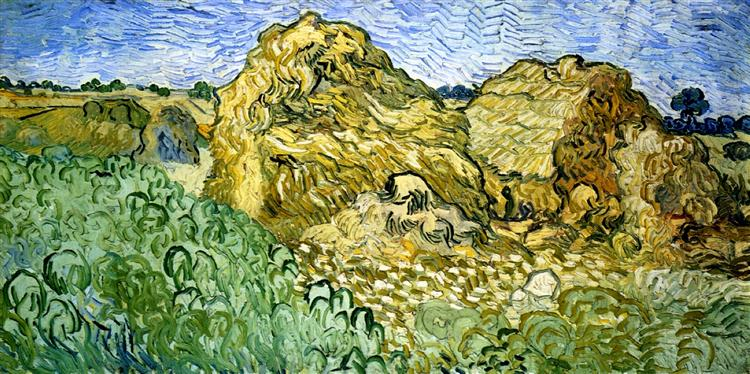
Christ told his disciples that the enemy’s efforts at thwarting our good works are sinister enough to bring about a situation where evil is so close to the good that to eradicate the evil is to therefore also do away with the good.
If you have weeds in your field or your garden, you know that some of those nasty weeds cannot be pulled out of the ground without yanking-up the good plant along with it. Instead, you’ll have to wait until you can harvest the plant, and then you can safely get rid of the offending weed.
Let’s think, then, about our own situations right now in this world. For myself, it seems that every single day I am upset and angered over decisions made by those in political power, because they almost always involve oppressing and/or harming powerless people.
Yet, to immediately stop the offending persons and organizations would involve some wicked methods. Instead, if I want to maintain doing good, I will have my time to unseat them through the vote, or writing my Senators, or directly contacting the offices of the institutions, etc.
Some of our responses may seem tepid in comparison to the evil being perpetrated, yet we can be sure that there is a time coming in which the reality of divine judgment will handle the wicked once and for all. At the proper time, heaven’s angels will do their own good work of removing evil and eradicating it forever.
We need to put our efforts into doing the very best at living in harmony with one another, promoting peace, and being peacemakers – using our greatest and most effective tools of humility, gentleness, grace, and love. These are the proper fertilizers which will keep the plants of righteousness and justice growing and thriving, even though they are surrounded by a bunch of close weeds.
As maddening as it is to see those weeds grow up alongside the plants, nowhere in Holy Scripture are we called or encouraged to become judge, jury, and executioner to the wicked.
Furthermore, Christians are nowhere called to force onto others Jesus as King through a theocratic nation, using authoritarian means. We are called, rather, to put our faith where our fear is and exercise a faith that does good work through love. (Galatians 5:6)
Equipped by the Spirit, we urge oppressors, tyrants, and egotists to turn from their selfishness and amend their evil ways. And we are not called to force the Kingdom of Heaven on others by trying to ensconce a form of Christian nationalism. For Americans, many of our ancestors came to the New World in order to flee their home Christian nationalist countries who persecuted them and did evil to them.
“To identify any particular form of government with Christianity is a dangerous error, for it confounds the permanent with the transitory, the absolute with the contingent.” T.S. Eliot
It takes very little prodding for Christians with political power to move into glorifying violence and ignoring biblical injunctions to love enemies, seek peace, and grant grace.
God puts a high premium of looking after the poor and needy, and rescuing them from oppression and violence. The last thing we ought to be doing is becoming the violent oppressors ourselves!
Giving ourselves as ambassadors of reconciliation, speaking truth to power, and doing the work of peacemaking is a narrow and hard road to hoe. The easy way is typically the road of destruction. (Matthew 7:13-14)
As citizens of the Kingdom of Heaven, we are to labor toward the things Jesus himself did: Challenge the arrogant religious types; offer mercy to the lowly and forgotten ones; warn of judgment; encourage faith; forgive generously; and speak words of truth in all places, including the halls of political power.
It is perfectly legitimate to disagree with others, but only if we ourselves are willing to defend their equally legitimate right to be disagreeable.
So, instead of always trying to snuff-out and vanquish our opponents with overt tools of evil, let us do the good work of winning their respect, living in peace with them, and affirming our shared humanity together.
We all have the right to be different; we don’t have the right to do evil and reprise evil with evil. The organizations, institutions, faith communities, corporations, and governments of this world are only as good as the people guarding that goodness through their good work, utilizing good means toward good ends.
Anyone with ears ought to listen and understand.
God of steadfast love and grace: Teach us your way and your truth. Root us in you alone, and help us to grow in grace and love, so that we may fulfill our role and our work in the reign of Jesus Christ our Lord. Amen.




