


Jacob looked up and saw Esau coming with his four hundred men. He divided the children between Leah and Rachel and the two maidservants. He put the maidservants out in front, Leah, and her children next, and Rachel and Joseph last. He led the way and, as he approached his brother, bowed seven times, honoring his brother. But Esau ran up and embraced him, held him tight and kissed him. And they both wept.
Then Esau looked around and saw the women and children: “And who are these with you?”
Jacob said, “The children that God saw fit to bless me with.”
Then the maidservants came up with their children and bowed; then Leah and her children, also bowing; and finally, Joseph and Rachel came up and bowed to Esau.
Esau then asked, “And what was the meaning of all those herds that I met?”
“I was hoping that they would pave the way for my master to welcome me.”
Esau said, “Oh, brother. I have plenty of everything—keep what is yours for yourself.”
Jacob said, “Please. If you can find it in your heart to welcome me, accept these gifts. When I saw your face, it was as the face of God smiling on me. Accept the gifts I have brought for you. God has been good to me and I have more than enough.” Jacob urged the gifts on him, and Esau accepted.
Then Esau said, “Let’s start out on our way; I’ll take the lead.”
But Jacob said, “My master can see that the children are frail. And the flocks and herds are nursing, making for slow going. If I push them too hard, even for a day, I’d lose them all. So, master, you go on ahead of your servant, while I take it easy at the pace of my flocks and children. I’ll catch up with you in Seir.”
Esau said, “Let me at least lend you some of my men.”
“There’s no need,” said Jacob. “Your generous welcome is all I need or want.”
So, Esau set out that day and made his way back to Seir.
And Jacob left for Succoth. He built a shelter for himself and sheds for his livestock. That’s how the place came to be called Succoth (Sheds). (MSG)
Repentance includes more than saying sorry. It also involves admitting wrong and making things right. This, then, lays the groundwork for an earnest attempt at reconciliation. For example, the Christian does more than a simple acceptance and acquiescence of Jesus, if merely adding a bit of Christ to life will dash it up a bit and make it better. Rather, we are invited into the very life of Christ. This life turns us upside-down and inside-out in a new and radical allegiance.
Repentance and reconciliation are a way of life, as well as a necessary skill requiring development through continual practice and use. Broken relationships are the stuff of life, and we need gracious approaches to deal with them so that bitterness does not take root in our souls. Connection and peace between two people are a beautiful thing; it brings emotional health, spiritual wholeness, and life enrichment.
From the get-go, twin brothers Jacob and Esau in the Old Testament book of Genesis had a contentious relationship. At one point their relations were so bad that Esau was having some homicidal ideation toward his brother. Neither Esau nor Jacob handled things well between each other with Jacob leaving, finding a wife, and growing a family, and becoming wealthy. Twenty years passed before they came together again.
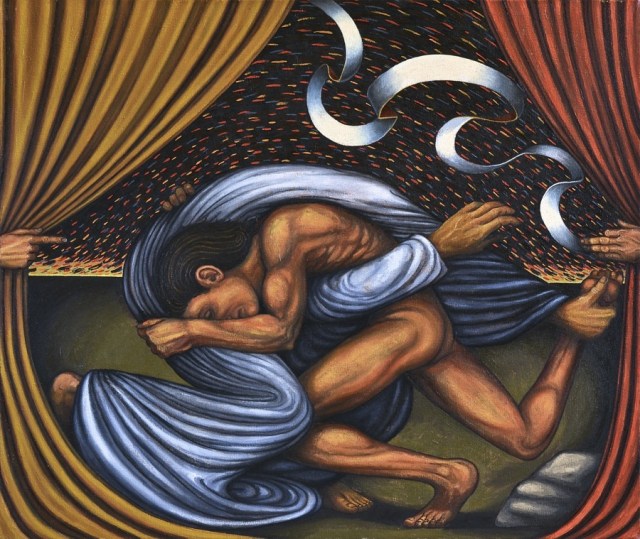
Jacob, knowing he was about to meet his brother, had an encounter with God that changed his identity from the old deceiver to the new Israel (Genesis 32:22-31). In a demonstration of his new identity as Israel, Jacob worked at making amends for his old cheating ways by turning around the blessing he had stolen from his brother and then giving one back to him.
Jacob understandably had some dread in meeting Esau, considering what he had done to his brother in deceitfully taking both his birthright and blessing. Fresh from wrestling with God, Jacob demonstrated a newfound courage and humility through respect, gift-giving, and showing honor – reversing his past pattern of disrespect, stealing, and dishonor.
True turning away from what we have done wrong is by making things right. Merely having the feeling of being sorry is not repentance. Genuine repentance involves true sorrow; an earnestness to make restitution and reconciliation; an indignation over what happened; and, perhaps most importantly, a deep concern for the person(s) harmed by our wrongdoing (2 Corinthians 7:8-11).
The reconciliation between the brothers was a surprise because Jacob was not expecting Esau’s response. It seems Jacob was bracing for the worse, which would explain his high anxiety before the encounter. Esau’s gracious response was an answer to Jacob’s prayer. For Jacob, seeing Esau’s face was like seeing the face of God – in fact, he saw both faces and lived! Jacob likely would not have seen his brother’s face until he had first seen God’s. His divine experience prepared the way for the human encounter.
We all experience times when relationships unravel and need to be mended. Jacob procrastinated for twenty years before working at reconciliation with his brother. What made the difference for Jacob was trusting God, who always works out his promises, despite our human foibles.
May you know and experience the God who reconciles and restores, and in so doing extend that same earnestness to others.
Merciful God, I confess that I have sinned against you and against others through my own fault by thought, word and deed in things done and left undone. Especially I confess that I have _____. I therefore repent; for these and all my sins I am terribly sorry and pray for forgiveness. I firmly intend to make amends and seek for help. I ask for strength to serve you in newness of life through Jesus Christ, my Lord, in the power of your Holy Spirit. Amen.


 Rev. Tim Ehrhardt