With Great Power Comes Great Responsibility (1 Kings 16:1-7)

This message from the Lord was delivered to King Baasha by the prophet Jehu son of Hanani: “I lifted you out of the dust to make you ruler of my people Israel, but you have followed the evil example of Jeroboam. You have provoked my anger by causing my people Israel to sin. So now I will destroy you and your family, just as I destroyed the descendants of Jeroboam son of Nebat. The members of Baasha’s family who die in the city will be eaten by dogs, and those who die in the field will be eaten by vultures.”

The rest of the events in Baasha’s reign and the extent of his power are recorded in The Book of the History of the Kings of Israel. When Baasha died, he was buried in Tirzah. Then his son Elah became the next king.

The message from the Lord against Baasha and his family came through the prophet Jehu son of Hanani. It was delivered because Baasha had done what was evil in the Lord’s sight (just as the family of Jeroboam had done), and also because Baasha had destroyed the family of Jeroboam. The Lord’s anger was provoked by Baasha’s sins. (New Living Translation)

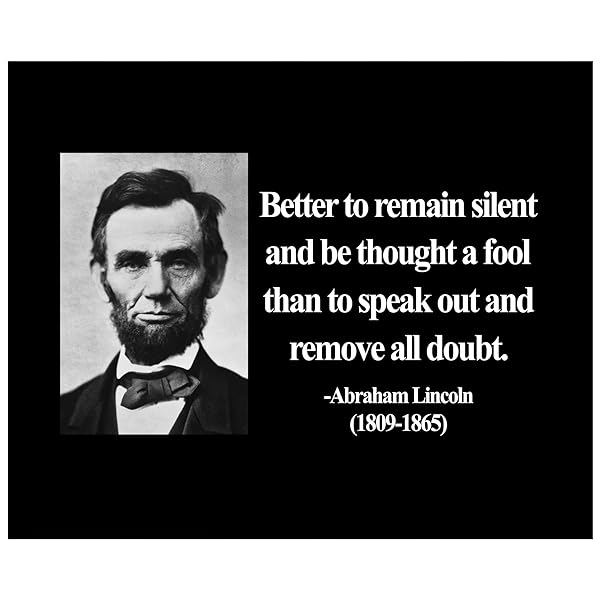
“With great power there must also come great responsibility.” Uncle Ben to Peter Parker, Spiderman

That’s one of those popular modern proverbs that resonate with us because we readily acknowledge the truth of it. No matter the culture, ethnicity, or place, we all have an inherent sense of justice and what is right.

And that makes sense to me, since we are created in the image of the Lord who is a God of justice and cares about what is right and good. So, whenever a person or a people buck their conscience, and practice injustice, it will raise the ire of both other people, as well as God.

Anger, at its core, is a response to injustice. Whenever we are treated unfairly in some way and are denied what we need to survive and thrive in this life, it makes us mad! Not only that, but it also makes God mad, too.

The use and abuse of power is a vital issue. Power must not be accumulated simply for someone (or a particular group of people) to enjoy its privileges. Power is given by God to individuals and groups so that they will use their position and authority for the common good of everyone.

To possess power is to possess a great moral responsibility for making good and just decisions. If the people in power fail to do this, then they shall be held accountable by a sovereign God who has ultimate authority over everyone and everything.

King Baasha of Israel was given a solemn responsibility by God to ensure the proper worship of God and to provide for the needs of everyone in the kingdom. In a theocratic society such as ancient Israel, the king served as the person who was responsible for knowing the commands of God and making sure that they were fulfilled. And that meant that justice for all should be ensconced throughout the land, and injustice should be eradicated wherever it is found.

By discarding the proper worship of God, and instead following other gods who engaged in injustice, Baasha was shirking his responsibility and setting up the nation for the misuse and abuse of power. So, God was determined to uproot the evil so that it didn’t destroy the whole nation.

“Whoever has been given much will be responsible for much. Much more will be expected from the one who has been given more.”

Jesus (Luke 12:48, ERV)

We all possess some level of power – whether it be small or great. Everyone is held responsible for what they have. If we have been blessed with talent, wealth, knowledge, time, position – or whatever it is – it’s expected that we benefit others. With whatever we have received, we are, in turn, to give for the sake of another.

Each of you has been blessed with one of God’s many wonderful gifts to be used in the service of others. So use your gift well. (1 Peter 4:10, CEV)

It’s not a matter of how much or how little power you have been given, but how faithful you are with the power you actually possess. Those who are trusted with something valuable must show they are worthy of that trust by stewarding their resources and their decision-making well. (1 Corinthians 4:2)

God’s anger serves the purpose of fueling God’s great purposes in justice for all people everywhere. And if we channel our own anger into love for all humanity, then we are rightly ordering our own power in good, redemptive, and responsible ways.

Almighty and eternal God, empower us all by your Spirit to be good, just, and faithful stewards of the power and authority you have given to us. Help us to live conscientiously, to bless others graciously and generously with the grace and generosity given to us by your goodness. May the very life of Christ be manifested in us and through us to your glory and honor. Amen.

Take Responsibility (Deuteronomy 3:23-29)

It was also at that same time that I begged the Lord: Please, Lord God! You have only begun to show your servant your greatness and your mighty hand. What god in heaven or on earth can act as you do or can perform your deeds and powerful acts? Please let me cross over the Jordan River so I can see the wonderful land that lies beyond it: those beautiful highlands, even the Lebanon region.

But the Lord was angry with me because of you! He wouldn’t listen to me. He said to me: That’s enough from you! Don’t ever ask me about this again! Go up to the top of Mount Pisgah. Look west, north, south, and east. Have a good look, but you will not cross the Jordan River. Instead, command Joshua, strengthen him, and encourage him because he’s the one who will cross the river before this people. He’s the one who will make sure they inherit the land you will see.

After that, we stayed in the valley across from Beth-peor. (Common English Bible)

I wonder if God ever feels like the parents of elementary aged children. “Please, please, puh-leeeze let me have it!” It’s a good thing God is spirit, because there may be some divine eye rolling happening with certain people’s requests.

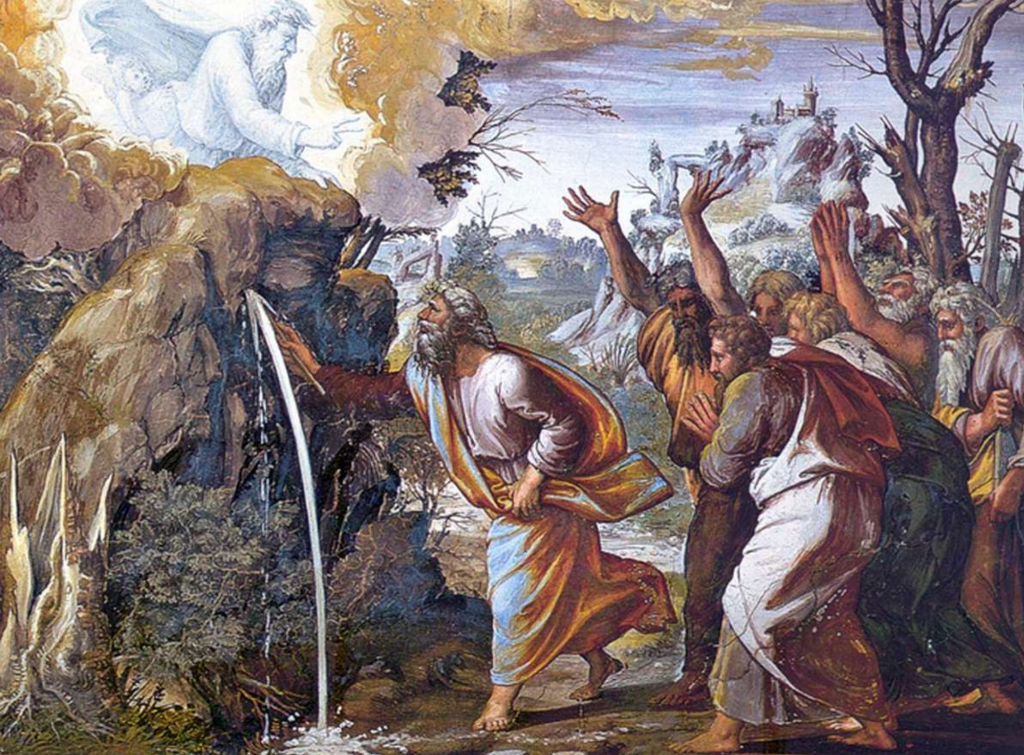
When Moses pleaded God to allow him to cross the Jordan River into the Promised Land, the Lord forbade him to do so. The reason God gave is that Moses had to bear the brunt of the Lord’s anger on behalf of the community.

But you [Israel] had no faith in the Lord your God about this matter, even though he went ahead of you, scouting places where you should camp, in fire by night, so you could see the road you were taking, and in cloud during the daytime.

The Lord heard what you said. He was angry and he swore: Not even one of these people—this wicked generation!—will see the wonderful land that I promised to give to your ancestors… (The Lord was even angry with me [Moses] because of what you did. “You won’t enter the land either,” God said. “But Nun’s son Joshua, your assistant, will enter it. Strengthen him because he’s the one who will help Israel inherit the land.”) (Deuteronomy 1:32-38, CEB)

Not allowing Moses to enter the land may seem strange to us whose culture prizes individualism and self-reliance. But that was not the culture of ancient Israel. There was a common core belief in corporate responsibility. The leader acted as the representative of the people, and so, Moses was answerable for the community’s sins.

Fresco of Moses and water from the rock, by Raffaello Sanzio da Urbino (Raphael), 1519

Lest we still don’t like what’s going on here, elsewhere in scripture we get a perspective that it was also the lack of faith by Moses that caused him to lose privilege in entering the land:

Moses and Aaron gathered the assembly before the rock. He said to them, “Listen, you rebels! Should we produce water from the rock for you?” Then Moses raised his hand and struck the rock with his staff twice. Out flooded water so that the community and their animals could drink.

The Lord said to Moses and Aaron, “Because you didn’t trust me to show my holiness before the Israelites, you will not bring this assembly into the land that I am giving them.” These were the waters of Meribah, where the Israelites confronted the Lord with controversy and he showed his holiness to them. (Numbers 20:10-13, CEB)

The fact of the matter is that we are responsible for both our personal selves and the entire community of people we are a part of. Indeed, we truly are our brother’s and sister’s keeper.

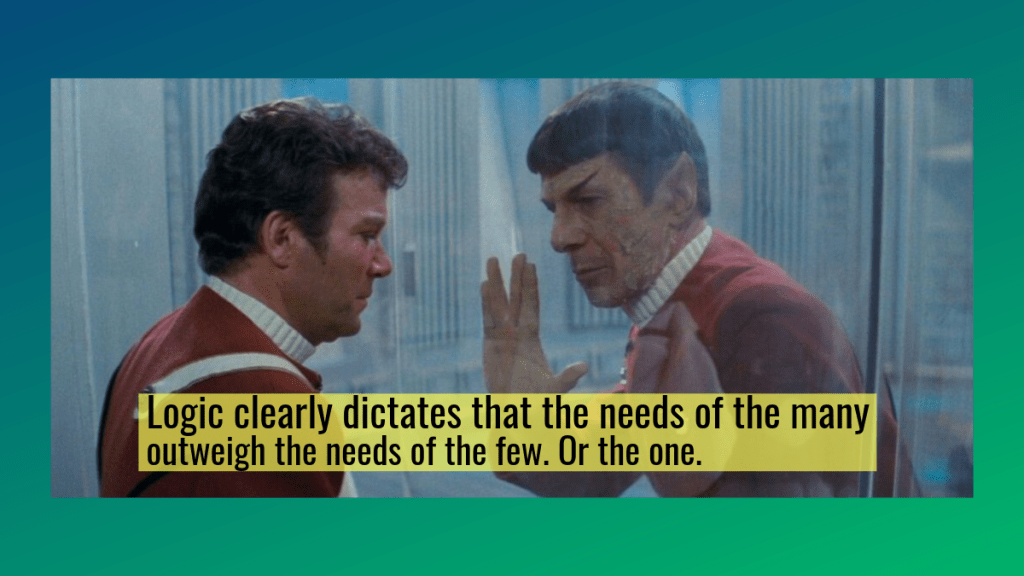
It’s important that everyone considers what the Lord’s will is – not only personally – but for the common good of all the people. Perhaps this idea is captured best in the fictitious Star Trek adage of the alien Vulcans who would logically examine a decision and say, “The needs of the many outweigh the needs of the few (or the one).”

What’s more, believers in God are meant to consider what is pleasing to the Lord, and not only to one’s personal or communal pleasure. The Lord is God and we are not. Sovereignty belongs to God. Servanthood belongs to us; and our ultimate service is to the Lord.

The bottom line for me is believing that the Lord God is good, all the time, and truly has our best interests at mind and at heart. Since God did not allow Moses into the land, I reason that it was for a greater good that transcended the individual request of Moses to enter.

Maybe that’s a difficult perspective to find whenever we are in the middle of strong desires for something, but it is one that we must struggle to find. Since the Lord is high and holy above everyone and everything, God is able to see the big picture and every angle of a situation.

We, however, only see a very small slice of the total view. So, it only makes sound spiritual sense that we learn to entrust ourselves to the One who sees all and acts according to what is right, just, and good.

Gracious and generous God, Creator and Giver of all that is good, we thank you for our many blessings. We acknowledge that all that we have is from you. We offer you thanks and praise for the beauty of the earth, our work, our family, our loved ones, and all the gifts we have been given.

You are with us always. In each dark hour, you are here. In each bright hour, you are here. Blessed by your grace, may we show gratitude by sharing what we have been given. For by serving our brothers and sisters, we serve you.

We remain ever grateful for your constant love, the gift of your Son Jesus, and the presence of your Holy Spirit with us. Protect and guide us on our personal and collective journeys, as we seek to be your faithful stewards. Amen.

Don’t Be a Fool (Proverbs 1:20-33)

Wisdom shouts in the street;
    in the public square she raises her voice.
Above the noisy crowd, she calls out.
    At the entrances of the city gates, she has her say:
“How long will you clueless people love your naïveté,
    mockers hold their mocking dear,
    and fools hate knowledge?
You should respond when I correct you.
    Look, I’ll pour out my spirit on you.
    I’ll reveal my words to you.
I invited you, but you rejected me;
    I stretched out my hand to you,
    but you paid no attention.
You ignored all my advice,
    and you didn’t want me to correct you.
So I’ll laugh at your disaster;
    I’ll make fun of you when dread comes over you,
        when terror hits you like a hurricane,
        and your disaster comes in like a tornado,
        when distress and oppression overcome you.
Then they will call me, but I won’t answer;
    they will seek me, but won’t find me
        because they hated knowledge
        and didn’t choose the fear of the Lord.
They didn’t want my advice;
    they rejected all my corrections.
They will eat from the fruit of their way,
    and they’ll be full of their own schemes.
The immature will die because they turn away;
    smugness will destroy fools.
Those who obey me will dwell securely,
    untroubled by the dread of harm.” (Common English Bible)

I don’t know about you, but I find that the older I get, the more I realize I don’t know.

What I’m trying to say is that, as I move along in this life, I am discovering more and more how much I need wisdom.

Wisdom is more than being smart, intelligent, or even having some common sense; it is to gain a basic foundation of sound knowledge and instruction, and then having the ability to put that knowledge into practice, applying it to the specific concrete situations we face daily.

In other words, to be wise is to make decisions, engage in actions, and speak words that are appropriate to a given circumstance.

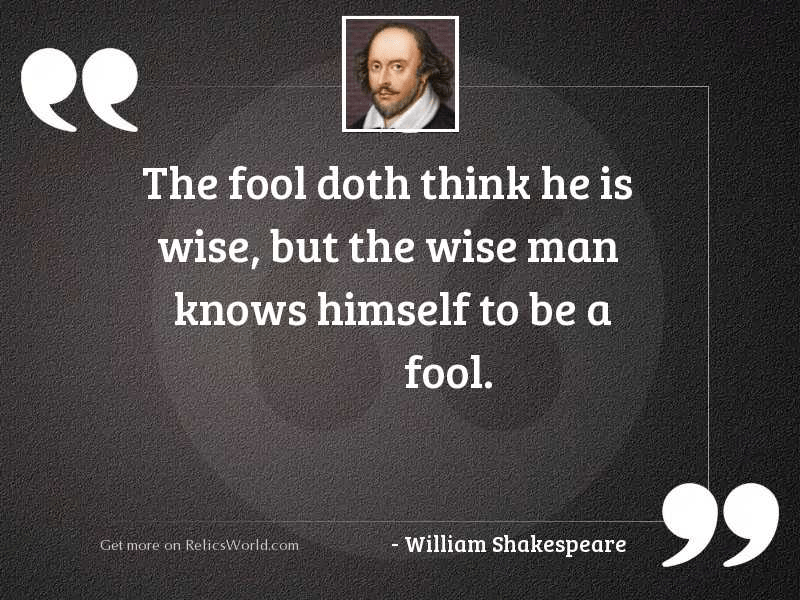
Conversely, stupidity has less to do with one’s intelligence quotient (IQ), lack of education (degrees), or ability to speak well (erudition). To be stupid means that a person is too stubborn to accept help, take advice, or learn from their mistakes.

The Foolish Person

Instead, a stupid fool relies on their own short-sighted opinions, looks for easy ways out of trouble, and generally expects others to think and act the way they do. And that approach to life can literally get you killed. I can testify to that as a hospital chaplain who has been around a lot of death.

The telltale signs of a foolish person are:

  • Refusing to change, even if it means having a better life, or even to keep living
  • Ignoring the advice, correction, or rebuke of another person
  • Being cynical and sarcastic most of the time
  • Mocking and talking down to others
  • Disliking books and reading; or just generally not wanting to learn or consider new ideas
  • Freaking-out when any little thing doesn’t go their way

A person characterized by those things will face disaster, likely sooner than later. That will happen, not so much because they tend to get into trouble, but because they do not have a solid spiritual, emotional, and mental foundation of internal support to draw from. So, when disaster hits them, they fall over and crumble, like a house with its foundation built on sand.

Fools won’t find God in the mix of their hardship since they did not look to the Lord to begin with. And even in the midst of their adversity, the fool would rather blame God than seek God’s help. Indeed, stupidity is the deliberate cultivation of ignorance.

The Wise Person

The wise person, however, is careful to set aside time so that they can learn about God and God’s Word. They seek to know God’s commands in order to live honestly, ethically, responsibly, and justly.

Wisdom has taught them humility, obedience, and acceptance. When the storms of life hit the wise, they are safe and secure in a house built on the rock; the wind and waves shall not blow them over.

People who have sought wisdom can remain calm in the midst of trouble; rely on their acquired experiential knowledge in hard situations; and have faith that doing what is right and just is its own reward.

Wisdom is still calling out, just as she did all those centuries ago to the ancients. Amidst all the noise, bustle, and confusion of our contemporary society, you can hear the clarion voice of Lady Wisdom above the fray – that is, if you are bending your ear to listen…

Almighty God, the Creator and Author of my life, help me learn to read what you have written on my heart. Give me discerning eyes, a steadfast spirit, and courage of heart to look within me in order to understand how to reach outside of me. And once I have begun to read you aright, give me the generosity to help others to read you, to sound you out one letter, and one word of radical giving at a time. Amen.

Use Your Freedom For Good (Exodus 33:1-6)

Then the Lord said to Moses, “You and the people you brought out of Egypt must leave this place. Go to the land I promised to Abraham, Isaac, and Jacob with an oath, saying, ‘I will give it to your descendants.’ I will send a Messenger ahead of you, and I will force out the Canaanites, Amorites, Hittites, Perizzites, Hivites, and Jebusites. Go to that land flowing with milk and honey. But I will not be with you, because you are impossible to deal with, and I would destroy you on the way.”

When the people heard this bad news, they acted as if someone had died. No one wore any jewelry. The Lord had said to Moses, “Tell the Israelites, ‘You are impossible to deal with. If I were with you, I might destroy you at any time. Now take off your jewelry, and I’ll decide what to do with you.’” After they left Mount Horeb, the Israelites no longer wore their jewelry. (God’s Word Translation)

It took little time for the covenant between God and the Israelites to be violated. The relationship between the Lord and the people was meant to be cemented through a special covenant in which Yahweh makes promises to them and gives them instructions and commandments; and the Israelites pledge their fealty and promise to obey.

But the people quickly reneged on the relationship. While Moses was up on Mount Sinai, receiving the Law from God, the Israelite grumbles and complaints came to full flower. They went their own way and made a calf idol out of gold.

So, the Lord’s judgment broke out amongst them. The Levites, to their credit, rallied around Moses and the Lord, and took out the rabble rousers in the camp. What’s more, God sent a plague that killed many.

In the aftermath of the rebellion against Moses and the Lord, God ordered the people to leave Mount Sinai – the place where everyone was to have a positive experience of Yahweh’s presence. God’s anger and wrath were so aroused that it became impossible for the divine presence to go with the people. Only Moses, as God’s emissary, would be able to guide the Israelites so that they are not completely eradicated.

Mount Sinai, by Sefira Lightstone

Yet, even after all the bad attitudes, rebellious actions, and an idolatrous spirit among the Israelites, Yahweh will still keep the divine promise to Abraham, Isaac, and Jacob to deliver them and bring them to the Promised Land.

Today’s story has the feel of a chastened child sitting in the corner, having to think about what they just did to raise the ire of the parent. The Israelites moved from Sinai in a somber mood, realizing more clearly than ever how much their lives are tied and linked to God’s divine presence.

At God’s command, the people removed their jewelry and took off their party clothes from the celebration that got them into so much trouble. It began to sink in, that the Lord departed from them because of their great sin. They started to realize, albeit too late, that they really screwed up their relationship with God.

The Israelites didn’t know how good they had it with the divine pillar of cloud by day and fire by night to lead them – and how much they actually depended on the God-given manna for their sustenance and existence.

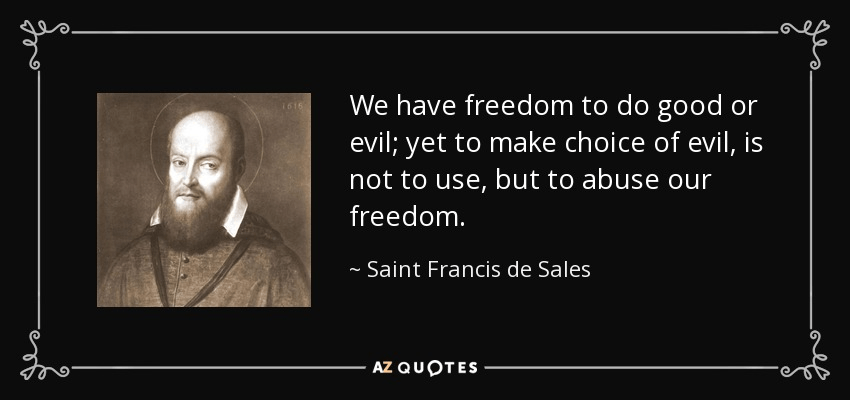
It’s all too typical for us humans that we fail to realize what we have, until it’s gone. The ancient Israelites were freed from a cruel slavery in Egypt. They clearly did not handle their freedom well, at all. Perhaps the people were so used to being in bondage that, when they go their freedom, they just adopted a different sort of slavery – to their sinful passions.

Let’s handle our freedom with some responsibility and accountability, so that we do not go down the same rebellious path as the ancient people of God. You and I are free to choose what we do, what we think, and how we spend our time. It’s easy to blame outside forces when circumstances are hard; and to grumble whenever we don’t like something.

Freedom is a spiritual discipline; we must learn how to intentionally practice it and use it for good. The following are four areas to purposefully work on with our freedom by making good choices:

Choose your words carefully. What comes out of your own mouth is up to you. Let those words reflect who you truly are; and let your speech impact others around you for good, and not evil.

Choose your attitude with some self-awareness. With awareness comes choices. For example, if we are not aware of our own anger, it will eventually come out sideways on another person. Our sullen attitude and jaded perspective will color our relational interactions. But if we are aware of our emotions, we can choose to effectively work through them, and then decide what sort of attitude we’re going to have.

Choose your actions before you do them. Seemingly insignificant choices turn into small actions. The small actions become habits. And habits shape character and create a life. We make choices every day about what we’ll do and not do. In every sort of situation we have choices to act, such as: Will I let go, or will I try and control others? Will I walk, or drive? Will I spend, or save? Shall I prepare, or procrastinate? Be fit, or be fat? Talk or listen?… and a thousand other choices of action.

Choose your beliefs with care. Our beliefs and our faith determines how we act and behave. If we believe in a good God who has our best interests at heart, we will freely trust such a God. But if we believe God to be a capricious Being who is aloof from my concerns, then we will make choices to watch out for number one and view others with suspect.

If you are behaving in ways that aren’t working for you, examine what belief is causing that behavior. Then decide whether that’s a belief you really need to have, or not, then change it, if necessary.

Every choice we make, contributes to the person we want to become, and sets us on the path to where we want to be in life. Maybe if the ancient Israelites had more awareness of this, they might have chosen very differently.

Gracious God, grant me clarity and awareness to make wise decisions. Enlighten my heart and mind, as I seek to follow your divine guidance. In the face of uncertainty, give me the courage to trust your promises. Help me embrace the path set before me, with a spirit of love and grace. Amen.