Genesis 33:1-17 – Brothers Reconciled

Jacob and Esau by Willow Winston
Jacob and Esau by British artist Willow Winston

Jacob looked up and saw Esau coming with his four hundred men. He divided the children between Leah and Rachel and the two maidservants. He put the maidservants out in front, Leah, and her children next, and Rachel and Joseph last. He led the way and, as he approached his brother, bowed seven times, honoring his brother. But Esau ran up and embraced him, held him tight and kissed him. And they both wept. 

Then Esau looked around and saw the women and children: “And who are these with you?” 

Jacob said, “The children that God saw fit to bless me with.” 

Then the maidservants came up with their children and bowed; then Leah and her children, also bowing; and finally, Joseph and Rachel came up and bowed to Esau. 

Esau then asked, “And what was the meaning of all those herds that I met?” 

“I was hoping that they would pave the way for my master to welcome me.” 

Esau said, “Oh, brother. I have plenty of everything—keep what is yours for yourself.” 

Jacob said, “Please. If you can find it in your heart to welcome me, accept these gifts. When I saw your face, it was as the face of God smiling on me. Accept the gifts I have brought for you. God has been good to me and I have more than enough.” Jacob urged the gifts on him, and Esau accepted. 

Then Esau said, “Let’s start out on our way; I’ll take the lead.” 

But Jacob said, “My master can see that the children are frail. And the flocks and herds are nursing, making for slow going. If I push them too hard, even for a day, I’d lose them all. So, master, you go on ahead of your servant, while I take it easy at the pace of my flocks and children. I’ll catch up with you in Seir.” 

Esau said, “Let me at least lend you some of my men.” 

“There’s no need,” said Jacob. “Your generous welcome is all I need or want.” 

So, Esau set out that day and made his way back to Seir. 

And Jacob left for Succoth. He built a shelter for himself and sheds for his livestock. That’s how the place came to be called Succoth (Sheds). (MSG) 

Repentance includes more than saying sorry. It also involves admitting wrong and making things right. This, then, lays the groundwork for an earnest attempt at reconciliation.  For example, the Christian does more than a simple acceptance and acquiescence of Jesus, if merely adding a bit of Christ to life will dash it up a bit and make it better. Rather, we are invited into the very life of Christ. This life turns us upside-down and inside-out in a new and radical allegiance.

Repentance and reconciliation are a way of life, as well as a necessary skill requiring development through continual practice and use. Broken relationships are the stuff of life, and we need gracious approaches to deal with them so that bitterness does not take root in our souls. Connection and peace between two people are a beautiful thing; it brings emotional health, spiritual wholeness, and life enrichment.

From the get-go, twin brothers Jacob and Esau in the Old Testament book of Genesis had a contentious relationship. At one point their relations were so bad that Esau was having some homicidal ideation toward his brother. Neither Esau nor Jacob handled things well between each other with Jacob leaving, finding a wife, and growing a family, and becoming wealthy. Twenty years passed before they came together again.

Jacob wrestling with God
Jacob Wrestling with the Angel of God by Jack Baumgartner, 2009

Jacob, knowing he was about to meet his brother, had an encounter with God that changed his identity from the old deceiver to the new Israel (Genesis 32:22-31).  In a demonstration of his new identity as Israel, Jacob worked at making amends for his old cheating ways by turning around the blessing he had stolen from his brother and then giving one back to him.

Jacob understandably had some dread in meeting Esau, considering what he had done to his brother in deceitfully taking both his birthright and blessing. Fresh from wrestling with God, Jacob demonstrated a newfound courage and humility through respect, gift-giving, and showing honor – reversing his past pattern of disrespect, stealing, and dishonor.

True turning away from what we have done wrong is by making things right. Merely having the feeling of being sorry is not repentance. Genuine repentance involves true sorrow; an earnestness to make restitution and reconciliation; an indignation over what happened; and, perhaps most importantly, a deep concern for the person(s) harmed by our wrongdoing (2 Corinthians 7:8-11).

The reconciliation between the brothers was a surprise because Jacob was not expecting Esau’s response. It seems Jacob was bracing for the worse, which would explain his high anxiety before the encounter. Esau’s gracious response was an answer to Jacob’s prayer.  For Jacob, seeing Esau’s face was like seeing the face of God – in fact, he saw both faces and lived!  Jacob likely would not have seen his brother’s face until he had first seen God’s. His divine experience prepared the way for the human encounter.

We all experience times when relationships unravel and need to be mended. Jacob procrastinated for twenty years before working at reconciliation with his brother. What made the difference for Jacob was trusting God, who always works out his promises, despite our human foibles.

May you know and experience the God who reconciles and restores, and in so doing extend that same earnestness to others.

Merciful God, I confess that I have sinned against you and against others through my own fault by thought, word and deed in things done and left undone. Especially I confess that I have _____.  therefore repent; for these and all my sins I am terribly sorry and pray for forgiveness. I firmly intend to make amends and seek for help. I ask for strength to serve you in newness of life through Jesus Christ, my Lord, in the power of your Holy Spirit. Amen.

The Parable of the Weeds

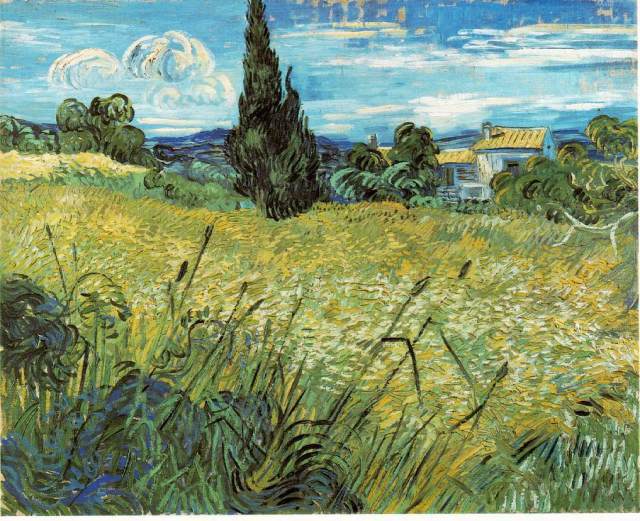
Van Gogh Wheat Field
Wheat Field and Cypress by Vincent Van Gogh, 1890

Jesus told them another parable: “The kingdom of heaven is like a man who sowed good seed in his field. But while everyone was sleeping, his enemy came and sowed weeds among the wheat, and went away. When the wheat sprouted and formed heads, then the weeds also appeared.

“The owner’s servants came to him and said, ‘Sir, didn’t you sow good seed in your field? Where then did the weeds come from?’

“‘An enemy did this,’ he replied.

“The servants asked him, ‘Do you want us to go and pull them up?’

“‘No,’ he answered, ‘because while you are pulling the weeds, you may uproot the wheat with them. Let both grow together until the harvest. At that time, I will tell the harvesters: First collect the weeds and tie them in bundles to be burned; then gather the wheat and bring it into my barn.’”

Then he left the crowd and went into the house. His disciples came to him and said, “Explain to us the parable of the weeds in the field.”

He answered, “The one who sowed the good seed is the Son of Man. The field is the world, and the good seed stands for the people of the kingdom. The weeds are the people of the evil one, and the enemy who sows them is the devil. The harvest is the end of the age, and the harvesters are angels.

“As the weeds are pulled up and burned in the fire, so it will be at the end of the age. The Son of Man will send out his angels, and they will weed out of his kingdom everything that causes sin and all who do evil. They will throw them into the blazing furnace, where there will be weeping and gnashing of teeth. Then the righteous will shine like the sun in the kingdom of their Father. Whoever has ears, let them hear. (Matthew 13:24-30, 36-43, NIV)

We live in an increasingly polarized world. We see it, feel it, and experience it daily in our politics and economy, and even in our families, churches, and faith communities. How are we going to deal with our differences? What kind of path might we chart forward? Where might we turn for help?

Let us acknowledge from the outset that within our world there are vast differences in religion and belief structures, as well as deep differences on issues surrounding human sexuality, immigration, race, and COVID-19, just to name a few. And let us also acknowledge that when we read Christ’s parable of the weeds (or the parable of the wheat and the tares) there is strong tendency to view ourselves and our beliefs as the good seed, which leaves anyone who does not agree with us as the weeds.

It is fruitless for us to debate who is the genuine crop and who is the weeds. We will likely just go around and around with airing our own opinions as gospel truth and expecting others to simply accept our arguments. That approach is neither wise nor even possible. I highly suspect that Christ’s disciples had such a mindset. I see them as the servants who eagerly ask the owner, “Do you want us to pull up the weeds?” In other words, whenever we see weedy people, we want to yank them out and get them out of our lives.

Oh, wouldn’t it be nice if it were that easy? If we could only purge all those problem people with their goofy thinking and crazy politics from among us, then all would be okay. Right? Wrong. It would not be okay. For those who are followers of Jesus, we take our cues from him. So, what Jesus says takes precedence over our personal approaches of how to handle those who express evil.

And what Jesus gave was a clear and unequivocal answer to the issue of weeds: “No, do not pull them up!” I can imagine the disciples (and us for that matter) retorting with: “Well, for heaven’s sake, why not, Jesus? Don’t you see what is happening to our world? Are you going to let this evil keep happening? I thought you cared about us!”

“I’ll tell you, why not,” said our Lord, “Because doing violence to the weeds will end up doing violence to the crop as well.” Christ’s response to our questions about the problem of evil in the world is to let God take care of it. That means, in the meantime, we are supposed to co-exist with each other. Yes, you heard that right. No holy crusades to stamp out problem people. No inquisitions or purges or forced takeovers to uproot whom we consider to be wicked people.

There has always been a temptation for people throughout history to exterminate evil people and force others into right doctrine and theology. That, however, is not our mandate as Christians. God, the owner of the world’s field, will send his own harvesting angels to do the work. They will separate the crop from the weeds. That is not our job.

So, what are we supposed to do with evil – just let it go?  Am I to let that evil person just be evil?  Shouldn’t I give them what they deserve?  Shouldn’t I at least tell them that they are no good rotten sinners and that they are going to hell because they are wicked?

Earlier in the Gospel of Matthew, Jesus had already dealt with how to handle so-called problem people saying,

Love your enemies and pray for those who persecute you,” (Matthew 5:44). 

Jesus will decisively solve the problem of evil, and not us!  It is not our place, and if we make it our place, we will end up hurting and destroying our fellow brothers and sisters in the church and the world.  We are to love and pray people into God’s benevolent rule and reign of the earth, not give them the message that they must either turn or burn.

The sobering reality taught by Jesus in this parable is that it is not a simple matter that we, the crop, are here; and they, the weeds, are over there.  It is more sinister than that: The enemy is within, not out there.  We have no further to look than in our own hearts, which is why we desperately need the lordship of Christ to completely overtake us.

Evil is present alongside the good.  Evil exists in the here and now where there is a desire to trip others up, to discourage people in their respective faith commitments, to offend and hurt others who believe differently, to overlook the weak, and to speak ill of others.  Evil is in our backyards where there is an impatient eagerness to step on others to get our way.  Evil is at its height where there is ignorance of Christ’s teaching, for no one can truly follow Jesus if they do not know what that way is. “We have met the enemy, and he is us,” said Walt Kelly in his mid-twentieth century newspaper comic strip, Pogo.

Walt Kelly - Pogo 

The eventual end of evil, when Christ returns, is that wickedness will be handled once and for all. There will be no more tormenting of others; no more oppression; no more inattention to those who are in need; no more disparaging of the weak; no more misguided or petty wars waged on the innocent; no more injustice; no more pain; no more bondage to sin. The tormentors, apart from repentance, will become the tormented. As they have gone about their lives in anger fomenting division and destruction in this life, so the tables will turn in the next life. Therefore, the Holy Scripture is adamant that Today is the day of repentance and salvation because tomorrow is judgment day. As the writer of Hebrews said:

Today, if you hear his voice, do not harden your hearts… See to it, brothers, and sisters, that none of you has a sinful, unbelieving heart that turns away from the living God. But encourage one another daily, as long as it is called “Today,” so that none of you may be hardened by sin’s deceitfulness. We have come to share in Christ, if indeed we hold our original conviction firmly to the very end. As has just been said:

“Today, if you hear his voice,
    do not harden your hearts
    as you did in the rebellion.”

Who were they who heard and rebelled? Were they not all those Moses led out of Egypt? And with whom was he angry for forty years? Was it not with those who sinned, whose bodies perished in the wilderness? And to whom did God swear that they would never enter his rest if not to those who disobeyed? (Hebrews 3:7, 12-18, NIV)

Grace awaits us, my friends, ever-present and poised to wash over us with baptismal power and spiritual rest. We may expect God to do things in a hurry.  However, the kingdom of God does not work that way.  The kingdom of God comes gently, like a seed planted in the ground; and, it takes time for it to grow.  Meanwhile, evil exists, and we think it ought to be sucked-up in God’s divine vacuum cleaner like clods of dog and cat hair.  We expect not to be left waiting, and for God to act drastically when we are wronged or are uncomfortable in any way.  We might confuse God’s slowness as being uncaring, when it really means that God is patient, and desires people to come to repentance.  God awaits us, always ready to hear the prayer of the penitent person.

O Lord God Almighty, Creator of heaven and earth, we are complacent people.  While you desire us to be a beacon of light to a world in need, we have become preoccupied with all the weeds in the field.  We are sorry for the madness unleashed through our own sinful desires.  We invite you now to plant a seed of love in our hearts for all people, not just our friends.  We commit ourselves to watering that seed and nurturing it with your Word.  We choose to trust you and live by your words, Lord Jesus.  Amen.

Matthew 11:20-24 – “C’mon, Man!”

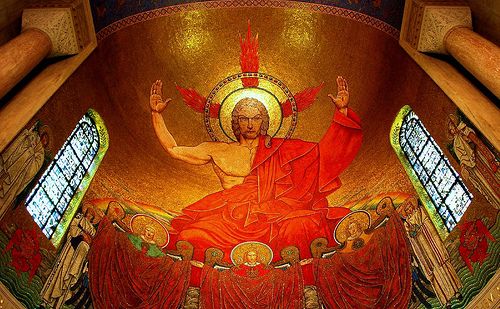
Jesus angry
“Christ in Majesty” by Polish artist Jan Henryk de Rosen at the National Shrine of the Immaculate Conception

Then Jesus began to denounce the towns in which most of his miracles had been performed, because they did not repent. “Woe to you, Chorazin! Woe to you, Bethsaida! For if the miracles that were performed in you had been performed in Tyre and Sidon, they would have repented long ago in sackcloth and ashes. But I tell you, it will be more bearable for Tyre and Sidon on the day of judgment than for you. And you, Capernaum, will you be lifted to the heavens? No, you will go down to Hades. For if the miracles that were performed in you had been performed in Sodom, it would have remained to this day. But I tell you that it will be more bearable for Sodom on the day of judgment than for you.” (NIV)

Today’s New Testament lesson from the Gospel of Matthew, recounting the words of Jesus, are not filled with unicorns and butterflies, to say the least. We might be somewhat unfamiliar with these not so famous, maybe even infamous, words from our Lord. Before Jesus tells who is accepted in the kingdom of God (Matthew 11:28-30) he tells us who is not accepted. These scathing words are specifically leveled to the towns in which Christ had performed his ministry of healing and miracles.

We need to hear the hard words of Jesus. Up to this point in Matthew’s Gospel, he has laid out the birth narrative of incarnation in chapters 1-2; the preparation for Christ’s ministry in baptism and being sent to the desert in chapters 3-4; Christ’s teaching on what constitutes a genuine follower of God, the Sermon on the Mount, chapters 5-7; and, chapters 8-10, recording ten miracles which were meant to demonstrate that the kingdom of God has broken into history in the person of Jesus Christ. In chapter 11, Jesus begins leveling a rebuke to the crowd who had observed his ministry and did nothing in response to his works.

For Jesus, the height of hubris was to simply ignore his righteous works of gracious teaching and benevolent healing.

If you are not a fan of Monday Night Football, let me explain a pre-game segment each week during the season called, “C’mon, man!” Each commentator picks out a bonehead play from the previous week that would cause someone to shake their head in dismay and say “c’mon, man!” They are typically situations where the player’s head just was not in the game and they ended up, in some cases, costing their team points or even the game.

Cmon man

Reading Christ’s words sounds a lot like Jesus picking out the towns in which he performed his miracles, and saying to them: “C’mon, man!”  “You saw me cleanse a man from leprosy, heal paralyzed people and a woman with a chronic disease, calm a great storm, exorcise demons from people, give sight to the blind and speech to the mute. You saw all of this, but it has not changed you one bit. You still live the same way you always have and have not come to me as the source of your deliverance… “C’mon, man!”

Notice that Jesus’ denunciation comes not because he was experiencing opposition or persecution; he was denouncing them for their bonehead lack of response and refusal to change their lives to conform to what they were seeing right in front of their faces. The crowd heard his teaching and saw his miracles, and it had no effect on them. So, Jesus gave them a great big “C’mon, man!” Judgment becomes the lot of someone who is unaffected and unresponsive to the vast sea of human need around them, viewing Jesus as just another voice, and living a life of mediocrity in the face of opportunity.

So, what would the segment “C’mon, man!” look like today? What would Jesus say to us? Keep in mind we are people with access to Christ’s teaching. We have the Sermon on the Mount to read, study, meditate upon, and live by – yet, too many [Christians] don’t take the time to examine it with the intent of seeing Jesus and allowing him to change their lives… “C’mon, man!”

The Holy Spirit has been provided, who is the power source of the Christian life. We possess all the resources of grace necessary to step into this world and make a difference, yet so many do nothing but occupy a place in the pew [or couch] because they are too afraid to sacrifice their time in meaningful ministry… “C’mon, man!”

There are neighbors, relatives, and co-workers who are lost and lonely, in need of the kind of grace Jesus gives, yet too many of us are oblivious to them and instead are constantly worried about things that, in the end, don’t really matter at all… “C’mon, man!”

We have opportunities to grow in the grace and knowledge of Jesus Christ through a vast array of available ministries, yet many do not take the chance to change and be spiritually stretched… “C’mon, man!”

Today the words of Jesus are right in front of our faces, and some of us will have the audacity to read them and remain unchanged, unchallenged, and unresponsive… “C’mon, man!”

If our highest values in life are sameness, stability, and security, we may very well, at the least, miss Jesus altogether, and, at worst, find ourselves under his condemnation. These verses are for those whom Jesus has become all too familiar, as if he is just another piece of furniture in the living room – the coffee table with a dusty Bible resting on it.

Perhaps this post may seem a bit out of place on a website which promotes itself as caring. I would like to think of it as obnoxiously caring. I trust you will accept today’s writing and the words of Jesus as caring enough to confront. There are times when Mid-West nice gets us nowhere and we must have hard conversations. Yes, conversations, and not verbal rockets launched from one group to another. Jesus did not denounce from a distance; he did it up close and personal. Furthermore, he was specific and not generic about why he was speaking in the way he did.

So, may you be able to pray this prayer of repentance today with heartfelt conviction:

Almighty God, Father of our Lord Jesus Christ, Sovereign Lord of the universe, Creator of humanity, we, your unfaithful children, are sorry for our sins and the lives that we have lived apart from your grace. We sincerely believe and confess in our hearts that only through the precious blood of our Lord Jesus Christ on the cross, can we obtain your forgiveness.

We repent that: in thought, word, and deed, we have committed serious offences against you and our neighbors. Through spiritual laziness and prideful lust for power, we have provoked hatred, division, despair, and hurt within our communities.

Through our greed, deceit, and indifference, we have inflicted serious damage, unnecessary conflict, and aggravated destruction to those different than us.

Through our selfishness, insensitivity, and bias (both conscious and unconscious) we have encouraged and emboldened those who inflict hurt, pain, and sorrow on those who are already oppressed and poor.

In the name of religion, doctrine, and even of Christ himself, we have wounded fellow believers and those who genuinely pursue a faith different than ours. In stubbornness, pride, and arrogance, we have caused division and strife within your church and among your people.

Mercifully send your Holy Spirit, the Spirit of order and comfort, to cleanse us from all unrighteousness; to restore in us true faith in Christ which brings truth, peace and harmony; and, to help us walk together with our brothers and sisters in the peace of our Lord Jesus Christ, to the glory of your name. Amen.

Matthew 12:38-42 – A Changed Life

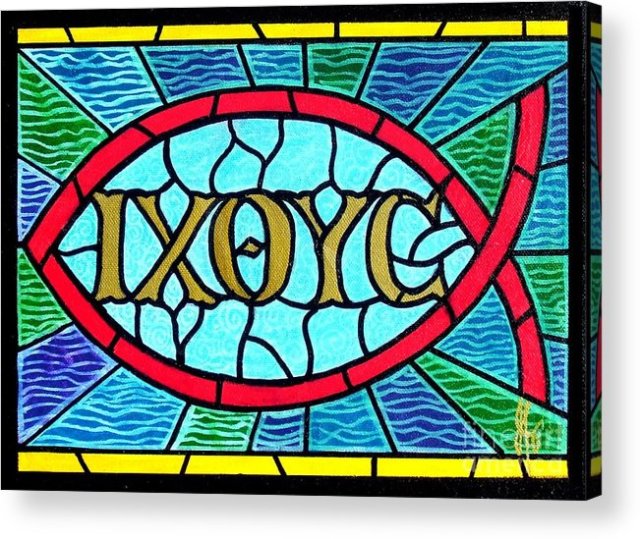
Ichthys
The ichthys (pronounced ick-thoos) is an early Christian symbol of new life in Jesus Christ.

Then some of the Pharisees and teachers of the law said to him, “Teacher, we want to see a sign from you.”

He answered, “A wicked and adulterous generation asks for a sign! But none will be given it except the sign of the prophet Jonah. For as Jonah was three days and three nights in the belly of a huge fish, so the Son of Man will be three days and three nights in the heart of the earth. The men of Nineveh will stand up at the judgment with this generation and condemn it; for they repented at the preaching of Jonah, and now something greater than Jonah is here. The Queen of the South will rise at the judgment with this generation and condemn it; for she came from the ends of the earth to listen to Solomon’s wisdom, and now something greater than Solomon is here. (NIV)

I say at the outset:

The greatest miracle, the best evidence of God’s work in the world, is a changed life.

Yes, both personal and corporate transformation – not a rearranging or a tweeking of habits – but a wholesale change of heart. New life is new life, and not a reconstituted life.

For many folks, when it comes to any discussion of change and transformation, it is a focus on others changing. Other people need to see things rightly; others who must bend their lives and organizations to how I believe things need to be. As you can tell, putting it in writing and laying it bear sounds an awful lot like pride and hubris. And, it is.

The need for repentance is for everyone, not just a select few or others for whom we believe need to change.

Jesus made waves with many people by hob-nobbing with the least, the lost, and the lowly. Christ actively sought such people out, and healed many of them from sickness, disease, and sin so that they would be united with God and no longer remain on the fringes of society.

Some within the religious establishment of the day did not take the healing ministry of Jesus into consideration because they were not in the transformation business. So, healing miracles which created new life did nothing for them. Jesus was not flexing any real Messiah muscle for them and improving their designs to see Gentiles get beat up and kicked out of Palestine. They even went so far as to ascribe Jesus’ healings as the work of the devil. They wanted a sign from heaven that would authenticate proper Messiah credentials.

Jesus responded by essentially saying there is already a sign that exists, the sign of Jonah. As Jonah was three days and three nights in the belly of a whale, so Jesus would be in the earth for three days and nights. The death and resurrection of Jesus is needed, and when faced with this information, the only appropriate response is repentance, a complete U-turn, to a changed life. Jesus brought up the Queen of the South to make the same point: When the ancient Ninevites, who were a sinful people, encountered the person of Jonah, they repented; when the Queen encountered the person of Solomon, she changed.

Therefore, how much more should we change when encountering the person of Christ?

Jesus himself is the sign. Jonah was in the belly of a whale. He was all but dead. But God caused the whale to belch up Jonah, and he went out as a changed man. The experience of having stomach fluids work on a person for three days and nights, some scholars point out that Jonah would have been both spiritually and physically different – bleached completely white and an incredible sight to see!

The whole point of bringing up this sign of Jonah was to communicate the great need for repentance when faced with Jesus, his life, his teaching, his ministry. The appropriate response to Jesus is a changed life.

Jesus was looking for status quo malcontents, and a desire for transformation and new life.

The process of change is hardwired into all creation – from seasons of the year to the seasons of people’s lives – all are designed for a sustained process of time to revolutionize us.

Jesus modeled this for us. He switched his address of heaven and moved into our neighborhood in order to bring us new life. As the Master of conversion, Jesus always extends the invitation to change. All he asks is to let God do the work of change within us, be patient with the construction of the soul he is doing and persist with daily routines of faith individually and with one another.

It pleases Jesus and it is the heart of God to realize new life. Change for change’s sake is not the point. Change that reflects the values of God is the point. And in order to know that, we must hear the Scriptures, and we must pray to seek the mind and heart of God.

God Almighty, we desire to be transformed by you and allow the life of Jesus to be expressed through us. We desire to walk in the light of your spirit. Reveal to us those things in our life that need to be made anew. Allow us to discern between flesh and spirit so that we can choose a healthy holy path. Continue to give us spiritual awareness. Transform us into something new altogether. May our old life and way disappear, and our new life emerge for the blessing of the world, through Jesus Christ our Lord in the power of the Holy Spirit. Amen.

Click I Will Rise by Chris Tomlin as we continue in this season of Eastertide with its focus on new life.