Be Helpful, Not Harmful (Psalm 119:113-128)

I hate two-faced people,
but I love your teachings.
You are my hiding place and my shield.
My hope is based on your word.
Get away from me, you evildoers,
so that I can obey the commandments of my God.
Help me God, as you promised, so that I may live.
Do not turn my hope into disappointment.
Hold me, and I will be safe,
and I will always respect your laws.
You reject all who wander away from your laws,
because their lies mislead them.
You get rid of all wicked people on earth as if they were rubbish.
That is why I love your written instructions.
My body shudders in fear of you,
and I am afraid of your regulations.

I have done what is fair and right.
Do not leave me at the mercy of those who oppress me.
Guarantee my well-being.
Do not let arrogant people oppress me.
My eyes are strained from looking for you to save me
and from looking for the fulfillment of your righteous promise.
Treat me with kindness,
and teach me your laws.
I am your servant.
Help me understand
so that I may come to know your written instructions.
It is time for you to act, O Lord.
Even though people have abolished your teachings,
I love your commandments more than gold, more than pure gold.
I follow the straight paths of your guiding principles.
I hate every pathway that leads to lying. (God’s Word Translation)

I don’t know about you, but disingenuous people drive me nuts. This is the type of person who is nice as pie to your face, but then walks away and talks smack about you to another. They seem to always have an agenda in order to get ahead, gain power, and be in the know, so that they can have leverage against you.

There are other people who try to avoid doing wrong and always try to do right. There are yet others who either bulldoze or sleepwalk through life, doing what they will, with impunity, unaware of how they’re damaging people’s lives. And then there are those who try to steer clear of what they consider the biggie sins, while having no problem indulging in so-called little sins. 

Selfishness, self-centeredness, and unawareness of the self’s impact on this world will create all sorts of problems for others. Indeed, sin is messy business. 

No matter the form or the attempt at dealing with one’s selfish proclivities, the bottom line is that we all engage in such behavior because it benefits us, that is, we like doing it. We might not always like the consequences and the fallout of self-centered living, but it sure feels good while it lasts.

Humanity needs a complete reorientation of the heart. Rather than hating every way that doesn’t benefit me, we must learn to hate every way which is contrary to God’s good commands.

The psalmist proclaims and affirms that all God’s precepts are right. It’s important to hate every false path which deviates from the true self and the common good of all persons. 

If we indulge in self-centered ways because we like them, the road to thinking of others and their needs is learning to hate my false self and false belief systems – to loathe them so much that it’s like a nasty stench in our nostrils. 

Hating sin comes from the acquired taste of loving God’s commandments. When we come around to cherish and desire God’s Word, then selfish sinful desires gradually become so odious to us that we want nothing to do with them.

The reason the psalmist could proclaim such an extended love song to the commands of God, is that he tried them, ate them, and imbibed them. And how good they were! It caused him to forsake every selfish way in trying to achieve human enjoyment. 

I encourage people to have a solid plan for reading (or listening to) Scripture every day – because it really has the power to reorient us from being selfish jerks who harm others to becoming unselfish thinkers who help others.

Scripture changes our taste buds. Sustained, consistent, daily eating of the psalms will teach us to want God and God’s ways – while forsaking the dark path of insolence and oppression in order to satiate our own selfish wants.

The psalmist committed himself to avoiding worthless selfish situations, as well as steering clear of harmful people with the propensity to doing wrong. They are fickle, double-minded, two-faced people, divided in their loyalties.

On one side of their mouth, they talk a good line about faith; and then talk out the other side of their mouth, spewing a bunch of worthless gobbledygook which, at the least, adds no value to anything, and, at worst, wrecks good plans and harms others.

If there are people in authority over us who don’t give a wit about our most cherished values, we will likely find ourselves tasked with doing things which rub against our understanding of Holy Scripture. In this state of moral distress, we are pushed, pulled, and tested in our single-minded devotion by the double-minded selfish person to do what we are uncomfortable with.

In the stress and crucible of trouble, we need the courage to speak up, despite the fear of repercussions. And that strength is only possible if we have a resilient spirit with the capacity to sustain our personal integrity in the face of distress. That is, we need God and God’s Holy Word.

Scripture and fellow believers provide support; we need to care for one another as a community of redeemed persons who seek to live into the words of ways of almighty God.

It can be tricky business, wisely trying to discern between what we to accept and what to pushback against. Yet, with God, God’s Word, and God’s people, we possess all the resources required in living the spiritual life and navigating the selfish world we inhabit.

Almighty God, I pray that you will deal with me according to your steadfast love and teach me your statutes. I am your servant; give me understanding so that I might know and live by your commands and forsake the evil of the world. Amen.

It’s Time for a Change (Matthew 12:38-42)

Later a few religion scholars and Pharisees cornered him. “Teacher, we want to see your credentials. Give us some hard evidence that God is in this. How about a miracle?”

Jesus said, “You’re looking for proof, but you’re looking for the wrong kind. All you want is something to titillate your curiosity, satisfy your lust for miracles. The only proof you’re going to get is what looks like the absence of proof: Jonah-evidence. Like Jonah, three days and nights in the fish’s belly, the Son of Man will be gone three days and nights in a deep grave.

“On Judgment Day, the Ninevites will stand up and give evidence that will condemn this generation, because when Jonah preached to them they changed their lives. A far greater preacher than Jonah is here, and you squabble about ‘proofs.’ On Judgment Day, the Queen of Sheba will come forward and bring evidence that will condemn this generation, because she traveled from a far corner of the earth to listen to wise Solomon. Wisdom far greater than Solomon’s is right in front of you, and you quibble over ‘evidence.’ (The Message)

I believe the greatest miracle and the best evidence of God’s work in the world is a changed life.

I’m not talking about rearranging a few things or tweaking some habits – but a wholesale renovation of the heart. A transformed life is a new life, and not a reconstituted life.

Far too many people put their focus on others changing. They’ve bought into the belief that other people need to see things how they seem them – that everyone else must bend their lives to how they believe things ought to be. But this is really nothing more than sinful pride and hubris, as if the world revolves around me.

Change is for everyone, not just a select few, or for others for whom we believe need to get right or get left. Jesus made a lot of waves with the religious establishment by hobnobbing with the least, the lost, and the lowly of society.

Christ actively sought out the marginal folks, healing many of them from sickness, disease, and sin so that they could be united with God and no longer remain on the fringes of society.

If you’re not in the transformation business, then healing a bunch of low-life people means nothing to you. For the religious leaders of Christ’s day, Jesus was not flexing any real Messiah muscle for them; he was not beating up Roman gentiles and kicking them out of Palestine. So, they wanted a sign from heaven that would authenticate the proper Messiah credentials of Jesus.

But a sign already exists: The sign of Jonah. As Jonah was three days and three nights in the belly of a big fish, so Jesus would be in the earth for three days and nights. The death and resurrection of Jesus is needed, and when faced with this information, the only appropriate response is to change, to do a complete U-turn in life.

Jonah was all but dead. But God caused the great fish to belch up Jonah onto the land. He went forth a changed man. The experience of having stomach fluids work on a person for three days and nights will certainly change you! Jonah was spiritually and physically different – bleached completely white and an incredible sight to see.

Yet another sign exists: The Queen of Sheba’s sign. When she encountered King Solomon, she was overwhelmed with the experience. It changed her. So therefore, how much more ought we to change when encountering Jesus?

The appropriate response to Jesus is a changed life. Jesus was looking for status quo malcontents, for a desire to change. The process of change is hardwired into creation – from seasons of the year to the seasons of people’s lives – all are designed for a sustained process of time to revolutionize us.

Jesus modeled this for us. He switched his address of heaven and moved into our neighborhood in order to bring us new life. Jesus continually extends the invitation to change. All he asks is to let God do the work of change within us, to be patient with the construction of the soul he is doing, and to persist with daily routines of faith.

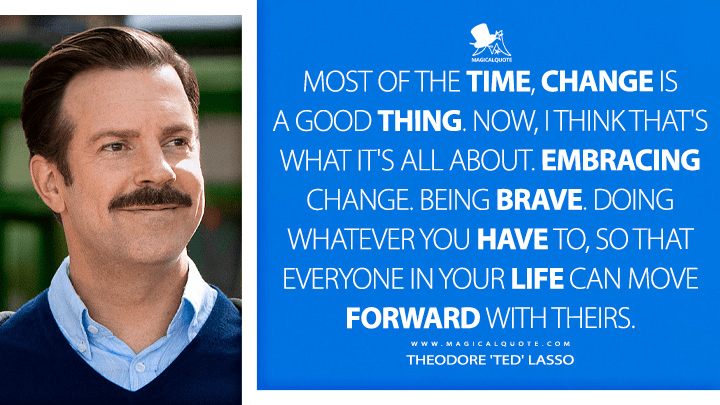
Yes, it’s time for a change. But change for change’s sake is not the point. Change that reflects godly values is the point. And in order to realize this good sort of change, we must be attentive and hear Holy Scripture, seek the mind and heart of God, and be willing to let Jesus come and have the run of the house.

We must unlearn before we learn. We need to let go so that we can take up. Change involves the humility to admit when we are lost, ask for help, and go in a different direction. New life is not rebranding oneself but is akin to being born again.

Almighty God, we desire to be transformed by you and allow the life of Jesus to be expressed in and through us. We desire to walk in the light of your Spirit. Reveal to us those things in our lives that need to change. Allow us to discern between flesh and spirit so that we can choose a healthy holy path.

Continue to give us spiritual awareness. Transform us into something new altogether. May our old life and old ways disappear, and may new life emerge that will bless both the church and the world, through Jesus Christ our Lord, in the power of the Holy Spirit. Amen.

Living in the Spirit (1 Corinthians 12:1-3)

What I want to talk about now is the various ways God’s Spirit gets worked into our lives. This is complex and often misunderstood, but I want you to be informed and knowledgeable. Remember how you were when you didn’t know God, led from one phony god to another, never knowing what you were doing, just doing it because everybody else did it? It’s different in this life. God wants us to use our intelligence, to seek to understand as well as we can. For instance, by using your heads, you know perfectly well that the Spirit of God would never prompt anyone to say, “Jesus be damned!” Nor would anyone be inclined to say, “Jesus is Master!” without the insight of the Holy Spirit. (The Message)

Summer is nearly upon us. In Christianity, this means we are entering the longest season in the Christian Year. By it’s sheer length alone, it behooves us to give it some recognition. We can only do that if we realize where we’ve come from so far.

The Christian Year

The Christian Year began with Advent – a time of anticipating Christ’s incarnation and remembering that Jesus will come again in a second advent.

We have celebrated the twelve days of Christmas, the birth of the Christ child, leading to the season of Epiphany. We kept up the celebration through rejoicing in God’s revelation to the entire world – all peoples everywhere – in having Christ’s earthly ministry of teaching and healing on our behalf.

Lent has come, beginning with Ash Wednesday and moving through six weeks of focusing on spiritual disciplines which prepared us for Christ’s death, and hopefully, our own death to sin, as well.

Then, we rejoiced in the Lord’s resurrection on Easter Sunday, and experienced a fifty day observance of Eastertide, including the Ascension of the Lord.

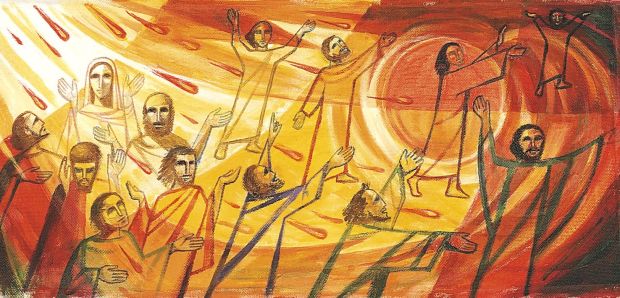
The Day of Pentecost has come, as we celebrated the gift of the Holy Spirit and the birth of the church, acknowledging our personal and communal spiritual power.

Now, we revel in this season of Pentecostal power, known as “Ordinary Time” or “Proper Time.” It is a time of engaging in the ongoing work of the church to spread the gospel of Jesus Christ. This is the Christian’s “proper” and “ordinary” work of ministry.

The Christian Life

All of the work of Jesus in securing redemption for us is directed toward using the spiritual gifts given to us for the life of the church and the world. There’s no going back. We move forward, utilizing everything provided for a godly life in this present difficult age.

Now we develop our ability to walk and live in the Spirit for the rest of our lives – working out our salvation with reverence and respect.

What I’m getting at, friends, is that you should simply keep on doing what you’ve done from the beginning. When I was living among you, you lived in responsive obedience. Now that I’m separated from you, keep it up. Better yet, redouble your efforts. Be energetic in your life of salvation, reverent and sensitive before God. That energy is God’s energy, an energy deep within you, God himself willing and working at what will give him the most pleasure. (Philippians 2:12-13, MSG)

What the Apostle Paul was getting at with the Corinthian Church was that inspired speech from God always exalts the Lord Jesus – and doesn’t point to someone else, especially the speaker.

In their pre-Christian days, many of the Corinthian believers were involved in pagan worship practices which also involved some inspired speech. But the issue for Paul is less about the speaker and more about the direction of the speech. If the inspirational talk only points to self, or someone else other than Christ, then that speech isn’t from God’s Spirit. Any true divine utterance will clearly point to Jesus.

In a society which was continually angling for personal display and a sort of one-upmanship, the Corinthians were prone and/or tempted to fall back into old ways of drawing attention to themselves. But the entire point of spiritual gifts is that that they are given by God to be used for helping others center their lives around the Lord Jesus. Anything short of that is simply non-Christian.

The Christian Commitment

Which is why I bring us back once again to the Christian Year with its seasons that follow the life and ministry of Jesus. Christian time revolves around Christ. Christian commitment centers in Christ. In Christianity, literally everything has Christ in the middle of it. To do otherwise is something other than Christianity.

We may not (and do not) all hold to the liturgical year as Christians, and that’s okay. Yet what isn’t okay is going off to do your own thing by making salvation something you made the choice to have, giving some of your time, money, and abilities at your leisure, as if you’re really the one in control, not God.

The demands of Christian discipleship are complete and total. Christianity is a life, not a hobby. Christians are followers of Christ’s words and ways, not fans cheering him from a distance without getting their hands dirty in Christian service and love.

“Cheap grace is the preaching of forgiveness without requiring repentance, baptism without church discipline, Communion without confession, absolution without personal confession. Cheap grace is grace without discipleship, grace without the cross, grace without Jesus Christ, living and incarnate.”

Dietrich Bonhoeffer, The Cost of Discipleship

Everything we have is a gift given by a gracious God to be stewarded well for the glory and exaltation of the Lord Jesus Christ. Our penultimate gift is the Holy Spirit, who helps complete a renovation of the heart so that it revolves thoroughly around Christ.

Almighty God and Father, who gave your only Son to die for our sins and to rise for our justification: Give me grace so to put away selfishness and wickedness so that I may always serve you in holiness and truth, through Jesus Christ my risen and ascended Lord, who lives with you and the Holy Spirit, one God, now and forever. Amen.

The Heart of Words (Matthew 12:33-37)

A good tree produces good fruit, and a bad tree produces bad fruit. You can tell what a tree is like by the fruit it produces. You are a bunch of evil snakes, so how can you say anything good? Your words show what is in your hearts. Good people bring good things out of their hearts, but evil people bring evil things out of their hearts. I promise you on the day of judgment, everyone will have to account for every careless word they have spoken. On that day they will be told they are either innocent or guilty because of the things they have said. (Contemporary English Version)

Words are important. They have meaning and power.

Our speech is the outward demonstration of what is really within the heart. There really isn’t any room to believe that a constant stream of gossip, backbiting, slander, and negative comments is anything but coming from a heart of evil. The person who speaks such words is not a loving, gracious, merciful person. Conversely, the person who continually encourages, uplifts, and seeks to be positive, reflects a deep heart of love for others.

Therefore, simply altering our speech when we’re around particular people is not the point; and it does no good. That kind of talking only breeds hypocrisy and is two-faced. Instead, the place to aim is the heart because that’s where the words come from. And the way to truly renovate a heart is to sub-contract the project to Jesus.

The people we typically hang-out with the most are the people that most influence our attitudes and our speech. 

So, if we spend copious amounts of time with Jesus, it’s inevitable that our hearts will become more like his heart, and thus, our words will be in alignment with the words and ways of Christ. Be rooted in Christ and the fruit of the tree will demonstrate it.

I always find public confessions on TV to be a rather disingenuous affair. Typically, celebrity apologies only take shape when one has been caught saying something and are called on the carpet. Then, when the apology comes, it’s predictably odd and incongruent, with the person saying something to the tune of, “I’m sorry if I hurt anybody by what I said. Saying that really wasn’t me. I’m not really like that.”

Well, apparently you are. It came out of your mouth. Jesus said that out of the overflow of the heart the mouth speaks. The words we say out loud betray what is truly inside us.

Jesus used the metaphor of a tree to illustrate his point. If the roots, the trunk, and the branches are good and healthy, then you can be sure the tree will produce good healthy fruit. However, if the tree is diseased, or infested with insects and rotting from the inside out, then no one can expect anything other than bad fruit, not fit to consume.

If the fruit is bad, the tree is bad. If the words are hateful, sarcastic, passive-aggressive, manipulative, conniving, racist, hurtful, ignorant, mean, unjust, foolish, and either subtly or overtly abusive, then the person has a dark heart and is need of redemption, not excuses.

Conversely, if the words are affirming, encouraging, loving, compassionate, gentle, caring, direct, helpful, peaceful, kind, giving hope and life, then there is a good heart behind it.

Yes, bad hearts can parrot good words. However, those words are not genuine but mere rote recitations to achieve some sort of personal agenda. And, of course, good people will occasionally say dumb or hurtful words. In such times, let it be a reminder that we all have some shadowy places within our hearts – and that we must depend on God’s grace to enlighten those dark spaces.

Let’s observe patterns, rather than focusing on isolated events where either good or bad words were said. A consistent pattern of invalidating another’s experiences or feelings; intimidating or threatening others; dismissing or discounting someone’s input; or being unnecessarily blunt, are all major red flags pointing to a severe heart issue.

Evil exists in the world. And if we are not vigilant to the power of language, wickedness can easily smack us upside the head when we aren’t looking.

The heart cannot be concealed forever. Eventually, the virtuous person will be shown as such by the stream of gracious speech which pours forth from the heart, as if it were living water for others to drink and enjoy. Their words reflect their good character.

The wicked person, however, cannot keep the bad words down. Those vile words sit in the soul, poisoning and making the person ill. Then, all of a sudden, the evil words come up and out with a great vomitous heave and spew impurity and unholiness all over the innocent. Their words betray their foolish and poor character.

Every tree that does not bear good fruit will be cut down and thrown into the fire. The wicked heart will not be able to speak ill of others with impunity forever. They will be called to account for their abusive words, whether overtly violent, or subtly undermining.

The righteous heart, however, shall experience divine pleasure and reward, as if the careful construction of helpful and building up words wins first-prize at the great heavenly fair.

The good person loves and does not hate. They are so far from harming anyone that they even pray and wish well for their enemies. They pray for blessings on those who curse them. There is an honest striving to speak good words to everyone, regardless of who they are.

The upright heart thinks the best of everyone and holds nothing over someone else’s head. Such a good heart condemns no one, leaving all judgment to God alone. It is patient with the most exasperating of people, praying they might come to their senses and become spiritually healthy.

The righteous are able to use their speech to admonish their neighbor with care and affection. They freely forgive, happily give, liberally encourage, and use their tongue to speak words of life. Indeed, their speech is wise, humble, full of grace, and above all, loving.

Almighty God, to you all hearts are open, all desires known, and from you no secrets are hid: Cleanse the thoughts of our hearts by the inspiration of your Holy Spirit so that we may perfectly love you, and worthily magnify your holy Name; through Christ our Lord. Amen.