All Saints Day (Psalm 34:1-10, 22)

I will praise the Lord at all times;
my mouth will continually praise him.
I will boast in the Lord;
let the oppressed hear and rejoice.
Magnify the Lord with me.
Let us praise his name together.
I sought the Lord’s help and he answered me;
he delivered me from all my fears.
Look to him and be radiant;
do not let your faces be ashamed.
This oppressed man cried out and the Lord heard;
he saved him from all his troubles.
The angel of the Lord camps around
the Lord’s loyal followers and delivers them.
Taste and see that the Lord is good.
How blessed is the one who takes shelter in him.
Fear the Lord, you chosen people of his,
for those who fear him lack nothing.
Even young lions sometimes lack food and are hungry,
but those who seek the Lord lack no good thing…

The Lord rescues his servants;
all who take shelter in him escape punishment. (New English Translation)

In all times and every place throughout history God has specialized in taking imperfect and broken people and transforming their lives. On the Christian Calendar, November 1 is the day each year to remember the saints who have gone before us. This day is meant to be an intentional way of not forgetting the people, friends, and family – as well as long-dead historical saints – who made a significant impact in our spiritual lives.

All Saints Day is more than a focus on extraordinary persons; it highlights the work of ordinary Christians who faithfully lived their lives. We give thanks for the gift of how they lived their faith every day. We also remember that all believers in Jesus are united and connected through the cross.

Remembering is a prominent theme in Holy Scripture. Over one-hundred times we are told to remember God’s covenant and actions on behalf of people; to remember the needy and those less fortunate; and to remember the important people who influenced us in our journey of faith.

Remember your leaders, who spoke the word of God to you.  Consider the outcome of their way of life and imitate their faith. (Hebrews 13:7, NIV)

We are to be inspired now in the present with the actions of faithful saints of the past. They serve as a model of faithfulness, so that we will persevere in our Christian lives and not give up. Through biblical stories of very human persons being used of God, as well as reading biographies of godly people, we can gain motivation for patience and perseverance until Jesus returns.

Who were the people in your life that went out of their way to communicate God’s love to you with both words and actions? Who were those persons who labored behind the scenes in prayer so that you and others would know Jesus? 

If any of those persons are still around, and you know where they are, remember them. Drop them a note. Express to them a simple thank you for their influence in your life. You will not only encourage that person – it will help you remember and re-engage with something in your life you may have forgotten or have just taken for granted for too long.

We are not to live our Christian lives in isolation from others, as if we do not need them. You and I are here today because someone influenced us in the way of Jesus. And we will continue to persevere and thrive in the faith when we remember those who have gone before us and allow those here in the present to journey with us along this road of faith.

Today is all about remembrance. We remember answered prayer and salvation. We recollect the people who gave us the life-giving gospel message in both word and deed. We remember the death of Christ and recall that he said he is coming back.

The psalmist recalled his rescue and pulled it forward into the present so that all God’s worshipers could taste and see that the Lord is good. This is exactly what the Apostle Peter did for a church which needed to recall and remember the mighty acts of God:

Like newborn babies, crave pure spiritual milk, so that by it you may grow up in your salvation, now that you have tasted that the Lord is good. As you come to him, the living Stone—rejected by humans but chosen by God and precious to him—you also, like living stones, are being built into a spiritual house to be a holy priesthood, offering spiritual sacrifices acceptable to God through Jesus Christ. (1 Peter 2:2-5, NIV)

Our memories are accessed through symbols and with taste and sight. God uses symbols to reveal himself to us.  For example, when God wanted to show us the ugliness of sin and the cost of forgiveness, the Lord told the Israelites to kill an animal and sprinkle its blood on their clothing and on the altar.

That sounds awful. Yet, worshipers never walked away from the experience scratching their heads and wondering what it was all about. That’s because they encountered and tasted the drama of sin and redemption. Their senses saw it, felt it, smelled it, and tasted the meat from it. 

Symbols have power. We cannot know God with only our minds; we’re more than brains on a stick. People need ordinary events, like shared meals, that include symbols and rituals. 

Every year faithful Jews gather to remember and re-enact the Passover – the story of how they were enslaved in Egypt, oppressed by Pharaoh, and set free by God.  To this day pious Jews still remember the Passover by eating and drinking together and telling stories.

We need both words and sacraments. Therefore, holidays like Thanksgiving and Christmas involve both verbal expressions of gratitude and love, and particular actions of love in giving gifts and sharing food. Together, it all connects us to God, to one another, and to a history of God’s people. 

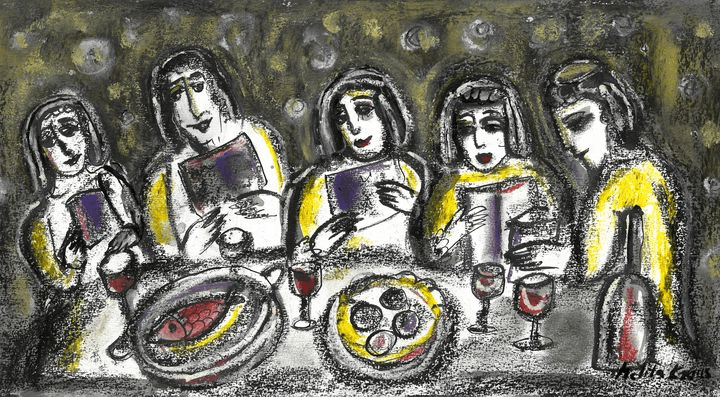
Jesus met his disciples in the Upper Room to celebrate Passover together. Jesus energized their time together by filling it with words and symbols of love and redemption. Christ told the disciples about his upcoming death and acted symbolically. “Take and eat – this is my body….  Take this cup – drink from it, all of you.” (Luke 22:7-20)

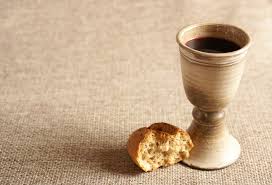
Rather than sitting around, analyzing the bread, and discussing the wine’s vintage, the disciples ate and drank.  They tasted real food and drink. They also tasted real spiritual food. It’s one thing to speak of God’s presence, and it’s another thing to experience that presence through an ordinary shared ritual of bread and cup.

God is good. Jesus is our Emmanuel, God with us. Christ is present with us through our ritual of fellowship and food. When the sixteenth-century Reformer John Calvin was asked how Jesus is present to us at the Lord’s Supper he explained: “Now if anyone asks me how this takes place I shall not be ashamed to confess that it is a secret too lofty for either the mind to comprehend or my words to declare….  I rather experience it than understand it.”

The taste of bread reminds us of the incarnation of Christ, and Christ’s humiliation and death. The taste of drinking the cup reminds us of the sacrifice of Christ, the drops of blood which Jesus sweated in Gethsemane, and the beatings, floggings, nails, and crown of thorns that caused the bleeding.

Tasting the bread and cup when we celebrate communion reminds us that our sins are forgiven, we are united to Christ, and we are united together. 

There are historical events which are just that. Then, there are past actions which linger with continual results into the present. The incarnation, life, death, resurrection, ascension, and glorification of the Lord Jesus are past redemptive events which continue to exert powerful force into the here and now.

Saints throughout church history have moved the message of Christ along and demonstrated for us that the past lives in the person of Jesus Christ.

Along with them, we proclaim that Christ has died, Christ has risen, Christ is coming again. And God has something planned for those who have gone before us, along with us, so that together we will experience the perfect righteousness of Christ forever. (Hebrews 11:39-40)

We are encouraged through word and sacrament to proclaim the good news of Jesus Christ until he comes again. Let us respond to God’s wooing invitation to eat and drink, to taste and see that the Lord is good through faith, hope, and love. Let us find in God our refuge and strength, our ever-present help.

Soli Deo Gloria

Remember God, for God Has Remembered Us (Psalm 105:1-11, 45b)

Give thanks to the Lord;
    call upon his name;
    make his deeds known to all people!
Sing to God;
    sing praises to the Lord;
    dwell on all his wondrous works!
Give praise to God’s holy name!
    Let the hearts rejoice of all those seeking the Lord!
Pursue the Lord and his strength;
    seek his face always!
Remember the wondrous works he has done,
    all his marvelous works, and the justice he declared—
    you who are the offspring of Abraham, his servant,
        and the children of Jacob, his chosen ones.

The Lord—he is our God.
    His justice is everywhere throughout the whole world.
God remembers his covenant forever,
    the word he commanded to a thousand generations,
        which he made with Abraham,
        the solemn pledge he swore to Isaac.
God set it up as binding law for Jacob,
    as an eternal covenant for Israel,
    promising, “I hereby give you the land of Canaan
    as your allotted inheritance….”

Praise the Lord! (New Revised Standard Version)

Human thoughts and actions respond to divine thoughts and actions. We remember because God remembers. We act because God acts in history. We give because the Lord first gave to us.

The psalmist calls us to act and to think – and it’s all a response to God’s merciful attention to God’s people. Notice the imperative verbs which call us to use our words, emotions, and actions, so that we press spiritual truth into our minds and hearts, and do not forget our experiences. They all, from a Christian perspective, have their fulfillment in the person and work of Jesus.

Give thanks to the Lord

Give thanks in all circumstances; for this is God’s will for you in Christ Jesus. (1 Thessalonians 5:18, NIV)

Make known God’s deeds

“Righteous Father, though the world does not know you, I know you, and they know that you have sent me. I have made you known to them, and will continue to make you known in order that the love you have for me may be in them and that I myself may be in them.” (John 17:25-26, NIV)

Sing praises to the Lord

For I tell you that Christ has become a servant of the Jews on behalf of God’s truth, so that the promises made to the patriarchs might be confirmedand, moreover, that the Gentiles might glorify God for his mercy. As it is written:

“Therefore I will praise you among the Gentiles;
    I will sing the praises of your name.”

Again, it says,

“Rejoice, you Gentiles, with his people.” (Romans 15:8-10, NIV)

Dwell on God’s works

Let the message of Christ dwell among you richly as you teach and admonish one another with all wisdom through psalms, hymns, and songs from the Spirit, singing to God with gratitude in your hearts. (Colossians 3:16, NIV)

Give praise to God’s holy name

Now on his way to Jerusalem, Jesus traveled along the border between Samaria and Galilee. As he was going into a village, ten men who had leprosy met him. They stood at a distance and called out in a loud voice, “Jesus, Master, have pity on us!”

When he saw them, he said, “Go, show yourselves to the priests.” And as they went, they were cleansed.

One of them, when he saw he was healed, came back, praising God in a loud voice. He threw himself at Jesus’ feet and thanked him—and he was a Samaritan.

Jesus asked, “Were not all ten cleansed? Where are the other nine? Has no one returned to give praise to God except this foreigner?” Then he said to him, “Rise and go; your faith has made you well.” (Luke 17:11-19, NIV)

Pursue the Lord

Flee the evil desires of youth and pursue righteousness, faith, love and peace, along with those who call on the Lord out of a pure heart. (2 Timothy 2:22, NIV)

Seek God’s face

And without faith it is impossible to please God because anyone who comes to him must believe that he exists and that he rewards those who earnestly seek him. (Hebrews 11:6, NIV)

Remember God’s works and God’s justice

“Why do you look for the living among the dead? He is not here; he has risen! Remember how he told you, while he was still with you in Galilee: ‘The Son of Man must be delivered over to the hands of sinners, be crucified and on the third day be raised again.’” (Luke 24:5-7, NIV)

We are to remember because God remembers. The Lord has an ongoing reminder in the divine day timer: Fulfill the promises I made. Keep the covenant I initiated with the people, even when they are stinkers and forget who I am.

God does not forget. The Lord keeps divine promises.

For the Christian, all God’s promises are remembered and fulfilled in the person and work of Jesus Christ.  Deliverance from sin, death, and hell; the gift of the Holy Spirit; and, ongoing divine presence and provision are given to us graciously and freely by the God who loves and cares for people. 

For Christians everywhere, remembering means coming to the Lord’s Table, entering into the once for all loving sacrifice of Christ on our behalf. It is here that we remember to give thanks and praise, seek and sing. In doing so, we make invisible realities visible, and the divine character of God known to amongst the nations.

God and Father of all, and of Jesus Christ our Lord, as you remember your dear Son, remember us. Grant us peace in our time and a longing for the day when people of every language, race, and nation will be brought into the unity of Christ’s kingdom, where there shall be endless praise, singing, thanksgiving, and joy in the Holy Spirit. This we ask in your holy Name, because of your great glory, and for the sake of Christ’s rule and reign over the earth, now and forever. Amen.

Bread from Heaven (Exodus 16:27-35)

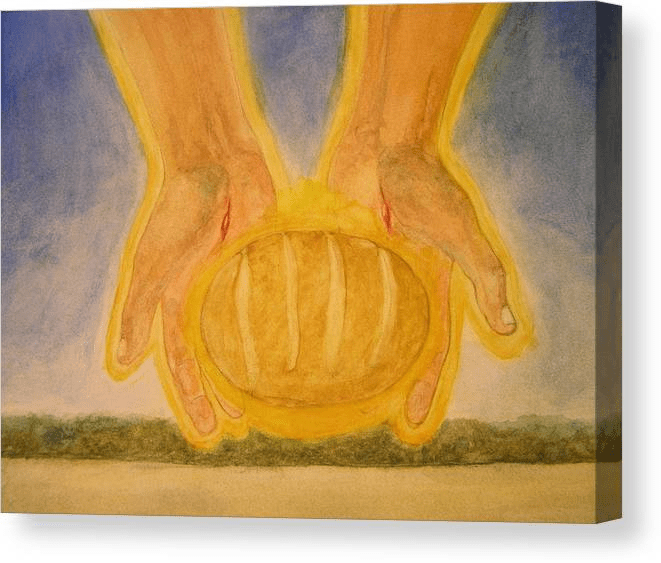
Bread From Heaven, by Nigel Wynter

On the seventh day some people went out to gather food, but they didn’t find any. The Lord said to Moses, “How long will you refuse to do what I have commanded and instructed you to do? Remember: The Lord has given you this day of rest as a holy day. That’s why he gives you enough food on the sixth day for two days. On the seventh day stay in your place—no one is to go out. Everyone, stay where you are.” So the people never worked on the seventh day of the week.

The Israelites called the food manna. It was like coriander seeds. It was white and tasted like wafers made with honey.

Moses said, “This is what the Lord has commanded: Take two quarts of manna to be kept for your descendants. This way they will see the food that I gave you to eat in the desert when I brought you out of Egypt.”

Moses said to Aaron, “Take a jar, put two quarts of manna in it, and put it in the Lord’s presence to be kept for your descendants.” Aaron put the jar of manna in front of the words of God’s promise to be kept there, as the Lord commanded Moses.

The Israelites ate manna for 40 years until they came to a place to settle. They ate manna until they came to the border of Canaan. (God’s Word Translation)

“What is it?” is the quite literal meaning of the word manna. And the answer is: It is bread from heaven.

The manna was food for the Israelite people in their 40 years of sojourning through the desert. There is also an implicit question surrounding this bread: What to do with it? Well, of course, you eat it. But, before eating it, there are issues and instructions about the manna’s arrival and collection.

The special food, only graciously given to this particular group of cantankerous people, appeared in the mornings for six days a week, not seven, and only had a shelf life of one day, with the exception of the singular Sabbath day each week.

There is a time to go out and gather, and there is a time to stay put and eat; a time to work, and a time to rest. The lack of wisdom in timing could cost you not only a meal, but also your overall sense of paying attention to God’s commands.

It is the fool who spurns the relationship between events, that is, the space between when the Lord speaks and when humanity responds. Our human responsibility is dependent upon Divine sovereignty. Ignoring the voice of God, or simply failing to listen out of present anxieties or fears, will nearly always result in a skewed response-ability.

Yes, indeed, we all have very legitimate needs for cuisine, clothing, companionship, care, and compassion. If these vital needs go unmet, we are undone and shall die. Yet, there is also the question of how we will go about getting those very important and basic needs met – and many people, having not listened well to the instructions about life, will go about attempting to meet those needs in illegitimate ways.

Trying to satisfy legitimate needs through illegitimate means ends up eroding the soul, compromising character, and searing the conscience. It’s inevitable that such a person will grumble and complain, projecting on God the evil that is, in reality, residing within the human heart.

Whenever folks go out and try to gather what isn’t there, they have lost their way and their very real needs will not really be met, at all.

This is why humans need remembrances – to have reminders of what time it is and what’s important to do and not do, to seek the appropriate paths of living well, and to avoid the pitfalls of dead end trails.

One purpose of Sabbath is to remember – to recall the great story of deliverance and never forget where we came from, so that we will continually have before us where we are going.

I Am the Bread of Life, by Joseph Matar

The Christian remembers the saving and redemptive events of Jesus by coming to the Table. We gather together to ingest bread from heaven, to partake of the Bread of Life. For those who choose to carefully listen and pay attention, the words of Christ will not only speak life into our weary selves, but shall also shape how we go about getting our needs met and satisfied:

The people began to murmur in disagreement because he had said, “I am the bread that came down from heaven….”

But Jesus replied, “Stop complaining about what I said. For no one can come to me unless the Father who sent me draws them to me, and at the last day I will raise them up. As it is written in the Scriptures, ‘They will all be taught by God.’ Everyone who listens to the Father and learns from him comes to me….

“I tell you the truth, anyone who believes has eternal life. Yes, I am the bread of life! Your ancestors ate manna in the wilderness, but they all died. Anyone who eats the bread from heaven, however, will never die. I am the living bread that came down from heaven. Anyone who eats this bread will live forever; and this bread, which I will offer so the world may live, is my flesh.”

Then the people began arguing with each other about what he meant. “How can this man give us his flesh to eat?” they asked.

So Jesus said again, “I tell you the truth, unless you eat the flesh of the Son of Man and drink his blood, you cannot have eternal life within you. But anyone who eats my flesh and drinks my blood has eternal life, and I will raise that person at the last day. For my flesh is true food, and my blood is true drink. Anyone who eats my flesh and drinks my blood remains in me, and I in him. I live because of the living Father who sent me; in the same way, anyone who feeds on me will live because of me. I am the true bread that came down from heaven. Anyone who eats this bread will not die as your ancestors did (even though they ate the manna) but will live forever.” (John 6:41-58, NLT)

Consider well, then, where and how you will find the sustenance of the soul, love, and in what ways you will listen to the words of Jesus and gather them for your next meal. Will you hoard your heaven-sent food, or will you share?

O God, our Provider and Sustainer, we who are many are one body in Christ, for we all share in the one bread. Refresh, strengthen, and preserve us as we journey in this life, in the name of Jesus Christ. Amen.

All Saints Day (Psalm 149)

All Saints Day I, Wassily Kandinsky, 1911

Praise the Lord!

Sing a new song to the Lord;
    sing his praise in the meeting of his people.

Let the Israelites be happy because of God, their Maker.
    Let the people of Jerusalem rejoice because of their King.
They should praise him with dancing.
    They should sing praises to him with tambourines and harps.
The Lord is pleased with his people;
    he saves the humble.
Let those who worship him rejoice in his glory.
    Let them sing for joy even in bed!

Let them shout his praise
    with their two-edged swords in their hands.
They will punish the nations
    and defeat the people.
They will put those kings in chains
    and those important men in iron bands.
They will punish them as God has written.
    God is honored by all who worship him.

Praise the Lord! (New Century Version)

Most of us are aware and in touch with how imperfect we are. Sometimes we view our imperfections as failure, weakness, or sin. But how does God see us? In what way does the eternally perfect, infinitely strong, and sovereign Lord feel about us?

The Lord is happy with his people, he is pleased with us. And because God is delighted with people, the Lord saves the humble in heart, beautifies the unlovely, and turns the sinner into a saint.

Throughout the ages, the faithful have experienced the love of God. Even now, they are rejoicing, singing for joy, and celebrating the ways God changed them to make the world a better place.

On the Christian Calendar, November 1 is the day each year to remember the saints who have gone before us, to acknowledge that God has always taken pleasure in using imperfect broken people to impact the world.  

Today is meant to be a day of remembrance – a way of not forgetting the people, friends, and family, as well as the long-dead historical saints, who have made a significant difference in our spiritual lives.

All Saints Day is more than simply acknowledging extraordinary persons; today also highlights the work of ordinary Christians who faithfully lived their lives and persevered to the end. We give thanks for the gift of how they daily lived their faith.

We remember today that:

  • Christians everywhere and throughout time are united and connected to one another.
  • God’s good pleasure saves and redeems all sorts of people.
  • Underprivileged and underserved people are noticed by God and God’s saints.
  • Influential people in our lives, now in the presence of the Lord, can be honored through emulating their faith and perseverance.

“Remember your leaders, who spoke the word of God to you.  Consider the outcome of their way of life and imitate their faith.” (Hebrews 13:7, NIV)

The saints of the past are an inspiration to us in the present. They serve us as a model of faithfulness in persevering in our Christian lives. Through biblical stories of very human persons being used of God, as well as reading biographies of godly people who were dedicated to God in service, we gain motivation and patience until Jesus returns.

All Saints Day II, by Kandinsky, 1911

Who went out of their way to communicate God’s love to you with both words and actions? 

Who wrestled in prayer for you so that you and others might know God? 

If any of those persons are still around, and you know where they are, remember them. Drop them a note. Express to them a simple thank you for their influence in your life. You will not only encourage that person – it will help you remember and re-engage with something in your life you may have forgotten or have just taken for granted for too long.

We truly stand on the shoulders of faithful and wise people those who have gone before us. We will continue to persevere and thrive in faith by remembering them; and also by allowing people now, presently with us, to join us in our journey along the road of faith.

It is sage to recall events of rescue and pull them forward into the present so that all God’s worshipers can taste and see that the Lord is good.

Like newborn babies, crave pure spiritual milk, so that by it you may grow up in your salvation, now that you have tasted that the Lord is good. As you come to him, the living Stone—rejected by humans but chosen by God and precious to him—you also, like living stones, are being built into a spiritual house to be a holy priesthood, offering spiritual sacrifices acceptable to God through Jesus Christ. (1 Peter 2:2-5, NIV)

God uses symbols as a means of revelation and remembrance. We need both special days and ordinary events;  shared meals and silent fasting, tangible signs and necessary endings, active rituals and passive observances, iconic images and iconoclastic nonconformity.

We need both words and sacraments – to have days set apart for gathering together and expressing our verbal gratitude and love for each other, as well as giving our nonverbal gifts of food, fun, and friendship.

Our shared spiritual history connects us to God, to one another, and to all of God’s people who have gone before us. We remember that history by energizing our time together with words and symbols of care and redemption.

Christ told the disciples about his upcoming death and provided symbols which reinforced the words: 

“Take and eat – this is my body…. Take this cup – drink from it, all of you.” (Luke 22:7-20)

The taste of real bread reminds us of the physical incarnation of Christ, and Christ’s humiliation and death. Drinking from the tangible cup reminds us of the bodily sacrifice of Christ, the drops of blood which Jesus sweat in Gethsemane, and the beatings, floggings, nails, and crown of thorns that caused the bleeding. Tasting the bread and cup when celebrating communion reminds us that our sins are forgiven, we are united to Christ, and we are united together. 

There are past historical events which are now presently forgotten. Yet, there are also past actions that ripple and linger with continuing results into the present. The incarnation, life, death, resurrection, ascension, and glorification of the Lord Jesus are past redemptive events which continually exert powerful force into the here and now.

The saints throughout church history moved the message of Christ along and demonstrated for us that the past is alive in the person of Jesus Christ. Along with them, we proclaim:

Christ has died, Christ has risen, Christ is coming again.

And God has something planned for those who have gone before us, along with us, so that together we will experience the perfect righteousness of Christ forever. (Hebrews 11:39-40)

Remember and celebrate, eat and drink, taste and see, that the Lord is good.

May we remember the Lord’s people and never forget their example of godly living.

Our spiritual ancestors in faith continue to praise the Lord, to proclaim that God is our refuge and strength, our ever-present help. Let us follow in their footsteps.

Almighty God, you have knit together your elect in one communion and fellowship in the mystical Body of your Son: Give us grace to emulate your saints by living virtuous and godly lives so that we may share the joy you have prepared for those who truly love you, through Jesus Christ our Lord, who with you and the Holy Spirit lives and reigns as one God, in glory everlasting. Amen.