Longing For God (Psalm 63)

O God, you are my God; I seek you;
    my soul thirsts for you;
my flesh faints for you,
    as in a dry and weary land where there is no water.
So I have looked upon you in the sanctuary,
    beholding your power and glory.
Because your steadfast love is better than life,
    my lips will praise you.
So I will bless you as long as I live;
    I will lift up my hands and call on your name.

My soul is satisfied as with a rich feast,
    and my mouth praises you with joyful lips
when I think of you on my bed
    and meditate on you in the watches of the night,
for you have been my help,
    and in the shadow of your wings I sing for joy.
My soul clings to you;
    your right hand upholds me.

But those who seek to destroy my life
    shall go down into the depths of the earth;
they shall be given over to the power of the sword;
    they shall be prey for jackals.
But the king shall rejoice in God;
    all who swear by him shall exult,
    for the mouths of liars will be stopped. (New Revised Standard Version)

David, the psalmist, had a great longing for God.

This sort of longing has nothing to do with lustful desires which want something specific under the Christmas tree. To long for God is to have a deep inner wish for fulfillment and connection.

People have all sorts of longings in their lives, because they miss someone or are missing something important.

A parent longs for an estranged child to return, or at least to talk to them.

A spouse wishes to be with their loved one without the ravages of dementia.

A teacher has a deep longing to impact her students in a positive and profound way that will change their lives.

A person longs to see their friend realize the dream they have been seeking.

An individual has been living with chronic pain for years, and longs to be at least pain-free enough to enjoy the simple pleasures of taking a walk, visiting family, or going to a restaurant for a nice meal.

These longings, and thousands more, make up the future hope which keeps us going day after day. And they are all, in one way or another, related to the ultimate longing for divine connection.

Many types of longing come from a place of relationship, of love and support for another. It is this kind of longing that the psalmist had for God. The deep longing to experience a divine/human contact, to commune with the living God, is what motivated and fueled David throughout much of his life.

Like a person looking to satiate their thirst in a hot dry desert, is the one who actively seeks and goes after the longing they have. I believe that every person on planet earth has a deep abiding desire and need for something transcendent in this life, to encounter a power which is higher and greater than us – knowing that the basic nature of this power is loving and good.

My need for communion with God is on the same level as my daily need for water. I cannot survive without either of them.

Spiritual survival requires being watered and fed by an intimate relationship with our Creator. The presence of God is just as necessary and life-sustaining as food. Along with the psalmist David, God’s words are the spiritual food I need to live and survive.

Longing involves memory. Our various longings are often a remembrance of special events, seasons, or people. Deep hope activates those memories, and drives us to prayer, because God has the strength and the ability to honor those honest longings.

The greatness of God, and the divine purposes for this world, are heavy laden with longing. God’s heart longs for humanity to realize a renewed and revitalized relationship with God.

So, the Lord serves humanity in a myriad of ways, bringing deliverance from all that hinders us in a relationship with God, so that we might associate meaningfully and purposefully with what is good, right, and just.

We are invited by God to unpack the gift of faith, and the various spiritual gifts given to us, for the benefit of the church and the world.

God’s steadfast love is indeed better than life itself, because it is beyond what we humans can even conceive of as to what a good life truly is.

God is Love, and Love is God. Love transcends life and brings us to a place of connection beyond what our minds can imagine, and our hearts can only long for.

Since God is always gracious, loving, and good within God’s basic character, God always does what is good and loving. And that makes praise and adoration of God always open season.

Praising God reminds us of what God has done. The Lord is personally invested and involved in God’s big world. Thus, praise is quite appropriate whenever one is going through difficult times; because it accesses memories of God’s help in times past, enabling divine help in the present.

God’s gracious actions are both communal and personal. God not only helps others; God helps me. The Lord’s faithfulness endures throughout all generations. And God is big enough to notice me, and to help me in my own time of need.

Therefore, any occasion is appropriate in coming to God.

Are you in need of rest? Do you need encouragement? Are you in need of some help?

Then, come to God. Praise the Lord. Remember God. Consider the works God has done throughout history for God’s people. Do it during the day while working. Do it at night with your head on the pillow. Do it anytime, anywhere. Because God is there.

The Lord will provide – perhaps not on your timetable, yet God will nonetheless help, often in a way you may not expect.

Faith in God isn’t about trying to avoid God’s anger or wrath; faith is about syncing my wishes and my longings with the heart of God. That is called “repentance.” And it’s the way of finding our great inner longings satisfied.

We must tend to our relationship with the Lord; for God has made it possible to do so.

Receive this blessing from author John O’Donohue in his book, To Bless the Space Between Us: A Book of Blessings…

Blessed be the longing that brought you here
And quickens your soul with wonder.

May you have the courage to listen to the voice of desire
That disturbs you when you have settled for something safe.

May you have the wisdom to enter generously into your own unease
To discover the new direction your longing wants you to take.

May the forms of your belonging—in love, creativity, and friendship—
Be equal to the grandeur and the call of your soul.

May the one you long for long for you.

May your dreams gradually reveal the destination of your desire.

May a secret Providence guide your thought and nurture your feeling.

May your mind inhabit life with the sureness with which your body inhabits the world.

May your heart never be haunted by ghost-structures of old damage.

May you come to accept your longing as divine urgency.

May you know the urgency with which God longs for you.

Amen.

Recall the Faithfulness of God (Psalm 105:1-11, 37-45)

The Delivery of Israel out of Egypt, by Francis Danby, 1825

O give thanks to the Lord; call on his name;
    make known his deeds among the peoples.
Sing to him, sing praises to him;
    tell of all his wonderful works.
Glory in his holy name;
    let the hearts of those who seek the Lord rejoice.
Seek the Lord and his strength;
    seek his presence continually.
Remember the wonderful works he has done,
    his miracles and the judgments he has uttered,
O offspring of his servant Abraham,
    children of Jacob, his chosen ones.

He is the Lord our God;
    his judgments are in all the earth.
He is mindful of his covenant forever,
    of the word that he commanded for a thousand generations,
the covenant that he made with Abraham,
    his sworn promise to Isaac,
which he confirmed to Jacob as a statute,
    to Israel as an everlasting covenant,
saying, “To you I will give the land of Canaan
    as your portion for an inheritance….

Then he brought Israel out with silver and gold,
    and there was no one among their tribes who stumbled.
Egypt was glad when they departed,
    for dread of them had fallen upon it.
He spread a cloud for a covering
    and fire to give light by night.
They asked, and he brought quails
    and gave them food from heaven in abundance.
He opened the rock, and water gushed out;
    it flowed through the desert like a river.
For he remembered his holy promise
    and Abraham, his servant.

So he brought his people out with joy,
    his chosen ones with singing.
He gave them the lands of the nations,
    and they took possession of the wealth of the peoples,
that they might keep his statutes
    and observe his laws.
Praise the Lord! (New Revised Standard Version)

Some stories are worth repeating over and over again. For example, on the birthday of each of my children (and now grandchildren) I recount and remember their birth story; on Christmas, I read the first chapter of Luke’s Gospel to the family in order to recall and remember the birth of Jesus.

Psalm 105 is a remembering and retelling of the ancient Israelites’ exodus event, their deliverance from Egyptian slavery. That event permeates much of the Old Testament, and rightly so. God’s faithfulness, grace, and steadfast love dominates the psalm, namely because the Lord’s majesty, power, and sovereignty was overwhelmingly evident through the deliverance from Egypt.

And so, it is appropriate for the psalmist to express gratitude and praise to God in remembering that deliverance. It only makes sense, in such a retelling, that we are encouraged to continually seek the Lord. Seeking the Lord is a common biblical admonition, and is linked to memories of what God has done in the past.

Glory in his holy name;
    let the hearts of those who seek the Lord rejoice.
Seek the Lord and his strength;
    seek his presence continually.
Remember the wonderful works he has done,
    his miracles and the judgments he uttered. (1 Chronicles 16:10-12, NRSV)

God graciously works in history by choosing a people and making a covenant with them. The Lord is faithful to that arrangement by giving them everything they need to maintain obedience on their end of the covenant. For God doesn’t merely call persons who are already equipped and ready for high level spiritual service. Rather, the Lord equips those who are called.

Abraham was called by God, not because he had some sort of superior spirituality or inclination toward the divine, but only because God chose him, period. And once he was called, Abraham doggedly and faithfully sought the Lord.

God brought the Israelites out of Egypt because of the covenant made to Abraham. The Lord promised him and his descendants a people and a land. It may have seemed that becoming enslaved in Egypt would negate the promise. But not so. The exodus happened.

Being freed from slavery, the people could seek the Lord and pursue knowing God without any hindrance or obstacle. From that point on, the people were expected to utilize their memory of God’s saving actions to seek God with all their heart, soul, and mind.

The entire aim of recounting God’s covenant and the exodus event is to remind the people to observe God’s commands. Since a powerfully good God has acted in history, then we are to keep the faith by embracing the powerfully good words of God and following them with the utmost commitment.

Remembering that we belong to God, enables us to keep on seeking the Lord throughout all of life, for the rest of our lives. The consistent retelling of deliverance stories can strengthen our faith and equip us for what is ahead.

When times are tough, it is good and helpful to recall the divine deliverance that has already happened. Our memory can then serve us well, by renewing our minds and energizing us to persevere in the spiritual life.

O Lord our God, we pray that your Spirit would guide and inspire our life and worship, our contemplation and our action. Open our mouths to sing and speak your praise, our ears to hear your Word, our eyes to see to you at work among us, and our hearts to receive your divine love. Help us to remember your goodness, seek your face continually, and serve you always. Amen.

Selective Memory (Psalm 25:1-10)

To you, O Lord, I lift up my soul.
O my God, in you I trust;
    do not let me be put to shame;
    do not let my enemies exult over me.
Do not let those who wait for you be put to shame;
    let them be ashamed who are wantonly treacherous.

Make me to know your ways, O Lord;
    teach me your paths.
Lead me in your truth and teach me,
    for you are the God of my salvation;
    for you I wait all day long.

Be mindful of your mercy, O Lord, and of your steadfast love,
    for they have been from of old.
Do not remember the sins of my youth or my transgressions;
    according to your steadfast love remember me,
    for the sake of your goodness, O Lord!

Good and upright is the Lord;
    therefore he instructs sinners in the way.
He leads the humble in what is right
    and teaches the humble his way.
All the paths of the Lord are steadfast love and faithfulness,
    for those who keep his covenant and his decrees. (New Revised Standard Version)

I admit there are things from my past I am neither proud of nor happy about. Yet, I give praise and thanksgiving to the Lord God Almighty because of divine selective memory. 

“I will forgive their iniquity and remember their sin no more.”

God (Jeremiah 31:34, NRSV)

God remembers according to the divine nature and God’s character of merciful grace and steadfast love. I’m glad the Lord doesn’t act based upon the stupid sins of my younger yesteryear. God freely chooses to forgive and has made the means available for us to experience daily cleansing and victory through the Lord Jesus Christ.

Memory is a major theme in the Old Testament. The importance of remembering pops up again and again throughout Holy Scripture. The way in which our minds and hearts remember past events is of great spiritual significance. 

Remember that you were a slave in the land of Egypt, and the Lord your God brought you out from there with a mighty hand and an outstretched arm; therefore the Lord your God commanded you to keep the Sabbath day. (Deuteronomy 5:15, NRSV)

“And remember, I am with you always, to the end of the age.”

Jesus (Matthew 28:20b, NRSV)

Remember Jesus Christ, raised from the dead, a descendant of David—that is my gospel, for which I suffer hardship, even to the point of being chained like a criminal. But the word of God is not chained. (2 Timothy 2:8-9, NRSV)

We are not to keep dwelling upon and remembering the former indiscretions of ourselves or others. To continue ruminating on a foolish decision or a poor choice only erodes our ability for resilience and perseverance.

The fact of the matter is that God does not hold those past regrets over our heads, and so, neither are we to do it. Forgiveness isn’t only for others; it’s meant to be directed to ourselves, as well. The ability to forgive enables us to leave the past in the past, without belching it up every day and chewing on it, like a cow with her cud.

Sometimes we are prone to remember the things we ought to forget, and forget those things we really should remember. Before us and in our minds continually is to remember the great works of God, especially in redemption. 

Forgetting what lies behind and straining forward to what lies ahead, I press on toward the goal, toward the prize of the heavenly call of God in Christ Jesus. (Philippians 3:13b-14, NRSV)

What we have done or failed to do, and what has happened to us in the past, is not the real problem; the most prescient issue right now is how you and I interpret those past events.

Today we can choose to remember the way God remembers. The health of all our relationships is dependent on this ability. Everyone on planet earth encounters difficult people, challenging relationships, obnoxious neighbors, and hurtful family members. Paying attention to our memory and how we choose to remember can be a significant part of interacting with others. 

I do not cease to give thanks for you as I remember you in my prayers, that the God of our Lord Jesus Christ, the Father of glory, may give you a spirit of wisdom and revelation as you come to know him. (Ephesians 1:16-17, NRSV)

If we like it that God has shown grace to us, then the least we can do is let that same grace flow from us to others – and to ourselves – we who neither deserve it, nor expect it. 

Let’s give thanks to the Lord, for God is good in forgiving sin and showing infinite mercy. And let’s express our gratitude through selfless words and acts of grace which reflect the nature of God.

Gracious God, you do not hold grudges; you always act according to your own loving character. Even though you could have condemned me, you saved me. Despite the fact that I have fallen short of your glory, you delivered me. I today remember your mighty redemptive deeds accomplished in your Son, my Lord, Jesus Christ, who with you and the Holy Spirit are one God, now and forever. To you, blessed Holy Trinity, I give my abiding praise and thanksgiving. Amen.

Remember… (1 Thessalonians 2:9-13)

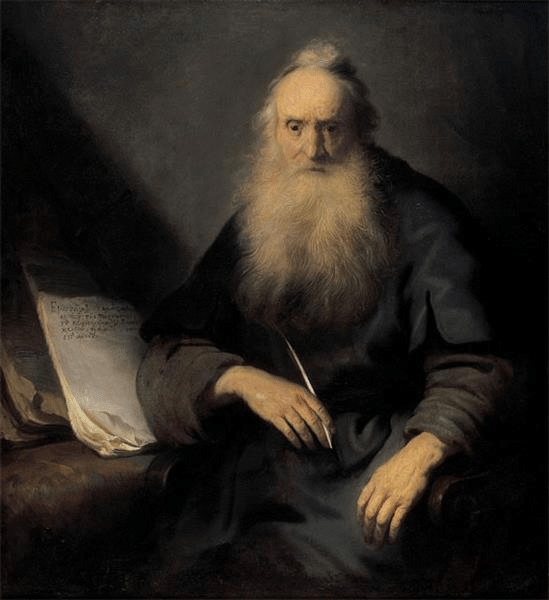
St. Paul writing to the Thessalonians, by Jan Lievens, c.1629

Surely you remember, brothers and sisters, our toil and hardship; we worked night and day in order not to be a burden to anyone while we preached the gospel of God to you. You are witnesses, and so is God, of how holy, righteous and blameless we were among you who believed. For you know that we dealt with each of you as a father deals with his own children, encouraging, comforting and urging you to live lives worthy of God, who calls you into his kingdom and glory.

And we also thank God continually because, when you received the word of God, which you heard from us, you accepted it not as a human word, but as it actually is, the word of God, which is indeed at work in you who believe. (New International Version)

The Christian believers in Thessalonica were becoming discouraged. The church sincerely believed that Jesus was coming soon… any day he could show up!

But as time went on, and Jesus was still nowhere to be seen…

the Thessalonians began losing their spiritual resolve…

started wondering if they had missed out on something…

began doubting if it was all real…

started slipping spiritually.

Missed expectations can be difficult to deal with. Maybe we have been praying for someone or something for so long that we wonder if it will really happen; or secretly question if something is wrong with us. Yet, maybe God simply wants us to wait… to be patient and to persevere… maybe the answer is closer than we think.

Since the church was becoming discouraged, the Apostle Paul reminisced with them. He wanted them to remember and not forget about what God had done in their lives. The Thessalonians desperately needed a faith for the long haul.

Remembering is a prominent theme in Scripture. Well over a hundred times we are told to remember:

  • God’s covenant and actions on behalf of people
  • Those less fortunate than us
  • Important people in our lives who influenced us in our journey of faith

In order to steel the church for a faith that lasts a lifetime, Paul reminded them of his own example, his own character, his ministry among them, and how they initially came to faith.

Paul was trying to inspire the believers with his own model of faithfulness, so that they would persevere in their Christian lives and not give up. He reminded them of his hard work in order to preach the gospel to them. The picture that Paul painted for them is having done whatever it took to make the good news of Jesus Christ known to the Thessalonians. 

Who were the people in your life that went out of their way to communicate the gospel to you both with words and with actions? 

Who were those persons who labored behind the scenes in prayer so that you and others would know Jesus? 

If any of those persons are still around, and you know where they are, remember them. Drop them a note. Express to them a simple thank you for their influence in your life. In doing so, you will not only encourage that person, but it will help you remember and re-engage with something in your life that you may have forgotten or taken for granted.

Paul was not shy about reminding the Thessalonians concerning the way in which he interacted with them. He did this not because he was trying to illicit some praise for himself, but because he wanted the church to emulate his character. 

That particular character is described as holy, righteous, and blameless. And we are to emulate Paul in these character qualities. These three words refer to the full range of relationships we encounter on a daily basis: with God, the church, and the community. 

Holiness in our relationship with God means that we have been set apart completely in Christ, so that we say and do nothing impure. 

Righteousness in our interactions with fellow believers in Jesus means we are in right relationship with them, so that there is nothing that hinders or stands between us. 

Blamelessness in our relations with the world means that the ways we live and work among outsiders are ethical and consistent with being a Christian.

Paul described his ministry as one of encouraging, comforting, and urging the believers to live lives worthy of God. He expected the Thessalonians to live into their callings as believers in Jesus. 

Encouragement refers to the ministry of coming alongside others and telling them what they need to do both in teaching and by example. Comfort refers to consoling others with the gospel. The word “urge” in the NIV is the word for “witnessing” which is a reference to the reality that Paul was constantly living his life in such a way that proclaimed Jesus to others.

The Thessalonians had received the Word of God; and this was an occasion to thank God for it. Each time we recall and remember what God has done for us through others and through God’s Word, we need to offer thanks. God’s Word is implanted within us, then takes root, grows, and produces a harvest of righteousness for those who have been disciplined by it.

We must remember those who brought us the Word of God; and to remember how they treated us, and what they did for us. Then, we must be obedient to what we learn. 

There are several needs we have as followers of Christ: 

  • intimate relationships in the church
  • to be mentored, and mentor others, in the faith
  • the power of God’s Word
  • our callings as Christians 

We forget these needs too easily – which is why repetition is a good thing. For example, each time we celebrate a baptism, it causes us to remember our own baptisms, and to live into our callings as Christians. Or when we move through the worship liturgy, we remember our sinfulness, God’s forgiveness, and our responsibility to live according to God’s Word. 

Our lives, our work, and our worship might seem plain and ordinary. However, the majority of life is lived in the mundane. The tangible reminders we can put in front of us are important, so that we never forget the spiritual experiences God has given us. (i.e. Deuteronomy 27:2-3)

We are meant to live our Christian lives in a vital connection with Christ and other believers. We will continue to persevere and thrive in the faith, when we remember those who have gone before us, and allow those here in the present to journey with us along this road of faith.

Blessed God, continue the good work begun in me; that increasing daily in wholeness and strength, I may rejoice in your goodness; and so order my life always to think and do that which pleases you, through Jesus Christ our Redeemer. Amen.